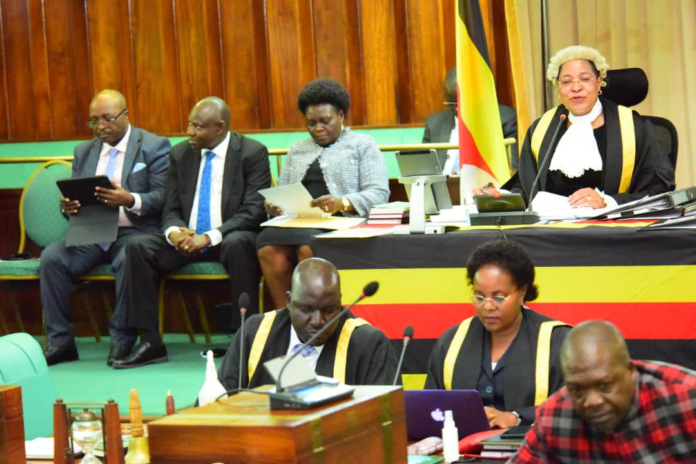
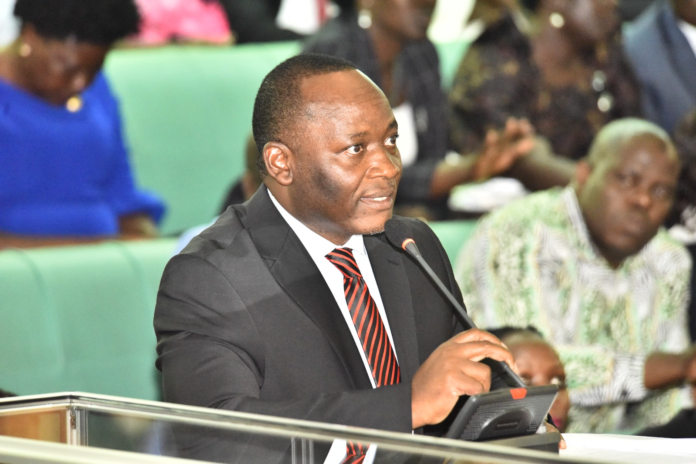
Members of Parliament have said it’s very risky to give monopoly to Vitol Bahraini to supply fuel to Uganda following a heated debate at parliament on Tuesday. While debating on the matter, Nathan Nandala Mafabi questioned how the government got into a deal with Vitol Company without allowing other companies to compete. “The procurement with Vitol Company should have been competitive in order to allow other companies in the business to apply,” Nandala said. The heated debate came after the parliamentary committee on Environment and Natural Resources chaired by Dr Emmanuel Otaala presented a report approving the Uganda National Company [UNOC] but also asked the government to procure fuel from multiple suppliers, not monopoly. Nandala said that UNOC should be given all the funding required so that it can buy fuel from refineries, not Vitol which is also “middleman”. According to the minority report on the same issue presented by Busiki Member of Parliament Paul Akamba, the government deal with Vitol is against government policy on a liberalized economy. He also said it’s been the government’s failure to have fuel reserves and high taxes that increase retail fuel prices not having middlemen in the fuel supply chain. Sheema Municipality MP, Dickson Kateshubwa said that the Government should capitalize UNOC but which should buy fuel from refineries not companies like Vitol which are also buying from other companies. Kampala Central legislator Mohammad Nsereko compared the Vitol monopoly to the previous failed contracts such as the coffee deals with Pinetti and Lubowa Hospital. “UNOC should be given a guarantee to regulate the circulation of fuel in the country. If we allow Vitol monopoly, we shall have knocked ourselves out like before on the matter of Umeme, Lubowa Hospital, Bujagali dam. How shall we explain to the people that we are the very same house that comes here and legislates after agreements have been entered into by the government without consulting the people and without involving the people of this country? I want to give the order that we are well informed about the status of UNOC and we must not be seen to come here under the back dress, the first of course of the government,” Nsereko said.
The opposition in parliament has continued to boycott parliament following the government’s delay to address their concerns.
The opposition legislators led by Nyendo-Mukungwe MP Mathias Mpuuga tasked the government to account for missing persons and the continuous detention of their supporters without trial.
“The Opposition will stay away from the proceedings until the government officially communicates to us, detailing how the issues we raised will be addressed, and giving a time frame within which they will be resolved,” Mpuuga said.
He stated that the executive is adamant and obstinate, our duty as opposition is to insist and the instance can be various. We are engaging the right gear and we aren’t about to change it, if necessity arises for us to change the gear, we will assess the feasibility of that engagement, but at the moment as their team leader, you probably might think the Executive is comfortable, probably the comfort is on their faces, but they
The Leader of Opposition in Parliament (LoP) said the opposition is going to change tactics, saying the team is on course.
Mpuuga also laughed off claims that the boycott isn’t paying off because the Gov’t has refused to oblige by the demands and business at Parliament has continued, noting that such individuals shouldn’t purport to know how he works because any attempts to do cram work on how he conducts his business will see such individuals crash.
“They also purport to know me, yet they don’t know me. That is the danger & mistakes that people make, purporting to know people they do not know & they are forgivable for their ignorance. I don’t do anything by cram work, those who have known me, know that I respond to issues depending on how they were raised. I have some level of imagination and that is how I handle them, so ask them to drop their cram work. I assess situations and supply answers depending on the conditions prevailing and if anybody tries to cram me, they will crash. I am not linear by the way I work,” Mpuuga said.
“After that meeting with government, no progress had been made, save for a transitory commitment with no time frame to the effect that they are ready to respond to the issues we raised and pour stance then and now is that we are out of plenary sittings until we have received response and there is no new development since then,”
“I also see some attempts at blackmailing me and my office, I follow it, I want to advise whoever is financing whoever so please take your paycheck but report what we say, do not misrepresent me and my office, if you have any questions raise them, I have never failed to make a response even if it is really flat. Raise the questions, do not attempt at blackmail because I never buckle at blackmail. Otherwise you aren’t helping the cause of citizens, for you to divert us into small things. If you have any questions, raise them here or shut up,” he said.
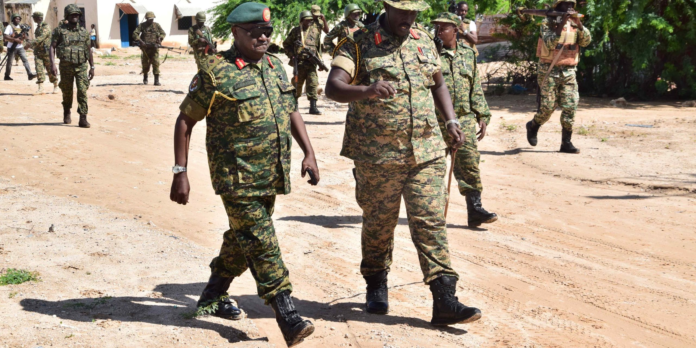
The Defence Spokesperson, Brigadier Felix Kulayigye has commended the support and existing cordial relationship between the Somalis and the Uganda Peoples’ Defence Forces serving in Somalia under African Transition Mission in Somalia.
He said this while meeting Somali local authorities at Uganda Battle Group 37 Headquarters in Celjaale, Somalia where he reminded the authorities that the existence of UPDF in Somalia is dependent upon Somalis.
“Without you we cannot exist. We came to support you to solve your problems, you have the solution. Once the problem is done we shall go back to our country. I want to thank my commander for being a true ambassador of UPDF because it is our culture to cooperate with civilians, which is where we derive our strength,” said Brig Kulayigye.
The Chief of Celjaale, Yusuf Osman Ali thanked ATMIS forces for the sacrifice and perseverance they have endured in Somalia.
He said it is from this sacrifice that Somalis can do their business freely without being disrupted by Al-Shabaab and expressed the objection towards the withdrawal of ATMIS Forces.
“Thank you for your sacrifice. We had run away from here but when AMISOM came, we came back. We are not happy with ATMIS withdrawal. This village we named it Kampala two while Kampala one is in Uganda. We still need you,” said Yusuf Osman.
Mr Bujeet Haji Isse tasked the Defence Spokesperson to inform President Yoweri Museveni not to allow UPDF to leave Somalia in the near future. “Tell him we don’t want ATMIS to withdraw. Ugandan soldiers have helped us to live peacefully and in harmony. My people have instructed me to tell President Yoweri Museveni to let ATMIS stay. Please continue with your work,” urged Haji Isse.
Meanwhile, Col Charles Asiimwe Kibaate, the Battle Group 37 Commander, informed the visiting team of journalists headed by Defence Spokesperson that whatever activity they do; be it militarily or civil cooperation, they do it with the blessing and participation of local authority and the Somali Security Forces.
“The wanainchi are appreciative. We involve them in every activity we do. They detached themselves from Al-Shabaab activities,” said Col Asiimwe.
Brig Felix Kulayigye is in Somalia with journalists from different media houses to take stock of the achievements and challenges ATMIS forces are facing.
So far, they have visited Barawe which is and Ceeljale all in Sector One under UPDF. The team has interacted with Somali local authorities and interviewed Brig Peter Gaetano Omola, the contingent commander and Ambassador Mohamed El-Amine Souef, the ATMIS Head and Special Representative of the Chairperson of the African Union Commission.
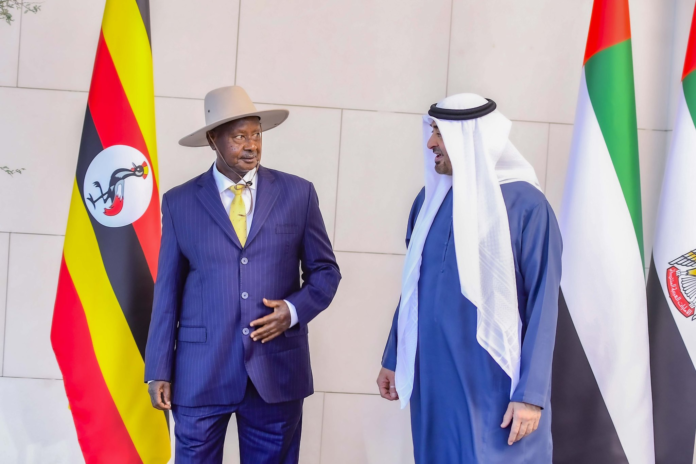
While meeting a delegation of investors led by H.E. Rashed Abdulkarim Al Blooshi, the Undersecretary of the Abu Dhabi Department of Economic Development, President Museveni urged the United Arab Emirates (UAE) to interest themselves in the area of local production of pharmaceutical products in Uganda.
“We have important things here in Uganda that we are not using. For example, we produce a lot of sugar but only use it for tea to drink, we also have a lot of starch from cassava and maize, these products have not been fully utilised yet they can be used for pharmaceutical purposes,” President Museveni said.
He added: “Many of these tablets are not all medicine, part of the tablet is just a carrier to take the medicine into your stomach, to make the tablet, and you need a special starch known as pharmaceutical-grade starch which we can make from maize or cassava.”
The President therefore appealed to the investors to locally partner with the Ugandan government in reducing the immense amount of starch from the various crops by putting it into good use of producing pharmaceutical drugs.
He further expounded that refining raw sugar into pharmaceutical-grade sugar is a huge potential area for investors to explore in Uganda explaining that the country is enriched with a lot of sugar which could be used for different types of syrups.
“We have a lot of sugar here in Uganda which could be used for pharmaceutical purposes. Usually, a lot of syrups for children contain sugar to make it sweet for them, I think this is something we can also do here locally by taking advantage of what we have,” he noted.
President Museveni also mentioned that Uganda is blessed with a variety of minerals, thus encouraging the investors to consider the country’s lucrative industrial venture, saying that the government is ready to work with them.
“There is iron ore for steel, phosphate for fertilisers, we have copper for electric military industries, gold, and lithium for electric batteries. We are already making electric cars so we need those batteries and many others. You are therefore welcome to tap into these areas locally,” the President said.
“The big ones here though are iron ore and phosphates; iron ore is like 800 million tons, while the confirmed phosphates are 230 million tons. So, the only thing we are struggling with now is for us to be able to link the industry and the minerals.”
H.E Abdulkarim thanked the President for informing him about the different potential areas for investment and economic cooperation between the two countries, saying that they are ready to work together for a better future.
“We are talking about manufacturing cars here, and so when it comes to batteries, we believe that it will be the next big potential market area, so why not consider Uganda?” Abdulkarim said.
Speaking to another group of investors led by Mr. Saifee Rupawala, the Chief Executive Officer of Lulu Group International, the President hailed the investors for exporting Ugandan products on a global market.
“Thank you for reaching the bigger markets of the world with our good natural products, I will make sure you get the ten acres of land that you need for the construction of the food processing and logistics center,” he promised the group.
Mr. Rupawala informed President Museveni that the company requires a piece of land near the airport for easy transportation of fresh fruits and foods from within Uganda to other countries for sale.
“We have been exporting a lot of different kinds of food products from Uganda to other countries, however, the only problem that we have now is having your space which can enable us in professional packaging of the products to attract the bigger market,” he said.
The group CEO added: “Uganda is blessed with natural foods and fruits that are of high quality and they do not have any chemicals. Your Excellency, we are therefore proud to export these products and promote them even further.”
President Museveni also met other investors including; Dr. Abdulmonem Almarzooqi, the Chief Executive Officer and Member of the Board of Elite Agro, H.E. Dr. Sultan Al Jaber, the Minister of Industry and Advanced Technology of the United Arab Emirates, and the Managing Director and Group CEO Abu Dhabi National Oil Company ( ADNOC), Brig. (Rtd) Saeed Saleem Khalfan Al Marri, the Group Chairman of SSK Technologies International and Prince Chaher Al Taki, the CEO and Managing Director of Rowad International Commercial LLC ( RCC).
The delegates, together with the President, discussed investment opportunities and possible areas of economic cooperation between Uganda and the UAE.
President Museveni welcomed the investors to Uganda and assured them of a ready market for their goods and services with a conducive business atmosphere.
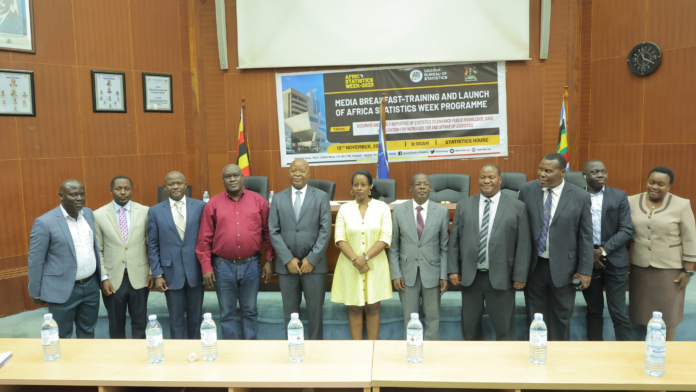
The Uganda Bureau of Statistics (UBOS) has launched the Africa Statistics Week at Statistics House in Kampala
The statistics week, which will be marked by a series of events that comes ahead of African Statistics Day, is an annual event that is celebrated on November 18, to raise public awareness of the importance of statistics in all aspects of social and economic life.
The executive director of UBOS, Dr Chris Mukiza highlighted that during the week, they will hold interactions with various stakeholders on disseminating statistics.
Dr Mukiza said the African Statistics Day 2023, is being held under the theme “Modernizing data ecosystems to accelerate the implementation of the African Continental Free Trade Area (AfCFTA): the role of official statistics and Big Data in the economic transformation and sustainable development of Africa”.
He said the theme aligns with the African Union theme of the year 2023: “Acceleration of the AfCFTA Implementation” and encapsulates the call to modernize data systems on the continent to produce and use high-quality official statistics and seize the opportunities that big data presents.”
The theme for African Statistics Day in 2023 was chosen to raise awareness among decision makers, technical and financial partners, data producers and users, researchers and the public of the importance of official statistics and big data to accelerate the implementation of the Agreement Establishing the African Continental Free Trade Area and promote intercontinental trade.
I wake up at night to write and inform Africa. I always try to use the tools I gained in the same universities in Britain to write and speak out my mind on topical issues. I am not going to narrow my brain to simple issues of the Malemas type in Africa. There are many dangers on the way that will face our continent.
I want to thank all those who wished us good luck and we won the first round of the Rwanda -Refugee saga that has brought down the second Home Secretary in the Tory Government.
As Home Secretary Suella Braverman was worse than Britt Patel on the issue on Rwanda-Refugee circus. The ruling was on Wednesday November 15, 2023. Sunak has smelt the coffee and done damage limitation.
Today let me try to analyze the new Foreign Secretary of Britain. As a scholar of political science there is no limit for me to educate Africa and create awareness to many African Foreign Affairs Ministers who will embrace the new changes in Britain. They need to learn the man who make journeys into Africa again.
The truth is that Cameron has fairly bland views on Europe and Africa which instantly make him a suspect figure. He is going to face a different party today from the one he left seven years and a half years ago. That will shape how he reacts on Africa.
My fellow Africans I write this from the bottom of my heart. Cameron’s position diverges from the present Tory orthodoxy that we saw King Charles III read in Parliament on Africa policy. It is not only on the EU but China, international aid, Africa and immigration but Cameron will be worse than any other Foreign Secretaries we have had.
He is not new to African war zones. Libya went down because of him and Sarkozy. They led the NATO to destroy Libya. I mean, only a month ago he accused Sunak of acting against the long-term interests of the country in foreign policy. He was very against the huge concessions that the UK was giving to African countries. Let African Foreign Ministers listen to me.
As an expert in Political Science & International Relations I have vowed to speak my mind on Africa. I will use my tools of analysis to warn Africa and the world about the pending obstacles.
The truth will show that many people in the world will inevitably raise questions over any ties with foreign governments, especially in Africa. How much did he receive for bombing of Libya? Was he investigated on the Libyan war? Who gained from the illegal oil deals of Libya? How much has Libya destabilized the region in Africa?
I must add that his counterpart in France Sarkozy was investigated and put on trial in France. He was found guilty of using Gaddafi money for his campaign! How much does Africa know on the new Foreign Secretary who comes when Africa is under many conflicts?
I want to say that what ultimately intrigues me most about this man Cameron’s appointment is that Sunak is far closer politically to his former Home Secretary Suella Braverman than the former Prime Minister. Sinak has the same views of sending refugees to Rwanda.
As an African who stood for the rights of Refugees worldwide, I am very sad. I am worried about what Cameron would bring for refugees in Britain? Or what are his views on immigration which is another topic that has created a hole in Sunak’s government?
African leaders who will read this article must know that on a whole range of social issues, Cameron is far to the right of whom you must not, forget, overcame widespread opposition from millions in Britain and within his own party to passed same-sex marriage.
How does this affect Africa? Do we expect more sanctions on many African countries who might defy this? It is already an issue that is dividing Africa and it depends on how African countries will react!
It would be unfair to compare Cameron’s appointment as foreign secretary with, say, Sir Ted Heath bringing back John Profumo as minister for pillow talk. The PILLOW TALK which rocked UK politics.
A rumour mongering era minister in Britain who caused damage to the Commonwealth and brought the first COUP in 1971 in my country Uganda. It is this coup of Uganda in 1971 that created the many Sunaks in Britain who today rule Britain in many aspects.
As an expert in political science I can simply tell you that that Sunak is simply pulling every lever at his disposal to see if anything still works. He is doing what Gobechv did in Soviet Union “PERESTROIKA” which is dangerous when GLASNOSTS are wrong.
To be honest, everything in Britain under the Tory Government in the last seven years or more has gone wrong. The COST of living is high. The pound buys few items in the supermarket.
The cost of gas and electricity are high. The rents have gone wrong. This is because in political science once you start restructuring and doing it in a piece meal manner like what Prime Minister Sunak, you create a REVOLUTION.
In summary the Perostroika Sunak is shaping in Britain is a disaster to Africa. Rt Hon David Cameron will add AGONY, ANGUISH, & PAIN to the Sunak’s bad FOREIGN POLICY in Africa.
I believe on Africa, Cameron has more questions to answer in the Africa and Arab world on how he ERASED LIBYA TO ASHES !
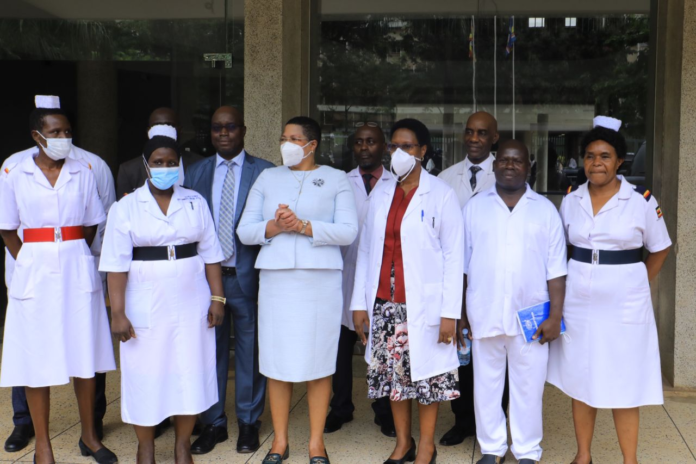
Speaker of Parliament Anita Among has decried the shortage of staff at Mulago Hospital, noting that although the hospital has 29 Intensive Care Unit (ICU) beds, only 14 are being utilized, leaving 15 beds idle, due to the lack of medical staff to manage patients in need of these services.
“What is disappointing is, we have a very functional ICU, but we don’t have human resources. We have an ICU of 29 beds, but only 14 are operational. I am going to urge my colleagues in this Financial Year we should be able to increase the money for health for all the ICUs to be operational. We will support you, this is our main referral hospital, Mulago must remain operational,”
The Speaker also expressed shock at the cleanliness she encountered at Mulago Hospital, noting that contrary to public sentiments about the hygiene & quality of services at Mulago, the premises are neat & the medical workers are looking after patients with courage & patience.
“We know how many patients you receive on a daily basis and we know the challenges you get, but as Parliament, we will try our best to see how we support you. We thank you for looking after our people & continue with that big heart, it takes courage for somebody to look after patients the way these people are looking after patients. I have seen some of them in bad condition, but they are so patient and doing their best to save these people,” Among said.
Among also updated the nation on the condition of Cosmos Elotu (Dakabale County) who was recently involved in a road crash and currently receiving medical attention from Mulago hospital ICU saying his condition is stable and is actually recovering.
The Director of Public Prosecutions (DPP) Jane Frances Abodo has sanctioned criminal charges against Kyoto Abdul Rashid alias Njovu alias Tembo, the prime suspect implicated in the killing of two tourists and their driver in Queen Elizabeth National Park.
Kyoto is facing two charges of Terrorism, three charges of Murder, three charges of Aggravated Robbery and one charge of belonging to a Terrorist Organisation will this afternoon appear before Nakawa Chief Magistrates Court.
Prosecution avers that on October 17, 2023, Njovu and others at large attacked and killed Alyai Eric and two British tourists; Barlow David James and Geyer Emmarentia Cecilia.
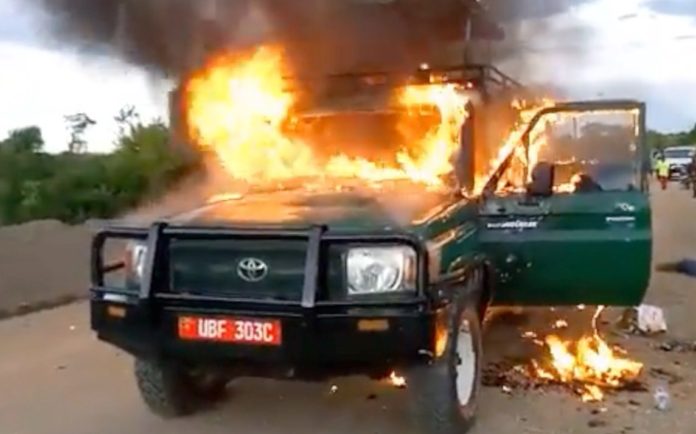
During the attack, two motor vehicles; a Mercedes Benz Cargo Truck and a Toyota Land Cruiser were burnt and the passports, money and visa cards of the tourists and the identity card, employment card, and driving permit of the Ugandan were taken by the suspect and his associates.
Prosecution-guided investigations were commenced by the Office of the Director of Public Prosecutions (ODPP), Criminal Investigations Directorate (CID) and Chieftaincy of Military Intelligence (CMI).
Consequently, Kyoto Abdul Rashid was arrested in an operation by the Uganda Peoples Defence Forces (UPDF) Marine Forces on Lake Edward. Two of his associates were shot dead and others managed to escape in a boat with their weapons.
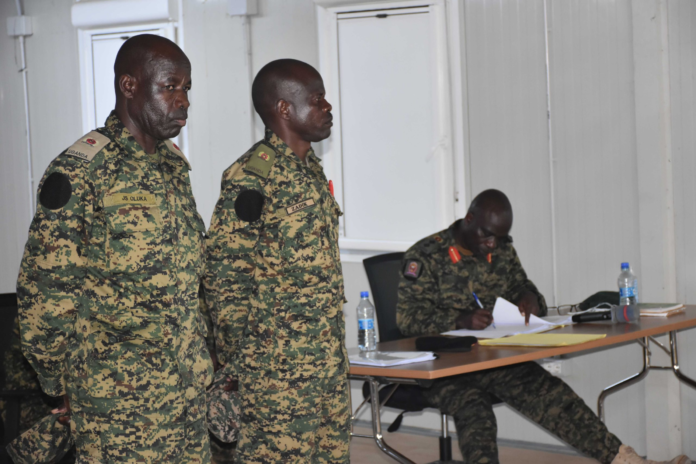
RO/10855 Maj John Steven Oluka 58 and RO/09572 Maj Zadock Abor.
The general court martial sitting at basecamp – Uganda Peoples Defence Forces (UPDF) sector one contingent headquarters in Mogadishu, capital of Somalia, has sentenced two UPDF majors due to cowardice in action.
RO/10855 Maj John Steven Oluka 58 years and RO/09572 Maj Zadock Abor 49 years, were both found guilty on count one; Cowardice in Action contrary to section 120 (1) (2) (a) of the UPDF Act of 2005. Whereas Maj John Steven Oluka on top of count one was also sentenced with count two; Offences by a person in command when in action contrary to section 128 (1) (b) of the UPDF Act of 2005.
On cowardice in action, the prosecution stated that the two majors on May 25, 2023 while in Bulomarer Forward Operating Base (FOB) as officers commanding infantry companies received an intelligence briefing from the Intelligence Officer and the Battalion commander over an impending attack from Al – Shabaab but failed to plan and deter the attack.
It’s said that on May 26, 2023 when Al-Shabaab attacked the base, the two Majors could not encourage officers and men under their command to fight courageously. They instead abandoned their troops and runway to Golweyn FOB.
“Convicts’ act of running away from Al-Shabaab greatly impacted on the name of UPDF and gave Al-Shabaab the opportunity to easily raid our forces. As a result of cowardice in action, a number of our soldiers and equipment were lost,” said the chairman of the GCM Brig Gen Freeman Mugabe.
On the second count; offences of persons in command when in action, the prosecution stated that Maj John Steven Oluka, on the May 27, 2023 while at Golweyn FOB commanding the rear protection force during the search, rescue and recapture Bulomarer FOB the operation was aborted due to the convict’s actions.
“This court, after listening to both defence and state councils respectively, sentences you as follows; you RO/10855 Maj John Steven Oluka you are sentenced to dismissal from the defence forces. You RO/ 09572 Maj Zadock Abor you are sentenced to dismissal from the defence forces. You have a right of appeal within 14 days if you are not satisfied with the decision of this court; may so rule be done at basecamp Somalia on this day under my hand and seal of this court,” Chairman GCM ruled.
Punishment for cowardice in action section 120 (1) (2) (a) of the UPDF Act of 2005 and offences of persons in command when in action section 128 (1) (b), where it results in failure of operation or loss of life state that on conviction, the punishment is by death or in other circumstances, life imprisonment.
Other Non-Commissioned Officers sentenced over failure to protect war materials contrary to section 122 (1) (2) (g) of the UPDF Act 2005 included; RA/207973 L/Cpl Okot Alex Anyatta sentenced to 16 years, 7 months and 20 days. RA/228600 Cpl Twinemanzi Hagai was sentenced to 22 years, 9 months and 24 days imprisonment. RA/199300 Sgt Obeyo Ronald was sentenced to 17 years, 6 months and 19 days imprisonment and RA/146246 Sgt Kakooza William 55 years sentenced to ten months and 18 days detention.
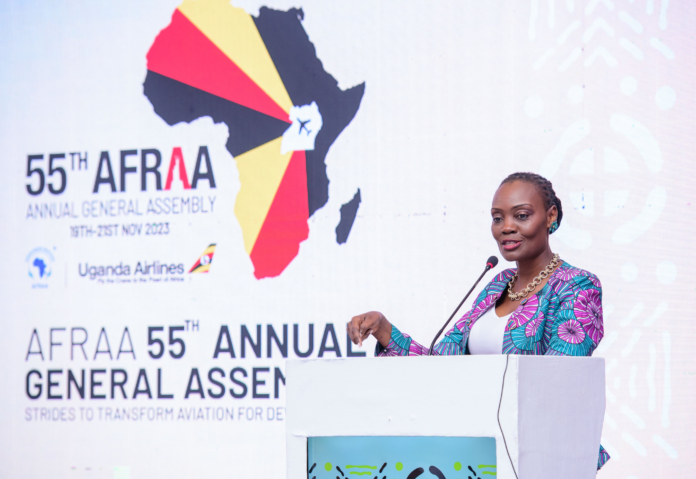
The 55th African Airlines Association (AFRAA) general assembly due to take place in Uganda from November 19 will focus on attracting more women to the aviation industry, the organisers have said.
Jenifer Bamuturaki, the Chief Executive Officer of Uganda Airlines, said men currently dominate the cockpit across the aviation industry on the African continent.
She cited Uganda’s case scenario which she says has only six women pilots compared to their majority male counterparts.
Bamuturaki said Uganda Airlines will cause a debate at the forthcoming general assembly of the African Airlines trade association to help the country attract more female aviators.
The summit will be held at Commonwealth Speke Resort in Entebbe under the theme, “Strides to Transform Aviation for Development.” The Aviation General Assembly which will be the first of its kind in Uganda is poised to be a game-changer for the country and promote the tourism industry.
Bamuturaki said hosting the AFRAA AGA is an opportunity for Uganda to shine on the global stage, present its progress, and contribute to the development and growth of the aviation sector within the country and the continent.
“It’s a chance for Uganda to foster relationships with global industry players, potentially attracting investments and partnerships that could benefit the country’s aviation sector and beyond,” she said.
Other discussions at the summit will include Sustainable Aviation Fuel (SAF), a hot topic across the refining and aerospace industries. Bamuturaki explained that by 2030, all airlines flying into Europe will be required to have SAF-empowered engines, an expensive venture that Uganda must prepare for.
SAF is a liquid fuel currently used in commercial aviation which reduces CO2 emissions by up to 80%. It can be produced from a number of sources (feedstock) including waste oil and fats, green and municipal waste, and non-food crops.
According to the International Air Transport Association (IATA), an agency that represents and serves airlines with advocacy and global standards for safety, security, and efficiency, SAF could contribute around 65% of the reduction in emissions needed by aviation to reach net zero in 2050.
At least 409 distinguished global delegates including aviation spare part manufacturers, technology giants, and finance companies among others have already confirmed attendance.
Binen Betty, the Acting and Business Development Officer at Uganda Wildlife Conservation Education Centre – UWEC Entebbe, said the assembly will provide an opportunity for the country to market its tourism potential to the visitors.
AFRAA was founded in Accra, Ghana, in 1968 as a leading trade association of airlines that hail from the nations of the African Union – AU. It is headquartered in Nairobi, Kenya. The primary purpose of AFRAA is to establish and facilitate cooperation between African airlines.
The Association has 50 airlines comprising all the major intercontinental African operators and the Association’s members represent over 85% of total international traffic carried by all African airlines.