Stanbic Bank
Stanbic Bank
25 C
Kampala
Stanbic Bank
Stanbic Bank
Home Blog Page 338

Teso sub-region gets 10 boreholes worth Shs 307 Million

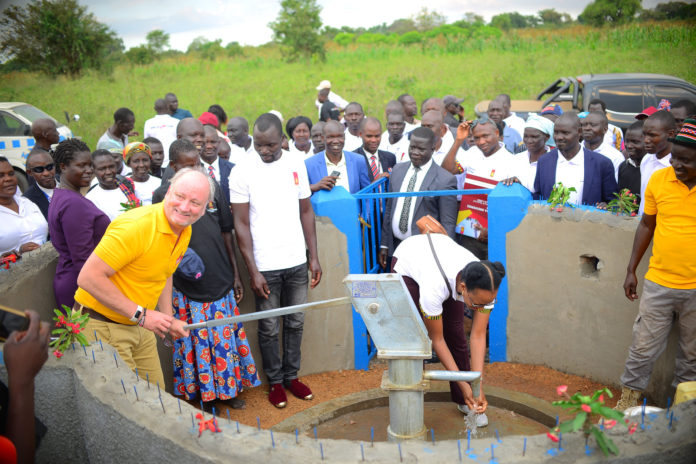
Teso sub-region has received 10 boreholes worth Shs 307 Million. The bore holes, which will benefit over 4,800 people in districts of Kapelebyong, Katakwi and Bukedea, were drilled by Uganda Breweries Limited (UBL).


The boreholes were officially received by Minister of State for Sports Peter Ogwang at Angopet Olilia B village, Okungur Sub-county, Kapelebyong District Village, Lyalakwe Parish in Kapelebyong.


Ogwang said that Teso has long faced challenges related to water scarcity, adding that many communities have had to rely on unclean water sources – leading to health issues and affecting overall community well-being.


“This project stands as a testament to the positive impact that responsible corporate initiatives can have on society. As the Teso sub-region embraces this transformative change, the hope is that other organisations will be inspired to undertake similar efforts, ultimately leading to a brighter and healthier future for all Ugandans,” he said.


Ansell, the Director of Corporate Relations for Africa at Diageo – UBL’s parent company – said that the business supports programs that improve the communities within which they operate all over the world.


“Our commitment to sustainability is outlined by our Society 2030: Spirit of Progress agenda – which is a global programme through which we work to create a more inclusive and sustainable world. One of the ways we do this is by supporting initiatives that preserve and replenish this critical resource, particularly in water-stressed areas.”


Like several sub-Saharan countries, Uganda faces the challenge of a growing number of people who have limited or no access to safe drinking water, which calls for concerted efforts from different stakeholders to address.


According to Water.org, a global non-profit organization working to bring water and sanitation to the world, out of Uganda’s population of 45 million people, 38 million people (83% of the population) lack access to a reliable, safely managed source of water and 7 million people (17%) lack access to improved sanitation solutions.


On a continental level, according to World Bank data, about 387 million people lived without access to basic drinking water services in sub-Saharan Africa in 2020, up from 350 million people in 2000.
Juliana Kagwa UBL’s Corporate Relations Director emphasised the company’s commitment to the well-being of the communities within which it operates. He said that access to clean water is not just a basic human right but also a fundamental necessity for the growth and prosperity of any community.
“Access to clean and safe drinking water remains a significant challenge in Uganda, and while there have been improvements in recent years, a substantial portion of the population – particularly in rural areas – still lacks access to clean water and sanitation facilities. By providing this vital resource, Uganda Breweries Limited has taken a commendable step towards empowering the people of Teso and enabling them to lead healthier and more productive lives,” Juliana stated.
UBL has so far invested over Shs 20 billion in water and sanitation projects across Uganda benefitting over 2 million people.
Some of the projects include a Shs 335 million piped water supply system in the Buwali sub-county of Bududa district that has benefitted over 2,000 residents, the construction of 37 boreholes in the Acholi sub-region and the implementation of a Shs 1 billion water and sanitation project in Bulangira, Kibuku District in partnership with Water Aid Uganda.

Stories Continues after ad

Gov’t, Russian firm launch Intelligent Transport Monitoring System

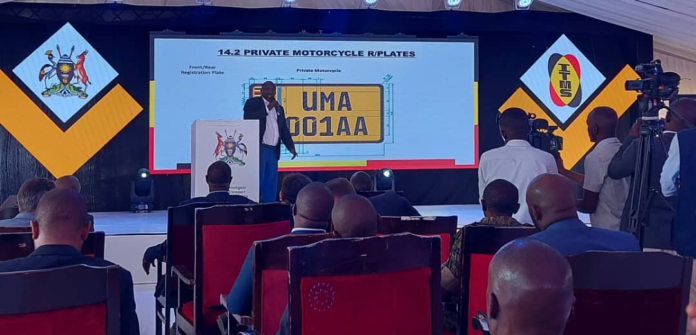
The ministry of works and Transport and the Russian firm Joint Stock Company Global Security have Intelligent Transport Monitoring System (ITMS) project that will see Ugandan vehicles reregistered and fitted with Electronic Number Plates.
The project is aimed at enhancing crime management through detection, tracking, identification and recognition of all vehicles and motorcycles operating in the Country and improved revenue collection, traffic management and reducing or eliminating duplicate registrations of vehicles or motorcycles as the case has been of late.
In July 2021, the Government signed a 10-year contract with the firm to provide digital vehicle trackers for motor vehicles and motorcycles in a bid to curb insecurity.
The proposal was first introduced by President Museveni in his 10-point security measure in the wake of gun violence in the country that saw several Ugandans killed by criminals moving by motor vehicles and motorcycles.
The ITMS project will be implemented in a phased manner and will be managed by Joint Stock Company Global Security for 10 years, before it is handed over to the government.
Speaking at the launch, the transport Minister Gen Katumba Wamala the Project will deter theft of motor vehicles & vehicle related criminality thru enhanced traceability, tracking and real-time feedback from the Police Command Center.
He said the project will also discourage reckless driving due to monitoring through the CCTV Camera network enhancing enforcement.
“New vehicle and motorcycle owners will  pay shs714,000 for the digital number plates while already registered road users will be required to pay shs150,000 and shs50,000 for vehicles and motorcycles,” the minister said.
A cross section of vehicles belonging to the Office of The President, Police and ministry of works has been selected to launch the ITMS Project however full rollout of the exercise is expected to commence on 1st February 2024.

Stories Continues after ad

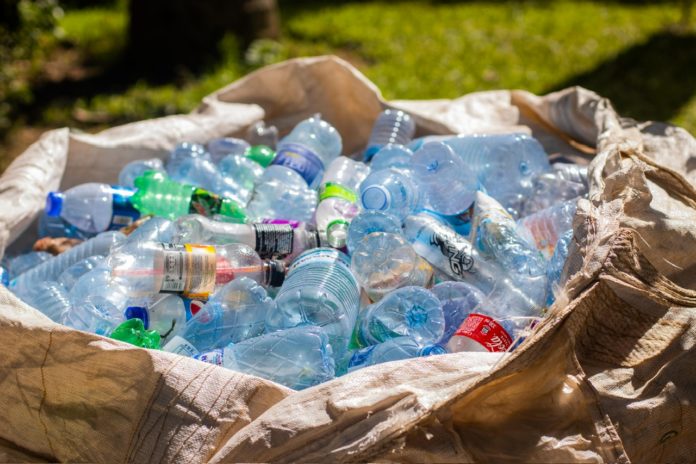
Environment: Over 1.3 tonnes of Plastic Waste Collected from Inaugural ObaFest

Atleast  1.6 tonnes of waste collected after the first-ever ObaFest has been recycled,  marking the beginning of an era of environmentally sustainable social events in Uganda.
According to a report from Asante Waste Management Ltd which was contracted to ensure proper waste management and recycling practices before, during and after the beer festival – a total of 1,666.30 kg (1.6 tonnes) of waste was collected – with 82.8% (1,379.30 kg or 1.3 tonnes) being recyclables and 17.22% (287 kg) being residue that was disposed of at the designated KCCA landfill.
The brand’s move is in line with recent trends that have seen more music and outdoor festivals around the world adopt green practices, such as the Glastonbury Festival, Burning Man, the Global Citizen Festival and more , and is a timely development following increased concern about Kampala’s waste management situation .
While addressing the National Technical Consultation workshop to develop a national action plan for the management of plastic pollution in Uganda, Dr. Akankwasa Barirega, the Executive Director of the National Environment Management Authority (NEMA), said that Kampala alone generates 150 tonnes of waste daily and only 40 per cent of the plastic waste produced in urban areas is collected.
He added that the other 60 per cent is not disposed of properly and contributes to the pollution of Uganda’s water bodies, negatively affects soil fertility and agricultural productivity, and also contributes to the blockage of drainage channels – which leads to floods.
Steered by the ambition to become Africa’s most sustainable festival by 2030, Bell ObaFest is taking significant steps to deliver an environmental impact and ensure a greener and more responsible festival experience.
Grace Amme, the Bell Lager brand manager, said, “ObaFest was a festival of many firsts and we are happy to champion a move towards sustainable festivals in Uganda. By being intentional about the way we collect and dispose of the waste generated from our events, we are sending a message to the communities in which we operate that we care about our collective well-being and the challenges we face as a people. Bell Lager is committed to ensuring the preservation and conservation of our environment even as we let the good times flow.”
Bell Lager’s efforts are guided by Uganda Breweries Limited (UBL)’s Society 2030: Spirit of Progress sustainability agenda – under which the business focuses on making a positive contribution to the communities within which it operates by among others – preserving natural resources; promoting the positive and moderate consumption of alcohol and; championing inclusion and diversity.

Stories Continues after ad

Minister Nankabirwa tables Bill to grant UNOC monopoly to supply imported petroleum products

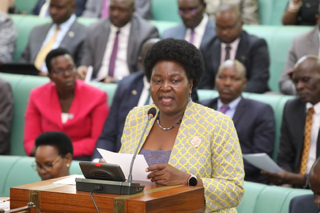
The Minister of Energy, Minerals and Mineral Development, Ruth Nankabirwa, on Tuesday tabled before Parliament the Petroleum Supply (Amendment) Bill, 2023, that seeks to grant Uganda National Oil Company (UNOC) monopoly to supply imported petroleum products.

Minister Nankabirwa told Parliament that the move is aimed at enhancing supply security, reducing pump prices, and generating additional revenue for UNOC to support infrastructure development, especially in the oil sector.

“The Petroleum Supply Act, 2003 does not empower the UNOC to supply all imports to the licensed oil marketing companies of petroleum products for the Ugandan market. This gap in the Act has threatened the security of supply of petroleum products in Uganda,” she said.

“The gap in the Act has exposed Uganda to occasional vulnerability to access the committed demand volumes of petroleum products, leading to petroleum product shortages and abrupt increase in retail pump prices,” she added.

Under the proposed arrangement, UNOC will exclusively source petroleum products from Vitol, a Swiss-based Dutch global energy and commodities giant. The duo signed a supply contract in August which was later ratified by Cabinet last week.

Uganda National Oil Company recently negotiated a five-year contract with Vitol Bahrain E.C.

The Ministry of Energy’s statement said Vitol Bahrain E.C will be financing the business by providing a working capital facility backed by its global balance sheet and working with UNOC to ensure competitive pricing of petroleum products.

Vitol Bahrain E.C. reportedly committed to financing the construction of additional capacity in partnership with UNOC of 320 million litres at Namwambula, Mpigi.

The ministry insisted that Oil Marketing Companies (OMCs) will continue selling the products to consumers through their commercial arrangements and the retail fuel pumps.

Nankabirwa in a press statement on Tuesday said the government believes that supporting UNOC will enhance its competitiveness on the international stage and benefit the people of Uganda.

The minister said the Government of Uganda has decided to enhance its involvement in ensuring the security of the supply of petroleum products into the Country by mandating the Uganda National Oil Company Limited (UNOC) to source and supply the petroleum products to the licensed Oil Marketing Companies actively involved in the importation of the products for Uganda.

By assigning UNOC the responsibility of importing petroleum products, the bill intends to reduce reliance on external suppliers, streamline the importation process, eliminate unnecessary transactions in the supply chain, and ultimately make petroleum products more affordable for consumers.

The government also hopes that UNOC’s involvement in the importation supply chain will generate additional revenue to finance other infrastructure projects that UNOC has a vested interest in on behalf of the State.   The amendment also seeks to authorize the Minister of Energy with the approval of the Cabinet, to nominate any other person to import petroleum products for the Ugandan market.

It is hoped that the proposed changes will improve the security of the supply of petroleum products for the Country. Uganda has on many occasions faced severe fuel shortages leading to a hike in prices.     So the government is of the view that the change in the law and policy will contribute to the reduction of the pump prices by eliminating unwarranted transactions in the supply chain.

Uganda is currently a net importer of petroleum products, where more than 90% are imported through the Mombasa port in Kenya and the rest through the Dar-es-Salaam port in Tanzania.

The importation is done independently by the licensed Ugandan Oil Marketing Companies (OMCs) through the importation structures in Kenya and Tanzania.

Under the existing importation structures, the Ugandan Oil Marketing Companies have been accessing their petroleum products import allocations through their affiliated Kenyan Oil Marketing Companies registered and participating in Kenyan and Tanzanian import structures.

In April 2023, the Government of Kenya made changes to the petroleum products import system by replacing the Open Tender System with the Government-to-Government importation arrangement with the Governments of the United Arab Emirates and the Kingdom of Saudi Arabia to manage some of the importation challenges that Kenya was facing.

According to Nankabirwa, despite the price-competitive nature of the Open Tender System in Kenya and its relatively normal supplies, it exposed Uganda to occasional supply vulnerabilities where the Ugandan Oil Marketing Companies were considered secondary whenever there were supply disruptions.

“These vulnerabilities posed additional challenges, resulting in Uganda receiving relatively costly products and ultimately impacting the retail pump prices” said Nankbirwa.

She explained that with the amendment of the Petroleum Supply Act, the Ministry of Energy and Mineral Development shall maintain its overall responsibility of regulating the importation of petroleum products into Uganda.

Under the proposed arrangement, the Uganda National Oil Company (UNOC) will be responsible for sourcing and supplying petroleum products to the licensed Oil Marketing Companies (OMCs) involved in importing the products to Uganda.


Stories Continues after ad

Promotions demand extra accountability to the country and UPDF – Gen Wilson Mbadi

The Chief of Defence Forces, General Wilson Mbasu Mbadi has challenged the newly promoted Uganda Peoples’ Defence Forces Generals and Officers that promotions come with extra demand of accountability to the country and the institution of the UPDF.

“You must prepare yourselves and also remember that the ranks denote seniority, authority and responsibility according to the chain of command,” said Gen Mbadi.

He made the remarks as he presided over the decoration ceremony of newly promoted Generals and senior Officers that was held today at the Ministry of Defence and Veteran Affairs Joint Headquarters, Mbuya. This follows their promotions by the President and Commander-in-Chief on the 3rd of October, 2023.

Gen Mbadi reminded them that the new ranks represent a great military service which they have exhibited through discipline, loyalty, integrity, selfless service, personal courage and patriotism and urged them to remain healthy and fit.

The Chief of Defence Forces urged them to always remember the UPDF’s pro-people code of conduct and to avoid injurious tendencies to the UPDF that undermine its cohesion and effectiveness.

He acknowledged the sacrifices and support of the spouses and their families extended to the officers.

Speaking on behalf of the decorated Generals and Senior Officers, the Commandant Uganda Military Academy – Kabamba, Brig Gen Wycliffe Keita extended gratitude to the guidance of the Commander-in-Chief and the CDF’s stewardship of the UPDF. “Your direction, personal example, can’t and consistent guidance have significantly helped us to grow professionally and consolidated our collective strength both individually and collectively as an institution,” said Brig Gen Keita.

He added, “Your confidence in our abilities means a great deal to all of us. We look forward to the new challenges and opportunities the new ranks provide.”

Those decorated today included: Brig Gen Jimmy N Musoke, Brig Gen John Patrick Otongo, Brig Gen James Muhwezi, Brig Gen Richard Rubongoya, Brig Gen Wycliffe R Keita and seventeen Colonels.

Stories Continues after ad

Ruto welcomes King Charles and Queen Camilla in Kenya

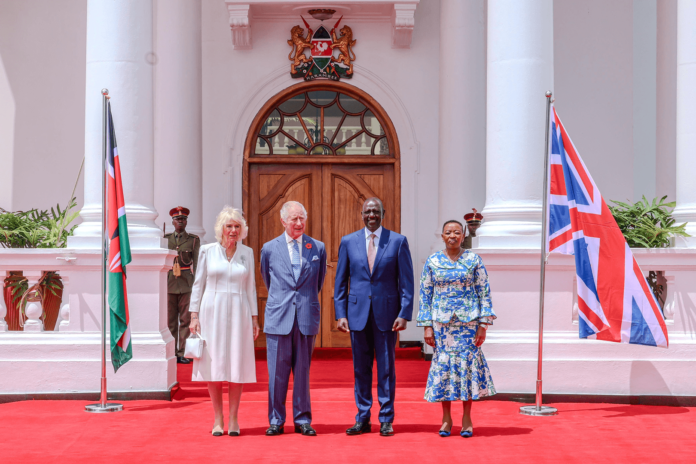
President William Ruto has welcomed King Charles III and Queen Camilla who are on a four-day state visit in Kenya.

Although the four-day trip by Charles and Queen Camilla has been billed as an opportunity to look to the future and build on the strong ties between London and Nairobi, the legacy of decades of British colonial rule looms large.

It is the 74-year-old British head of state’s first visit to an African and Commonwealth nation since ascending the throne in September last year on the death of his mother, Queen Elizabeth II.

While welcoming the duo, H.E Ruto said that Kenya is honoured to host His Majesty King Charles III and Queen Camilla.

“We will work together to build an even stronger and more prosperous future featuring cooperation in strategic areas such as defense and security, education and climate change for our shared prosperity,” Ruto said.

He added that the Kenya-UK historic ties have grown steadily, deeper and stronger, enabling the two countries to achieve stable progress in trade and investments.

The British High Commission said the visit, which follows trips to Germany and France earlier this year, will “spotlight the strong and dynamic partnership between the UK and Kenya”.

But it will also “acknowledge the more painful aspects” of Britain’s historic relationship with Kenya as the country prepares to celebrate 60 years of independence in December.

Stories Continues after ad

Kasana School inferno: Kiruddu hospital confirms the death of more students

The death toll in Kasana Junior School inferno has risen to seven, Eagle Online has learnt. The revelation was made by Dr. Rose Alenyo, a Surgeon at Kiruddu hospital.

Dr. Alenyo a said the victims were critically injured with some succumbing on arrival and others during the night.

On Monday, two pupils were confirmed dead after a fire gutted the boy’s dormitory. The five new casualties succumbed to fire wounds at Kiruddu Referral Hospital, where they had been rushed for treatment.

According to the Masaka deputy regional police commander, Jamada Wandera, they are still investigating this grim incident to establish the cause of the fire.

“We instituted investigations into the cause of this fire and we are continuing to pray that we get to the root cause of the inferno,” he said.

Stories Continues after ad

Court convicts American couple Nicholas and Mackenzie Spencer

Mackenzie Leigh Mathias Spencer and Nicholas Spencer.

The International Crimes Division of the High Court has convicted an American couple Nicholas and Mackenzie Spencer on their own plea of guilty.

The couple is facing for charges of aggravated trafficking in children, torture of a 10-year-old boy, unlawful stay, and working without a permit.

Prosecution avers that Spencer aged 32 and his wife Mackenzie, a 32-year-old, volunteer, fostered three children, including John Kayima, in 2018, from Welcome Ministry, in Jinja City.

The couple was released on bail for alleged mistreatment of a 10-year-old child, who was one of the children in their care. According to the amended plaint or charge sheet, the couple reportedly adopted a 10-year-old boy, whom they then mistreated on grounds that he was obstinate.

The suspects came to Uganda in 2017 and started working with Akola Project, based in Jinja. The couple joined the Motive Creation Agency and moved with their children to Upper Naguru, where they have been staying together.

It was however, realised that between the year 2020 and December 2022, the couple constantly tortured John nKayima, a 10-year-old pupil of Dawn Children’s Center in Ntinda, which attracted the attention of neighbours.

The couple kept the victim barefoot, and naked throughout the day, would occasionally make him squat in an awkward position, with his head facing the floor and hands spread out widely, he spent his nights on a wooden platform, without a mattress or beddings and was served cold meals from the fridge.

In 2018, they fostered three children including the victim from Welcome Ministry – Jinja. They moved to Kampala when they joined Motive Creation Agency, with their three children.

Stories Continues after ad

US suspends Uganda from AGOA trade program over violation of human rights

The United States of America has suspended the participation of Uganda in the African Growth and Opportunity Act (AGOA) trade program over violation of internationally recognized human rights.

The other countries suspended from the trade program include; Gabon, Niger and Central African Republic

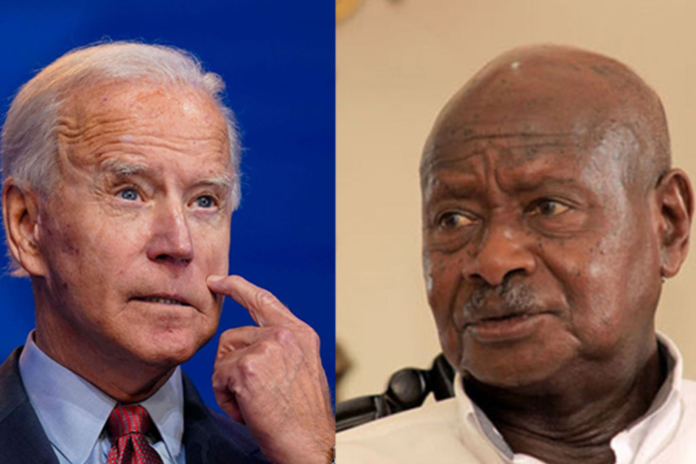
The United States of America President, Joe Biden wrote in a letter on Monday that he was taking the step because of “gross violations” of internationally recognized human rights by Uganda and the Central African Republic.

“The Government of Uganda has engaged in gross violations of internationally recognized human rights,”

He also cited Niger and Gabon’s failure to establish or make continual progress toward the protection of political pluralism and the rule of law.

“Despite intensive engagement between the United States and the Central African Republic, Gabon, Niger, and Uganda, these countries have failed to address United States concerns about their non-compliance with the AGOA eligibility criteria,” Biden said in a letter to the speaker of the U.S. House of Representatives.

Biden said he intends to terminate the designation of these countries as beneficiary sub-Saharan African countries under the AGOA, effective Jan. 1, 2024.

“Accordingly, I intend to terminate the designation of these countries as beneficiary sub-Saharan African countries under the AGOA, effective January 1, 2024. I will continue to assess whether the Central African Republic, Gabon, Niger, and Uganda meet the AGOA eligibility requirements,” he added.

He said he will continue to assess whether they meet the program’s eligibility requirements.

Launched in 2000, AGOA grants exports from qualifying countries duty-free access to the U.S. market. It is set to expire in September 2025, but discussions are already under way over whether to extend it and for how long.

African governments and industry groups are pushing for an early 10-year extension without changes in order to reassure business and new investors who might have concerns over AGOA’s future.

Stories Continues after ad

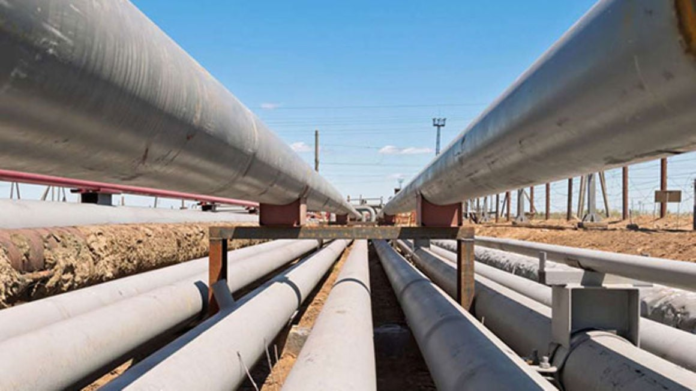
EACOP announces first batch of 100km of pipes ready for dispatch

Panyu Chu Kong (PCK) Steel Pipe Co., Ltd, the company contracted to supply line pipes to the US$4bn East Africa Crude Oil pipeline (EACOP) has revealed that the first batch of 100 kilometres of pipes is completed and in the process of being delivered to the port of Tanga, in Tanzania, the Petroleum Authority of Uganda said in a statement dated Oct.30.

“We are committed to ensuring timely delivery and high-quality pipes,” Xie Leshan, the PCK President said at a meeting with a delegation of the Petroleum Authority of Uganda (PAU) led by Ernest Rubondo, the Executive Director.

The team visited PCK’s Pipe Mill in Lianyungang as part of a verification and validation visit to the Kingfisher Development project and East Africa Crude Oil pipeline (EACOP) Project activities in China, ahead of accelerated timelines for Uganda’s Oil projects.

The developers of the EACOP project are CNOOC Uganda Limited, TotalEnergies EP Uganda, Tanzania Petroleum Development Corporation (TPDC), and the Uganda National Oil Company (UNOC).

“The readiness of the first 100km of pipes for the EACOP indicates the Government of Uganda and the oil companies’ commitment to deliver First Oil. The achievement of these and other milestones is also a result of the stable macroeconomic environment, and Uganda’s legal and institutional framework that has and continues to enable the oil industry to thrive,” Rubondo said.

During the visit, which coincided with China’s Belt and Road Initiative forum, Ernest Rubondo and Liu Yongjie, the Chairman CNOOC International met at the CNOOC International Headquarters in Beijing on October 21, 2023.

“This meeting signifies an important development in the ongoing collaboration between Uganda and China in the oil and gas sector,” said Rubondo.

Liu and Rubondo discussed the progress of the Kingfisher project. They received assurances of CNOOC’s commitment to fulfill its responsibilities on the project and expand cooperation to deliver a ‘shining star’ project in Uganda.

Also discussed were strategies for the commercialisation of Uganda’s oil and gas resources and ways to maximise the in-country value generated by these projects, extending to local communities and national enterprises, thereby further enhancing economic growth and development.

The two principles agreed that the timely delivery of the project together with the development of national and community content was the best way to ensure a win-win situation for the Kingfisher project.

The delegation also visited the Shougang Beijing Group’s Qian’an steel mill, which supplies the steel plates used in the manufacturing of pipes.

“This is a crucial component of the project, as the quality and timely delivery of steel sheets are vital for the successful execution of the pipeline project which ensures the delivery of Kingfisher and Tilenga crude to Tanga for export,” Rubondo said.

The PAU delegation also met various companies that have been contracted by both TotalEnergies and CNOOC Uganda to undertake works and services on the oil and gas projects in Uganda.

These contractors included COOEC (part of a joint venture undertaking the detailed engineering design, procurement, and construction of the Kingfisher project Central Processing facility and other facilities), COSL (drilling services), CENERTECH (Well completions tools, core cutting and fishing, drilling software and coating of the Kingfisher feeder pipeline) and CPP (construction of the EACOP pipeline and above ground installations).

EACOP will be able to pump up to 230,000 barrels of crude oil daily down a specially designed 1,443km-long `smart’ pipe from western Uganda to the Indian Ocean coastline of Tanzania. Some parts of the pipe will be heat traced so that the high-grade, Sulphur Ugandan crude, which is waxy at surface temperatures, will flow evenly. The pipeline, which will be buried along its length at up to 1.5 meters below the surface, will be lined with hi-tech insulation as well as sensors and cut-off valves to minimise the risk of leakages

Stories Continues after ad