Stanbic Bank
Stanbic Bank
26.3 C
Kampala
Stanbic Bank
Stanbic Bank
Home Blog Page 359

Parliament approves statutory instrument extending local council tenure in office

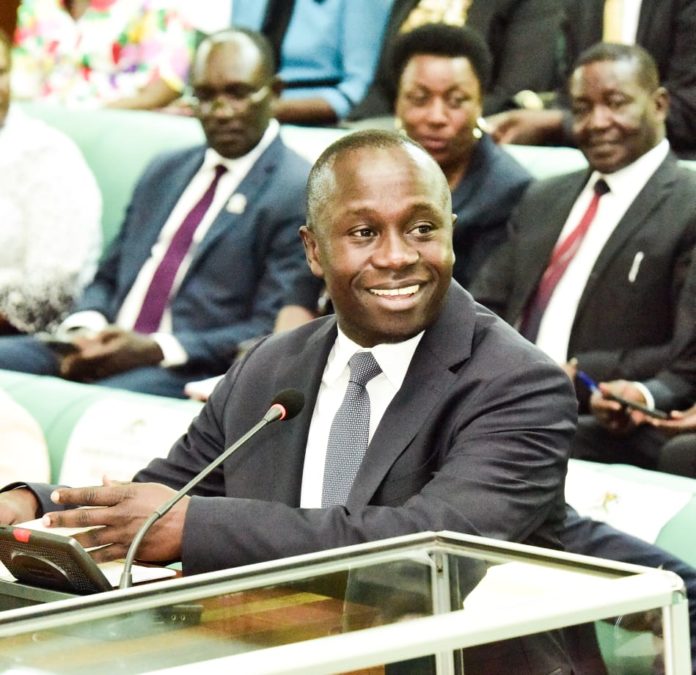
Minister Magyezi making a point on the floor of Parlaiment.

Parliament has approved a statutory instrument extending local council office bearers’ tenure by six months. The local council leadership’s tenure expired earlier on Monday July 10, 2023. The current LC I and LC II leaders were voted into office in 2018.

Following the expiry of their tenure, the Minister for Local Government, Raphael Magyezi said the government had postponed the LC elections since it did not have the Shs59 billion required by the Electoral Commission to organize them.

This prompted Opposition leaders in Parliament led by Shadow Ministers, Betty Ethel Naluyima (Local Government), Brenda Nabukenya (Education), Gorreth Namugga (Science and Innovation), Helen Nakimuli (Fisheries) and Yusuf Nsibambi (Works and Transport) to issue a 30-day ultimatum for government to organize the Local Council (LC) elections.

Naluyima said that the government’s decision to postpone the elections is illegal as it contravenes the provisions of the Constitution and Section 170 of the Local Government Act which provides for the election of local government and administrative councils every five years.

Under the Third Schedule of the Local Government Act, the minister can extend the tenure of local leaders for a period not exceeding six months if the country is in a state of war or if a state of emergency has been declared under the Constitution, Naluyima stated.

The MPs argued that without fresh elections being held, the current LC I chairpersons cannot issue legally acceptable recommendations for identification documents, endorse property sale agreements or settle community disputes.

Appearing before parliament earlier today Magyezi, assured MPs that there would be timely elections within the designated period. MPs back the move, citing smoother functioning of activities needing local council approval.

Stories Continues after ad

Health needs heighten as Sudan conflict displaces millions of people

Sudanese displaced woman line up to receive food at Kasab Internally Displaced People's camp near Kutum, Northern Darfur, Sudan in this July 2004 file picture.The European Union has threatened Sudan with "imminent" U.N. sanctions if it does not end the conflict in its western Darfur region that has killed tens of thousands, but Sudan said the threats would only damage peace efforts.(AP Photo/Marcus Prior/WFP)

The conflict in Sudan that has forced 3.4 million people to flee for safety within the country and across its borders is rapidly intensifying health threats, with cases of infectious diseases and other afflictions reported among the displaced populations who have sought refuge in hard-to-reach locations, with limited health services.

Among those uprooted from their homes, nearly 760 000 have sought refuge in neighbouring Central African Republic, Chad, Egypt, Ethiopia and South Sudan, where World Health Organization (WHO) and partners are supporting national authorities to provide emergency health assistance

In Sudan itself, the health crisis has reached gravely serious levels as more than two-thirds of hospitals remain out of service amid increasing reports of attacks on health facilities. Between April 15, and July 24, 2023, WHO verified 51 attacks on health facilities, resulting in 10 deaths and 24 injuries—and cutting off access to urgently needed care.

 ā€œThe scale of the health crisis is enormous. We are working hard to step up our response, delivering critical medical and other emergency health supplies,ā€ said Dr Nima Saeed Abid, WHO Representative in Sudan. ā€œAlthough the attacks on health facilities and the widespread insecurity are compounding the challenges, we’re determined to reach those most in need and urge for increased donor support to ensure that we deliver adequately.ā€

Across the border in Chad, which is receiving an average of 2500 people daily—accounting for most of the people forced to flee across borders from Sudan—WHO and partner organizations have identified and treated more than 1400 trauma cases. That includes over 60 major surgeries. About 70% of the trauma cases are due to gunshot wounds. Additionally, malaria, malnutrition and cholera infections are also being reported among the displaced.

 ā€œThe conflict in Sudan is triggering a health crisis that is affecting an entire region,ā€ said Dr Jean-Bosco Ndihokubwayo, WHO Representative in Chad. ā€œChad alone is currently hosting more than a quarter of a million people and an equal number of people are projected to arrive in the country by the end of this year. This will significantly increase the health needs and exert huge pressure on the available health facilities.ā€

Cases of malaria among children under five years of age, as well as suspected cases of yellow fever have also been identified among the about 17 000 people who have sought refuge in the Central African Republic. A suspected cholera outbreak has also been reported in locations in northern Ethiopia receiving large numbers of displaced people.

The influx of more than 176 000 people into South Sudan has overstretched facilities in the northern Renk region, where an upsurge of acute watery diarrhoea among children under-five year of age is driving up mortality. There is also a significant rise in cases of severe acute malnutrition and measles among these children.

To adequately respond to the crisis, WHO in June issued an emergency appeal for $145 million in June. To date, only about 10% of the funds have been received, and with little prospects of peace, the health crisis is likely to worsen.

WHO is working with partners to deliver emergency assistance swiftly. So far, it has shipped over 36 tons of supplies to Chad, where an emergency medical team has also been deployed. The Organization has also delivered emergency medical and non-medical supplies to provide care to the affected populations in Central African Republic, Egypt, Ethiopia and South Sudan. In addition, disease Surveillance is being enhanced to guide prevention and enable early detection of potential outbreaks. WHO is also providing technical support to national authorities to strengthen the emergency health response.

With scarce, overstretched and at times inexistent health facilities in the locations hosting the people fleeing the armed violence in Sudan, WHO and partners are supporting national health authorities to enhance provision of basic health services. Improving water, sanitation and hygiene services, carrying out vaccination drives, as well as strengthening infection prevention and control are some of the priority health interventions.

Stories Continues after ad

Court issues arrest warrant against Besigye, Mukaku

Dr Kizza Besigye and Samuel Walter Lubega Mukaku

Buganda Road Court Chief Magistrate Asuman Muhumuza has issued a warrant of arrest against the former Presidential candidates Dr Kizza Besigye and Samuel Walter Lubega Mukaku for failure to turn up for court proceedings.

Appearing before court, the suspect’s lawyers led by Musa Matovu said his clients are out of the country. Prosecutor led by Ivan Kyazze objected to his plea, saying there is no proof to that effect which prompted the trial Magistrate to issue an arrest warrant against them.

ā€œWe have received a court ruling indicating Besigye and Mukaku should be arrested. A warrant of arrest was issued against them and criminal summons were issued against all their sureties. It was irregular because I intimated to the trial Magistrate that the matter had lost track on February 27, 2023,ā€ Matovu said.

He said his clients have been coming to court to their dismay, all the times they reported; there were either no magistrate or state prosecutors.

Prosecution avers that the accused without any unlawful excuse at an assembly addressed members of the public implying that it would be desirable for them to demonstrate, yet it could result in violence and destruction of property.

The two were arrested on June 14,2020 following their protests over the skyrocketing prices of commodities in the country. They were detained at Central Police Station (CPS) and later transferred to Naggalama Police Station.

They were on June 15, 2022 produced before Magistrate Muhumuza and charged them with inciting violence.

Stories Continues after ad

Parliament approves statutory instrument extending local council tenure in office

Parliament has approved a statutory instrument extending local council office bearers’ tenure by six months. The local council leadership’s tenure expired earlier on Monday, 10 July 2023. The current LC I and LC II leaders were voted into office in 2018.
Following the expiry of their tenure,  the Minister for Local Government, Raphael Magyezi said the government had postponed the LC elections since it did not have the Shs59 billion required by the Electoral Commission to organize them.
This prompted Opposition leaders in Parliament led by Shadow Ministers, Betty Ethel Naluyima (Local Government), Brenda Nabukenya (Education), Gorreth Namugga (Science and Innovation), Helen Nakimuli (Fisheries) and Yusuf Nsibambi (Works and Transport) to issue a 30-day ultimatum for government to organize the Local Council (LC) elections.
Naluyima said that the government’s decision to postpone the elections is illegal as it contravenes the provisions of the Constitution and Section 170 of the Local Government Act which provides for the election of local government and administrative councils every five years.
Under the Third Schedule of the Local Government Act, the minister can extend the tenure of local leaders for a period not exceeding six months if the country is in a state of war or if a state of emergency has been declared under the Constitution, Naluyima stated.
The MPs argued that without fresh elections being held, the current LC I chairpersons cannot issue legally acceptable recommendations for identification documents, endorse property sale agreements or settle community disputes.
Appearing before parliament earlier today Magyezi, assured MPs that there would be timely elections within the designated period. MPs back the move, citing smoother functioning of activities needing local council approval.

Stories Continues after ad

Microfinance body blamed for failure to spend Shs21b Emyooga funds

The Microfinance Support Centre failed to absorb a total of Shs21.2 billion of the Emyooga grant in the Financial Year 2021/2022 according to a report by the Auditor General.

In his report to Parliament, the Auditor General observed that Shs100 billion was meant for SACCOs under the Emyooga programme but only Shs78.8 billion was disbursed.

In a meeting with officials from the Microfinance Support Centre (MSC), legislators on the Public Accounts Committee on Commissions, Statutory Authorities and State Enterprises (COSASE) queried the way the funds were absorbed.

Roland Ndyomugyenyi (Indep., Rukiga County) asked officials from MSC to explain why they failed to fully absorb the money yet it was budgeted for.

ā€œThe moment you make a budget and Parliament appropriates the money, you are sure that you are going to spend that money. Failure to spend that money means you are limiting other sectors who want an opportunity to do service delivery,ā€ said Ndyomugenyi.

Muwada Nkunyingi (NUP, Kyadondo County East) said there has been delayed support to SACCOs including registration, which has limited their timely access to funds.

ā€œThe process of identifying beneficiaries, especially the Emyooga SACCOs appeared to be bureaucratic. The money came and communities were excited that they would receive the funds but now they are hearing that you took back the money,ā€ Nkunyingi said.

Nkunyingi added that failure of MSC staff to follow due diligence in loan disbursement indicated that incompetent loans officers were employed.

He tasked the MSC officials to detail the efforts put in place to ensure that the intended beneficiaries receive the funding.

Hellen Masika, the Deputy Executive Director at the Microfinance Support Centre attributed incomplete absorption of Emyooga funds to the winding verification process.

ā€œThis money was not supposed to be touched because it was committed for SACCOs that had certificates of registration. However, the process of verification delayed their access to the funds,ā€ Masika said.

The Committee Chairperson, Joel Ssenyonyi, also put the MSC officials to task over the disbursement of four loans worth Shs4.1 billion that was done without proper loan appraisals.

ā€œWithout a loan appraisal, there should be no recommendation for one to get a loan. On what basis was this money given because we are beginning to think that either there are untouchable people or your staff members got this money somehow?ā€ said Ssenyonyi.

According to the Auditor General, MSC did not give due attention to assessment of the financial performance of SACCOs that applied for loans in the year under scrutiny.

His report indicates that a total of Shs3.7 billion in loans was disbursed to clients who lacked vital documents, whereas Shs1.3 billion was advanced to clients without collateral.

Masika said loans were paid out without adequate appraisals due to recruitment of staff at different levels who have varying levels of experience.

ā€œWhen we are referring staff to zones, there are those who are very experienced and those who are new and are learning. But through continuous training, this weakness has been improved as of today,ā€ she added.

Nathan Itungo (Indep., Kashari South County) alluded to section 4.5 of the Microfinance Support Centre Credit and Operations Manual 2017 that provides for areas of focus during the loan due diligence process, including security for collateral to be offered.

ā€œThis is a law that is within your section. Your explanation that there are new loans officers who cannot follow the law does not hold anything. Whoever comes into the organisation should follow the manual,ā€ Itungo said.

Nwoya District Woman Representative, Judith Achan, said there was likely to be fraud and connivance at MSC which facilitated the irregular loan disbursements.

Stories Continues after ad

Minister Muhanga calls on men to shun DNA paternity tests

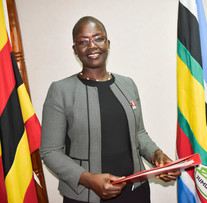
Minister Margaret Muhanga, the State Minister for Primary Health Care. Photo by MakSPH.

Margaret Muhanga, the State Minister in-charge of Primary Health Care has urged men to go slow on issues to do with embracing Deoxyribonucleic acid -DNA.

The minister advised men to stop going for the DNA paternity testing, saying that it is not beneficial to the wellbeing all over. 

She said that it is not really important for men to go for DNA paternity tests, asking how a normal man who has raised his child/children, would wake up admiring to lose them because of doubting paternity.

ā€œBiology does not matter. If you have raised your children, they automatically become your children. No one is looking for the child after all.

Minister Muhanga asked men to stay with their children without doubting them in order to keep harmony. ā€œBecause if you hear people killing each other because of DNA, why are you even going for it. Minister queries.

According to her, what you do not know has no harm to anyone. ā€œAnything that you don’t know will not kill you. If you do not know that it is not your child, it will not break your heart. But when you find out, your heart will be brokenā€.  She added.

The minister made the remarks during the launches of Makerere University’s Public health fellowship programme-laboratory leadership programme, that took place in Kampala, on Tuesday.

Attending the event was also; World Health Organization-WHO, Dr Henry Mwebesa, Dr Amy Boore of US CDC, Ms Kim Lewis of APHL, Prof Rhoda Wanyenze of MaKSPH, Dr Alex R. Ario of APHL, among others.

The event saw a group of the first cohort of the same programme, who are the pioneers graduate. These are; Martha Nankya, Anthony Kiyimba, Priscilla Atim, Shem Mwebaza and Leah Naluwagga.

The above carried out studies like Evaluation of turnaround time for yellow fever testing in Uganda from January 2022 to March 2023, Evaluation of HIV Early Infant Diagnosis and Viral Load logistics inventory management system in Uganda laboratory hubs, Strengthening HIV Test Kits inventory management at an HIV testing  Laboratory, Kampala, 2023, Experiences and lessons in coordinating laboratory activities during disease outbreaks in Uganda and Fellowship achievement from a fellow’s point of view between January to July 2023, respectively.

The Ministry of Health welcomed the programme and recommended it with hopes that I will make a difference in the laboratory sector.

Minister Muhanga noted that it would improve efficiency in service delivery and the experience of patients while in health facilities.

“This programme is good because it includes inhumaneness in the training of health workers. People go and train but sometimes they don’t know how to deal with human beings. So, once they are managing laboratories, they are not trained to manage the laboratories but also how to manage their clients and their workmatesā€ Muhanga said.

Dr. Mwebesa, who is the Director General for Health Services, said laboratories that are conducting sensitive tests should be more responsible.

He notes that some lab experts issue results negligently disregarding implications that these actions could have.

ā€œAs laboratory leaders, you need to know how to communicate results and the right channels to follow. In the DNA paternity tests, you don’t just carry out the tests and throw results to the complaining man and say that it is not your child. Dr. Mwebesa tasks the graduates.

The programme is under the Uganda National Institute of Public Health (UNIPH) and is supported by the American Centers for Disease Control and Prevention, the Association of Public Health Laboratories and Makerere University School of Public Health.

According to Dr Alex Ario, the head of UNIPH, six master’s degree holders (three females and three males) have already enrolled as the next cohort for the fellowship in January. 

Stories Continues after ad

Archbishop Kaziimba Mugalu flags off medical supplies donated by Barnabas Fund UKĀ 

Archbishop Kazimba flagging off the items.

The Archbishop of the Church of Uganda, The Most Rev Dr. Stephen Samuel Kaziimba Mugalu has today flagged off distribution of medical supplies to all 256 health facilities founded by the Church of Uganda in a move to improve healthcare services across the country.

The medical supplies which were donated by Barnabas Fund UK, will be distributed in 16 Hospitals, 7 Health Centre IV’s, 119 Health Centre III’s and 114 Health Centre II’s to support healthcare professionals in their efforts to provide quality care to the communities they serve.

Archbishop Kaziimba Mugalu commended Barnabas Fund for their commitment to supporting healthcare initiatives in Uganda, referring to their donation as a testament to the power of collaboration and compassion.

ā€œI extend our deepest gratitude to Barnabas Fund for their invaluable contribution to our healthcare system. These medical supplies are of great significance in enhancing the capacity of Church of Uganda’s health facilities to cater to the medical needs of our people.ā€ Archbishop Kaziimba said.

Archbishop Kaziimba Mugalu emphasized the need for responsible and appropriate usage of the medical supplies, ensuring they reach the intended beneficiaries and are utilized effectively.

He urged healthcare professionals and administrators within the Church of Uganda’s health facilities to maintain transparency and accountability throughout the distribution process.

The Archbishop commended the Ministry of Health for supporting the Church with clearance of the items and National Medical Stores for offering storage for the items on arrival in Uganda.

The Church of Uganda’s Programs Officer for Health Stephen Angala Ochieng said that the medical supplies were applied for during #Covid-19 pandemic but they were delayed to arrive because of logistical challenges.

He reaffirmed the Church of Uganda’s commitment to further enhancing healthcare infrastructure and services and improving access to quality healthcare for all.

Stories Continues after ad

Crane Bank Limited floors Dfcu bank in London

Chairman Ruparelia Group, Sudhir Ruparelia.

Crane Bank Limited and its shareholders who include Kampala businessman Sudhir Ruparelia now stand a chance to prove their case in London, United Kingdom after Court of Appeal agreed with them that there are serious issues that can be tried in the UK as per the transaction where the Bank of Uganda, through corruption, illegally sold Crane Bank Limited (CBL) assets to Dfcu in January 2017.

In a written judgment, Lord Justice Phillips said: ā€œI would allow the appeal on the ground that there are serious issues to be tried as to whether part or all appellants’ claims fall within the Commercial Activity Exception and/or the Public Policy Exception.ā€

The appellants aver that the sale of CBL was commercial rather than sovereign in character, therefore falling outside the foreign act of state rule.

The appellants assert that from 2016 senior Ugandan government officials and officials of the Bank of Uganda engaged in a corrupt scheme to take control of CBL, making improper use of statutory and regulatory powers to do so, and then to sell assets for the benefit of the parties to the scheme.

The appellants further argued that the Dfcu which was the first respondent in the appeal case joined the corrupt scheme as purchaser of CBL assets from BoU. Dfcu Bank’s holding company -Dfcu Limited, and former executives and directors are also alleged to have joined the scheme.

Until 2016, CBL was Uganda’s largest locally owned bank. At the end of 2015 it had a strong balance sheet, showing total equity of about US83m and highly profitable, with net operating income of about US$4m and was highly profitable, with financial statements audited by KPMG and approved by BoU.

The corruption that led to sell of CBL involved a foreign national Dr Patrick Ho, who sought preferential access for CEFC China (CEFC) Energy in Uganda by bribing various government officials, including the Foreign Minister (Kuteesa) and deputy BoU Governor [Kasekende] then, in respect of which Dr Ho was convicted in US.

Dr Ho is said to have told the Foreign Minister then that acquisition of a local bank in Uganda was CEFC’s top priority, and in about June 2016, CBL was identified as a target.

As such BoU adjusted CBL’s capital position on July 1, 2016 and ordered CBL to raise extra capital of $46.4 million by July 31, 2016. Further BoU withdrew CBL’s authorization to conduct most financial businesses and placed a lien over about $50 of treasury bills held by CBL, seriously inhibiting CBL’s ability to raise the additional capital. Worse still, In August 2016, BoU ordered CBL to raise more capital of about $26 million.

On September 2016 the late BoU Governor Emmanuel Tumusiime Mutebile issued a press release falsely claiming CBL’s problems of weal loan performance and depositor flight. This triggered a run on CBL.

Between July and September 2016, CBL’s shareholders raised US$ 8.2m to recapitalize CBL, but BoU refused the money to be injected and required that it be held on deposit at the BoU. BoU also thwarted investment in CBL by independent financial institutions.

Then on October 13, Kasekende through Foreign Minister’s wife, privately informed Dr Ho of the possible acquisition of CBL. At their request the next day, CEFC sent an email to Kasende’s private email expressing such interest.

On October 16, 2016 CBL requested emergency liquidity assistance from BoU, of about US$ 115m, offering a prime property held by Sudhir’s other company, worth more than 115m, as collateral but BoU refused the request, offering only $22.8m on terms which were impossible for CBL to meet.

On October 2016, BoU placed CBL into statutory management under the FIA provisions.

BoU would later claims to have injected $135m into CBL as liquidity support yet $79.5m is unaccounted for by BoU.

However, CEFC’s interest in acquiring CBL ceased in late October 2016 and BoU privately approached Dfcu bank with preferential terms to buy CBL assets, which was illegal as it breached FIA. DFCU’s bid was accepted on December 23, 2016.

Then BoU placed CBL into receivership on January 24, 2017, with BoU as receiver, and the central bank on January 25, 2017 sold CBL assets to Dfcu at Shs200 billion paid in installments, and interest-free, with BoU wanting to get the interest from CBL shareholders.

It should be noted that CBL’s loans worth Shs100 billion was not reflected in the sale agreement, which CBL says was transferred to BoU or its officers secretly as quid pro quo, [or part of it] for the sale of CBL’s assets to Dfcu bank at undervalue.

CBL dragged Dfcu bank and its executives to the UK courts in December 2020, but the respondents said the case could not be heard outside of Uganda, stating that claims were debarred by the foreign act of state rule so that there was no serious issue to be tried.

Stories Continues after ad

Uganda Christian University 24thĀ graduation set for Friday 28

Uganda Christian University (UCU) has announced that it will confer degrees upon 1002 students during the First part of the 24th Graduation ceremony on Friday, July 28, 2023. Among these graduates, 442 (44%) are male and 560 (56%) are female.

Jimmy Siyasa, UCU Acting Communication Officer revealed that this will be a historical event for the university as it confers degrees upon the first batch of medicine and dentistry graduates.

The graduation ceremony will be presided over by the University Chancellor, the Rt. Rev. Dr. Stephen Samuel Kaziimba Mugalu, with the esteemed Chief Guest being the Rt. Rev. Dr. Dunstan Kopoliano Bukenya.

ā€œA total of 28 students have achieved first-class honours, comprising 17 females and 11 males. We are delighted to recognise Yohana Eyob Ghebrekristos, of Eritrean nationality, as the overall best student, graduating with a Bachelor of Dental Surgery and an outstanding CGPA of 4.71,ā€ Siyasa revealed.

He added, ā€œWe commend Wilson Wanyama, the overall best male student, who pursued a Bachelor of Development and Social Entrepreneurship and achieved an impressive CGPA of 4.64.ā€

Preceding the graduation, a Commissioning Service will take place on Thursday, July 27, starting at 2:00 p.m. During this event, the Archbishop of the Church of Uganda and Chancellor of UCU, His Grace the Most Rev. Dr. Kaziimba, will lead prayers and blessings for the graduates. Furthermore, the ceremony will include the recognition and awarding of the best-performing students.

ā€œWe extend our heartfelt congratulations to all the graduates for reaching this remarkable academic milestone. We also commend their families, friends, and sponsors for their unwavering support throughout their educational journey,ā€ he applauded.

UCU assures all graduates that their transcripts and certificates will be made available on graduation day, and we are committed to fulfilling this pledge without exception.

Stories Continues after ad

IGG arrests former UNBS boss

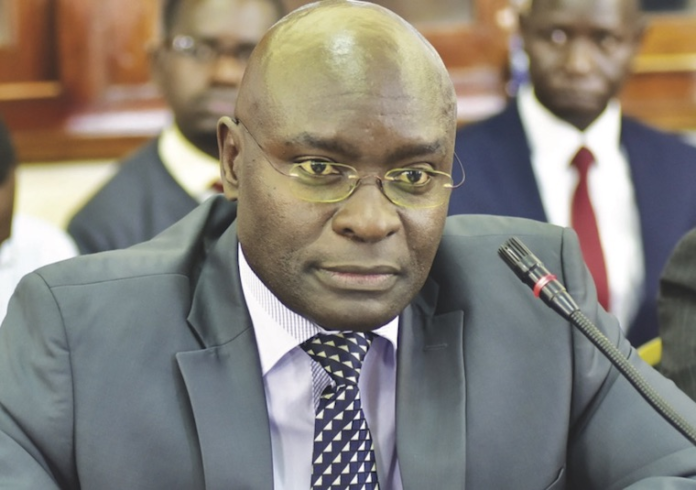
ON SUSPENSION: David Livingstone Ebiru, the Executive Director UNBS.

The suspended Executive Director of Uganda National Bureau of Standards David Livingstone Ebiru has been arrested for failure to heed to the Inspectorate of Government summons.

His arrest was confirmed by Ali Munira, the Spokesperson of the inspectorate of government.

ā€œInspector General of Government (IGG) has this afternoon arrested the former UNBS executive director, David Livingstone Ebiru. He will be arraigned in the Anti-Corruption Court,ā€ she said.

Appearing before the Parliamentary Committee on Commissions, Statutory Authorities, and State Enterprises (COSASE) last week, Ebiru admitted to bribing the entity’s board with Shs100 million to retain his job.

The committee is investigating Ebiru, the Executive for misappropriating Shs12.5 billion. During the committee proceedings, the Chairperson of the Board of UNBS, Charles Musekuura said that the Ebiru had caused financial loss at the entity and was at the helm of corruption and numerous irregularities.

He revealed that out of the total $4.9 million in the account, only $1.5 million had been sent to the Consolidated Fund, while the remaining $3.4 million was converted and utilised to support the bureau’s operations at its source under the authority of the director.

ā€œThe $3.4 million was used at the source which, to my understanding, was contrary to the law and I am mindful that whatever it is that I have to do at the bureau, I am guided by the law,ā€ Musekuura said.

Stories Continues after ad