Stanbic Bank
Stanbic Bank
26.3 C
Kampala
Stanbic Bank
Stanbic Bank
Home Blog Page 360

Pope Francis applauds Uganda’s generosity for refugees

Pope Francis and Ms Nabanja.

ROME-Pope Francis has praised Uganda for its generosity to host refugees.

The pope said while meeting Uganda’s Prime Minister Robinah Nabbanja at the Vatican’s Apostolic Palace.

Uganda hosts some 1.5 million refugees and asylum seekers, according to the UN’s refugee agency, UNHCR. Many of them hail from South Sudan, the Democratic Republic of Congo, and Burundi.

Nabbanja and Pope’s meeting lasted around 25 minutes and saw the Pope and the Prime Minister discuss various issues.

Among the topics covered during the conversation, the Pope was touched by the welcome generously extended by Ugandan institutions to migrants and refugees, not only from the African region, but as far as Central Asian countries.

Pope Francis and Nabbanja also engaged in the customary exchange of gifts.

The Pope gave Uganda’s none executive Prime Minister a bronze statue representing a dove carrying an olive branch in its beak. The statue bears the inscription: “Be messengers of peace”.

He also offered Ms. Nabbanja copies of several papal documents, including the Pope’s message for this year’s World Day of Peace, the Document on Human Fraternity, and a book on the Statio Orbis on 27 March 2020, published by the Vatican’s Publishing House.

Stories Continues after ad

Museveni departs for Russia–Africa Summit

President Museveni being seen off at Entebbe International Airport by his team.

President Yoweri Museveni has this morning departed for the Russian City of St. Petersburg to attend the 2nd Russia–Africa Summit.

 “There will be a separate bilateral meeting between President Putin and President Museveni to exchange views on the most important areas of cooperation,” said Russia’s Ambassador to Uganda, Vladlen Semivolos.

“The discussions will focus on ways of deepening our cooperation with Uganda,” he added.

President Museveni will be accompanied by cabinet ministers, MPs, business people and journalists among others.

The Russia–Africa Summit is the highest-profile and largest-scale event in Russian–African relations, aimed at bringing about a fundamentally new level of mutually beneficial partnership to meet the challenges of the 21st century.

The goal of the event is to promote efforts to strengthen comprehensive and equal cooperation between Russia and African nations across all areas of society including politics, security, economic relations, science and technology, and the cultural and humanitarian spheres.

President Museveni, who last visited Russia in 2019, has since called for stronger bilateral relations especially in the areas of defense and security, economic and technical cooperation.

Russia has since disclosed plans to make Uganda a regional hub for development, upgrading and maintenance of Russian military equipment and technology.

“The center of maintenance of aviation equipment produced in the Soviet Union has been set up and made operational in Uganda,” said Russia’s Foreign Affairs Minister Sergey Lavrov earlier this year.

“We intend to make it a regional hub,” said Lavrov, emphasising, “The military and technical cooperation between our two countries is a longstanding one.”

President Museveni recently commissioned into flight the first ever overhauled and upgraded Russian Type helicopter in sub-Saharan Africa in Nakasongola, Central Uganda.

Uganda has been under intense pressure from the United States not to help Russia to evade sanctions over Moscow’s invasion of Ukraine.

The U.S. and European Union have since slapped sanctions on Russia’s defence industries, a move expert say would deny Russia billions of dollars in military exports.

But Uganda’s Foreign Affairs Minister, Jeje Odongo said it was “fallacious to think we (Uganda) can suddenly change in that situation.”

Stories Continues after ad
Museveni to meet Putin at Russia–Africa Summit this week

President Yoweri Museveni will later this week meet Russian leader Vladimir Putin in St Petersburg, Russia for the Second Russia–Africa Summit in the resort city of Sochi.

“There will be a separate bilateral meeting between President Putin and President Museveni to exchange views on the most important areas of cooperation,” said Russia’s Ambassador to Uganda, Vladlen Semivolos.

“The discussions will focus on ways of deepening our cooperation with Uganda,” he added.

President Museveni will be accompanied by cabinet ministers, MPs, business people and journalists among others.

The Russia–Africa Summit is the highest-profile and largest-scale event in Russian–African relations, aimed at bringing about a fundamentally new level of mutually beneficial partnership to meet the challenges of the 21st century.

The goal of the event is to promote efforts to strengthen comprehensive and equal cooperation between Russia and African nations across all areas of society including politics, security, economic relations, science and technology, and the cultural and humanitarian spheres.

President Museveni, who last visited Russia in 2019, has since called for stronger bilateral relations especially in the areas of defense and security, economic and technical cooperation.

Russia has since disclosed plans to make Uganda a regional hub for development, upgrading and maintenance of Russian military equipment and technology.

“The center of maintenance of aviation equipment produced in the Soviet Union has been set up and made operational in Uganda,” said Russia’s Foreign Affairs Minister Sergey Lavrov earlier this year.

“We intend to make it a regional hub,” said Lavrov, emphasising, “The military and technical cooperation between our two countries is a longstanding one.”

President Museveni recently commissioned into flight the first ever overhauled and upgraded Russian Type helicopter in sub-Saharan Africa in Nakasongola, Central Uganda.

Uganda has been under intense pressure from the United States not to help Russia to evade sanctions over Moscow’s invasion of Ukraine.

The U.S. and European Union have since slapped sanctions on Russia’s defence industries, some move experts say would deny Russia billions of dollars in military exports.

But Uganda’s Foreign Affairs Minister, Jeje Odongo said it was “fallacious to think we (Uganda) can suddenly change in that situation.”

Stories Continues after ad
Kira Police Station keeping rape suspect in deal worth Shs30m, which is against the law

Lawrence Lubowa at Kira police station.

Officers at Kira Police Station have been keeping a suspected rapist for over a week now without the Knowledge of their superiors at Uganda Police headquarters in Naguru Kampala.

The rape suspect Lawrence Lubowa, who was arrested on Monday last week, is a resident of Ntinda who operates Giraffe Park Hotel on Ntinda-Kisaasi road, a few kilometers from Baba TV officers, where he is alleged to have raped the victim [names withheld].

According to our sources at Kira Police Station, Lubowa, a former lecturer who had a stint in the USA before he was deported back to Uganda, is said to have raped the victim after giving her a job of a waitress in his motel which provides accommodation and bar services.

Our sources at the police station say the allegations against Lubowa were investigated and found to be true whereby apart from raping the innocent girls, he is also alleged to have infected her with a dangerous disease that has no cure, with the frugs available only being able to prolong the victim’s life on planet earth.

It is said that police at Kira Police Station having confirmed the allegations to be true, decided to ask both sides to settle the matter at the police station in Shs30 million deal, where police officers are expected to get a share should the suspect find the money.

It is said the police officers at Kira Police Station told the rape victim and her family that she would get nothing if the suspect is arraigned before courts of law, the case being a capital offence that could mean a life sentence for the suspected rapist.

“It has been found to be true that this gentleman (Lubowa) raped the poor girl yet our bosses want to make money out of the case. They are denying the young girl justice,” one of our sources told us yesterday in Kampala, adding that the suspected rapist has many related cases in Kigowa and Ntinda police posts but that officers at the police small stations have been covering them in exchange for money.

According to our sources at Kira Police Post, a suspect brought on a capital offence is not supposed to stay at the station beyond 48 hours but Mr. Lubowa whose family is looking for money to give to the police keep off the case has stayed there for 8 days now.

This website contacted the area LC leaders who confirmed that they have cases of Lubowa abusing his female employees- such as wanting to forcefully have sex with them, denying them food and, even not paying them their wages.

“We have reported many cases of this man to Ntinda and Kigowa police station but he always gets his way out. We don’t know how he does it but I think he bribes the police,” one the village leaders said, adding a few months ago he took away his worker’s smartphone for good after she refused to give him sex. The girl, they say, went home without her phone on top of not paying her all the money she had worked for.

One of the village leaders also confirmed that Lubowa who is about 60 years is fond of sexually abusing his workers. “He uses and fires them [the girls]. That is why he cannot keep them for a month. Many run away because of his bad behaviour of wanting to sleep with them and yet he does not want to pay them for the work hired them for,” he said.

The boda boda riders who operate near Lubowa’s Giraffe Park Motel also confirmed that he has a habit of sexually abusing the girls he hires as waitresses. “One of the girls last year abused him (Lubowa) after he tried to forcefully have sex with her. Many people witnessed that incident in the morning. We were here at our work station. He (Lubowa) is a bad man,” a boda boda rider said.

However, our police sources at Kira Police Station that their bosses and others at different police stations in Kampala have a habit of making money out of rape suspects, in the process killing the case, and denying the victims justice.

In June 2019, Lubowa was arrested by police detectives from Busikirwa Police Post in Kisaasa after his employee identified as Sarah Sanya accused him of raping her. Case file number SD REF 05/06/2019 was opened.

It would later emerge that Lubowa accepted raping Sanya and asked for forgiveness but police there told the two sides to negotiate a financial settlement. It is said the girl’s family wanted Shs1,000, 000 while Lubowa could only manage to raise Shs700, 000, which was rejected.

It is said officers at Busikirwa Police Post after realising they could not handle the case forwarded it to Kira Police Station and nothing much came from there.

According to Arti 123 of the Penal Code Act Chapter 120, any person who has unlawful carnal knowledge of a woman or girl without her consent has committed rape. A person who commits rape is liable to death or imprisonment.

Despite the existence of the law, many girls and women in Uganda are raped every year by their employers and other men who offer the victims and parents money to settle the matter. This illegal activity (where some police officers) are involved has perpetrated sexual abuse and violence against women.

Stories Continues after ad
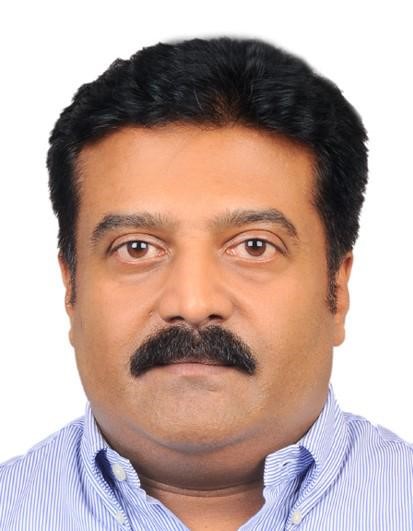
UBUNTU rebrands to TowerCo of Africa Uganda

TOA Uganda CEO, Geoffrey Donnels Oketayot and CEO of TOA - Stephane Beuvelet Unveiling the new identity of Ubuntu Towers

Ubuntu Towers Uganda today announced the successful completion of its rebranding to TowerCo of Africa Uganda, which is 90% owned by TowerCo of Africa (TOA), a fully owned subsidiary of AXIAN Telecom. Under a new identity, the company forges ahead with its journey towards redefining connectivity in Uganda.

Geoffrey Donnels Oketayot, CEO at TowerCo of Africa Uganda, said: We are thrilled to officially unveil TowerCo of Africa Uganda and embark on this exciting next chapter in what has been a very fulfilling journey. Our rebranding represents a transfer of the positive legacy from Ubuntu Towers to the TowerCo of Africa brand. It also marks an important milestone in our evolution, which is punctuated by our ambition to be the best green passive infrastructure solutions provider in Uganda.”

At a celebratory event graced by the Uganda State Minister of ICT, Honourable Joyce Juliet Nabbosa Ssebugwawo, and other dignitaries as well as business leaders, the TowerCo of Africa Uganda team reflected on the market impact the company has had since it was founded in 2020. They also thanked the partners who have been instrumental in accelerating the benefits realised by the Ugandan people.

“We are immensely grateful for the support of our employees, customers, business partners, industry bodies and government in helping to shape the socio-economic impact of TowerCo of Africa Uganda. We remain committed to delivering exceptional telecommunications solutions that catapult communities, businesses, and the economy towards meaningful growth,” concluded Oketayot.

Left to Right_ CEO of TOA – Stephane Beuvelet, Ag. Executive Director at the Uganda Communications Commission Eng. Irene Kaggwa Sewankambo, State Minister of ICT and Communications

Committed to sustainable and responsible development, TowerCo of Africa Uganda has rolled out towers across approximately 360 sites – nearly all of them equipped with hybrid energy solutions – and expects this number to grow significantly in the coming years.

Stephane Beuvelet, CEO of TowerCo of Africa, added: “TowerCo of Africa’s infrastructure investments are contributing to various sectors such as education, e-health, e-farming, logistics, and transport – amongst others. We are delighted to collaborate with compelling partners to deliver enhanced services as we work towards a better-connected, sustainable Uganda. We feel privileged to operate in a market where the regulation is progressive, and its people, ambitious and innovative. This fuels our confidence for the country’s ability to become a leading player in green powered passive telecoms infrastructure.”

TowerCo of Africa Uganda will continue to be run by its highly experienced management team, including the co-founders Geoffrey Donnels Oketayot (CEO), George Ssamula (CLO), and Ronald Onzia (COO), Mark Otai (CFO) and Harold Luzinda (CCO) – who collectively have over 25 years of experience in different fields, including engineering, business, operations management, and law. With a visionary leadership team at the helm, TowerCo of Africa Uganda is poised to shape the future of sustainable passive telecoms infrastructure and drive Uganda’s ascent as a trailblazer in the digital age.

Stories Continues after ad
Behind the DNA ‘confusion’: A socio-cultural and politico-economic perspective

Mr Charles Tweheyo.

By Tweheyo Charles

JUST RECENTLY, Uganda experienced a growing public demand to understand the role of identity in shaping society. This is not new. From early 1860s, with the discovery of Deoxyribonucleic Acid (DNA); a material that exists in human body cells holding genetic codes, identity became inevitable in relating people and social units like family. Since then, people identify as members of certain units in comparison with others. In simple terms, genetically belonging to a particular family means being part of it, like others within and sharing its identical features. As an end to frequent quests to prove identity, memberships to certain families are either validated or terminated depending on the test results; whether accurate or compromised. Consequently, conflicts have broken families where identity is found misplaced. Even where there are no misplaced identities, at least trust is left in question. Hence posing serious existential threats to society.

The rapid technological transformation of society has buttressed dynamic perceptions of different social components, identity inclusive. Since the 1990s, globalization has triggered the proliferation of scientific explorations to deal with identity crises, hence high demand for scientific intervention through DNA tests. On one hand, this may be an indication that people’s faith in science and technology has grown but on the other hand, without doubt, there is a consistent increase in people’s quest to know their origins and with whom they relate. Hence necessary to ascertain why.

1. A volatile socio-political economy

Gradually, as the socio-economic and political environment becomes more volatile, uncertain, complex and ambiguous globally, people explore motivational mechanisms to expand means of survival while minimising avenues of expenditure. Here comes the politics of genealogy that has, of late, engulfed the practice of democratic governance where progenies of established politicians are seen as the most suitable to inherit their parliamentary and district political offices. When this is expanded to the micro social spaces, mothers have also innovatively founded a preference for their children to identify with ‘fathers’ who have capacity to ensure their better living in a highly complicated society from all aspects, be it political, social or economic. No wonder, cases of misplaced identities rise amidst men’s scrutiny for their biological progenies.

2. The ‘class’ question

At the core of the increasing demand for identity lies the classification of individuals according to their roles in relation to resource allocation, utilization and maximization. Needless to say, identity is about things that sustain persons. Majority of the meaningful activities within society revolves around the distribution and control of resources because this is the feature on which social structures are built. So, in such a highly structured society, individuals are placed in different social categories. The existence of these categories is characterized by contrasting interests in terms of power and status…which later determine our classes in society. This is to say, we are born into a society with structures which precede our interests. It is therefore natural that once in such a society, people want to drive their identity largely from the social categories with which they share majority of class interests. Thus, each person, depending on their personal history, is a member of a unique collection of social classes. Therefore, it’s only mandatory for one to belong to a group with a set of interests shaping his/her unique identities. Once this is not done appropriately, class conflicts are bound to break down our social fabric.

3. The role of culture

Identity, as a social instrument, is essential in the formation of one’s role in a larger cultural space. In a culturally rich society like Africa, some of the common tools of identity are symbols. These are employed in the allocation of positions and in naming and recognizing one another as occupants of positions. This comes with expectations with regard to one’s roles and behaviors. Therefore, in circumstances that a person’s identity is misplaced, one may be subjected to a situation where they have to perform misplaced cultural roles hence leaving the actual players with no roles while some roles remain unoccupied. For instance, we all belong to our fathers’ clans and only man’s biological children can perform his clan roles. In this context, it is mandatory for children to belong to their rightful fathers to belong to their clans. In failure, their socio-cultural status as well as that of their succeeding generations is compromised and this definitely causes cultural erosion.

4. Social media & the common sense of uncertainty

The rapid change in science and technology exhibited by the coincidental DNA demands and social media growth has proliferated doubts and arguments about identity. This common sense of uncertainty especially among men feeds a motivation for identification and pursuit of validation through genetic correlations. It is this change that inevitably brings mistrust infused with tension from the aggrieved parties seeking to resolve uncertainty through validation and exclusion of children in/out of particular families even when it is not only unnecessary but also very costly sometimes.

That said, the whole identity question can only be appropriately resolved by women. While there are some advocates for legal regulations, as long as there is continuous abuse of the principles of trust in families and society at large, identity questions will persist. Of course, even men play a role but our mothers, through the laws of nature, have the highest discretion in determining which man should or should not biologically own a child, when, where and why. So, they are at the center of making or breaking society. Largely, this whole DNA hullabaloo is a consequence of what they choose to and/or not to do. So, is there any sustainable way to save humanity from future identity crises? Yes. Our dear mothers must allocate us to fathers we truthfully belong to!

Tweheyo Charles is a social and political commentator

tweheyocharles@gmail.com

Stories Continues after ad

Health Ministry approves Uganda Police Forensic lab to conduct DNA testing

Police Laboratories

The Ministry of Health has approved the Uganda Police Forensic Laboratory to conduct DNA testing services adding to the database of gazetted/certified facilities for DNA testing relationships in the country.

Police Spokesperson SCP Fred Enanga revealed on Monday that the lab was cleared after meeting the necessary requirements and standards to carry out DNA (deoxyribonucleic acid) testing services.

“The clearance of the Forensic DNA Lab, is a big and important step, in significantly enhancing the investigative capabilities of the police, and also plays a pivotal role in crime solving, disaster victim identification, and counter-terrorism efforts,” said.

Enanga explained that DNA is scientifically accurate and more difficult to dispute than eyewitness accounts, and that the DNA lab testing centre “has further helped remove the major setbacks, in obtaining the much-needed justice for victims of crime, by corroborating witness and survivor statements.”

The laboratory, which is based at the Police headquarters at Naguru in Kampala, was commissioned on January 28, 2021, by Principal Judge Flavian Zeija.

Enanga said that the police DNA and Forensic Testing Service features a laboratory equipped with state-of-the-art technology and facilities to perform a broad range of forensic DNA testing services, for evidential material, in support of investigations by the police.

“The tests include; dead body identification, DNA paternity, and maternity. Sibling and kinship testing in criminal investigations, immigration DNA testing, cell line authentication and DNA profile.”

He added that the laboratory will also work with medical officers, from the health ministry, who handle evidential material for DNA analysis, to ensure that the identification, collection, packaging, storage and transportation of the evidential material attain acceptable international standards.

“…the Police Forensic Laboratory is committed to providing high-quality DNA testing services that are accurate and reliable. In addition, the force’s extensive use of DNA technology, in crime solving, disaster victim identification, and counter-terrorism efforts, shows our commitment to upholding justice, providing closure to victim’s families and ensuring National Security.”

“As the Uganda Police Force continues to harness DNA technology, it reinforces its position as a progressive and resilient institution, poised to combat crime and safeguard the nation’s well-being,” he added.

Stories Continues after ad

IGG issues warrant of arrest against suspended UNBS boss

ON SUSPENSION: David Livingstone Ebiru, the Executive Director UNBS.

The Inspectorate of Government has issued an arrest warrant against David Livingstone Ebiru, suspended Executive Director of Uganda National Bureau of Standards for failure to heed to summons.

Ebiru who is currently on suspension was last Friday summoned to appear before the inspectorate officials and record a statement of the alleged bribing of UNBS board members with Shs100 million shillings to keep his contract.

According to Ali Munira, the Spokesperson of Inspectorate of Government UNBS board members have appeared before the inspectorate and recorded statements however Ebiru has since not shown up.

“Ebiru’s failure to appear before the inspectorate has prompted us to issue a warrant of arrest against him,” she said

Appearing before the Parliamentary Committee on Commissions, Statutory Authorities, and State Enterprises (COSASE) last week, Ebiru admitted to bribing the entity’s board with Shs100 million to retain his job.

The committee is investigating Ebiru, the Executive for misappropriating Shs12.5 billion. During the committee proceedings, the Chairperson of the Board of UNBS, Charles Musekuura said that the Ebiru had caused financial loss at the entity and was at the helm of corruption and numerous irregularities.

He revealed that out of the total $4.9 million in the account, only $1.5 million had been sent to the Consolidated Fund, while the remaining $3.4 million was converted and utilised to support the bureau’s operations at its source under the authority of the director.

“The $3.4 million was used at the source which, to my understanding, was contrary to the law and I am mindful that whatever it is that I have to do at the bureau, I am guided by the law,” Musekuura said.

Stories Continues after ad

Museveni urges ANC leaders to push for African common market

President Yoweri Kaguta Museveni continues to emphasize regional integration among African states in order to create a bigger market for businesses on the continent to thrive.

While meeting a delegation from South Africa’s African National Congress (ANC) at State House Entebbe led by the political party’s Treasurer General, Dr. Gwen Ramokgopa on Monday July 24,2023, the President said that Africa’s small, disintegrated economies can do so little in terms of trade and investment, adding that Partner States need to integrate as a matter of survival to create bigger markets.

“We have got the Southern African Development Community (SADC) and the Common Market for Eastern and Southern Africa (COMESA) but they have got a lot of bottlenecks; protectionism, border delays and all that. The issue of the African common market is a matter of survival if we don’t want to be like Latin America,” President Museveni said, adding that it is unfortunate that South America, with all its natural resources more than the United States is still disorganized economically and Africa should be very careful if they don’t watch out.

“I have actually asked that question; are we trying to build a Latin America in Africa? Or a United States of Africa in Africa? If you want to be Latin America, then we shall build it. You will see,” H.E Museveni stressed.

The President who is also the National Chairman of the National Resistance Movement (NRM) party told the guests that Uganda has since diversified its economy from the 3C’s- coffee, cotton and copper and the 3T’s- tobacco, tourism and tea which the country depended on during the colonial times.

“This was a small island of modernity, surrounded by a sea of backwardness and yet the land was with the people but not developed. We are now saying; in order to jump from non-monetary economy to monetary economy, everybody must work for both the stomach and the pocket,” H.E Museveni stressed.

Adding value to the agricultural raw materials and minerals is another strategy he said Africa must adopt if prosperity is to happen, mentioning coffee which should uplift Africa to modernity, but the cash crop is poorly managed.

“Germany earns 6.5 billion dollars and the whole of Africa earns only $2.5 billion. Why? Because when the coffee is taken raw from here, it is roasted and packaged from there. So, that is the second battle now,” the President noted.

He further added that for those battles to go on, Africa must deal with the issue of the market.

“If I produce, who buys? Uganda has only 46 million people but that market is not big enough. That’s why we have to deal with regional integration for the African market. We can quickly become a first world country,” H.E Museveni said.

President Museveni who said he recruited himself into the ANC party in 1967 had to fight together with others, “because although we already had independence in 1971, the leaders who were coming in and going out were off the point! They were only emphasizing politics of identity, tribe, religion and gender chauvinism”.

ANC’s Treasurer General, Dr. Gwen Ramokgopa who led a three-people delegation extended greetings from President Cyril Ramaphosa and the people of South Africa. She praised President Museveni for providing refuge to the anti-apartheid freedom fighters at Kaweweta where they trained, planned, and launched attacks against the white racist regime in South Africa from 1989 to 1993.

Dr. Ramokgopa informed President Museveni about their visit to Oliver Tambo Leadership School in Kaweweta, Nakaseke District describing their visit as inspirational and key in strengthening the historical ties between the ANC and NRM.

“We are greatly honoured, inspired and indebted for life to the people of Uganda for our liberation and particularly your wisdom, the pan-Africanist leadership and courage,” she noted.

Dr. Ramokgopa further promised to follow up on the pledge which was made by the former President of South Africa Jacob Zuma during the commissioning of the OR Tambo School of Leadership, Kaweweta on March 26, 2010 to improve health services delivery at the institute.

“There was a commitment to build a theatre for the hospital and will certainly follow that up to have it implemented. Being a medical doctor myself and having worked in a maternity ward as my last clinical work, I have also added to the obstetrics maternity ward as a token of appreciation to the immense contribution that the people of Uganda meant for our liberation and democracy we enjoy today,” Dr Ramokgopa said.

She further expressed commitment on behalf of the ANC to continue the liberation movement and to build on the successes and the progress so far made.

“Our economies have got minerals, agricultural land and water and the challenge is to translate these economic endowments into a shared prosperity for all our people,” Dr. Ramokgopa added.

During their three-day official working visit in Uganda, the team held high-level meetings with the NRM party Secretary General, Rt. Hon. Richard Todwong and the top management at the party headquarters.

A liberation movement known for its opposition to apartheid, the ANC has governed the country since 1994, when the first post-apartheid election installed Nelson Mandela as President of South Africa.

Stories Continues after ad

Daniel Nangalama appointed UNBS Acting Executive Director

Daniel Richard Makayi Nangalama

The National Standards Council (NSC) has appointed Daniel Richard Makayi Nangalama as the Acting Executive Director of the Uganda National Bureau of Standards (UNBS).

This appointment comes in after the Bureau’s Executive Director, David Livingstone Ebiru was sent on forced leave after confessing of offering Shs100 million bribes to NSC members to retain his job.

Previously, he has been serving as the Deputy Executive Director – Management and Financial Services, responsible for provision of strategic leadership and oversight of the directorate through effective and efficient planning, monitoring, coordinating, and implementation of UNBS policies and programmes, ensuring proper management and optimal utilization of available resources. He previously worked with the Bureau as Audit Manager from 2013 to 2016.

Prior to his appointment to this role, he was serving as the Chief Internal Auditor, Kyambogo University.  He has over two decades of experience in both private and public entities. His working experience entails strategy and policy monitoring, internal audit, financial and operations management within the sectors of tertiary education, energy, and quality and standards regulation.

He holds a Master of Science Degree in Accounting & Finance; Post graduate Diploma in Human Resource Management; Certificate in Law (Administrative Officers course) and Bachelor of Commerce. He has also received trainings in Quality Management Systems (QMS ISO 9001), Corporate Governance for directors and senior managers, Internet security and ethical hacking, Competence Based Job Evaluation, Public Finance Reforms among others. Professionally, he is a Certified Public Accountant (Uganda and Kenya), Certified Internal Auditor, Certified Information Systems Auditor, Certified ISO 31000 Risk Management Professional.

He is actively involved in governance responsibilities as   member of the Audit Committee of Inter-University Council of East Africa, the Governing council of Aduku College of Commerce, Board of Finance Mukono Diocese. He is also chairperson Board of Governors Bubulo Secondary School and a member of Bubulo Girls High School. In addition, he has served on several   professional committees at the Institute of Internal Auditors of Uganda (IIA-Uganda) and Institute of Certified Public Accountants of Uganda (ICPAU).

During his working and voluntary life, he has fostered establishment of policy frameworks and institutional capabilities in the areas of Governance, Auditing, Risk management, Financial and Operations management. He is a strong advocate of Team work, Inclusiveness, Value added proposition, Continuous improvement and Professionalism.  He is a member of the Institute of Corporate Governance of Uganda and a life member of the Bible Society of Uganda.

UNBS is committed to performing its mandate of developing, promoting and enforcing standards in protection of public health and Safety and the environment against dangerous and sub-standard products.

Stories Continues after ad