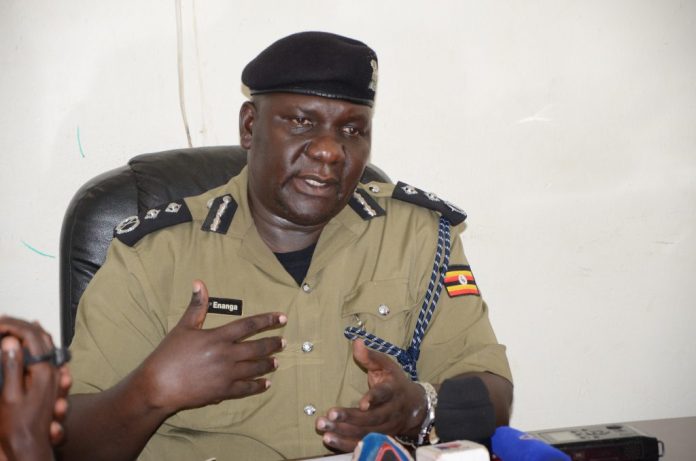
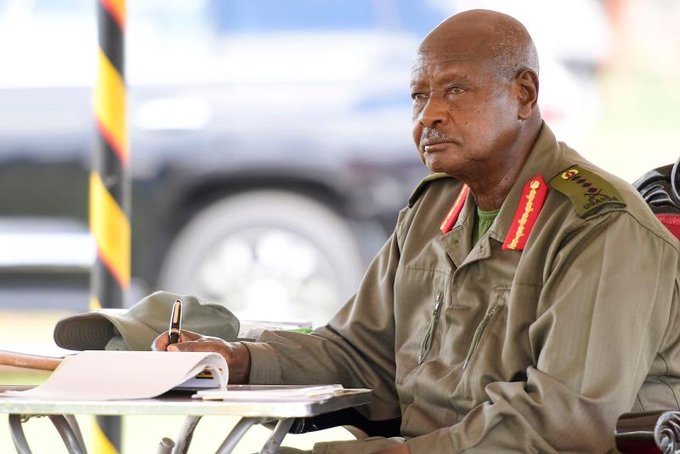
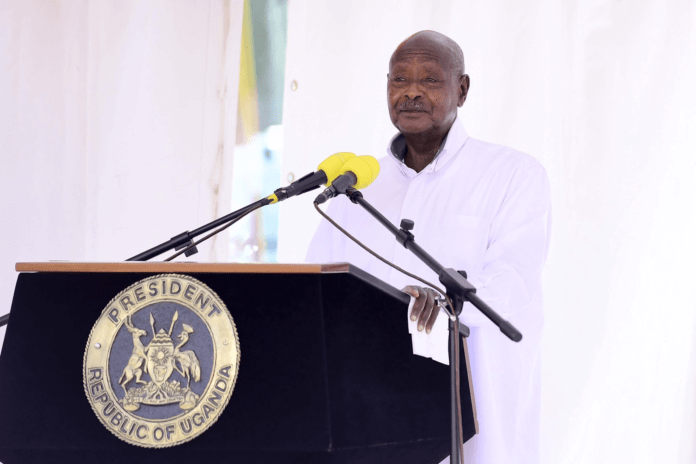
Police have nabbed the director and headteacher of Lhubiriha secondary school. Their arrest was confirmed by Fred Enanga, the police spokesperson. Over the weekend, Allied Democratic Force (ADF) attacked Mpondwe Lhubiliriha Secondary School in Nyabugando Parish, Karambi SubCounty in Kasese District. The attack led to death of 42 people including 37 students. He said 20 people have been arrested in connection with Lhubiriha secondary school attack in Kasese including the Director as well as the Headmaster of the school to help in investigations. Apart from the incident in Kasese, Enanga said other regions and territories within Uganda still remain peaceful and calm. Yesterday, President Yoweri Museveni dispatched more Uganda Peoples Defence Forces (UPDF) troops to pacify the southern mountain Rwenzori areas. Museveni said since the government of Congo allowed UPDF to operate in the country, there is no excuse in not hunting down the ADF terrorists into extinction. He urged UPDF to ensure maximum surveillance of the areas so that nobody steals fuel on which they depend on to make more bombs and other things. “We are now sending more troops into the area, south of Rwenzori Mountain and eliminating any gaps,” he said.
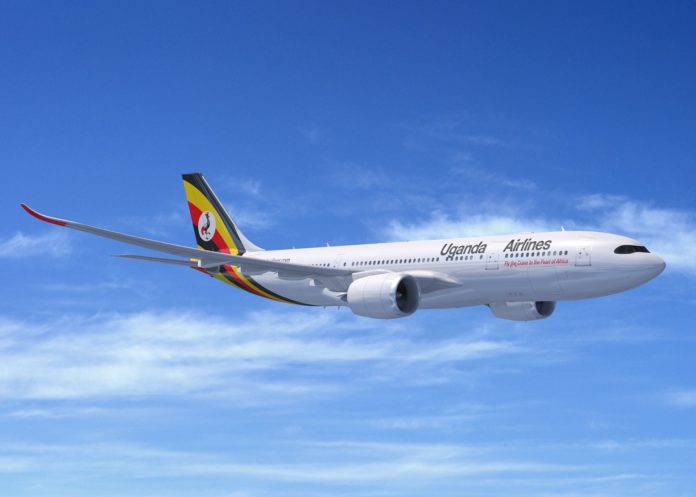
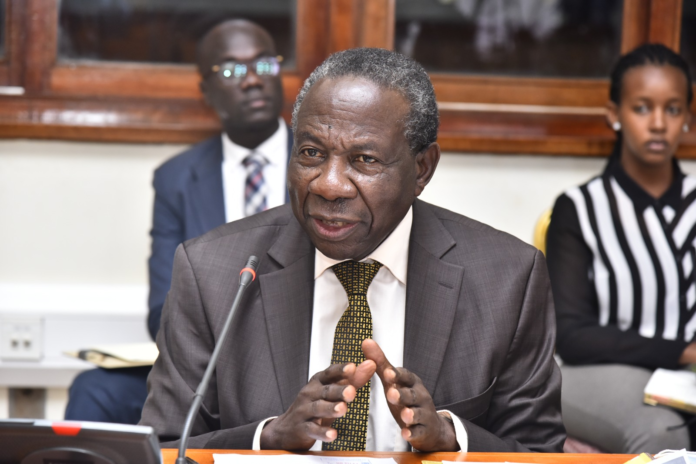
Atleast 250 Muslim pilgrims have been flown to Mecca aboard the Uganda Airlines Airbus A330. The group was flagged off by the third Deputy Prime Minister Lukia Nakadama, minister of works and transport Gen Katumba Wamala and Fred Bamweisgye, Director General of Uganda Civil Aviation Authority (UCAA). The 250 are part of the 500 pilgrims who will be transported for Hijja in Saudi Arabia. The other 250 will be flown tomorrow. This however symbolizes a significant milestone for the national carrier. The flagging off of Ugandans follows Uganda Hijja Bureau and Uganda Airlines to transport Muslim pilgrims at a fair cost. This is the first time in 40 years that the national carrier is transporting pilgrims to Mecca. “I want to thank the Ministry of Works and Transport for giving us Uganda Airlines to take our first batch of pilgrims to Mecca. I want to thank all those who have supported us as Uganda in promoting Uganda Airlines,” Nakadama said briefly before flagging off the pilgrims. Katumba Wamala said we all need to be happy that we will be able to make the pilgrimage to Mecca using the Uganda Airlines. Recently the airliner finalized its stages to introduce direct flights to London, Dubai, Guangzhou and Mumbai, from Entebbe International Airport. It is currently operating in over 10 countries all over the world. Established in May 1976, Uganda Airlines, started operations in 1977 and was liquidated in May 2001 after efforts to privatize the company failed due to massive debts it had incurred. The airliner competes with Africa’s best airline companies such as South Africa Airways, Ethiopian Airways, Kenya Airways, RwandAir and others on the continent, not forgetting International ones such as Emirates Airways, Qatar Airways and Turkish Airways among others that land at Entebbe International Airport.
Zambian gospel music artist Pompi has unveiled the ‘Pole Pole Tour’ dates to promote his latest album with Uganda being the first location on the tour. Pole Pole – Pompi’s sixth studio album will be performed live at the Alive in the Park Festival on 2nd September 2023 at the Kololo Independence Grounds in partnership with Vine Entertainment Group (VEG). The announcement was made during a virtual press conference streamed live on Vine Entertainment Group’s Facebook page during which the artist also revealed the other tour stops in Kenya, Malawi, and his home country of Zambia. While addressing the press and fans, Pompi said, “This album is a special project that has been years in the making, and I am excited for the opportunity to share it with you during this tour and listen to you sing along with me as we make a joyful noise. I look forward to seeing you all at the Kololo Independence Grounds on the 2nd of September.” The artist will perform during the second edition of Alive in the Park, which is being dubbed the “Pole Pole Edition”. Shadrack Kuteesa, the CEO of Vine Entertainment Group, said, “Alive in the Park is a coming together of friends and family to celebrate life and love through an exciting and engaging outdoor experience and wonderful music, and the Pole Pole Edition is going to be even bigger and better than last year’s edition by being part of Pompi’s tour.”
Last week, the minister of Finance Planning and Economic Development presented Shs 52 Trillion for next fiscal year 2023/24. According to the budget, Shs 2.7 Trillion will be redirect resources towards wealth creation by facilitating more Ugandans to join the money economy and accelerate the economy’s rapid expansion.Ramathan Ggoobi, the Finance Ministry Permanent Secretary/ Secretary to Treasury id government is looking to accelerate the full monetization of the economy to achieve socioeconomic transformation. Key focus areas include the effective implementation of the Parish Development Model (PDM), upgrading of infrastructure, and continued support to the private sector to access affordable capital among others. Ggoobi said during the Post Budget Dialogue which was under the theme “Managing risks, vulnerabilities that await implementation of the FY 2023/24 National Budget”. “We continue to support the private sector with access to affordable and patient capital through UDB, Agriculture Credit Facility, Small Business Recovery Fund, and Microfinance Support Centre on lending to SACCOs. A total of Shs 2.7 Trillion is available under these activities,” he stated. Other funds include the World Bank’s grant of $218m to export-oriented Small and Medium Enterprises (SMEs) and $ 217m for supporting Women-led enterprises. On infrastructure, Ggoobi said that funds have been allocated for the Standard Gauge Railway (SGR). He also said the Metre Gauge Railway is also being finalised as well as stepping up the maintenance of the existing infrastructure. “The other issue is building infrastructure such as water, reliable electricity, and roads in industrial parks such as Mbale, Kapeeka, and Buikwe. Government has also put in place deliberate efforts to support the sustainable exploration of oil resources and activities are ongoing benefitting various players in the value chain including several Ugandan contractors,” said Ggoobi. The dialogue sought to identify risks and vulnerabilities in the implementation of the Financial Year 2023/24 National Budget which include lower than anticipated tax revenues, currently standing at only 14% of GDP according to Ggoobi, rising public debt, and the associated high costs of servicing the national debt, unpredictable weather patterns, further tightening of global financial conditions, and imported inflation among others. The Absa Group Senior Economist Sub-Saharan Africa Mpho Molopyane said that Uganda’s growth will be boosted by the oil production which is estimated at 230,000 barrels per day, which is ahead of Gabon and Ghana. According to Absa Group data, key developments in Uganda’s oil and gas sector include the commissioning of the Kingfisher field oil drilling, drilling at Tilenga (expected by the end of Quarter 3, 2023, FID on the refinery (expected by mid-2023), construction licenses for EAPCOP issued among others. On inflation, Molopyane said that Uganda’s inflation is likely to continue trending lower and revert to target by Quarter 3, 2023. “Moderating grain, fertilizer, and oil prices, coupled with easing supply chain constraints and improved weather conditions, should lead to a further drop in annual inflation. At the June meeting, The Bank of Uganda’s MPC noted that while inflationary pressures have eased, the inflation outlook remains sensitive to elevated risks.” From a global perspective, the Absa Group data indicates that global growth is likely to slow for the second consecutive year, and the slowdown will be more pronounced in advanced economies. The research data furthermore indicated that oil prices are below the peak, but they are likely to remain high on production cuts. Global policy rates will likely remain high to re-anchor inflation expectations, global inflation will moderate slowly and global rates likely to remain higher for longer. Mumba Kalifungwa, Managing Director of Absa Bank Uganda applauded the Finance Ministry and Central Bank for using the fiscal and monetary tools respectively in curbing inflation. He said the Annual Headline Inflation in May 2023 declined to 6.2% from 8.0% registered in April and 10.4% registered in January 2023.
“I remain optimistic that reduced inflation will ultimately lead to a reduction of goods and services in the long run and an improvement in livelihoods. Investors are more likely to make long-term investment decisions when they can confidently predict future costs and returns. This stability encourages both domestic and foreign investment, leading to increased business activity, job creation, and economic development,” said Kalifungwa.
Economic growth
According to Norbert Kagoro, the Deloitte Uganda Country Managing Partner, Uganda’s GDP dropped by 3.4% in FYE 2019/2020 with a 5.98 decline in taxes “In the aftermath of Covid, the economy this year is projected to have grown by 5.5% compared to 4.6% last year, which was attributed to measures put in place by the Government to mitigate the impact of the pandemic on businesses and households.” To boost Agriculture, Kagoro said that in the Financial Year 2023/24, Gov’t should invest in post-harvesting and storage, agricultural mechanization, and ensure that there’s access to water for agricultural productivity. The Uganda Manufacturers Association Executive Director Ezra Muhumuza called for an integrated approach to growth by Government and Non-Governmental Organisations. He said, “Systems must work together, we can target a few with an expectation to grow the whole economy.” ‘Increase exports to boost reserves Dr. Adam Mugume, the Executive Director in charge of Research at the Bank of Uganda said Uganda’s exports have been influenced by global geopolitical tensions in Europe. “Our inability to export means we have no ability to buy dollars from the market to build our reserves. The other source of dollars is tourism,” said Mugume. Mugume said that the COMESA trading block takes 52% of Uganda’s exports with the main countries being Kenya, DRC, and South Sudan. He said that Uganda-DRC trade is $790m, formal & informal trade, North & South Sudan, export value $800m, and the war in these countries is risky enough. “In the region, the biggest risk is South Sudan and DRC. If the Sudan war was to spill over into South Sudan, to what extent would that affect our exports? Our inability to export means that we are unable to buy the dollars from the market to build the reserves,” he stated.
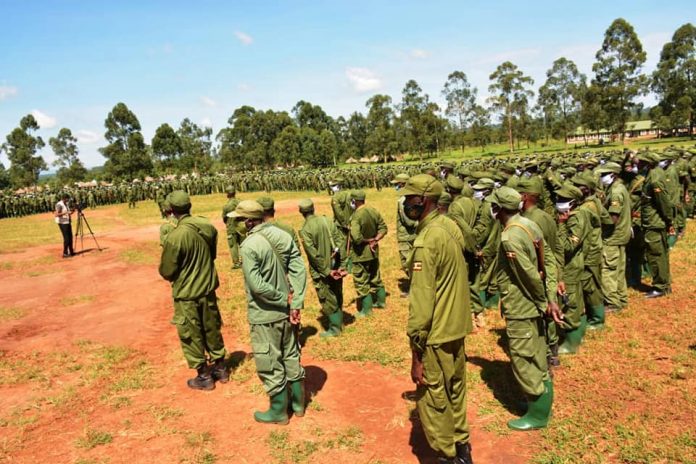
President Yoweri Museveni has dispatched more Uganda Peoples Defence Forces (UPDF) troops to pacify the southern mountain Rwenzori areas. The dispatching of soldiers followed the Allied Democratic Force (ADF) attack on Mpondwe Lhubiliriha Secondary School in Nyabugando Parish, Karambi SubCounty in Kasese District. This is a boarding school situated near the DRC border. The terrorist group is reported to have killed 42 students while five are admitted in hospital still fighting for their lives. Lhubiliriha Secondary School is a private school that was built by an NGO led by Peter Hunter, who works in both Uganda and DRC. The school has two dormitories, a girls’ dormitory and a boys’ dormitory. The boys had locked themselves in the dormitory and because these evil people could not enter they threw a petrol bomb inside the dormitory which started the fire that burnt the 17 boys. “The girls on the other hand opened their door and tried to run out but the terrorists cut them with pangas. This is how they killed the 20 girls and the 17 boys, with only five escaping,” Janet Museveni, the minister of Education and sports said over the weekend. Museveni said since the government of Congo allowed UPDF to operate in the country, there is no excuse in not hunting down the ADF terrorists into extinction. He urged UPDF to ensure maximum surveillance of the areas so that nobody steals fuel on which they depend on to make more bombs and other things. “We are now sending more troops into the area, south of Rwenzori Mountain and eliminating any gaps,” he said. Since the launch of the joint the Armed Forces of the Democratic Republic of Congo (FARDC)and UgandaPeoples’ Defence Forces (UPDF)operation in November 2021, a total 105machine guns, five light guns, three RPG tubes recovered, 508 ADFs combatants have been put out of action, 50 captured alive, 90 abductees rescued. In much2023, UPDF put 29 ADF terrorists in Ntoroko district and recovered SMGs. They invaded Uganda from Congo. Last year East African Community (EAC) Heads of State Conclave on Inter-Congolese Dialogue in April 2022 resolved to establish and deploy the East African Community regional force to pacify Eastern DRC. Uganda has contributed a battle group to that regional force to address security challenges caused by insecurities in Congo.
President Yoweri Museveni has condoled with families of those who lost their children after a terror attack on Nyabugaando Peter Hunter Secondary School in Kasese district. The President also said that the attack on innocent students was an act of desperation and cowardly which will not save the terrorists. “Condolences on the death of the 37 students of Nyabugaando Peter Hunter Secondary School at the hands of the terrorists of ADF, possibly working with other criminals because I hear that school had some wrangles about it. I extend condolences to the families and the whole country,” Museveni condoled. This new atrocity by the elements of the ADF is criminal, desperate, terrorist and futile. Since Operation Shujja started, the Congo Army and Ugandan Army have put a lot of pressure on ADF who had turned that area into their territory for almost 20 years. We have inflicted so much damage on these criminals. Before Operation Shujja, the whole area West and South of the Rwenzori Mountain, on the Congo side, was controlled by ADF, more or less, in spite of some camps of the Pro-Government Armies (Congo, UN and SADDEC). They were mining in the area, harvesting People’s cocoa and selling it as their own, collecting taxes, etc. “In their ignorance, they also thought that the forests in the area were a protection for them. However, with modern technology, Government Armies, by day and by night, can see them from above wherever they may try to hide and the more remote the forest, the better. With eyes in the sky, day and night, we would then deliver long-range artillery fire on the unsuspecting terrorists or attack them with high speed fighter bombers from Entebbe. It was devastating,” Museveni said. However, Museveni cautioned the CDF to get some of his staff to inform of the damage done to the terrorists since the operation started. As a consequence of the eyes in the sky and long-distance deadly fire, followed by infantry troops on the ground, two things have happened. In the huge area West of the Rwenzori, the terrorists have runaway to beyond the Beni-Eringeti-Komanda-Bunya Road; and the terrorists can no longer concentrate in big groups. It is safer for them to splinter into small groups which, they hope, may not be seen by our eyes. That is how their desperate, futile, criminal and terrorist schemes come in. They start imagining that if they flee Congo, re-enter Uganda, kill People that are not armed (soft targets), that action would force us to recall our Army from Congo to defend the Uganda villages and that would save them from the losses they are now suffering. That is what they tried on the 13th of December, 2022, when 51 of them entered Ntoroko with the same plan as the one of Nyabugaando yester-night-kill People etc,” he revealed. Since the Army and the People in that area were alert, 26 of them were killed, 25 were captured, 2 light machine guns, 7 IEDs were also captured and, among the captured, there was their leader, Ekyakute, a Musoga by tribe. The UPDF had, initially, concentrated on the bigger groups, west of the Rwenzori. After defeating the bigger groups, recently, they started hunting the smaller group, South of the Rwenzori Mountain, South of the Kasindi-Beni Road, in the Mwalika Valley, around Biruunga National Park inCongo, Opposite Lake Edward (Rutshuru, Butuumbi). 1½ months ago, Mulaalo, Commander of that group was killed. Earlier in April, Rubaanga, quartermaster of one of the groups, was also killed. “Their desperate, cowardly, terrorist act of attacking a school? Why not attack the detachment that was only 3 kms away? If they did that, they would be fighters –Army to Army -the way NRA was and they would not be terrorists. Their criminal and cowardly scheme would not, however, have succeeded if our People around Mpondwe were alert like the People of Ntoroko were when ADF came to that area last December 2022.Especially now that the Congo Government allowed us to operate on the Congo side also; we have no excuse in not hunting down the ADF terrorists into extinction,” he said. Museveni further urged the military officials to ensure that their eyes are in the sky and the other gadgets are working all the time, to ensure nobody steals fuel on which they (the machines) depend and all the other linkages. “We are now sending more troops into the area south of the Rwenzori Mountain and eliminating the obvious gaps. Was an alarm sounded and by whom? How were the nearby Security People,” Museveni said. Adding, “Their action, the desperate, cowardly, terrorist action, therefore, will not save them. We are bringing new forces to the Uganda side as we continue the hunting on the Congo side.”
A sport that was only available to the richest members of society in Uganda back in the 1960s, tennis has become more popular professionally and recreationally speaking for middle-class individuals to enjoy.
Go on NetBet to make bets on your favorite live tennis games, check on the bet’s status, and get the latest updates on scoring and player stats.
Uganda’s First Introduction of Wheelchair Tennis in 2019
In mid-December 2019, Uganda hosted its first wheelchair tennis event. It was the start of great changes in Uganda’s tennis culture including initiatives for handicapped talent interested in the sport. Thanks to the International Tennis Federation (ITF), the Uganda Tennis Association (UTA) received wheelchair donations for the participating players.
The project continuation was put off for a couple of years and has since then been re-initiated.
The Nation’s More Recent Wheelchair Tennis Initiative in 2022
In November 2022, UTA held different training sessions for wheelchair tennis coaches from the Lugogo Tennis Complex in Kampala. They trained the coaches so they can professionally and proficiently teach the wheelchair tennis teams the rules of play and techniques for navigating the court as wheelchair-bound players.
UTA partnered with the Kampala School for the Physically Handicapped (KSPH) to begin their first team of wheelchair tennis players. Lawrence Karanja spearheaded these training sessions to be sure everyone was on track.
The local tennis association plans to eventually form junior teams. The entity also plans to work with other schools for handicapped individuals to further spread the social initiative of making the game available for players of all physical orientations.
Uganda Tennis Association’s Strategic Plan (2022-2027)
UTA has published a strategic plan for their wheelchair tennis initiative for 2022 to 2027. The written plan outlines how they will include people from different organizations that serve disabled individuals throughout Uganda to spread the social initiative.
The ITF and UTA will continue to work closely together to enhance tennis availability for disabled and handicapped talent. Their other partnerships will include the Uganda Tourism Board, Uganda Paralympic Committee, and the Ministry for Persons With Disabilities.
UTA Makes Great Strides in Enhancing Tennis Availability for the Nation
The UTA has done more than introduce wheelchair tennis as an initiative to change the dynamic of one of the most popular sports in the nation. There are also competitions for children 12 and under hosted during the year to foster their skill and love of tennis.
Professional teen and adult players participate in J30 and other international tennis tournaments to test their tennis prowess against other professionals worldwide. In affiliation with the International Tennis Federation, Uganda is the host nation for the J30 Kampala 2023 Tennis Tournament.
Frequently Asked Questions
Here are answers to your frequently asked questions about the introduction of wheelchair tennis in Uganda.
Why did the Uganda Tennis Association choose now to introduce wheelchair tennis?
Karanja stated wheelchair tennis has been prominent for the past three decades. There are already leagues for the specialized sport in other African countries such as Eritrea and Kenya.
How is wheelchair tennis the same as traditional tennis?
Wheelchair tennis is played on the same-sized court, matching height for the nets, and identical tennis racket measurements. Hence, the setup and rules for the game are mainly the same except for the two-bounce rule.
What are the exceptions to the usual rules of the game for wheelchair tennis players?
Wheelchair tennis players are allowed two bounces of the ball before they have to pass it back to their opponent. In contrast, non-wheelchair-bound tennis players are only allowed one ball bounce before it must be passed back to their opponent.
The Future Of Wheelchair Tennis for Uganda
There is more to come as teams are finalized for wheelchair tennis competitions in Uganda. Check back for updates!
At least 25 students have been confirmed dead as suspected rebels raided Rubiriha Secondary school at Mponde in Kasese in Western Uganda.
According to police, the suspected rebels attacked the school around mid-night killing 25 students, abducted over 30 and leaving over 10 in critical conditions.
“We registered a terrorist attack by the ADF rebels on Rubiriha Secondary School, in Mponde that is located about 2 kilometers from the Democratic Republic of Congo border. A dormitory was burnt and a food stored was robed. Bodies of the dead have been recovered and transferred to Bwera Hospital” Fred Enanga, the Police publicist said.
Kasese and Rwenzori sub-region has previously suffered raids and attacks by Allied Democratic Forces rebels. Previous incidents registered include the 1998 Kichwamba attack that left over 80 students in Kabarole district dead and a host of others in Ntoroko, Bundibugyo and Kasese districts.
According to Enanga, Uganda Peoples Defence Forces (UPDF) and police are pursuing the rebels in Virunga area.
President Yoweri Museveni has promoted 1638 gazetted police officers to the ranks of Senior Commissioner of Police, Commissioner of Police, and Assistant Commissioner of Police, Senior Superintendent of Police, Superintendent of Police and Assistant Superintendent of Police.
Gen Kahinda Otafiire, the Internal Affairs Minister announced the promotion of the officers in his capacity as the chairperson of the Police Authority. “Powers vested in the President under section 9(1) of the Police Act Cap. 303, and on advice of the Uganda Police Authority, His Excellency the President has appointed 1638 gazetted police officers on probation,” Otafiire said.
400 officers have been promoted from the rank of Inspector of Police (IP) to Assistant Superintendent of Police (ASP).
976 officers have been promoted from Assistant Superintendent of Police (ASP) to Superintendent of Police (SP)
Others include 37 from Senior Superintendent of Police (SSP) to Assistant Commissioners of Police (ACP), 09 officers from Commissioners of Police to Senior Commissioners of Police, 200 from Superintendent of Police to Senior Superintendent and 17 Assistant Commissioners of Police to Commissioners of Police
The revelation comes shortly after 9312 subordinate officers were promoted a few weeks ago.
Dr Brian Isabirye, the Commissioner of Renewable Energy Department.
KAMPALA-Stakeholders of the Renewable Energy Sector in Uganda have taken a step ahead to embrace the mini grids tariff modelling to enable the supply of renewable energies to small, localized groups of people in Uganda.
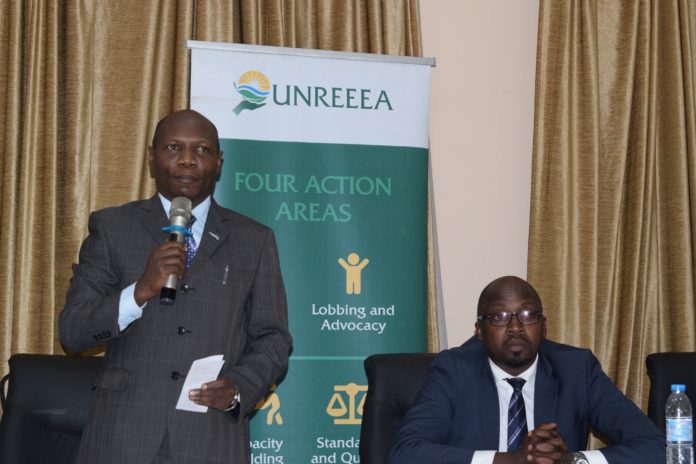
Dr Brian Isabirye, the Commissioner of Renewable Energy Department, in the Ministry of Energy and Mineral Development, while speaking during the Mini-Grids Tariff Modelling and Viability Assessment workshop on Wednesday in Kampala, applauds the stakeholders for venturing into the mini grids, hoping that this will increase the supply of renewable energies to the people where main grids have not managed to access.
“The training is a critical one because it attempts to give the capacity to human man-power. I therefore, ask you trainees to extend the skills and knowledge to the rest of the parts of this nation”. Dr Isabirye said.
Bernard Mbaine, the Chief Executive Officer of Uganda National Renewable Energy and Energy Efficiency Alliance-UNREEEA, revealed that the workshop intended to build capacity of stakeholders to have the required knowledge to model the tariff and determine viability of the mini grids.
According to Mr. Mbaine, in mini grids project, most developers have always complained that mini grids are not a viable business and these issues raises from lack of enough capacity or knowledge to be able to assess the viability of mini grids, but also to do the modeling to arrive at the tariff which is fair for the developers and users that is acceptable by the regulator.
A mini-grid is a set of small-scale renewable energy generation interconnected to a distribution network that supplies renewable energies to a small, localized group of customers. It usually operates independently from the national transmission grid.
A quick google search shows that it is advantageous that the mini grids tariff model can provide high-quality uninterrupted electricity to nearly half a billion people in unpowered or underserved communities and be a least-cost solution to close the energy access gap by 2030.
Mini-grid energy generation technologies can include diesel generators, hydropower systems, solar photovoltaic (PV) modules, wind turbines, biomass -powered generators and geothermal -powered generators. A mini-grid may use a single energy source or mix of sources (hybrid) that are either renewable or nonrenewable.
In the Energy Policy 2002, the government of Uganda places specific emphasis on the electricity supply industry, firstly; by seeking to make the power sub-sector financially viable and able to perform without subsidies from the government budget.
A participant who liked to be anonymous, a student of Renewable Energy at Makerere university explained that Uganda has abundant energy resources, especially renewable resources, yet there is widespread energy poverty throughout the country. “The country’s energy sector faces considerable challenges including high costs for renewable energy technologies, rising international oil prices and an increased demand for power”.
He argues that Uganda has many renewable energy resources that can be used for energy production and the provision of energy services. These resources include bioenergy, through biomass and biogas, water/ hydro, solar, geothermal and wind energy potential, adding that unfortunately, many of these resources are yet untapped.
The participants testify that the workshop has set the stage for bridging the gap between mini-grid developers and regulators, fostering a business-friendly atmosphere to promote distributed Renewable Energies
The training attracted people from various bodies like the regulator (Electricity Regulatory Authority-ERA), ministry of Energy and Mineral Development, ministry of Water and Environment (policy makers), private sector-the mini grids developer, development partners (GIZ) among other bodies.
Over thirty-five (35) Participants were trained by the co-organizers of UNREEEA, the Sustainable Energy for All, an international organization based in Australia.