Stanbic Bank
Stanbic Bank
26.3 C
Kampala
Stanbic Bank
Stanbic Bank
Home Blog Page 370

WHO, KOICA hands over medical equipment to improve service delivery in the Busoga sub-region

State Minister for Health, Margaret Muhanga together with WHO, KOICA official and a local politician handover medical supplies to Busoga.

Ministry of Health today has received from the World Health Organization and the Korea International Cooperation Agency a package of medical equipment designed to improve reproductive, maternal, and newborn, child, and adolescent health (RMNCAH) service delivery in five districts of the Busoga sub-region.

With funding from KOICA through WHO, the medical equipment worth 1.5 million United States Dollars is intended to equip 30 health facilities in the targeted districts of Bugiri, Buyende, Kamuli, Iganga, and Mayuge. The equipment includes 30 solar lighting systems, 30 solar vaccine refrigerators and water pack freezers, 90 stove top sterilizers, 90 resuscitators for adult, child, and neonatal sets, 90 normal delivery sets, 90 digital baby scales, 90 infant weighing scales, 90 Delivery Beds, 90 Wheelchairs, 90 Examination Beds and 90 Oxygen Concentrators.

“I welcome the support of the Government of the Republic of Korea and the people of Korea, KOICA, and WHO in procuring this essential medical equipment, as they will strengthen our effort to end preventable maternal, newborn, child, and adolescent deaths in the country,” said Hon. Margaret Muhanga, Uganda’s Minister of State for Health in charge of Primary Health Care.

Echoing the same appreciation, Dr Yonas Tegegn Woldemariam, the WHO Representative to Uganda said that “the provision of these medical supplies is in line with our vision to improve the country’s health system to meet the needs of its population.” He expressed gratitude for the partnership with the Republic of Korea, KOICA, and the Ugandan government as he underlined WHO’s commitment to supporting Uganda’s health system.

His Excellency, Park Sung-Soo, the Korean Ambassador in Uganda, reiterated his government’s commitment to supporting Uganda’s health sector noting that “through KOICA, the Government of Korea is committed to contributing to the achievement of the Ministry of Health’s vision of ending preventable maternal new-born, child, and adolescent deaths by improving the health infrastructure, supporting capacity building of health workers and enhancing school health.”

The consignment of medical equipment being handed over today has been procured under the project – Health System Strengthening for Improving RMNCAH service delivery. The project has been implemented since 2020 in five districts of the Busoga sub-region including Bugiri, Buyende, Iganga, Kamuli, and Mayuge.

Under this project, WHO and KOICA procured seven ambulances that have improved the referrals of patients. Working with the Ministry of Health, they have also built the capacities of over 1500 health workers to provide quality reproductive, maternal, neonatal, child, and adolescent health services.

Moving forward, the Government of Korea through KOICA and WHO will embark on the refurbishment of 30 health facilities by renovating some sections, improving water harvesting systems, and installing motorized boreholes.

Stories Continues after ad

Peter Mayiga retains ‘Katikkiro’ position as Kabaka reshuffles Buganda cabinet

Kabaka Ronald Muwenda Mutebi has made a reshuffle in the Buganda cabinet; Charles Peter Mayiga has retained his position as the Kingdom’s Prime minister (Katikkiro).

In the same reshuffle, Twaha Kaawaase remains the first deputy premier and the minister for administration and ICT in Buganda while Robert Waggwa Nsibirwa is the second deputy premier and also minister for finance in the Mengo government.

Patrick Luwaga Mugumbule has also retained his position as the speaker of the Lukiiko, the Buganda parliament with Ahmed Lwasa as his deputy whereas Christopher Bwanika has also retained his position as the Buganda Attorney General.

Noah Kiyimba, David F.K Mpanga, and Joseph Kawuki have retained their positions as the ministers for cabinet, lands and properties, and local government respectively.

Cotilda Nakate Kikomeko who has been serving as the chairperson of Buganda Kingdom Education Committee is now the minister in charge of social services and office of the Nnabagereka to replace Dr. Prosperous Nankindu Kavuma.

Mariam Nkalubo has maintained her position as the minister for self-help, environment, water and gender, the same as Israel Kazibwe and Robert Sserwanga as the ministers for information and mobilization and youths and sports.

Cotilda Nakate Kikomeko and Anthony Wamala have joined the Buganda cabinet  as the minister in charge of social services and office of the Nnabagereka  and heritage, palaces, tombs , tourism and security.

Anthony Wamala is the principal for Buganda Royal Institute of Business and Technical Education in Mengo, an institute owned by Buganda.

He is credited for having helped the institute grow into one of the best vocational institutions in the country.

Henry Ssekabembe Kiberu who has been the minister for youth, sports and recreation as well as Dr. Prosperous Nankindu Kavuma who has been in charge of social services have dropped from cabinet.

David Kyewalabye Male who has been the minister for culture, tourism and palaces has not returned to the Buganda cabinet after asking to retire from service.

The Kabaka has also created a new ministry in charge of mobilization and it falls under the Kabaka’s spokesperson.

The changes have seen Noah Kiyimba gets another responsibility to add onto what he previously had and will now be the minister in charge of cabinet, lukiiko(parliament) and protocol and other affairs in the office of the Katikkiro whereas Joseph Kawuki who has been the state minister for local government has been elevated to a full minister in the same docket.

Hajji Amisi Kakomo who has been the state minister for agriculture, markets and cooperatives is now elevated to a full minister in the same docket which has been elevated to a ministry away from the ministry of lands where it previously fell under.

Stories Continues after ad

Gov’t lowers the cost of internet

National Information Technology Authority (NITA) Uganda has reduced the cost of internet provision through the National Backbone Infrastructure (NBI) project from $70 (Shs 254,167) to $35 (Shs 127,083) for each Megabit per Second (Mbps). The revelation was made by Dr. Hatwib Mugasa, the Executive Director of NITA-Uganda.


In the financial year 2006/2007, the Government of Uganda through the Ministry of ICT secured funding towards the implementation of the National Data Transmission Backbone Infrastructure and e-Government Infrastructure (NBI/EGI) Project. The project aimed at providing connectivity to Government Ministries and Departments in the country.
Since then, NITA-Uganda has connected 1,466 government offices, extended connectivity to 53 Districts and 10 border posts.


According to Dr. Mugasa, from the FY 2017/2018 has maintained a steady rate of $70 for each Mbps of Internet following a competitive market analysis against the average market rate which is currently at $ 84 (Shs 305,001).
“In a bid to deepen e-services usage and absorption while lowering government expenditure, we have reduced the cost of internet provision through the NBI from $70 to $35 for each Mbps,” he said.
He stated that NITA-Uganda is committed to further low bandwidth costs, deepen digitization, and accelerate e-services usage while at the same time lowering government expenditure through shared IT services like Internet and centralized hosting.
“We have been working hard to consistently lower the cost of internet bandwidth in Uganda especially for Government institutions since they provide onward services to ordinary citizens and the private sector. We are happy that we have maintained our long-term plans to lower bandwidth prices,” he said.

Stories Continues after ad

Police arrest road rage murder suspect 

Police in Kampala have charged to court, one Menya Moses a suspect in connection with a road rage related murder, which occurred on July 15, 2023 at around 12.30pm in Kironde Zone, Kabowa, Lubaga division.

Fred Enanga, Police Spokesperson said that a one Reagan Ssentongo alias Abtex, while travelling with other mourners for burial in a taxi, got involved in a minor accident with a boda-boda rider, called Wasswa, who was transporting a female passenger before an argument ensued between the boda-boda rider, and the taxi driver, who was joined by the occupants in the taxi.

“Shortly after, Ssentongo, (a taxi passenger), came out of the taxi, and aggressively pushed Wasswa, the boda-boda rider, who hit his head on the road, and collapsed. This prompted one Teopista, the boda-boda passenger, to raise an alarm, where she claimed the rider had died.”

“Several responders and angry residents from the Kisenyi metal yard started chasing Reagan Ssentongo, who fled from the scene. They found when he had been arrested by PC Baluku, whom they overpowered, and grabbed the suspect, Ssentongo. They took him to Kisenyi metal yard LCI offices while beating him. The suspect who sustained critical injuries was eventually handed over to police of Ndeeba and rushed to Mulago Hospital where he was admitted. He unfortunately succumbed to the injuries on 23.07.2023 at Kirudu Hospital, where he was undergoing treatment,” he added.

His relatives retrieved the body and marched in protest in Kisenyi, before dumping the body at the railway line. The body was removed by police and transported to Mulago City Mortuary, for post mortem.

Enanga strongly condemned such blatant acts of impunity and lawlessness that cost the life of a citizen. The suspect behaved aggressively and there is no justification for his behaviour, which devastated the family of the deceased.

“We hope this case serves as a reminder of the dangers of road rage. And how those who behave in ways that endangers the lives of other motorists on the road, shall always be arrested and prosecuted to the full extent of the law,” Enanga urged.

Stories Continues after ad

UPDF contingent disposes unexploded ordinances in eastern DRC

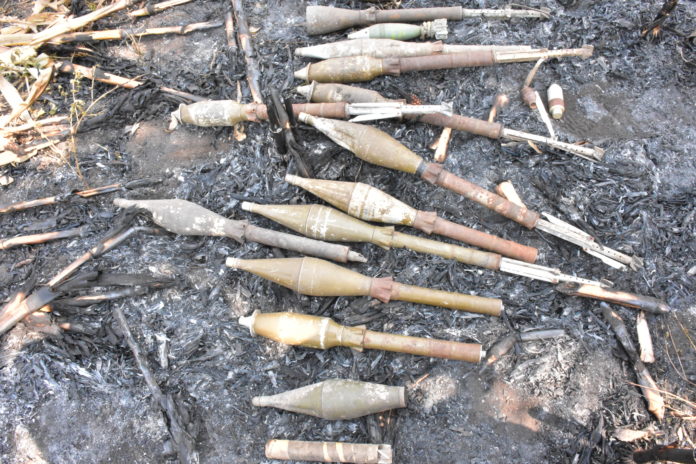
The Explosive Ordnance Disposal (EOD) Team under the Field Engineering Unit of the Uganda Peoples’ Defence Forces Contingent serving under the East African Community Regional Force has safely disposed 18 pieces of assorted unexploded ordinances ranging from rocket propelled grenade (RPG) bombs, main battle tank bombs, anti-tank bombs, 82 millimeter recoilless bombs, bomb fuses, hand grenade and assorted live ammunition of assault rifle weapons from several plantations, fields and bushes within the villages of Mabenga.

The Commanding Officer of the 9th battalion, Lieutenant Colonel Samuel Mawanda Lubega said that since the UPDF Contingent occupied the general areas of Mabenga, peace and calmness has been restored and as a result, the civilians have gone back to cultivate their fields but are faced with a challenge of unexploded ordinances left behind as a result of previous wars.

Lt. Col. Lubega said UPDF Contingent has the obligation of protecting the wanainchi against the dangers of the unexploded ordinances adding that some of the bombs were still functional and pose a great danger to human lives and animals if tampered with.

The UPDF EOD Field Engineering Commander Major Julius Aine said that the community heeded to their advice about the management of the explosives and advised the community to be vigilant and careful when dealing with unknown materials because the bombs are deadly and can cause death once they explode.

Farmers from Mabenga lauded the UPDF EACRF Contingent for the efforts towards removing the ordinances. They called upon EACRF and partners to come to their rescue and rid the general areas of North Kivu because their lives depend on agriculture and animal husbandry.

Mabenga is 37 kilometers from Rutshuru-Kiwanja town center. It is one of the food producing areas of North Kivu where food and cash crops ranging from maize, soya, beans, cassava and sorghum are produced to sustain the population of not only Rutshuru territory but North Kivu and beyond.

Stories Continues after ad

Mulago officials on spot over defying financial regulations

Officials from Mulago Women Hospital.

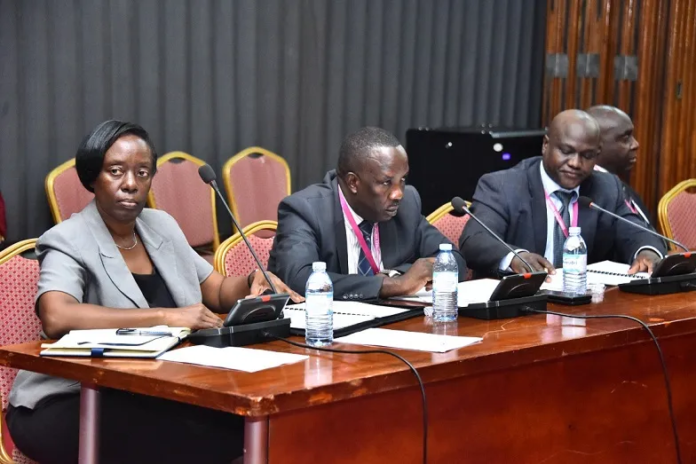
Officials from Mulago Specialised Women and Neonatal Hospital have been tasked to explain why they were issued with letters of credit from Bank of Uganda worth Shs4.07 billion despite the closure of the financial year.

While interfacing with the officials on Monday July 31, 2023, Members of Parliament on the Public Accounts Committee (Central Government) wondered why the letters of credit were issued on July 22, 2022 after the closure of the 2021/2022 Financial Year.

The officials led by the Executive Director, Dr. Evelyn Nabunya appeared before the committee to respond to audit queries raised by the Auditor General.

According to the Auditor General, the letters of credit were issued for the procurement of specialised medical equipment (Shs3.4 billion), an ambulance (Shs390 million) and a pick-up vehicle (Shs208.9 million).

Xavier Kyooma (NRM, Ibanda County North) observed that the money budgeted for vehicles were released but not all the vehicles were bought in the year under question.

“If money has been budgeted for and it is not spent, it is supposed to be sent back to the Consolidated Fund. Why did you have to get these letters of credit if you had not spent the money by the end of the financial year?” Kyooma asked.

Mubiru Muhammad, the Principal Hospital Administrator said the letters of credit were issued since the procurement process was ongoing by the time the financial year closed.

“The procurement process for these items had not been completed by the yearend and at the time of the audit. The money for these purchases was transferred to the Bank of Uganda to be paid when the items were delivered,” Mubiru said.

Nabunya said that there were procurement delays for the vehicles, due to changes in specifications required by the hospital.

“We initially planned for an ambulance that had a small capacity but we discovered that it would not meet the specialised service needs offered by the hospital. We then applied for new approval of an ambulance that was of a higher capacity,” she said.

Nabunya added that funds were not enough to purchase the vehicles in the year under audit due to increased prices attributed to #Covid-19.

Stories Continues after ad

Kabaka scoffs at labour externalisation of Ugandans

Kabaka 30th Coronation held in Bulange today.

Kabaka Ronald Muwenda Mutebi II has warned of the continuous labour externalization of Ugandans into Arab countries. Kabaka said this during his 30th coronation anniversary which was held at Bulange, Mengo.

Currently there are over 150,000 Ugandan migrant workers in Saudi Arabia, 140,000 in UAE and other countries. Most Ugandans are employed in the informal sector as housemaids, gardeners, cargo handlers and other jobs.

As of June, last year, there were 235 licensed private recruitment companies. Every two years, each company pays Shs2 million in license fees. Annually, the government collects $ 1.3 billion globally from labour export business the Middle East alone sends in $700 million.

The government collects $30 (Shs110,000) job order fees for each permanent worker. That money is wired directly to the Uganda Revenue Authority accounts. From August 2021 to August 2022, the government collected over Shs12 billion from Job orders.

Kabaka said labour export is good however Ugandans have been trafficked, treated like slaves and many have since lost their lives.

“People export our brothers and sisters are not good people and they don’t wish them well,” Kabaka said

From 2019 to date, Uganda has registered 88 deaths of migrant workers, according to the Gender ministry. Of these, Saudi Arabia has the highest number at 69.  On work-related injuries, only seven have been registered since 2019 in Saudi Arabia (five) and Iraq (two).

Kabaka stated the kingdom was restored and they love however there are people who don’t like and therefore everyone should be alert to defend it whenever there is need.

He asked the government of Uganda to reconsider allowing youth to carry out fishing and the various landing sites.

During the celebrations Katikkiro Charles Peter Mayiga said; “I recognise all the work done by the different Katikkiros who have held offices before me. I recognize the contributions of the ministers, members of the royal family and the descendants of the royal lineage, clan mates, and members of the kingdom’s Grand Council to chiefs and all Kingdom officials and employees for their tremendous efforts towards the rebuilding of our kingdom in the last 30 years.”

He said we have witnessed the monumental developments and challenges within the kingdom since his coronation 30 years ago today. our heritage has been brought to the fore. It has been promoted, has taken center stage in the lives of the people and a significant portion of our lands and properties have been restituted back to the owners, the Kabaka and the kingdom.

During his reign, Mayiga said health and education have been prioritized, companies and agencies have been established to ensure delivery of essential services and have offered employment to a sizable number of especially the youth and youth development programs aimed at poverty reduction have been initiated.

Stories Continues after ad

UPDF, ATMIS Commanders resolve to withdraw troops from Somalia 

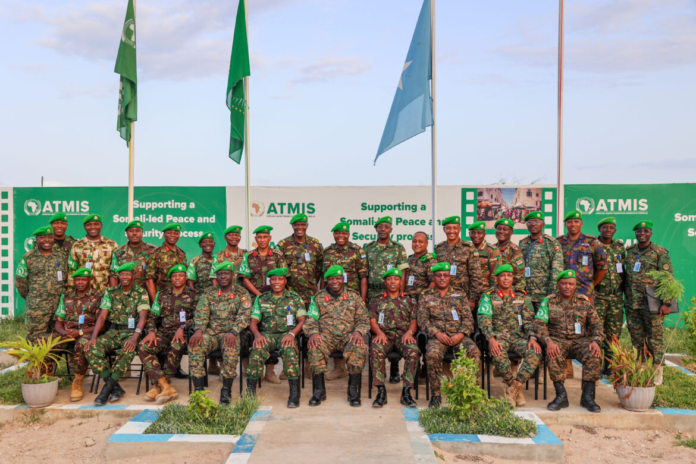
Top military commanders of the African Union Transition Mission in Somalia (ATMIS) have concluded a four-day meeting to evaluate the first phase of ATMIS troop withdrawal from Somalia, which was successfully implemented in June.

The meeting held in Somalia’s capital Mogadishu, was attended by contingent commanders of the five troop contributing countries; Kenya, Uganda, Djibouti, Ethiopia and Burundi. It was chaired by ATMIS Force Commander Lt. Gen. Sam Okiding.

“We discussed a wide range of issues, including the general security situation and the threats posed by Al-Shabaab and came up with resolutions to be implemented by the respective sector commanders,” said Lt. Gen. Okiding at the end of the meeting on Saturday.

ATMIS withdrew 2000 soldiers from Somalia at the end of June and handed over six Forward Operating Bases (FOBs) to the Somali Security Forces (SSF) in line with the UN Security Council Resolutions 2628, 2670 and 2687.

“We also discussed the transition in detail, mainly phase one drawdown and its impact as well as our capacity and capabilities for subsequent operations,” added Lt. Gen. Okiding.

The meeting conducted under the theme, “Enhancing Synergy Towards Implementation of ATMIS CONOPS,” also discussed the upcoming phase two withdrawal of 3000 ATMIS troops, which is expected to be completed by the end of September.

Under phase two, the commanders deliberated on the FOBs to be handed over to the Federal Government of Somalia (FGS) and their security implications.

ATMIS Deputy Force Commander in charge of Support and Logistics Maj. Gen. Peter Kimani Muteti, who spoke at the opening of the meeting on Wednesday, described the conference as timely and key to fulfilling the Mission’s mandate ahead of its exit from Somalia in December 2024.

“The key components of our mandate include degrading Al-Shabaab, protecting civilians, ensuring that we give access to and escorts to humanitarian assistance, mentoring Somali Security Forces and also supporting the stabilization process,” said Maj. Gen. Muteti.

He encouraged the sector commanders to continue fulfilling the ATMIS mandate of securing Somalia both in individual and joint military operations.

ATMIS and SSF are currently planning the second phase of the joint military operations against Al-Shabaab following the completion of the first phase, which liberated chunks of territory in central and southern Somalia that were under the control of terrorist group.

ATMIS’s Deputy Force Commander in charge of Operations and Plans, Maj. Gen. Marius Ngendabanka, underscored the importance of conducting an assessment of the security implications of the first phase of ATMIS troop withdrawal.

“We must assess the first phase of the drawdown, its implications on security, humanitarian, the political situation and other fields, the challenges encountered and analyse how we can effectively conduct the second phase of the drawdown,” he said.

The sector commanders meeting is held after every four months to plan the Mission’s security priorities in implementation of the Concept of Operations (CONOPS), a document that alongside the Somali Transition Plan, provides a roadmap on military operations against the Al-Shabaab and the gradual transfer of security responsibilities to SSF.

Stories Continues after ad

Museveni to compensate over 500 people displaced in 1981-1986 Bush war

President Museveni.

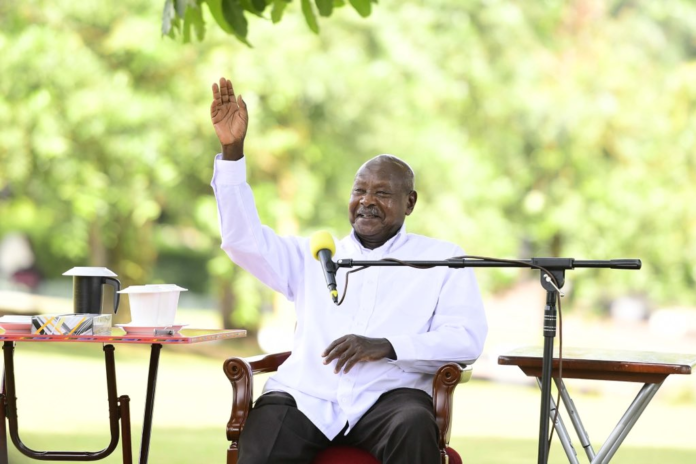
President Yoweri Museveni has pledged to compensate more than 500 people who were displaced from Buikwe District during the 1981-1986 war.

In a statement issued to Attorney General Kiryowa Kiwanuka, the President said the victims will be compensated with Shs58,262,772,995 billion since getting back the original bibanja may cause more problems.

“I have seen two letters written on the of April 2, 2013 and on the August 5,, 2014, by Harriet Nankabirwa (Kimyaso), our chairperson in Buikwe, regarding the Badaama (Jopadhola) and other UPC supporters that ran away from their bibanja in the bush war of 1981-86. Although I do not have details, I am aware of that phenomenon. I heard about it in the Semuto area,” read part of Museveni’s letter.

 “I therefore, direct you to engage their association headed by Oryuk so that you solve their problem. These people were peasants caught up in conflicts caused by the elites. Even if the individuals were involved in the anti-people activities, their families may be innocent. Moreover, the ones that made the criminal mistakes can be prosecuted. However, that should not be mixed-up with family wealth,” Museveni directed.

Buikwe District is part of the greater Mukono District that was part of the areas affected by the 1981-85 Luwero triangle war that brought Museveni to part after the downfall of Tito Okello short lived regime.

Stories Continues after ad

Uganda, Kenya to resume construction of Standard Gauge Railway

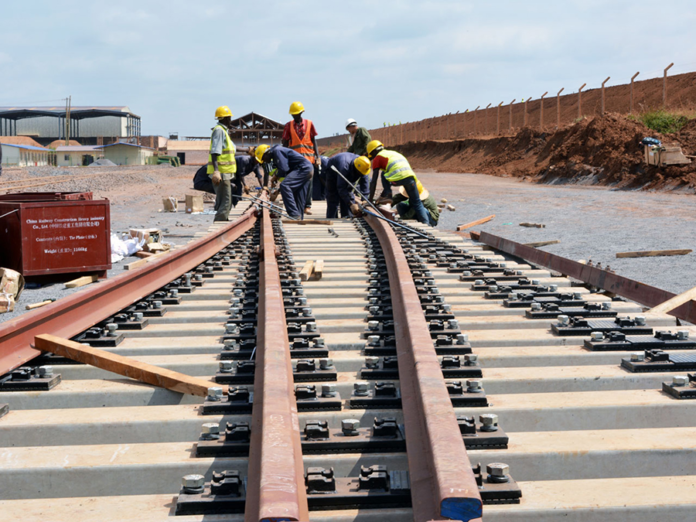
Uganda and Kenya have agreed to work together and avail funding for the building of the Standard Gauge Railway (SGR), which has stalled on the side of Uganda over lack of funds.

In a joint statement issued on Friday, Uganda’s Works Minister Gen Katumba Wamala, and Kenya’s Roads minister Kipchumba Murkomen said they will work together to extend SGR from Naivasha in Kenya to Malaba border. From there, Uganda will extend SGR from Malaba to Kampala.

“In the agreement, Uganda has committed to ensure that SGR is extended to the border with Rwanda, South Sudan and DRC Congo as soon as possible to further improve viability and attractiveness for financing of the SGR along the Northern Corridor,” Mr Murkomen said.

Kenya, Uganda, Rwanda and South Sudan – launched the construction of SGR in 2014 as part of the Northern Corridor infrastructure project. While Kenya constructed its part from Mombasa to Nairobi, the extension to Malaba border did not take off. The side of Uganda has also not taken off ever since due to funding gaps for which $2.2 billion (about Shs8 trillion) is required.

The two leaders said their countries commit to undertake the SGR extension project as a regional project under the Northern Corridor Integration Projects Initiative. The leaders also agreed to build dry ports and industrial parks along the rail routes to improve the viability and attractiveness of the project.

In May this year, the Uganda government got funding from a commercial bank and contracted a Turkish company to carry out the SGR construction.

The Turkish company will construct a 273-kilometre (170-mile) SGR from Malaba to Kampala.

Currently, the government is compensating people and also relocating them from the areas where the railway is to be passing so that the contractors are not delayed when works start.

Uganda is also rehabilitating the metre gauge railway between Malaba and Kampala City.

Stories Continues after ad