Stanbic Bank
Stanbic Bank
26.3 C
Kampala
Stanbic Bank
Stanbic Bank
Home Blog Page 369

Letter to all AU heads of state, gov’t and AUC Chairperson

Writer of the article David Matsanga.

I hope this letter finds AU, AUC in good health and high spirits. I write to AU, AUC today with a deep sense of concern and urgency regarding the impending chaos in the Sahel region in general. 

2. As an African and one who stands for peace and arbiter of truth, I hold a tremendous responsibility in safeguarding the peace principles upon which our continent, was built. 

3. My Pan African spirit will not fade away until Africa and AUC are fully liberated from the fangs of French colonial policy. The death of Gaddafi left a huge deficit on the continent. We seem to have lost the stamina to speak with one voice. Each state is speaking in its own language different from that of UNITY.

4. The chaos created by military coups in that region has the potential to shape the worst course of direction for OUR African Union (AU) and the very existence of our beloved Africa. We at crossroads as of now with nobody to help up but ourselves to RESCUE our organization from the FOREIGN CAPTURE 

5. The eyes of most Africans and indeed the entire world are upon AUC, to deliver Africa from the current stalemate FINDS itself in. It is imperative that AU rises above any external influences, biases, or pressures that may seek to compromise the integrity of African Union (AU).

7. Africa is at a critical juncture as its electoral and democratic journeys seem

to be shaky and overwhelmed by deficit of TRUST. The element of trust and confidence in most African elections has diminished. It calls for more education on the differences between elections and democracy.

8. It sad that the above factors are absent in our Elections and institutions in Africa. The lack of trust and lack of confidence in electoral institutions have reversed the democratic space we had after the coups of 1960s&70s where military coups were Africa’s flagship. 

9. We are sinking at a fastest speed. If we are not careful in 5 years to come almost all AU states will have coups. There is no election in Africa today that ends well apart from South African and Tanzanian systems. What are the causes of the violence during and after elections.

10. Almost all elections held in Africa in the last 10 years and especially in West African states have deficit crisis where peoples will have been undermined by those who supervise these elections. This has had the potential to invite the army and ignite civil unrest in most countries.

11. The erosion of credibility in electoral institutions, has plunged most nations into chaos and the armies have moved in. The consequences of such a scenario would be catastrophic and have led to the loss of innocent lives and destruction of property.

12. The AU has watched haplessly while our African countries one by one end up with people on the streets or the army knocking on the doors of Presidential Palaces. Africa has become a fractured society from which recovery may be arduous, if not impossible.

13. AU Peace, Political and Security commissions have become morimbund and failed to act as impartial arbiters in election monitor &observation missions in Africa but instead copy pasted the familiar statement that is read in all elections in Africa. There are no early warning signals about coups or violence by the AUC.

14. The AU Charter demands that AUC remain steadfast in upholding the principles of, fairness, and transparency. In doing so, AU and AUC will ensure that democracy in Africa remains intact, and the flame of hope continues to burn brightly in the hearts of every African.

15. AUC Chairperson must remember that history will judge you not only for the legacy you leave but what you have delivered and also for the repercussions it creates afterwards. The people of Africa have placed their faith in the AU, AUC trusting that TWO will be the guardians of truth but you have let them down.

16.  I implore you to look at the far-reaching negative effects of militarism that is destroying the unwavering integrity of our hopeful masses .AU has been captured and is not able to take decisions on its own. 

17. Let us look at Sudan, it is still burning since 15 April 2023 and very little efforts have been put across to resolve the crisis. Libya remains divided into two by France and there are no efforts to reunite it. General Khalifa Hafta remains a hired mercenary in the region whose rebel troops killed General Idris Derby in cold blood. 

18. The type of sanctions you imposed on Chad where AUC Chairperson was born were not the same as those imposed on other states where coups have happened. These types of double standards have opened AU to ridicule to the extent that the Generals in Sudan prefer dealing with the Arabs across the Red Sea than dealing with AU or IGAD.

19. How then does Africa get out of this mess? I suggest you resign and concentrate on building your capacity to become the President of Chad after the sad and mysterious death of my friend Idris Derby in cold blood at the hands of General Haft’s trained men in South Libya.

20. What is wrong with Africa? The answer is here. The CONSTITUTIONS of almost all the countries are COPY & PASTE from USA of the type of WESTMINISTER ABBEY SYSTEMS which leads to the CHAOS we have today.

21. Why should African countries hold expensive ELECTIONS then CHALLENGE the same ELECTION RESULTS in a SUPREME COURT? It is here Where FEW Judges decide the FATE of an EXPENSIVE ELECTION? This is one of root causes that African GOVERNMENTS must heal.

22. Finally let us RECAPTURE our AU, and AUC institutions that have been CAPTURED by FRANCE and other FOREIGN AGENCIES.

Thanking you in Advance 

Yours truly 

Dr. David Nyekorach -Matsanga 

 Founder& Chairman Pan African Forum Ltd

6.08.2023 

Surrey 

London United Kingdom.

Stories Continues after ad

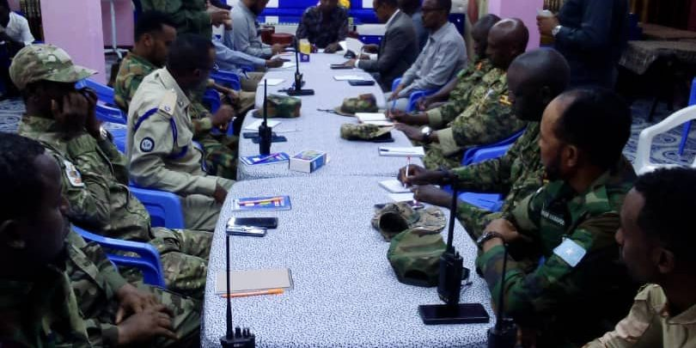
UPDF emphasizes information sharing and cohesion among security forces to fight Al-Shabaab

Lieutenant Colonel Hannington Kigula, ATMIS Commanding Officer of Uganda Peoples Defence Forces (UPDF) 41 Battalion has emphasized the importance of proper information sharing and cohesion among security forces. He made the call during the Barawe District security meeting held at Hotel Abu.

He noted that without the two elements, Al-Shabaab can exploit the opportunity to infiltrate and cause mayhem to innocent civilians.

“As ATMIS we are ready to work and cooperate with all stakeholders as mandated in order to create peace and stability in Somalia” Col Kigula noted.

At the same event, the South West Federal State Minister for Security, Hassan Abdikadir Mohammed, called upon security forces to unite in order to degrade Al-Shabaab and reminded the security forces to always consult the Somali Constitution which spells out the roles of the Armed Forces of Somalia.

“Unity is strength and key to flush out Al-Shabaab. Let the Constitution be your guiding principle as you are obliged to protect it,” said Minister Abdikadir.

He further urged Somali Security Forces to use the presence of the African Union Transition Mission in Somalia (ATMIS) Forces to decisively defeat Al-Shabaab.

The Minister thanked ATMIS forces for creating an enabling environment where the federal government is able to provide services to the people. He said by curtailing Al-Shabaab terror activities, the government is able to construct administrative structures and other social and economic amenities.

The security meeting was attended by Hon. Nuur Siidow Baba; Minister for Endowment and Religious Affairs, Dahir Abdulahi, Minister of Public Works, Dr. Libaan Osman, Barawe District Commissioner, Unit Commanders from SNA, Police and ATMIS, among others.

The delegation later inspected and laid a foundation stone at the site for the construction of the South West Federal State House.

Stories Continues after ad

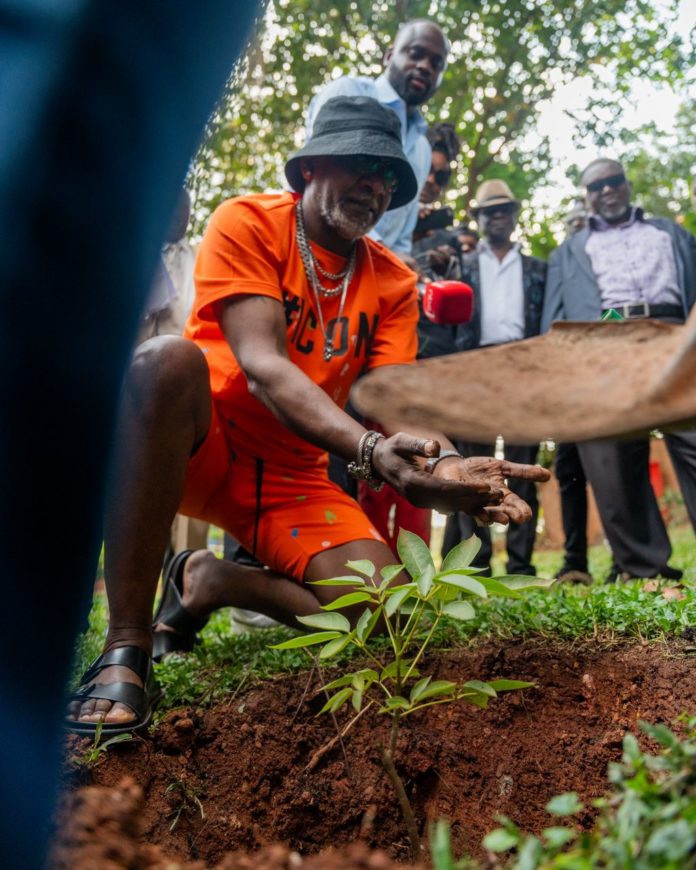
Awilo Longomba, Afrigo Band join Stanbic in a symbolic tree planting campaign

DR Congo’s Soukous’s maestro Awilo Longomba and Afrigo Band joined Stanbic Uganda staff and clients in a symbolic tree planting campaign. The Campaign is aimed at raising awareness on the urgent need to conserve the environment, ahead of the weekend’s much anticipated ‘Legends of Sound’ concert.


Speaking to the press shortly after planting a fruit tree, Awilo said: “we need a beautiful environment to enjoy our beautiful music, therefore we must all join efforts to conserve our nature. I therefore thank Stanbic Bank for leading this effort in Uganda.”
“Awilo and Afrigo are legends of music who are also rendering their platforms to raise awareness on the urgent need to save our climate through tree planting efforts, as Stanbic Bank Uganda, we thank them and call on all Ugandans to join support efforts to preserve the environment in their respective communities,” said Diana Ondoga, the Manager Corporate Social Investment at Stanbic Bank.


Awilo is in Uganda to perform at the ‘Legends of Sound’ concert organized to celebrate 48 years of Afrigo Band this Saturday at the Sheraton Hotel Gardens in Kampala.
Speaking to the press, Philip Otim, Stanbic Bank’s Brand and Marketing Manager said “we are pleased to partner with Talent Africa Group to put these two legends of sound Awilo and Afrigo, on the same stage, this weekend.


“We love supporting the passions of our people that is why we invest in sports, music, and arts in general. To this end, we have innovated around these passions. We have created FlexiPay, our flagship digital payments solution that enables you to enjoy these- passions for less. This weekend, you will enjoy the full suite of benefits that comes with using Flexipay.” he said.

Stories Continues after ad

Two perish in Njeru-Buikwe fatal accident

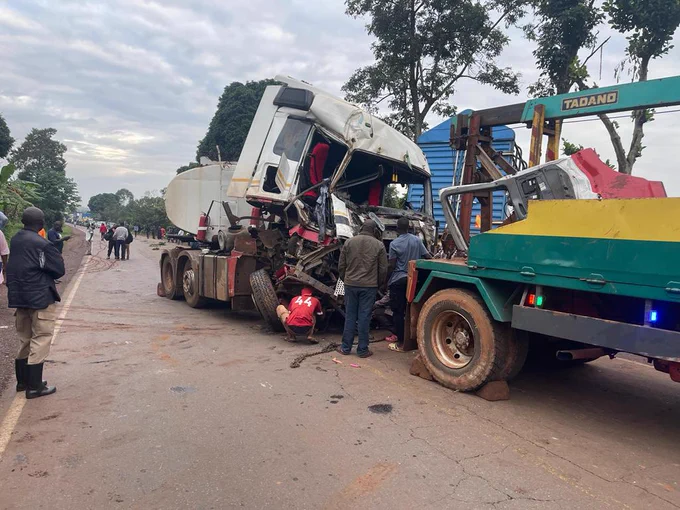
Njeru Police station has registered a tragic accident that occurred at 05:20 AM on August 4th, 2023, at Kitigoma village along the Jinja-Kampala highway in Buikwe District which claimed the lives of two people.

SP Butoto Hellen, PRO Ssezibwa Region said that the accident involved two motor vehicles with registration numbers UBB 716F (Fuso Fighter) and UAY 077A/UAY 928A (Fuel Tank).

The Fuso driver and turn-man lost their lives in the accident and their bodies are being removed from the truck. Meanwhile, the driver of the fuel tank and turn man has been rushed to Jinja Hospital in critical condition for medical treatment.

“According to preliminary findings, the Fuso Fighter with registration No.UBB 716F, driven by a yet to be identified person, was traveling from Jinja towards Kampala when it veered into the lane of oncoming traffic from Kampala, colliding with the M/Benz Fuel Tank vehicle (registration No. UAY 077A/UAY 928A) heading towards Jinja,” Butoto said.

He added, “Both motor vehicles are still at the scene, waiting towing, while inquiries are being conducted.”

Police urged all road users to prioritize road safety and avoid reckless driving.

Stories Continues after ad

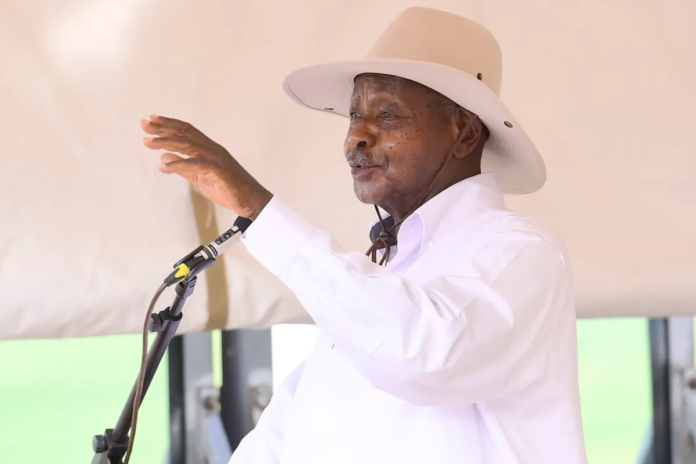
Nobody should export unprocessed timber- Museveni says

President Yoweri Kaguta Museveni has reaffirmed his ban on the exportation of unprocessed timber in Uganda.

“I said nobody should export timber which is unprocessed. So if you are a furniture maker that is what you want. Keep the timber and make the furniture here. So, if you want to export, you export the furniture, not the timber,” President Museveni said.

The President revealed this yesterday during the closure of a 2-day 4th Bi-Annual CEO Retreat held at Kiira Vehicle plant in Jinja. Organized by the Presidential CEO Forum (PCF) aimed at highlighting the private sector’s driving role in the country’s development.

The National Policy Committee in Environment had earlier resolved to ban the export of timber and canceled all licenses and permits issued in this regard as a way of protecting the environment. This followed President Museveni’s directive of 21st June 2023 instructing the Prime Minister, Robinah Nabanja to reverse the worrying trend of deforestation.

During the same meeting, President Museveni suggested that Uganda should also persuade the government of the Democratic Republic of Congo to also ban the importation of timber to Uganda in order to make his exportation ban gain traction.

“Now when it is coming from Congo, I think we should also persuade our Congolese friends to make furniture because that will be a loophole. They will take out timber claiming that it’s coming from Congo. That lack of vision is what I cannot support. State House which we built in 2007, the furniture there is all imported, can you imagine? That is why I questioned the Comptroller who that time was there asking how they could allow us to sit on imported furniture,” the President explained.

“You don’t make a plane, you don’t make a computer, you don’t make medicine, you can’t even make furniture, and what do you do? What sort of people are these? Then you say, we are experts, experts of what? Ignorance? So that is why I cannot support the export of timber and import furniture. Convert the timber into furniture and export the furniture to those who don’t have trees. You can imagine people are importing furniture from Dubai, a desert.”

On the issue of taxation on imported raw materials, President Museveni said the raw material should come in Uganda tax free as long as it is not produced here.

“But if we have it here, why do you undermine us and how about intermediate products like the steel billets? But we shall discuss all that. Rt Hon. Rebecca will follow it up and we shall discuss it,” he assured.

On the other hand, the President commended the organizers of the retreat, saying they play a very important role in developing Uganda.

“The PCF retreat is a very good attempt, and I will always attend whenever organized because I always get free consultancy. Why would I refuse free consultancy? I have to be happy with them for helping me,” he said.

He also asked Ugandans to support UPDF’s National Enterprise Corporation (NEC), explaining that it has the capacity to help the country build an independent, integrated and self-sustaining economy.

“I want to thank Lt. Gen James Mugira, the Managing Director of the National Enterprise Corporation and his group. You can see that your children are educated, they have all the capacity but the problem has been the backup. They are not utilized so if the whole system wakes up and understands our original point number 5 of building an independent integrated, self-sustaining economy, they will do it, these people are educated. We already have a very educated workforce, but they don’t have any backup,” President Museveni said.

Running under the theme: “Uganda’s Industrialisation Agenda: Positioning Uganda as a net source of E-mobility Solutions in Africa”, the event was attended by over 300 business leaders, government executives, investors and scientists.

Stories Continues after ad

Dfcu names three Business Advisory Council to bolster support for women entrepreneurs

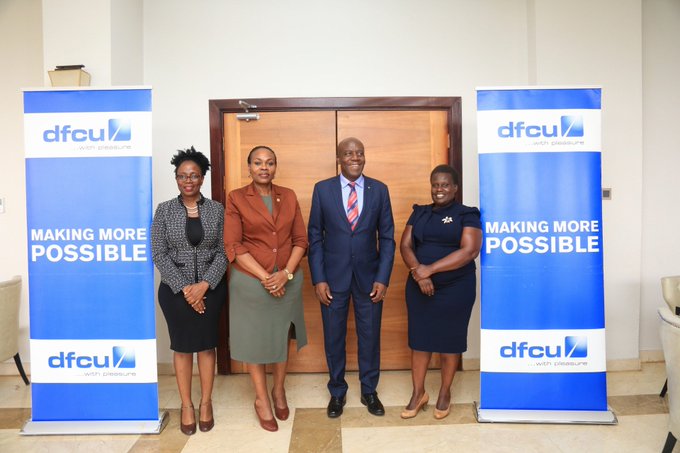
L-R - Belinda Namutebi, Rosemary Iwanu Mutyabule, Charles Mudiwa, dfcu Bank CEO and Dr. Gudula Naiga Basaza, new Chairperson WBAC pose for a picture during the meet & greet at Golden Tulip Hotel.

Dfcu Bank has announced the appointment of its Women in Business Advisory Council (WBAC) with a new chairperson and two Council esteemed members. The council will continue to play a crucial role in providing strategic advice to the Bank’s management, ensuring that the dfcu Women in Business program remains relevant and impactful in today’s ever-changing environment.

The reconstituted Women in Business Advisory Council include Dr. Gudula Naiga Basaza as the Chairperson, alongside Belinda Namutebi and Rosemary Iwanu Mutyabule. This announcement was made during an exclusive meet & greet event organized by the bank at Golden Tulip Hotel, ahead of their new term.

Established in 2012 by the dfcu Board of Directors, the Women in Business Advisory Council is a trailblazing initiative, making dfcu Bank the first financial institution to constitute such a council. The all-female council brings a diverse range of expertise, enabling them to provide valuable insights and support to the bank in strategy formulation, with a specific focus on gender-oriented approaches.

The primary goal of the dfcu Women in Business program is to build the capacity and enhance the skills of women entrepreneurs, enabling them to make informed decisions and thrive in their businesses. Additionally, the council aims to foster a conducive environment that addresses the challenges faced by women entrepreneurs.

Charles Mudiwa, the CEO of dfcu Bank, expressed his excitement about this reappointment, recognizing it as a significant milestone to bolster support for the dfcu Women in Business Program. He emphasized that the program goes beyond financial aid and offers various opportunities for women’s growth and development.

“As an advocate for women-focused programs throughout my career, I understand the immense impact they can have. Women are catalysts of change, and the dfcu Women in Business program presents us with the opportunity to support and empower more women entrepreneurs,” Mudiwa said.

Mudiwa further stated, “We eagerly look forward to collaborating with the WBAC members to promote various women initiatives, provide mentorships, training, and tailored financial solutions to empower the next generation of women entrepreneurs.”

Ruth Asasira, the Manager of Women in Business and Special Programs at dfcu Bank highlighted the pivotal role played by the Women in Business program in fostering a community of entrepreneurial women who support each other to achieve their personal and financial goals, backed by the Bank’s unwavering support.

The reappointed WBAC council, serving from 1st August 2023, for a term of two (2) years, will play a crucial role in establishing new partnerships and deepening existing ones, aiming to create an inclusive and empowering environment for women entrepreneurs in Uganda.

Stories Continues after ad

UNBS impounds over 500 substandard tyres in operation

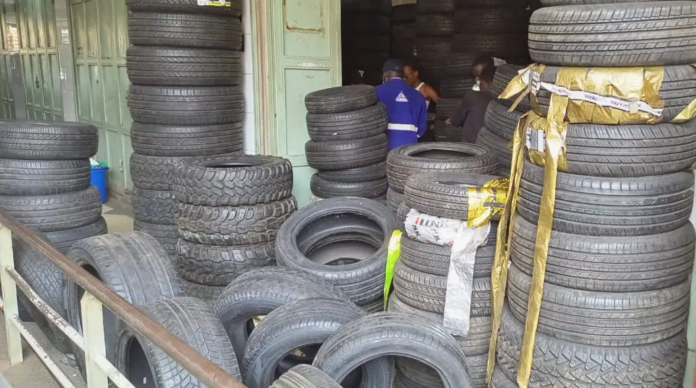
The Uganda National Bureau of Standards (UNBS) through its operations against substandard tyres in the country has impounded over 500 substandard pneumatic tyres worth 150 million shillings from traders in downtown Kampala, in line with the Bureau’s mandate of enforcing standards in protection of public health and safety, and that of the environment, from dangerous substandard products.

According to the UNBS Surveillance Officer who led the operation, Mr. Denis Odur, the operation follows recent public outcry and complaints about substandard tyres on the market as well as the increased accidents attributed to tyre failure in the recent past.

“We have discovered that a number of tyres are defective and some are poorly stored which compromises the quality of the tyres. When such tyres are used on motor vehicles, they can result into accidents for motorists,” he said.

Other poor practices in handling tyres include poor packaging, transportation and storage during importation and distribution, which lead to degeneration in quality of tyres posing a risk to the health and safety of the public and the environment.

UNBS thus developed standards to regulate the quality of tyres on the market and urges all manufacturers, importers, distributors, transporters, wholesalers and retailers of pneumatic tyres to ensure that their products meet the standards.

UNBS further cautions the traders against retreading pneumatic tyres for passenger trucks, stacking them inside one another during importation and transportation, re-grooving old and expired tyres and reselling them to unsuspecting customers, storing tyres directly on the floor and under direct light from skylights, windows, doors and other openings among others.

UNBS encourages traders of pneumatic tyres to store them in a covered place to prevent exposure to direct light from skylights. Any openings should be kept closed so that light entering the warehouse is reduced to the minimum as possible.

In case the warehouse where tyres are stored cannot be darkened for some reason, the storage piles of tyres should be carefully covered with some reasonably heavy woven fabric for complete protection against light, air current, dirt or water.

Stack them on a suitable clean base in an as stress-free condition as possible

No more than 25 motorcycle tyres; no more than 15 light truck tyres; no more than 20 car tyres; and no more than 10 truck and bus tyres shall be stacked one atop another

All the tyres in a stack shall be turned and re-piled at least once every 90 days.

During re-piling, the bottom most tyres shall be placed at the top and the top most tyres at the bottom.

Lacing of tyres in piles shall not be allowed. Tyres shall be free from water or excessive moisture before stacking.

All manufacturers and importers of pneumatic tyres or any other person retreading pneumatic tyres shall apply to UNBS for registration and approval and demonstrate capacity to provide quality tyres that meet requirements of relevant Uganda standards

In the case of importers/exporters, undergo Pre-Export Verification of Conformity to Standards (PVoC) process during importation.

Stories Continues after ad

Is Africa caught up in a cold-War frontier?

Writer of the article David Matsanga.

By Dr. David Nyekorach -Matsanga (RAS)

In the recent past, West Africa has become a hotbed of Coups and Counter- Coups. The constant jostling for power in mostly Francophone West African countries has thrown the continent into a miasma of precariousness and eminent instability.

The most recent regime change in Niger closely resembles those in neighboring Mali and Burkina Faso in 2021 and 2022 respectively where members of the military seized power on similar pretexts.

Those two’s new leaders weren’t Western puppets like their predecessors but firm believers in multipolarity, which resulted in them standing up to France and comprehensively expanding strategic ties with Russia.

Africa needs to properly understand the potentially game-changing significance of the Niger coup in the context of a New Cold War era. To peek briefly into this, Russia is accelerating multipolar processes in Africa through Wagner’s “Democratic Security” operations, with Mali and the CAR functioning as the associated cores in their respective regions.

Meanwhile, France and the US oppose these developments, which is why they’re jointly waging proxy wars against Russia in the region. So, Africa is being used as a base for a new Cold War.

It’s apparent that these two fears that Chad will follow in corresponding neighbor’s footsteps, despite not experiencing a coup as proven by the moves that its interim government began to make over the past year to strengthen its sovereignty.

This had left Niger as the last reliable bastion of Western influence in this broad swath of Africa, and yet its traditional role can no longer be taken for granted if the current junta emulates the Malian and Burkinabe precedents.

It’s a matter of fact that this Niger is indispensably important to France, since 62.6% of France’s electricity is generated from nuclear power, of which at least one-third of was fueled by Nigerien uranium.

These statistics mean that this West African country’s prime export accounted for roughly 20% of all French electricity in 2022, which is expected to increase even further due to more uranium deals and Paris’ commitment to the “Green alAgenda”.

Furthermore, France recently set up a regional “Partnership HQ” in Niger after its forces were expelled from Mali and Burkina Faso, which reinforced its long-standing role there.

Over the past half-decade, Italy and Germany deployed troops to Niger too to help them stem illegal immigration to the EU, while the US built a major drone base on the pretext of fighting terrorism.

Despite all these, Niger had remained one of the poorest places on earth, and sporadic terrorist attacks have been picking up pace over the past years.

This context resembles the situations in pre-coup Mali and Burkina Faso, thus extending credence to the explanation put forth by the Nigerien military for its latest coup regarding their desire to reverse the deteriorating socio-economic and security situations.

To that end, the region’s newest junta might emulate its two western neighbors by cracking down on foreign media and “NGO” meddling, kicking out French (and possibly all other foreign) troops, and requesting Russia’s “Democratic Security” assistance through Wagner Marcenaries.

Unlike Mali and Burkina Faso, however, Niger has strategic natural resources that it could consider nationalizing in order to immediately obtain the wealth required to improve its largely impoverished populace.

Any such moves in that direction would be likely be regarded by France as a potential national security threat and may not auger well with France and its Western allies.

It might be too early to tell now whether the Nigerien junta is multipolar like its neighbors or if it’ll be co-opted by the West to function as a new face for their neo-imperialist system there, however it would be a game-changer in the New Cold War’s African front, if this group took a page from its Malian and Burkinabe counterparts.

In that event, the West would have lost its last stronghold in this broader region of Sahel, which would unprecedentedly accelerate Africa’s rise as an independent pole in the emerging Multipolar World Order, which could essentially enable Africa to seek new allies like Russia, China and the Middle East.

God bless Africa

The writer is Pan African, a Political Scientist & International Relations Expert with bias in Conflict Resolution based in London United Kingdom. He is a member of Royal African Society an author, and media owner. He defends Africa.

Stories Continues after ad

20 people confirmed dead after boat capsized on Lake Victoria

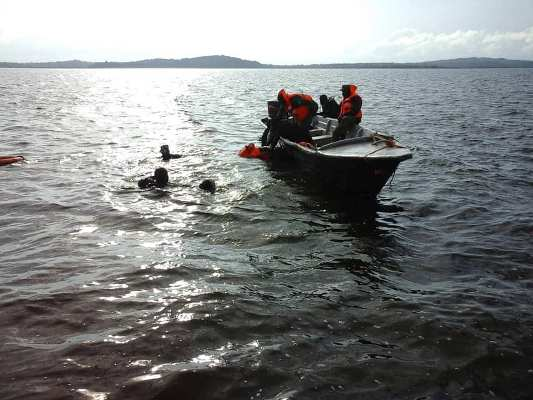
Twenty (20) people have been confirmed dead after the boat capsized on Lake Victoria in the wee hours on 2nd August 2023.

SSP Onyango Patrick, PRO Kampala Metropolitan confirmed the incident and said the number of people on board is allegedly to be 34.

“The incident happened at 5am. So far 20, people have been confirmed dead, and nine (9) rescued,” Onyango revealed.

Onyango added that the boat was also carrying bags of charcoal, fresh foods, silver fish among others.

However, the cause of the accident is attributed to overloading and bad weather.

He said the rescue efforts are underway with teams from Police Marines, UPDF Fisheries Protection Unit and local community on the waters trying to locate the missing people.

He appeal to members of the public who travel on waters to always wear life jackets and not to overload their vessels

Stories Continues after ad

EC launches roadmap for 2025/2026 general elections

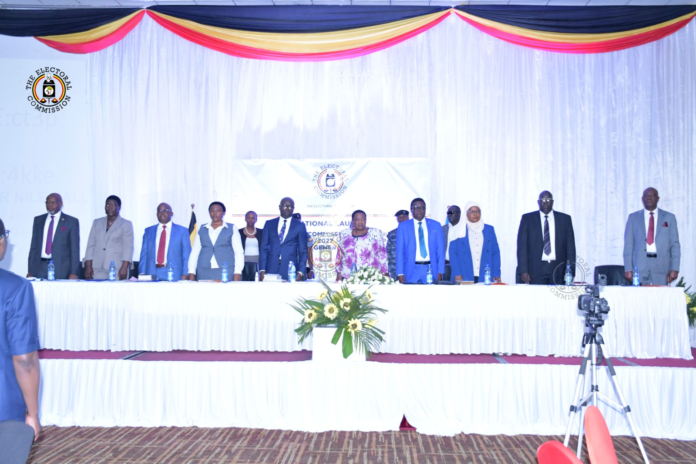
Prime Minister Robinah Nabanja who was the Chief Guest is joined by top EC commissioners at the launch that took place at Africana Hotel.

The Chairperson of the Electoral Commission, Justice Byabakama Mugenyi Simon has today launched the Electoral Commission Strategic Plan 2022/2023-2026/2027 and Roadmap for the 2025/2026 General Elections at Hotel Africana.

The objective of this Strategic Plan and Roadmap is to provide clear communication of priority areas in the Election Cycle with the aim of improving operational efficiency and stakeholder awareness and participation, by seeking to build on the positive reforms and innovations introduced in the last general elections.

Speaking at the event, Justice Byabakama echoed on the 2020/2021 General Elections, which were organized under extraordinary circumstances owing to the #Covid-19 pandemic and applauded the members of the Commission, the Management team, and the entire EC fraternity for the commitment showed while planning and carrying out Commission assignments, which were characteristically very demanding.

“These elections were unique because the risks associated with the pandemic required us to conduct electoral activities under reduced and limited timeframes and modified guidelines. Furthermore, there was an increase in cost to provide for #Covid-19 safety measures at all electoral activity areas, public mobilization, sensitization, and enforcement, as well as safety materials at all electoral centers. The Commission appreciates the Government for providing the funding that enabled us to deliver the elections within the Constitutional timelines,” Byabakama said.

The Electoral Commission is established under Article 60 of the 1995 Constitution of the Republic of Uganda. Under Article 61 of the same Constitution the Commission is mandated to, among others, ensure that regular, free, and fair elections and referenda are held.

In so doing, the Commission is required to conduct the various activities within specified timelines as stipulated in the Constitution and other Electoral Laws.

Byabakama clarified that under Article 61 (2), the Commission must conduct general elections for Presidential, Parliamentary, and Local Government Council elections within the first thirty (30) days of the last one hundred and twenty-two (122) days before the expiration of the term of the President, Parliament or Local Government Councils as the case may be.

He added that the Commission must, therefore, set particular timelines for purposes of proper planning, management, and organization of elections and it is in this spirit that the Commission is launching the Strategic Plan and Roadmap we are here to witness.

“Since our establishment by the Constitution, the Commission has organized and conducted six (6) general elections (1996, 2001, 2006, 2011, 2016, and 2021) as well as two referenda on political systems (2000 and 2005), and several Parliamentary and Local Government Councils elections and by-elections,” he said.

“The Strategic Plan we are launching today is a result of extensive research and stakeholder consultation. Following the conclusion of the 2020/2021 General Elections, the Commission conducted Post-Election Evaluation workshops across the Country with various key stakeholders in the electoral process. The stakeholders gave us their own honest assessments on how the electoral process and the conduct of the 2020/2021 General Elections were done,” Byabakama noted

The Commission further conducted its own self-assessment by engaging the own staff to give their opinions on the conduct of the last General Elections and subsequent by-elections. The recommendations from various election observer reports were keenly studied, as well as the recommendations from Court decisions and all this was done to improve the election management.

Some of the strengths identified during these evaluations include: Government commitment to fund the electoral process; an enabling legal framework; an experienced and knowledgeable workforce; Good working relationship between the members of the Commission and Staff; forward planning through project approach and roadmap for electoral activities; and, Availability and use of technology.

The Commission also identified the following challenges: Delayed enactment/amendment of electoral laws; Continuous creation of administrative units which brings about an increase in costs; Inadequate training of temporary election officials as a result of limited funds; inadequate voter education because of insufficient funds.

Justice Byabakama said that these evaluations and self-assessments were in line with the practice of the Commission, and it is from this background that the Commission has been able to introduce new innovations and improvements in election management. To us, every election provides lessons for the next one.

The Plan and Roadmap also aim at enhancing organizational and staff capacity planning.

He further noted that organizing and conducting Presidential, Parliamentary, and Local Government Councils Elections is a huge and expensive exercise, particularly when it is funded in one year. The Strategic Plan is, therefore, designed to enable phased funding of key election activities, which will reduce funding pressure on the Government and facilitate the Commission to conduct the elections in a smooth manner.

The detailed objectives of this Strategic Plan are to:

a) Enhance inclusive citizen participation in the electoral process;

b) Strengthen stakeholder collaboration and engagement in the electoral process;

c) Deliver regular free and fair elections and referenda;

d) Improve timely, gender and equity responsive and accurate information sharing, public trust, and confidence in the electoral process; and,

e) Strengthen the institutional capacity of the Electoral Commission.

The Commission has also extracted a detailed Road Map to the 2025/2026 General Elections from the above goals.

The Roadmap will enable the various stakeholders in the electoral process to achieve the following:

a) Improvement in the planning for participation and implementation of electoral activities;

b) Improvement in co-ordination of electoral activities;

c) Timely implementation of scheduled electoral activities; and,

d) Transparency in the implementation of electoral programs and activities.

The Roadmap is clearly a reminder to all stakeholders in the electoral process to start planning to ensure a smooth democratic process.

He said that to achieve the above, the Commission appeals to the Government, particularly Cabinet and the Legislature, to ensure timely amendment and/or enactment of the relevant electoral laws. This is critical because any amendment in electoral laws will have to take into consideration, the electoral roadmap, the procurement timeframes in accordance with PPDA requirements, and the impact on the overall elections planning and budget.

The Commission further appealed to the Government to consider and approve the creation of new administrative units in a timely manner, so that the electoral program and budget are not destabilized. When this is not done, the impact on our preparations, particularly on the demarcation of electoral areas, re-organization of polling stations and voter education is enormous.

“Prime Minister, you will note that the projected cost for the 2025/2026 General elections has significantly gone up compared to the 2020/2021 General elections. The factors for the significant increase and the cost drivers are indicated and include the projected increase in the voter population and hence a number of polling stations; an increase in the number of elective offices and number of candidates nominated for elections; an increase in the number of Administrative Units; as well as continuous improvements/reforms in the electoral process, among others,” Byabakama revealed.

He added, “As we launch the Strategic Plan and Roadmap, we also recognize that there are key pending national-level electoral activities, namely, Administrative Units (LC 1 and LC 2) and Women Councils and Committees Elections. The Commission urges the Government to provide the required funds so that the above elections are held before key General Elections activities start, to avoid stampeding the Roadmap.”

Byabakama cautioned political parties and organizations, that the release of this Strategic Plan and Roadmap is not meant to thrust the Country into a frenzy of campaign-related activities for aspiring individuals, Political parties, and organizations. While Consultations are provided for in the law, campaigns must follow a program approved and regulated by the Commission.

“I urge Political Parties and Organizations to use the Plan and Roadmap to make adequate preparations for successful participation in the elections. I further urge the political parties to pursue peaceful co-existence before, during, and after the electoral process,” he said.

He cautioned citizens of Uganda, in general, that they also have a role to play in ensuring the successful implementation of this Plan and Roadmap and urged them to work with the Electoral Commission and ensure a smooth implementation of the Roadmap, and the preservation of the peace and stability they are currently enjoying.

He further appealed to the Government to continue providing adequate funding in a timely manner to enable the Commission to undertake its constitutional obligations and the Parliament to enact laws or amendments to electoral laws in time so as not to destabilize the Roadmap.

Stories Continues after ad