Stanbic Bank
Stanbic Bank
20.7 C
Kampala
Stanbic Bank
Stanbic Bank
Home Blog Page 384

Uganda to construct a 308km power line to South Sudan

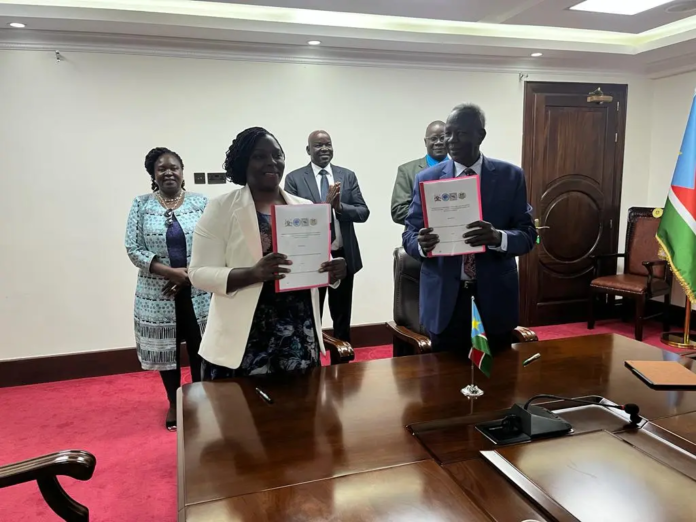
Uganda and South Sudan have signed a Power Sales Agreement (PSA) for trade in electricity between the two countries. Trading of electricity across the border is expected to benefit the towns of Oraba and Elegu in Uganda, and Kaya and Nimule in South Sudan.           

The signing of the sales agreements comes at a time when Uganda is about to switch on the 600MW Karuma power station that has been under construction since 2013.       

Uganda and South Sudan signed a Memorandum of Understanding in December 2015 setting negotiations. The memorandum was signed by then-state Minister for Energy Simon D’ujang. 

A statement from the Ministry of Energy said the power purchase agreement was signed in the South Sudanese capital Juba on Tuesday.         The Minister of Energy, Ruth Nankabirwa Ssentamu led the Ugandan delegation accompanied by the ministry’s Permanent Secretary, Irene Bateebe. Peter Marcello Jelenge, represented the South Sudan government.         

The 400kV Olwiyo-Juba Transmission Line will pick up power from Olwiyo Substation, which is already operational at 132 kV.       

The agreement will see the development of the 400kV Olwiyo – Juba Power Transmission line of 308km. Uganda will develop 138km of the line on the Ugandan side while South Sudan will construct 170km on its side.

The deal will see the expansion of the 400kV Power Substations of Olwiyo and Bibia near Uganda’s Elegu border post while the Juba Substation will also be expanded. 

The Ministry of Energy Permanent Secretary, Irene Bateebe, signed the power purchase agreement on Uganda’s behalf, while Beck Awan Deng, the General Manager of South Sudan Electricity Corporation (SSEC), signed on behalf of his country.

“Today’s signatures mark the beginning of serious cooperation in power trade between Uganda and South Sudan,” said Dr Nankabirwa.   “We would like to see projects that benefit both the people of Uganda and South Sudan…We will take power from small towns in Uganda, such as Elegu and Oraba. Similarly, the people at the border of such as Nimule and Kaya in South Sudan shall be supplied with power from Uganda.” Said Nankabirwa.

Nankabirwa did not however reveal other details concerning the financing of the project and how much Uganda was selling the power and vice versa. 

Meanwhile, a Joint Technical Committee has been established to plan and coordinate the project’s development.

Uganda and South Sudan have secured funds for feasibility studies from African Development Bank (AfDB). AfDB would also finance the project based on EPC or Public Private Partnership, depending on the outcome of the feasibility study. 

A consortium of CESI S.p.A (Italy), ELC Electroconsult S.p.A. (Italy) and Colenco Consulting Ltd (Nigeria) have been procured to undertake the feasibility study, which commenced in March 2023 and will be completed in February 2024.   The two countries also collaborate in the power distribution segment, where distribution networks have already been constructed in the Uganda-South Sudan border towns of Nimule and Kaya.    

Another PSA was executed between Uganda Electricity Transmission Company Limited (UETCL) and Juba Electricity Distribution Company Limited (JEDCO) to ensure seamless Nimule and Kaya power distribution.

The Power Purchase Agreement between Uganda and South Sudan is within the spirit of Nile Cooperation under the Nile Basin Initiative’s Nile Equatorial Lakes Subsidiary Action Program (NELSAP) 

The Nile Equatorial Lakes Subsidiary Action Program (NELSAP) is one of two investment programs under the Nile Basin Initiative (NBI).       

The Nile Basin Initiative (NBI) is a partnership of the riparian states effective 1999; it seeks to develop the river in a cooperative manner, share substantial socioeconomic benefits, and promote regional peace and security through its shared vision of “sustainable socioeconomic development through the equitable utilization of, and benefit from, the common Nile Basin water resources”.

The NBI is based in Entebbe, Uganda; it includes Burundi, the Democratic Republic of Congo, Egypt, Ethiopia, Kenya, Rwanda, Sudan, Tanzania, and Uganda. Eritrea is participating actively in the NBI as an observer.     

Stories Continues after ad

ZTE releases dynamic reconfigurable intelligent surface 2.0 product, promoting the green evolution of 5G-A 

Shenzhen, China – ZTE Corporation (0763.HK / 000063.SZ), a global leading provider of information and communication technology solutions, has unveiled the second-generation Dynamic Cooperative Reconfigurable Intelligent Surface (Dynamic RIS 2.0) product on the eve of the Mobile World Congress (MWC)  Shanghai 2023. This release aims to further drive the green evolution of 5G-A. Compared to its predecessor, Dynamic RIS 2.0 boasts significantly reduced specifications and power consumption, as well as more convenient deployment, marking a significant stride towards commercial implementation.

As an emerging technology, Reconfigurable Intelligent Surface (RIS) utilizes programmable, cost-effective two-dimensional metamaterials along with phase control components to achieve signal propagation, direction regulation, and interference suppression in three-dimensional space. Its primary goal is to establish an intelligent and controllable wireless environment, surpassing the limitations of traditional wireless communication.

Originally, RIS operated as a static surface, enhancing signal coverage at fixed points. However, the coverage provided by a single fixed beam was relatively limited and couldn’t adapt to dynamically distributed users. To address this, ZTE has introduced an innovative solution called Reconfigurable Intelligent Surface Dynamic Collaboration technology, which is built upon 5G base stations. This technology enables rapid scanning of multiple beams and real-time user tracking. By incorporating key techniques from 6G’s Reconfigurable Intelligent Surface advancements into 5G, it has become a pivotal technology for the new stage of 5G-A.

In 2021, ZTE successfully completed the initial phase of prototype verification for Static Reconfigurable Intelligent Surface (RIS) technology, exploring the potential of RIS in improving fixed-point coverage in 5G blind spots and areas with weak signals. In February 2022, ZTE unveiled the first-generation Dynamic Cooperative Reconfigurable Intelligent Surface product, named RIS 1.0, at MWC 2022 in Barcelona.

In August 2022, ZTE achieved an industry milestone by successfully completing the prototype verification of Dynamic RIS technology. The verification results demonstrated that the cooperative beamforming technology between base stations and reconfigurable intelligent surfaces not only significantly enhances base station coverage but also facilitates seamless user connectivity in mobile scenarios. Moreover, the beam can be dynamically adjusted to accommodate diverse deployment scenarios.

ZTE continues to address critical challenges in RIS product development and key technologies. In 2023, they launched the dynamic RIS 2.0 model. Compared to its predecessor, the RIS 2.0 product offers significant advancements in terms of wide coverage distance, high user gain, and enhanced reliability.

Through the incorporation of new materials and an evolved architecture, dynamic RIS 2.0 products achieve an impressive 80% reduction in power consumption. The integrated design also contributes to a lighter and aesthetically pleasing appearance. Additionally, dynamic RIS 2.0 is designed for easy installation and adaptability to diverse environments, making deployment, management, and maintenance more streamlined.

According to Li Xiaotong, VP of ZTE and GM of RAN products, the launch of dynamic RIS 2.0 product serves the purpose of expanding network coverage in a cost-effective and energy-efficient manner. It also aims to address challenges associated with higher frequency bands, such as millimeter waves, which suffer from high propagation loss and penetration loss. Dynamic RIS 2.0 enables high and low-frequency co-site and co-coverage, thereby reducing construction and operation costs for high-frequency networks.

Moving forward, ZTE will continue collaborating with operators and industry partners to drive the evolution of RIS, transitioning it from technology research to practical deployment. ZTE aims to address real-world challenges in commercial networking, enhance innovation, and refine solutions for network collaboration and streamlined operation and maintenance processes. Furthermore, ZTE plans to expand the application of RIS to a wider range of fields. Leveraging the capabilities and boundaries of 5G-A, RIS will be combined with other advancements to realize the vision of enabling digital lives for individuals, empowering industries with digital intelligence, and building a digital society.

Stories Continues after ad

ZTE presents key insights on commercial deployment of 50G PON at Light Reading’s online symposium

Shenzhen, China – ZTE Corporation (0763.HK / 000063.SZ), a global leading provider of information and communication technology solutions, announced today  that Gui Bin, Chief Engineer of Optical Access Product Planning at ZTE, has shared the Company’s thoughts and suggestions on improving ROI in 50G PON deployment.The insights were presented under the theme “50G PON Evolution and Coverage Scenarios” at the online “Next-Gen PON Digital Symposium” hosted by Light Reading.  

In terms of application scenarios, Mr. Gui envisions that 50G PON will enter the commercial deployment stage in 2025, starting with ToB scenarios and expanding to ToH scenarios. The combination of 50G PON and FTTR-B will cater to the needs of small and medium-sized enterprises (SMEs) like hotels, street stores, and coffee shops, ensuring a quality user experience. Additionally, 50G PON will facilitate 10G all-optical access for campuses and enterprises in development zones, industrial parks, and factories, meeting demands for low latency and jitter. In terms of home scenarios, 50G PON + FTTR will provide ultra-high bandwidth for applications such as smart homes, online education, gaming, VR, and live streaming. Furthermore, 50G PON’s high bandwidth, low latency, and low jitter capabilities make it suitable for mobile backhaul and indoor coverage requirements. 

In terms of network evolution, ZTE recommends the Combo PON concept for a smooth transition from existing PON to 50G PON. This concept enables GPON, XG(S)-PON, and 50G PON to coexist on a single platform and line card, tripling the equipment life cycle and saving network construction investments. ZTE took the industry lead by releasing the 50G PON&10G PON&GPON Combo solution at Mobile World Congress 2023. Moreover, ZTE pioneered the application of the Combo concept to the upgrade from 10G PON to 50G PON. This upgrade approach requires OLTs to be built only once, allowing for the deployment and seamless evolution of GPON, 10G PON, and 50G PON ONUs on the same backbone fiber as per demand. Notably, this upgrade mode saves costs associated with equipment room, equipment, maintenance, and network upgrades since OLTs and ODNs do not require changes, ensuring no disruption to existing GPON and 10G PON users and services.

Additionally, ZTE holds the distinction of being the industry’s first to introduce precision 50G PON technology. This technology enables support for multi-service scenarios by providing deterministic control over bandwidth, latency, and jitter. ZTE unveiled the world’s inaugural precision 50G PON prototype at Mobile World Congress 2022 and launched the world’s first 50G PON+Wi-Fi 7 ONU prototype at the FTTH Conference 2022. These advancements have significantly accelerated the exploration of application scenarios for 50G PON, the integration of multiple technologies, and the overall maturity of the 50G PON industry chain.

Being a frontrunner in fixed network technologies, ZTE has consistently pursued innovation in 50G PON technologies and practices, drawing on its extensive experience in FTTx development and deep understanding of future PON technology trends. Thus far, ZTE has engaged in extensive collaboration with over 20 operators worldwide, encompassing demonstrations, tests, and trials of 50G PON. Moving forward, ZTE will continue to drive technological advancements, foster deeper partnerships in the 50G PON domain, conduct thorough feasibility and maturity assessments in diverse application scenarios, explore additional use cases, and accelerate the progress of the 50G PON industry chain.  

Stories Continues after ad

ZTE and Smartfren Business strengthen collaboration to drive network infrastructure market development 

ZTE

Jakarta, Indonesia – ZTE Corporation (0763.HK / 000063.SZ), a global leading provider of information and communication technology solutions, and Smartfren Business, the leading telecommunications service provider in Indonesia for both retail and corporate sectors, have officially signed a Memorandum of Understanding (MoU). This strategic partnership aims to reinforce their commitment to driving the development of the network infrastructure market. 

The MoU was signed by Musa Gan, Sales Director of ZTE Indonesia, and Alim Gunadi, Chief Enterprise Business Officer of Smartfren Business, during the ZTE Day 2023 event in Jakarta. 

The collaboration aims to provide customized and scalable solutions that specifically address the unique requirements of government and enterprises, thereby facilitating their digital transformation goals. 

By leveraging their combined expertise, ZTE and Smartfren Business will provide cutting-edge solutions that actively drive the transformation of network infrastructure in Indonesia.

Musa Gan, Sales Director of ZTE Indonesia, said, “We are excited to collaborate with Smartfren Business as it marks a significant milestone in our joint pursuit of network infrastructure market development. Through this collaboration, we aim to leverage our respective strengths and expertise to deliver cutting-edge solutions that address the evolving needs of government and enterprises. This partnership exemplifies our commitment to providing advanced technology solutions that empower institutions and businesses.”

Alim Gunadi, Chief Enterprise Business Officer of Smartfren Business, said, “Smartfren Business is delighted and grateful for ZTE’s support in developing network infrastructure and providing the latest network solutions. With this collaboration, Smartfren Business is committed to providing advanced solutions to meet the needs of government and enterprises in achieving digital transformation goals, while expanding service coverage throughout Indonesia.”

This partnership represents a significant stride towards building a more interconnected and technologically advanced future. Together, ZTE and Smartfren Business aspire to introduce the advantages of advanced technologies to the Indonesian market, promote digital inclusion, and stimulate economic growth in the country. 

Stories Continues after ad

Uganda cash consortium receives €6m funding from European Union

The Uganda Cash Consortium (UCC), led by the Danish Refugee Council (DRC) in partnership with the Lutheran World Federation (LWF), has received €6 Million grant from the EU’s Humanitarian Aid Operations (ECHO) to provide cash-based assistance across targeted refugee settlements in Uganda.

Through this funding, the UCC will support at least 62,000 of the most vulnerable individuals within settlements in the Southwest (Kyaka II, Kyangwali, Rwamwanja, Nakivale, Oruchinga), Mid-West (Kiryandongo), West Nile (Imvepi, Rhino Camp, Bidi Bidi, Lobule, Palorinya) and North (Adjumani, Palabek) regions of Uganda.

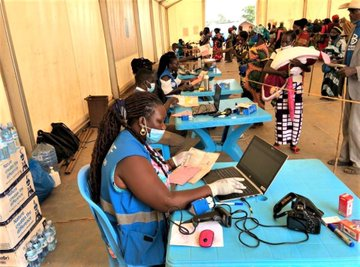
As part of the UCC’s intervention, more than 44,000 refugee community members will benefit from unconditional multi-purpose cash assistance designed to assist individuals and households to meet their most immediate needs. The assistance will be provided monthly over the course of five months, with a potential sixth cash transfer, and through a digital mechanism. 

The UCC is also scaling up the referral mechanism to better link to and assist referred beneficiaries from other agencies across the settlements.

The referral mechanism is also open to protection partners, able to identify individuals with high protection risks, and whereby the complementary cash assistance will reduce or eliminate the protection risk. Cash will also be provided to over 18,000 children and adolescents, including approximately 1,300 Ugandan nationals, who are currently out of school or at risk of dropping out. This sectorial cash assistance will be provided termly for Term 2 and 3 in 2023, all three terms in 2024, and Term 1 in 2025.

“The UCC has been providing cash assistance since March 2019, observing the positive outcomes of the support in the most vulnerable communities. The DRC is grateful to the EU for responding to the most urgent basic needs of the most socio-economically vulnerable refugees,” said Anna Maria Trzcinska, the Uganda Cash Consortium Manager.

She said people of concern face challenges in Uganda as the funding is drastically decreasing. Humanitarian actors also need to do more with less. One added value of the UCC is the strong focus on cost efficiency; 75% of the entire budget goes to beneficiaries. The DRC, with the partner LWF, are committed to continuing their effort in supporting the most vulnerable in meeting their basic needs and enrolling or retaining pupils in school.

Stories Continues after ad

Court okays implementation of Intelligent Transport Monitoring System

The Court of Appeal has dismissed an application which sought to block the implementation of the intelligent Transport Monitoring System (ITMS).

In July 2021, the Government signed a 10 year contract with the firm to provide digital vehicle trackers for motor vehicles and motorcycles in a bid to curb insecurity.

The proposal was first introduced by President Museveni in his 10 point security measure in the wake of gun violence in the country that saw several Ugandans killed in 2018. The intelligent Transport Monitoring System is set to be rolled out in July. 

In 2021, Legal Brains Trust (Lbt) Ltd through its lawyers led by Stanely Oketcho petition court seeking for a declaration that the presidential directives cabinet resolution and approval by the Attorney General, agreements, contracts, statutory instruments through which government of Uganda purportedly engaged or otherwise authorized a Russian Company, Joint Stock Company Global Security to execute a programme of compulsory digital surveillance of all motor vehicles, motorcycles and other vessels in Uganda, violate or threaten to violate a bundle of fundamental rights.

High Court injudiciously denied the Applicant the remedy of a temporary injunction and instead cleared the government to go on with the implementation of the programme. Legal Brains Trust did not relent, they appealed against the court decision.

In his ruling justice said the Applicant has not demonstrated the injury they are likely to suffer if the ITMS is implemented. 

“I am inclined to agree with the Respondent’s counsel submission that the implementation of the Intelligent Transport Monitoring System will only require persons who own cars to obtain new number plates that are embedded with digital tracking capacities,” he ruled.

“The application is dismissed. The costs of this application shall abide by the outcome of the appeal,” he ruled.

Stories Continues after ad

Deputy Speaker Tayebwa:  Why is Africa not represented at the UN Security Council?

Deputy Speaker, Thomas Tayebwa.

Deputy Speaker of Parliament Thomas Tayebwa has called for the reservation of two permanent seats for African countries to present their issues on the UN Security Council.

Speaking at the 63rd Organization of African, Caribbean, and Pacific States (OACPS) – European Union Joint Parliamentary Assembly u in Brussels, Tayebwa said that it is a shame that Africa, which is three times bigger than Europe, is not represented at the UN Security Council.

Tayebwa also called for the African Union to be given a more significant voice at the UN’s International Peace and Security Organization.

He said Uganda and her friendly countries would press for Africa to have a permanent seat on the United Nations Security Council.

“The Security Council has been reduced to settling quarrels between big states and superpowers but when it came to the invasion of Africa, specifically, the invasion of Libya, you did all you could and you made a mess. Now you have seen one of your own, whom you considered an ally in the Security Council, what he has done to one of your European countries and you’re waking up. Maybe we need more of these examples for you to wake up,” Tayebwa said, adding that if the invasion of Ukraine by Russia had been done much earlier, “you would have listened to us much earlier”.

Tayebwa explained that Security Council membership where European countries have three out of the five seats since 1947 has no standing in any modern society

“There are no permanent members from Latin America or Africa, and China is the only Asian member. That damages the legitimacy of the Security Council if it is seen as a forum dominated by the West and Great Powers, where the Global South and smaller states are marginalized,” Tayebwa said, telling the assembly president that: “this has no standing in any modern society. We can’t continue living in the era of 1945 before most of us were born,” he added.

At several AU assemblies, Uganda has asked African countries not to accept anything less at the UN Security Council reforms, until the continent is granted at least two permanent seats.

Uganda’s position is that like the rest of other developing regions of the world are not asking for favors when they demand adequate representation. He said it was “obvious” that reforms will make the global body inclusive and relevant to the current realities.

Stories Continues after ad

Over 2000 entrepreneurs benefit from GIZ E4D, Stanbic Incubator training

Over 2000 entrepreneurs that participated in various training modules to equip them with relevant business skills at the Stanbic Accelerator Program between January 2022 and April 2023, graduated on June 23.

Speaking at the graduation ceremony held at hotel Africana, Stanbic Business Incubator’s Chief Executive Tony Otoa said, “Small and Medium enterprises (SMEs) are universally regarded as key engines of economic growth. Therefore, SBIL is closely supporting SMEs to access the financial services and skills they need to grow and thrive.”

He added that the goal is to see Uganda’s small businesses improve their operations and profits and create new jobs and business opportunities for women and youth.

Otoa noted that the training emphasized three key areas namely; access to markets, access to finance and business operational skills, all of which are necessary for the growth of MSMEs. “SBIL will continue supporting entrepreneurs to exploit their potential in various ways through networking, connecting them to market platforms and guiding them on how to be competitive locally and internationally,” Otoa said.

SBIL developed the EDP in 2018, supporting 190 SMEs in Kampala by building their capacity to actively participate in Uganda’s natural resource sector.

In 2019, the SBIL received funding from the GIZ Employment and Skills for Development in Africa (E4D) programme to enable expansion of the Enterprise Development Programme (EDP) to support SMEs in Gulu and Mbarara districts to become more competitive, attain sustainable growth and create jobs.

Based on the promising results recorded by E4D in 2019, a new partnership was entered in 2021 to further upscale and expand the Incubator’s reach across the country to cover at least 20 districts through four regional branches

Speaking on behalf of the project’s development partners, the GIZ E4D Uganda programme, Team Leader, Donald Agaba mentioned that E4D will continue promoting local employment through capacity development in partnership with the Incubator. He went on to say that the role of MSMEs in a country’s social economic development cannot be downplayed because of their contribution to Gross Domestic Product and to creation of decent jobs. He said, “We have partnered with Stanbic Business Incubator since 2019 and in our recent program evaluations we established that 1400 jobs were created as a result of these trainings”.  Mr. Agaba applauded SBIL for the significant achievements and solid partnership thus far.

During the graduation ceremony, Emma Mugisha, the Head of Business and Commercial at Stanbic Bank, advised entrepreneurs to always seize training opportunities. Ms. Mugisha said that in November 2020, Stanbic Bank launched the Economic Enterprise Restart Fund as a private sector led response to provide affordable funding for key sectors and groups that were most adversely impacted by the COVID-19 pandemic. She added that capacity building and training for SMEs through SBIL has been critical in ensuring faster business recovery and equipping business owners to survive through turbulent economic periods.  She said, “Stanbic Uganda Holdings is building an eco-system through its five subsidiaries that include Stanbic Bank, Fly Hub – A Fintech Company, Stanbic business Incubator, Stanbic Properties Limited and SBG securities- an investment firm, to support Entrepreneurs and drive Uganda’s economic growth as well as create networks and collaboratively work with Entrepreneurs”.

The Guest of honor, Aga Ssekalala Jr, a renowned entrepreneur advised on the need to uphold values like honesty, hard work and integrity. He said, “The real success is not in the financial gains but in the positive impact you create as entrepreneurs from the financial gains,’’ and “that’s the success you should embrace,’’ he said.

Cathy Adengo , The head of sustainability Stanbic Uganda Holdings Limited, said, “We understand the challenges and hardships and we are here to support entrepreneurs in their journey as we drive economic growth.”  She emphasized that, “Sustainability is a critical pillar in the Stanbic Uganda Holdings Limited’s agenda through providing easily accessible finance solutions and mentorship to entrepreneurs especially those in the agriculture sector.”

Aisha Mayanja, an EDP graduate and founder, Ewaffe Cultural Village said, “We forced to do market research and competitor’s analysis after the training, these are things we never thought we needed to do. We have been trained on the importance of being compliant and formally registered”

Stories Continues after ad

Health PS reinstates Dr. Byarugaba Baterana back to full salary as he awaits clearance to resume office

Dr Byarugaba Baterana

The Ministry of Health Permanent Secretary, Dr. Diana Atwine has reinstated the interdicted Executive Director of Mulago National Referral Hospital, Dr. Byarugaba Baterana back to full salary as he awaits clearance to resume office.

Dr. Byarugaba Baterana was interdicted in 2022 and detained by officials from the State House Health Monitoring Unit, led by its Director Warren Namara on allegations of mismanagement of the national referral hospital and misappropriation of funds totaling to Shs28.8 billion for the past four financial years.

In a letter dated June 21, 2023, the Dr. Diana Atwine ordered the reinstatement of Dr. Byarugaba Baterana referring to the interdiction letter of March 2, 2022.

“Reference is made to my letter of even reference dated March 2, 2022, under which you were interdicted from duty and put on half pay with effect from 2nd March to pave your way for investigations,” read part of the letter.

Pursuant to Section F-s (15) of the Uganda Public Service Standing Order, 2021, Dr. Atwiine lifted Dr. Byarugaba’s interdiction and reinstated on full pay with effect from March 2, 2022.

“In accordance with Regulation No. 38 (8) of the Public Regulations 2009 and Public Service Commission External circular No. 1/2021 dated September 14, 2021 “the interdiction of the officer shall remain in force until the Public Service Commission has noted the lifting the interdiction”, you shall not therefore assume duties until the health Service Commission has noted the lifting of the interdiction,” read in letter.

The office has since been run by his deputy Dr. Rosemary Byanyima as investigations were going on.

Stories Continues after ad

FDC dismayed by DPP’s discontinuation on prosecution of ministers in stolen iron sheets saga

The Forum for Democratic Change (FDC) party has expressed deep concerns regarding the recent decision made by the Director of Public Prosecutions (DPP) to discontinue the prosecution of ministers and other high-ranking officials involved in the iron sheets saga.

While the party acknowledges the DPP’s authority to close any case, the members firmly believe that this particular case is of utmost public interest, and the party is disheartened by the outcome.

“There exists clear evidence linking these ministers to the possession of the iron sheets in question. In fact, some ministers have even admitted that the iron sheets were found at their residences. As Ugandans who are committed to the fight against corruption, we had hoped that this case, which seemed so straightforward, would be thoroughly investigated and that the senior leaders involved would face prosecution. We believed that a successful prosecution in such a high-profile case would set a precedent for future corruption cases, making them easier to pursue,” FDC stated.

FDC added, “The DPP says that some ministers were compelled to return the iron sheets, and this raises further questions. Why would they return something they never took in the first place? The iron sheets were initially taken into government stores, marked as exhibits, yet now we are told that there is insufficient evidence. This inconsistency is deeply troubling to us.”

This situation has significant implications, particularly for whistleblowers who take the risk of coming forward with information. If individuals who expose corruption are not met with proper prosecution and accountability, it can deter others from stepping forward in the future.

The party further stated that it is only this time when they saw the collaborative efforts of anti-corruption institutions such as the Criminal Investigations Department (CID), Inspectorate of Government (IGG), and Statehouse Anti-Corruption Unit and they thought they would do something, only to be ultimately told that the individuals under investigation had no case to answer.

“This not only undermines the faith of the public but also puts whistleblowers at greater risk,” FDC revealed.

FDC has urged the DPP to reconsider this decision and revisit the evidence and these officials are held accountable for their actions

“We have continuously told the country that Mr. Museveni and his government lacks the commitment to effectively combat corruption, because a significant majority, approximately 90%, of corrupt officials are either personally connected to or have familial ties with Mr. Museveni. That is why we are finding one individual being bigger than an institution,” the party noted.

Stories Continues after ad