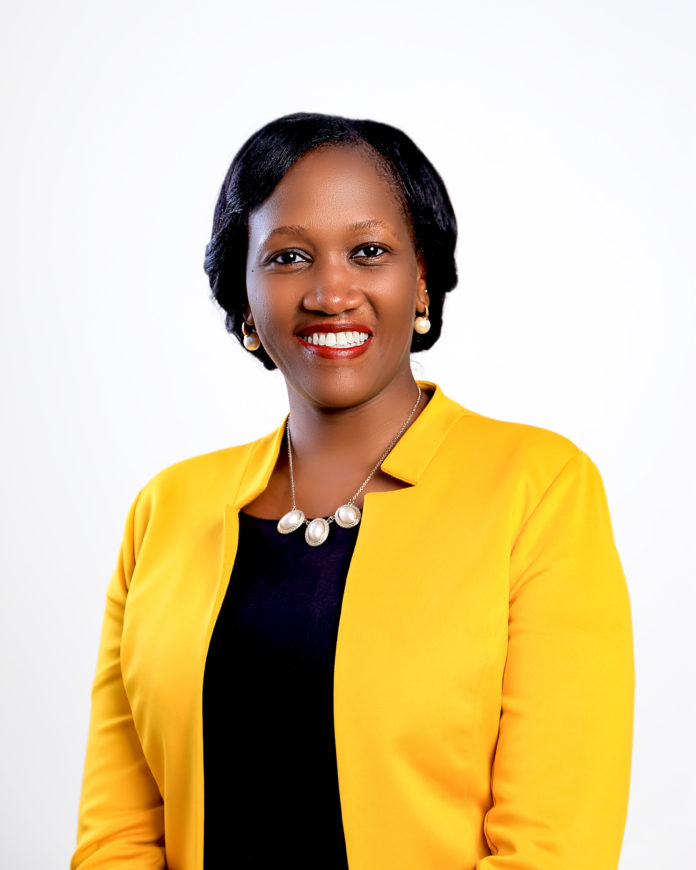
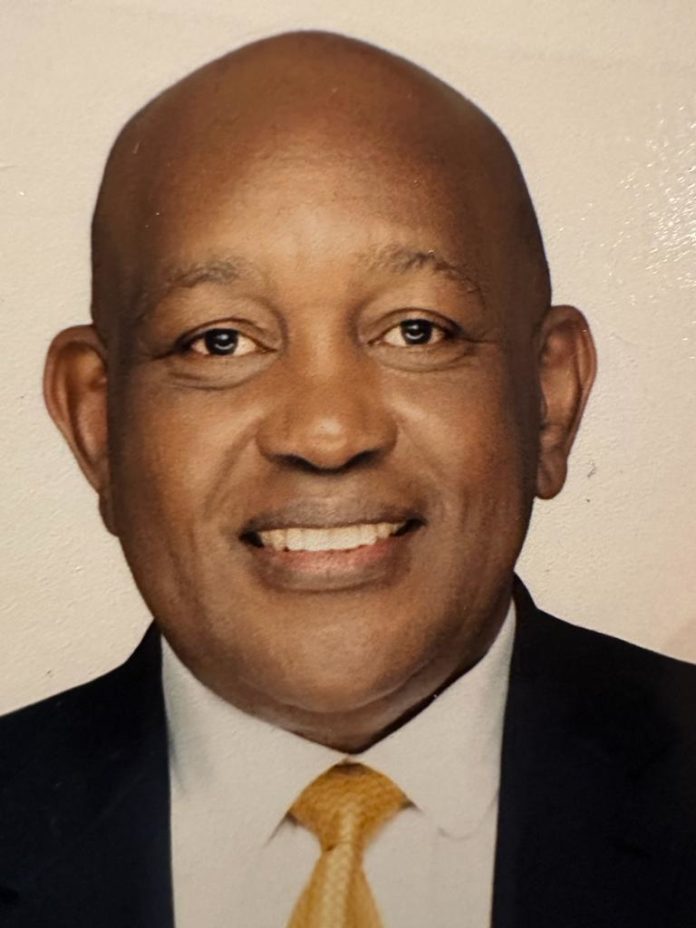
Rachel Rwakatungu has been appointed the new Credit Director at Absa Bank Uganda.
Rwakatungu is a seasoned banker with a wealth of experience in the banking and financial services industry, business, and regulatory risk. She brings significant sector experience to her new role and has also worked in Tanzania and South Africa.
Prior to joining Absa Bank Uganda Ltd, Rwakatungu worked as Senior Credit Manager at Stanbic Bank Uganda Limited where she was responsible for the end-to-end risk management process, credit approval, and steering risk.
She also worked at Standard Chartered Bank in various capacities such as Senior Credit Analyst, Relationship Manager under Corporate Banking, and the Head of the Client Service Group.
As the Credit Director, Rwakatungu will be responsible for overseeing the credit risk management function of the bank. This includes developing and implementing credit risk policies, procedures, and strategies, as well as ensuring compliance with regulatory requirements.
Speaking on her appointment, she said, “I am excited to be joining Absa Bank Uganda Ltd at such a crucial time in its growth journey. I look forward to working with the team to drive the bank’s credit management function, and to ensure that we continue to provide our customers with innovative and tailored credit solutions.”
Mumba Kalifungwa, the Managing Director of Absa Bank Uganda Ltd, said, “We are delighted to welcome Rachel Rwakatungu to our team. Her vast experience and expertise in credit risk management will be invaluable as we continue to grow and strengthen our position in the market. We are confident that she will play a key role in driving our credit risk management function to new heights.”
Rwakatungu holds a Master’s degree in Business Administration from Eastern and Southern Africa Management Institute (ESAMI), Postgraduate Diploma in Financial Management from Uganda Management Institute (UMI), various credit certifications including Credit Skills Assessment Program, Corporate Credit Curriculum, and a Bachelor of Statistics from Makerere University.
She is also certified in Valuation and Corporate Strategy from the Erasmus University of Rotterdam, Negotiation from the University of Michigan, and International Trade Finance from the London Institute of Banking and Finance.
M1911 Pistol: Kampala rich are seeking to acquire guns because of insecurity
An assailant has shot and killed an Indian businessman at Raja Chambers along Parliamentary Avenue. The incident happened at around 1:20 PM. The area has since been cordoned off. Developing story.
The United States Embassy in Uganda has announced an increase in visa application processing fees for a number of non-immigrant visa categories, including students. The new prices will be effective from May 30, 2023.
The increases will affect visitor visas issued for business or tourism purposes and other categories, such as student and exchange visitor visas, the price of which will increase by 15 percent.
In a statement issued on May 11, 2023, the Department said these increases were announced in the Federal Register at the end of March and will take effect on May 30, 2023.
According to the US Department of State’s statement on the increase to certain nonimmigrant visa application (NIV) processing fees, it said “Effective May 30, 2023, the fee for visitor visas for business or tourism (B1/B2), and other non-petition based NIVs such as student and exchange visitor visas, will increase from $160 to $185.
The fee for certain petition-based nonimmigrant visas for temporary workers (H, L, O, P, Q, and R categories) will increase from $190 to $205.
The fee for a treaty trader, treaty investor, and treaty applicants in a specialty occupation (E category) will increase from $205 to $315.”
The United States Embassy in Uganda said that they are committed to facilitating legitimate travel for both immigrant and non-immigrant travelers.
The fee increase is based on the cost acquired for providing non-immigrant services.
This has been increased after conducting a study.
“The Department of State works hard to keep the costs associated with visas to a minimum, and the Department only recovers the costs of providing these consular services,” it added.
The embassy said that individuals who already paid the existing, lower NIV fee will not have to pay the difference once the fee increases on May 30, 2023.
“All NIV fee payments made on or after October 1, 2022, are valid for 365 days. Receipts for NIV fees paid prior to October 1, 2022, will continue to be valid until September 30, 2023,” it said.
The change will not apply to other consular fees, including a waiver of the two-year residency fee that certain exchange visitors are required to pay.
The Department said that work and tourism visas are an integral part of US President Joe Biden’s foreign policy, highlighting the important role international travel has for the US economy.
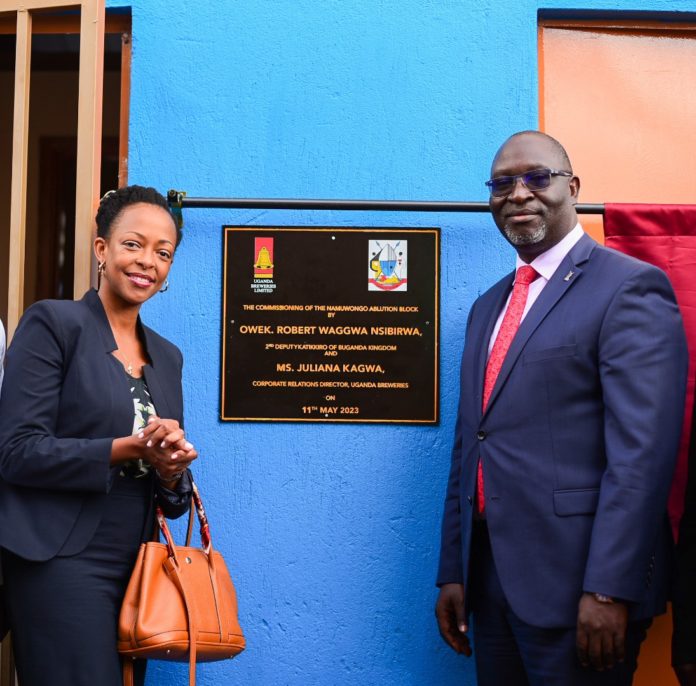
Kabaka Foundation and Uganda Breweries have commissioned the Namuwongo sanitation block which is one of the eight blocks that have been constructed in Katwe, Mulago, Mengo, Nakulabye, Kireka, Nateete, Lubiri, and Namuwongo over the past two years.
These sanitation blocks will give residents of these respective communities’ easy access to clean water and sanitation services.
Uganda over the past two decades has experienced economic growth which has led to large population movements from rural areas to informal settlements around urban centers. The increase in population has caused stress on the water and sanitation services that exist in urban areas. Out of its population of 45 million people, 38 million people, that is, about 83% of the population lack access to a reliable source of water, and 7 million people lack access to improved sanitation solutions.
The eight sanitation blocks consist of a urinal section, two male toilets, one bathroom, one male seat toilet for disabled persons, two female toilets, one bathroom, and one female seat toilet for disabled persons. This all together is going to serve an average population of 1,900 people per block, summing to 15,200 beneficiaries. The sanitation blocks will be accessible to the community members 24/7 and will contain running water in the toilets, bathrooms, and hand washing area.
Owek. Robert Wagwa Nsibirwa, the second Deputy Prime Minister and Minister for Finance of the Buganda Kingdom thanked UBL for the continuous support in improving the levels of sanitation in various areas around the suburbs of Kampala and beyond.
“The need for accessible water sources that have clean and safe water cannot be ignored because the lack of those facilities means that the people’s health in those particular communities is at great risk. Therefore, interventions such as these will help to prevent those health hazards in our communities. Now that you have received these facilities, let it be everyone’s responsibility to take good care of these facilities and maintain good hygiene so that they can serve us for many years to come and most importantly, sustainably manage the project after it has been handed over,” Nsibirwa said.
“I also thank the local leaders of the respective areas who have collectively worked with their respective communities to support the project implementers. Your love and dedication to your community and the people is what has made this possible,” Nsibirwa added.
Speaking during the commissioning of the Namuwongo sanitation block, Uganda Breweries Corporate Relations Director, Juliana Kaggwa the brewery is committed to improving access to water, sanitation, and hygiene to various communities across Uganda that have a hard time accessing clean and safe water or toilets and bathrooms.
“As the brewery, we are deliberate in finding ways to create impact communities because we are part of society. This makes us optimistic that the construction of these reliable water supply facilities in these areas is going to play a huge role in easing access to clean and safe water, which will ensure healthier communities.” Kaggwa said.
The netball federation president, Sarah Kityo (R) explaining how the Shs100 million was used (Courtesy photo).
The Shs100 million that was allocated to the Uganda Netball Federation (UNF) in the Financial Year 2021/2022 for the International Male Netball Championship in South Africa has exposed the professional misconduct of the federation’s top officials.
The money in question was disbursed by the National Council of Sports to the netball federation in 2021 to facilitate the preparation of Uganda’s men netball team, the Rock, to participate in the championship which took place in Pretoria, South Africa in September 2021.
Parliament’s Public Accounts Committee (PAC) (Central Government) that is currently probing the matter as reported by the Auditor General John Muwanga has noted accountability flaws in the expenditure of the funds which adversely affected the facilitation of the netball players in terms of allowances, meals, accommodation and other planned activities.
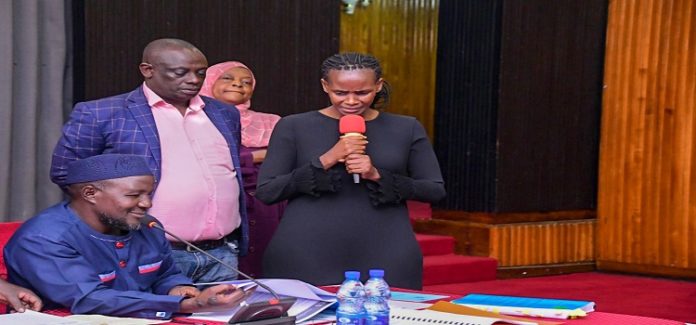
As a result, the PAC deputy chairperson, Asuman Basalirwa, on Thursday handed the UNF President, Sarah Kityo, Richard Muhumuza (Vice President) and Aidah Nambusi (Treasurer) to the Parliament Police Criminal Investigation Department for further management.
This is after the officials, while appearing before the committee, failed to properly account for the funds but rather pointed fingers at their president for allegedly diverting a huge chunk of the money for her personal use at the expense of the planned activities.
Nambusi told the committee how on the eve of the night the players travelled to South Africa she withdrew Shs98 million of the received Shs100 million and took it to Kityo in her office in the presence of other executive committee members for allocation as per the planned budget.
However, to her shock, Kityo ordered her to leave her office claiming that her services were no longer needed since she was not part of the team travelling to South Africa.
“Out of the Shs98 million, she told me to pay Shs11 million to Beyond the Sky Travel Company for five air tickets and another Shs1.7m Mando Shoes and Clothing Centre. The rest of the money (Shs85.3 million), she told me to hand over all the money and leave the office,” Nambusi said.
Nambusi added that Kityo received the money without signing on any voucher claiming “she was time-barred and that accountability would be done when they return from the trip.”
“Even when I later returned to ask her about the documents and information of how the money was spent so that I could account for it, she [Kityo] told me not to bother because she has an accountant who will do the accountability. I was left useless and since then, I have never done any accountability at UNF,” she said.
Both Yahaya Sengabi, UNF Publicity Secretary and UNF Secretary, Aminah Mande, who were present when Kityo was handed the money confirmed that indeed the latter received the money and single handedly managed it without the committee’s input.
“It is true that when the treasurer asked the president to sign the voucher, she barked at her and reminded her that she is the president of the federation. She got Shs25 million out of the Shs85.3 million and put it aside. She removed another Shs5 million which she said was for paying for the sports kits. When I reminded her that we needed to distribute the money according to the needs, she reminded me how I am a public relations officer,” Sengabi said.
Vice President Muhumuza said Kityo would then give him Shs15 million out of the balance left to give to NCS General Secretary, Dr Bernard Patrick Ogwel, who had lent them money to secure visas for the players. She also handed him another Shs40.3 million which he would use to facilitate the netball team in South Africa.
“You realise that the budget of Shs72 million which we had prepared was not followed. I had to work within the available Shs40.3 million which she gave me. This affected the meals and even players’ allowances,” Muhumuza said.
Kityo denied all the allegations saying she is not responsible for the accountability of the funds meant for the netball team in South Africa. “I delegated Muhumuza as the responsible officer for financial management of the entire trip in South Africa. Also, I did not authorise any payment in regards to the Shs100 million,” she said.
She also denied ever making any accountability to NCS in respect of the said money despite the committee showing her the accountability letter that was reportedly authored by her.
When interrogated further by Basalirwa on if she received any money from the Shs100 million either in form of allowances, Kityo said, “I do not remember at all getting any money.”
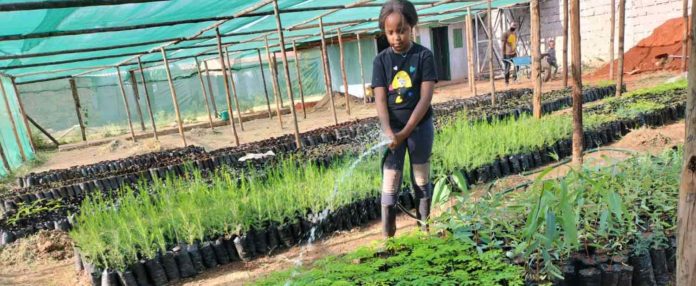
Karen Kimani at work in one of her nursery beds (Courtesy photo).
Karen Wanjiru Kimani, a young African ambassador for the environment, has called for policies that will encourage young people to participate in protecting the planet, including through climate change mitigation.
The Kenyan-born 10-year-old environmentalist said: “As future generations, it is important that we are not overlooked in some of the programs or activities regarding protecting the planet. Our leaders must catch us young. After all, we will be the ones to gain or suffer tomorrow as a result of the policies and actions being implemented today.”
Karen, who has received many awards for her efforts to protect the environment, including through planting trees, was speaking ahead of the African Development Bank Group’s 2023 Annual Meetings, to take place in the Egyptian resort of Sharm El Sheikh from 22 to 26 May
The event has the theme Mobilizing Private Sector Financing for Climate and Green Growth in Africa.
The meetings will offer the Bank Group’s Governors and global businesspeople and investors the opportunity to share experiences of mobilizing domestic and international private sector funds, including harnessing Africa’s natural capital, to close the climate financing gap and advance the transition to green growth in Africa.
The meetings also provide African governments a forum to discuss the nature and level of support they need from development partners, such as the African Development Bank Group, to achieve their climate ambitions.
Karen expressed the hope that the meetings would yield “tangible outcomes.”
“Africa’s contribution to global climate change is very small, but the continent suffers the most,” she said. “Our countries need much more money to fight climate change and protect the planet. So, I want to hear about more action when they meet; we have heard enough of talking.”
Karen has won several awards locally and internationally for her tree-planting efforts—she has planted more than 10,000 tree seedlings to date—and other environmentally friendly actions. These include the MTM Environmental Excellence Award, Bristol, United Kingdom; and winner of Kenya’s 2022 Green Kid Awards for children that have impacted nature through climate change and environmental protection actions. She was also recognized by the African Development Bank and the Global Center on Adaptation jointly during COP27 in Egypt.
“Protecting the natural environment is a nice thing. It has beautiful trees and flowers that give us life,” says Karen, who started planting trees at age four.
She plans to open a factory that will produce biodegradable bottles.
According to estimates, Africa has lost between 5 percent and 15 percent of per capita GDP growth from 1986 through 2015 due to climate change-related impacts.
The African Development Bank projects that, without strong climate change policies, Africa could lose as much as 12 percent of GDP by 2100, depending on different scenarios. This is compared with losses of less than one percent each for the United States and the European Union, and no more than five percent for China.
African Development Bank (AfDB) has slapped a 24-month ban on Goldsun Investments Company following evidence that the company wanted to win a tender for a major road project in the country through fraud. The ban is effective from January 13, 2023.
According to the Bank’s Office of Integrity and Anti-Corruption Goldsun Investments Company Limited wanted to un fairly win the contract for the dualling of the 84 kilometre Kenol-Sagana-Marua highway, Lots 1 and 2, components of the Kenol-Sagana-Marua Highway Improvement Project sponsored by AfDB, a major funder of infrastructural projects in Africa.
The Kenol-Sagana-Marua Highway Improvement Project is part of the Kenyan section of the Trans-Africa Highway (Cairo to Cape) and is expected to enhance the movement of goods and services, as well as people between the counties in Central and Eastern Kenya on the one part, and the capital city, Nairobi, on the other part.
AfDB says during the debarment period, Goldsun Investments Company Limited will be ineligible to participate in Bank Group-financed operations and activities. Additionally, the debarment qualifies for cross-debarment by other multilateral development banks under the Agreement for Mutual Enforcement of Debarment Decisions, including the Asian Development Bank, the European Bank for Reconstruction and Development, the Inter-American Development Bank and the World Bank Group.
“At the expiration of the debarment period, Goldsun Investments Company Ltd. will only be eligible to resume participation in African Development Bank Group-financed operations and activities after it implements an integrity compliance program consistent with the Bank’s guidelines.”
The Office of Integrity and Anti-Corruption of the African Development Bank Group is responsible for preventing, deterring and investigating allegations of corruption, fraud and other sanctionable practices in Bank Group-financed operations.
Uganda Hotel Owners Association (UHOA) has partnered with Pespal to offer cashless transactions and streamlined operations in the country.
Uganda’s travel and hospitality industry has steadily progressing until the outbreak of #Covid-19 pandemic. According to UNDP, during the pandemic, the arrivals dropped to 156,000 in 2020, and the hospitality sector suffered great losses from 2019 to 2021. Prior, the sector contributed to 7.7% of GDP and earned $1.6 billion annually, twice as much as the forex income earned from the largest export, coffee.
During and after the pandemic several businesses shifted their modes of operations to online, offering quality and reliable services. In tandem, the modes of payments changed to cashless or online transactions.
Susan Muhwezi, the chairperson of Uganda Hotel Owners Association said with the increasing demand for contactless payments and streamlined operations, the partnership will play a critical role in promoting the adoption of digital solutions, enhance customer experiences, improve efficiency, and drive growth in the hospitality sector.
“Digital payment solutions are so critical in the travel and hospitality industry. With the growth in the industry, we need efficient payment solutions that cater for the diversity of businesses within the industry. It is not surprising that the effects of #Covid-19 have necessitated and accelerated the need for safe, secure and timely payments solutions,” she said.
“Hotel owners partnering with Pespal will bridge the gap and make the experience in hotels a lot more convenient. We believe that it will offer a one stop solution to all payment concerns raised by hoteliers,” she said.
She said Pesapal should use this opportunity to ensure that Uganda hotel owners association does not lose another service provider. We want exceptional services. This engagement has familiarized our members with the benefits of online payment solutions.
She said Pesapal offers a solution to one of their strategic objectives of offering a seamless, efficient and timely payment solution particularly after the #Covid-19 pandemic where we shifted our modes operations online to look for a tailor-made solution.
Isao Otika, the Technical Director at Pesapal said with cashless transactions, all the payments are guaranteed and received ahead of time, especially with online payments, because customers pay from the comfort of their home and payment is received instantly.
“There is automatic reconciliation unlike cash. All the transactions that happen on this system are automatically reset, reconciled with any accounting system. Your finance team will appreciate that facility, unlike cash where you have to balance your books and make losses in case you received fake notes,” he said.
Government in partnership with the United Nations Population Fund (UNFPA) are committed to work together to ensure sustainable financing for Reproductive Health commodities for women and girls in Uganda.
This programme delivers a choice of modern contraceptives and life-saving maternal health medicines through strategic country-led actions to strengthen supply chains and reproductive health services.
The programme will also prioritize accountability and the effective use of resources to reach the last mile and also marks a step forward for the realization of the Government of Uganda’s FP2030 Commitment as well as universal access to sexual and reproductive health services including family planning.
While speaking at the event, Minister Kasaija noted that with over half of the population under the age of 18, Uganda’s population is expected to increase over the coming decades as the number of children, adolescents, and youth is forecasted to rise from 27 million in 2015 to 75 million in 2080.
Minister Kasaija said that these population dynamics put Uganda uniquely in position to harness the economic and social benefits of a young and growing dynamic population.
“The optimized relationship between population growth and accelerated economic growth, also referred to as the demographic dividend, is not automatic. Harnessing the demographic dividend hinges on key and strategic public investment choices. First and foremost, it is critical that the dependency ratio, the share of working-age adults to children, continues to decline”, Minister Kasaija said.
“For Uganda, achieving this demographic dividend will not only accelerate economic growth, getting us closer to attaining middle-income status, it also has the potential to boost key social outcomes crucial to improving the daily lives of Ugandans,” he added.
Minister Kasaija further noted that sexual reproductive health and in particular family planning is one of the key pillars in accelerating the opening of the window of opportunity to harness the demographic dividend.
“The Government of Uganda recognizes the contribution of Family Planning to the social-economic transformation of the country through Uganda’s Vision 2040 with a goal of transforming the country from a predominantly low economy to a competitive upper middle-income country with a per capita income of $9,500 dollars”.
Kasaija revealed that one of the ways to reduce the total fertility rate is by increasing uptake of contraceptives which calls for investing in the procurement of family planning commodities.
“This will allow for a smaller number of children per household, resulting in larger investments per child, more freedom for women to participate in the national labour market and more household savings for old age thereby providing a window of opportunity for future economic growth” he emphasised.
Hon Kasaija said that the Compact Agreement is an emphasis of Uganda’s commitment to invest in family planning as a key intervention to address the unfavorable demographics profile under vision 2040 as the country journeys to middle-income status.
Dr Mary Otieno, UNFPA Representative in Uganda said that in 2019, at the International Conference on Population and Development (ICPD) summit in Nairobi, Uganda committed to promoting universal access to all methods of family planning and to reduce the unmet need for family planning from 28% to 10% by 2022, but also pledged to increase the financial support towards reproductive health and family planning supplies and commodities to the last mile.
According to the 2016 Uganda Demographic Health Survey, the modern Contraceptive Prevalence Rate (mCPR) increased from 18.2% in 2001 to 34.8% in 2016, the unmet need for family planning reduced from 35% to 28% for all women while the total fertility rate reduced from 6.9 to 5.4 over the same period.
Dr Otieno is optimistic that there will be further improvements noted by the 2022 Demographic and Health Survey currently being analysed and noted that despite these achievements, about 3 out of 10 women in Uganda who want to avoid pregnancy are not using modern contraceptives.
“They are left behind because formidable barriers to reproductive health continue to persist in matters of policy, finance, sociocultural norms, strained health systems, inadequate services and weak supply chains”, She said.
Dr Otieno noted that the programme will ensure that a young woman entering her reproductive years can count on access to and availability of information, services and supplies to protect her sexual and reproductive health and rights.
“She can stay in school, delay marriage, space or avoid pregnancy, protect her health and earn more income”, Dr Otieno said.
“We know that affordable, quality sexual and reproductive health services save and improve lives. Stronger partnerships including governments, donors, other United Nations agencies, international and national nongovernmental organizations, civil society organizations, academia, the private sector and other implementing partners, can enhance the efficiency and impact for change”, She added.
She commended Uganda for increasing its domestic financing contribution towards the procurement of family planning commodities allocating over 25% of the 6.2 million US dollars for the Reproductive health commodities budget, noting that it will greatly contribute to the achievement of Uganda’s Vision 2040.
MTN Uganda with market capitalisation of $1 billion is Uganda’s most valuable brand, according to the latest annual survey done by African Business Magazine headquartered in South Africa.
According to the survey, MTN Uganda attained position 102 out of the 250 companies ranked in Africa. This was an improvement when compared to the 105 position the Ugandan telecoms giant attained previously.
Stanbic Bank Uganda with market capitalisation of $285 million came second in Uganda even though it was ranked 224 in Africa, which was a decline given that the Ugandan lender previously came in position 215 when it had capitalisation of $357 million.
East African telecoms giant Safaricom retained the top spot in East Africa despite a decline in its overall ranking. On the continent Safaricom is was ranked 25th with $5.4 billion market capitalisation, from position 12, when it had capital of $11.89 billion.
Tanzania Breweries Ltd, Equity Holdings Group and East African Breweries were ranked 77th, 83rd and 101st position with a market capitalization of $ 1.37 billion, US$ 1.29 billion and $1 billion, respectively.
Other companies in the Top 250 companies are; KCB Group ($861 million), NMB Bank ($748 million), Vodacom Tanzania ($737 million), Tanzania Cigarette Co ($726 million) Co-operative Bank of Kenya ($582 million), Absa Bank Kenya ($525 million), Standard Chartered Bank Kenya ($485 million).
Others are; British American Tobacco Kenya ($350 million), Stanbic Bank Kenya ($328 million), Tanzania Portland Cement ($311million) and I&M Holdings ($260 million) are the other companies that have made it to the list of Top 250 companies in Africa.
The African Business Top 250 Companies survey focuses on the biggest companies, with the ranking determined by the market capitalisation (total value of the listed shares). The market capitalisation is converted into US dollars on the same date.
To be ranked, the company must be listed on the national and regional stock exchanges across Africa and make huge profits and invest in Africa-wide strategies to seize future opportunities.
Market capitalisation declines
Overall, the market capitalisation for the top 250 biggest listed companies declined considerably since the 2022 survey, from $701 billion to $561 billion, and is well below the record$948 billion achieved in 2015.
The 2022 figure represented, however, a strong recovery from the low of $556 billion recorded in 2020 at the height of the #Covid-19 pandemic. Many companies enjoyed a temporary bounce from the release of pent-up demand.
Yet this year’s market capitalisation has drifted below the lows of the pandemic – and much more needs to be done to support the growth of a vibrant private sector across the continent.
According to a recent McKinsey study, of the 438 African companies with revenues in excess of $1 billio, 60% were privately owned and 25% were subsidiaries of foreign-domiciled multinationals.
The continent’s biggest oil firms, such as Sonatrach from Algeria and Sonangol from Angola, would be among the very largest companies if they were listed. The Angolan government has pledged to list Sonangol on the Angola Stock Exchange, but the timetable for this has repeatedly slipped and the current target date is in 2027.
South African companies still dominate
The lion’s share of this year’s decline is due to big drops in the value of South African stocks, from $488 billion to $375 billion over the past year. The position of South African companies within the pan-African corporate landscape is particularly interesting.
Stock values on the Johannesburg Stock Exchange (JSE) have tumbled in dollar terms over the past year through a variety of factors, including the falling value of the rand; the underlying weakness of the South African economy; and the impact of low infrastructural investment on power supplies and transport reliability. This is reflected in our survey, with the number of South African entries in our Top 250 falling from 133 last year to 96 in our 2023 rankings.
However, it is important to note that cyclical fluctuations in demand for mining commodities have also played a role. Commodity prices soared as the #Covid-19 pandemic and associated lockdown measures were lifted, driving up the value of the mining companies that comprise a significant proportion of the JSE. For instance, the value of the highest-ranked mining company in our table, Anglo American Platinum, jumped from $11.3 billion in March 2020 to $38.6 billion in 2021 and then $36.4 billion the following year, before crashing to $14.2 billion this year, with its value mainly determined by wide fluctuations in global demand.
The total value of the Top 250 was also affected by several delistings, notably South Africa’s Massmart and Danone Centrale in Morocco. The lack of medium-term growth in the value of Africa’s biggest corporations is, however, also partly a function of general African economic trends, with the optimism generated by moderately robust growth in the first part of the new millennium giving way to more patchy growth punctuated by a handful of stronger growing economies.
The lack of progress is also reflected in the lack of strength in depth. The 250th position in the rankings was achieved with $394 million in 2018; but that figure fell this year to the $229 million valuation of Cleopatra Hospital in Egypt.
Despite continued weak economic growth in South Africa, the country’s 96 corporations listed in the continent’s Top 250 companies completely dominate it, taking 67% of its entire value, with combined market capitalisation of $375 billion out of the $556 billion total for the Top 250.
Nine of the top ten slots were filled by South African companies, with only telecoms company MTN Nigeria intruding into a perfect ten, while 15 out of the top 20 are South African. Of the remaining five, three are Nigerian and two Moroccan, which fairly reflects the balance of power in the overall table.
Naspers leads the table with market capitalisation of $81 billio, up from $50 billion last year, although still down from a high point of $104 billion in 2021. Naspers also has the highest net income by a long way, with $12 billion, ahead of Anglo-American Platinum with $2.7 billion. However, analysts have suggested that some of the company’s operations may have little room for growth in its domestic market.
Naspers moved to the top of the pan-African rankings in 2016 following the purchase of a 33% stake in Chinese tech and entertainment company Tencent – but now plans to sell off some of its stake to fund a planned share buyback.
Its stake in Tencent was worth about $100bn at the start of the year, but the company’s share price on the JSE lies significantly lower than its net asset value per share, because of its complicated dual system of voting rights, which reduce shareholder influence on the company’s operations.
FirstRand moves up one place to second, despite a big fall in value from $30 billion to $19 billion, with fellow South African bank Standard Bank rising two positions to third with $16 billion, from $21 billion last year, representing a far more modest fall.
Beyond South Africa
South Africa’s continued dominance of the African corporate landscape obviously means that the rest of the continent appears – and indeed is – underrepresented in the rankings. North Africa accounts for 14.3% of the value, followed by West Africa with 11.4% and East Africa 3.3%.
The next biggest markets by combined market capitalisation are Nigeria with 9.3%, Morocco with 8.8% and Egypt with 4.7%. There is not a single entrant from Central Africa, and some individual countries are conspicuous by their absence, including Algeria, Ethiopia and the Democratic Republic of Congo (DRC). State control largely explains the first two, while many of the biggest economic enterprises in the otherwise underdeveloped DRC are foreign mining companies.
The survey shows Mauritius is the next most important country in the Top 250, with six companies and 1.3% of market value, an increase of 2 percentage points. It is followed by Namibia with seven entrants and 1.2%, also up 2 points on last year. The remaining Southern African companies come from Malawi (7), Botswana (3), Zimbabwe (3) and Zambia (2). It might be expected that Zambia would enjoy stronger representation – but its large mining sector is dominated by foreign companies.