Stanbic Bank
Stanbic Bank
22.9 C
Kampala
Stanbic Bank
Stanbic Bank
Home Blog Page 403

Gov’t Chief Whip confesses to receiving iron sheets 

Government Chief WhipDenis Hamson Obua has denied participating in the mismanagement of Karamoja relief items but admitted receiving the controversial iron sheets meant for the sub-region. 

 Obua who is also Ajuri Couty legislator told the Parliamentary Committee on Presidential Affairs investigating the mismanagement of Karamoja relief items that he received the iron sheets from the Karamoja Minister Mary Gorreti Kitutu. 

According to Obua, on January 23, 2023, after cabinet meeting, he received a verbal communication from Kitutu that there were 300 pieces of iron sheets allocated for his constituency, Ajuri County by the Office of the Prime Minister- OPM in form of a donation and that they were ready for collection at OPM store.

“I instructed my personal assistant, Winfred Mwesigye who signed for and collected them on February 1, 2023, for further distribution,” he said.

“Clearly labeled the Office of the Prime Minister, the iron sheets were transported to Ajuri County, Alebtong District and I gifted them to six government aided schools.  I wish to categorically state that I have never participated in any alleged mismanagement of relief items meant for Karamoja sub-region and neither did I solicit nor request for them,” he said.

He said the line Ministers should be held liable for the mismanagement of the relief items.

Appearing before Committee last month, Kitutu accepted responsibility for the mismanagement of iron sheets procured for the vulnerable people in the sub-region and apologized noting that she was never guided about the project.

Kitutu requested for 12,200 iron sheets to aid her in community mobilization and peace-building missions in Karamoja.

Her January 12, 2023, internal memo to the stores’ department at the OPM read in part, “During community mobilization and peace-building missions, I usually meet vulnerable groups and Karuchunas (reformed warriors) who are willing to dissociate themselves from cattle rustling. As part of my intervention, I will be distributing iron sheets to such special vulnerable groups.”

In February, security operatives nabbed Cotilda Kitutu, Michael Nabwaya, and Julius Wabule, the relatives of the Karamoja Minister allegedly selling iron sheets in Namisindwa District. The accused are the mother, brother, and nephew of Minister Kitutu.

Stories Continues after ad

Finance Ministry moves to recapitalize Central Bank with Shs217b

Jennifer Muhuruzi, Acting Director Treasury Services and Asset Management at Ministry of Finance.

Ministry of Finance has appealed to Parliament’s Finance Committee to approve Shs217.330 billion for the recapitalization of the Bank of Uganda in the 2023/2024 national budget.

However, no single money has been availed for this item, with Jennifer Muhuruzi, Acting Director Treasury Services and Asset Management at Ministry of Finance, calling on Members of Parliament to support the latest endeavor to recapitalize the Central Bank to ensure its smooth operations in the 2023/2024 Financial year.

Muhuruzi said that the Government wants another Shs1.2 trillion to pay up the money it borrowed from the Central Bank to finance the national budget.

“We do have Bank of Uganda reimbursements and this is Shs1.2 trillion, last financial year, we weren’t able to clear all the reimbursements and we had to carry this forward. We had talked about capitalizing the Bank of Uganda so we have made a provision of Shs217 billion as per Bank of Uganda Act and our responsibilities to our agents who are the Central Bank. So Shs217 billion has been put in the budget but it hasn’t been provided for in the estimates,” Muhuruzi said.

However, Muwanga Kivumbi (Butambala County) wondered why Government should shoulder the burden of recapitalizing the Central Bank yet the entity charges the Government highly for the money it borrows.

“You want us to capitalize the Bank of Uganda to the tune of Shs217 billion and at the same time, this Bank of Uganda charges exorbitantly. I want to be convinced, which one is which? We are capitalizing you, you are charging highly, so this animal called Bank of Uganda and this capitalization has been everywhere almost every financial year except last financial year,” Muwanga said.

Although the Treasury Operations claims that the request for recapitalization was made by the Bank of Uganda, it should be recalled that in January 2021, a similar claim was made by the Ministry of Finance, only for the Deputy Governor, Bank of Uganda, Michael Atingi-Ego, to distance himself from the request denying that Bank of Uganda had not sought for Shs481 billion to recapitalize the Central Bank, describing the request as impractical.

Atingi-Ego said that the Central Bank could not have requested for Shs481 billions as purported by the Ministry of Finance in the 2021/2022 National Budget Framework Paper because the Bank’s books for the same financial year haven’t been audited to establish the capital position of the Central Bank to warrant its recapitalization.

The denial angered MPs who accused the Ministry of Finance of using the perennial recapitalization requests to Bank of Uganda, to siphon funds, by hiding behind the Central Bank.

Stories Continues after ad

Ssewanyana, Ssegirinya to attend today’s plenary after one and half years

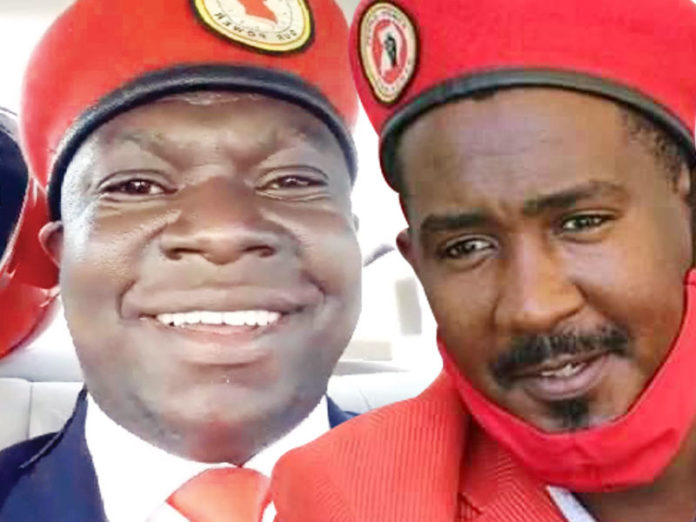
Makindye West legislator Allan Ssewanyana and Kawempe North MP Muhammad Ssegirinya will for the first time go to parliament after one and half years.

On February 13, 2023, Masaka High Court judge, Lawrence Tweyanze granted Shs20 million bail to the two legislators after spending over one year on remand.

Eagle Online has learnt that the two MPs will first go to the Leader of Opposition in Parliament –LoP Mathias Mpuuga who will later lead them to the Speaker of Parliament Anita Among for guidance before joining their colleagues in the plenary.

The two MPs and four other suspects are accused of terrorism contrary to sections 7 (1) and (2) (d) and (d) of the Anti-Terrorism Act 2002 in count one, aiding and abetting terrorism contrary to section 8 of the Anti-Terrorism Act 2002 in count two, murder contrary to sections 188 and 189 of the Penal code Act in Counts three, four, five and attempted murder contrary to section 204 (a) of the Penal code Act.

Prosecution states that the two legislators together with other suspects -some on remand and others still at large on August 2, 2021, allegedly killed Joseph Bwanika, a resident of Kisekka Village in Kisekka Sub County in Lwengo District.

It is further alleged that on August 23 at Ssettaala Village in Masaka City, the MPs and their co-accused persons killed Francis Mugerwa Kiiza aka Nswa, Sulaiman Kakooza and Tadeo Kiyimba.

The MPs are also accused of attempting to kill Ronald Ssebyoto, a resident of the same area. They are also accused of financing the killings in the Greater Masaka region.

Stories Continues after ad

Opiyo Oloya, Vladimir Putin is good for multipolarity

Ambassador Henry Mayega.

By Ambassador Henry Mayega

The recent brazen opinion of Opiyo Oloya about the President of Russia, Vladimir Putin, utterly evinced the author as “a young boy who tries to shake a baobab tree but only ends up shaking his rump.” He essentially cancelled himself out as a pragmatical global south citizen by being harrowingly upbeat about ICC’s indictment of Vladimir Putin over the alleged “removing of Ukrainian children from their home country and taking them to Russia.” Apparently Russian speaking children and adults from Eastern Ukraine were evacuated to safety at the beginning of the Russian special operation to escape from the Ukrainian ultranationalists’ pogroms – that is normal practice in all conflict-ridden areas.

Since WW2, the west, more than anybody else, has overthrown or invaded tens of governments. Despite Opiyo’s exaltation of the west which has luxuriated as a free world, they, last year, shamelessly blocked RT and Sputnik – both Russian media houses from broadcasting into the northern hemisphere!  

Opiyo Oloya, the most recent invader of Afghanistan was, in August 2021, seen removing several Afghan children without their parents from their country after pulling out its forces – why didn’t the ICC issue an arrest warrant? You went ahead to disparage President Xi Jinping’s recent visit to Moscow which to you was meant to “buy dirt cheap oil and gas that Russia cannot sell to Europe because of the trade embargo…and turn Russia into an open market for dumping Chinese goods” – big lie; Russian “dirt-cheap” oil as well as gas are finding their way into the west through third parties.

To dispel Opiyo’s intellectual dishonesty and objectively appreciate the causes, course and consequences of the operation, one has to interrogate the intervening period after the collapse of the USSR to the start of the operation last year. Earlier, NATO committed to no expansion toward the Russian Border; they have, however, been threatening Russia’s security by expanding rapidly towards its border.

The situation was exacerbated by NATO creeping farther and farther to the east; the Baltic States that initially were once part of the USSR are the most recent engulfment; Ukraine was to follow. In the case of Ukraine, a majority of its eastern citizens are Russian speaking – a target of the Ukrainian ultra-nationalists who sought to force them not only speak Ruthenian but also carried out deadly pogroms against them claiming over 14,000 people. Opiyo, hopefully, remembers how the US reacted to the Cuban Missile Crisis of 1962 because what’s good for the goose is also good for the gander.

NATO’s expansionist policy eastwards was purposed to lock in Russia’s strategic naval fleet in Sevastopol, Crimea – a region that had been gifted by Russia to Ukraine in 1954; their place of long standing military tradition and major access to that warm water port as well as the Mediterranean sea.

In short, 2014 was a deciding moment in Ukraine; at Maidan, Kyiv’s city square, deadly violence engulfed that piazza pitting the ultra-nationalists, militias and stone-hearted oligarchs against whoever opposed their agenda of joining the EU and NATO.

These are some of the underlying issues that Opiyo glossed over in his quest to soothe the nerves of his westerly friends. Nothing was more bizarre and preposterous than his fertile imagination that President Putin’s indictment by the ICC put him on the wire; for firsts, Russia is not a signatory to the Rome Statute which established the court that infamously and largely molests the gullible in the global south; the ICC doesn’t have a particle of jurisdiction over Russia. By parroting the western narrative, therefore, Opiyo is not better than those who collaborated with the pilfering colonialists. His piteous narrative is purposed to benefit the west’s hegemonic stranglehold on the rest of the world with all its poignant attendant economic trappings.

Secondly, those who “justified” the ICC arrest warrant against Vladimir Putin – a man revered by many in the global south for championing the equalizing multipolarity are themselves not ICC members. So, where did they get the locus standi to hail that court’s decision while simultaneously quizzing its competence thesis?

And so, when Opiyo, with approbation, cheers Putin’s ICC indictment, he exudes a sycophantic and apologetic posture to neo-colonialism hence exacerbating the north-south polarizing paralysation.

Analogously, Russia, like China, is impelling for a multipolar world in place of western unilateralism that has perpetuated a debilitating stranglehold on us for far too long. Africa, for instance, has been demanding for representation on the UNSC for decades to no avail. Some may gloss over that injustice committed against Africa but that duo has consistently advocated for the actualization of our demand.   

Consul General

Uganda Consulate

Dubai, UAE               

Stories Continues after ad

Police intensifies security ahead of Easter celebrations

Police officers on foot patrol.

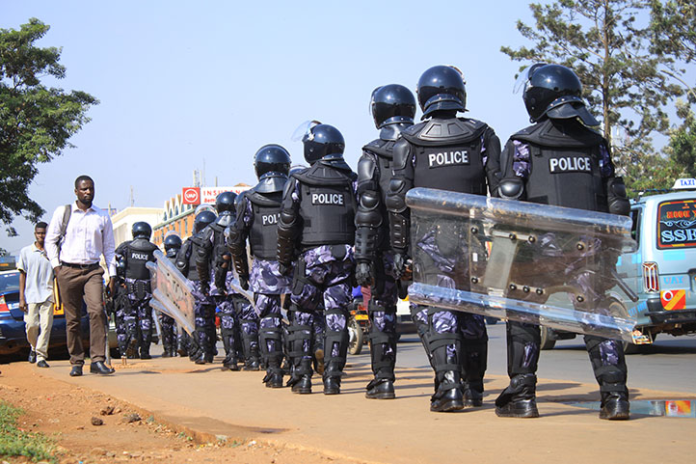
As a precaution to protect Ugandans, the Uganda Police has intensified security measures at churches and other worship centers during this Holiday week and Easter celebrations.  The Easter celebrations are due to take place on Sunday 10.04.2023.

“Because of the Easter holiday, we anticipate many people will be travelling to their hometowns and villages for the Easter Holiday. Many others will go partying, celebrating, shopping and thanksgiving. As a result, we expect an increase in criminal activity, and other threats to public safety, especially robbery, bag snatching, frauds, livestock theft,” Police stated.

Although there are no specific threats directed towards the Easter holiday, police continue to actively monitor all activities to ensure there are no credible threats in the country. Police have increased patrols, visibility and other security interventions that will run through the Holy week Easter Sunday and Easter Monday.

“We have also partnered with all religious leaders and stressed the importance of community vigilance. We would like to remind all places of worship to review their security measures and contingency plans on protecting the churches and its assets like installing intruders’ alarms, use of forensic markers, encouraging local vigilance, and minimizing the risk of arson among others,”

Police added.

We encourage those that are travelling to plan for early movement and additional time to the transport hubs and delays along the major roads and highways. For those going shopping, we encourage you to avoid carrying large sums of money, displaying valuables, use ATMs at banks, hotels, shopping malls for safety etc.

Police further warned all criminals that they are well prepared to deal with them. Adding, “Our territorial commanders have been tasked to do everything within their means to deliver a joyful and peaceful Easter holiday to Ugandans and visitors in the country.”

Stories Continues after ad

Col Chris Sseruyange takes over as new Uganda’s Defence Attaché to Saudi Arabia

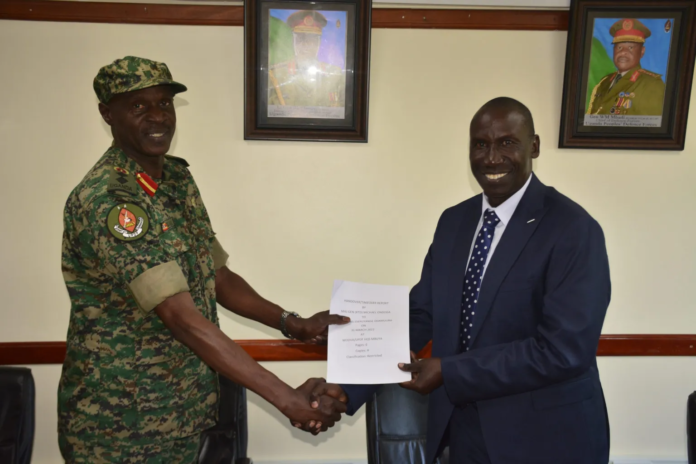
Colonel Chris Sseruyange Ddamulira has taken over as the Defence Attaché to Saudi Arabia, replacing Maj. Gen (Rtd) Micheal Ondoga who has been serving in the role for over three years.

 The UPDF Joint Chief of Staff Lt. Gen. Leopold Eric Kyanda while presiding over the handover/takeover function thanked Maj. Gen. Ondoga for the well-served time on duty. He assured Maj. Gen. Ondoga that, despite his going into retirement, he remains a key resource of the UPDF and can be called upon for any assignment.

He congratulated the incoming Defence Attaché and wished him a successful tour of duty. He advised him to uphold the good relationship between the two countries. He urged him to maintain the UPDF reputation of discipline and excellence.

 The Outgoing Defence Attaché Gen. Ondoga thanked the CIC, Gen YK Museveni for the opportunity to serve and the UPDF leadership for the tireless support during his tour of duty. He further remarked on the open working relationship he enjoyed with the host country and wished his successor the best.

The incoming Defence Attaché to Saudi Arabia, Col. Chris Seruyange Ddamulira in his remarks thanked God, the Commander in Chief Gen YK Museveni and the UPDf leadership for entrusting him with such a key office.

“I joined the UPDF as a young man and therefore, any training and education I have, it has been UPDF and I promised to serve to the best of his ability,” Seruyange remarked.

 Uganda and the Kingdom of Saudi Arabia continue to enjoy friendly relations that have grown and developed over the years, deepened by common interests and mutual benefits. Relations between the two countries are witnessing increasing cooperation in the fields of defence, economy, science and society.

 The two countries also share joint membership in the United Nations (UN) and the Organization of Islamic Cooperation (OIC), among the membership of international organizations.

Stories Continues after ad

Continued demand for dollars keeps the Shilling on a back footing

The currency was quite volatile during the week opening the session trading at the 3765/3775 levels and weakening to trade at lows of 3790/3800 before strengthening marginally to trade at the 3770/3780 levels.


Continued demand for dollars kept the unit on a back footing but healthy month-end inflows gave the currency some relief. Looking ahead as we head into the new month the currency is anticipated to trade within the 3720 – 3820 trading range and still expect some pockets of demand for dividends but also continued flows from NGOs, commodity exporters and other sectors.
Fairly liquid Money Markets during the week with overnight yields easing marginally to trade within the 9.00% -12.00% levels during the week. Bank of Uganda held a Treasury Bill auction on Wednesday and the 91-day, 182-day and 364-day tenors cleared at averages of 10.384%, 10.512% and 13.000% respectively. The next Monetary Policy Committee meeting is scheduled for 6th April 2023.


Catherine Kijjagulwe, Head of Trading at Absa Bank Uganda at last some two-way flow was seen in the Kenyan market during the week with some inflows from the tea sector and Central Bank, but continued demand from the energy and manufacturing sectors kept the unit weak. The unit traded within the 130.50 -140.50 levels. The Monetary Policy Committee raised the Central Bank rate by 75bps to 9.50% citing continued inflationary pressures.


“The dollar was volatile during Thursday’s session losing some ground as bond yields edged lower as the market awaits the US Inflation print and the Fed’s upcoming action with regard to Monetary Policy,” she said.


The Euro rode on the dollar’s weakness to touch highs of $1.0926 (Shs 4110) on Sunday, closing the day at $1.0906 (Shs 4103).
The Pound followed suit, touching highs of $1.2393 (Shs 4662) as concerns of a financial crisis subsided during the week.
She said Brent Crude traded at $78.69 (Shs 296,046) a barrel and West Texas Intermediate traded at $73.98 (Shs 278326) a barrel with a marginal rise in oil prices after a drop in US stockpiles to a 2-year low and a stop in oil exports from Iraq. The expectation is for China’s demand and sustained lower production from Russia in the long term to lead to a rise in oil prices.
Gold traded at $1974.33 (Shs 7.4 Million) an ounce.

Stories Continues after ad

A Brief Explanation of Shiba Inu Coin and Its Impact To Dogecoin

In the cryptocurrency world, there have been many coins that have tried to compete with bitcoin’s market share, but none have gained as much popularity as Dogecoin. It started as a joke on the internet, but it quickly grew into one of the most popular cryptocurrencies online.

Shiba Inu, the newest cryptocurrency on the market, has been called a “Dogecoin killer” ever since it started gaining traction among investors. This nickname is not only inaccurate, but it also misses the bigger picture of what makes Shiba Inu stand above the rest: its focus on ease of use and accessibility.

What is Shiba Inu Coin

Shiba Inu Coin (SIC) is a cryptocurrency used primarily on the Shiba Inu Blog, a website devoted to the Shiba Inu dog breed. It was created when Dogecoin was well-established and it was one of the first crypto coins to be made in the image of an animal. 

SHIB coin can also be used for trading pair with Tether or SHIB USDT along with other pairs such as ETH BTC, DOGE USDT and more.

It originally existed as a fork of Litecoin, and like Litecoin, it has a short block generation time—only 1 minute—which makes for faster transaction speeds than many other coins.

Shiba Inu Coin also uses Scrypt mining just like Litecoin and other popular coins rather than Bitcoins SHA-256 algorithm. It makes mining of Shibas much faster and more stable (not subject to huge spikes in hashing power). It also keeps the coin accessible to normal users who don’t have super-powerful computers like those needed to mine Bitcoins.

Why Shiba Inu Coin is Considered the Dogecoin Killer

One reason why people might think that Shiba Inu Coin is a Dogecoin killer is because it has established a fixed limit on the maximum number of coins that will ever exist. This number remains unchanged as long as the coin exists and there will not be any new coins created when it reaches this limit. 

This means that if you own one Shiba Inu Coin, you could hold onto it forever and never become part of a declining market with falling prices. If there are no new coins created, then there will be no additional supply in the market, which should help to maintain an increase in value over time.

A lot of people are calling Shibe the “Dogecoin Killer”. They say it’s faster and better than Dogecoin, because its new technology called “Techno” can handle more transactions per second than Dogecoin. They say this makes it cheaper to use for microtransactions like buying coffee or tipping someone on the internet for a funny picture or video they posted.

Shiba Inu is called Dogecoin killer because of its much-improved features which will make it a better alternative to Dogecoin.

  1. It will be more secure and reliable than Dogecoin.

Shiba Inu will use a new concept known as the ‘Blockchain 2.0’ to give the users a safe, secure and reliable platform to trade in.

  1. There can be multiple virtual currencies based on Shiba Inu’s Blockchain technology.

This means that if one currency fails or becomes obsolete, there will always be another one for the users to use.

  1. It will have a decentralized nature with no single point of failure and no centralized authority over it. This is also known as ‘decentralized currency’.

Why Is Shiba Inu Coin Better Than Dogecoin?

Shiba Inu is faster than Dogecoin, which means that you can send money more quickly. It’s also more secure and liquid, so if you want to trade your coin for another cryptocurrency, cash out into USD, it’s easier to do that on Shiba Inu than Dogecoin. And there are plenty of other exciting benefits too:

  • An active community of Shibas (that’s what people who love Shiba Inu call themselves)
  • A better ecosystem with all kinds of apps — wallets and exchanges — aimed at making sure Shibas are always safe and secure
  • A better price — the market cap is currently $0.000011 while Dogecoin is still struggling at $0

The Shiba Inu Ecosystem 

SHIB

The Shiba Inu Ecosystem is a platform that allows users to trade, buy and sell anything with the use of Shiba Inus. The ecosystem provides an online wallet service for storing your coins, as well as a mobile app for trading coins on the go. Users can also use their native token (SHIB) to purchase things like food or clothing.

Shiba Inu SHIB

Shiba Inu SHIB is the currency of the Shiba Inu Ecosystem. It can be used to buy and sell products, services, and digital assets in every market on the Internet.

LEASH

LEASH is a decentralized blockchain-based social media platform for Shiba Inu owners. It is an ecosystem that allows Shibas to be rewarded for their content, and allows users to make money by using the Leash token (Leash).

BONE

BONE is a platform for the collection, exchange and trading of dog bones.

This ecosystem serves as the primary means of collecting data on the population dynamics of Shiba Inus (and their owners). The system records every time a bone is collected or exchanged by its owner, which allows us to track how often people are giving away their bones so we can use them later for research purposes.

SHIBASWAP

Shiba Inu Swap is a decentralized exchange for Shiba Inu tokens. It allows users to trade shibas without intermediaries, and it’s also compatible with all ERC20 tokens.

The Shiba Inu swap has an easy-to-use interface that makes it convenient for anyone to trade their shibas without having to worry about learning how to use a complex trading platform. It supports both buy and sell orders as well as limit orders, stop losses and much more.

Shiba Inu Incubator

Shiba Inu Incubator is designed to help new projects launch on the Shiba Inu blockchain. It’s a decentralized incubator that offers funding and mentorship to help new projects get off the ground.

Shibosis

Shibosis is a website that provides shiba inu enthusiasts with everything they need to know about the breed. You can find news and information about the dog, as well as a marketplace for products related to them. The site also provides a forum for shiba owners to connect with each other and share their experiences with the breed.

Stories Continues after ad

BRAC celebrates 50th year anniversary in Uganda

BRAC, one of the largest development organisations of the world, celebrated its 50-year anniversary titled “50 Years of Igniting Hope from Bangladesh to the World” at Munyonyo Commonwealth Resort on 30 March 2023.

The event was organized by BRAC Uganda and BRAC Uganda Bank Ltd organised where prominent guests and dignitaries attended from different government institutions, non-governmental organisations, microfinance institutions, social enterprises and other notable organisations.

First Lady and Minister for Education Janet Kataaha Museveni, F attended as the Guest of Honour and Dr Michael Atingi- Ego, Deputy Governor of Bank of Uganda, attended as the Special Guest. Shameran Abed, the Executive Director of BRAC International, as well as other BRAC leaders from Uganda and around the world, were also present at the celebrations.

In her welcome address, Spera Atuhairwe, the Country Director of BRAC Uganda expressed her gratitude to the communities, stakeholders and partners that work with BRAC to create sustainable pathways out of poverty. She also reaffirmed BRAC Uganda’s commitment to achieving impact in Uganda, saying “In Uganda, we are committed to growing and deepening our presence to deliver impactful solutions for the people and communities we serve.”

Speaking at the event, the First Lady paid special tribute to BRAC’s founder, the late Sir Fazle Hasan Abed, for sharing his dream of empowering people and communities, In Bangladesh and beyond. She expressed her admiration for BRAC’s work and impact in Uganda saying “My hope and prayer is that their work in Uganda will rub off on our people so that they can learn to build, to empower themselves, to work with integrity and change the face of Uganda. Uganda will not change until Ugandans rise up and change it.”

Shameran Abed, the Executive Director of BRAC International, in his speech, thanked the First Lady for the invitation she extended to Sir Fazle to bring BRAC to Uganda. “Building on nearly two decades of experience with communities all across Uganda, we will deepen our work in the critical areas of financial inclusion, extreme poverty and early childhood development. Hon

“Janet Museveni, thank you for your invitation to my father to work in Uganda all those years ago, and for being such a strong supporter of BRAC. So much of what we are celebrating here today is owed to your vision of what this partnership could achieve.”

BRAC has been working in Uganda since 2006, marking this year its 17th year in the country.

Its microfinance, BRAC Uganda Bank Ltd (BUBL) is one of the largest providers of financial services in Uganda. BUBL’s mission is to provide a range of financial services to people living in poverty, especially women, to build sustainable livelihoods.

The NGO works with communities, providing holistic services including integrated, quality health care; early childhood development through play-based education; safe spaces for adolescent girls and young women to empower themselves; vocational education and training for skills and employability; emergency response and preparedness; and time-bound interventions to help families escape extreme poverty long- term.

The Deputy-Governor of the Bank of Uganda, Dr. Michael Atingi-Ego praised BRAC Uganda Bank’s contributions to financial inclusion in Uganda. He quoted the significant growth in the adult population with access to formal financial services – from 20% in 2011 to 66% in 2021. He reiterated the need for all stakeholders to contribute to making financial services in Uganda more accessible and more inclusive.

Nkosilathi Moyo, Chief Executive Officer of BRAC Uganda Bank Ltd, recognised BUBL’s achievement of having the largest network of banking services in Uganda, with 32 Credit

Institution locations and 130 satellite branches. He also reiterated BUBL’s commitment to reaching more underserved people, especially women, saying, “We have not come this far too just. By 2027, we hope to reach 250,000 borrowers, of whom 65% will be populations living in poverty and 90% populations living in rural areas.”

The celebrations ended with a touching and inspiring performance from girls in the Empowerment and Livelihood of Adolescents (ELA) clubs under BRAC’s Youth Empowerment Programme.

The organisation’s 50th anniversary is a celebration of solutions that are born and proven in the Global South, and the strength, ingenuity and courage of people who partner with BRAC to solve some of the world’s toughest challenges.

BRAC was born in a remote village in Bangladesh in 1972. Today, BRAC partners with over 100 million people living with inequality and poverty globally, through a community-led, integrated development model, combining social development, social enterprises and humanitarian response. BRAC first expanded its operations outside of Bangladesh in 2002 as BRAC International, and now directly implements and provides technical assistance to partner governments and civil society organisations in 16 countries across Asia and Africa.

Stories Continues after ad

Polly Namaye returns as deputy police spokesperson

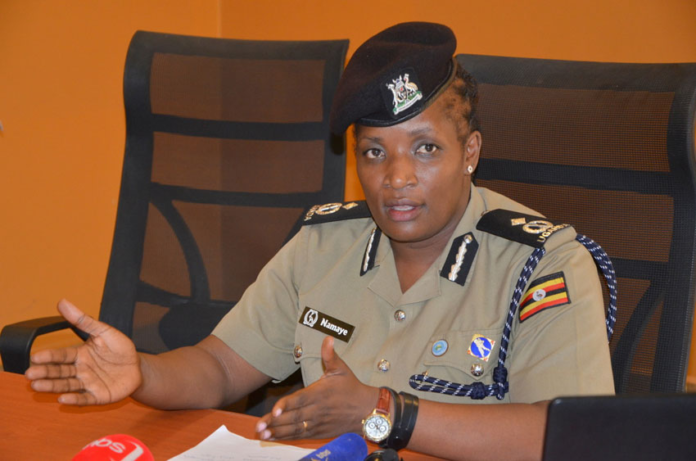
Commissioner of Police (CP) Polly Namaye has returned as the Deputy Police Spokesperson.

Namaye, who had been dropped from the position in 2022 and replaced with Senior Superintendent of Police (SSP), Claire Nabakka, has worked with the United Nation Mission in Juba, South Sudan for the last 18 months.

While making the announcement this morning at police headquarters in Naguru, Police spokesperson Fred Enanga said that Namaye will be his deputy in charge of press-related matters.

Enangs added that SSP Claire Nabakka will handle the police’s Public Relations.

Namaye joined the police in 2007. Her basic police training, which involved academics, the law and internship, lasted until December 2008.

From January 2009 until April 2014, at the rank of Senior Superintendent of Police, she served as the regional police spokesperson for Mbarara Municipality.

In April 2014, she was transferred to the police head office in the Office of the Commissioner of Police. There, at the rank of Acting Assistant Commissioner of Police, she was appointed the Deputy-in-Command for the Press and Public Relations Office.

In 2016, Namaye was promoted to the rank of Assistant Commissioner of Police. She’s now a Commissioner of Police.

Stories Continues after ad