Stanbic Bank
Stanbic Bank
17.5 C
Kampala
Stanbic Bank
Stanbic Bank
Home Blog Page 410

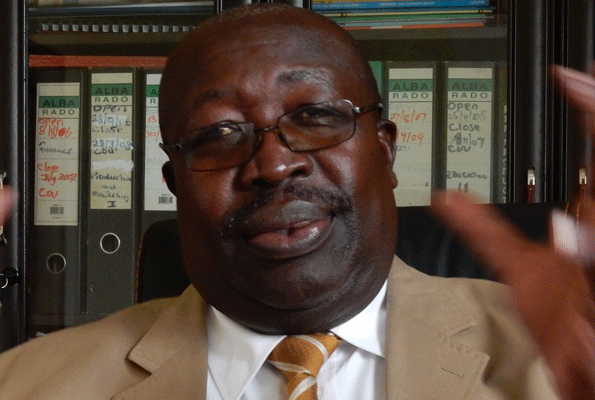
Wit, Humour and God’s Ultimate Power – RIP Keith Muhakanizi

Former PSST Keith Muhakanizi

eulogy by Mwesigwa Rukutana

Sleep eluded me the whole night last night. I had experienced a funny feeling the whole of yesterday, thinking of our planned trip to Milan to see Keith and Janet. Efforts to reach him or Janet on phone, as I always did almost every morning, had failed for nearly three weeks. I had received news from Bob and Ben that he was in ICU, but steadily improving. We together booked a flight to Milan for the 17th April, hoping that by the time we arrive, he will be in position to talk to us.

Last evening, I failed to stay for long at Millennium as I always do. I felt uneasy, stressed, and all of a sudden, an urge to go home and sleep. My wife and I watched the 8:00pm news. She noticed that I was absent minded and asked me what was going on in my mind. Surprisingly, there was nothing I was thinking about or something I could place a finger on. My mind was just blank. I went to bed and soon caught a lousy, uneasy sleep.

Then an unusual bang on the door; angrily, I asked the house help why she was disturbing our sleep. In a shrill and timid voice, she told me that Rehema had called to ask me to call Ben Kavuya urgently “someone has died” she ended.

I dropped ‘dead’. I didn’t need any other explanation. It was Keith!!

Keith is not any other brother or friend to me. He is part of me. His demise goes away with a big portion of what Iam. Having known each other at Makerere in the early 80’s where he was a year ahead of me, we had discovered each other, through a mutual friend, late Yason Mpungye.

In the Ntungamo political turmoil of the Ruzindana Vrs. Kamwesiga, Karazaarwe Vrs. Kacooboye, Karazaarwe Vrs. Buriiku, Rukutana Vrs. Kazoora divides, when myself and my brothers Bob Kabonero, Jim and Susan Muhwezi, the First Family and the NRM as a party, were strenuous protagonists, it was Keith and my friend Sudhir who, one evening that went to the wee hours of the morning, sat me down, at Speke Hotel, over bottles of Red Label mixed with hot water, to convince me to reconcile with my said brothers and fully join the NRM.

As fate would have it, when the reconciliation catapulted me into mainstream politics, I was to find myself in the Ministry of Finance as a Minister of State, where Keith was a senior official as Director Budget. Nothing cemented our brotherhood more than his intellectualism, outspokenness, firmnesses in thought and deed, and a crude sense of humor. Most people, including me at first, thought Keith was an arrogant, defiant man because of these qualities. Once he thought he was right, he could dare anyone.

In my thirty years of political life, Keith is the only Government official I ever saw, so many times, telling the President to his face; “Your Excellency, we cannot do that”! Or even interrupting him mid-speech!!

Yet, in Keith laid a humble, obedient, listening and advisable civil servant. As a Minister, I thought I was his boss. I always joked with him that I could dismiss him, to which he always retorted that he will live to see who would leave the Ministry before the other! When, after five years I was transferred to the Ministry of Labor, he was so sad. But the following morning, he called me so early in the morning and, with his characteristic laughter, asked me; “you fool, who of the two of us has left the Ministry of Finance first”? to which I retorted that I had voluntarily left them because I was tired of working with ‘stupid’ people.

Such were our daily witty and humorous greetings. One time in 2001, when I had just been appointed a Minister, he found me shivering on my desk with malaria. He asked what the problem was. I told him I had malaria. Surprisingly, the ‘fool’ burst out laughing at me. “Malaria, a Minister suffering from Malaria? That’s backwardness; malaria is like jiggers, a modern person should never contract malaria”!! Then he went on to educate me on how to sleep under a mosquito net and to make houses mosquitoe proof. To his credit, following his advice, I have not suffered from malaria since 2001!!

It’s unfortunate that the country has lost the three architects of the revival of our economy; Lates Chris Kassami, Emmanuel Mutebile, and now Keith Muhakanizi.

When I joined MOFPED in 2001, Uganda was classified as HIPC (Highly Indebted Poor Country). We could not generate resources to run our recurrent, leave alone Development budgets. We majorly relied on foreign aid, loans and grants. All these accessed under strict, unfair, unconscionable, even dehumanizing conditionalities from the IMF, World Bank and Donor Countries. These three departed comrades, under the supervision of President Musseveni worked very hard on the reforms that have shaped and transformed this economy. I remember the sleeplessness and endless meetings at State House, in the Ministry Boardroom, in Washington and other capitals, putting our heads together defend our country’s actions so that we could convince the donors not to cut aid or to grant us further advances. I remember the debates while formulating and presenting to Parliament the various laws that encompass the legal regime that facilitated and supported the transformation of the economy. Kassami, Keith, Mutebile were always at the forefront.

For me personally, coming from a background alien to financial and economic management, I found the trio big assets in preparing me to handle my mandate. They all became my teachers, mentors and personal friends. Now, they are all gone, and God be praised!!

I will not conclude without narrating our last crude humor with Keith; when he was transferred from the office of PS/ST, to PS, OPM, of course I was no longer a Minister and he was always reminding me that I lost power. I took my revenge by calling him to tell him that he too had lost power. One time, he wrote a letter rebuking and warning a driver who had knocked a student’s case, or something of the sort. With Ben Kavuya, we called him and asked him how, a person who always wrote to the President of the World Bank and IMF, could stoop so low to write a long letter condemning a driver who had spilled mandaazi. We laughed so heartily about it. But his revenge never took long. I had written a letter to the Attorney General over a case Iam handling. The AG referred the letter to PS/ OPM for a response. Keith called me the following morning and said; “you fool, you said I had lost power; come and sign the letter yourself”

We laughed to tears

God makes His decisions. They are not appealable. He has his reasons. All we have to do is to obey and respect Him.
Keith, Rest in Peace my Brother, Friend, Mentor and Inspiration.

Stories Continues after ad

Breaking: Keith Muhakanizi dies in Italy

The Permanent Secretary in the Office of the Prime Minister Keith Muhakanizi has died

According OPM sources Muhakanizi died in an Italian hospital where he has been undergoing cancer treatment.


Muhakanizi is a former long time PS and Secretary to the Treasury. He hails from Rukungiri and he was instrumental in economic reform after the NRM capture of power

Keith Muhakanizi, a renowned Ugandan economist and public servant, has passed away at the age of 64. Muhakanizi, who was serving as the Permanent Secretary/Secretary to the Treasury in the Ministry of Finance, Planning, and Economic Development, has passed away.

Muhakanizi had a distinguished career in the Ugandan public service, serving in various capacities for over three decades. He was appointed Permanent Secretary/Secretary to the Treasury in 2017, having previously served as the Deputy Secretary to the Treasury and the Director of Budget in the Ministry of Finance.

Born in 1959 in Uganda, Muhakanizi was educated at Makerere University, where he obtained a Bachelor of Commerce degree. He later went on to earn a Master’s degree in Development Economics from Williams College in Massachusetts, USA.

Muhakanizi was known for his expertise in public finance management, budgeting, and economic policy. He played a key role in the formulation and implementation of Uganda’s National Development Plans, and was instrumental in the country’s successful completion of the Heavily Indebted Poor Countries (HIPC) initiative.

Muhakanizi was also a respected figure on the international stage, serving on various committees and boards, including the United Nations Committee of Experts on Public Administration and the International Monetary Fund (IMF) Board of Governors.

Muhakanizi’s passing is a great loss to Uganda and the international community. He will be remembered as a visionary economist and public servant who dedicated his life to improving the lives of Ugandans and advancing the cause of sustainable development.

Stories Continues after ad
US, Europe to engage gov’t to reverse decision on closure of UN Human Rights Office

The United States and European embassies in Kampala have been urged to engage the government of Uganda so that it can renew the mandate of the Office of the United Nations High Commissioner for Human Rights (OHCHR) in the country.

The urge is contained in a press release issued jointly by the Youth for Green Communities (YGC) and the Community Transformation Foundation Network (COTFONE) both operating in Uganda on behalf of 47 Civil Society Organisations (CSOs) based in Africa, Europe, the US and Asia.

The petition emanates from the February 2023 announcement in which the Ministry of Foreign Affairs notified the OHCHR that its mandate in the country would not be renewed.

This non-renewal has now raised the eyebrows of the organisations saying the OHCHR had made a milestone in promoting and protecting Ugandans against human rights violations.

“While the Government of Uganda justifies its decision on the basis of the country’s own sufficient capacity to monitor rights compliance, the [CSOs] signatories are concerned that the closure of the UN Office will worsen human rights violations in the country. Embassies must react to the planned closure of the Office of the United Nations observers for Human Rights in Uganda,” the organisations write in the petition to the embassies.

The Coordinator of the COTFONE, Yisito Kayinga Muddu, claims that since the closure of the OHCHR, threats against human rights defenders have allegedly increased.

He says the situation especially of human rights defenders working on the negative impacts of oil extraction projects in Uganda has been repeatedly denounced by the OHCHR itself and the United Nations Special Procedures.

“The shutdown of the United Nations Office of the High Commissioner for Human Rights in Uganda has hindered the efforts to enhance coordination mechanisms for grassroots environmental and human rights organisations and defenders. The threats against human rights defenders have grown but despite these concerns, there has been a limited response to the issues at hand,” Muddu said.

Brighton Aryampa, the Chief Executive Officer YGC, fears that if the government of Uganda does not renew the mandate of the OHCHR, the country will slip to human rights violations especially against oil host communities.

“The Office of the United Nations High Commissioner for Human Rights (OHCHR) in Uganda has since its creation laid down baby steps for the respect of human rights in all spheres of political, economic, social and cultural life. Unless the mandate [of OHCHR] is renewed and extended, it will be a setback in ensuring all Ugandans, especially those in oil and other local communities, enjoy equal protection of the law,” he says.

In a press release by YGC Communication Officer, Ms Norah Luyiga, the organisations request the embassies to engage the Ugandan government so that it halts the planned closure of the OHCHR adding that international reactions could also assist resists any attempt to dilute the State obligations or the OHCHR mandate during the negotiations on its renewal.

The signatory organisations include those from Uganda, Nigeria, South Africa, Malawi, Zambia, South Africa, Eswatini, Madagascar, Ivory Coast, Liberia, Gambia and Sierra Leone in Africa.

Those in Europe are in countries like Switzerland, France, Netherlands and Albania; Guatemala in North America and India in Asia.

Stories Continues after ad
I will not return iron sheets – Kadaga

Rt. Hon. Rebecca Kadaga

The first deputy Prime Minister Rebecca Kadaga has vowed never to return Karamoja iron sheets claiming that they were used to roof schools and health facilities.

Kadaga said while appearing before the Presidential Affairs Committee which is investigating the mismanagement of relief items that were meant for impoverished people in Karamoja sub-region. She reportedly received 500 pieces of iron sheets.

“I was approached by Karamoja Affairs Minister Mary Goretti Kitutu during a cabinet meeting. She asked me to contact her office for iron sheets.  I didn’t know which vote the iron sheets were coming from,” she said.

“I will not return the iron sheets but will rather pay for the equivalent because the school and health center that were damaged are accessed by Ugandans,” she said.

Kadaga is among the top ministers who benefited from the iron sheets which were allegedly meant for people in Karamoja. The ministers involved in the scandal include, Jacob Oboth Oboth, Hamson Obua, Amos Lugolobi, Matia Kasaija, Speaker Anita Among and others.

Last week, the Anti- Anti-Corruption Court remanded Karamoja Affairs Minister Mary Goretti Kitutu to Luzira prison.

Kitutu, her brother Michael Kitutu Naboya and Secretary Joshua Abaho are facing six counts which include loss of public property, corruption, receiving stolen property and conspiracy to defraud. Abaho was however not present in court.

Stories Continues after ad

Equity Bank Unveils Equi-Mama, a Business Product for Women, Alongside the Opening of Its 50th Branch in Uganda

Equity Bank Uganda has launched a new product called Equi-mama, which is a credit facility designed to support women entrepreneurs in rural Uganda. The aim of the product is to provide affordable capital, business skills training, mentoring, networking opportunities, and tools to help women succeed in business. The product was launched at the Ntungamo Municipal Grounds, with First Lady and Minister for Education Janet Museveni praising the bank for creating a product specifically for women. Mrs. Museveni also highlighted the challenges faced by women in accessing credit facilities, particularly due to the lack of collateral and limited financial literacy.

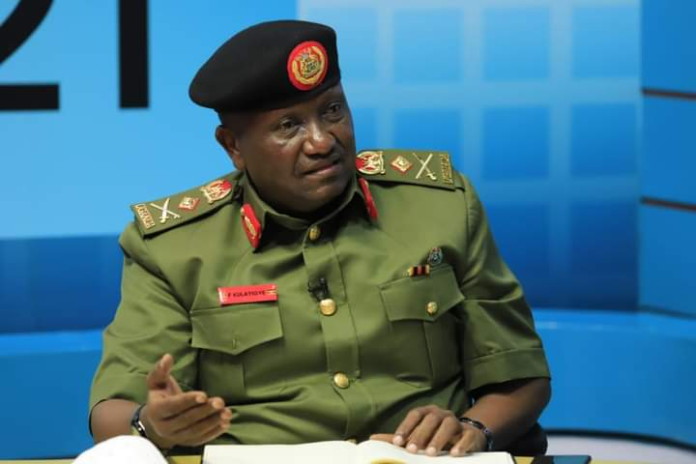
Equity Bank Managing Director, Anthony Kituuka, affirmed that the Equi-mama proposition has been designed to address the unique needs of women at the micro-level. The bank conducted extensive research to understand the financial challenges faced by women at the bottom of the economic pyramid and how to overcome these challenges. The product offers unsecured loans ranging from UGX5m to UGX40m, as well as insurance for maternity, life, catastrophe, fire, and temporary or permanent disability. Equity Bank also provides free financial and entrepreneurial literacy training to help women overcome hurdles such as record-keeping, accounting, and long-term business planning.

Equi-mama was first developed in 2021 to address the challenges faced by women entrepreneurs affected by the COVID-19 pandemic. Equity Bank has already trained over 89,000 women in various aspects of business development and growth and given loans to over 20,000 women in various groups under the program. The bank’s support for women entrepreneurs includes tailored business advisory sessions, advanced business workshops, networking, and linking them to financial services, investments, and markets.

Before the product launch, Mrs. Museveni opened the new Equity Ntungamo branch, bringing the total number of branches to 50. Equity Bank operates in six East African countries and Ethiopia. The Equi-mama product is accessible to women of all backgrounds and income levels, offering flexible payment options and no application fees to make it easier for women to access the bank’s services.

Stories Continues after ad

Dfcu Bank hosts NGO Forum; reiterates support to Non-Profit Organisations

Non-Governmental Organisations play a critical role in the socioeconomic development of a country, whether that be the creation of a citizen agency or creating employment for thousands of citizens. In the execution of these and more roles, NGOs come across multiple hurdles which oftentimes require the intervention of and response of financial institutions.

It was against this background that Dfcu Bank held a successful breakfast meeting for Non-Governmental Organizations at Hotel Africana in Kampala, bringing together participants from various NGOs across multiple areas of work from across the country.

Godfrey Mundua, Head Corporate Banking at Dfcu, highlighted the Bank’s commitment to supporting NGOs in Uganda to achieve their objectives, stating that “dfcu Bank recognizes the critical role NGOs play in driving social and economic development in Uganda. We are committed to providing the necessary support to enable these organizations to overcome the challenges they face and achieve their objectives.”

He also spoke about the Bank’s dedication to its vision to transform lives and businesses through innovative solutions and empowering people. 

“The road to recovery has not been easy for anyone, and the NGO sector has been particularly affected by the after-effects of the COVID-19 pandemic. Our reason for hosting this meeting is to make the road to recovery shorter, less tedious, and to partner with NGOs as we figure out how to support your organizations to run sustainably now and in the future.” 

“We believe that partnerships and collaborations are key to achieving sustainable development. We, therefore, urge NGOs to take advantage of this opportunity and engage with each other and with dfcu Bank to explore ways of working together to drive social and economic development in Uganda,” Mundua added.

The event’s keynote speaker, Dr. Moses Isooba, Executive Director of Uganda National NGO Forum called on dfcu to increase its interactions with NGOs, to assist the latter in increasing their access to funding. In addition to the co-creation of socially-responsible infrastructure, Dr. Isooba noted that this would “…create community-benefiting solutions and programs.”

At the event, Julius Kateera, Head Financial Markets at dfcu Bank gave a Macroeconomic overview presentation, detailing what is happening in the economy locally, regionally, and globally while Robinah Nanjego Muhinda, Relationship Manager Corporate Banking made a detailed presentation on the dfcu NGO Customer Value Proposition. 

Non-Governmental Organisations play a critical role in the socioeconomic development of a country, whether that be the creation of a citizen agency or creating employment for thousands of citizens. In the execution of these and more roles, NGOs come across multiple hurdles which oftentimes require the intervention of and response of financial institutions.

It was against this background that dfcu Bank held a successful breakfast meeting for Non-Governmental Organizations at Hotel Africana in Kampala, bringing together participants from various NGOs across multiple areas of work from across the country.

Godfrey Mundua, Head Corporate Banking at dfcu, highlighted the Bank’s commitment to supporting NGOs in Uganda to achieve their objectives, stating that “dfcu Bank recognizes the critical role NGOs play in driving social and economic development in Uganda. We are committed to providing the necessary support to enable these organizations to overcome the challenges they face and achieve their objectives.”

He also spoke about the Bank’s dedication to its vision to transform lives and businesses through innovative solutions and empowering people. 

“The road to recovery has not been easy for anyone, and the NGO sector has been particularly affected by the after-effects of the Covid-19 pandemic. Our reason for hosting this meeting is to make the road to recovery shorter, less tedious, and to partner with NGOs as we figure out how to support your organizations to run sustainably now and in the future.” 

“We believe that partnerships and collaborations are key to achieving sustainable development. We, therefore, urge NGOs to take advantage of this opportunity and engage with each other and with dfcu Bank to explore ways of working together to drive social and economic development in Uganda,” Mundua added.

The event’s keynote speaker, Dr. Moses Isooba, Executive Director of Uganda National NGO Forum called on dfcu to increase its interactions with NGOs, to assist the latter in increasing their access to funding. In addition to the co-creation of socially-responsible infrastructure, Dr. Isooba noted that this would “…create community-benefiting solutions and programs.”

At the event, Julius Kateera, Head Financial Markets at dfcu Bank gave a Macroeconomic overview presentation, detailing what is happening in the economy locally, regionally, and globally while Robinah Nanjego Muhinda, Relationship Manager Corporate Banking made a detailed presentation on the dfcu NGO Customer Value Proposition. 

Stories Continues after ad

Uganda Pentecostal University VC John Ntambirweki dies at 68

Prof John Ntambirweki, the Vice Chancellor of Uganda Pentecostal University has died at 68 years.

Ntambirweki died on Wednesday12, evening at Le Memorial Hospital in Kampala where he had been admitted for some time with an illness.

“The family of Prof John Ntambirweki and Uganda Pentecostal University regret to announce his death which occurred on Wednesday, April 12, 2023,” read the family’s public death announcement.

The deceased’s daughter, Brenda Ntambirweki, tweeted: “Rest in peace, Daddy. You were the best dad in the world. You fought and we will keep your legacy alive.”

According to the family announcement, there will be a funeral service at All Saints Cathedral, Nakasero on Thursday at 2 pm followed by the vigil at the late Ntambirweki’s home in Katuso-Buziga, Kampala.

He will be buried on Saturday, April 15, 2023, at his ancestral home in Bisheshe, Ibanda District, in Western Uganda.

Prof John Ntambirweki was a renowned legal scholar who was passionate about legal education, and the linkages of the universities with various law schools around the globe, championing comparative legal education and the legal profession.

Ntambirweki held a Bachelor’s degree in Law from Makerere University, a diploma in law from the Law Development Centre, Kampala and a Master of Law degree (LLM) from the University of Nairobi.

Ntambirweki founded Uganda Pentecostal University in 2001 as the Grotius School of Law and Professional Studies and has since been the Vice Chancellor.

In 2005, the Grotius School of Law was licensed by the National Council for Higher Education and named Uganda Pentecostal University.

As the VC, Ntambirweki was in charge of academic excellence at Uganda Pentecostal University and had championed access to education for indigenous communities in Western Uganda, Uganda and in East Africa through the uprising institution.

He had a wealth of experience as a Professor of Law, having taught at the University of Nairobi, Pacific in the United States, Makerere University and Uganda Christian University as well as providing legal advice to Government agencies in many African countries and International organizations in several legal aspects.

He was also a former Senior Lecturer at Makerere University and also served as Head of Department of Law, Uganda Christian University.

Prof Ntambirweki served as Chairman of the Board of Trustees for Advocates Coalition for Development and Environment (ACODE); one of the leading think tanks in Uganda.

The deceased was a Consultant at the law firm of Ntambirweki Kandeebe & Company Advocates, based in Kampala.

Other advocates at the firm include Barbara Ntambirweki, a daughter to John Ntambirweki, and a Senior Lecturer in the Faculty of Law at Uganda Pentecostal University.

Stories Continues after ad

DFCU to pay Sudhir Shs32 Billion

City Tycoon, Sudhir and his lawyer Peter Kabatsi

Business tycoon Sudhir Ruparelia demands Dfcu Bank, the financial institution that took over management of Crane Bank in January 2017 to pay $8,660,462 (Sh32 billion) for rent arrears.

Sudhir through his company Meera Investment Limited says the amount is in breach of the tenancy agreements in respect to plots 38 and 40A Kampala Road. Plot 38 Kampala was the headquarters of Crane Bank.

Dfcu expressly inherited all tenancy agreements and, therefore, “assumed the rights and obligations under the tenancies in respect of the suit properties.”

The case stems from a December 16, 2014, in the commercial Court presided over by Justice Stephen Mubiru, where Sudhir expressed that by the time of execution the tenancy agreement was a separate legal entity from the Crane Bank Limited.

“Under clause 3(c) of the tenancy agreement, it was specifically agreed by the parties (Crane bank and Meera) that the tenancies shall remain firm and binding on them until the expiry of ten years,” reads part of the plaint filed by Meera.

In the above tenancy agreement, Crane bank would pay $46,980 (Shs171m) in rent and $46,980 (Shs 171m) in ground rent per month with a seven per cent annual increment for Plot 38 Kampala road and $9,890 (Shs36m) in rent and $9,890 (Shs36m) in ground rent for Plot 40A Kampala road.

At the time of the takeover, dfcu inherited the entire premises previously rented by Crane bank and rebranded the entire premises. Dfcu also undertook to pay to Crane Management Services (managers of Meera) $531,000 (Shs 1.93bn) in restoration costs and arrears in utility bills.

According to the Meera plaint, Dfcu, in February 2017, entered into a revised contract in “respect of the basement and ground floors of Plot 38 Kampala road for a fixed period of three years.”

Dfcu, however, reportedly continued to occupy 1st, 2nd 3rd and 7th floors of Plot 38 Kampala road and Plot 40A Kampala road “under the terms and conditions of the tenancy agreement dated December 16, 2014” until April 30, 2017, when it opted to vacate them.

According to Meera, this constituted a breach of clause 3(c) of the surviving tenancy agreement, that covenanted that the “tenancies shall remain firm and binding on them until the expiry of ten years” and for this breach, dfcu is “liable to pay the plaintiff the sum constituting rent for the unexpired period of 84 months being $8,660,462.34 (Shs 31.6bn).”

Meera, read Sudhir, now wants this money plus interest “at the prevailing commercial rate from the date the defendant was in default until payment in full.”

Sudhir added that the tenancy agreement which is scheduled to expire on March31, 2024 has no clause of termination in the contract.

“The agreement was a fixed tenancy for 10 years which binds the successor, Dfcu, which continued occupying the premises. The rentals were on an excluded liability,” Sudhir said.

Sudhir added that the rent is in respect of the four floors occupied by Dfcu.

“No reasonable tenant as a bank would behave in that manner. Dfcu Bank was in breach of the agreement,” Sudhir expressed.

Meera contends that non-payment of the rent has not only caused it losses, but also deprived it of use of its money and interest, caused it more suffering and grave inconveniences and adversely affected its damages which it claims general damages.

Stories Continues after ad

Uganda inaugurates first-ever National Forensic Sciences University

Uganda has inaugurated the first-ever National Forensic Sciences University (India – Africa Campus) in Africa.

The ceremony was graced by the Third Deputy Prime Minister Hon. Nakadama Rukia on behalf of President Yoweri Kaguta Museveni at the Uganda Rapid Deployment Capability Centre (URDCC) Gaddafi Barracks in Jinja .

Speaking to distinguished guests at the function, Nakadama and Woman MP for Mayuge District commended the Government of India for helping Uganda establish the NFSU – Uganda Campus.

She said that the act demonstrates the excellent diplomatic relationship between India and Uganda, and will create forensic and allied experts that manage complex security situations.

Nakadama pledged government support to the NFSU to meet its expectations and further enhance the existing cordial bilateral relations.

“This is the first NFSU branch that India has built outside their country,” remarked Nakadama.

She further said that the Uganda Government has already secured 130 acres of land with a 99-year-old lease for the construction of the permanent NFSU – Uganda campus.

India’s External Affairs Minister Dr. Subrahmanyan Jaishankar praised the robust relationship between India and Uganda, saying it reflects the vision and leadership in both countries.

Hon. Jaishankar also noted that the first foreign campus for the NFSU of India will mark a significant milestone in furthering bilateral defence cooperation between India and Uganda.

He observed that courses in forensic science are in high demand world over for the past few years.

The Minister of Defence and Veterans Affairs Hon. Vincent Bamulangaki Ssempijja recognized the strategic vision between President Museveni and India’s Prime Minister Narendra Modi in building modern and efficient economies based on science and technology to spur social-economic transformation.

He said that both Uganda and India need a shared peace, adding that the University will facilitate technological transfer and enhance defence capabilities to address emerging threats.

“The investigative capacities of our legal experts will be greatly enhanced with this university,” he concluded.

Speaking at the same ceremony on behalf of the Chief of Defence Forces (CDF) Gen Wilson Mbasu Mbadi, the Deputy CDF Lt Gen Peter Elwelu commended President Museveni for his earlier guidance on building the workability of the tripartite doctrine; where any assistance must seek to build internal capability, as evidenced by the day’s security-related scientific education at URDCC.

Lt Gen Elwelu noted that the coming of the NFSU will have a positive bearing on the national security architecture since it will plug the gap of the acute shortage of forensic experts both in Uganda and Africa, bust crime more easily and in a scientific way, aid more research in forensic science crime management and add on the already existing curriculum.

“By building capacity and capability enhancement, UPDF is becoming more of a highly productive force,” said Lt Gen Elwelu, adding that UPDF shall remain focused on providing conditions for investment in Uganda and beyond.

The D/CDF also remarked that the management of contemporary security challenges calls for science and technology.

“The spirit of science and technology has taken over man,” he said.

The D/CDF further noted that the most serious threat to man is science, not conventional wars and crimes, thus necessitating the adoption of science and technology to safeguard our human life and security.

At the same ceremony, a plaque was declared and signed by the Hon Dr. Jaishankar for a satellite survey program and mapping agreed upon between the Government of Uganda and the Government of India.

The NFSU will provide specialized training in forensics (use scientific methods and techniques to investigate crime), cyber security, and digital forensics, behavioral and allied sciences.

Stories Continues after ad

Minister Goretti Kitutu denied bail over unsubstantial sureties

Minister Kitutu breaks down upon court refusal to grant her bail.

The Anti-Corruption Court in Kololo has denied the Karamoja Affairs Minister Mary Goretti Kitutu Kimono bail on grounds of unsubstantial sureties.

Last week, the Minister was remanded to Luzira Prison by the Anti-Corruption Court on charges of causing loss of public property, corruption, and conspiracy to defraud the government.

According to state prosecution, Kitutu is accused of allegedly diverting iron sheets meant for the vulnerable people in Karamoja to her own benefit and to the benefit of third parties, having reason to believe that such an act would result in the loss of public property.

On count two of the same charge of causing loss of public property, the minister is accused of causing the loss of 5,500 iron sheets.

Under the charge of conspiracy to defraud, the DPP contends that the minister and Mr Abaho, between June 2022 and January 2023, allegedly conspired to defraud beneficiaries under the Karamoja Community Empowerment Programme of 9,000 pre-painted iron sheets.

Kitutu’s brother is accused of receiving stolen property. The charge sheet says he received 100 pre-coated iron sheets from OPM, having reason to believe the same to have been feloniously obtained.

If convicted of the charges, Kitutu could spend at least 10 years in prison.

Yesterday President Museveni weighed in onto the issue of iron sheets for the disadvantaged communities in Karamoja saying all those ministers and legislators implicated should return them and be prosecuted as well.

Stories Continues after ad