Stanbic Bank
Stanbic Bank
20.7 C
Kampala
Stanbic Bank
Stanbic Bank
Home Blog Page 415

PSFU expresses discontent on Kenya’s decision to ban milk imports

Sarah Kagingo

Private Sector Foundation Uganda (PSFU) has described the Kenyan decision on banning milk powder importation from Uganda as unfortunate and a contradiction to the regional trade protocols.

In a memo dated March 6, Kenya Dairy Board said it sought to protect homegrown processors from regional competition.

Ms. Sarah Kagingo, the Vice Chairperson of PSFU said the ban by Kenya, contradicts regional trade protocols.

As per the East African Community (EAC) common market protocol, Uganda products should be permitted entry into the Kenyan market and vice versa, without any hindrance.

“Kenya’s ban on importation of our products is not new, if it is not milk, it is eggs or grain. The ban contradicts the EAC (East African Community) trade protocols, the Common Market Protocol on free movement of goods and services, as well as the agreement that established the African Free Continental Trade Area (AfCFTA),” Kagingo said.

Asked whether PSFU would consider organising milk processors in Uganda for a protest at the Kenyan border, Kagingo said their approach is engagement.

“Our approach is engagement not belligerence. Experience shows that engagement delivers,” said Kagingo.

She added,” regional trade should be the cornerstone of EAC Partner States’ policies. Our countries signed the Common Market Protocol in 2009 which came into force in July 2010. However, the practice often contradicts what was ratified, and businessmen engaged in export need handholding. We, in partnership with the Ugandan government, have held several business summits to, among others, resolve barriers to trade and travel.”

Asked what steps PSFU would take, Kagingo said Uganda’s private sector apex body will engage the Ugandan government and KEPSA.

“At a strategic level, we partner with the government in pursuit of integration of markets for the benefit of the entire private sector in the region. We will table the unfortunate development to the Ugandan government to use their good offices and diplomatic mechanisms to engage the Kenyan government. We will also engage our counterparts – KEPSA,” Kagingo said.

In 2018, milk exports totalled $131m. 74% of that ($96m) was exported to Kenya, according to data from United Nations Comtrade.

In 2019, exported dairy products were worth $135.9m, according to Ugandan government statistics. That figure is triple what the country earned in 2015 ($45m). Milk production also increased to 2.7 billion litres in 2019 from 2.08 billion litres in 2015.

But by 2018, Kenya began to poke holes in the cheap imports of Uganda’s milk in an effort to protect the local market. Kenya first raised its doubts on Uganda’s milk production capacity; but that was debunked through a fact-finding mission in 2019.

Technocrats then proposed a 16% levy on Ugandan milk to ensure it would be expensive in the Kenyan market but President Uhuru Kenyatta rejected the proposal. Soon after, a ban on Ugandan milk was imposed in 2020.

Since early 2021, the milk blockade has been extended to include maize imports from both Uganda and Tanzania. Nairobi said it had found these imports to contain high levels of aflatoxins that are consistently beyond safety limits.

It’s hard to measure the impact of this blockade since statistics of Uganda’s dairy exports to Kenya are not readily available.

Stories Continues after ad

Shs2.7 billion request for supervision of Lubowa Hospital works rejected

Ministry of Health officials led by the Minister appear before the Health Committee of parliament

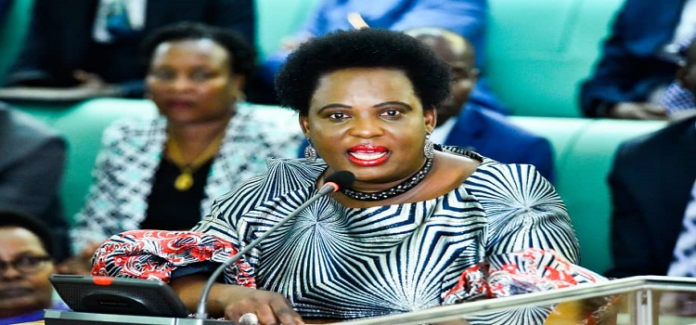
Members of Parliament on the Health Committee have rejected a supplementary request of Shs2.7 billion by the Ministry of Health to supervise the construction of the Lubowa International Specialized hospital tasking the ministry to present the status of the hospital. 

The ministry requested that the supplementary budget be drawn from the $10 million reimbursed by World Bank to Government of Uganda for purchase of #Covid-19 vaccines.

Legislators said it was unwise to approve such a request when there is no proof of any developments at the Lubowa Hospital site.
 “Ever since we visited the Lubowa Hospital site, to date we have never received any feedback on where we are on this Shs14 trillion project that raised the hopes of Ugandans,” said George Bokha Didi (NRM, Obongi County).

The Health Ministry officials presented their request during the meeting with the committee on Thursday, 09 March 2023. 

Florence Nebanda (NRM, Butaleja District) said the delayed implementation of the Lubowa project has caused mistrust from the public on government’s commitment and interest in the project. 
“The project was launched in 2019 on a two-year contract; the contractor is supposed to handover the project to government within 10 years but they are not on schedule and seem unbothered and we do not see value for money,” she said.

The Minister for Health, Jane Ruth Aceng who could not disclose to the committee whether there were ongoing works at Lubowa said her ministry was mandated to carry out supervisory roles which were never budgeted for.
“When we are constructing a hospital, we normally have supervisors as consultants; we can either hire a consultancy firm or get a consortium of engineers. We were told that there was no money for hiring a firm; the money we are requesting for is to facilitate a consortium of contractors,” said Aceng.

She added that by the time the ministry engineers came in to supervise the project, the foundation of the hospital had been laid.

In a related development, the minister also requested the committee to approve a Shs14.7 billion supplementary budget for the ongoing rehabilitation of Mulago National Referral Hospital whose works commenced in 2013.

“Since 2013, we have been on rehabilitation of Mulago Hospital; by the time we finish, it will be old.  Some of the equipment we provided are becoming obsolete,” she said. 

There was a general approval by MPs to prioritize completion of Mulago Hospital with the supplementary budget and defer other items such as payment of court fines and repair of medical equipment in the forthcoming budgeting cycle.
“I want to know how someone chooses court awards over Mulago when government has lots of court cases that it has lost with pending payments,” said Kazo County MP, Dan Kimosho Atwijukire.  

The Committee Chairperson, Dr. Charles Ayume said basic necessities are lacking in Mulago Hospital despite the annual budgetary appropriations to the hospital.
“We cannot keep on going like that; out of six lifts only one is working, water is scarce; it comes dripping in the night and people have to fetch in jerry cans. We have invested money to put up VIP facilities which are non-functional; what will happen when a visiting president falls ill while here?” Ayume wondered.

Ayume said the committee has scheduled a meeting with Mulago Hospital officials and Roko contractors over the rehabilitation works at the hospital.

The ministry also requested for Shs3.6 billion for rehabilitation and expansion of Busolwe Hospital, Shs6 billion for repair and maintenance of oxygen plants said to have been overworked during the #Covid-19 pandemic and Shs8 billion to clear outstanding allowances for #Covid-19 staff.

Stories Continues after ad

MPs insist Betty Amongi must resign over NSSF saga

Minister Betty Amongi

Members of Parliament have adopted a recommendation by the House’s select committee, directing the Minister of Gender, Labour and Social Development, Betty Amongi to resign with immediate effect on account of abuse of office.

The select committee, chaired by Mbarara South Division Member of Parliament ,Mwine Mpaka investigated the alleged mismanagement of the National Social Security Fund (NSSF) and found that the minister’s actions in directing Shs6 billion to be availed to her ministry were irregular. 

The report, presented during plenary sitting on Wednesday, 01 March 2023 added that President Museveni should take keen interest in the conduct of the minister.

The report was adopted on Thursday, March 9, 2023 during plenary sitting chaired by Speaker, Anita Among.

The MPs said that the minister’s actions contravened the NSSF Act.

Aisha Kabanda (NUP, Butambala District) wondered how the minister was going to account for the Shs6 billion and yet according to the NSSF Act, she supervises the fund.

“Were you going to account for the Shs6 billion with your juniors,” asked Kabanda.

Theodore Ssekikubo (NRM, Lwemiyaga County) said that Parliament’s task is to prove beyond reasonable doubt if the minister was right or wrong to request for the money.

“Parliament must rise to the occasion. The minister said she performed her statutory duties in approving the budget but in her letter, she said that she received a budget proposal of Shs15 billion and she said that that out of Shs15 billion, can I have Shs6 billion for expanding the fund,” said Ssekikubo.

Dokolo District Woman Representative, Cecilia Ogwal urged her counterparts to make a decision based on the Public Finance Management Act which clearly stipulates budget initiation and implementation.

“There is a difference between originating and implementation. We should be clear on who initiates the budget so that nobody is seen as being victimised,” Cecilia Ogwal said.

The Leader of the Opposition, Mathias Mpuuga said that the minister does not have the power to appropriate funds. 

“She is conveniently expanding the interpretation of the NSSF Act. Why did you think you can borrow the word appropriation to use the money for government work? NSSF funds are for private people who are saving their little money for a rainy day,” said Mpuuga.

He added that, ’we must clean this house [NSSF], we must give assurance and hope to the citizens. This entity has become over the years some people’s daily income’.

The Minister of State for Finance, Planning and Economic Development (General Duties), Henry Musasizi said that the request of the Shs6 billion was not approved by the Ministry of Finance.

“It came to our attention and we notified the minister [Amongi]. We held a meeting with her, gave her our opinion and we were against her request but she went ahead with her request,” Musasizi said.

Amongi however, said that she cannot resign based on a falsehood by the report and she maintained that the request of Shs6 billion was within the National Social Security Fund (NSSF) Act.

“I have been condemned without evidence, facts and reference to points of the law. In Fact I am being victimised yet I am the whistle-blower,” she said.

Amongi explained that her letter directing the appropriation of Shs6 billion was in exercise of ministerial power under Section 29 of the NSSF Act which gives her power to amend the budget.

“Activities of the Shs6 billion do not fall under the Ministry of Gender and I want to state that the new law introduced mid-term access and the law permits me to issue regulations for voluntary savings. I am required to carry out stakeholder engagements and I cannot do that alone,” she added.

Mwine Mpaka said that every recommendation in the report is backed by evidence.

“We believe we did this job to the best of our knowledge and we can defend all the recommendations,” said Mwine Mpaka.

MPs further agreed that the NSSF Board should be dissolved as recommended by the committee.

The House further adopted a recommendation that 24 board members who illegally received the 10 per cent contribution from NSSF should refund the money within seven working days after adoption of the report or face prosecution.

On January 19, 2023, the House resolved to institute a committee to inquire into the operations of NSSF, following reports of corruption and mismanagement of the Shs17.9 trillion fund.  

Lawmakers have adopted a recommendation by the House’s select committee, directing the Minister of Gender, Labour and Social Development, Hon. Betty Amongi to resign with immediate effect on account of abuse of office.

Stories Continues after ad

URA’s directive on banks is unconstitutional – Constitutional Court rules

Symbol of Justice

The Constitutional Court has held that the order by Uganda Revenue Authority (URA) requiring banks to disclose balances of account holders is unconstitutional.

In the letter dated March, 16, 2018, URA sought to obtain detailed information on account holders from January 2016 to December 2017.

The tax body also requested the banks to furnish them with among others; Telephone numbers of clients, email addresses, Tax identification Numbers (TIN), National Identification Numbers (NIN) and physical addresses.

Also required from the banks are the total cash deposits by each client, total cash withdrawals for the said period as well as the standing balance at the time of filing the content to URA.

However, this move violated confidentiality agreements between banks and their respective clients

In light of the resolution of issues, the Constitutional Court declared that the notice impairs the right to privacy of bank account holders.

“We declare that the notice impairs right to privacy of all bank account holders of Uganda enshrined in article 27 (1) of the constitution in a matter that far exceeds what is necessary to accomplish the objective of tax collection and accordingly beyond what is acceptable and demonstrably justifiable in a free and democratic society,” Court ruled.

“Further, the petition concerns issues of public interest, the actions of the second respondent subjected the petitioners to unnecessary costs and inconveniences. In the premises, the petition should follow the event and I would make an order only. As far as the first respondent is concerned, it was directly involved in the matter and I would make an order that the first respondent shall bear its own costs,” Court added.

Stories Continues after ad

Over 300 stakeholders to participate in African Nuclear Business Platform 2023

Minister Ruth Nankabirwa

The Ministry of Energy and Mineral Development in partnership with the Nuclear Business Platform will host the Africa Nuclear Business Platform 2023 (AFNBP 2023) from March 14-17, 2023 in Kampala with an expectation of over 300 stakeholders from the international nuclear community.

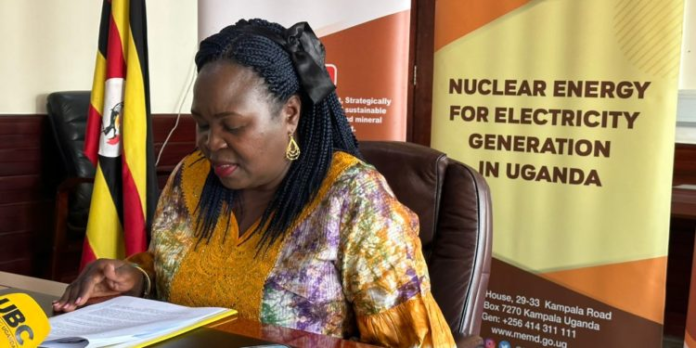
Energy Minister Ruth Nankabirwa said AFNBP 2023 will bring together the key stakeholders pursuing nuclear energy implementation to understand and discuss nuclear energy developments in Africa and explore areas of strategic collaborations to move Uganda and African countries’ nuclear industry forward.

“H.E. General Yoweri Kaguta Museveni, the President of the Republic of Uganda, is expected to grace the event featuring ministers and senior officials from various countries running nuclear programmes, industry players and nuclear technology vendors,” she said in a statement issued on Thursday.

The minister said the conference presents an excellent opportunity to Uganda, particularly, and the African continent in general, to find suitable approaches to challenges in the nuclear industry.

Seven sub-Saharan African countries, including Uganda, have committed to having nuclear energy as part of their energy mix between 2030 and 2037. The other countries are Ghana, Nigeria, Sudan, Rwanda, Kenya and Zambia.

Nankabirwa said all these countries have developed national positions on having nuclear energy and have engaged with the International Atomic Energy Agency (IAEA) to assist in their nuclear power programs. Ongoing activities in the countries include site selections, drafting nuclear laws and regulations, establishing dedicated nuclear organizations and developing strategic cooperation with key global nuclear nations such as the USA, South Korea, China, France and Russia.

The region, particularly Uganda, is experiencing an ever-increasing population, economic growth, and rising social needs that require sustainable development of energy resources.

The Uganda Vision 2040 and the subsequent National Development Plans identify electricity as modern energy to shift the country from a peasantry to an industrialized and predominantly urban society. Electricity has been identified as a critical driver of the socio-economic transformation of a nation.

In that regard, Nankabirwa said Uganda embarked on diversifying the electricity generation mix to address the electricity crisis of 2005, predominantly hydropower, to develop all the available generation potential.

However, according to studies conducted in the energy sector, electricity generation from hydro, biomass, geothermal and peat potential, if fully developed, cannot meet Uganda’s Vision 2040 targets.

The minister says Uganda is making firm steps to integrate nuclear energy into the electricity generation mix to ensure energy security and provide sufficient electricity for industrialization. In addition, she said, the government has identified nuclear as part of Uganda’s energy transition plan. It continues to invest in developing the requisite infrastructure, including human capital development in specialized areas to support the early development of nuclear power.

In 2021, Uganda hosted the IAEA Integrated Nuclear Infrastructure Review Mission (INIR Phases) to evaluate the status of nuclear infrastructure development. The experts made recommendations and suggestions to the Uganda Nuclear Power Programme and identified good practices in national position, stakeholder involvement and local industrial involvement.

Uganda has now taken significant steps towards implementing the INIR recommendations and suggestions to support the development of its nuclear power programme.

Among these is the preparation for the amendment of the Atomic Energy Act, 2008, to strengthen the legal regime for nuclear safety, security, safeguards for nuclear material, civil nuclear liability and maintaining the nuclear institutional framework.

In addition, preparation to evaluate the Buyende Nuclear Power Plant site is ongoing to pave the way for the first nuclear power project expected to generate 2,000MW, with the first l000MW to be connected to the national grid by 2031.

The minister said for a successful nuclear power program, international support is very vital. She said the involvement of global multinational bodies such as the IAEA and the International Framework for Nuclear Energy Cooperation (IFNEC) in African countries’ nuclear power program development will be crucial, given their extensive experience and knowledge. In line with this, the Deputy Director General of the IAEA, Mikhail Chudakov and the chairperson of IFNEC, Aleshia Duncan, will be attending AFNBP 2023.

Stories Continues after ad

Speaker refers Anti-Homosexuality Bill to Legal and Parliamentary Affairs committee for scrutiny

Parliament of Uganda

Speaker of Parliament Anita Among has referred Anti-Homosexuality Bill to legal and Parliamentary Affairs committee for scrutiny.

Earlier today, Bugiri Municipality MP Asuman Basalirwa tabled the Anti-Homosexuality Bill after obtaining a certificate of financial implications.  

“This is to certify that the Anti-Homosexuality Bill, 2023 has been reviewed in accordance with section 78 of the public finance and management Act 2015 as amended,” Said Matia Kasaija, the Finance Minister.

“I have tabled the Anti-Homosexuality Bill for first reading. The Bill is referred to the Committee of Legal and Parliamentary Affairs and directed to ensure there is a sufficient public hearing of the bill. Everyone can come and Uganda hears what they have to say,” he said during plenary.

Last month, Speaker of Parliament Anita Among tasked Bugiri Municipality MP Asuman Basalirwa to reintroduce the Anti-Homosexuality bill. The bill comes at a time when there are widespread cases of same-sex relationships in the community and major traditional schools.

The bill aims at among others protecting traditional families by prohibiting sexual relationships between people of the same sex, strengthening that country’s capacity to deal with emerging threats to the traditional family, protecting the cherished culture of Uganda and protecting children and youth who are vulnerable to sexual abuse.

It also seeks to criminalise same-sex relationships with a liability of imprisonment of two to 10 years for homosexuality, aggravated homosexuality, attempted homosexuality, aiding and abetting homosexuality, conspiracy to commit homosexuality and other related practices.

The Uganda Anti-Homosexuality Act, 2014 was passed by Parliament on 20 December 2013 with life in prison substituted for the death penalty. Whereas it was signed into law by President Yoweri Museveni on February 24, 2014, the Constitutional Court on August 1,2014 annulled the law citing that it was passed without the required quorum in the House.

Stories Continues after ad

Vipers SC sack Head Coach Beto Bianchi 

Beto Bianchi

Vipers SC has sacked Beto Bianchi as head coach after two months in charge at the St. Mary’s Stadium in Kitende.

The Brazilian-Spaniard succeeded Roberto Oliveira on January 10, but after the 1-0 defeat by Simba SC on Tuesday provided doom for his fate.

“Vipers Sports Club announces that the contract of head Coach Beto Bianchi has been terminated with immediate effect,” Vipers’ statement read in part.

“The club would like to thank Bianchi for his tireless efforts during his time at the club and wish him success in his future endeavours,” Vipers added.

Bianchi has endured a fruitless stay in Kitende taking charge of only seven games, four CAF Champions League, one Uganda Premier League match and two Stanbic Uganda Cup games.

In the mentioned games, he could only account for four draws and three losses. Additionally, the club failed to score a single goal in all seven games played.

Stories Continues after ad

Justice Kakuru applied for early retirement but was never released- CJ Owiny-Dollo

RIP Justice Kakuru.

The Judiciary has praised the fallen Court of Appeal judge Kenneth Kakuru for his passion for getting justice for the indigent. Justice Kakuru succumbed to prostate cancer at Aga Khan Hospital in Nairobi, Kenya.

Speaking during a special sitting of the Court of Appeal held at the High Court to honor his distinguished service to the country, Chief Justice Alfonse Chigamoy Owiny-Dollo revealed that the late had applied for early retirement however his application was not processed because he was still needed at the judiciary.

“It is true that Justice Kakuru applied for early retirement. I informed the President he had applied for early retirement through me but I told him I had declined to send it to him. Why? Because I knew he was a workaholic and would die much sooner in retirement,” Chief Justice said.

His wife Samantha Kakuru Mwesigwa said he loved the law and was passionate about it. He was passionate about getting justice for the indigent.

“During court vacation, he would organize his files and work through them. He was a backlog fighter. Two weeks ago, he called from Nairobi when he was frail and dictated to me a court judgment, the last that he wrote. That is how passionate he was about his work,” she said.

Deputy Chief Justice Richard Buteera said Justice Kakuru worked even when he was admitted to the hospital. You disagreed with him in the morning and had lunch with him later in the day. He held no grudge.

“The Late Justice Kenneth Kakuru exceeded his call of duty. Using his own money, he bought shelves for the criminal registry at the court. He bought trolleys to enable staff to move bulk court documents to chambers and court,” he said.

The chairperson of Judicial Service Commission-JSC Benjamin Kabiito said Justice Kakuru was fiercely independent but accountable and observed collegiality.

He carried no grudges and worked for the welfare of staff at the Court of Appeal.

Justice Kakuru’s body will be laid to rest on Saturday, 11th at the ancestral home in Rwebishuri village in Mbarara.

The body is apparently at his home in Buziga, where an overnight vigil will be held to allow the family and loved ones of the deceased to spend some time with the body and reflect on his life and legacy.

On Friday, March 10th, a funeral service will be held at All Saints Cathedral in Nakasero, starting at 9 am. After the service, the body of the deceased will be transported to Rwebishuri, Mbarara, where another overnight vigil will be held.

The final day of the funeral proceedings, Saturday, March 11th, will begin with a funeral service at St. James Cathedral in Ruharo. This service will be the final opportunity for family, friends, and colleagues to say goodbye to the late Justice Kakuru before his body is laid to rest.

Stories Continues after ad

Minister Kitutu to be charged with abuse of office over Iron sheet scandal

Under investigation, Minister Kitutu

Karamoja Affairs Minister Mary Goretti Kitutu is set to be charged with abuse of office, Eagle Online can reliably report.

According to a source, Dr Kitutu’s matter has been taken over by the Inspector General of Government (IGG) and soon she will be arrested and charged.

Earlier this month, Kitutu confessed to diverting 3000 iron sheets that were meant for the unprivileged people in Karamoja.

Appearing before the Presidential Affairs Committee of Parliament Kitutu accepted responsibility for the mismanagement of iron sheets procured for the vulnerable in the sub-region.

“Some of the iron sheets were used to roof a boys’ dormitory in Situmi Primary School, Namisindwa district. The school lacked a store, hence storing them at a relative’s house,” she said.

She apologized to the committee and parliament noting that she was never guided about the project. Kitutu requested for 12,200 iron sheets to aid her in community mobilization and peace-building missions in Karamoja.

Her January 12, 2023, internal memo to the stores’ department at the OPM read in part, “During community mobilization and peace-building missions, I usually meet vulnerable groups and karuchunas (reformed warriors) who are willing to dissociate themselves from rustling. As part of my intervention, I will be distributing iron sheets to such special vulnerable groups.”

Last month, security operatives nabbed Cotilda Kitutu, Michael Nabwaya, and Julius Wabule. The accused are the mother, brother, and nephew of Minister Kitutu. The three were allegedly selling OPM-branded iron sheets to residents of Namisindwa district, in eastern Uganda.

Kitutu is among the top ministers who benefited from the iron sheets which were allegedly meant for people in Karamoja. The ministers involved in the scandal include; Rebecca Kadaga, Jacob Oboth Oboth, Hamson Obua, Amos Lugolobi, Matia Kasaija and others.

Stories Continues after ad

Museveni to address the parliament on matters of National Importance

President Museveni

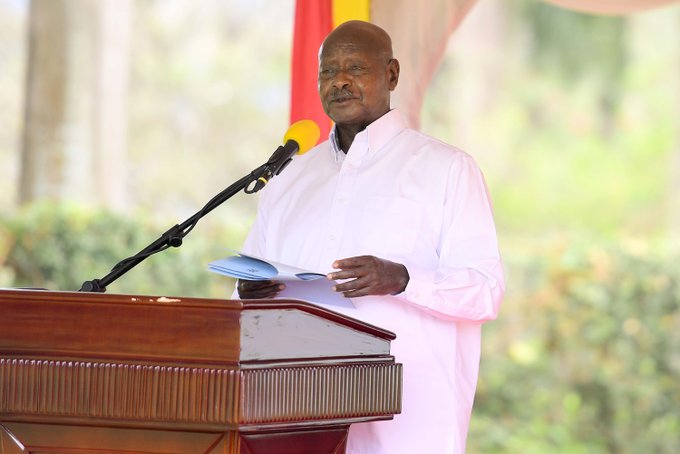
President Yoweri Kaguta Museveni will next week address the Parliament on matters of National Importance. The address has been confirmed by Anita Annet Among who said the Museveni’s address will be premised on matters of National Importance.

Museveni’s address comes at a time when the house is processing the contagious Anti-Homosexuality Bill, 2023 which seeks to criminalise same-sex relationships with a liability of imprisonment of two to 10 years for homosexuality, aggravated homosexuality, attempted homosexuality, aiding and abetting homosexuality, conspiracy to commit homosexuality and other related practices.

“I want to report that pursuant to Article 101 (2) of the Constitution of the Republic of Uganda, President Yoweri Kaguta Museveni will be coming to address the House on Thursday, March 16, 2023. I urge all of you to be in the House that day to hear what the President says on what we can do to change our economy and society,” She said during the plenary.

Museveni last addressed parliament in June last 2022 at Kololo ceremonial grounds. The Speaker Anitah Among started by making her communication to mark the official opening of the 2nd Session of the 11th Parliament.

This was after the swearing-in of new Member of Parliament Andrew Ojok Oulanyah, who replaced his dad, former Speaker Jacob Oulanyah, the former Speaker of the Parliament, who died on March 20, 2022 in Seattle, Washington State.

During his address, Museveni pledged that the country will process coffee, oil and iron in a bid to boost revenue collection instead of exporting the commodities for peanuts.

He promised to engage parliament that is opposing the government’s plan to process coffee in a deal with Uganda Vinci Coffee Company. The president said he is the one who was interested in the company in coffee after he realized how much the country was losing from exporting raw coffee.

Stories Continues after ad