Stanbic Bank
Stanbic Bank
17.8 C
Kampala
Stanbic Bank
Stanbic Bank
Home Blog Page 416

European Union, UNHCR offer Shs61b for Uganda’s Refugee Response

The European Union (EU) in partnership with the United Nations High Commission for Refugees (UNHCR) has announced a €15 million fund (equivalent to Shs61 billion Ugandan Shillings) to support Uganda’s response to refugees.

The three-year funding will be allocated to improving water, sanitation, hygiene, healthcare, energy, education, and environmental conditions for both the refugees and the host communities.

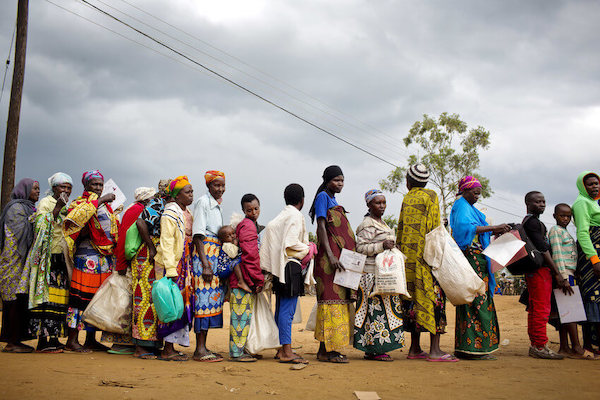
The announcement was made during the visit of officials from the European Union and the UNHCR to the Nakivale refugee settlement in southwestern Uganda. During their visit, the delegates had the opportunity to interact with refugees in groups, discuss key challenges, and assess opportunities for further support.

Myrian Ferran, the Deputy Director General of the European Union Commission in the Department of International Partnership, stated that although funding will be given to the government of Uganda, the EU is also developing strategies to shift from providing solely humanitarian assistance to offering development assistance, which will ensure resilience and self-sustainability among the refugees through livelihoods.

Rauf Mazou, the Assistant High Commissioner for Operations at the UNHCR, explained that the funds will be used to help refugees become more self-reliant, which will reduce their dependence on humanitarian aid.

Matthew Crentsil, the UNHCR Country Representative, added that the funds will address significant gaps that have existed in refugee response in Uganda since last year. The Minister of State for Relief, Disaster Preparedness, and Refugees, Esther Anyakun, expressed her gratitude for the funding, stating that it will help resettle the large number of refugees who have entered Uganda from the Democratic Republic of Congo since March 2022.

She also noted that although Uganda has included refugee activities in all three National Development Plans, the government lacks a specific budget for refugees, making resources from partners like the European Union vital in supporting the refugees.

Currently, Uganda hosts over 1,542,000 refugees, primarily from the Democratic Republic of Congo and South Sudan, making it the largest refugee-hosting country in Africa. The Nakivale settlement alone houses 168,946 refugees from twelve different nationalities, including Congolese, Burundians, Rwandans, and Somalis.

Stories Continues after ad

Uganda upgrades to polycarbonate e-passports

Government of Uganda has today upgraded the current paper-based e-passports to polycarbonate e-passports.

The Ministry of Internal Affairs Permanent Secretary Lt Gen Joseph Musanyufu, said the aim of this upgrade is to ensure enhanced security features, durability as well as conforming to the standard requirements as recommended by EAC and International Civil Aviation Organization (ICAO).

“This implies better quality, easy data verification at various airports of ICAO member states, better data protection and minimal chances of damage,” he said in a statement.

According to Musanyufu, the Republic of Uganda introduced an East African Community (EAC) e-Passport in Dec 2018, which replaced the machine-readable light blue passports.

“These were paper-based passports that were presented in the following colors; Light Blue (ordinary passport), Green (service passport) and Red (diplomatic Passport). There was a two-year transitional period to allow for a gradual phase out of the previous Machine-Readable Passports which ended on 4. April, 2021 when Machine Readable Passports validity ceased,” he said.

“As a follow up on the above, the Ministry of Internal Affairs has completed an upgrade of the current Paper-based e-passports to Polycarbonate e-passports,” he added.

The ministry has so far issued over 1,008,401 e-passports since the launch in December 2018.

But Musanyufu said both passports (e-paper based and e-polycarbonate) shall continue to be used until expiry or leaflets run out.

The upgraded Polycarbonate passports, just like the e-paper passports have electromagnetic chips. E-Polycarbonate passports however have polycarbonate (tough plastic) layers infused together, leading to a finished material where personal data is engraved inside the deeper layers of the document with laser. This cannot be delaminated.

According to Musanyufu, this gives the new e-polycarbonate passport the resilience and robustness for data security and protection, with strong anti-fraud features.

“These features make the EAC e-Passport suitable for use at e-gates for self-clearance; easy and automated issuance of boarding passes; quick passenger processing worldwide (for ICAO member states); and full compliance with international security standards, hence easing traveller experience. Travel, specifically document verification is going to be easier and seamless than ever before, due to improved technology,” he said.

The cost of the passports remains unchanged, according to the ministry.

An ordinary Passport costs Shs250, 000, while processing an express Passport attracts a fee of Shs150, 000, which makes a total of Shs400, 000. Official and Diplomatic passports cost Shs400, 000 and Shs500, 000 respectively though these are for specific identified categories of Government officials.

Ordinary passports take between 7-14 working days to be ready, while express Passports take 3-5 working days. All these lead times are subject to due diligence and other verification procedures. If there are queried cases, these tones may change.

The ministry said it is very important that the stakeholders understand that Paper based e-passports are not being invalidated.

“They are valid until the expiry date or until the leaflets are finished. The Polycarbonate e-passports merely present an upgrade akin to upgrading software that does not negate the upgraded software itself. So, holders of the paper-based e-passports should not worry as they are as valid as the polycarbonate ones and they will be used concurrently,” he said.

“There is no need to replace paper-based e-passports. Going forward, new applicants will be issued with polycarbonate e-passports,” Musanyufu added.

Stories Continues after ad

Over 50 women benefit from agribusiness training and mushroom gardens in Luzira

Over 50 women have benefited from agribusiness training and mushroom gardens to boost their household income.

A study from the World Bank indicates that females account for 76% of Uganda’s workforce in the agricultural sector and contribute about 60% to 80% to the production of locally consumed food.

With Uganda’s population standing at 45 million people at the current growth rate of 3.6%, the population is expected to double by 2050. This means that the demand for food will keep increasing and so there’s a need to empower women with the right skills they need so that they are able to produce food for their families as well as income generation.

Speaking after the training, the Corporate Relations Director Uganda Breweries, Juliana Kagwa said many women living in urban settings bear the burden of growing income gaps due to the multiple forms of barriers women face in their everyday lives which have put them at a greater risk of poverty and limited negotiating power to access to resources.

“We recognize that inequitable access to skills and resources are some of the key reasons why having equal opportunities for women is seemingly difficult. This means that equitable actions need to be put in place to empower women and one of the ways is through acquiring skills. As players in the private sector, we pledge to continue working together with the local leadership to empower the women of Luzira and beyond so that we completely eliminate poverty and achieve gender equality for all women,” said Kagwa.

“Most inclusive and diverse culture makes a better business and a better world and this can be done through championing inclusion and diversity within our business, our partners, and communities around our areas of operation. We pledge to continue providing avenues where there’s equal opportunity for those in our communities to grow as we grow,” she said.

Fatumah Naigaga, Luzira Women Councillor LCIII said women living in urban slums in particular endure multiple hardships ranging from basic needs such as; unemployment, nutrition, durable housing, limited access to clean water, and improved sanitation facilities which often go unmet. This has constrained women’s participation in all spheres of life with serious implications for human resource development and, in that capacity, the economic development of the country and the general state of gender equality is still a great need.

Stories Continues after ad

Museveni pledges to empower LC Chairpersons

President Yoweri Museveni on Wednesday 29 said that the government is committed to helping local council leaders in fighting poverty.

Museveni who is also the chairman of the ruling National Resistance Movement party revealed this while speaking to NRM Village chairpersons from Kampala City at Kololo ceremonial grounds.

“Paying a salary to all LC leaders is practically impossible. What the government is going to do is to encourage you to form SACCOs so that financial assistance can be given to you and you invest in production or agriculture,” Museveni said, adding, “This SACCO idea will not cripple government operations because it is easy to manage.”

Museveni also said the government’s priority is to get the entire population out of poverty saying, “That is why all this time we have been trying out all these programs like NAADS, Microfinance, Operation Wealth Creation, Youth lively program, Emyooga, and the recently introduced PDM.”

He however, added that PDM money in Kampala will be increased since their parishes have bigger populations compared to parishes in rural areas, “We are going to study the idea of investing more money in the city since there are many people. But the principle is one, borrow and invest then return it for other people to use it,” the President said.

He advised the leaders to also consider venturing into pre-urban agriculture since there is a ready market to buy their products, especially poultry and vegetables. 

 The president also said he will work with Kampala leadership to acquire many more spaces for markets, skilling, and artisan centres.

“As a policy, the government will construct more skilling centres so that thousands of youth are taken in, trained and are equipped with skills to startup businesses,” President Museveni promised.

 The NRM Secretary-General, Richard Todwong said he was excited about the love that the local leadership of Kampala has towards their party Chairman.

“The desire they have for you is overwhelming. We might have differences and challenges as leaders, but, waking up every day to your leadership as our President gives us hope,” Todwong said.

He requested the president to kindly take the demands of his people to stand in the next election, saying the voice of the people is the voice of God. “Your current advanced age is the best time for you to lead. You make us comfortable as our president and the party leadership equally supports you,” Todwong added.

Todwong told the President that the poor performance of the NRM party in the central region has been captured in the findings that were recently captured in research that the Secretariat commissioned under the Department of Mobilization.

“Very soon, the people’s concerns from the Central and Busoga regions which require special attention will be sent to your office,” Todwong said.

“Issues to do with constrained resources; unemployment and poverty are a result of the increasing population available, especially in the urban areas like Kampala city, Wakiso, Mukono and Mpigi districts. And so, these require concerted efforts,” the head of the NRM Secretariat said, adding, “I believe you are the leader of the ordinary person. So, we request you to handle them.”

Stories Continues after ad

UPDF kills senior ADF commander in Eastern DRC

The Uganda People’s Defence Forces -UPDF and Armed Forces of the Democratic Republic of the Congo -FARDC have killed an Allied Democratic Force (ADF) commander in the Eastern Democratic Republic of Congo –DRC.

The killing was confirmed by the Brig. Gen Felix Kulayigye, the spokesperson of UPDF.

“UPDF Put Out of Action an ADF senior Commander in Mwalika Valley in Eastern DRC. Seka Wankaba, a Ugandan & Musoga by tribe was part of ADF leader Mularo Seguja’s Group & a highly trained Improvised Explosive Device (IED) Expert,” Kulayigye said.

He said UPDF troops will not relent till ADF command and control structure is fully decimated.

Since it was launched in November 2021, the operation is being conducted by UPDF and FARDC. Since then, the joint forces captured over 34 ADF terrorists and injured scores.

The two Forces are currently engaged in road construction and rehabilitation works to facilitate and further secure the movement of soldiers and the displaced civilian population, particularly on Mbau- Kamango and Mobili axes, Kamango-Semuliki- Beni.

In November 2021, the two Forces launched joint air and artillery strikes against ADF camps. The attack on ADF camps follows three terror attacks which claimed four lives and scores injured.

 According to police the first explosive occurred at Digida Pork joint in Komamboga, Lungala along Kampala Masaka Highway, Parliamentary Avenue and Kampala Central Police Station (CPS).

Stories Continues after ad

Uganda signs new Bilateral Labour Agreement with Saudi Arabia

Betty Amongi

Government of Uganda has signed the new Bilateral Labour Agreement with the Kingdom of Saudi Arabia, Eagle Online has reliably learnt. The agreement was signed by Betty Amongi, the Minister of Gender, Labour and Social Development.

In December 2022, the government of Uganda suspended a bilateral labour export agreement with Saudi Arabia over the continuous mistreatment and torture of Ugandan migrant workers.

In 2017, the government of Uganda signed a five-year labor agreement with Saudi Arabia aimed at promoting the welfare and rights of Ugandan migrant workers.

The Observer newspaper on December 23, reported that the Permanent Secretary in the Ministry of Gender, Aggrey David Kibenge had issued directives to recruitment agencies and pre-departure orientation and training institutions that the agreement with Saudi Arabia had been suspended effective immediately pending re-negotiations of the agreement.

“This is therefore, to inform you that clearance and deployment of migrant workers, approval of job orders, and training of migrant workers under this agreement are suspended with immediate effect. Note, however, that this temporary suspension does not affect migrant workers whose travel had already been cleared by the ministry, prior to this date, and are in possession of signed contracts, travel tickets, and entry visas” read the letter in part.

Kibenge also said that the government is pursuing other efforts for the protection of Ugandan workers. In the pipeline is the recruitment of labour attaches to follow up on Ugandan laborers abroad, strengthen embassy offices and establish a call center in Uganda to which complaints about the welfare of Ugandan workers can be reported for action.

Remittance and Revenue

That was the only bilateral labour agreement that Uganda had. As of June, last year, there were 235 licensed private recruitment companies. Every two years, each company pays Shs2 million in license fees. Annually, Government collects $1.3 billion globally from labour export business the Middle East alone sends in $700 million.

The government collects $30 (Shs110,000) job order fees for each eternalized worker. That money is wired directly to the Uganda Revenue Authority accounts. From August 2021 to August 2022, the government collected over Shs12 billion from Job orders.

Ministry of Internal Affairs says they process 10,000 passports every month and the biggest percentage goes to individuals seeking to work in the Middle East.

According to the ministry of Gender, Labor and Social Development, there are over 150,000 Ugandan migrant workers in Saudi Arabia. Most Ugandans are employed in the informal sector as housemaids, gardeners, cargo handlers and other jobs.

Eagle Online   has learnt that in 2021, Uganda externalized 89000 Ugandans of which 79000 went to Saudi Arabia. Of the 79000, 75000 were female. By June 2022 Uganda had externalized 50,000 nationals and a high percentage went to Saud Arabia.

Stories Continues after ad

2022 financial report: Stanbic Bank Uganda records Shs360b profit

Stanbic Bank Uganda Limited has released its financial results for the year 2022, indicating that they made a gross revenue of more than Shs1 trillion and Shs360 billion profit after tax.

Stanbic Bank Uganda Chief Executive Anne Juuko said the strong performance was underpinned by increased growth in credit demand as the economy recovered from the effects of the Coronavirus pandemic.

“As a result of the economic recovery of our customers, we saw a 9.8% growth in demand for new credit in 2022 with the volume of disbursed loans increasing to 77,819 worth Shs4.0 trillion from 63,639 approved applications worth Shs3.7 trillion disbursed in 2021,” Juuko said.

She added that the company’s innovations aimed at helping small businesses also paid off’

“It gives us great pleasure to also report that over 11,000 small businesses have opened accounts with us in the past year and that over 1,800 of them have already benefited from access to affordable credit at rates as low as 15.5%, to the tune of over Shs30 billion,” the CEO said.

Ronald Mataka, Acting Chief Finance Officer at Stanbic Bank Uganda, said in 2022, they paid a total of Shs272 billion in taxes, making the entity the biggest taxpayer in the country’s banking sector.

“We collected another Shs7.5 trillion on behalf of the government by enabling taxpayers to remit through our expansive channels network, representing 33% of total remittances to the government by the entire banking industry,” he said.

Juuko added that through the StanbicForHer programme launched in 2022 with support from the International Finance Corporation (IFC), over 18,500 women received training in the fundamentals of bookkeeping, tax reporting, and accounting, giving them the confidence to run their businesses.

“We are happy to note that these SACCOs have accessed affordable credit through our multi-stakeholder Economic Enterprise Restart Fund (EERF) to the tune of Shs40 billion at as low as 10% per annum for those involved in the agricultural space,”Juuko said.

“We have also invested in their digitalisation as well as governance capacity to ensure that they serve their members, efficiently, like ‘micro Stanbic banks’ in their respective areas. We manifested our purpose of driving Uganda’s growth in ways that directly and indirectly benefited millions of Ugandans and engineered the economic recovery of customers from effects of the Covid-19,” she added.

Despite the emerging challenges in the economy, Juuko said they are pleased with our contribution towards economic recovery success stories of our customers registered in 2022, most of which are a result of sustained dividends of Covid-19 interventions implemented between 2020 and 2021.

Japheth Katto, Board Chairman Stanbic Uganda, speaks at the function.
Andrew Mashanda, Chief Executive Stanbic Uganda Holdings Limited, said Stanbic Properties Limited remains profitable and is executing various projects geared towards revamping our real estate portfolio.

‘FlyHub received its first revenues during the year and continues to pursue more opportunities as businesses explore ways to become more efficient through automation while our SBG Securities revenues were impacted largely by a drop-in capital markets activity, we remain optimistic about its potential as the diversification into asset management is implemented. Stanbic Business Incubator continued to execute its mandate, as a beacon of SME capacity development in Uganda by directing and supporting over 3000 small businesses for the period under review,’ Mashanda said.

Japheth Katto, Board Chairman Stanbic Uganda, said their performance is commendable given the challenges they have gone through.

“We are coming through a period which has had its challenges, coming from #Covid-19 then Ebola, and an increase in the CBR rate. However, notwithstanding all those challenges, the team at Stanbic Bank with the support of the regulators, we have performed well,” he said.

“We have done a lot to support the businesses that are recovering from #Covid-19. We do not only look at the number of customers we have. We look at the impact that we create in society, and how many people we are touching. This is really seen in the support we extend to SACCOs,” he added.

Stories Continues after ad

UPDF joins Kenyan troops for peacekeeping mission in Congo

Uganda’s contingent of the East African Community regional force is set to join Kenyan troops to foster peace in the war torn eastern Democratic Republic of Congo-DRC. The revelation was made by Brig. Gen Felix Kulayigye.

“Our officers are at Bunagana border post as Uganda Contingent of the East African Community Regional Force prepare to be flagged off to join their counterparts in Eastern DRC,” he said.

Last month the UPDF said it would deploy 1,000 soldiers as part of the regional military force. The North Kivu province is occupied by different militia groups including the M23 rebels who are fighting government forces and causing civilians to flee.

East African Community (EAC) Heads of State Conclave on Inter-Congolese Dialogue deliberated in 2022 to jointly deploy in Congo.

According to Museveni the crisis in Congo needs a collective approach from all regional members of the East African Community. “We must insist on working together because these people have suffered a lot” he said during the meeting last year. 

Kenya first deployed its troops in November 2022 and is expected to deploy 900 soldiers in the area.   

Stories Continues after ad

PICTURIAL: Nakivubo Stadium takes shape as Ham insists, construction is on progress

The construction of Nakivubo Stadium has steadily taken shape with works standing at 80%.

The construction which he is being undertaken by Hamis Kiggundu popularly known as Ham   has dispelled critics who had earlier said it had delayed and was of poor standards.

However, contrary to the allegations that it was behind schedule, lately it is being constructed day and night.

The Construction works are spear-headed by Roko Construction Company. The Stadium will have a modern athletic track and other indoor games plus multi-level parking of about 10,000 cars among others.

Ham took over the sports facility for redevelopment in 2017. Initially, the stadium was projected to end in 2019 but the construction of the facility had stalled due to #Covid-19 pandemic, politics, court battles and compensation of vendors.

Stories Continues after ad

Gov’t to build more airfields in game parks to boost Uganda’s tourism

Government has made it a priority to improve the infrastructure to make it easy for tourists by setting up airfields in different tourist destinations is top on agenda.

While addressing trade representatives, MDA’s & the private sector at the Annual Trade Representative Forum (TRF) at State House Entebbe on Tuesday, organized by the Presidential Advisory Committee on Exports and Industrial Development (PACEID) Museveni said there is need to build more Airfields near the national parks to ease movement of tourists.

“I have already told the government that we need to build more Airfields near the national parks. This is because some of the rich people don’t have time to come and land at Entebbe and drive 500 miles to Kidepo National Park. It’s only small people who can manage to do that but the rich people want to come in their private jets, land in the national park and then fly out. So, we shall have to build more hard surface airports in Kidepo, Kasese, Kihiihi, Gulu etc.,” Museveni said.

The Trade Representative Forum is an initiative by the Presidential Advisory Committee on Exports and Industrial Development PACEID headed by Mr. Odrek Rwabogo that brings together all trade representatives, allowing them to network, learn and build strategies with Uganda private sector local input.

According to the Chairman of Uganda Tourism Board Mr. Daudi Migereko, prior to Covid-19, tourism was Uganda’s number one foreign exchange earner fetching the country 1.6 million dollars and that it had been predicted that Uganda would be among the 10 fastest growing fastest destinations for leisure, travel and spending between the year 2020 and 2026.

“We need to appreciate the fact that we have already lost time with everything and we must pursue everything with urgency. We’re fortunate that ever since H.E the president launched our country’s destination brand in January 2022, our tourism has been getting very good ratings to unprecedented levels. We have received awards and endorsements from international media houses,” Migereko said, calling upon the Ministry of Works to have an emergency program to develop the roads with high tourist demand.

President Museveni tipped the gathering about the many ways of making money in Uganda especially if one is focused on adding value to the existing raw materials like coffee, Milk, cotton, tea, tobacco, fruits, beef, oil seeds, cocoa, bananas, leather, cassava, sugar, etc.

On minerals, the President said that the government has already identified investors who are setting up an integrated steel industry for the inland parts of Africa instead of importing steel from other places.

“I think we now have about 4 or 5 factories coming up to produce steel from our good iron ore, phosphates for fertilizers, cement, oil and gas, lithium (we need to produce electric batteries here for electric cars), copper, gold, tin, potassium etc.,” he added, praising PACEID group for identifying the gaps in export promotion and involving the young people.

“The other day I was in Gulu district and I saw an exhibition by the young people who are engaged in processing all our precious products for the world market and we are ready to support them.

I would really like to advise anybody who wants to work in government to understand this. If you do not understand that Uganda must be business oriented, then resign.” Museveni warned, saying Africa has for long missed out on the global money market with people until recently producing only for home consumption and not for the market.

He said that the now growing population of Uganda which will be 100 million people in the next 30 years, up from the current 43 million is an opportunity for growth.

“Now with the bigger population, competition for economic space increases. You can no longer afford to be laid back because more people now need access to resources. Nobody can compete with us once the people wake up,” President Museveni noted.

The head of state gave an example of milk which until recently was not among the exports.

“My family has been keeping cows for the last 7000 years but my father who was born 1916 and died some years ago, was not involved in the money economy for milk until he was about 80 years old when we commercialized milk in 1989 for the first time. The milk sector has now been commercialized and the production has gone up to 5.3 billion liters per year,” he further said.

According to the Chairman of the Presidential Advisory Committee on Exports and Industrial Development (PACEID) Odrek Rwabwogo, the meeting focused on strengthening coordination in order to move faster.

“If we’re not coordinated in our institutions to deliver these targets, we’ll run around, our trade reps will get us orders that we won’t be able to fulfill. So, coordination is a lesson we have learnt and that’s why we have brought these trade representatives,” Rwabogo said.

On the emergency key standards Uganda exporters need to enhance production and set the stage for value addition. The Minister for Agriculture Animal Industry and Fisheries, Frank Tumwebaze said his ministry is developing a new approach to production, informed by the market requirements.

“As you open the market for us, just know that we’ll not only give you volumes, but we’ll also give you quality volumes. We are working out a regulatory system on foods and medicines under one framework so that regulation and fighting of fakes is made easier and when you do that, you contain disease to ensure more rewards to the farmer and eventually exports,” Minister Tumwebaze emphasized.

Gen. Edward Katumba Wamala the Minister for Works and Transport presented on how key transport infrastructure can drive Uganda’s Exports Competitiveness. He said the government is addressing the few pockets of poor road networks which are making goods expensive on the market.

“We have harmonized our laws within the country and the region to support regional trade and to ease movement of goods and services. We are also implementing key infrastructural development like the one stop border posts to facilitate easy movement of goods and services and people between countries,” Gen. Katumba said, adding that as Uganda dreams of exporting 12 million bags of coffee, the government is developing the railway system to move goods across East Africa.

Stories Continues after ad