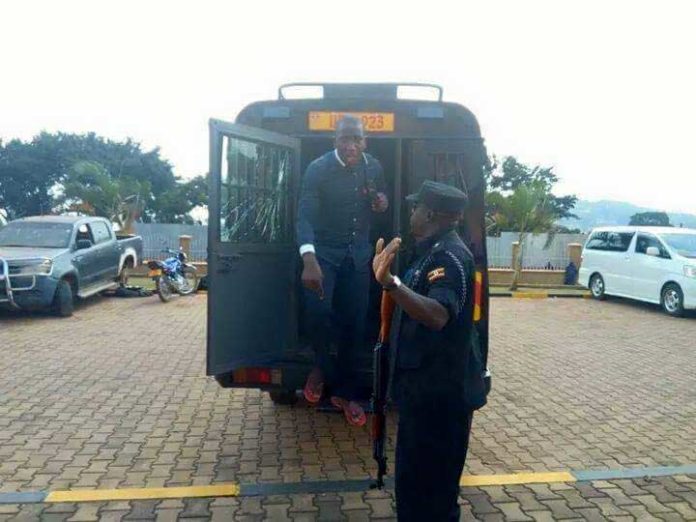
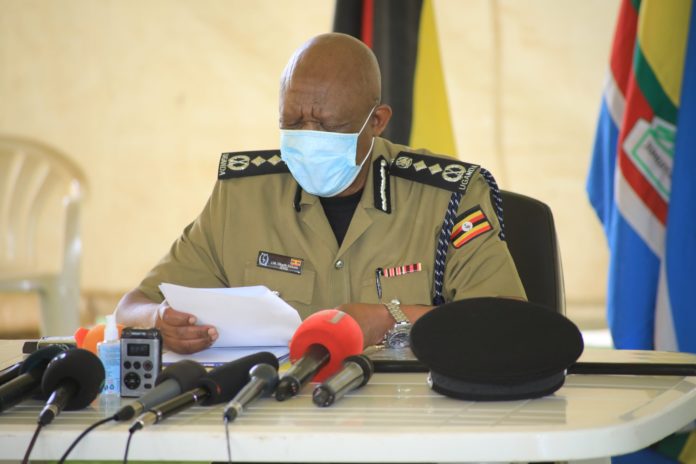
High Court Kampala is set to deliver its ruling on the double murder of the outspoken assistant superintendent of police (ASP) Muhammed Kirumira and his friend Mbabazi Nalinya.
Kirumira and Nalinya were gunned down on September 8, 2018 by unknown assailants travelling motorcycles. Kirumira was driving towards his home when gunmen waylaid him and opened fire at Bulenga trading centre. Last year, the court started the trial of Hamza Mwebe and Abubakar Kalungi over their links to the killing of Kirumira and Nalinya. Justice Margrate Mutonyi acquitted Mwebe in December after the prosecution failed to avail evidence pinning him over the double murder. She ruled that Kalungi had a case to answer.
Last month court assessors advised the High Court to find the suspect Abubaker Kalungi innocent and acquit him of the crime. The assessors told Justice Margaret Mutonyi that they are not convinced that Kalungi participated in the murder of Kirumira and another victim Resty Nalinnya Mbabazi in Bulenga Trading Center, Wakiso district.
They claimed that they are convinced that the prosecution proved that Kirumira’s death was unlawful and committed with malice aforethought and that none of the 15 Prosecution witnesses had placed Abubaker Kalungi at the scene of the crime. Kalungi is said to have been hired by one Kateregga who is reportedly dead, to trail Kirumira’s movements. It shall also be remembered that on 23rd November last year, Justice Mutonyi dismissed a confession statement of one of the suspects Abubaker Kalungi saying that the State had failed to prove that it was voluntarily made as it was full of contradictions. Kalungi was acquitted but was rearrested soon after.
The Inspected General of police – IGP Martins Okoth Ochola has instructed Professional Standards Unit to open investigations into the alleged beating and torture of Buvuma district woman MP Susan Nakaziba Mugabi. The revelation was made by Police spokesperson Fred Enanga. The MP was over the weekend assaulted by the police and military as they blocked her belated Women’s Day celebrations in Buvuma.
The enforcement of that unlawful assembly, there are disturbing images that went viral that captured some of our officers using excessive force during the arrest of some of the suspects in Buvuma,” he said. He said police have summoned 11 officers who will be discontinued from their duties and report to the Professional Standards Unit headquarters in Kampala for further investigations.
The summoned officers include the Acting Regional Police Commander SP Kanyesigye Jamal; District police Commander –DPC Buvuma, Bagole Frank and other officers who took part in the operations. Over the weekend, Ssezibwa regional police spokesperson Hellen Butoto said for the National Unity Platform –NUP party members will be charged for unlawful assembly and inciting violence. The group was nabbed at Kyanja Village, Bwema Sub County in Buvuma District.
She claimed that Nakaziba’s event was not cleared by police as the law mandates. “Just learnt of the violent assault on Susan Mugabi, the Woman MP for Buvuma District under the NUP. In trying to block her Women’s Day celebrations, the shameless thugs in our national uniform pounced on her and other leaders and assaulted them,” Robert Kyagulanyi, NUP Party President said on Twitter.
“This is how Susan Mugabi and the District Speaker of Buvuma were treated by the police and military yesterday. Journalists were detained and forced to delete footage to hide these criminal actions. In a sane government, these security men would now be behind bars,” he said. NUP party spokesperson Joel Ssenyonyi said Buvuma Woman MP and the District Speaker were brutalised by the military and police because of a Women’s Day function they had organised in the District. Sometimes one wonders whether some of these guys in uniform are real human beings!
The High Court has dismissed an election filed by National Unity Platforms- NUP’s Fred Nyanzi Sentamu against the re-election of Kampala MP Muhammad Nsereko. In his ruling, Justice Jessey Byaruhanga said Nyanzi failed to avail evidence that the Nsereko and electoral commission falsified the election results.
“The petition is hereby was dismissed with costs,” he ruled. On March 10, 2021, Bobi Wine’s brother Nyanzi filed an electoral petition against the Electoral Commission, the Returning Officer Kampala Central Ms. Doreen Musiime and Nsereko. Through his lawyers led by Justin Ssemuyaba, Nyanza wanted the court to order for recounting of votes in the 50 polling stations gazetted Kampala Central. Nsereko is the only MP who won the election in Kampala with the rest being won by the National Unity Platform (NUP).
“There was noncompliance and failure to conduct a free and fair election, which substantially affected the results,” Nyanzi’s lawyer said. Nyanzi averred that the electoral process was marred with malpractices and alterations of results. He told the Court that his client’s agents were threatened and chased away from polling stations. Nyanzi contended the Electoral Commission connived with Nsereko to alter and manipulate results recorded on many of the Declaration of Results Forms. He said that the electoral fraud denied him victory since 2,557 votes that cannot be accounted for. Nsereko was declared winner after garnering 16,998 votes as his closest opponent, Nyanzi polled 15,975 giving a difference of 1,022 votes.
In June 2022, Court of Appeal ordered for fresh hearing of the petition after high court judge Margret Apiny had dismissed the matter for lack of sufficient evidence to show electoral malpractices.
When it comes to taking Kratom with you on a trip, there are a few things that you really must comprehend. The following advice will assist you in avoiding any problems and will make your travel much more straightforward. You can get red thai products kona kratom sample pack online.
First and foremost, Kratom users must ensure that the nation or state they will be visiting does not have a prohibition on Kratom. If it occurs, you can run into severe difficulties due to this.
Things To Keep In Mind While Traveling With Kratom
Bring Your Original Mitragyna
Kratom is a plant that has a variety of effects, including ones that are stimulating and ones that are energizing. It is indigenous to Southeast Asia, where it is a part of the family Rubiaceae and may originate.
If you are going on a vacation, you should research the laws regarding the possession and use of Kratom in each nation and state you will be visiting. This approach guarantees you no issues while staying at the location. Please carry your Kratom products because sourcing them in a different region may be difficult.
Research The Legal Standing Of Kratom Around The World
As with all plants, some nations view the herb with suspicion since they believe it to be a potentially harmful substance. Before purchasing or using Kratom, it is crucial to be aware of the regulations in your country since some of these nations have gone so far as to outright outlaw the substance.
Kratom may now be purchased legally across Europe thanks to the Lisbon Treaty, which established the EU customs union. Nevertheless, since a few nations do not let the sale or import of Kratom into their country, it is vital to make sure that you are purchasing it from a reliable online retailer or one that sends it from the EU.
In Southeast Asia, where it originates, Kratom is a tropical evergreen related to coffee trees and used as an herbal alternative. It is also helpful as an alternative to some relaxation methods. There is a molecule in it called Mitragynine, which leads to an overall better mindset. Moreover, it may boost one’s mood. It is often used in lower dosages as a stimulant and at higher levels as a practical approach to help wind down.
The American Kratom Association estimates that between 10 and 16 million individuals in the United States use Kratom as a dietary supplement to improve their well-being. Most of these users would like to be able to travel with their Kratom products. Therefore, users should clearly understand the best approaches to travel with Kratom extracts.
Please Do Not Remove It From Its Original Packaging
Maintaining the integrity of your Mitragyna purchase is essential by transporting it in its original box whenever you travel with Kratom. This approach will make it much simpler for the security personnel at the airport to identify the material, which will assist in preventing any mistakes.
Maintaining the quality of your Mitragyna by ensuring that it is in the original container will keep it fresh even when you are on the go. Because of this, it will not get oxidized and lose any of its effectiveness.
Local shops may not often have as wide a variety of Kratom as online dealers do, and online suppliers typically mail it to you more quickly. This option might be convenient if you are considering traveling shortly and will not have time to purchase Kratom in the area.
There is another significant advantage to maintaining your extracts in their original packaging. Packing and using these products can be messy if you pack them properly. Manufacturers pack their products most efficiently and conveniently. Please be careful if you want to change the packaging and repack it according to your preference.
Do Not Attempt To Cover It Up
Attempting to conceal your use of Mitragyna will result in clarity and optional queries. In addition, it may give the impression that you are trying to get away with doing anything against the law.
It is in every Kratom user’s best interest to be forthright about what they are carrying and to inform the security personnel of its nature. You will not be questioned further and can proceed with assurance using this method.
It is also essential to remember that Kratom powder is quite dusty and might be challenging to clean up after use. If it spills on clothes, it has the potential to become a significant stain very rapidly. So, covering it up is not a wise choice.
As long as you carry products legally, there is nothing wrong with you bringing these products. If you act suspiciously, the airport authorities may flag your behavior and pull you aside for questioning. If traveling with Kratom in a plane, you must also ensure that the liquid extract does not exceed the maximum allowed volume. If you carry a liquid over the permitted levels, they may force you to dump it.
Always Be Ready To Answer Questions
When users are caught with Kratom while traveling, they should be ready to answer inquiries. This approach guarantees that they can respond accurately and effectively to the questions.
The first step is to look up the legislation on Kratom in the area you will be visiting and thoroughly research kratom. You will better understand the current scenario, ensuring that you do not get into any difficulties due to your actions.
Wrapping Up
Before you start your trip, it is a wise idea to research the Kratom regulations that are in effect in the location you will be visiting. You should also know important and basic facts about kratom extract vs powder, capsules etc. to be able to answer about products in case an adverse situation occurs. This way, you will be able to enjoy your vacation without worrying about whether or not you are allowed to bring Kratom with you. It is good to research before hand on Kratom products so that you can get Best Deals on Green Maeng Da Kratom and other Kratom products. It will also help you avoid any complications that may arise.
Red Vein Kratom is a plant native to Southeast Asia, particularly in countries like Thailand, Indonesia, and Malaysia. Its leaves contain alkaloids that have been traditionally used for their relaxing effects. Secondly, red-Vein Kali Kratom powder belongs to the coffee family. It is a natural product that provides a range of benefits to people.
In recent years, Kratom has gained popularity as an emerging name in the wellness sector. However, the legality of Kratom varies across different countries and regions, and it is necessary to understand the legal status of Kratom in your location before carrying it in your bag.
Furthermore, in the United States, Kratom is legal at the federal level, but its legality varies by state. Kratom is banned in six states, including Alabama, Arkansas, Indiana, Rhode Island, Vermont, and Wisconsin.
In other states, such as California and New York, Kratom is legal but subject to certain restrictions, such as age limits or labeling requirements. It is important to note that Kratom’s legal status is constantly changing, and it is recommended to stay informed about any updates to the laws in your state.
This blog post aims to inform parents of six essential facts they should know before traveling with kali red kratom. These facts will help parents make an informed decision about whether or not to use Red-Vein Kali Kratom when traveling with their children.
What Is Kali Red Kratom?
Red Kali Vein Kratom is a type of Kratom derived from the red veins on the leaves of the plant Mitragyna speciosa, a tropical tree of Southeast Asia.
While it is legal in some countries, such as the United States, New Guinea, and San Diego, it is illegal in other drugs in places like Thailand, Indonesia, and Malaysia. It sells with restrictions in others, such as New Hampshire.
6 Important Facts Parents Should Know Before Traveling With Red Kratom
Although many states have legalized its use, Kratom is considered a controlled substance at the federal level as per FDA.
In the United States, The American Kratom Association advocates for the responsible use of Kratom. It promotes lab tests to ensure its quality, mainly when it is sold in smoke shops. However, its legality is complicated, with some countries emphasizing on ban kratom products altogether while others have legalized it. While some people report positive effects from using Kratom, adverse effects and risks exist, especially at higher doses.
Here are some more additional information you need to know while flying to a different region with Kratom-
Original Packaging
When traveling with Red-Vein Kali Kratom, keeping it in its original packaging is essential. This will ensure that the product is clearly labeled and identifiable, helping to avoid any misunderstandings or confusion with security officials during travel.
The original packaging should include the brand name, the name of the product, and the quantity. Additionally, check the packaging for any damages or signs of tampering before traveling, as this could raise suspicions and cause unnecessary delays at the airport.
It is best to place the product in an air-tight, sealed container and place it in the center of your luggage, between other items, to reduce the risk of damage. Additionally, consider placing the product in a clear plastic bag to be visible to security officials during a routine check.
Overall, keep a check on local laws and regulations before your trip. While the product is allowed in some countries, in others, it may be considered illegal and could result in a fine.
Carry Small Amounts Of Kratom
When flying Red Kali Kratom, it is essential to carry only small contents Kratom. Carrying large quantities of the product may lead to legal complications that may disturb your planned schedule.
This practice would help also ensure that the product you are traveling with is used properly without worrying about it not going well. Small quantities would also keep a check on your dosage while lasting you properly on your trips.
Housing Finance Bank (HFB) Uganda has announced its partnership with the Uganda North American Association (UNAA) to offer investment solutions for Ugandans living in the Diaspora. The partnership also allows customers to pay for their UNAA registration and subscription fees at any Housing Finance Bank branch and through the bank’s digital channels.
The partnership between HFB and UNAA underscores the Bank’s commitment as an indigenous bank to supporting the Ugandan community – both at home and in the diaspora – and creating opportunities that enhance their financial well-being. Through this partnership, the Bank offers customers in the diaspora with advisory services on top of the wide range of financial solutions including home loans and mortgages, investment opportunities with fixed deposits & government securities, remittances plus the ability to bank anytime anywhere through the HFB digital channels among others.
While addressing the media at Housing Finance Bank head offices, Micheal K. Mugabi, Housing Finance Bank’s MD said, “We know that our brothers and sisters in the diaspora are looking for a reliable financial partner that can enable them to invest back home and benefit from their hard-earned money, and Housing Finance Bank is the bank you need to comfortably live abroad and invest back home.” We do not only offer banking services to our customers, but also go an extra mile and walk with our customers to enable them to achieve their financial aspirations.”
According to Michael Mugabi, the Managing Director at Housing Finance Bank, the partnership aligns with the Bank’s commitment to providing convenient and innovative solutions to its customers. “We are pleased to partner with UNAA to simplify the registration payment process for our customers. Strategic partnerships like these are vital to HFB’s commitment to providing efficient, innovative and customer-centric services that maximise value to our customers and help them achieve their financial goals while providing the best possible banking experience.“
Henrietta Wamala, UNAA President, expressed her delight in the partnership, noting that it would make it easier for Ugandans to participate in the event. “We are excited to partner with Housing Finance Bank to make it more convenient for our members to pay their registration and subscription fees. We believe that this partnership will enhance the overall experience of our members planning to attend the 2023 annual convention.”
Customers can visit any Housing Finance Bank branch to make their payments and register for the 35th Annual UNAA Convention & Trade Expo. For more information, customers cancontact the bank through the 24/7 contact center toll-free number 0800211082, WhatsApp 0771888755, via email on info@housingfinance.co.ug , through the bank’s website www.housingfinance.co.ug or visit any of the 18 Housing Finance Bank branches.
United Nations Population Fund’s (UNFPA) State of World Population report has revealed that population anxieties are widespread and governments are increasingly adopting policies aimed at raising, lowering or maintaining fertility rates. But efforts to influence fertility rates are very often ineffective and can erode women’s rights.
The landmark report “8 Billion Lives, Infinite Possibilities: the case for rights and choices” calls for a radical rethink of how population numbers are framed – urging politicians and media to abandon overblown narratives about population booms and busts. Instead of asking how fast people are reproducing, leaders should ask whether individuals, especially women, are able to freely make their own reproductive choices – a question whose answer, too often, is no.
“Women’s bodies should not be held captive to population targets,” says UNFPA Executive Director Dr. Natalia Kanem.
“To build thriving and inclusive societies, regardless of population size, we must radically rethink how we talk about and plan for population change.”
A staggering 44 per cent of partnered women and girls in 68 reporting countries do not have the right to make informed decisions about their bodies when it comes to having sex, using contraception and seeking health care; and an estimated 257 million women worldwide have an unmet need for safe, reliable contraception.
History has shown that fertility policies designed to increase or lower birth rates are very often ineffective and can undermine women’s rights. Many countries have rolled out programmes to engineer larger families by offering financial incentives and rewards to women and their partners, yet they continue to see birth rates below two children per woman. And efforts to slow population growth through forced sterilization and coercive contraception have grossly violated human rights.
Family planning must not be used as a tool for achieving fertility targets; it is a tool for empowering individuals. Women should be able to choose if, when and how many children they would like to have, free from the coercion of pundits and officials.
The report strongly recommends governments institute policies with gender equality and rights at their heart, such as parental leave programs, child tax credits, policies that promote gender equality in the workplace, and universal access to sexual and reproductive health and rights. These offer a proven formula that will reap economic dividends and lead to resilient societies able to thrive no matter how populations change.
Twenty-four per cent of partnered women and girls are unable to say no to sex and 11 per cent are unable to make decisions specifically about contraception, according to data from 68 reporting countries.
A survey of eight countries showed people who had been exposed to media or conversations about the world’s population were more likely to view the global population as being too high.
Global demographics are changing rapidly: Two thirds of people are living in low fertility contexts, while eight countries will account for half the projected growth in global population by 2050 (the Democratic Republic of the Congo, Egypt, Ethiopia, India, Nigeria, Pakistan, the Philippines and the United Republic of Tanzania), dramatically reordering the world’s ranking of most populous countries.
Blaming fertility for climate change will not hold the greatest carbon emitters to account. Out of 8 billion people, around 5.5 billion do not make enough money, about $10 a day, to contribute significantly to carbon emissions.
A recent UN study says greater gender parity in the labour force would do more to sustain economies in ageing, low-fertility societies than setting targets for women to have more children.
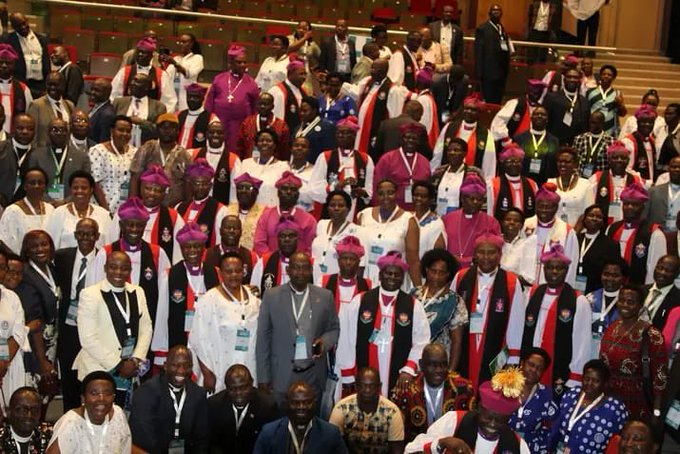
The fourth Global Anglican Future Conference (GAFCON) has resolved to prioritise youth and children’s affairs and equipping them in the next ten years.
Members of GAFCON met this week in Rwanda. The meeting brought together 1,302 delegates from 52 countries, including 315 bishops, 456 other clergy and 531 laity.
“We will devote ourselves to raising up the next generation of leaders in Gafcon through Bible-based theological education that will equip them to be Christ-centred and servant-hearted,” GAFCON resolved.
Despite the majority vote by the General Synod of the Church of England in February 2023 to welcome proposals by the bishops to enable same-sex couples to receive God’s blessing, believers said it grieves the Holy Spirit.
In order to pursue these priorities and to grow the work of the GAFCON movement, leaders endorsed the establishment of a foundation endowment and encouraged the GAFCON provinces to become financially self-sufficient, not only to advance mission but also to avoid being vulnerable to economic manipulation.
“Public statements by the Archbishop of Canterbury and other leaders of the Church of England in support of same-sex blessings are a betrayal of their ordination and consecration vows to banish error and to uphold and defend the truth taught in Scripture. Since the Lord does not bless same-sex unions, it is pastorally deceptive and blasphemous to craft prayers that invoke blessing in the name of the Father, Son and Holy Spirit,” GAFCON resolved.
President Yoweri Kaguta Museveni on Thursday, 20 congratulated the members of parliament for their stand on homosexuality and agreed to assent to the Anti-Homosexuality Bill, 2023 into law during the interaction with members of NRM Parliamentary caucus at Kololo Independence grounds
“It is good that you rejected the pressure from the imperialists. Those imperialists have been messing up the world for 600 years causing so much damage,” the President said, adding that most of the problems and the instability in many African countries are caused by imperialists trying to impose what is not meant for Africa.
This was during an interaction with members of the NRM Parliamentary caucus at Kololo Independence grounds on Thursday about the Anti-Homosexuality Bill 2023 sent to him for signing into law.
“Therefore, I congratulate you for making that stand and also the bishops, the religious people and the citizens,” H.E Museveni added.
The President who is also the National Chairman of the ruling National Resistance Movement (NRM) was however informed by Attorney General Kiryowa Kiwanuka that the bill passed by parliament in its current form criminalizes even those who voluntarily come out to have practised homosexuality and need to be helped. He proposed a provision for amnesty for those who will have come out to be helped not to punish them to allow others not to fear to come out.
“This country has issued an amnesty for people who have carried out criminal activities of treasonous nature against this country. A similar provision would be provided in this law to ensure that a person who comes out on his own is not criminalized. In that regard I would like to beg the members of parliament and implore them to allow Your Excellency to return this bill so that we can address that matter,” the Attorney General said.
This, according to the President, was his main concern.
“The issue I raised is a matter of subsistence. I agree with the bill but my original problem is the physiologically disoriented person. What you are saying is that the law doesn’t recognise him as long as he does not act. But how do you provide for him to come out?” H.E Museveni said, asking members of parliament to make some corrections especially not to frighten someone who needs rehabilitation to come out.
The President promised to meet the legal affairs committee of parliament, the sponsor of the motion Hon Asuman Basalirwa and other interested parties next week to finalize the bill.
“Since we have agreed now, I’m going to return that bill, and you quickly deal with those issues and we sign it,”
However, the President reminded NRM MPs of the need to be patriots when fighting what he termed as imperialists. He reminded them that in the 1980’s they fought to liberate Uganda with no pay until recently.
“That’s how we can fight. We’re dangerous because we can fight for no or low pay,” the President said, calling upon members of Parliament to brace themselves for the likely consequences including cutting the wage bill which is about 8 trillion shillings to cater for sectors like health where promoters of Homosexuality are threatening to cut their aid to Uganda.
“One of the things they’re threatening is to kill our 1.2 million people who have been surviving on PEPFAR funds to buy drugs for HIV/AIDS so that we don’t buy the drugs for our people and they die,” the President noted after information that the bill for AIDS medicine is 260 million dollars.
“This is a simple matter which we can fight but parasites can’t fight. If you fear to sacrifice you cannot fight. For you to fight I want to first cure you of parasitism. Europe is lost and they also want us to be lost. Those who want an easy life will end up being prostitutes,” the President emphasized.
H.E. the President told MPS that up to now he has failed to agree with the view of those promoting homosexuality as an alternative way of life.
There was a heated yet healthy exchange between the President and members of Parliament on whether to make amendments to the bill or pass it in its current form where legislators assured the President of their full support concerning implementing the bill once signed into law.
The Woman Member of Parliament for Busia Auma Hellen Wandera told the President that homosexuals once rehabilitated can change, giving an example of her female colleagues who were homosexuals but changed and are happily married with families.
Ndorwa East MP David Bahati informed the President and members that the law he sponsored in 2001 and the current one both criminalize the acts of homosexuality and their promotion, saying that children recruited unknowingly should be rehabilitated to become better citizens.
Vice President Jessica Alupo also called upon members of parliament to support the President and Parliament to make a few changes to the bill so that it is passed when everybody is content.
“What is clear here is that no one of us here supports homosexuality and nobody has intentions to support it,” the Vice President said.
Hon Bright Rwamirama called upon the President to be firm and sign the bill to protect the country from immoral acts.
“Homosexuality is not sickness. The bill is before you and there’s no contradiction at all. Those people trying to convince you otherwise want to water it down,” Minister Rwamirama said.
On the other note, the Chairman of the NRM caucus also Government Chief Whip Hamson Obua informed the president that his office has received reports with concerns from a section of MPs hailing from Lango and Acholi, Sebei and from some districts in Karamoja about cattle rustling, asking the president to find a decisive solution to this vice.
President Museveni assured the affected communities that the problem is solvable and he has already met Army commanders to find solutions to the vice, causing insecurity in Northern Uganda.
“We have all the assets to solve that problem and there’s no need to worry. It’s not such a big issue. It’s a problem of command and will be sorted out. I will have to spend some time in that area so that I supervise that work myself,” the president said.
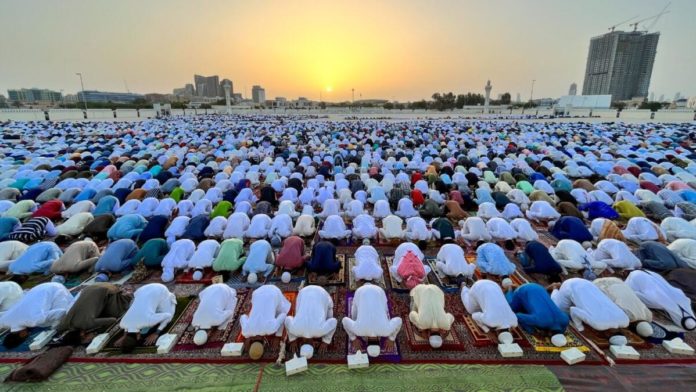
Muslims worldwide will tomorrow, April 21, celebrate Eid al-Fitr which marks the end of long fasting of Ramadan.
Lunar months are either 29 or 30 days long and Muslims typically wait until the night before Eid to confirm its date. Astronomical reports have confirmed crescent moon around the world and it is 2.4% lit from Mecca and generally much higher and brighter in the post-sunset sky while it was about 4% from the West coast of the US.
The Government of Uganda has also declared Friday as a public holiday to mark this year’s Eid-el-Fitr, a religious festival for all Muslims.
This was disclosed in an official announcement by the Permanent Secretary, Ministry of Public Service, Ms Catherine Bitarakwate dated Thursday, April 20, 2023.
“The Honorable Minister of Public Service informed the general public that tomorrow April 21, 2023 is Eid al Fitr and will be observed as a Public Holiday throughout Uganda pursuant to the Public Holiday Acts, 1965,” Ms Bitarakwate’s announcement read.