Stanbic Bank
Stanbic Bank
24.6 C
Kampala
Stanbic Bank
Stanbic Bank
Home Blog Page 423

Gianni Infantino re-elected as FIFA president

Gianni Infantino has been re-elected as president of FIFA until 2027 after standing unopposed at the congress of world football’s governing body on Thursday.

The 52-year-old Swiss lawyer, who succeeded the disgraced Sepp Blatter in 2016, was waved in for a third term by acclamation, just as he was four years ago, by delegates from the 211 member federations.

“I love you all,” Infantino told delegates in the Rwandan capital, where the voting system did not register the number of dissident voices.

While FIFA statutes currently limit a president to a maximum of three four-year terms, Infantino has already prepared the ground to stay until 2031, declaring in December that his first three years at the helm did not count as a full term.

The men’s World Cup will increase from 32 teams to 48 for the next edition in North America in 2026, while the women’s World Cup will feature 32 teams for the first time in Australia and New Zealand later this year.

Infantino has also announced projected income of $11 billion in the four years up to 2026, compared to $7.5 billion in the last four-year cycle ending in 2022.

Stories Continues after ad

Byabashaija announces appointments, transfers of Prisons Officers

Dr. Johnson Byabashaija

The Commissioner General of Prisons, Dr. Johnson Byabashaija has announced the appointments, transfers and leave of Prisons officers in different locations.

Byabashaija in a directive released on Wednesday, March 15, 2023, Dr. George Muge was appointed as acting Director, Corporate and Cooperation Affairs at the Prisons Headquarters. He takes over from Mr. Moses Kakungulu, ACGP, whose contract appointment has expired.

Mr. Hillary Bisanga, CP/LM has been appointed Acting Director, Human Resource Management. He replaces Mr. David Ahimbisibwe, ACGP, whose contract appointment also expired.

Mr. Elly Tumuramye, ACP/STO (Service Transport Officer) has been appointed Acting Director Commissioner of Prisons.

Ms. Peace Christine Babirye, SSP, has been appointed to take charge of the Information, Communication and Technology at the Prisons Headquarters.

In the transfers, Mr. Henry Kidega, SP, O/C Bushenyi Prisons (Nyamushekyera) has been transferred to Prisons Headquarters as STO. He hands over the station to Evans Rock Abio, SP, and O/C Nakasongola Prisons, who is now transferred to Bushenyi Prisons as Office in Charge.

Mr. Gerald kubomu, SP, O/C Nebbi Prisons has been transferred to Nakasongola Prisons as Officer in Charge.  He hands over the station to Ernest Turyomurugyendo.

Mr. Patrick Eplia, ASP, from leave has been appointed Staff Officer at Divisional Police Commander (DPC) Lira.

Mr. Samuel Omoding, ASP, from leave has been appointed Staff Officer Iganga Region at Iganga.

Mr. Priston Tibashoboka, ASP, Kampala Remand has been transferred to Kampala Remand has been transferred to Mid-East Region, Soroti as Staff Officer. He takes over from Max Otim Okalebo, ASP, who proceeds on leave pending retirement.

Mr. Edwin Kanyesigye, ASP, Prisons Headquarters has been transferred to Kampala Remand for duty.

Joseph Mungai, the P.O.I, DO/C Mutufu Prison has been appointed Officer in Charge of the same Prisons. He takes over from James Wateka, ASP, who is retired from service.

Harriet Gonza Nabwire from leave has been transferred to Kabonera Prisons as Officer in Charge. She takes over from Betty Nannozi Nakato whyo proceeds on 90 days normal leave.

Julius Ochom, M/bay Prisons has been transferred to Padhai Prisons as Acting Officer in Charge.

Richard Owor from Kasangati Prison has been transferred to Kitalya Mini-Max for duty

“These orders take immediate effect unless otherwise. The Acting Director/ Administrator to facilitate officers’ movements without delay,” Dr. Byabashaija said.

Stories Continues after ad

Education Cannot Wait announces Shs 93.5b towards refugees

Refugees

Education Cannot Wait (ECW) has announced US$25 million (Shs 93.5b) in catalytic funding to expand the Fund’s Multi-Year Resilience Programme, which continues to bridge the humanitarian-development nexus in Uganda. Total ECW funding in Uganda now tops US$75 million (Shs 280b).

The extended three-year programme will be delivered by Save the Children and UNHCR, in partnership with the Government of Uganda, and will support the inclusion in the national education system of more than 122,000 refugees. These children and those in host-communities in Uganda will receive the safety, hope and opportunity of quality, inclusive education.

The new programme seeks to catalyse US$180 million (Shs 673.6b) in aligned funding to deliver on the overall objectives outlined in Uganda’s Education Response Plan for Refugees and Host Communities II, the Government’s bold and continued commitment to the inclusion of refugee children and adolescents in its education system.

The scaled-up investment builds on the impact of ECW’s first Multi-Year Resilience Programme in Uganda, which enrolled 240,000 girls and boys into formal and non-formal education, built and rehabilitated 225 classrooms, provided learning materials for close to 150,000 children, and ensured bespoke educational supports for girls, children with disabilities and learners impacted by the COVID-19 pandemic.

“At this year’s High-Level Financing Conference, world leaders stepped up with US$826 million in commitments to ECW. We must build on that support and ensure that inclusive, quality education through humanitarian-development coherence in places like Uganda are fully funded. This is an investment in sustainable economic and social development for those left furthest behind,” said Yasmine Sherif, Executive Director of Education Cannot Wait, the UN’s global fund for education in emergencies and protracted crises.

Uganda hosts more than 1.5 million refugees, with 798,000 child refugees. Since January 2022, there have been over 84,000 new arrivals in Uganda, primarily from South Sudan and the Democratic Republic of the Congo, where ECW also supports education interventions.

While the Government of Uganda has taken significant steps to include refugees in the provision of social services, including education, the influx of refugees is putting an additional strain on resources already compounded by the #Covid-19 pandemic, putting girls and boys at increased risks of falling behind, dropping out, early marriage, gender-based violence and other violations of their human rights.

“Save the Children welcomes Education Cannot Wait’s generous and continued support towards the delivery of the Uganda Education Response Plan, which will ensure that children from both refugee and host communities are able to continue accessing safe and quality education. Quality education is a right of every child, and a foundation for their future. We look forward to continuing to support children and their communities together with the civil society partners in Uganda, including national and local organizations,” said Dragana Strinic, Save the Children Country Director Uganda.

“I am thrilled to see the Education Cannot Wait fund extend its Multi-Year Resilience Programme in Uganda. This will provide the opportunity for quality, inclusive education to more than 122,000 refugee and host community children and strengthen the systems for sustainability. The programme will not only bridge the gap in education but will also help to ensure the rights and pave the way to a bright future for thousands of Ugandan and refugee students,” said Matthew Crentsil, the UNHCR Country Representative.

A significant number of school-aged refugee children are out of school in Uganda. More than half of refugee early learners (aged 3-5) are out of school. Approximately 27% of girls and 19% of boys are left out of primary education, while less than 5% of girls and just 10% of boys will make it into secondary school.

The expanded programme focuses on access, quality of delivery, and the strengthening of systems in support of inclusion across Uganda’s education system. The investment will address barriers to quality formal and non-formal education by building and rehabilitating schools and providing children with mental health and psychosocial support. To improve the quality of education, the programme strives to recruit, train and deploy teachers in the least serviced areas of the country.

Finally, in building a long-term sustainable solution, the programme improves coordination and management of education services through partnerships with the government, civil society, UN agencies, donors, including education development donors, and other key stakeholders. In addressing the climate crisis, the investment advances disaster risk reduction and contingency planning for education.

In all 60% of programme beneficiaries are girls and 14% are children with disabilities. Of the 122,000 children and adolescents reached through the programme, approximately 21,000 will receive early childhood education supports, 92,000 primary education, 9,000 secondary education and 6,000 accelerated education programmes.

Stories Continues after ad

Uganda introduces yellow fever vaccine into routine immunization programme

A child being immunized

Uganda introduced the yellow fever vaccine into its routine immunization programme.

The vaccine is being administered to children aged 9 months, as part of its commitment to the EYE Strategy, with a vaccine introduction grant (VIG) from Gavi. All children will be vaccinated with both yellow fever and measles-rubella vaccines.

The EYE Strategy is a multi-stakeholder partnership that provides support to high-risk countries on how to minimize and eventually end the threat of yellow fever epidemics.

“Uganda is committed to controlling yellow fever transmission,” said Dr Jane Ruth Aceng Ocero, Uganda’s Minister of Health. “We want to ensure that our people are protected against this high-threat disease, and vaccines remain the main tool we have to efficiently prevent and contain yellow fever outbreaks.”

Uganda is a high-risk country for yellow fever transmission due to less than 10 per cent of the population being immunized against it, with sporadic outbreaks occurring every 3 to 5 years. The recent confirmed cases have been reported from near urban areas, such as Kampala. Around 24 per cent of Ugandans (approximately 44 million in total), live in urban areas with roughly half of those living in slums. Urban outbreaks of yellow fever in densely populated areas with low population immunity and often with poor sanitation can have catastrophic consequences.

“We applaud Uganda for taking such an important step towards immunization against yellow fever,” said Dr Yonas Tegegn Woldemariam, WHO Representative in Uganda. “Vaccination is the single most important measure for preventing yellow fever, and the prevention of outbreaks can only be achieved if the majority of the population is immunized.”

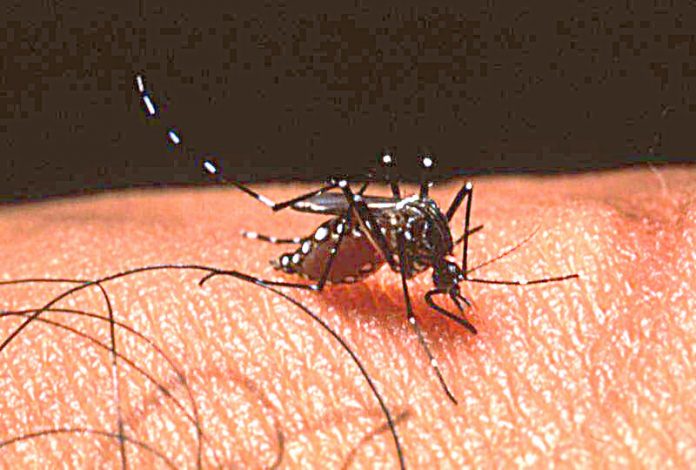
Yellow fever is transmitted by the Aedes Aegypti or Haemagogus mosquito species and outbreaks in Uganda originate mainly from sylvatic, or jungle, transmission. Mosquitoes acquire the virus by feeding on infected primates and then bite humans during agricultural and other activities in forested areas. Humans can then carry the virus to other areas, including urban centres, where it is spread by mosquitoes from human to human.

Yellow fever infections can cause serious illness and, in up to 30-60 per cent of severe cases, death. There are no specific therapeutics to treat the disease, but early supportive care increases survival rates. Crucially, there is a vaccine against yellow fever, and it is safe, highly effective and only a single dose is needed for life-long protection.

“The recent rise in disease outbreaks and the risks they present are why Uganda’s introduction of the yellow fever vaccine into its routine immunization programme is so important,” said Thabani Maphosa, the Managing Director, Country Programmes Delivery at Gavi, the Vaccine Alliance. “We commend the continued commitment of the Government of Uganda and will work with all partners to support this vital programme, which will save many lives.”

“There is no cure for yellow fever. It can only be prevented,” said Dr. M. Munir A. Safieldin, UNICEF Representative to Uganda. “A single dose of yellow fever vaccine is sufficient to give an individual life-long protection against the virus. This addition to the routine immunization schedule is critical to saving children’s lives and will go a long way towards eliminating epidemics of this disease.”

In addition to the success of the roll-out of yellow fever vaccine into its routine immunization schedule, Uganda will start the implementation of a phased preventive mass vaccination campaign (PMVC) by administering 13 million vaccine doses in 2023, for which Gavi has provided funding through a campaign operations grant. This will target areas deemed most vulnerable to outbreaks.

Stories Continues after ad

Cipla Limited offers 51.18% shares to its subsidiary firm in Uganda

Cipla Limited, a multinational pharmaceutical company, has revealed that it will sell a majority shareholding of 51.18% in its Ugandan subsidiary, Cipla Quality Chemicals.

In a statement to shareholders issued on Wednesday, 15 March 2023, Cipla said it will sell the stake to Africa Capitalworks, an investment management company incorporated in Mauritius.

The statement also reveals that the Cipla Quality Chemical Industries Board of Directors is aware that the company applied to the Capital Markets Authority for approval of the transaction.

Mr Ajay Pal, the chief executive officer of Cipla Quality Chemical Industries Limited, however, said there will be no change in business.

“Cipla Quality Chemicals is still a profitable business, its market is expanding and they begin to manufacture new drugs at the end of the year,” he said in an interview.

“It is an expression of interest by Africa Capital Works SSA 3. This is more of a special transaction, not a takeover of the company. It remains limited to taking ahareholding from Cipla Quality Chemicals, we shall give more details once Capital Markets Authority and Uganda Securities Exchange approve the sale of shares,” he added

The sale is expected to generate about $30 million, the same amount that Cipla spent on acquiring the 51% in QCL in 2015.

If the transaction is approved, Africa Capitalworks will become the largest shareholder in Quality Chemicals Industries (QCIL).

However, one of the terms in the agreement is that QCIL will continue to manufacture, distribute and sell products of Cipla Group.

The company’s current shareholders include Meditab Holdings Ltd (51.05 percent) and AMISTAD (11.51 percent).

Other shareholders are Capitalworks SSA 1 (11.15 percent), government employees pension fund (8.54 percent), NSSF Uganda (7.38 percent, Cipla (EU) (0.13 percent) and Yiga Joseph (0.11 percent).

The Ugandan founders of Cipla; Emmanuel Katongole, Ferderick Kitaka Mutebi and George Baguma will each hold 2.79 percent of shares in Cipla Quality Chemical Industries and they will each acquire 1.50 percent interest in the company, which is listed on the stock exchange.

Stories Continues after ad
Kenya suspends ban on milk imports from Uganda

The Kenyan Government has suspended the ban on importation of milk products from other East African countries.

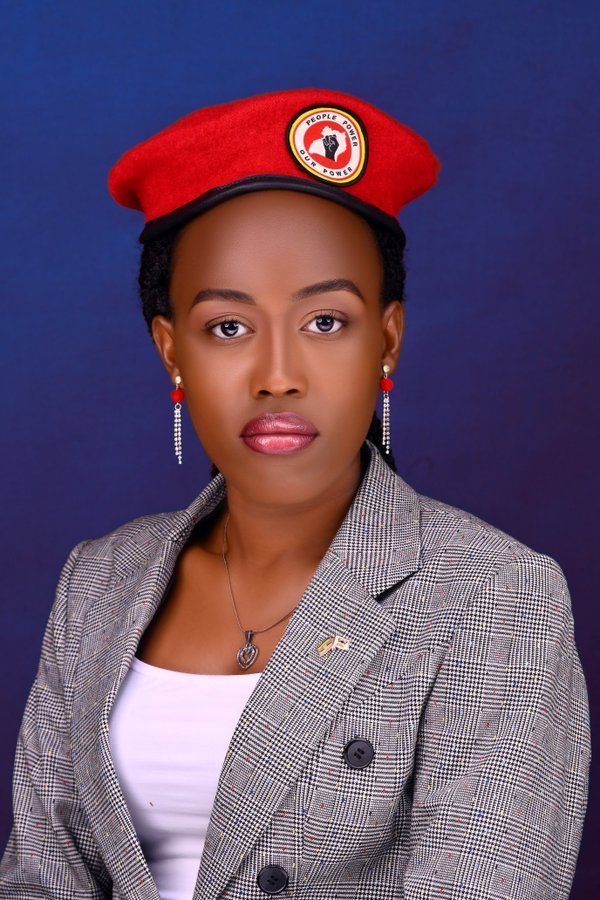
The announcement was revealed after a successful meeting between permanent secretary for the Ministry of East African Community, Abdi Dubat and Minister for East African Community Affairs, Rebecca Kadaga.

“Am delighted to inform the dairy Industry in Uganda that the Ban on  Milk products has been suspended,  Have also had fruitful discussions with Mr. Abdi  Dubat , Permanent  Secretary  Kenya  Ministry  of East African Community 9n bilateral issues,” Kadaga revealed.

Last week, in a notice dated March 6, the Kenya Dairy Board, KDB, said it was moving to protect local farmers from external products as output is expected to increase soon.

 “In anticipation of the long rains, the Government has stopped the importation of milk powders to cushion the industry from surplus production and low prices,” read a statement signed by Margaret Kibogy, the KDB Managing Director.

 However, a statement from Harry Kitmai, Principal Secretary at the Ministry of Agriculture and Livestock Development, called for the stoppage on the ban of the milk imports into Kenya.

“The stoppage issued through Kenya Dairy Board letter ref. KDB/MD/WED/1 VOl.5/58 dated 6th March, 2023, is hereby suspended to allow for the Dairy Industry (Import and Export) Regulations 2021to apply accordingly,” read part of the statement.

“Take note that, importation of products under the East African Community (EAC) protocol refers to goods being imported from outside the East African Community, while goods traded within EAC are referred to as transfers,” added in statement.

Kenya is well known as Uganda’s major milk market but the constant barriers have prompted the search for wider markets, especially in the Democratic Republic of Congo, South Sudan, Zambia, and Algeria.

Stories Continues after ad
Court sets date for hearing of American couples’ bail application

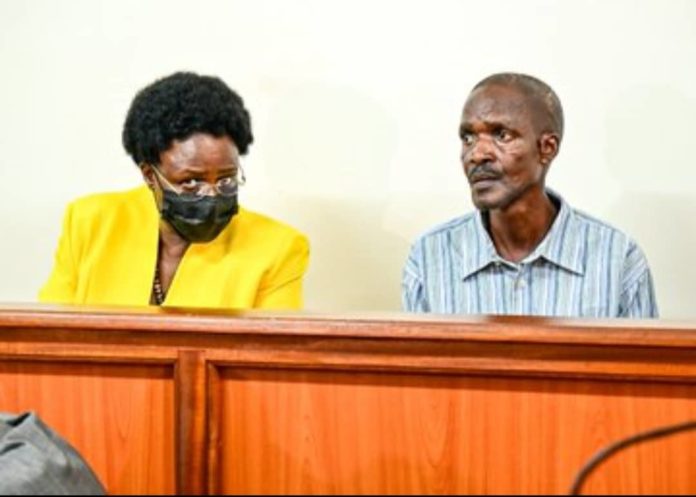
Mackenzie Leigh Mathias Spencer and Nicholas Spencer.

High Court sets Wednesday next week to determine the bail application filed by an American couple Mackenzie Leigh Mathias Spencer and Nicholas Spencer.

The couple is also facing charges of Aggravated torture.  Prosecution avers that Spencer aged 32 and his wife Mackenzie, a 32-year-old, volunteer, fostered three children, including Kayima John, in 2018, from Welcome Ministry, in Jinja City.

The couple has been on remand for mistreating a 10-year-old child, who was one of the children in their care. According to the amended plaint or charge sheet, the couple reportedly adopted a 10-year-old boy, whom they then mistreated on grounds that he was obstinate.

The suspects came to Uganda in 2017 and started working with Akola Project, based in Jinja. The couple joined the Motive Creation Agency and moved with their children to Upper Naguru, where they have been staying together.

It was however, realised that between the year 2020 and December 2022, the couple constantly tortured  Kayima John, a 10-year-old pupil of Dawn Children’s Center in Ntinda, which attracted the attention of neighbours.

The couple kept the victim barefoot, and naked throughout the day, would occasionally make him squat in an awkward position, with his head facing the floor and hands spread out widely, he spent his nights on a wooden platform, without a mattress or beddings and was served cold meals from the fridge.

The suspects came to Uganda in 2017, where Nicholas started working with AKOLA Project based in Jinja. In 2018, they fostered three children including the victim from Welcome Ministry – Jinja. They moved to Kampala when they joined Motive Creation Agency, with their three children.

This story will be updated.

Stories Continues after ad
Uganda tops the list of high burdens for tuberculosis

Uganda tops the list of 30 high-burden countries with tuberculosis (TB), HIV-associated TB and multidrug resistance, Eagle Online can reliably report.

The 30 high TB-burden countries include; Gabon, Mongolia, Zambia and Uganda and others while Ethiopia, Kenya and Thailand transitioned out of the list.

According to statistics released by the ministry of health, at least 30 people in Uganda die from TB every day and more than half of the number are people living with HIV. On average, Uganda records over 90, 000 new cases of TB every year. In 2022, the country registered 94,000 cases of TB.

Dr. Henry Mwebesa, the Director-General of Health Services, at the Ministry of Health TB is four times more common among men than women and the cost of treating it is high especially if treatment is received from private health facilities. This causes poverty but also poor people are more likely to suffer from TB.

“The biggest challenge is that we have failed to identify all the cases yet we have all the facilities for screening, testing and giving treatment. This has contributed to the shooting numbers of cases since many don’t seek treatment. If you cough for more than two weeks, please go testing at the nearest health facility,” he said.

He said the community should stop stigmatizing TB. People should know that TB is like other diseases and it is curable. We should encourage them to seek treatment.

In a bid to fight the disease, Uganda will mark world TB day to raise public awareness about the devastating health, social and economic consequences of tuberculosis (TB) and to step up efforts to end the global TB epidemic.

To ease the burden, Uganda has procured 12 mobile x-ray machines and is in the process of acquiring 21 more machines to strengthen the diagnosis. The machines however are not strictly for TB but for other complications.

Stories Continues after ad

Speaker Among returns iron sheets as police, IGG swings into action

Speaker Anita Among

Speaker of Parliament Anitah Annet Among has returned 500 iron sheets to the Office of the Prime Minister- OPM.

Speaking during the plenary, the speaker acknowledged receiving OPM iron sheets. She told the house that she has purchased 500 iron sheets to be returned to the OPM.

“l don’t want to be accused of grabbing iron sheets meant for the vulnerable people of Karamoja”. She said.

Among is one of the government officials who benefited from the iron sheets which were meant for underprivileged people in Karamoja. Others include ministers; Rebecca Kadaga, Jacob Oboth Oboth, Hamson Obua, Amos Lugolobi, Matia Kasaija, Karamoja Affairs Minister Mary Goretti Kitutu and others.

On Monday, the Director of Public Prosecutions (DPP) Jane Frances Abodo directed the Directorate of Criminal Investigations to expeditiously investigate the Ministers implicated in the mismanagement of iron sheets that were meant to benefit the impoverished people in Karamoja.

The Inspector General of Government-IGG Betty Kamya said they have embarked on investigating the case against several ministers.

“I wrote to all of them especially those who have been written about in the newspapers and those whose names have appeared on the distributions list in the Office of the Prime Minister. From the Vice president to the prime minister, ministers and other individuals,” she said.

She said the ministers will be required to explain whether they asked for them or not and whether they followed the right procedures to get them.

Earlier this month, Kitutu confessed to diverting 3000 iron sheets that were meant for the unprivileged people in Karamoja.

Appearing before the Presidential Affairs Committee of Parliament Kitutu accepted responsibility for the mismanagement of iron sheets procured for the vulnerable in the sub-region.

“Some of the iron sheets were used to roof a boys’ dormitory in Situmi Primary School, Namisindwa district. The school lacked a store, hence storing them at a relative’s house,” she said.

She apologized to the committee and parliament noting that she was never guided about the project. Kitutu requested for 12,200 iron sheets to aid her in community mobilization and peace-building missions in Karamoja.

Her January 12, 2023, internal memo to the stores’ department at the OPM read in part, “During community mobilization and peace-building missions, I usually meet vulnerable groups and karuchunas (reformed warriors) who are willing to dissociate themselves from rustling. As part of my intervention, I will be distributing iron sheets to such special vulnerable groups.”

Last month, security operatives nabbed Cotilda Kitutu, Michael Nabwaya, and Julius Wabule. The accused are the mother, brother, and nephew of Minister Kitutu. The three were allegedly selling OPM-branded iron sheets to residents of Namisindwa district, in eastern Uganda.

Stories Continues after ad

Lady Captain’s Prize Tournament seals Shs 20 million sponsorship deal

Uganda Golf club, The Lady Captain’s prize tournament has sealed Shs 20 million sponsorship deal from Standard Chartered Bank.

The golf tournament is expected to attract over 200 participants from across the country and will provide an opportunity for golf enthusiasts to compete in a friendly and competitive environment. The event is set to take place on  March 18, 2023, and is expected to be one of the most exciting golfing events of the year.

Remarking about the sponsorship Sanjay Rughani, CEO of Standard Chartered Bank Uganda said Golf is a great way for our clients and all players to unwind as they pursue their well-being. It enables them to take the load off, unwind and reenergize to break the monotony of work and hectic lifestyles.

He said by partnering with the Uganda Golf club ladies’ section for this tournament, our clients and players are guaranteed a sporty fun day filled with various activities like networking with fellow strong female & male professionals in the country.

 “As a bank, we always look for solutions that add value to various segments of our clients with the understanding that they desire different experiences and enjoy varied lifestyles during various stages of their lifecycles. Our sponsorship of golf is a recognition that our clients have robust lives beyond banking and our aim is to continuously enhance their day-to-day lifestyle as we reward them for banking with us,” he said.

Grace Kabonero, The Lady Captain as the host of the Tournament said we are very pleased and excited about the partnership between Standard Chartered Bank Uganda and the Uganda Golf club, ladies’ section.

“This tournament is an annual event that brings together women golfers from across the country and this year we have different categories of players, ladies, men, seniors and some Junior golfers. We are ready to host all participants, especially the women as we celebrate this women’s month,” she said.

Stories Continues after ad