Stanbic Bank
Stanbic Bank
19.8 C
Kampala
Stanbic Bank
Stanbic Bank
Home Blog Page 424

BoU maintains April Central Bank Rate at 10%

Bank of Uganda Monetary Policy Committee (MPC) has maintained the Central Bank Rate (CBR) for the month of April 2023 at 10%.

Michael Atingi-Ego, the BoU Deputy Governor, said this is to continue the sustained economic recovery that is marked by a drop-in inflation.

The March 2023 data from the Uganda Bureau of Statistics indicated that annual headline and core inflation dropped to 9.0% and 7.6% in March 2023 from 9.2% and 7.8% in February 2023, respectively.

“In the MPC’s current assessment, absent new shocks, inflation will continue decelerating and converge to the 5% target by the end of 2023. The factors favouring the continued decline of inflation are lower energy prices, improved global supply chains, lower food crop prices due to favourable weather, the existing spare capacity in the economy, and the exchange rate stability owing to tight monetary and fiscal policies,” Dr Ego said at a press conference on Thursday, 06 April 2023.

The Deputy Governor also explained that whereas the tight monetary policy has enabled the economy to recover, there are still internal and external risks.

“The MPC assesses that the near-term risks to the inflation outlook remain elevated, with considerable uncertainty surrounding the economic outlook,” he said.

“Economic growth remains on a recovery path, averaging 6.8% in the first two quarters of the Financial Year (FY) 2022/23, supported by a stronger recovery in services and agriculture output,” he said.

Dr Ego said, however, the quarterly economic growth for Q2 FY2022/23 dropped to 4.4% from 9.2% for Q1 FY 2022/23, due to a decline in industrial output and a moderation in services output growth.

 “Moreover, growth in economic activity, measured by high-frequency indicators, points to a moderation in recent months. The Composite hides of Economic Activity (CIEA) grew by 0.9 percent in the three months to February 2023, lower than 1.2% in the quarter to November 2022. The moderation in growth partly reflects the tight monetary and fiscal policies, as the increase in domestic interest rates and tight credit standards by banks affected the growth in private sector credit,” he explained.

Bank of Uganda projects economic growth in the 5.5 – 6.0% range for FY2022/23, remaining below its long-term trend until FY2025/26 partly because of the tight domestic and external financial conditions.

“Moreover, growing external financing needs are expected to put pressure on the shilling. With lower export-to-import prices and slower growth in export volumes, the current account balance is forecast to deteriorate to a deficit of 7.4% of GDP for the next three years, keeping some drag on economic growth,” the Deputy Governor said.

Stories Continues after ad

Appeals Court grants NSSF Shs25.3b refund from URA

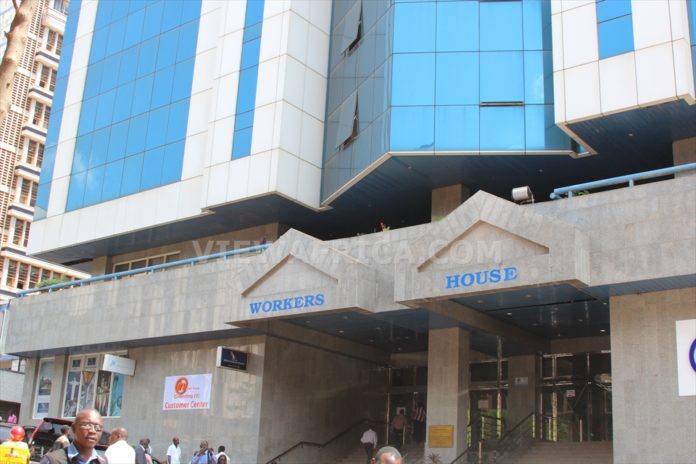
NSSF Workers House in Kampala

Court of Appeal has dismissed an application by URA opposing the refund of over Shs25 billion to the Fund following the judgment of the High Court which overturned the decision of the Tax Appeals Tribunal and a tax assessment against the Fund of Shs45 billion.

URA had initially issued a tax assessment of Shs84 billion and the Fund was required to pay 30 percent of the tax assessed before the dispute was heard by the Tax Appeals Tribunal. The High Court overturned the assessment which meant that URA was required to refund the 30 percent with accrued interest. URA has never refunded the money.

Justice Oscar Kihika in his ruling delivered on March 24,2023 dismissed the application on grounds that URA failed to prove that its substantive appeal against an earlier decision of the High Court has a likelihood of success.

“The Applicant (URA) is in the process of obtaining leave to appeal, having filed a Notice of Appeal. However, having failed to establish whether or not the intended appeal has a likelihood of success, this Court is of the view that the balance of convenience does favour the Respondent (NSSF) which has a judgment in its hands. I find, therefore, that the Applicant has failed to establish that the Appeal will be  rendered nugatory if an order for stay of execution is not issued,” Justice Kihika ruled.

He also found that there was no evidence of irreparable damage that URA could suffer in the event that a stay of execution was not granted, in response to the tax body’s submissions. On the contrary, NSSF stood to suffer substantial loss since they have been in court since 2014 and since obtaining judgment in its favour, URA had without sufficient cause, held onto the 30 percent that was paid in 2014. 

NSSF Ag. Managing Director Patrick Ayota welcomed the court’s decision saying that the funds will be invested to earn a return for the members.

“This ruling gives us more confidence as we pursue the substantive case through the courts that our decision will be vindicated,” he said.

In 2013 URA conducted a Tax audit on the Fund and assessed taxes on NSSF interest paid to members. However, this was a departure from URA’s earlier position contained in November 1, 2011, letter, which had advised NSSF that the interest paid to members is allowed as a deductible expense for income tax purposes.

The Fund objected and filed a case in the high court against URA. Through an arbitration process, the assessment was reduced from  Shs84 billion to Shs42 billion but the parties failed to agree on the tax treatment of interest the Fund declares and pays to members annually.

The dispute on the tax treatment of Interest case was transferred to the tax appeals tribunal which ruled against the Fund upholding the assessment of Shs42 billion in March 2020. 

Dissatisfied with the decision of the tribunal, the Fund appealed to the commercial division of the High Court, arguing that whereas the Tribunal decided that members’ savings are not a debt obligation as they are excluded from the definition, which is provided in the Income tax act definition, this was erroneous because the income tax act does not state so. 

The Fund also argued that the tribunal treated interest paid to members as a dividend which is contrary to the definition of dividends in the Income Tax Act and that the financial impact of the tribunal ruling would effectively impair its ability to preserve the value of members’ savings.

In November 2020, the High court agreed with the Fund. In his ruling, Justice Boniface Wamala set aside the tax tribunal ruling that interest paid by the Fund is a deductible expense for income tax purposes.

Stories Continues after ad

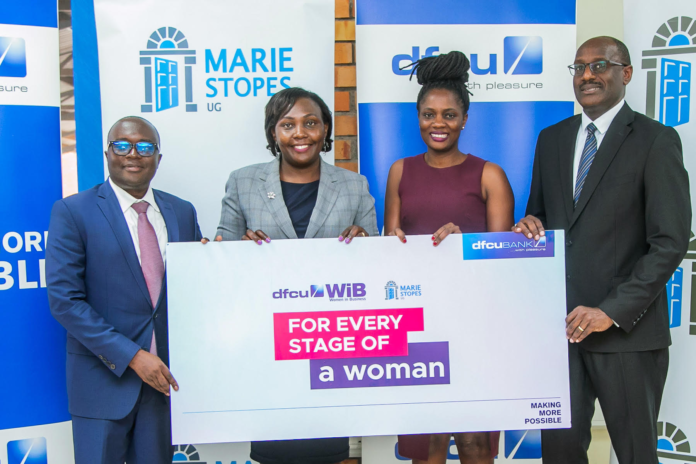
Marie Stopes, Dfcu partner to offer specialised healthcare services to female customers

Marie Stopes Uganda (MSU) and Dfcu Women in Business Program have announced a joint campaign that will allow the Bank’s female customers to get access to free and specialised healthcare services for a period of one month, starting March 3, 2023. The campaign will run under the name, ‘Every Stage of Woman.’

Under the campaign, Marie Stopes Uganda will offer free gynecology and antenatal consultations, free screening services which include body mass index, blood pressure and breast examinations. Dfcu’s customers will also get access to subsidized pap smear tests and family planning services.

Through ‘Every Stage of Woman’, Dfcu bank seeks to create an environment where women who use its financial solutions can easily access wellness tests that will help them know the status of their health and make informed lifestyle choices. 

‘‘Empowering women is a core contributor to socio-economic transformation, and as Dfcu bank we strive to create an environment that allows for all-round wellness and empowerment,’’ said Ruth Asasira, the Manager, Women in Business and Special programs at Dfcu bank Uganda.

Speaking at the launch of the event, MSU’s Deputy Country Director, Dr. Peter Ddungu stated that Marie Stopes Uganda is committed to prioritising women’s health and wellness throughout Uganda.

“Women, in their quest to juggle multiple roles, often fail to prioritise their own health by neglecting regular check-ups and preventive care. Marie Stopes will continue to provide holistic solutions to promote accessibility and awareness about women’s healthcare – including sexual and reproductive health. Women’s health is a great contributor to successful business outcomes in women-led enterprises and we are delighted to partner with Dfcu bank on our For Every Stage of Woman campaign,’’ he said.

Robert Wanok, Dfcu bank’s Ag. Chief Commercial Officer &, Head Personal and Business Banking reiterated Dfcu’s commitment to empowering the members of the communities in which it does business.

“At Dfcu bank, we recognise the vital role women play in our society, and we understand the challenges faced by women everywhere, including poor health. We, therefore, encourage our female customers to prioritize their well-being by taking advantage of the free and subsidized healthcare services offered at Marie Stopes Hospital & Maternity and various centres.”

“This partnership is a testament to our commitment to Making More Possible in our communities, and we applaud Marie Stopes Uganda for their dedication to improving women’s quality of life and for working with us in pursuit of the same” Wanok added. 

The campaign will run for a period of one month, starting on 31st March.

All women who bank with Dfcu are encouraged to visit any nearby Marie Stopes Centre and hospital with their National ID and Dfcu Visa Card to access these services.

Stories Continues after ad

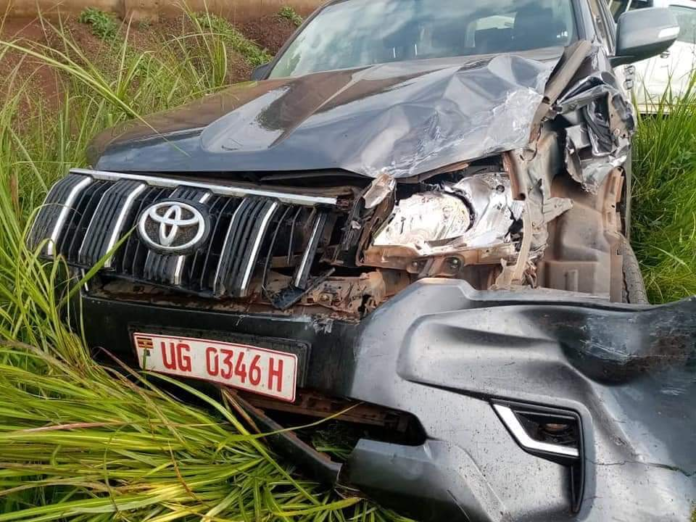
Road crash fatalities increase to 78% in Kampala

The number of road crash fatalities in Kampala has increased to 78%, the just released annual road safety report indicates. The shooting numbers are attributed to speeding, unsafe overtaking, violating traffic lights, sudden turning, and tailgating and other factors.

Produced with support from Bloomberg Philanthropies, the report shows that fatalities in Kampala increased from 236 in 2020 to 419 in 2021.

Speaking at the launch of the report, Lord Mayor Erias Lukwago report findings should inform continuous interventions to reduce road crash-related deaths and injuries in the city and guide the activities of road safety stakeholders to deliver on their mandates. The goal is to halve road traffic deaths and injuries in Kampala by 2030.

According to the World Health Organization, road traffic crashes kill nearly 1.3 million people and injure up to 50 million worldwide. More than 90% of these deaths occur in low-income and middle-income countries, which have less than half of the world’s vehicles, and unfortunately, these deaths are preventable.

The Lord Mayor also highlighted the need to re-establish the National Road Safety Council as a lead agency in order to secure funding and develop effective strategies to tackle the issue.

The report identified excessive speed as a significant risk factor, with almost half of speeding vehicles in Kampala clocking speeds more than 5 km/h above the posted limit.

The report recommended the adoption of global standards of 30 km/h for local and collector roads, along with stricter enforcement of speed limits.

The report also highlighted low seat-belt usage in the city, with overall seat-belt use at only 41%. Adult passenger seat-belt use was at 19%, while rear-seat passengers’ seat-belt use was at 2%, and child restraint use was almost non-existent at only 1%.

The report’s authors called for increased public awareness campaigns and strict law enforcement to promote seat belt and child restraint use.

Bonny Balugaba from Makerere University School of Public Health underscores the need for increased public awareness campaigns and strict law enforcement to promote seat belt and child restraint use.

“The combination of outcomes data and road user observation data provides a comprehensive understanding of road safety in Kampala, providing an opportunity to implement effective interventions and monitor their impact.” Balugaba said.

The report revealed that the highest number of deaths and serious injuries in 2021 occurred among those aged 20 to 29 years, with almost half of the reported deaths (49.9%) occurring on Saturdays, Sundays, and Mondays.

The report also identified the highest-risk intersections and fatal corridors in the city, including Kalerwe roundabout (Northern Bypass), Nakulabye intersection (Balintuma and Hoima Road), and Entebbe Road.

The Bloomberg Philanthropies Initiative for Global Road Safety, which supports road safety activities and coordinates with governmental and non-governmental stakeholders, emphasized the need for high-quality monitoring and evaluation mechanisms to continually assess progress in reducing road crashes and fatalities.

Stories Continues after ad

Minister Kitutu appears before Anti-Corruption Court

Minister Mary Goretti Kitutu, the Karamoja Affairs Minister is this afternoon set to appear before the Anti-Corruption Court over corruption and mismanagement of iron sheets that were meant for the unprivileged people in Karamoja.
Kitutu arrived at court following the joint investigations which were carried out by the Directorate of Criminal Investigations and the inspectorate of government. Last week, she confessed to diverting 3000 iron sheets for the Karamajongs.
Appearing before the Presidential Affairs Committee of Parliament Kitutu accepted responsibility for the mismanagement of iron sheets procured for the vulnerable in the sub-region.


“Some of the iron sheets were used to roof a boys’ dormitory in Situmi Primary School, Namisindwa district. The school lacked a store, hence storing them at a relative’s house,” she said.


She apologized to the committee and parliament noting that she was never guided about the project.
Kitutu requested for 12,200 iron sheets to aid her in community mobilization and peace-building missions in Karamoja.
Her January 12, 2023, internal memo to the stores’ department at the OPM read in part, “During community mobilization and peace-building missions, I usually meet vulnerable groups and karuchunas (reformed warriors) who are willing to dissociate themselves from rustling. As part of my intervention, I will be distributing iron sheets to such special vulnerable groups.”
Last month, security operatives nabbed Cotilda Kitutu, Michael Nabwaya, and Julius Wabule. The accused are the mother, brother, and nephew of Minister Kitutu. The three were allegedly selling OPM-branded iron sheets to residents of Namisindwa district, in eastern Uganda.
Kitutu is among the top ministers who benefited from the iron sheets which were allegedly meant for people in Karamoja. The ministers involved in the scandal include; Rebecca Kadaga, Jacob Oboth Oboth, Hamson Obua, Amos Lugolobi, Matia Kasaija and others.

Stories Continues after ad

Charles Mulindwa appointed Dfcu Bank Managing Director

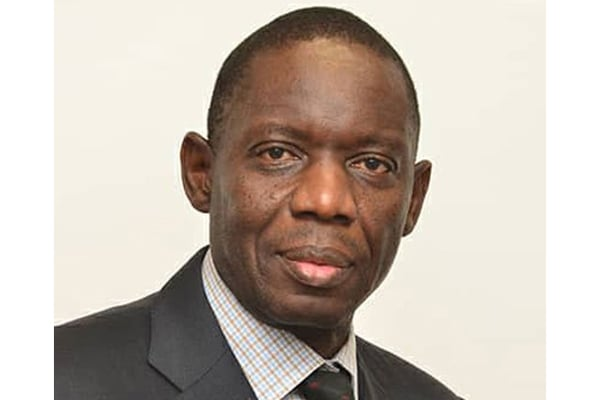
Dfcu Bank Limited has appointed Mr. Charles M. Mudiwa as Managing Director and Chief Executive Officer, effective April 1, 2023.

Charles brings on board over 26 years of experience in banking, with strong business leadership, success in turning around businesses and increasing business profitability.

He takes over the leadership of the Bank at a critical time as we implement our enhanced customer-obsessed strategy to transform lives and businesses with innovative solutions and empowered people.

He is a change agent who believes in providing the best enabling environments for all employees and has been instrumental in their growth to leadership at all levels.

A staunch champion for gender and diversity, he is passionate in ensuring that equal opportunities are available for all staff.
On the announcement of Charles’ appointment, Board Chair Dr. Winifred Tarinyeba Kiryabwire remarked, “Charles is a visionary leader who has led financial institutions in various African economies with remarkable success. We welcome him to Uganda and to the dfcu family.”

Prior to his appointment to the Bank, Charles had a 20-year remarkable journey at Standard Bank Group as CEO of Stanbic Bank Kenya Limited, CEO of Stanbic Bank Zambia Limited; CEO of Standard Bank Malawi and Director Mass Markets at Standard Bank South Africa amongst other roles.

He has previously served on the Boards of Stanbic Bank Zambia and Kenya, Standard Bank Malawi Ltd; Standard Bank Insurance Brokers of South Africa, Edu-loan Limited South Africa, and Agribank Zimbabwe.

Charles is the past founding Chairman of Liberty Insurance Company (Zambia Ltd) and past Chairman of the Bankers Association of Zambia. In 2021 he was recognised among the Top 50 Reputable Bank CEO’s in Africa by Reputation Poll International.

Africa Leadership Magazine in 2022 also awarded him the Special African Banking Leadership Excellence Award.

He holds an Honours Degree in Economics from the University of Zimbabwe, Post Graduate Diploma in Leadership & Change Management from Leeds Metropolitan University (UK); Advanced Management Programme and Certificate in Digital Transformation & Enterprise Leadership from the Columbia Business School (USA), and a Banking Certificate from the Institute of Bankers of Zimbabwe, among others.

Charles is a certified executive coach and holds a Practitioners’ Diploma in Executive Coaching from the Academy of Executive Coaching (UK).

He is a member of the Institute of Bankers of South Africa.

Charles is an active Rotarian and served as the Past President of the Rotary Club of Lusaka, and as the Director of Fundraising and Foundation at the Rotary Club of Nairobi Muthaiga North. Additionally, he was the Patron of Rotary Club of Nairobi Samawati, a corporate chapter at Stanbic Bank Kenya.

Charles believes in family and is a committed husband and father. He is an avid reader, an amateur chef, enjoys good music and art. Charles also serves as a Trustee of Ridgeways Baptist Church in Nairobi.

“I am happy and honored to join the dfcu team. Building on Dfcu’s strong foundation, I look forward to creating sustainable value for our stakeholders and customers thereby contributing to the growth and development of Uganda, the Pearl of Africa,” Charles said.

Stories Continues after ad

UDB launches finance facility to promote climate-smart agriculture

UDB Managing Director Patricia Ojangole,Ramadhan Ggoobi, Permanent Secretary/Secretary to the Treasury and other guests during the high level launch.

Uganda Development Bank has launched the UDB Climate Finance Facility (CFF), a strategic Fund that will make available affordable finance that aims to promote climate-smart agriculture, ensure climate resilient infrastructure and low carbon industries.

Uganda Development Bank (UDB) Managing Director Patricia Ojangole said the increasing threat of climate change and environmental degradation has the potential to present high socio-economic risks to the economy.

 “As the impacts continue to manifest through floods, drought, landslides, animal and crop epidemics among other signs in different parts of the country, they are more deleterious to the poor and marginalized who depend largely on natural resources for their livelihoods,” Ojangole said while at the high-level launch held at Mestil Hotel in Kampala.

Over 70% of Ugandans depend heavily on micro, small, and medium enterprises (MSMEs) for employment, and these generally have less capacity to withstand financial shocks.

“The vulnerability of Uganda’s population requires the urgent need to adapt and maintain future economic growth opportunities by transitioning to a low carbon (green) economy. This will require massive investment in green technologies. Green finance will be central to providing the flows of capital required. This is primarily driven by the fact that most green technologies are characterized by high capital intensity and consequently high upfront financing requirements,” Ms. Ojangole added.

As a financial intermediary, the Bank will stimulate green economic growth by coordinating green financing options, mobilizing and increasing access to green finance by structuring and providing tailored products to address market gaps including risk mitigation products, and providing the right products to address investment demand in the green sector.

“I would like to thank UDB for this intervention. Without appropriate funding, we cannot build the capacity to adapt to these impacts, to mitigate these impacts, or even build resilience. Am delighted that financial institutions are starting to realize their role in the climate change agenda and strategically getting involved,” Mr. Ramadhan Ggoobi, Permanent Secretary/Secretary to the Treasury said.

The initiative will foster climate-conscious change in investments with a clear objective of building climate resilience among the businesses supported. The intention is to build climate-proof businesses as this is a better strategy for building long-term viable enterprises that are adaptive to climate impacts and seek a low-carbon development pathway.

The move to create a Climate Finance Facility builds on the Bank’s successful initiatives to foster innovation, engender holistic sustainability, and increase interest in green technologies. In line with the Bank’s priority sectors, the facility shall target investments in Climate Smart Agriculture, Low Carbon Industries, Climate Resilient Infrastructure, and cross-cutting projects like sustainable waste management, clean energy – renewable energy and energy efficient projects, sustainable water resources management, eco-tourism, and related investments.

“There have been commendable efforts by the Government in establishing structures and policies to advance climate action. Progress is ongoing in scaling up local community solutions to manage climate impacts. However, it is now time for financial institutions and private sector players to get involved. That’s why we are committing Shs50 billion towards the capitalization of this facility. This is expected to grow with support from various partners over time,” Ms. Ojangole concluded.

The beneficiaries will also be exposed to the Bank’s Green Investment Advisory as well as the Project Preparation Support to make them bankable but more importantly, grow them to become viable green businesses.

Stories Continues after ad

UPDF denies negotiations with DRC on behalf of M23 rebels

Brig. Kulayigye.

The Uganda Peoples Defense Forces (UPDF) has denied allegations that Uganda is negotiating with the Democratic Republic of Congo (DRC) government on behalf of the M23 rebels. The concern arose following a statement from a one citizen on social media alleging UPDF was negotiating with Kinshasa on behalf of M23.

“Word on street: Uganda is allegedly negotiating with Kinshasa on behalf of M23.I wouldn’t be surprised if Kinshasa, especially, UDPS has chosen to keep this off radar because it’s not in their benefits, maybe the reason why yesterday, Muyaya said that DRC will never negotiate with M23,” the citizen stated.

UPDF spokesperson Brig. Felix Kulaigye discredited the allegations and termed them a hoax aimed at diverting attention from bilateral achievements toward peace.

 “Uganda is not mandated to negotiate on behalf of the M23 because the Conclave of East African (EAC) Heads of State has already chosen a political facilitator, the former Kenyan President Uhuru Kenyatta,” Kulaigye clarified.

He further stated that its deployment in DRC is part of the EAC regional force, which is tasked with enforcing the cessation of hostilities between the Armed Forces of the Democratic Republic of Congo (FARDC) troops and M23 and monitoring their withdrawal to designated containment areas.

“The only bilateral security arrangement we are handling with DRC is operation Shujja,” Kulaigye said.

Reports of negotiations between Uganda and DRC came just two days after Ugandan troops began patrolling Rutshuru territory, which is under the control of M23 rebels. Some members of the public had hoped for a gun battle between UPDF and M23, but M23’s military spokesperson, Major Willy Ngoma, welcomed the troops and showed readiness to withdraw.

President Museveni on Thursday, March, 30 clarified that the deployment of more Uganda Peoples Defense Forces (UPDDF) in Democratic Republic of Congo is to keep peace but not battling the M-23 rebels.

Museveni clarified, “we are not going to battle or fight the M-23. The Congo government and the M-23, have agreed to a peace plan. This involves cessation of hostilities (fighting), withdrawal of the M-23 from some of the specified areas they had captured to other areas that have been agreed upon, etc.”

Stories Continues after ad

Absa Bank Uganda plants trees in Kabanyolo to mark Makerere University’s 100th year anniversary

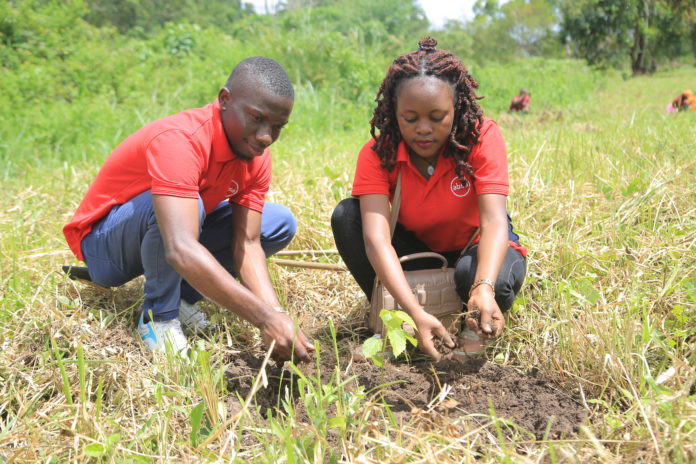
Absa bank staff planting trees to mark 100 years of Makerere University.

Staff from Absa Bank Uganda have planted 300 trees and adopted 100 indigenous trees at the Makerere University School of Forestry, Environmental and Geographical Sciences Botanical Garden which is found at Makerere University Agricultural Research Institute Kabanyolo, as part of the activities to celebrate 100 years since the establishment of Makerere University (Mak@100) and 50 years of Forestry Training.

The College of Agricultural and Environmental Sciences – under the stewardship of the School of Forestry, Environmental and Geographical Sciences – is establishing a 30-acre Botanical Garden at Kabanyolo, Wakiso district with a vision to be the leading centre of excellence in in-situ conservation of indigenous plant species in Uganda.

Robinah Mukasa Kamuntu, Absa Bank Uganda’s Head of Communications and Citizenship, said, “As a pan-African bank, we are honoured to be partnering with the School of Forestry, Environmental and Geographical Sciences to advance the growth and development of Uganda’s green spaces and overall natural environment. It is through partnerships like these that both the public and private sectors can work together to find solutions to the environmental challenges facing the country and the continent as a whole.”

The Botanical Garden will serve as a one-stop centre of plant collections of diverse origins, and ecosystem types, and used for training, research, outreach and recreation in Uganda.

Professor Fred Babweteera, the Dean of the School of Forestry, Environmental and Geographical Sciences said, “The work that needs to be done in this field is rather immense and requires a multi-sectoral approach to help us deepen our research into and conservation of the rich and diverse species of flora of Uganda that contribute to the nation’s recognition on the global stage as having an exceptional natural environment, and I would like to thank Absa for being a part of this effort.” He further added that this Botanical Garden will improve air quality and provide other important ecosystem services.

The Principal of the College of Agricultural and Environmental Sciences, Professor Gorettie Nabanoga reiterated the importance of partnerships with the private sector in the quest for ensuring sustainability and addressing environmental challenges. She appreciated Absa Bank for supporting the initiative and staff for physically planting the trees and committing to adopt them. She added, “This proves that environmental consciousness is an important value embraced by Absa and staff.”

The bank’s staff will be allowed to adopt the planted trees to ensure that they are properly nurtured and grow to maturity. Absa Bank strongly believes in not only planting but growing trees to address the current deficit of forest and tree cover in Uganda.

 Robinah said “This is just one of the many efforts we are driving under our citizenship agenda – and specifically the pillar of environmental sustainability. It is also a key element of our wider goal to be a force for good in the communities within which we operate, and we believe we can create a much bigger and more meaningful impact by getting our colleagues to be an integral part of the effort.”

Stories Continues after ad

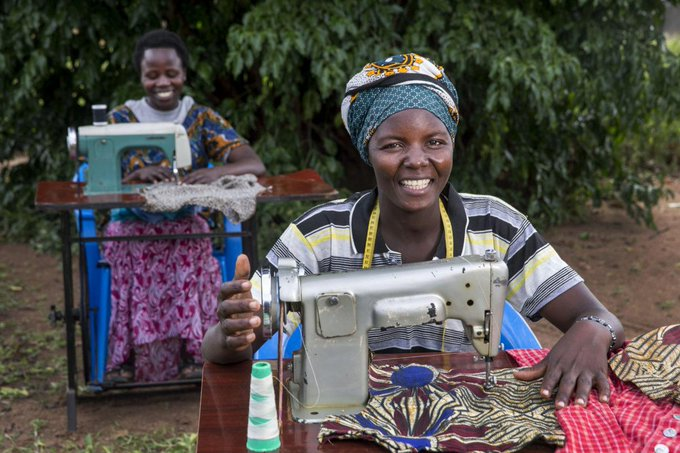
Gov’t rolls out Shs3.97b for Women’s Entrepreneurs and youth Programs

The Minister of Gender, Labour and Social Development Betty Amongi has launched Shs3.97 billion for Uganda Women’s Entrepreneurship Program and the Youth Livelihood Program.

The funds will benefit the people of Kyankwanzi, Mbarara, Rwampara, Kazo, Ibanda, Kyegegwa, Wakiso, Kamuli, Nebbi, Lira, Bududa and other districts in the country.

Started in 2015, Women’s Entrepreneurship Program is designed to address the challenges women face in undertaking economically viable enterprises including the limited access to affordable credit, limited technical knowledge and skills for business development, limited access to markets as well as information regarding business opportunities.

Launched in 2014, the Youth Livelihood Program was designed as one of the interventions of the Government in response to the high unemployment rate and poverty among the youth in the country.

Since the roll out of the program Shs116 billion has been disbursed to women enterprises and Shs169 billion for youth.

Amongi said Shs34. 7 billion had been recovered and that is what the ministry is disbursing this financial year. In the middle of the third quarter, we had recovery of about Shs9 billion. That means that people are not only borrowing but paying back.

She said cabinet sitting on March 28, 2022, chaired by the President Yoweri Museveni directed that any money that we collect back will now be flowed back into Uganda Women’s Entrepreneurship Program and Youth Livelihood Program.

“Youth and women do not have collateral to borrow. Some of the banks require land title; vehicle logbook to borrow. To benefit from this money, you just need collateral from group members that group members are standing and saying that we are borrowing in a group and within our group will make sure we lend amongst our members and as a group will recover and give it back,” she said.

She said this intervention for the vulnerable community doesn’t need to be anchored on collateral for them to get capital to start businesses. It has also shown that many people out there are willing to work hard so long as they can get a little capital that can give them some leverage to start businesses.

She said the majority of the people who have borrowed this money and utilize it have been able to graduate from Uganda Women’s Entrepreneurship Program and Youth Livelihood Program by borrowing from banks.

Stories Continues after ad