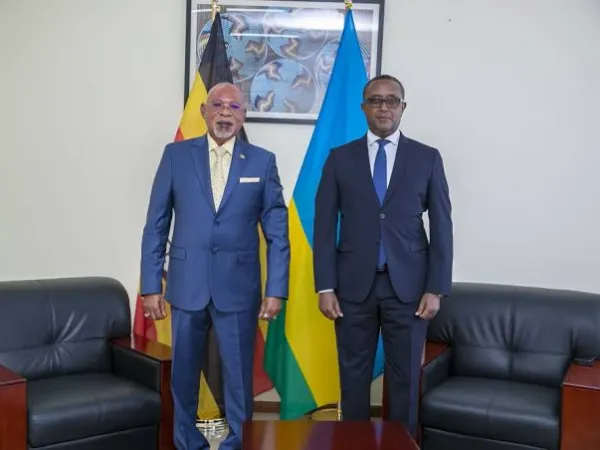
Rwanda and Uganda have agreed to revive Northern Corridor Integration Projects including the much sought-after Standard Gauge Railway and removal of non-tariff barriers that limit free movement of persons and goods.
Speaking at the Joint Permanent Commission held in Kigali, Uganda’s Foreign Affairs Minister Jeje Odongo said both countries would now exert all efforts to promote mutually beneficial trade such as infrastructural challenges and non – tariff barriers that affect the smooth flow of goods and services.
Gen Odongo said the private sector expects both governments to provide an attractive environment for business.
Gen Odongo said that the session agreed on other strategic areas of interest for both countries such as the One Network Area (ONA), the Single Customs Territory, the Single East African Tourist Visa, free movement of persons and goods, among others.
“It is in this respect that Uganda appreciates the efforts and the progress under the Northern Corridor Integrated Projects (NCIP) framework, particularly in promoting regional infrastructure projects. In recognition of the necessity and urgency to have implementation of these projects fast tracked, this Session will deliberate on strategic areas of connectivity,” Gen Odongo said.
The Ministers of both countries exchanged views on regional and continental developments and further resolved to strengthen the two countries’ cooperation in multilateral issues.
In this regard, they underscored the importance of continued efforts and commitment to peaceful resolution and dialogue in resolving conflicts.
The Ministers further commended the efforts of regional and sub-regional frameworks aimed at finding lasting solutions to these conflicts which severely impact the lives and livelihoods of our peoples.
The Ministers reiterated both countries’ commitment to good neighborliness and safety of our citizens.
Absa Bank has won the ‘Best Practices in Workplace Culture & Environment’ Award at the prudential best HR practices survey 2022 which was held on Friday at the Kampala Serena Hotel. The survey seeks to recognise organisations that have implemented people policies, systems, and processes that create and sustain productivity along with industrial peace and harmony and were held following the participation of over 3800 employees from various industries in Uganda across 14 thematic areas on the best HR practices critical for influencing positive employment practices in Uganda today.
Absa has in place HR policies covering employee wellness by providing psychosocial support towards employees’ physical, mental and social health; driving a healthy and inclusive workplace culture through employee engagement and; an organisational policy that values and fosters mobility within the organisation, performance management to decrease employee grievances and a competitive remuneration proposition.
Speaking to the recognition, Sylvia Mulomi, Absa Bank Uganda’s People Function Director, said, “I would like to appreciate Prudential for allowing our employees to give us feedback. At Absa, we believe that our people are our strength and they play a critical role in enabling the bank to achieve its strategic priorities.”
The COVID-19 pandemic highlighted concerns about employee wellness, healthy work-life balances and employers’ roles in guiding their workforces’ growth and development, and these have contributed to global phenomenons such as “The Great Resignation” and “Quiet Quitting” that have seen employees reconsider their attitudes towards work. Mulomi added, “This award is a testament that our people value the efforts of the leadership team as well as the People Function in creating an enabling environment for our people to thrive and to grow.” Last year, Absa Bank Uganda was recognised as having the Best Practices in Learning and Development in the Prudential best HR practices survey for 2021.
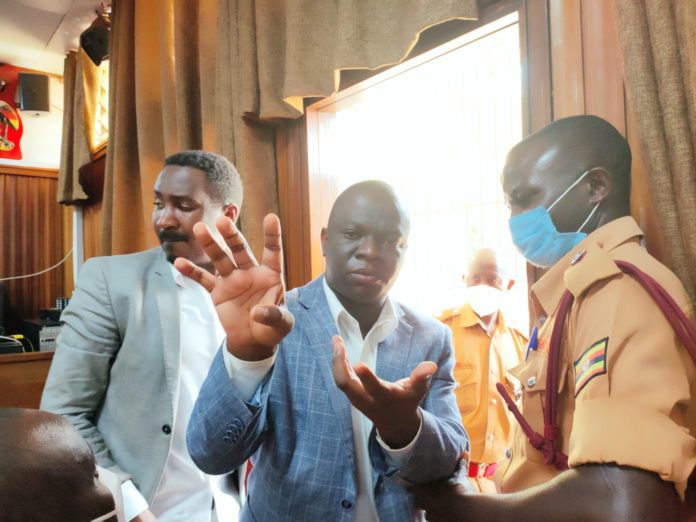
The pre-trial of the embattled Makindye West legislator Allan Ssewanyana and Kawempe North MP Muhammad Ssegirinyana resumes today at the International Crimes Division of the High Court in Kampala.
Last month, Judge Alice Komuhangi said court couldn’t continue without Ssewanyana due to his health condition. The matter was subsequently adjourned to today. The two MPs were in February released on bail after spending more than one on remand. The two MPs and four other suspects are accused of terrorism contrary to sections 7 (1) and (2) (d) and (d) of the Anti-Terrorism Act 2002 in count one, aiding and abetting terrorism contrary to section 8 of the Anti-Terrorism Act 2002 in count two, murder contrary to sections 188 and 189 of the Penal code Act in Counts three, four, five and attempted murder contrary to section 204 (a) of the Penal code Act.
Prosecution states that the two legislators together with other suspects -some on remand and others still at large on August 2, 2021, allegedly killed Joseph Bwanika, a resident of Kisekka Village in Kisekka Sub County in Lwengo District. It is further alleged that on August 23 at Ssettaala Village in Masaka City, the MPs and their co-accused persons killed Francis Mugerwa Kiiza aka Nswa, Sulaiman Kakooza and Tadeo Kiyimba. The MPs are also accused of attempting to kill Ronald Ssebyoto, a resident of the same area. They are also accused of financing the killings in the Greater Masaka region.
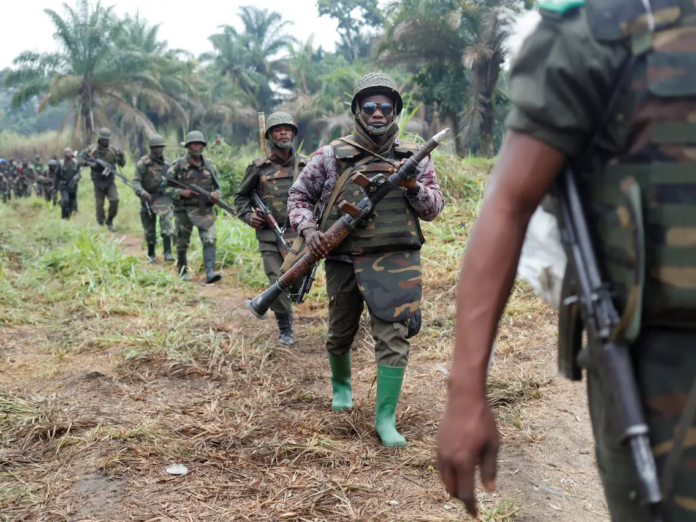
20 rebels of Allied Democratic Forces (ADF) have been killed, and four AK 47 guns, 313 bullets among other military equipment recovered after the Uganda People’s Defence Forces launched a surprise attack on the rebels’ camp in the eastern Democratic Republic of Congo over the weekend.
According to Defence Spokesperson Brig Felix Kulayigye, the UPDF in a joint operation with the Congolese army attacked the ADF on Saturday, March 25, base at 10:30 am where they killed the 20 rebels South West of River Lusulubi and near River Semliki.
“On Saturday 25th March at 10: 30 am, the UPDF & FARDC Joint Forces had a fight with elements of ADF South West of River Lusulubi near River Semuliki – Rwenzori Sector in DRC,” he said.
He added: “20 ADF were killed & the following were charged from the enemy;4 AK 47s, 313 Rounds of AK 47, 5 Magazines of AK 47,11 Quran Books,7 Solar panels,2 Combat Uniforms of UPDF,7 Combat Uniforms of FARDC, 5 charge Pots of Walkie Talkies, 5 Radios, 5 Batteries, 2 Phones, 3 Backpacks, 2 Ponchos, 2 Fishing Nets. 1 UPDF soldier was killed in the fight. May his soul rest in eternal peace.”
Uganda and DRC have been holding joint military campaigns in Eastern DRC aimed at wiping out the ADF rebels following failed negotiations between the two parties.
During the fight, the army said one of the UPDF soldiers was killed, but the identity of the soldier was not revealed by press time.
The joint army of UPDF and DR Congo forces in 2021 launched an attack in the Eastern DR Congo to hunt for the ADF rebels after terror attacks in Kampala City and towns in the central region allegedly carried out by the same group left at least 10 people dead and dozens injured.
According to the Defence Ministry, since Operation Shujaa commenced, more than 400 rebels have been killed and several areas liberated from the control of the group.
Maj Katamba said the hunt on the rebels has intensified and urged those that are still in hiding to come out and surrender to save their lives.
“They should surrender to our detachments. They would be handled well. We don’t have the intention of harming those who will surrender. We shall welcome them,” he said.
“If they don’t surrender, we shall continue with the operation until Congo is peaceful.”
There have been attempts by ADF rebels to cross back to Uganda, but they have been foiled by the UPDF.
In December 2022, UPDF said it captured seven more suspected ADF rebels in Kyobe, Bweramule sub-county in Ntoroko district.
In the same month, ADF attacked Ntoroko district and during a fire exchange, 17 of ADF militia were killed, 13 captured with sixteen guns and 14 improvised explosive devices were captured while one UPDF officer was also killed.
Are you one of the millions of gambling enthusiasts who can’t wait to get their hands on their winnings? Do you dream of the convenience of receiving your hard-earned cash instantly, without any delays or complications? Well, then, you’ve come to the right place!
In this article, we’ll guide you through the ins and outs of getting your winnings instantly at fast withdrawal online casinos in South Africa. From choosing the right casino to cashing out your winnings, we’ll cover everything you need to know to make your gambling experience unforgettable but, most importantly, smooth. So, sit back, relax, and let’s get started!
Choose the Right Casino
The first and most crucial step to getting your winnings instantly is choosing the right casino. Not all casinos are created equal, and some are better equipped to handle withdrawals than others. So, what should you look for in a top-notch casino?
First and foremost, make sure the casino is licensed and regulated by a reputable authority. This ensures that the casino operates under strict rules and that your winnings are protected. You will find this information at either the casino’s footer or you may read some of the online casino reviews that chow down this information so it’s easier for layman punters to understand.
These reviews will also help you check the casino’s reputation and the responsiveness of its customer service. Are they known for fast payouts? Do they have a wide variety of games and generous bonuses? You can discover all these valuable insights and more.
You will also learn all there is to know about the casino’s payment methods. Do they offer instant payout options such as e-wallets or cryptocurrencies, or is the casino stuck in the nineties, only offering Visa? Are their withdrawal fees reasonable? These factors can significantly impact the speed and ease of getting your winnings.
Choose the Right Game
Once you’ve found the right casino, it’s time to choose the right game. While some games offer better odds of winning, others offer higher payouts. So, what should you consider when selecting a game?
You first need to have a goal in mind. Are you looking to win big or simply enjoy a leisurely gambling experience? If you’re after a big win, consider games with progressive jackpots. These high-volatility games will have you winning less frequently, but the amounts can be life-changing. On the other hand, if you’re after a more relaxed experience, opt for games with lower stakes and less volatility. These games are often skill-based, such as poker or blackjack.
As some games require more skill than others, you should also choose the game you stick to based on that consideration. Choosing a game that aligns with your skill level can increase your chances of winning. However, skill isn’t an end all be all. You can always perfect your strategy by enjoying demo games where you can understand the workings of a game and learn the ins and outs.
Manage Your Bankroll
Managing your bankroll is crucial to ensuring you get your winnings instantly. It’s easy to get caught up in the excitement of gambling and overspending, but doing so can lead to financial troubles and delayed payouts.
To manage your payroll effectively, set a budget and stick to it. Determine how much money you’re willing to spend and how much you’re willing to lose. Choose games with stakes that align with your budget. Avoid games with high minimum bets that can quickly deplete your bankroll.
Cash Out Your Winnings
Once you’ve hit it big, it’s time to cash out your winnings. While the process may vary depending on the casino and payment method, there are a few general things to consider, such as the withdrawal requirements, banking method, and KYC.
To withdraw, you should always abide by the terms and conditions of the casino, which means you will have to play through any bonus you may have used. Failure to meet these requirements can result in delayed payouts or even forfeiture of your winnings.
When you’ve finally played through what’s required of you, you should choose an instant payout option. Usually, this entails either an e-wallet or cryptocurrency. Your wins will be processed in no time if you use Skrill, Neteller, or crypto, such as Bitcoin. Also, there are lower fees associated with these than the traditional methods. Finally, be prepared to provide the casino with any necessary documents, such as a copy of your ID or proof of address, to verify your identity and prevent fraud.
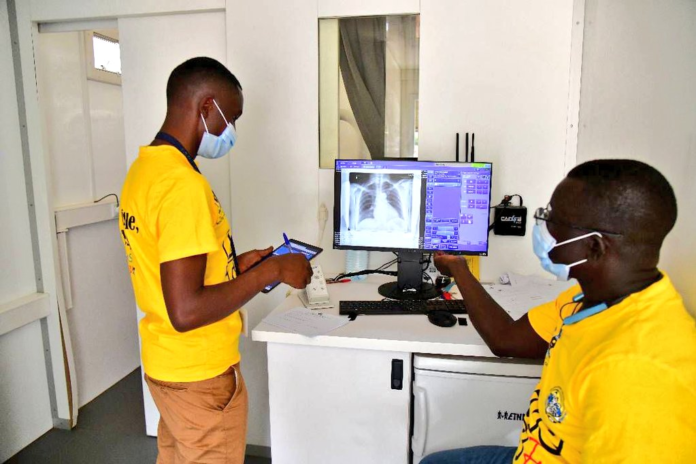
The African region has recorded a 4% annual decline rate in tuberculosis (TB) cases. Although the rate is double the global pace, the region risks missing major milestones and targets to end the disease if efforts are not scaled up rapidly.
The World Health Organization’s (WHO) End TB Strategy calls for countries to reduce TB deaths by 75% and cases by 50% by 2025 compared with the 2015 levels. To cross the 2025 milestone, the annual pace of reduction should reach 10% per year. Yet despite the slowing pace towards the 2025 target, the African region has made progress in recent years. For example, TB deaths in the region fell by 26% between 2015 and 2021, with high burden TB countries surpassing initial targets to lower TB cases. Accelerating TB elimination progress is crucial. This year World TB Day is being marked today under the theme “Yes, we can end TB” to spur national action to bolster TB prevention and control.
“African countries have made remarkable progress against TB. The question is no longer about whether we can end TB, but how fast we must act to reduce the disease burden, save lives and maintain a high momentum towards a TB-free world,” said Dr Matshidiso Moeti, WHO Regional Director for Africa.
The End TB Strategy also sets 2030 targets to cut TB deaths by 90% and cases by 80% for which the annual reduction progress must be accelerated to 17%, and further reductions to realize the 2035 vision of a world free of TB. African countries have increased the uptake of new WHO-recommended tools and guidance, resulting in early access to TB prevention and care and better outcomes. The proportion of people diagnosed with TB who were initially tested with a rapid diagnostic, for example, increased from 34% in 2020 to 43% in 2021.
However, major barriers to ending TB persist. They include limited access to health services, inadequate health infrastructure, insufficient quality of care, inadequate human and financial resources for health and inadequate social protection. Underinvestment by governments in TB control programmes is a significant drawback to the fight against the disease. For instance, of the estimated US$ 3.9 million required for the African region’s 2018–2021 TB response plan, only US$ 957 million were mobilized each year for prevention, diagnosis and treatment of the disease.
Africa still records a significant gap between the estimated number of TB cases and those that are diagnosed. In 2021, the latest year for which data is available, an estimated 40% of cases were not reported or diagnosed. The region also accounts for 23% of the estimated global TB burden and over 33% of global TB deaths.
In September, a high-level meeting on TB will be held during the UN General Assembly bringing together heads of state to help ramp up action and accelerate TB control efforts. “TB control efforts require concerted action by all: communities, governments, the private sector and international partners. Our region still suffers an unacceptably high TB toll. Without robust joint efforts, this preventable and treatable disease will remain a serious public health threat with costly impacts for individuals and societies,” Dr Moeti said.
Three soldiers were on Thursday injured after suspected encroachers on government land allegedly attacked Uganda People’s Defence Forces (UPDF) engineers renovating Mandela National Stadium, Namboole in Kira Municipality, Kampala.
According to a statement by the deputy Defence spokesperson, Col Deo Akiiki, it is alleged that at around 9am, a group armed with machetes, stones, arrows and bows under the leadership of one Godfrey Kawooya, the Vice Chairman of Kireka Zone B and another only identified as Masada of Katooke Zone allegedly attacked their engineers on duty within a confrontation that lasted three hours.
The engineers were reportedly surveying part of the land that hosts Namboole Stadium Complex in order to begin laying culverts and block manholes.
“The security detail protecting the site and workers shot three warning shots to disperse Mr. Kawooya’s gang but in vain. Chaos ensued and three of our soldiers were injured, including Pte Jackson Masereka, whose fingers were cut by panga-wielding gangs,” the deputy Defence spokesperson, Col Deo Akiiki said.
“Civilians injured are not yet established as police join us to investigate the incidents and bring those involved to book,” he added.
The UPDF Engineering Brigade kicked off the renovation of the stadium last year with the construction of the perimeter wall as one of the requirements from CAF and to protect the land from encroachers.
As such, hundreds of residents of Kireka Zone B have been spending sleepless nights over their eviction with UPDF saying the residents were given a deadline of February 15, 2023, to vacate the premises.
“Notices of vacating the premises were sent out to encroachers several times by all concerned authorities and a deadline of February 15th, 2023 was given. Indeed upon expiry of these notices, a company called Flight Auctioneers was hired to forcefully evict the defiant encroachers,” Col Akiiki added in a Thursday evening statement.
“The UPDF engineers Brigade will continue to do its work and will not be deterred despite acts of provocation by errant and illegal encroachers on the property. We have beefed up security at the stadium and call upon citizens to respect public property in order to avoid injuries and loss of lives.”
Mr. Kawooya recently told the media that about 550 residents were ordered to leave the premises and that their efforts to engage the stadium management on the matter were futile.
“Our case is in the high court. It is very sad that these people just came and demolished people’s houses without any warning. Many people have lost their properties in that kind of manner,” he said. Kawooya insists that block 232 on which his local council is situated, belongs to Kabaka Ronald Mutebi’s uncle known as Kisosonkole.
In 2019, Jamil Sewanyana, the managing director of the stadium petitioned the Justice Catherine Bamugemereire-led land commission to help them evict individuals and companies that had allegedly grabbed half of the 120 acres of land belonging to Namboole.
In his petition, Sewanyana said that the Government bought 103 plots on Kyadondo Block 232 and Block 234 to build a stadium and several people were compensated but many denied that they were ever compensated.
The construction of the perimeter is still underway as part of the first phase of the stadium’s renovation. The renovation works will also cover the dressing rooms, playing surface, running track, installation of desks and air conditioners in the media and VIP sections, seats in the general public stands, and upgrading floodlights as directed by CAF.
The shilling continued to slide during the week to trade at lows of 3770/3780 on Friday morning, having opened at the 3745/3755 levels on Monday. The demand side remained active throughout the week with buying activity from Corporates for usual operations coupled with planned dividends, interbank and some pockets of offshore demand. Catherine Kijjagulwe, Head of Trading at Absa Bank Uganda said supply side flows continued to trickle in from NGOs offshores and commodity exporters but were quickly taken up by the dollar buyers. Month-end inflows from NGOs and other sectors will come into the market as we draw close to the end of March 2023.
She said if demand remains robust, the next psychological level that the market is closely watching is the 3800 level. The unit is likely to buoy within the 3720-3820 trading range in the short term. Money Markets were fairly liquid during the week with overnight yields trading between the 11.00% -12.00% trading levels. Bank of Uganda held a 3-year and 15-year Treasury Bond auction and yields cleared at averages of 14.00% and 17.00% respectively. Bank of Uganda is scheduled to hold a Shs 215 billion Treasury Bill auction on 29th March 2023. The Uganda Bureau of Statistics is scheduled to release the March 2023 inflation data on 31st March 2023.
“The Kenya shilling saw a bit of relief during the week as the President and new Central Bank Governor spoke of the return of an active interbank market creating some calmness among customers and market players with the hope that market spreads will become narrow in the near future, the unit traded within the 130.5-140.5 levels. The Central Bank of Kenya also published and shared the Kenyan Foreign Exchange Code of Conduct,” she said.
The Federal Reserve raised its benchmark rate by 0.25% on Wednesday, cautious about the US Banking crisis and also indicating that the rate hikes may be ending soon. The dollar was volatile during the week but strong on Thursday being further enhanced by a lower jobless claims print of 191k from an anticipated 197k.
The Euro weakened on Thursday to close the day at $1.0833 (Shs 4,089) due to a strong dollar. The Pound was volatile on Thursday as the market reacted to the Bank of England’s 0.25% rate hike that put the benchmark rate at 4.25%. The Pound briefly traded at highs of $1.2341 (Shs 4,658) and closed the day on Thursday at $1.2285 (Shs 4,637). Brent Crude traded at $75.63 (Shs 285,515) a barrel and West Texas Intermediate at $69.69 (Shs 263,090) a barrel, a slight recovery during the week. Oil prices are still relatively low in comparison to earlier in the year as the Fed hiked its benchmark rate again and US stockpiles and increased oil flows from Russia despite sanctions. There are still prospects of recovery of demand as the China economy picks up again. Gold traded at $1990.61 (Shs 7.5 Million) an ounce.
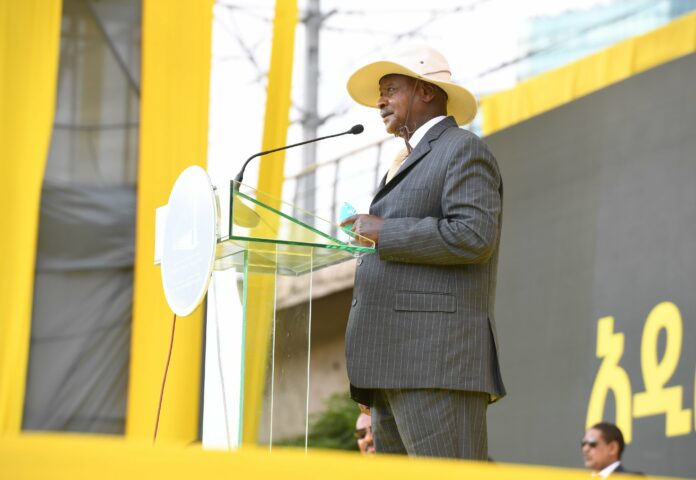
Museveni speaking at Meskel Square in the Ethiopian capital Addis-Ababa
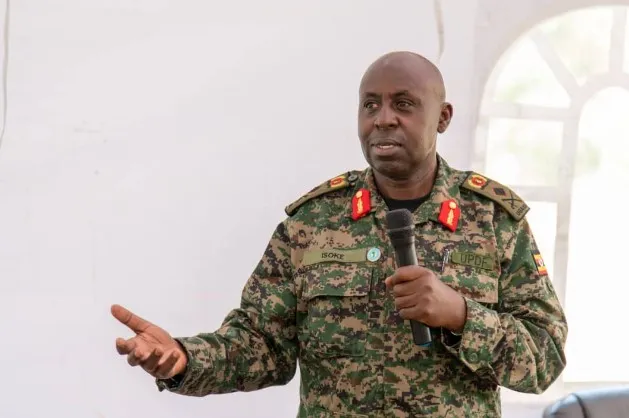
President Yoweri Museveni has directed the State House Anti-Corruption Unit head Brig. Gen Isoke to investigate cases of extortion and mismanagement of funds meant for Parish Development Model (PDM) in Acholi sub-region.
While addressing the gathering at Kaunda grounds in Gulu City as he concluded his Acholi sub region tour on investment and wealth creation last month under the theme: “Securing your future through wealth creation and shared prosperity”, the President received shocking revelations and testimonies from the locals on how the wealth creation campaign has been mismanaged in its infant stages, expressing fear that its intended objectives might not be achieved and promised to follow up.
The President on Wednesday met a group of local leaders from Acholi led by the Gulu Resident City Commissioner (RCC) Jane Francis Amongin Okili to follow up on complaints made in February.
The leaders included local council chairpersons, councilors, women and youth leaders and elders. The State House Anti-Corruption Unit Head Brigadier General Henry Isoke also attended the meeting.
Adokorach Doreen, a farmer from Onyama sub county, Gulu district, told the President that the PDM is good but has been mismanaged. She said in her area, people were called to the sub county instead of the parish and Community Development Officers collected 10,000 Uganda shillings from the beneficiaries to get registered in the Savings and Credit Cooperative Organisation (SACCO) and get certificates.
Opio Ronald Zola from Awach Sub County in Gulu district said many of the SACCOs in Awach who registered their enterprises, up to now have not received the money, blaming the extension workers for delaying the process.
“To speak the truth Your Excellency, extension workers say they are overloaded with work and up to now they have not been paid,” Opio said.
“If those staff are few, they can go on the radio and educate people like I do and people will listen,” the President responded.
Alex Odong Okoya, the LCII chairperson- Labourline ward in Laro, Pece division in Gulu City said in his area, the PDM secretariat rushed the enrollment of beneficiaries by giving a very short time of 3 days to enroll beneficiaries. He says very few people were registered and many, especially the poor, were left out.
President Museveni asked the State House Anti-Corruption Unit Head Brig. Isoke to follow up on the matters raised for appropriate action.
“Brig Isoke, you should check with the PDM secretariat about the instructions given in forming the Parish SACCOs. What are they telling the people so that you compare with what is on ground. Also check this report of the extension workers,” H.E Museveni said.
About corruption, President Museveni said the National Resistance Movement (NRM) government will not fail to bring to book all those involved in messing up the Parish Development Model in which the government has put in many resources to get people out of poverty.
He said the NRM government has always been in direct contact with the people and its leaders.
“For the corruption in Amuru, those corrupt people are stupid and we are going to arrest them. This money came and it will be traced, that’s why I started my upcountry tour and you’re helping me. I will go to other places also because the people are there. We are going to arrest them properly, we have got some rooms at Luzira, there’s some good accommodation there. Rubanga Tye (God is there),” the President warned.
President Museveni also thanked the leaders for doing a good job and enabling him to structure the method which the NRM put in place to work unlike in the past.
“Because when we came from the bush, there was the old structure of parish chiefs, Sub County chiefs etc., I had seen in colonial times that those structures cannot work for the people. That’s why I said that no, let the people elect their own people,” the President added, but expressed dismay that some leaders have failed him.
He said the Parish Development Model is meant to get everyone involved in wealth creation without any pay.
“That’s why we said, let the money go direct to the people themselves in the parish, because I don’t want a faraway place, and all of you who want to engage in wealth creation, join without paying anything,” the President said, adding that the PDM money belongs to the whole circle of the wealth creators in the parish who are the ones to elect their own leaders.
“We’re not going to change that because that’s really the answer,” he further noted.
The President believes the PDM will empower the local people to have their own banks which will in future save the poor from borrowing from commercial banks which charge high interest rates since each year each parish will be adding more Shs100 million, making it Shs500 million in 5 years.
“I want to thank you and happy to hear that you want to engage in the 4 acre model and I will support you,” Museveni said.
The Parish Development Model project was launched by the President in February 2022 in Kibuku District with the parish as the lowest administrative and operational hub for delivering services closer to the people and hence fostering local economic development.
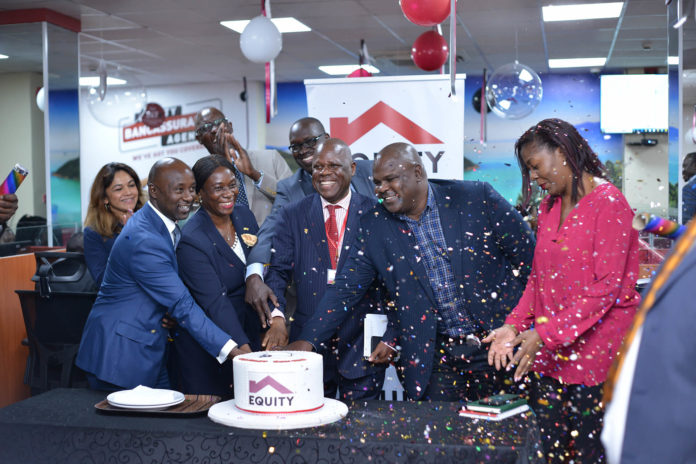
2023…Equity Group, East and Central Africa’s largest financial institution, has enhanced its position as one of the strongest banking brands globally by scoring highly, in the 2023 Brand Finance’s Brand Strength and Brand Value rankings. In its second consecutive appearance in the Brand Finance Banking 500 rankings, Equity climbed one place to 4 th position in the World’s Top 10 Strongest Banking Brands with a Brand Strength Index score of 92.4 out of 100 and an elite AAA+ brand strength rating. This marks a 1.6 points BSI improvement on its 2022 debut ranking.
The Bank also climbed an impressive 47 places in its brand value ranking to position 291 from last year’s 338 after recording a significant growth in brand value to USD 531.7 million from USD 338 million in 2022.
Every year, leading brand valuation consultancy Brand Finance puts 5,000 of the biggest brands to the test, and publishes nearly 100 reports, ranking brands across all sectors and countries. The World’s Top 500 most valuable and strongest banking brands are included in the annual Brand Finance Banking 500 ranking.
Speaking on the ranking, Equity Group Managing Director and CEO, Dr James Mwangi said “We are delighted to see that Equity has once again been recognized as one of the strongest banking brands in the world by Brand Finance. We are excited that 4 of the top 10 banks are from the African continent and that in a span of 1 year the Bank’s brand value has ascended by 37% and improved its ranking inching one step closer to position 1 globally.” In addition to sustainability perceptions, Brand Finance’s research has found that trust is a dominant driver of customer choice when it comes to banking services.
“Customers are looking for guarantees that they can proceed with full reassurance. Other key drivers include ease of use, excellent website and apps, and great customer service,” says the report.
Regarded as the industry’s most authoritative report of its kind, the Brand Finance Banking 500 report gauges the brand value of the world’s financial institutions through quantitative and qualitative metrics, including brand strength, brand loyalty rate and revenue forecasts. Equity has been at the forefront of championing sustainability through its twin-engine socio- economic business model that has seen the lender invest over USD 585 million in various social impact projects in education, women and youth empowerment, social protection and environmental conservation among others.
Equity has also continued to deliver efficiency, convenience and flexibility to its customers by investing in the development of innovative digital solutions and products that meet the customers’ evolving lifestyles. Key among them is the enhanced digital banking suite on its Equity Mobile and Equity Online platforms, which offers a seamless experience – simplified customer journeys and enhanced security.
Declan Ahern, Director of Brand Finance says that banking brands across the globe have continued to recover significantly post Covid-19. “There has been an improvement in digital banking services, government stimulus measures have been relatively successful, and the rise of mobile banking and online platforms have contributed to the sector’s positive performance,” comments Ahern.
“The rankings are a reflection of the strong brand positioning that Equity continues to hold within the local markets that we operate in and globally as well. Our commitment is that we will continue to invest in innovation and continuous self-advancement to enhance value creation for all our stakeholders.” added Dr. Mwangi.
The consultancy defines brand value as the net economic benefit that a brand owner would achieve by licensing the brand in the open market. This is however different from the valuation of a company’s assets. They also define brand strength as the efficacy of a brand’s performance on intangible measures relative to its competitors.