Stanbic Bank
Stanbic Bank
18.2 C
Kampala
Stanbic Bank
Stanbic Bank
Home Blog Page 431

NUP top Lawyer Anthony Wameli dead

Anthony Wameli

National Unity Platform (NUP) party Head of legal team, Anthony Wameli has died.

Wameli died in the United States of America where he has been undergoing treatment for the last two years.

He has been a human rights activist who at all costs defended violation against human rights and also at one time a lawyer of a former presidential candidate Henry Tumukunde.

He contested for Bubulo East under the National Unity Platform party flag.

“Very sad day! Just learnt of the untimely passing of our dear brother and Head of our Legal Team, comrade Wameli Anthony from the U.S. where he’s been admitted for treatment. Details will be provided in due course. May his soul rest in eternal peace,” Kyagulanyi Ssentamu, party president announced.

Stories Continues after ad

“We can’t fight anyone”, NDA responds to Pastor Kayanja over Tickoff acaricide

National Drug Authority has told Pastor Robert Kayanja that the organization cannot fight anyone who comes up to manufacture local drugs.

 “We can’t fight anyone; that’s why our teams have been engaging with you for over 30 days! When anything risks lives of Ugandans and their animals, we are duty bound,” NDA said.

Pastor Kayanja having heard that tickoff acaricide was declared counterfeit said that that NDA is trying to fight him as he tries to solve many problems.

“While others are fighting us for trying to solve our problem for one reason or the other, we will continue to seek and explore our local solutions to the effect, Now Karamoja is harvesting their own land produce to fight food insecurity. One day soon our cows will be tick free,” Kayanja said.

NDA said that they have been supporting local drug initiatives and over 200 local herbal remedies have been cleared by them

“Tick resistance isn’t fought by falsified dangerous chemicals that don’t only impact on animals but humans who consume animal products,” NDA guided Kayanja.

In the NDA investigation, the product was mixed with diazinon, a highly concentrated fumigant used to kill bedbugs, bats, and termites; Fipronil, a spray that was banned for food-producing animals because of the long withdrawal period due to the potential risks it could have on human health in addition to Benalaxyl, a fungicide which is carcinogenic composing of cancer-causing components.

The chemicals were also being mixed with animal feeds and silverfish and packaged without an expiry date, ingredient information, or warning.

Stories Continues after ad

Lack of jobs is the main driver of violent extremism in sub-Saharan Africa: UNDP

Hope of finding work is the leading factor driving people to join fast-growing violent extremist groups in Sub-Saharan Africa, according to a new report launched today by the United Nations Development Programme (UNDP).

Among nearly 2,200 interviewees, one-quarter of voluntary recruits cited job opportunities as their primary reason for joining, a 92 percent increase from the findings of a groundbreaking 2017 UNDP study.

Religion came as the third reason for joining, cited by 17 percent — a 57 percent decrease from the 2017 findings, with a majority of recruits admitting to having limited knowledge of religious texts.

Nearly half of the respondents cited a specific trigger event pushing them to join violent extremist groups, with a striking 71 percent pointing to human rights abuse, often conducted by state security forces, as ‘the tipping point’.

“Sub-Saharan Africa has become the new global epicenter of violent extremism with 48% of global terrorism deaths in 2021. This surge not only adversely impacts lives, security and peace, but also threatens to reverse hard-won development gains for generations to come. Security-driven counter-terrorism responses are often costly and minimally effective, yet investments in preventive approaches to violent extremism are woefully inadequate. The social contract between states and citizens must be reinvigorated to tackle root causes of violent extremism,” UNDP Administrator Achim Steiner said.

Journey to Extremism in Africa: Pathways to Recruitment and Disengagement” draws from interviews with nearly 2,200 people in eight countries: Burkina Faso, Cameroon, Chad, Mali, Niger, Nigeria, Somalia, and Sudan. More than 1,000 interviewees are former members of violent extremist groups, both voluntary and forced recruits.

The report explores pathways out of violent extremism, identifying factors that push or pull recruits to disengage. Interviewees most often cited unmet expectations, particularly financial expectations, and lack of trust in the group’s leadership as their main reasons for leaving. It also presents gendered data to understand violent extremism from the perspective of women.

“Research shows that those who decide to disengage from violent extremism are less likely to re- join and recruit others. This is why it’s so important to invest in incentives that enable disengagement. Local communities play a pivotal role in supporting sustainable pathways out of violent extremism, along with national governments amnesty programmes,” UNDP Preventing Violent Extremism technical lead in Africa Nirina Kiplagat said.

To counter and prevent violent extremism, the report recommends greater investment in basic services including child welfare; education; quality livelihoods; and investing in young men and women. It also calls for scaling-up exit opportunities and investment in rehabilitation and community-based reintegration services.

This report is part of a series of three reports on the prevention of violent extremism, including the report, “Dynamics of Violent Extremism in Africa: Conflict Ecosystems, Political Ecology, and the Spread of the Proto-State” which analyses the latest dynamics of violent extremist groups in Sub-Saharan Africa and provides recommendations for specific development actions.

Stories Continues after ad

UNEB to release UCE results tomorrow

Candidates during a UNEB exam

The Uganda National Examination Board (UNEB) is expected to release the 2022 Uganda Certificate of Education (UCE) results tomorrow Thursday, February 9, 2023.

This will be the second batch of the national examinations to be released after releasing the Primary Leaving Examinations (PLE) results two weeks ago.

Like the case on PLE, the senior four results will be released from State House, Nakasero in Kampala by the Minister of Education and Sports Janet Museveni.

349,455 candidates sat for UCE in 2022, out of which 175,923 (50.3 percent) males and 173,522 (49.7 percent) were females.

Out of the total number of candidates, 114,200 (32.7 percent) were funded under the Universal Secondary Education (USE) programme, while 235,245 (67.3 percent) candidates were non-USE.

At least 50 candidates wrote their final O-Level examinations from Luzira prison. 519 of the candidates were Special Needs Education candidates.

Stories Continues after ad

NEMA to implement Express Penalty Scheme for environmental breaches

The National Environment Management Authority (NEMA) is set to implement the Express Penalty Scheme intended to deter non-compliance to environment laws and to prevent environmental degradation through payment of monetary penalties (fines).

“Under the Express Penalty Scheme, the offender will be required to pay a fine within the prescribed time frame and in a specific bank account. The notice will specify the date and nature of the alleged contravention, a summary of the facts that NEMA or authorized officer alleges, and the amount payable,” NEMA stated.

The fines payable for specific environmental breaches are a computation of currency points where one currency point is equivalent to twenty thousand shillings (Shs20,000) only.

NEMA stated that failure to conduct an Environmental and Social Impact Assessment and Environment, Risk Assessment for the projects that require ESIA or ERA will attract a fine not exceeding Shs 1 billion for individuals or fifteen years in prison or both and Shs 6 billion for corporate bodies; Failure to conduct an annual environment audit will attract a penalty of up to Shs 1 billion or imprisonment not exceeding fifteen years or both and failure to display the complete certificate of approval of Environmental and social impact Assessment is up to Shs 1 billion for an individual and up to Shs 6 billion for a corporate entity.

Destroying, damaging or disturbing a wetland, River Banks and Lake Shores in a manner that has or is likely to have an adverse effect on any plant or animal attracts a fine of up to Shs3,000,000, failing or neglecting or refusing to protect a lakeshore in accordance with the regulations attracts a fine of up to Shs 3,000,000.

Waste mismanagement such as leaving rubbish outside residential premises will attract a maximum fine of up to Shs 6,000,000, uttering from commercial buildings attracts a maximum fine of up to Shs6,000,000 and depositing rubbish or waste on a roadside, or ditch attracts a maximum fine of up to Shs 6,000,000, depositing rubbish in a river, stream, lake, pond, canal or channel attracts a maximum fine of up to Shs6,000,000 and littering from cars or driving a car without a dustbin attracts a maximum fine of up to Shs6,000,000.

Mismanagement of plastics such as importing, exporting, manufacturing, using or reusing plastic carrier bags or plastic products made of polymers of ethane (polythene) and propylene that are below 30 microns will attract a fine of up to Shs100,000,000.

“Activities that result in aggravated pollution or polluting the environment contrary to conditions contained in a pollution control license or permit, discharge or emission of pollutants into the environment contrary to approved standards attracts a maximum fine of up to Shs 6 billion,” NEMA stated.

NEMA added that emitting noise in excess of the permissible noise levels will attract a maximum of up to Shs10,000,000 upon conviction and also failing to immediately reduce noise to a permissible noise level when required to do so, attracts a maximum fine of up to Shs10,000,000.

NEMA guided that the full schedule of breaches and corresponding maximum fees and bank account(s) to which payments will be made are available on the NEMA website.

“NEMA retains the right to suspend operations of a facility, withdraw the ESIA Certificate, Permit, License and other relevant documentation or to commence prosecution until the fine is paid. A person who does not prefer a voluntary fine will be subject to prosecution and imprisonment or a fine as determined by the courts of law,” NEMA stated.

The body called upon the general public to strictly observe Environment best practices to avoid being penalized.

Stories Continues after ad

Women-led enterprises to be prioritized in new Stanbic Business Incubator training

Stanbic Bank

Over 500 business enterprises are set to benefit from a training program funded by the German Agency for International Cooperation (GIZ) with priority given to women-led start-ups.

Scheduled to start during this month of February and run for two weeks, the training will be offered by the Stanbic Business Incubator Limited (SBIL), a subsidiary of Stanbic Uganda Holdings Limited (SUHL), which supports and nurtures small and medium enterprises to prepare them for business growth.

SBIL Chief Executive Tony Otoa said the proposed training will be delivered with a key focus in three core areas namely; access to markets, access to finance and business operational skilling necessary for start-ups, management and growth.

He said, “Special attention will also be given to female owned businesses. However in order to qualify for the training, the businesses must have been in existence for more than two years, have at least five employees and should be operating within Kampala, Mukono and Wakiso.”

SBIL initially developed the Enterprise Development Program (EDP) in 2018, to focus on identifying and building the capacity of enterprises that could potentially penetrate and actively participate in Uganda’s oil and gas sector.

However, the program has since been modified to support Ugandan micro small and medium enterprises (MSMEs) to become more competitive, attain sustainable growth while also creating jobs.

Only interested trainees whose businesses are already registered with the Uganda Registration Services Bureau (URSB) may apply. Training slots will be offered to owners and one employee.

Key sectors of focus include agribusiness, food and beverages, trade, consumer goods and supplies, green businesses, tourism, hospitality and catering services.

Others are construction, fabrication and civil works, transport and logistics, health, professional services, power and Infrastructure.

Stories Continues after ad

10 winners of Rising Woman Initiative get all-expenses-paid study trip to Nairobi

At least 10 winners from the 5th Season of the Rising Woman Initiative have been flagged off to Nairobi, Kenya, for an all-expenses-paid study trip. The cross-border trip doubles as an educational and mentorship exercise and will allow the entrepreneurs to meet and learn from other successful businesswomen outside Uganda. This will be the third cohort of women entrepreneurs benefiting from the grand prize of all-expenses paid study trip to Nairobi, making a total of thirty (30) women since the initiative was first launched in 2018.

The ceremony was held at the Bank’s Head Offices in Nakasero, Kampala, presided over by the Bank’s Acting Chief Executive Officer, William Sekabembe. Also present was Robert Wanok, dfcu’s Head Personal and Business Banking and Ruth Asasira, Manager Women in Business & Special Programs at dfcu.

In her remarks, Ruth Asasira stated that the study trip was the culmination of a long process that started early last year. “We spent the better part of last year travelling across the country to identify female entrepreneurs and encouraging them to be part of this life-transforming Rising Woman Initiative. In addition to the knowledge acquired during the various stages of the 2022 Rising Woman Initiative, the top 10 winners will now get to see what enterprises outside of Uganda are doing to build their businesses.”

“This trip will also provide valuable benchmarking opportunities which are indispensable as the world becomes an even smaller global village. We believe that this experience will cement dfcu Bank’s commitment to the economic empowerment of women.” – Ruth Asasira

Robert Wanok, dfcu’s Head Personal and Business Banking noted that the Bank is “…committed to our brand promise of ‘Making More Possible’ for women entrepreneurs. They make a significant contribution to the socioeconomic development of our communities and country. Empowering women economically creates a ripple effect of positive transformation for all of us.”

“As a Ugandan financial institution,  we are dedicated to seeing more women involved in the business space, which is why we have initiatives such as the dfcu Women in Business Program  (WIB) set up to uplift women-owned Small and Medium Enterprises.” – Robert Wanok.

Addressing the entrepreneurs and representatives from the Bank, William Sekabembe, dfcu Bank’s Acting Chief Executive Officer encouraged them to treat the study tour as a learning opportunity, drawing inspiration from fellow entrepreneurs in Nairobi.

“It is commonplace to talk about the challenges that both new and long-term entrepreneurs face, especially when they are women. Today however, is a day of celebration of the hard work from last year. As you embark on this trip, I encourage you to look for inspiration and allow your minds to be stretched by the possibilities that exist for your individual businesses and female business owners, as a collective.”

“Use the success stories in Nairobi as a yardstick of what is possible for you if you remain resolute in your business pursuits. The places where you identify room for improvement should drive you to be more creative, make the most of your network and forge more partnerships with institutions such as dfcu Bank, because successful  entrepreneurship cannot be accomplished singularly.”

“On behalf of dfcu Bank, I wish you a safe trip and an unforgettable learning experience,’ Sekabembe said.

The Rising Woman Initiative falls under dfcu Bank’s Women in Business Program (WiB) which is dedicated to providing financial and business solutions to women entrepreneurs. During season five (5), the Initiative directly interfaced with and trained over 5,000 women across the country.

Last year, over 180 women entrepreneurs from across Uganda participated in the competitive proposal writing competition where 23 made it to the defense stage. Of the 23, 10 contestants across 3 categories made it to the final list of winners. The categories included; Agribusiness Value

Addition; Manufacturing and Consumer Services; and Digital Innovation and E-commerce. The overall winners in each category also received Shs 10 Million each as funding for their businesses.

Rising Woman aims to recognize, celebrate, and promote a culture of mentorship among women in the business space in Uganda. It is implemented by dfcu Bank in partnership with Monitor Publications and Uganda Investment Authority.

Last year, the campaign was held under the theme ‘Taking Your Business Ahead’, with the aim of providing female entrepreneurs with the knowledge, skills, and abilities to improve their business operations, enabling them to create profitable enterprises.

Stories Continues after ad

Private Sector Foundation takes lead on the Uganda-South Africa business summit

PSFU Chief Executive Officer, Mr. Stephen Asiimwe

The Private Sector Foundation Uganda (PSFU) in partnership with Ministries of Foreign Affairs, Trade and Cooperatives, Privatisation and Investment is organizing the Uganda – South Africa Trade, Tourism, and Investment Summit to take place on February 27th – 1st March 2023 in Pretoria, South Africa.

The Business Summit will be attended by two the Heads of State of South Africa and Uganda H.E Cyril Ramaphosa and H.E Yoweri Museveni, Ministers, Heads of Government Departments and Agencies, Policy Makers, and the private sector.

The summit will provide a platform for the Private sector, companies and businesses to create new markets and ways of how to facilitate doing business and identify existing and emerging business or investment opportunities in Uganda and South Africa.

According to the PSFU Chief Executive Officer, Mr. Stephen Asiimwe, South Africa is one of the fastest growing sources of Foreign Direct Investment for Uganda as the South Africa’s exports to Uganda. In 2010 alone, Uganda attracted FDI of up to US$ 848 million.

“We also intend to link up with the Ugandan diaspora in South Africa to create partnerships with them on the many opportunities they are engaged in. It is estimated that there are over 500,000Ugandans living and working in Southern Africa.”

The Private Sector Foundation Uganda has been the secretariat coordinating all the relevant stakeholders of the summit. So far, 160 Ugandan businesses have already registered to participate in the summit with the highest percentage coming from the sectors of Agriculture and Agri-business, Tourism and Hospitality, Professional Services, Transport and Logistics, Energy and Minerals, and ICT

Asiimwe said that the main objective of the summit is to market Uganda’s beauty and economic potential of becoming Africa’s leading destination for Trade, Tourism, and Investment.

Last year, PSFU initiated and implemented business missions to Kenya, Tanzania, the DRC, Burundi, South Sudan, UAE, Vietnam, the USA among others.

The other implementing partners are the Government of the Republic of Uganda’s Ministry of Trade, Industry and Cooperative (MTIC), Ministry of Foreign Affairs, High Commission in Pretoria, Ministry of East African Community Affairs (MEACA), Uganda Export Promotion Board (UEPB), Uganda Investment Authority (UIA), Uganda Tourism Board, The Presidential Advisory Committee on Export and Industrial Development (PACIED) and the Presidential CEO Forum.

Stories Continues after ad

NDA declares Pastor Kayanja’s tickoff acaricide counterfeit

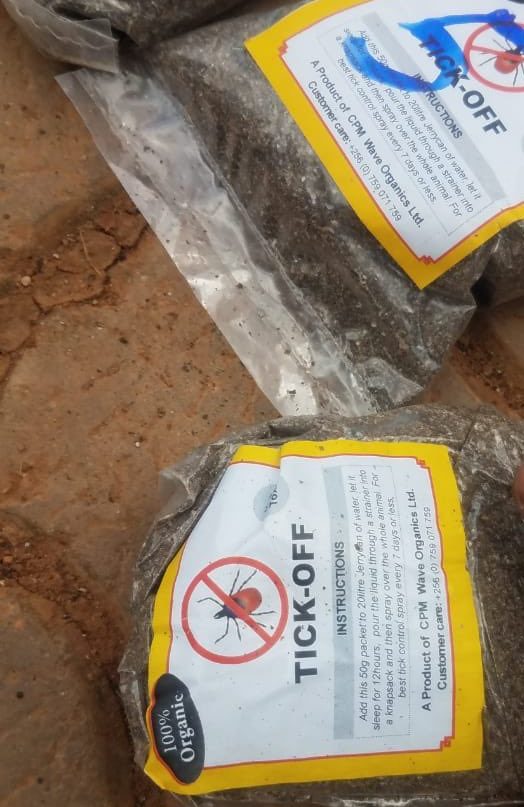
The National Drug Authority (NDA) has found Tickoff, an acaricide produced by Pastor Robert Kayanja of Miracle Center Cathedral to be counterfeit and have since banned it.

According to Abiaz Rwamwiri, NDA’s Public Relations Officer, the product which has been distributed in districts of Kiruhura, Lyantonde, Sembabule, Gomba, Isingiro, and parts of Karamoja is laced with diazinon, a highly concentrated fumigant used to kill bedbugs, bats, and termites.

It was also found to be contaminated with Fipronil, a spray that was banned for food-producing animals because of the long withdrawal period due to the potential risks it could have on human health in addition to Benalaxyl a fungicide which is carcinogenic composing of cancer-causing components.

According to a statement issued by NDA on Tuesday, the chemicals were being mixed with animal feeds and silverfish and packaged without an expiry date, ingredient information, or warning.

Rwamwiri says that NDA received a tip-off about the product after the pastor started advertising the anti-tick drug during services at his church claiming that the product kills ticks instantly.

But, after being engaged by the authority about the drug’s efficacy, Rwamwiri says the team revealed that they had worked with scientists at Makerere University School of Veterinary Medicine to conduct trials on the medicine but they denied having ever worked with the pastor and his colleagues.

Pastor Kayanja and his team have declined to disclose the ingredients of the product but NDA working with police have impounded over 100 samples from his church stores and taken them to both NDA and Government Chemist Laboratories.

Stories Continues after ad

UPDF, South African army sign defence co-operation agreement

The Uganda Peoples’ Defence Forces and South African National Defence Forces have signed a defence cooperation agreement that will see the two institutions from their respective countries share training experiences and exchange programs intending to enhance the Military Police functions of their respective countries.

The cooperation agreement was signed by Commandant Military Police Maj Gen Don Williams Nabasa on behalf of Uganda while Mokgadi Alpheus Maphoto Provost Marshal Gen signed on behalf of the South African National Defence Force.

The bilateral relations between the two parties had earlier started way back in 2019 as far as signing the cooperation agreement and had partially been implemented but was quickly hampered by COVID-19 which brought the entire program to a halt.

Maj Gen Don Williams Nabasa informed the SANDF delegation that he was confident that integration of experience by both parties forms a basis for sound and timely decision-making by their respective leaders by proposing practicable and actionable measures that bear enduring effects towards professionalisation of provost formations.

Speaking at the same function the Provost marshal General of South Africa’s Defence Force Mokgadi Aupheus Maphoto said the relationship between the two countries was real and aimed at reviving the long-standing history, adding that during the struggle for independence, South African youth came and trained in Uganda in 1989 part of that group became formed the military police of SANDF, therefore this agreement will see improvement in defending territorial boundaries of their countries.

Others in attendance during the signing of the cooperation agreement were Col Silvia Meeme Boto Military police, Col DR Lumumba, Lt col Hamza Kasaija from Protocol, and on the South African side Col Twice Moganyaka , Lt col AK Mahlangu and Maj ME Motala.

Stories Continues after ad