Stanbic Bank
Stanbic Bank
17.3 C
Kampala
Stanbic Bank
Stanbic Bank
Home Blog Page 434

Gems Cambridge Schools founder Sunny Varkey exits Kenya over escalating debts

Gems Cambridge Education founder Sunny Varkey is liquidating his school investments in Kenya, leaving behind a trail of debt.  Kenyan tycoon Peter Burugu has taken over the management of Regis School in Runda.

According to sources in Kenya, Mr Varkey’s Gems Group may have sold the majority shareholding in their sole remaining asset in Kenya the Regis School in Runda to local businessman Ernest Mureithi for just $1 (Sh124).   

Court papers and sources at Regis School have indicated that Gems Cambridge transferred 70 per cent of the institution’s shares to Dr Mureithi through his Ernestem Holdings.

NCBA Bank is demanding repayment of a Sh1.6 billion loan. Dr Mureithi, who has been Gems Cambridge’s regional director since 2016, denied the claim, insisting that he is just a CEO looking out for Gems Cambridge’s interests in Kenya.

He further denied that Mr Burugu’s Runda Gardens Development Ltd has taken over the management of Regis School, Gems Cambridge, he added, has already found buyers to take full ownership and control of the school.

On the dispute with NCBA, Dr Mureithi said negotiations are ongoing to settle out of court. 

Mr Varkey, an Indian national based in Dubai, opened his school’s first East African campus on Magadi Road in Karen, Nairobi,11 years ago. Despite attracting hundreds of learners who have collectively paid billions of shillings over the past decade, Gems Cambridge has irked some firms it entered into contracts with as the deals have been broken, leaving debts of over Sh2 billion.

The latest entrant is Runda Gardens Development Ltd, a firm owned by Mr Burugu and his family, which built Regis School’s facilities and is now at risk of losing close to Sh1 billion incurred in construction costs. A government valuer who calculated the amount of stamp duty due placed the value of the property at Sh795 million in 2019.

Mr Burugu’s real estate firm further obtained a Sh17.6 million loan to pay Regis School workers in October and November last year. That debt remains unpaid.

When Gems Cambridge started operations in Kenya, it signed a deal with real estate firm Goodison Sixty One School Ltd to set up the Karen school. Gems Cambridge wanted the Karen development to be a near replica of Wellington International School in Dubai, but with slight modifications.

Under the agreement, Goodison was to lease the building to Gems Cambridge Education’s local subsidiaries to recover construction costs. Goodison spent Sh3 billion for the project, which was expected to be recovered from Gems Cambridge.

Goodison Sixty One subcontracted experienced architectural firm Symbion Kenya Ltd to design the school and help put it up.

The Dubai group started to complain about the quality of the Karen facilities shortly after Gems Cambridge International School opened for its first term. Goodison pushed the blame to Symbion Kenya, and a legal battle ensued. Arbitrator Paul Ngotho in February 2016 ordered Goodison to pay the Sh131 million claimed by Symbion.

This meant that Goodison was expected to pay and recover the cost from Gems Cambridge. Attempts to challenge the arbitration award in court were dismissed by Justices Fred Ochieng and Francis Tuiyott. As Justice Tuiyott was closing the door on Goodison’s appeal, Gems Cambridge was being introduced to Mr Burugu.

After meeting with the Dubai investors, Mr Burugu struck a deal similar to the Goodison one; build a world-class facility and lease it back to Gems Cambridge to set up Regis School, Runda.

Gems Group had also entered into negotiations for the purchase of Hillcrest School from Fanisi Capital, which had bought it from the family of former politician Kenneth Matiba.

The Dubai investors eventually paid Sh2.6 billion for Hillcrest in 2019. Shortly after, they closed the Karen school and moved students to Hillcrest.

To finance the purchase, Gems borrowed Sh1.3 billion from NCBA Bank. In January 2022 Gems sold Hillcrest to a rival, Braeburn, for an undisclosed amount. By the time of the Hillcrest acquisition, a deal had also been struck with Mr Burugu who built a facility in Runda.

Gems signed a 30-year lease with Mr Burugu, but details of the costs remain a secret. When Nation contacted Mr Burugu, he refused to reveal the value of the deal but confirmed that a contract was signed in August 2019. 

A Lands ministry valuer assessed the stamp duty due from the leasing deal at Sh31.8 million, which was to be paid by the Gems group within 30 days. The Gems group was targeting a January 2021 opening date.

But the stamp duty remained unpaid over a year later, accumulating penalties of Sh3.2 million.

In November 2021 Mr Burugu’s firm was furnished with a copy of a lease agreement purporting to grant Gems Cambridge and its Regis School an exemption on stamp duty. It was then that Mr Burugu’s firm discovered that Gems Holdings Africa had transferred 70 per cent of its shareholding in Regis School for a consideration of $1.

Somehow, the Gems group had managed to alter the lease contract without involving Runda Gardens Development Ltd and held verbal non-recorded conversations with the collector of stamp duty that resulted in the tax waiver.

The contract was dated August 27, 2019. But the altered document which led to a stamp duty waiver was dated November 8, 2019. Under Kenyan law, stamp duty assessment can only be challenged by filing a case at the High Court after paying the amount demanded by the collector.

Runda Gardens Development Ltd demanded that Gems Group adhere to the original lease deal of August 27, 2019, and pay the Sh31.8 million stamp duty to avoid legal trouble. When Regis School failed to adhere to the lease, Mr Burugu’s firm termed the contract as frustrated hence null and void.

Runda Gardens Development Ltd opted to let Regis School continue operating under a regular tenancy deal with quarterly payments. By December 2022 Regis School was still behind on rent payments and was now delaying workers’ salaries. Runda Gardens Development Ltd was owed Sh19.55 million at the time.

The landlord had also lent Regis School Sh17.6 million to pay salaries in the months of October and November 2022. Regis School promised to repay the loan by end of November. Three days before Christmas, Regis School. through Dr Mureithi, sought to borrow more money to pay December salaries.

In the December letter, Dr Mureithi allowed Runda Gardens Development Ltd to use Gems equipment and property as security, meaning an auction could be done if the debts were unpaid at the end of January 2023.

The school revealed that it is searching for a new buyer.

But as the search continues, parents, students and workers at the school remain in limbo over their future with Regis School.

A new dispute is brewing, as Dr Mureithi collected over Sh10 million from a section of parents in school fees for the first term of 2023 despite Mr Burugu’s temporary management takeover.

Stories Continues after ad

Why is government concealing details of the Bilateral Agreement with Saudi Arabia?

By Kayonde Abdallah

In December 2022, the Ministry of Gender, Labour and Social Development (MGLSD), suspended the bilateral agreement with the Saudi Arabian government, three days before its end. The bilateral agreement was canceled, due to complaints from stakeholders about clauses that were causing conflict amongst players in the migrant workers’ industry. It should be noted that this agreement was compiled in 2005 and it automatically renews itself if it is not contested. When there are no complaints regarding a bilateral agreement, it is assumed that all parties involved are happy with the situation. 

One of the shortcomings of this bilateral agreement prepared in 2005, was that it had no Joint Technical Committee (JTC). The existence of this committee was suggested by this agreement, to provide an oversight role over migrant workers. Officials at the MGLSD explained that whenever they would arrange to constitute this committee with the Saudi Arabians, they would not turn up.

 Without an oversight body, Ugandan migrant workers in Saudi Arabia have been treated inhumanly, abused and degraded, as a result. There have been numerous unexplainable deaths and disabilities, especially among domestic workers working in the Middle East over the years. These girls usually make videos that they share on social media calling for help while in situations where they cannot help themselves. Ugandan migrant workers were hopeful when the bilateral agreement was suspended. Following the suspension, the MGLSD invited all stakeholders in the migrant workers’ industry, in January 2023, to seek their input in the new agreement. However, this meeting did not allow the stakeholders present to have any discussions. The representatives of migrant workers were unhappy that they were not given time to air their views. The meeting was limited to 30 minutes and it was concluded. MGLSD informed the stakeholders that they would be invited again for discussions. 

Now, the 60 days given since December 27th, 2022, within which a new agreement was to be developed are coming to an end. Migrant workers are frustrated and disturbed that MGLSD has not invited the stakeholders for detailed consultations as promised. It now seems as though the MGLSD was calling them as part of the protocol without really looking to hear from them or incorporate their views. While they were asked for proposals on what should be included in the new agreements, there has been no in-depth discussion or even an acknowledgment of the issues raised. The worry here is that MGLSD officials may be looking to sign an agreement that favors the Arabs, otherwise, why aren’t they being transparent about the developments in the bilateral agreement? 

One of the core issues migrant workers are looking to have addressed about the myriad, is the minimum wage offered to Ugandan migrant workers. It is appalling that workers from other countries who do the same work in the exact locations in the Middle East, earn a much higher minimum wage. This is because these countries have this clause catered for in their bilateral agreements with these countries. Ugandans usually earn a minimum of 700,000 shillings while migrant workers from other countries earn a minimum of 1.6 million shillings. 

Secondly, workers from other nations are not mistreated and abused like Ugandans because they have stringent clauses in their bilateral agreements to this effect. Ugandans on the other hand are denied access to justice and health services even when they are visibly in need of these services. They are denied basics like food and sleep, leading some to commit suicide or suffer debilitating health complications or death. Many end up suffering serious mental health issues from the unbelievably degrading treatment meted out to them, which many times complicated further when they demand to return back home. Their travel documents and phones are confiscated so that they are cut off from friends and family. This gross abuse is against the migrant workers’ rights or human rights for that matter.

While the proposed JTC might provide an oversight role, it might not go deep into all the issues that affect Uganda’s migrant workers. Uganda can benchmark countries like the Philippines which have successfully navigated the issue of mistreatment of their nationals. As a matter of fact, the African Union recommended that all countries involved in labour externalization should benchmark the successful Philippine example because it is working well. 

Kayonde Abdallah is the President Migrant Worker’s Voice.

Stories Continues after ad

Uganda–South Africa Trade Summit to target new investment opportunities

The Ugandan business community revealed that the South Africa Trade Investment and Tourism summit, scheduled at the Gallagher Convention Center, Midrand, South Africa, from 27th to 28th February 2023 under theme “Boosting Trade and Investment Relations between South Africa and Uganda”, will provide a platform for the business community and government agencies to identify existing and emerging business and investment opportunities of mutual benefit.

Over 300 delegates comprising business leaders, government agencies, and investors from the two countries will be in attendance. They will explore opportunities in sectors of Agriculture, tourism, oil and gas, healthcare, and transport and logistics, amongst other sectors.

The purpose is to bring buyers and sellers from both countries along with investors in the value chain of the key export products from Uganda, together.  Uganda has a target of US$6bn in non-oil exports between 2023 and 2028, to stave off growing unemployment, restore sustained growth in key sectors of the economy post covid19 and increase value addition in agriculture along with more manufacturing in the country.

Uganda is focused on increasing exports of beef, dairy, coffee, sugar, cement, steel products, poultry, bananas and banana flour, fruits, and vegetables, and tourism. South Africa consumes Uganda’s coffee, vanilla, chocolate, and other products.

The trade summit will begin on 27th February, with the plenary session followed by a panel discussion by technical experts on the bottlenecks and mechanisms for unlocking trade and investment potential between Uganda and South Africa.

Roundtable meetings with industry experts will follow, focusing on the opportunities of mutual benefit in the Energy, Oil, and Gas sectors, boosting African trade in value-added products, and unlocking mutually beneficial business opportunities in infrastructure.

On 28th February, the business community will be provided with a networking platform to identify potential projects and partners for investment and collaboration. This session will be graced by His Excellencies, Yoweri Kaguta Museveni and his host Cyril Ramaphosa.

Speaking at the briefing event, Robert Mukiza, the Director General at the Uganda Investment Authority said: “Uganda enjoys excellent bilateral relations with South Africa, and this is premised on the long-standing bond between our two countries long before South Africa gained independence. The summit is one way we leverage the existing cordial relations to showcase and identify potential areas for collaboration so that we scale up trade between our two countries.”

The Chairman of, Presidential Advisory Committee on Exports and Industrial Development, Mr. Odrek Rwabwogo further emphasized Uganda’s need to grow export revenue, especially in Africa. He requested the Uganda business community to travel to South Africa to conclude deals and attract investors in order to achieve a growth in export revenue by USD 6BN over the next 5 years.

 “Markets only make sense if the firms have a deep working relationship and knowledge of what to sell and how. Each of us must carry sample products, brochures, have books of accounts from the last five years, be honest with our strengths and weaknesses, and know how to communicate with our brothers in South Africa and this should be for every market. We go to avoid talk shops and go for deals and equity investors in our firms,” he said.

Enid Edroma, General Manager, of Corporate Affairs at MTN Uganda thanked the government for the favourable policies and regulations that have enabled the telecom company and other businesses to succeed.

She, however, requested the government to harmonize its policies, especially in the telecom sector, with the country’s aspiration for digitalization.

She said the government needs to forfeit taxes on smartphones like it is in Rwanda to drive the prices of smartphones downwards and thus stir their uptake leading to a reduction in operational costs and so the cost of internet.

South Africa is one of Uganda’s fastest-growing sources of Foreign Direct Investment and is leading in telecommunication, banking, energy and many others. Uganda, on the other hand, exports pharmaceuticals products, coffee, Vanilla, Flowers, and vegetables.

The South Africa – Uganda, Trade Investment and Tourism summit is part of the government’s intentional initiatives to increase its export quota in the regional and international markets.

The summit was coordinated in Uganda by the Presidential Advisory Committee on Exports and Industrial Development, Private Sector Foundation Uganda, and Government agencies in partnership with MTN Uganda, Stanbic Bank, UNDP and Uganda Airlines.

Stories Continues after ad
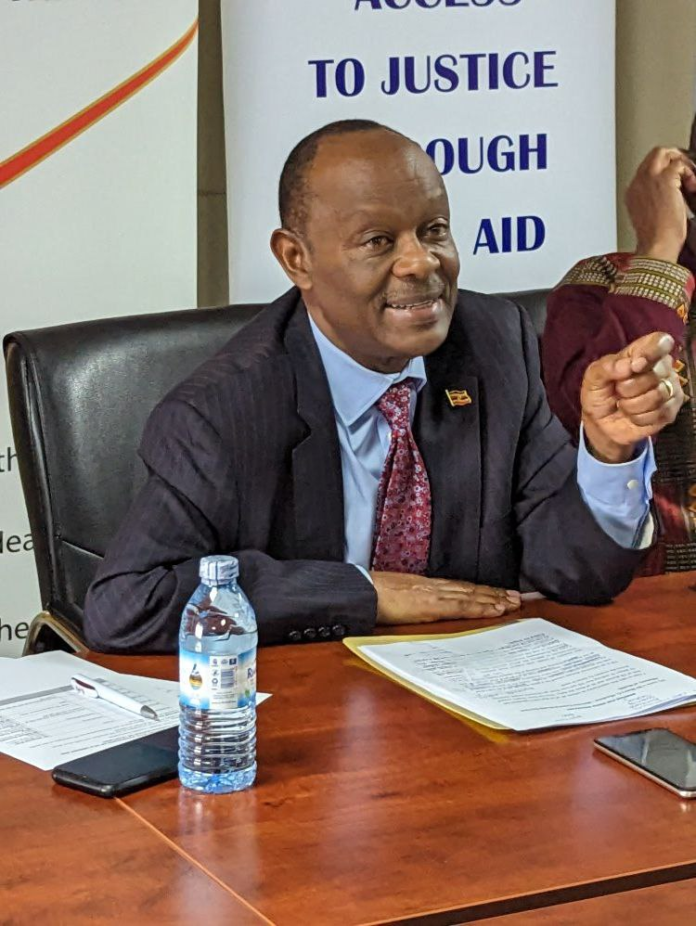
Kitagwenda District Education Officer arrested for forging documents

Mr Sedas Asiimwe

The District Education Officer for Kitagwenda District, Mr Sedas Asiimwe has been arrested by the State House Anti-corruption Unit on charges of forgery and uttering false documents.

Mr Asiimwe allegedly forged an appointment letter and posting instructions in 2012/2013 purportedly signed by the Education Service Commission appointing him as an Education Officer at Kamwenge College School.

He has also reportedly been on government payroll for two positions: as a teacher (using different names) with the second position as a DEO using his real names.

Asiimwe was arraigned before the Chief Magistrate’s Court in Kamwenge on Wednesday and has been remanded till February 28, 2023.

Stories Continues after ad
Kadaga admits receiving Karamoja iron sheets

Rebecca Kadaga

The former Speaker of Parliament, Rebecca Kadaga has admitted that she received the iron sheets after requesting for them from the Office of the Prime Minister.

Uproar from the public came in after several government officials allegedly allocated themselves the relief iron sheets meant for the Karamoja sub-region in which she also appeared on the list.

Kadaga however revealed that the 250 iron sheets received were used to repair a health centre in Kamuli District. She equally received another 250 iron sheets to repair a school in the same area, saying all these had been destroyed by a hailstorm.

“This is to confirm that I requested for and received 250 iron sheets from the office of the Prime Minister. This was to facilitate the repair of the facilities at Buzaaya Health sub district Health Centre II, located at Buwooya, Bugulumbya Sub-county in Kamuli District. I also received 250 iron sheets from the Office of the Prime Minister to repair Buwooya Primary school. This together with the Health Center II had equally been devastated by a hailstorm,” Kadaga revealed.

Meanwhile, the Prime Minister Robinah Nabbanja, revealed that most of the iron sheets meant for Karamoja were delivered. She added that she doesn’t know about those that were swayed. Nonetheless, she promised to launch an investigation into the matter.

Stories Continues after ad
Museveni holds talks with Ukraine’s President Zelensky

Ukrainian President Volodymyr Zelensky

President Yoweri Museveni held talks with Ukrainian President Volodymyr Zelensky via telephone.

The conversation focused on Ukrainian peace initiatives at the UN and the potential for developing bilateral relations.

“I was pleased to have the first conversation in the history of bilateral relations with President of Uganda Kaguta Museveni. I have outlined the Ukrainian peace initiatives at the UN. We also discussed the potential for the development of bilateral relations,” Zelensky said on twitter.

It should be remembered that Uganda, South Sudan and 17 other African countries in March 2022 abstained from voting as the UN General Assembly overwhelmingly voted to condemn Russia’s invasion of Ukraine.

In the vote, 141 UN members’ states out of the 193 passed a resolution to condemn Russia’s aggression against Ukraine in an emergency session signaling further international pressure on Moscow.

The resolution demanded that Moscow stops fighting and withdraw its military forces, an action that aims to diplomatically isolate Russia at the world body.

Stories Continues after ad

Vivo Energy launches ‘Genda Okikube’ Campaign

Vivo Energy Uganda has launched ‘Genda Okikube’ campaign for drivers of commercial vehicles and public transportation that aims to support their ambition to succeed at their jobs.

Through the campaign, the company, through its Shell Rimula brand of engine oil, will offer generous rewards for drivers of commercial vehicles for every purchase of a 5-litre pack of Shell Rimula at targeted Shell stations and spare part shops countrywide. 

Speaking at the launch held at Nateete Taxi Park, Johan Grobbelaar, the Managing Director at Vivo Energy Uganda said, “The commercial transport sector was subjected to a turbulent operating environment during the current Covid-19 outbreak that has impacted the cost of doing business. With the ‘Genda Okikube’ campaign, we hope to help commercial drivers effectively manage their operating costs and drive their cars more productively. Drivers who use Shell Rimula can testify to the efficiency it provides, because it is designed to contribute to a considerable decrease in vehicle maintenance and operating expenses, thereby increasing their profitability.”

“For the next 12 weeks, we shall reward 12,000 motorists with assorted prizes worth over 200 million shillings. ‘Genda Okikube’ is a commitment from Shell Rimula to support your passion for success. Both taxi and truck drivers who purchase 5 litres of Shell Rimula engine oil will enter a draw and stand a chance to win prizes weekly. Our rewards include t-shirts, caps, airtime, fuel, car service discounts, and school fees for a year for our weekly grand prize winners,” Grobbelaar added. 

The campaign will reward drivers of heavy-duty diesel engine vehicles such as Dyna trucks, Elf, Fuso, Forward, Canter, taxi vans and other such vehicles across the country. The regular winners will receive assorted prizes ranging from airtime, fuel, car service discounts, and school fees rewards. A total of 24 drivers will win a year’s worth of school fees during the campaign. The intention is for the commercial drivers to fully discover the benefits of Shell Rimula as a high-quality engine oil.

Alex Tusingwire, the Lubricants Manager at Vivo Energy Uganda revealed the company’s plans to conduct targeted training for taxi and truck drivers to skill them on the correct methods of vehicle maintenance, to bridge the knowledge gap and reduce vehicle breakdowns and downtime. 

“Shell has been ranked the world’s leading global lubricants supplier over such a long period for our consistency in offering high-quality engine oils. Shell Rimula has specifically been designed for heavy-duty diesel engines that work hard to meet the needs that the tough terrain and environments our roads have to offer. Our goal, therefore, is to empower customers to make informed decisions so that they can get more value on every shilling spent on their vehicle maintenance,” said Tusingwire. 

“Shell Rimula delivers better wear control, acid control, deposit, and Sludge protection for reduced maintenance costs, longer engine life, and better fuel efficiency. I encourage all drivers to participate in the ‘Genda Okikube’ campaign so that they can enjoy benefits both from Shell Rimula and the additional value this campaign has to offer,” Tusingwire said.

Stories Continues after ad

Karamoja MPs move to censure Minister Kitutu as investigations into iron sheets saga continue

Mary Goretti Kitutu

Seven Karamoja region parliamentary group members have written to the Speaker of Parliament seeking to move a motion to censure the Minister for Karamoja Affairs, Mary Goretti Kitutu.

It is alleged that Kitutu together with other senior government officials diverted the iron sheets that were meant to be distributed to people in the Karamoja sub-region for their own benefit.

The Legislators who have written to the Speaker are; Lochap Peter Ken (Bokora East), Aleper Moses (Chekwii County), Nakut Faith Loru (Napak District), Baatom Ben Koryang (Dodoth West), Ngoya John Bosco (Bokora County) and Lokwang Phillips Ilukol (Napore West).

“We undersigned hereby give you notice for a motion to censure the Minister for Karamoja Affairs, Hon. Dr. Mary Gorretti Kitutu,” reads part of the notice dated February 22.

“Article 118 of the constitution of the republic of Uganda provides grounds under which a minister can be censured and we wish to draw your attention to the following grounds for which we seek to censure the Minister for Karamoja Affairs; a) Abuse of office or willful violation of the oath of allegiance or oath of office, b) mismanagement.”

“We have taken this decision based on the following particulars: a) The Minister for Karamoja Affairs has failed to deliver iron sheers and other supplies meant for Karamoja to support the ongoing disarmament exercise. These supplies were financed through the supplementary budget that parliament passed in December 2021. b) Diversion of some of the items to non-intended beneficiaries depriving the intended beneficiaries of Karamoja sub region,” the MPs said.

According to sources, Kitutu was interrogated yesterday by officials from the State House Anti-Corruption Unit and she gave uncoordinated answers. Efforts to receive a comment from the anti-corruption unit were futile as calls went unanswered.

Some of other officials who picked iron sheets from the Office of the Prime Minister were; Prime Minister Robinah Nabbanja, state minister for Karamoja Agnes Nandutu, state minister of ethics and integrity Rose Lilly Akello,  Speaker of Parliament Anita Among, Vice President Jessica Alupo, Minister of state for Finance, Planning and Economic Development Amos Lugolobi, Finance Minister Matia Kasaija, Minister of State for Bunyoro Affairs Jennifer Namuyangu, Central youth MP Agnes Kirabo and State Minister for Finance (General Duties) Henry Musasizi.

Stories Continues after ad

Uganda urged to prioritize agriculture, tourism, mining for economic recovery

The government of Uganda has been urged to prioritize agriculture, tourism, mining and prudent debt management if it is to recover from the effects of a three-year global slowdown.

Speaking at the 2023 Stanbic Global Financial Markets Forum in Kampala on Tuesday, economic experts said the government is still handling the four sectors, especially tourism and agriculture, in a rudimentary way.

Dr. Fred Muhumuza, an economist at Makerere University, criticized government approach on modernization of agriculture, saying it is opting for costlier means.

He said while the sector has for long been considered the backbone of the economy and Uganda a food basket for the region, the country actually does not have enough food for itself.

According to Muhumuza, if the government is to use irrigation for areas vulnerable to drought, then a lot of resources have to be applied. He however, says that the cheaper and more sustainable solution should be the introduction of resistant seeds.

He also said the Parish Development Model’s challenge is the limitation of the government budget and conceptualization.

“The conceptualization of the PDM is the seven pillars and all of them are meant to work together, if fund one and not the other, you are going to have a problem,” he said.

Joseline Kateeba, the Managing Director of Crest Foam Uganda, said agriculture is not just for increased availability of food for people to eat, but that it increases the spending power of farming communities which account for the majority of Ugandans.

Dr Micheal Atingi-Ego, the Bank of Uganda Deputy Governor, said they are studying the possible implementation of central bank digital currencies.

In turn, this will lead to high purchasing power for industrial products and boost industrialisation.

Jibran Qureishi, the Head of Research at the Standard Bank Group, urged the government to make it a priority to clear what it owes the Bank of Uganda as demanded by the International Monetary Fund because it will give a wrong image internationally on Uganda’s financial market.

Qureishi hailed Uganda for its cautious borrowing compared to other countries in the region, though this does not mean that it is in a very safe position. He says for example, that Uganda has ensured a lower ratio of commercial loans as part of total debt compared to others like Kenya, Zambia, Angola or even Ghana which announced it was defaulting on debt repayment starting this year. He says if countries like Uganda are to borrow, more of the credit should go towards productive sectors like agriculture.

Qureishi said much as Uganda’s debt level is just around 50 percent of GDP while other countries have already recorded higher figures, it is the ratio of the commercial loans to the total burden which should be worrying.

Currently, such loans account for eight percent of the debt stock, having grown from nil 10 years ago, while Kenya’s has grown from six percent to more than 30 percent.

He warned that the government is acquiring too much expensive debt especially in the form of government treasuries.

Muhumuza urged the government to focus on developing other minerals in Uganda other than oil and gas.

“I am going to suffer to remove my sister Irene Batebe and her bosses from oil and gas so we can talk about other minerals. 2025 is a good target for gold. The refineries for gold came around 2014,” he said.

Anne Juuko, CEO at Stanbic Bank Uganda said: “The most important risk that we must all address ourselves to is the existential risk of climate change. We are one of the few institutions in this country with a fully-fledged sustainability department.”

“In the Old World Order, we knew two things to be certain: death and taxes. In the New World Order, we can add risk. There is always going to be one form of risk or the other manifesting in your business. That is where we come in as your risk management partners,” she added.

Ms Pauline Irene Batebe, the Permanent Secretary in the ministry of Energy, said: “As part of the New World Order there is an aspect that hasn’t been discussed exhaustively and that is the energy transition.”

“As the Ministry of Energy and Mineral Development, we want to emphasize that the energy transition should be tailor-made on a case-by-case basis for countries. As a country such as Uganda where we are predominantly using biomass for our energy requirements, it is on us to push ourselves to transit very fast,” she added.

Dr Micheal Atingi-Ego, the Bank of Uganda Deputy Governor, said they are studying the possible implementation of central bank digital currencies.

“BoU is open to financial innovations, especially those that reduce the cost of transactions,” he said.

He also urged financial institutions to cooperate and fight cybercrime.

“We all know what the pandemic did for digitization. This is good for business growth and operations but also presents risks of cybersecurity,” he said.

Stories Continues after ad

UNHCR, partners appeal for Shs4.7 trillion to support South Sudanese refugees

Refugees

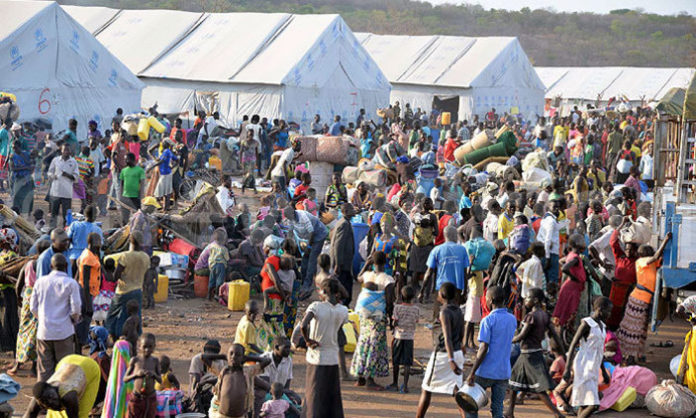
In a bid to protect and assist 2.2 million South Sudanese refugees this year, UNHCR, the UN Refugee Agency, together with 108 humanitarian and development partners, have appealed for US$1.3 billion (Shs 4.7 trillion). The funds will go towards supporting South Sudanese refugees and their local host communities in the Democratic Republic of Congo (DRC), Ethiopia, Kenya, Sudan and Uganda.

The appeal comes amid a worsening economic outlook across the region as the long-term impact of the COVID-19 pandemic as well as the ripple effects of the war in Ukraine have pushed up fuel and food prices and increased unemployment. Host countries that have generously welcomed South Sudanese refugees are bearing the strain of the crisis amid staggering levels of underfunding, prolonged drought, and severe food shortages, including food ration cuts for refugees.

Launching the South Sudan Refugee Response Plan, UNHCR urged the international community to scale up support for the millions of refugees who are unable to return home as their country continues to face a fragile peace and security environment marked by cycles of sporadic violence, and the impacts of an unfolding climate crisis. Four years of unrelenting floods have inundated two-thirds of the country, damaging tens of thousands of people’s houses, farmland and livestock.

“The support will be crucial in meeting refugees’ most immediate needs in host countries, including shelter, education, health and food assistance. With women and children comprising 80 percent of all South Sudanese refugees in the region, funding for programmes to prevent and respond to gender-based violence needs to be prioritized,” UNHCR said in a statement.

The appeal also aims to provide digital cash assistance, and other resilience-enhancing initiatives such as access to finance and training, to help refugees and local communities generate income, supplement their needs and live in dignity.

UNHCR said host governments will also be supported to strengthen the asylum space and further protect the rights of refugees and asylum-seekers, as well as boost the prospects for long-term solutions. This includes improved registration and documentation and advancing ongoing efforts to include refugees in national social protection systems and enhance their access to basic services, all of which help to better prepare refugees for an eventual return.

Interventions to increase the use of clean and sustainable energy in refugee hosting communities will also be strengthened, to mitigate environmental impacts.

With only a third of funding requirements met for last year’s South Sudanese refugee appeal, the major countries of asylum in the region  the Democratic Republic of the Congo, Ethiopia, Sudan and Uganda — were among UNHCR’s most under-funded operations.

We call for compassion and commitment to be extended to South Sudanese refugees and other people forced to flee around the world. Timely funding is crucial to ensure adequate support and protection for the most vulnerable.

Stories Continues after ad