Stanbic Bank
Stanbic Bank
18.4 C
Kampala
Stanbic Bank
Stanbic Bank
Home Blog Page 437

Secrets why Kyanja-based Kampala Standard Primary School emerged the best in 2022 PLE

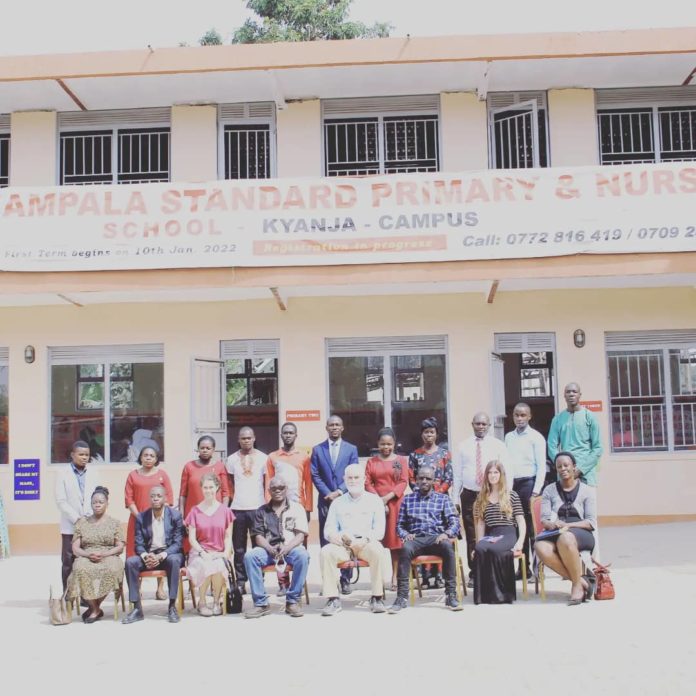
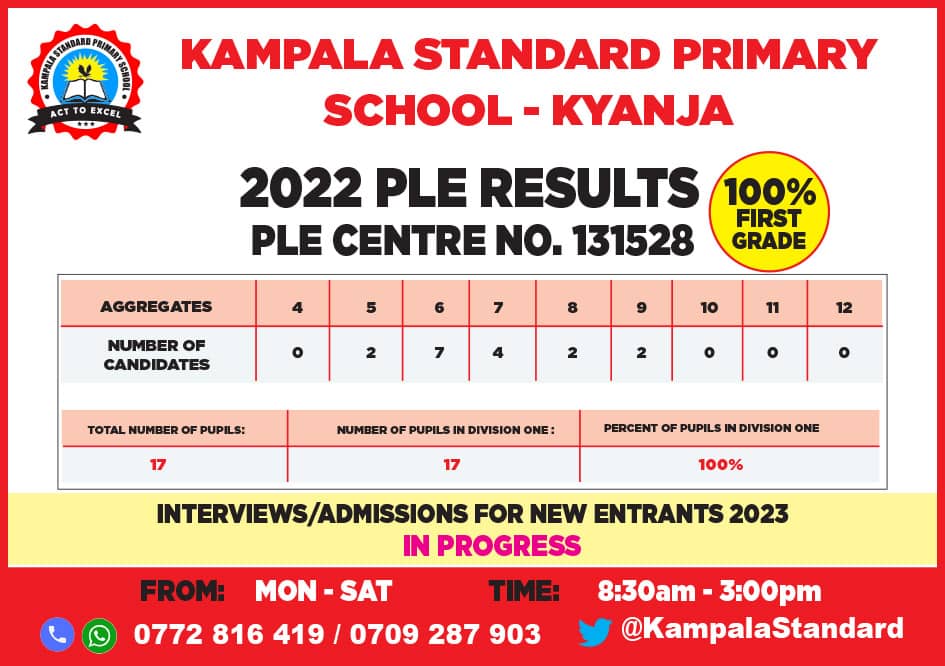
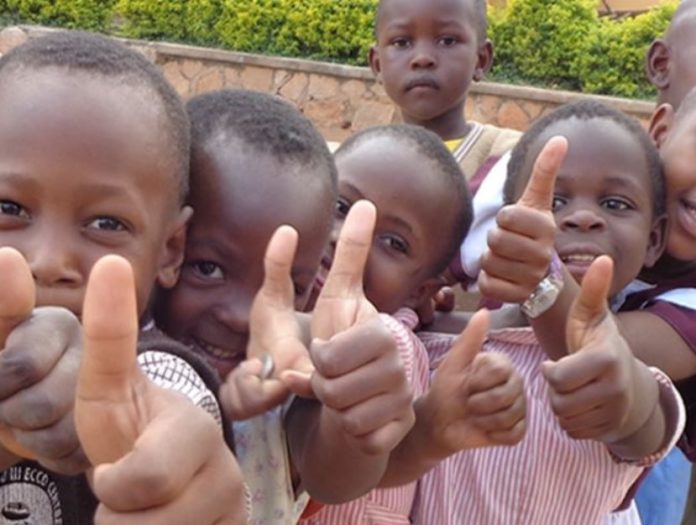
Kyanja-based Kampala Standard Primary School topped all schools and had all the candidates who sat 2022 PLE came in first grade with a single digit aggregate. The best had 5 aggregates and last had 9 aggregates making it the only school where all the pupils scored less than 10 aggregates.

Today we shall reveal top secrets why Kampala Standard Primary School-Kyanja posted excellent results in its maiden year of sitting PLE exams.

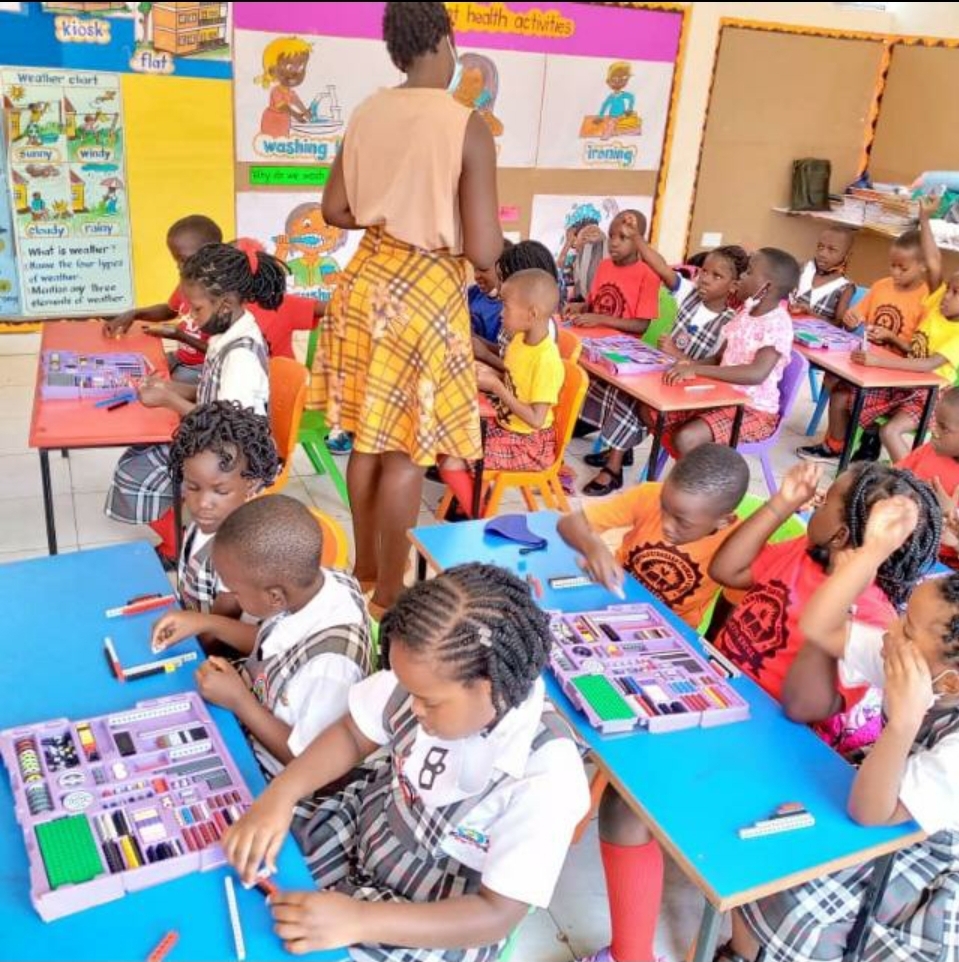
The Head Master Mr Simon Mugaaju, said KSP maintains a small number of pupils per class to enable the pupils concentrate better and excel. “This enables the teachers to concentrate on all the pupils and give the maximum attention,” said Mugaaju.

Besides academics, Mr Mugaaju said Kampala Standard Primary School-Kyanja has special programs for children in collaboration with UK and USA based schools and organisations, the programs include exchange visits between UK, USA and Ugandan teachers and pupils.

“KSP as Kampala Standard Primary School-Kyanja is popularly known has young Engineers program that helps to boost pupil’s critical thinking and lots of co-curricular activities that include swimming, scouting, sports, agriculture value addition among others,” he added.

While Kampala Standard Primary School-Kyanja teaches Uganda’s national curriculum, they blend it with international content in order to make it holistic for children to learn with ease.

Director Kampala Standard Primary School-Kyanja Dr Aggrey Kyobuguzi also posted on his twitter handle that in February 2023 a team from EDL and  little children of Jesus Christ based in Sacramento, California USA will visit Kampala Standard Primary School-Kyanja and Kentim School of Health sciences to interact with pupils, students and management while in August 2023 a soccer  team from Kentim Sports Academy and Kampala Standard Primary School-Kyanja will play a friendly match in football camp in London, UK.

Deputy HM academics Master Samson Katubeeho said, “All the above activities supplement teaching to ensure that pupils access holistic education and excel”.

Stories Continues after ad

LOP Mpuuga wants Parliament to investigate pension fund management

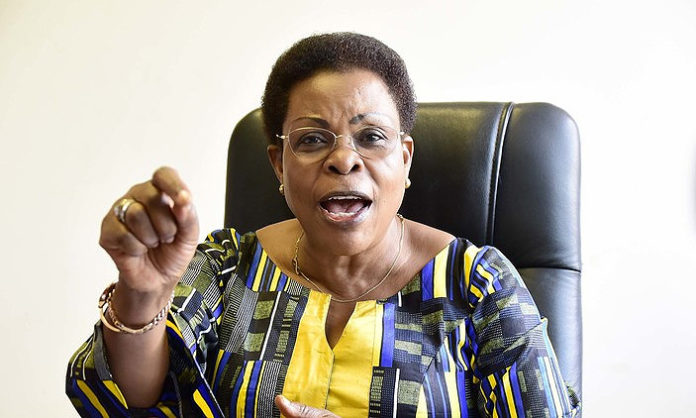
Leader of the Opposition in Parliament (LOP) Mathias Mpuuga

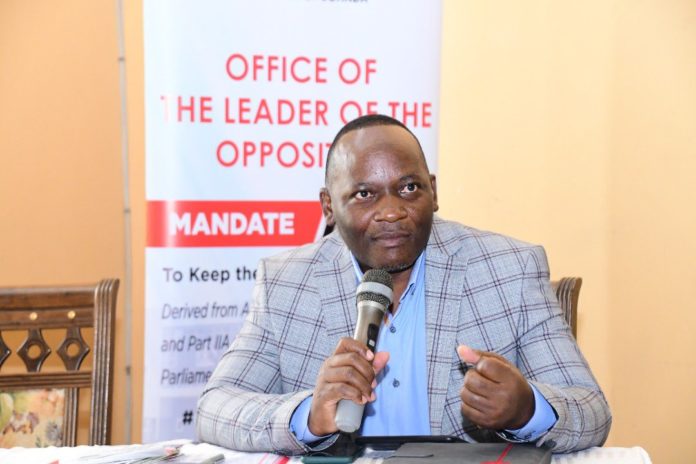
The Leader of the Opposition in Parliament (LOP), Hon Mathias Mpuuga, wants Parliament to institute an inquest into the management of the pensions fund for retired civil servants.

Meeting members of the Uganda Parliamentary Forum on Social Protection who called on him on Wednesday, 01 February 2023, Mpuuga said that it is important for Parliament to interest itself in the management of the budget allocations for the fund since cases of de¬layed pen¬sion payments or em¬bez-zle¬ment of pen¬sion funds are on the increase.

“What we handle in the budget is to show how much more the Government is going to commit, and it is not that whatever they commit goes instantly. So on which account is that money? How is it spent?” Mpuuga wondered further adding that the pension fund is one of the most abused public resources.

“There are complaints from different corners and it is shocking that pensioners take ages without getting their pension money,” the LOP said.

The meeting in the LOP’s boardroom at Parliament House was intended for the forum to share its position paper on social protection financing in the National Budget Framework Paper for the Financial Year 2023/2024 with the Opposition leadership in Parliament.

The forum’s chairperson, Hon. Flavia Kabahenda (NRM, Kyegegwa District Woman MP), said that they looked forward to the Opposition’s support for a parliamentary vote to task the finance ministry to revoke the blanket 80 per cent cut on subventions which has mostly affected social protection interventions.

Besides, the forum also calls for a policy shift in the management of support to people with disabilities and children in remand homes to allow for local procurement and avoid misuse of public funds through unrealistic procurement processes.

“Parliament should not be used by people seeking to fill their pockets,” Kabahenda said, adding, “The food for the remand homes [across the country] is bought in Kampala and then transported to [the various remand homes] but the fuel and per diem is more than the food they are carrying to those areas.”

The forum also wants Parliament to compel the government to reinstate the Shs 121 billion budget meant for the Social Assistance Grants for Empowerment (SAGE) to meet the demands including payment of arrears amounting to Shs 5.1 billion.

Stories Continues after ad

Uganda Cranes to host Afcon qualifiers abroad

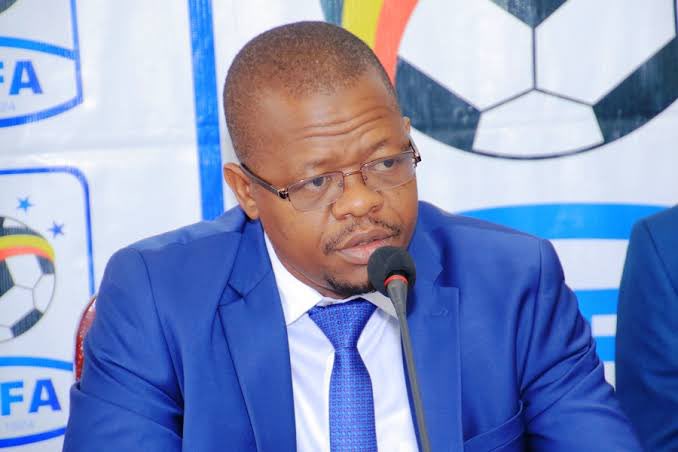
FUFA President Moses Magogo

FUFA President Moses Magogo has said Uganda currently has no stadium to host the Africa Cup of Nations (AFCON) and World Cup Qualifiers.

This means that the national team will have no option but to host the games from abroad.

“According to the latest stadium homologation by CAF, Uganda Cranes shall have no stadium in Uganda to host AFCON and World Cup Qualifiers,” Magogo tweeted.

“CAF has given us until the 10th of February to be able to submit a stadium that has been homologated by the administrative body. Between now and the deadline, I don’t think there are miracles that can be done for Namboole to be ready,” he said.

Cranes have been using the St. Mary’s Stadium in Kitende as the home ground for the AFCON and World Cup Qualifiers since Mandela National Stadium, Namboole in undergoing renovation.

Uganda will be taking on neighbors Tanzania in a double header in the AFCON 2023 Qualifiers in March.

“Unfortunately, all our immediate neighbors don’t have stadiums that qualify. Tanzania has one, but we are playing against them in the AFCON Qualifiers so we are looking at nations like Zambia, Malawi, and Egypt, among others,” Magogo said.

Uganda is in Group F with Tanzania, Algeria, and Niger.

The renovation of Mandela National Stadium is set to be completed in June 2023, according to the UPDF Engineering Brigade.

Stories Continues after ad

Minister Amongi’s Shs6bn request was irregular – NSSF Board

NSSF board chairperson, Peter Kimbowa (L) and the fund’s finance committee chair, Silver Mugisha, appearing before the committee

A Shs6 billion request by the Minister of Gender, Labour and Social Development, Betty Amongi, to facilitate activities to expand the National Social Security Fund (NSSF) was irregular, the NSSF board chairperson, Peter Kimbowa, has said.

He made the revelation while appearing before the select committee investigating allegations of mismanagement of NSSF on Wednesday February 1, 2023.

Kimbowa said that the board declined approval of the Shs6 billion because the fund’s governing body is not fully aware of the intended purpose of the requested funds.  

“The board requested management to come up with a comprehensive work plan and examine how the various activities are going to be resourced and we also examine the accountability matrix that will be attached to this project. This has not happened,” Kimbowa said.   

Kimbowa’s submission, however, contradicted a statement made by the minister during plenary sitting on 19 January 2023.

Mbale City MP Karim Masaba read the Parliament Hansard in which the minister said that the NSSF board had approved the request of the Shs6 billion and the work plan.

Committee chairperson, Mwine Mpaka, then asked Kimbowa if the minister’s statement to Parliament was not true.

“The Parliament Hansard is clear and I need you to answer either ‘yes’ or ‘no’ if the minister was lying to Parliament,” said Mwine Mpaka.

Kimbowa said that since there is no board resolution on the minister’s request, it is proof that it was not approved.

The chairperson of the fund’s finance committee, Silver Mugisha, explained that when the proposal was tabled before his committee, the NSSF management resolved to evaluate whether it aligns with the fund’s budget strategy.

“When we sent the budget for approval to the minister, the feedback was that it is approved but there was an idea that we allocate Shs6 billion for certain activities,” said Mugisha.

Workers’ MP, Charles Bakkabulindi, wondered how investment plans are initiated.

“Does the finance committee sit before the board or the board sits first. Who was sneaking the Shs6 billion for the final approval of the board? I want the board members to be mindful that we have all the figures and the papers,” Bakkabulindi said.

On 19 January 2023, the House resolved to institute a committee to inquire into the operations of NSSF following reports of corruption and mismanagement of the Shs17.9 trillion fund.

Stories Continues after ad

Non-compliant alcohol manufacturers to pay Shs10m fine

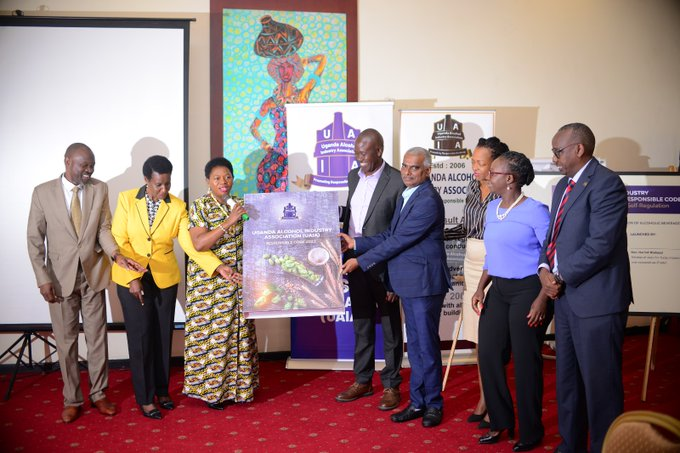
Non-compliant manufacturers are set to be fined Shs10 million, the newly launched alcoholic beverages Responsible Marketing Code indicates.

The code is intended to streamline production and promotion of responsible use of alcoholic beverages that are recognized by Uganda National Bureau of Standards (UNBS) and Uganda Revenue Authority (URA). This association has 40 members.

The alcohol industry generates over Shs800 billion in terms of taxes annually – almost 38.7% of the total taxes of this nation.

“The sector employs more than 60,000 but there are more in micro small and medium enterprises. If we could really use this chance to save this industry, it will directly give us a lot more employment than just given before. It is reducing the burden of employment and therefore it needs to be protected,” State Minister for Trade Harriet Ntabazi said.

“Currently, illicit alcohol accounts for 65% of the alcohol market in Uganda. It is neither registered, nor certified nor does it pay taxes. It is dangerous to the health of the consumers and undermines the economic development of the country,” Ntabazi added.

Ntabazi urged small and medium enterprises to step out and get incentives that are required for them to put a good facility in place including tax exemptions.

“I urge you manufactures to take every component of what it takes for certification, verification and conformity to avoid marriages break ups, school dropouts, abuses and others,” she said.

Speaking at the launch of the Code, Juliana Kagwa, the vice chairperson of Uganda Alcohol Industry Association (UAIA) said they intend to onboard more manufacturers in the foreseeable future and comply. “Where there are non-compliant members, the code has spelt out various penalties in conjunction with the government of Uganda.”

Under the code, alcohol manufactures want to tighten the grip on advertising of the misleading messages transmitted through traditional media, social media and other communication channels.

“We want to ensure that our advertising and promotion is reaching the right audience, of which in this code the right audience is anybody above 18 years of age. We have highlighted the perils of drunk driving and made a stand against road carnage within the same code,” she said.

She said there are penalties to do with intoxication, disorderly behavior, all of which the association doesn’t subscribe to. “We have highlighted as much as possible because not everything can be in one document. But all the anti-social behaviors we believe that would be perilous to the population of Uganda, and we have put down mitigations.”

The code recommends that all advertising goes through the Uganda Alcohol Industry Association, not so much for vetting but for advice and all the members signed up for that in a bid to keep themselves honest, that they are speaking to the right age group above or above 18 years of age.

David Livingstone Ebiru, the Executive Director UNBS said the Bureau’s focus is to promote voluntary compliance, self-regulation.

“So I am excited that if I see the sector coming up with a code of conduct, this is what we call industry standards. I want to congratulate you, the Association Executive, for helping us go into that direction to be able to support UNBS and other regulatory agencies to champion the culture of voluntary compliance or self-regulation, which is a big problem in our country,” he said.

“We always say that for manufacturers or producers to put goods on the market, they should have passed the test first. Culture must change that what is good for us, must be good for the work for the market and that goes with the Code of Practice and code of behavior in the various sectors.”

Former trade minister Amelia Kyambadde said; “We need to create awareness because people do not know that illicit alcohol is the cause of abuse, indiscipline, smuggling, and counterfeiting. All these challenges need to be addressed. So we need to formalize our small producers, private sector foundation you have a role to play in this.”

Stories Continues after ad

Museveni urges Luwero residents to engage in wealth creation to fight poverty

President Yoweri Museveni on Tuesday urged the people of Luwero to engage in wealth creation activities such as commercial agriculture in order to fight poverty and increase their household incomes.

The president says this has been the consistent message of the National Resistance Movement (NRM) for the last 60 years.

“The NRM for the last 60 years has been advising you to seek first homestead income and the rest will be added unto you. If you don’t get that message, you just waste a lot of time,” H.E Museveni said.

Gen. Museveni who was accompanied by the First Lady, H.E Janet Museveni made the remarks while addressing the gathering at Bukalasa Agricultural College shortly after commissioning their new modern infrastructure that are meant to kickstart the process of transforming the college as a centre of excellence in agricultural training.

The commissioned facilities include among others; Milk and Food processing house, zero grazing unit, broiler and layer unit, piggery unit, agro-processing unit, a calf pen, a demonstration unit, laboratories, classrooms, library and ICT laboratory block. These were constructed at the cost of $11 million equivalent to approximately Uganda shillings 40 billion.

This investment has not only uplifted Bukalasa Agricultural College as a centre of excellence but also as an institution that can generate income to sustain itself according to Ms Ketty Lamaro, Permanent Secretary, Ministry of Education and Sports (MoES).

President Museveni told the people of Luwero that whereas the government has improved the infrastructure like roads, hospitals and other social services, it makes no sense to be proud when the people using them are poor.

“Even if we make the roads, it will not take away the poverty in your home. A tarmac road will pass by your home and you will remain poor,” Gen Museveni said, giving an example of the people in Ngoma subcounty, Luwero district who despite having poor infrastructure, they listened to his message of wealth creation and transformed from keeping cows and producing milk for home consumption but also for the market.

“People in Kampala have the best roads but the poor are so many. I started teaching these things to people 60 years ago. I used to teach them that the antidote for poverty is wealth, and it can move hand in hand with development as long as you are able to differentiate between the two and what benefits all of us. For example, the road belongs to us all; the hospital is for all of us but the wealth is mine alone or for us as a family,” he noted.

“In all that we do, we should desist from being diverted and get to know the medicine for poverty in wealth. Development just makes it easy for you to create wealth but even without development like in Ngoma, you can create wealth as you follow our teachings. They have challenges of development, but their homestead incomes are steady.”

The President also appreciated Bukalasa Agricultural College for championing Science-led agricultural production for crops and animal products and urged Ugandans to use these agricultural institutions for more knowledge in areas of; Livestock and crop production, Animal feed growing and processing, Value addition to the products and for specialized Training and skilling of the young people.

“You the community, must learn from it. This is important,” he said.

President Museveni further directed the Minister of state for Luwero Triangle and Rwenzori Region, Hon. Alice Kaboyo to work with the Ministry of Works and Transport so that the road from Wobulenzi town council leading to Bukalasa Agricultural College is worked on.

“I agree we should tarmac the roads inside here. It’s not good to have food factories with this dust contaminating the food being prepared,” he remarked.

The First Lady who is also the Minister of Education and Sports, H.E Janet Museveni informed the gathering that as Uganda strives to transform its human resource, Bukalasa and other technical colleges are going to quicken the process of industries to find home in the country because those who qualify from these colleges must be hands on in training and not just theoretical qualification alone hence transforming the country’s human resource.

The First Lady was also happy to learn that Bukalasa has been equipped to add value to their products such as fruits, milk, and other agricultural products, saying “with time we can also build some silos so that they can store dry cereals and food stuffs. When we have food shortages, we can get help from these agricultural colleges or at least specialize in seed banking”.

She also thanked the President for striving to strengthen Uganda’s potential by investing in infrastructure development especially for higher institutions of learning both for universities and technical colleges.

“I am confident that with the skills we intend to build here and elsewhere, food shortages will not only be a thing of the past but also the people who live on the land who happen to be the majority of our communities will no longer live in poverty, considering that government has also invested heavily in the Parish Development Model. If more skilled personnel come from these colleges, the sky should be the limit,” Mrs. Museveni said.

She thanked development partners such as the World Bank, for the financial lending and technical support towards these projects; the Uganda Skills Development Project (USD) and the Albertine Region Sustainable Development Project (ARSDP) that have enabled government create centres of excellence for specialized training for the priority sectors of Uganda’s economy which are the foundational building blocks for the country.

At the same event, the Minister for Agriculture, Animal industries and Fisheries, Hon. Frank Tumwebaze thanked the Government for prioritizing Bukalasa Agricultural College to continue skilling Ugandans to do amazing innovations and produce products ready for the market.

“The Ministry of Agriculture will sit with the Ministry of Education to discuss how we can support these institutions to cooperate with dedicated separate business arms that will help to commercialize their products,” Minister Tumwebaze said.

The Principal of Bukalasa Agricultural College, Mr. Gelvan Kisolo Lule informed the President that the commissioned state-of-the-art infrastructure has not only benefited students but also farmers and groups from within and outside Luwero district to acquire agricultural skills.

“This college is now open to all categories of people who are interested in acquiring skills irrespective of their level of education. As a result, there’s already an increased demand for training among the farming fraternity,” Mr. Kisolo said.

Bukalasa Agricultural College (BAC) was originally established in 1920 as a cotton research centre by the Imperial Cotton Research Program. Through mergers with other institutions, the centre was later transformed into a comprehensive Agricultural Research and Training Institute.

The college is among the five Colleges in Technical, Vocational Education and Training (TVET), referred to as centres of excellence. The other four include;Uganda Technical College Lira, Uganda Technical College, Elgon, Uganda Technical College, Bushenyi and Uganda Technical College, Kichwamba.

The ceremony was attended by among others Ministers, District leaders of Luwero, Principals of different agricultural institutions countrywide, students and the general public.

Stories Continues after ad

Uganda, 11 African Health Ministers unite to end AIDS in children

Ugandan children

African Health Ministers and international partners are uniting in a pledge to end AIDS in children.

Concerned by the stalling of progress for children, and the widening gap between children and adults, UNAIDS, UNICEF, WHO and partners have brought together a global alliance to ensure that no child living with HIV is denied treatment by the end of the decade and to prevent new infant HIV infections.

The new Global Alliance for Ending AIDS in Children by 2030 was announced by leading figures at the International AIDS Conference in Montreal, Canada.

In addition to the United Nations agencies, the alliance includes civil society movements, including the Global Network of People living with HIV, national governments in the most affected countries, and international partners, including PEPFAR and the Global Fund.

Hosted by the United Republic of Tanzania, the alliance will run for the next seven years until 2030, aiming to fix one of the most glaring disparities in the AIDS response.

Three quarters of adults living with HIV globally are on treatment  while only half (52%) of children living with HIV are on life-saving treatment, far behind adults where three quarters (76%) are receiving antiretrovirals, according to the data that has just been released in the UNAIDS Global AIDS Update 2022.

Children accounted for 15% of all AIDS deaths despite making up only 4% of all people living with HIV. The alliance is to advocate and mobilize political commitment and resources to ensure action and accountability around shared targets and commitments.

Twelve countries have joined the alliance in the first phase: Angola, Cameroon, Côte d’Ivoire, The Democratic Republic of the Congo (DRC), Kenya, Mozambique, Nigeria, South Africa, Tanzania, Uganda, Zambia, and Zimbabwe. Tanzania being one of the first countries to sign up.

Stories Continues after ad

Parliament approves Budget Framework Paper of Shs49.9 trillion for FY 2023/24

Deputy Speaker Tayebwa

The Budget Framework Paper with proposals of a Shs49.98 trillion budget for Financial Year 2023/2024 has been passed by Parliament.

The passing of the Budget Framework Paper is in line with the requirement of the Public Finance Management Act that sets 1st February as deadline for Parliament to approve it.

The passing of the draft budget in a plenary sitting chaired by Deputy Speaker, Thomas Tayebwa on Tuesday January 31, 2023, followed a debate by Members of Parliament  on the Budget Committee reports on the framework and the budget performance respectively.  

The proposed budget will be financed through domestic revenue equivalent to Shs28.8 trillion, budget support amounting to Shs2.4 trillion, domestic borrowing Shs1.6 trillion and external project support of Shs8 trillion.

The other sources are, domestic refinancing of Shs8.7 trillion and local revenue for local government of Shs238.5 billion.

Government’s key priorities are starting the construction of the Standard Gauge Railway and finalization of the rehabilitation of the Meter Gauge Railway under the Integrated Transport programme.

Government also intends to invest in small-scale solar-powered irrigation as well as addressing climate change and food security under the Agro Industrialization Programme.

The other priorities are constructing power service stations and transmission lines under the Sustainable Energy Development programme and capitalization of Uganda Development Bank and Uganda Development Corporation to continue supporting private sector development, recovery and economic transformation under the Private Sector Development.

Kashonzi County Member of Parliament, Herbert Tayebwa warned against the high expenditure against government’s low revenue.
He said that Uganda should only borrow for investment but not consumptive expenditures.

The Leader of the Opposition, Mathias Mpuuga said that the Budget Framework Paper is silent on the high interest rates on loans.

He wondered how much the country was paying annually as debt repayment for Karuma Hydro Power Dam.

The Deputy Speaker, Thomas Tayebwa expressed worry about the reducing discretionary expenditure despite the growth in revenue estimates.

“This means that we shall have limitations in using our appropriation power to reallocate the budget. For every Shs100 collected, over Shs37 is spent on servicing debts,” said Tayebwa.

The Deputy Chairperson of the Budget Committee, Wamakuyu Mudimi said that proposed budgets towards programmes that contribute directly to value addition is only 5.6 per cent of the total budget and only 4.7 per cent of the total budget has been allocated to programmes that contribute towards strengthening of the capacity of the private sector.

Government will now revise the budget estimates based on Parliament’s recommendations and present final estimates to the House by March 15, 2023 for the final budgeting process.  

Stories Continues after ad
UNOC pledges to involve more women in oil and gas sector

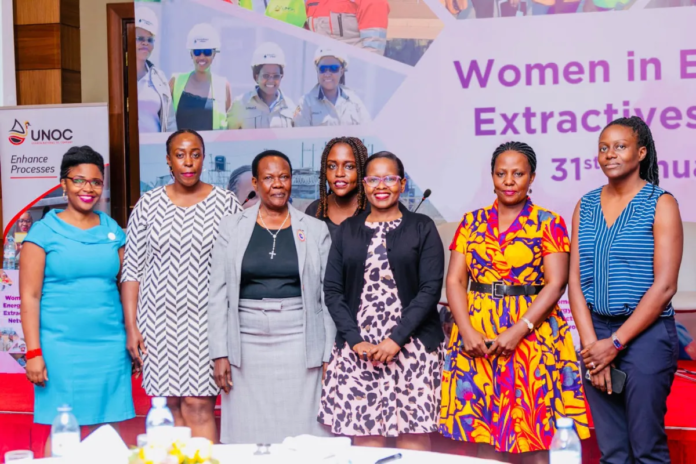
The Uganda National Oil Company (UNOC) has launched an initiative that seeks to involve more women in Uganda’s oil and gas sector.

Dubbed ‘Women in Energy and Extractives Network (WEEN)’ the initiative is hoped to help to create a more equitable and inclusive energy and extractives sector.

Speaking at the WEEN meeting in Kampala on Tuesday, 31 January 2023, Eng. Irene Bateebe, the Permanent Secretary in the Ministry of Energy and Ministry Development, said that women should not use their gender as an entitlement but should demonstrate capability, dedication and professionalism while portraying themselves as focused on contributing to the social and economic development of Uganda.

“As women at the top, we must put in place strategies to protect women. I believe that a robust network of women can lead to greater collaboration. Networks such as these are timely and help identify opportunities,” Eng. Bateebe said.

She added that monitoring and evaluation mechanisms should focus on gender segregated data to identify where the gaps are.

She also said that gender considerations have been made in the land acquisition process for the oil and gas projects.

Eng. Irene Bateebe, the Permanent Secretary in the Ministry of Energy and Ministry Development, speaks at the function.

The keynote speech at the Breakfast Meeting was given by Dr. Oladunni Owo, the National President of Women in Energy, Oil, and Gas (WEOG) Nigeria. She expounded on experiences from the organization.

She shared the expected return on investment/associated economic benefits for Uganda that would include strong networks, the promotion of women leadership, increased women and girls’ participation in STEM, a boost in innovation as well as higher employment rates.

Associated economic benefits for WEEN would also include inclusive national economic growth and sustainability, increased GDP per capita, a boost of business competitiveness and performance, increased domestic and local content participation, and several other spill over effects.

In her remarks, Dr. Jane Nambakire Mulemwa, Chairperson Board of Directors of Petroleum Authority Uganda, shared the following tips for women in leadership; you should be proud of your achievements as a professional; self-confidence and Integrity.

Dr. Mulemwa also urged women in leadership to be intentional about increasing the visibility of women in technology and science.

She has urged guests to “have principles, have self-esteem, self-confidence, self-commitment to work hard and excellence.”

She briefly delved into her inception at PAU stating, “I was given the responsibility of establishing PAU from scratch. I was its first staff member with two other board members and we had help from UNOC with setting up the authority.”

“We need to work on getting people qualified into the energy and extractives industry. It is an industry that has the potential to uplift Uganda. Position yourselves in terms of acquiring the right qualifications, maintain your integrity, stand up for yourself,” she explained.

Stories Continues after ad
IGG proposes vetting of District Service Commission members

IGG Beti Kamya

The Inspector General of Government (IGG) Beti Kamya has proposed that members nominated to the District Service Commissions (DSC) first undergo a due diligence vetting exercise before being submitted to the District Councils for endorsement.

The IGG noted that the move is aimed at reducing corruption amid increased allegations of sale of jobs to unsuspecting members of the public by DSCs.

She was addressing Journalists at the Inspectorate of Government (IG) head office in Kampala on January 31, 2023.

“Currently, the District Chairperson nominates names to the DSC and submits them to the District Council for endorsement. The practice is that once the District Chairperson takes care of the interests of all stakeholders in this matter then endorsement is guaranteed. And usually, merit is the least of anybody’s concern. The IG has already written to the Public Service Commission proposing an engagement to discuss the matter,” the IGG said.

The IGG’s revelation was triggered by the Presidential directive made on January 26, 2023 to all District Internal Security Officers (DISOs) and Criminal Investigations Directorate (CIDs) to swing into action and arrest district officials who are allegedly selling jobs.

President Museveni, who was officiating at the 37th NRM Day celebrations in Kakumiro district, also noted that he had heard of girls being allegedly sexually exploited for jobs.

“I have heard the bazukkulu [youth] crying about DSCs selling local government jobs. I have heard of girls being exploited sexually for jobs. Get evidence, please, devoted members of the public and we expunge and roast those pigs,” the President said.

He added: “The DISOs and the CIDs should also be on notice. How does such corruption go on in your area and you do not know or, if you know, you do not report?”

The IGG expressed concern that apart from the injustice of denying a person of merit the opportunity to serve this country, there is the great danger of littering the public service with human resource of low caliber which in turn leads to incompetence, inefficiency, non-performance, loss of public funds, poor service delivery and poverty.

She revealed that the IG has over the years investigated and given orders, recommendations and sanctions to address this grave evil to the country, adding that the matter is currently being addressed at the highest political and administrative level.

For instance, she said that there is an ongoing prosecution of the Mitooma DSC, and the disbanding of the Rakai DSC on the basis of alleged corruption as per the IG report.

The IG had also started engaging DSCs and had actually done Kabarole, Jinja and Masaka districts, to discuss issues of rampant corruption in recruitment of staff for District Local Governments but the exercise was interrupted by the Covid-19 lockdown.

However, the IGG said that plans are in high gear to revive the engagements so as to change the mindset of DSC officials and combat corruption.

“We thank those members of the public who raised these matters with relevant authorities, in particular to the IG and those Bazukkulu who brought the matter to the attention of His Excellency the President. That is the way to fight graft, corruption, abuse of office and authority and violation of the laws of this country. Expose them with evidence,” she said.

The common breaches in the recruitments handled by the DSCs include nepotism/conflict of interest, extortion/bribery/ring-fencing of jobs, recruitment of non-qualified candidates and irregular composition of DSCs.

Others are; external interference in the recruitment process especially by political leaders and top technical staff, recruitment of staff with forged academic documents and deliberate poor record keeping by DSCs, which makes supervision and auditing of their performance difficult.

The Director Anti-Corruption, in the IG Mr. Simon Kajura Ogwal, said that the directorate has successfully handled a number of corruption cases in DSCs with serious measures being undertaken.

“We have intervened in a number of occasions in DSCs where malpractices are made during recruitment and some of the culprits have been prosecuted in the Anti-Corruption case. We will continue doing our best to ensure that there is rule of law in this country and also ensure that corruption is eliminated. We call upon members of the public not to keep quiet but speak up about these issues and we can assure them that they will be protected under the Whistleblowers Protection Act,” he said.

Stories Continues after ad