Stanbic Bank
Stanbic Bank
18.3 C
Kampala
Stanbic Bank
Stanbic Bank
Home Blog Page 437

Justice Kakuru applied for early retirement but was never released- CJ Owiny-Dollo

RIP Justice Kakuru.

The Judiciary has praised the fallen Court of Appeal judge Kenneth Kakuru for his passion for getting justice for the indigent. Justice Kakuru succumbed to prostate cancer at Aga Khan Hospital in Nairobi, Kenya.

Speaking during a special sitting of the Court of Appeal held at the High Court to honor his distinguished service to the country, Chief Justice Alfonse Chigamoy Owiny-Dollo revealed that the late had applied for early retirement however his application was not processed because he was still needed at the judiciary.

“It is true that Justice Kakuru applied for early retirement. I informed the President he had applied for early retirement through me but I told him I had declined to send it to him. Why? Because I knew he was a workaholic and would die much sooner in retirement,” Chief Justice said.

His wife Samantha Kakuru Mwesigwa said he loved the law and was passionate about it. He was passionate about getting justice for the indigent.

“During court vacation, he would organize his files and work through them. He was a backlog fighter. Two weeks ago, he called from Nairobi when he was frail and dictated to me a court judgment, the last that he wrote. That is how passionate he was about his work,” she said.

Deputy Chief Justice Richard Buteera said Justice Kakuru worked even when he was admitted to the hospital. You disagreed with him in the morning and had lunch with him later in the day. He held no grudge.

“The Late Justice Kenneth Kakuru exceeded his call of duty. Using his own money, he bought shelves for the criminal registry at the court. He bought trolleys to enable staff to move bulk court documents to chambers and court,” he said.

The chairperson of Judicial Service Commission-JSC Benjamin Kabiito said Justice Kakuru was fiercely independent but accountable and observed collegiality.

He carried no grudges and worked for the welfare of staff at the Court of Appeal.

Justice Kakuru’s body will be laid to rest on Saturday, 11th at the ancestral home in Rwebishuri village in Mbarara.

The body is apparently at his home in Buziga, where an overnight vigil will be held to allow the family and loved ones of the deceased to spend some time with the body and reflect on his life and legacy.

On Friday, March 10th, a funeral service will be held at All Saints Cathedral in Nakasero, starting at 9 am. After the service, the body of the deceased will be transported to Rwebishuri, Mbarara, where another overnight vigil will be held.

The final day of the funeral proceedings, Saturday, March 11th, will begin with a funeral service at St. James Cathedral in Ruharo. This service will be the final opportunity for family, friends, and colleagues to say goodbye to the late Justice Kakuru before his body is laid to rest.

Stories Continues after ad

Minister Kitutu to be charged with abuse of office over Iron sheet scandal

Under investigation, Minister Kitutu

Karamoja Affairs Minister Mary Goretti Kitutu is set to be charged with abuse of office, Eagle Online can reliably report.

According to a source, Dr Kitutu’s matter has been taken over by the Inspector General of Government (IGG) and soon she will be arrested and charged.

Earlier this month, Kitutu confessed to diverting 3000 iron sheets that were meant for the unprivileged people in Karamoja.

Appearing before the Presidential Affairs Committee of Parliament Kitutu accepted responsibility for the mismanagement of iron sheets procured for the vulnerable in the sub-region.

“Some of the iron sheets were used to roof a boys’ dormitory in Situmi Primary School, Namisindwa district. The school lacked a store, hence storing them at a relative’s house,” she said.

She apologized to the committee and parliament noting that she was never guided about the project. Kitutu requested for 12,200 iron sheets to aid her in community mobilization and peace-building missions in Karamoja.

Her January 12, 2023, internal memo to the stores’ department at the OPM read in part, “During community mobilization and peace-building missions, I usually meet vulnerable groups and karuchunas (reformed warriors) who are willing to dissociate themselves from rustling. As part of my intervention, I will be distributing iron sheets to such special vulnerable groups.”

Last month, security operatives nabbed Cotilda Kitutu, Michael Nabwaya, and Julius Wabule. The accused are the mother, brother, and nephew of Minister Kitutu. The three were allegedly selling OPM-branded iron sheets to residents of Namisindwa district, in eastern Uganda.

Kitutu is among the top ministers who benefited from the iron sheets which were allegedly meant for people in Karamoja. The ministers involved in the scandal include; Rebecca Kadaga, Jacob Oboth Oboth, Hamson Obua, Amos Lugolobi, Matia Kasaija and others.

Stories Continues after ad

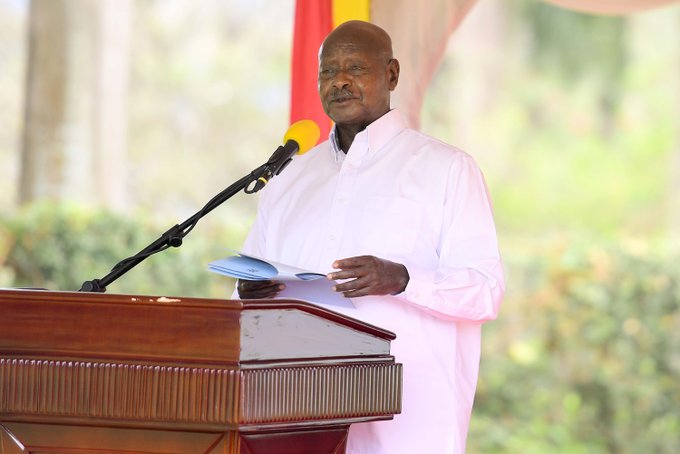
Museveni to address the parliament on matters of National Importance

President Museveni

President Yoweri Kaguta Museveni will next week address the Parliament on matters of National Importance. The address has been confirmed by Anita Annet Among who said the Museveni’s address will be premised on matters of National Importance.

Museveni’s address comes at a time when the house is processing the contagious Anti-Homosexuality Bill, 2023 which seeks to criminalise same-sex relationships with a liability of imprisonment of two to 10 years for homosexuality, aggravated homosexuality, attempted homosexuality, aiding and abetting homosexuality, conspiracy to commit homosexuality and other related practices.

“I want to report that pursuant to Article 101 (2) of the Constitution of the Republic of Uganda, President Yoweri Kaguta Museveni will be coming to address the House on Thursday, March 16, 2023. I urge all of you to be in the House that day to hear what the President says on what we can do to change our economy and society,” She said during the plenary.

Museveni last addressed parliament in June last 2022 at Kololo ceremonial grounds. The Speaker Anitah Among started by making her communication to mark the official opening of the 2nd Session of the 11th Parliament.

This was after the swearing-in of new Member of Parliament Andrew Ojok Oulanyah, who replaced his dad, former Speaker Jacob Oulanyah, the former Speaker of the Parliament, who died on March 20, 2022 in Seattle, Washington State.

During his address, Museveni pledged that the country will process coffee, oil and iron in a bid to boost revenue collection instead of exporting the commodities for peanuts.

He promised to engage parliament that is opposing the government’s plan to process coffee in a deal with Uganda Vinci Coffee Company. The president said he is the one who was interested in the company in coffee after he realized how much the country was losing from exporting raw coffee.

Stories Continues after ad

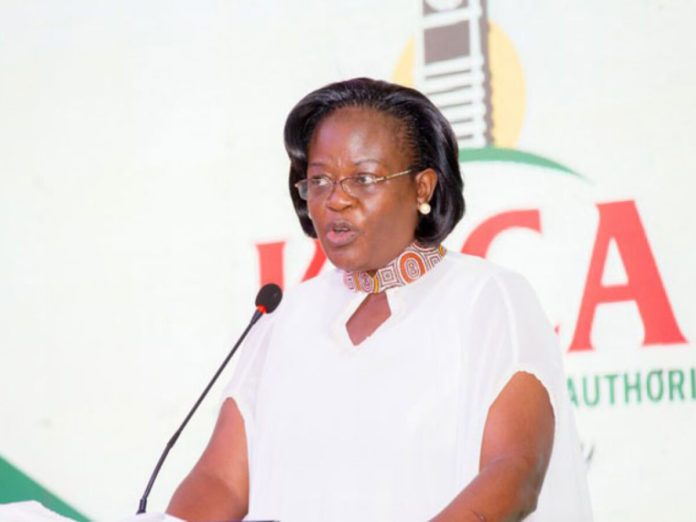
KCCA Probe: Lusaze Cemetery lease expired

KCCA Executive Director Dorothy Kisaka

The lease title for Lusaze Cemetery land has expired this was revealed by the Committee on Commissions and State Enterprises at Parliament.

The MPs are questioning the technical wing of the Kampala Capital City Authority- KCCA over the Auditor General’s report for the financial year ending 2022.

Eli Waligo, the Director of Land Management at KCCA said the lease expired and the authority is engaging Buganda Land Board to have it renewed.

“We are in advanced stages towards the renewal of the lease but Buganda land board is still hesitant because they want the land to serve another purpose other than the cemetery,” he said.

The legislators also expressed their dismay over the continuous encroachment on KCCA land. They claimed that part of the Lusaze cemetery land was encroached on.

MP Yusuf Nsibambi asked if there any for any plans of shifting the cemetery in case Buganda Land Board declines to renew the lease title.

The MPs also learnt that the 60.4 acreages of land that was purchased to serve as a landfill in Kasenga have been encroached on. The land was allegedly bought in 1997 however it didn’t serve the purpose.

“You have land in Kasenge and what are you really doing at KCCA?” Nsibambi asked.

Waligo said the Authority filed a lawsuit against the encroachers and the matter is before the high court pending hearing. KCCA is in the process of fencing off all its land and signage indicating the ownership of land has been elected at the land to ensure that the land is not encroached on.

Stories Continues after ad

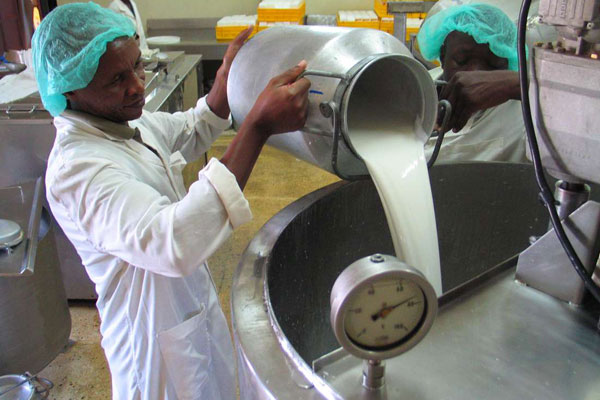
Kenya suspends imports of powdered milk

Kenya has suspended imports of powdered milk, a development that is set to badly affect Uganda.

In a notice dated March 6, the Kenya Dairy Board, KDB, said it was moving to protect local farmers from external products as output is expected to increase soon.

“In anticipation of the long rains, the Government has stopped the importation of milk powders to cushion the industry from surplus production and low prices,” read a statement signed by Margaret Kibogy, the KDB Managing Director.

Ms Kibogy said that the Board shall no longer issue new import permits until further notice.

While the letter does not specifically mention which countries are affected by the ban, the move has been received with consternation from across the region.

This comes two months after Kenya President William Ruto said milk imports from Uganda should be allowed into the country and the more expensive Kenyan milk be processed for the international market.

However, there have been continuous calls from both the industry and the political leaders in Kenya to ban milk from Uganda because it is cheaper and outcompetes the Kenyan products on the market.

Kenya is Uganda’s major milk market but the constant barriers have prompted the search for wider markets, especially in the Democratic Republic of Congo, South Sudan, Zambia, and Algeria.

The Dairy Development Authority (DDA) said that for dairy products like casein, whey protein powder, UHT milk, and milk powder, the main destinations have been United Arab Emirates, Syria, Japan, Oman, USA, Nepal, and Bangladesh.

Processed milk accounts for more than 35 percent of Uganda’s marketed milk, according to DDA. It is not known how much of the milk powder is exported to Kenya.

Recently, DDA Executive Director, Samson Akankiza said the Kenyan market was now fully open for Uganda’s dairy products, while talks are on with Algeria for the export of powdered milk.

The announcement by KDB came hardly a day after Kenya’s Deputy President, Rigathi Gachagua vowed that the government would ‘break the monopoly’ in the milk and gas sectors so as to bring the prices down.

Speaking at a church service in Nairobi on Sunday, Gachagua said that for a long time the milk industry was dominated by one person who has bought off all other companies and that the same went for gas.

It is said that Mt Kenya and Brookside, which control more than half the market, are majority-owned by the Kenyatta family, while political ally Raila Odinga owns East African Spectre, the main petroleum gas supplier in Kenya.

“We need to open up that sector to competition so that farmers can get a fair deal. The days of monopoly are over, and we will not let a few individuals continue to exploit Kenyans,” Gachagua said.

He insisted that this was not a political witch-hunt by a move aimed at improving the livelihood of Kenyans.

“They wanted to continue with state capture and monopoly, but that has come to an end. We are going to open up the milk and gas industry so that we can end monopoly for the benefit of Kenyans,” Gachagua asserted, adding that one person has been buying up all the companies and selling milk at inflated prices.

In 2015, Brookside acquired Sameer Agriculture and Livestock Ltd which had earlier acquired the assets of Fresh Dairy from the Dairy Corporation of Uganda.

Effectively, Brookside became the leading milk buyer, processor, and exporter in Uganda.

Stories Continues after ad

There was no any succession talks at Kapeeka meeting, it is a hoax -Otafiire

Gen. Otafiire

Internal Affairs Minister, Gen. Kahinda Otafiire has dismissed claims that he held a private meeting focusing on succession with fellow Generals Salim Saleh and Kainerugaba Muhoozi as speculative and baseless.

Nile Post had reported that a private meeting had been held in Kapeeka at the residence of Gen. Saleh to reconcile Gen Otafiire and Gen. Muhoozi.  The story further revealed that under the same meeting, the question of succession was discussed.

However, in a telephone interview with Eagle Online Gen. Otafiire acknowledged holding a meeting with both Generals Saleh and Muhoozi but insisted that no question succession was discussed.

“It is true I attended a meeting and I refused a group photo” Gen. Otafiire said when contacted. He continued “It is true the President took me in confidence and I am not at liberty to disclose secret interactions” Gen. Otafiire said.

“The president called for a meeting of three of us and if he wanted it open, he would have said so and I am not at liberty to disclose anything. It was not a public meeting, why do you want to know”

The minister said his meeting with Saleh and Muhoozi was cordial and interactive. “It was a friendly chat between two old comrades and their son”

This website has also learnt from some sources that whereas the meeting was secret, there was no clear agenda as it was prompted by the secret document which President Museveni authored on cohesion and internal discipline within the senior ranks of the party which he wanted discussed by the three.

“Just treat that story as hearsay from part timer thinkers who neither were invited nor attended the meeting. Those are frictions of people who don’t wish Uganda well and are probably accounting for their foreign backers” a top source who asked not to be named told Eagle Online.

According to Nile Post, the meeting started with a review of President Museveni’s paper on the matter. Museveni in the document outlines that the fighting between senior UPDF/NRM leaders and attacking each other publicly doesn’t look good out there. 

Sources revealed that whereas it is true that on January 17, 2023, a meeting took place at Gen Saleh’s residence, it is only the three generals that attended the closed-door meeting and two of Gen. Saleh’s staff, none of others that had travelled with Gen. Muhoozi was allowed in.

It is true Brig. Chris Damulira, the Director Crime Intelligence in the police, businessman Kwame Ruyondo and Journalist Andrew Mwenda accompanied Gen. Muhoozi, none of them attended meeting because it was meant for the three generals’

The two aides of Gen. Saleh were Emmy E Allio, the Director Investment at Operation Wealth Creation and Col. James Nkojjo, the Military Assistant to Gen. Saleh.

Stories Continues after ad

After prison MP Rukari wants police officers punished for arresting him

MAN IN THE STORM: Mbarara North MP Robert Mwesigwa Rukaari.

The under fire flamboyant Member of Parliament for Mbarara North Robert Mwesigwa Rukari has written to the Inspector General of Police registering his complaint against police officers that effected his arrest.

Rukari in a letter dated March 7, 2023, which Eagle Online has seen says ASP Kharim Mukiibi was unprofessional during his arrest as he didn’t disclose himself and the reason for arrest to the MP.

“My name is Mwesigwa Robert Rukari Member of Parliament representing Mbarara City North Constituency. I wish to officially register my complaint against the above-mentioned police officers for their unprofessional conduct to my person. On March 1, 2o23, I was arrested at around 4.30pm between Bhatia Chambers and Jubilee Insurance Centre Building along Parliament Avenue as I was coming from a meeting with the creditor’s lawyer Stanley Omwony to discuss a new debt payment plan” Rukari who came out of Luzira prisons after pay part of the loan writes.

He further continues “The arrest was effected by a Court Bailiff Moses Kirunda together with ASP Kharim Mukiibi and another police constable whose name I couldn’t readily establish armed with a pistol and both dressed in an FFU blue and white anti-riot police uniforms. Without being shown a warrant of arrest, I was ordered to abandon my vehicle on the street and forced into a waiting private car Toyota Mark X, driven to Commercial Court”.

In his complaint says to his surprise, even after the Assistant Registrar committed him to prison, at around 6.30pm, the same police officers and court Bailiff Moses Kirunda ordered him back to the same private car without a prison’s officer. Rukari says in total disregard of traffic rules, they drove dangerously at a terrific speed and in the opposite direction of the road towards Luzira Prison, putting his life in danger.

“In a dramatic fashion, at Garden City round about, ASP Mukiibi jumped out of the vehicle and stopped all the vehicles including the Prison’s bus then shifted me to the Prison bus. This is therefore, to request your good office to establish whether the said police were authorized to participate in the civil court processes in the manner described above” Rukari wrote to IGP and copied the Police Chief of Staff.

Background

Rukari was March 1, taken before Commercial section of the High Court under execution of a decree which was made and pronounced by execution miscellaneous application No77 of 2022 and by which decree it was ordered that the said should pay a decretal sum and cost 702,000,000.

Mwesigwa Rukari’s arrest and subsequent remand was due to failure to pay Shs702 million to city businessman Gerald Kalungi.

“And whereas the respondent has neither obeyed the decree nor satisfied the Court that he will not be committed. You are hereby committed the said Mwesigwa Robert into civil prison and keep him therein for a period not exceeding six months until the said decree shall be fully satisfied or the said Mwesigwa Robert shall otherwise be entitled to be released according to the provisions of Section 43 of CPA” reads the committal of respondent to civil prison.

It further continues “The Court does hereby fix Shs5,000 as allowance for the subsistence of the said Mwesigwa Robert during his confinement under this warrant of committal”

On December 30, this website exclusively revealed that Mr Mwesigwa Rukaari was having sleepless nights as several money lenders had ganged up against him demanding for repayment of loans the politician obtained from them.

Rukari’s subsequent release and payment of Shs300 million was negotiated by Deputy Speaker, Thomas Tayebwa, Amb. Adonia Ayebale among others.  

Stories Continues after ad

New BBC Africa Eye investigation shines a light on Seychelles’ heroin epidemic

Heroin

Known for its coral reefs and beautiful beaches, Seychelles, a tropical paradise located off the coast of east Africa, is visited by thousands of tourists. Yet, beyond the country’s multi-million dollar tourist industry, BBC Africa Eye shines a light on its heroin epidemic.

In a new investigation by BBC Africa Eye, Seychelles, Heroin and Me pieces together a complex picture of how political and socio-economic factors including poverty and a lack of rehabilitation centres, are contributing to what is now a drug epidemic.

According to Seychelles’ Government, based on population, Seychelles – which is made up of 115 islands – has the biggest heroin problem in the world, with around 10 percent of Seychellois dependent on the drug.

Presented by Joseph Fady Banane, the Seychellois support worker was one of the 10 percent. Now free of heroin, he uses his experience and role as a support worker to show viewers the true extent of the drug epidemic, whilst confronting his own painful past and reconnecting with the people he loves.

Meeting drug users, dealers, government officials and the communities caught in the middle, the film captures Fady’s journey as he gains first-hand access to their stories.

He told BBC Africa Eye how he was introduced to drugs: “I was 27 when I first took heroin. Business was not picking up, sitting outside I decided to try my first couple of smokes, and that was it for five years. I still don’t know why I started smoking heroin, but part of it was just because I could – drugs were everywhere.” He added: “I became a stranger to my own mum, and my son was taken away.” 

Throughout the film, individuals share details on the gruelling ripple effect of drugs in their communities and families.

Ravinia Jean, a mother, shares the impact of her son’s death Tony, who was heroin-dependent and a friend of Fady’s. “It is hard…it’s very painful.” She revealed her second son, Jude, is also using heroin and has been in and out of prison, where he is still able to buy the drug on credit. She said: “Parents have to pay for it because they will send people to collect the money…Of course you’re scared, they threaten you, they said they will kill him.”

However, there is still hope for drug-users like Jude. The documentary follows Jude’s journey towards recovery as he finally visits a councillor with hopes to recover from heroin-dependency.

The documentary also captures the common reality of drug-dependency passed from parents to children. Two brothers, Stefan and Roy (not their real names) are heroin-dependent – so was their mother. Stefan’s drug usage started from around the age of 12. He said: “I was looking after the drugs for somebody else… we said we were going to try it just for one day. We continued taking it until we ran out of drugs and that’s when I started getting sick. It was the drug withdrawal making me sick.”

Many people told the programme that drugs are used to escape the trauma of poverty. 25% of residents live below the poverty line, and in the last few years, use of crack cocaine in Seychelles has also increased. Latest figures show police seizures of cocaine have increased by almost 3,000% since 2018.1

Despite the scale of the problem, there is lack of support for heroin users due to the closures of all of the country’s residential rehabilitation centres which is contributing to the problem.

Revisiting the rehabilitation centre in Les Canelé that saved his life, which is no longer open to heroin users, Fady reflects on the consequences of the closures. “Back then, these rehab centres were helping hundreds of people. Rehab saved me from heroin, but with these programmes now closed – there’s not much help for anyone else, and many users have to fight their dependency alone.”

The only consistent support left for many users is a free methadone programme, a heroin substitute which can be used to detox.

The BBC Africa Eye investigation also revealed many women are resorting to sex work to aid their heroin-dependency. One woman told BBC Africa Eye: “No one will give you anything for free, so you have to do something.”

It is estimated two tonnes of heroin comes into Seychelles every year, which are mainly smuggled from Afghanistan via Iran through the Indian Ocean.In response, the government has resorted to a “war on drugs” approach, and the documentary explores whether this approach risks further alienating the drug-using community.

BBC Africa Eye obtained an exclusive interview with Seychelles President Wavel Ramkalalwan to understand the “war on drugs” approach. He said:  “Communities, villages cannot be controlled by the drug lords, by drug addicts. This is why we have we have taken the approach that we need to disrupt those activities. It’s an all-out war on drugs in order for me to save our people.”

On what was being done to address the lack of rehabilitation centres, he revealed: “We have received a grant from the UAE to build a proper rehabilitation centre. And, and so we are going in that direction.”

Stories Continues after ad

First reading of Anti-Homosexuality Bill fails to kick off

Ugandan Parliament in season

The first reading of the Anti-Homosexuality Bill has failed to kick off over the lack of a certificate of financial implications.

Last month, Speaker of Parliament Anita Among tasked Bugiri Municipality MP Asuman Basalirwa to reintroduce the Anti-Homosexuality bill. The bill comes at a time when there are widespread cases of same-sex relationships in the community and major traditional schools.

“I want to ask religious leaders to time round be there to see who is who. We will not allow an aspect of saying there was an aspect of quorum; we are going to vote by show of hands. You are either for homosexuality or against it. We want to see the kind of leaders we have for this country,” she said last month.

During the plenary, Basalirwa said the ministry of finance has not issued him a certificate of financial implications and therefore the first reading of the bill could not go on.

“The issue of the certificate of financial implication, I think we must go on record. The front bench of government should take a stand and come out clearly. Are they willing to avail of the certificate or not?” Basalirwa asked.

He said the front bench (Ministers) should take a stand because if they don’t take a stand, then an impression would be created that all of us here are condoning homosexuality, whereas we are not.

“We are going to pass the Anti-Homosexuality Bill at whatever cost. We will pass it, and we are going to protect the values and morals of Ugandans.” Among said.

Through state minister for investment Evelyn Anite, Matia Kasaija, the Finance Minister assured MPs that the certificate of financial implications will be issued before the end of Thursday.

The Uganda Anti-Homosexuality Act, 2014 was passed by Parliament on 20 December 2013 with life in prison substituted for the death penalty. Whereas it was signed into law by President Yoweri Museveni on 24 February 2014, the Constitutional Court on 1 August 2014 annulled the law citing that it was passed without the required quorum in the House.

Stories Continues after ad

Women’s presence is growing in technology industries – Infobip

Tshidisegang Mosenyegi

Global cloud communications platform, Infobip celebrates International Woman’s Day, reinforcing the relevance of gender equity.

The volume of women in vital positions for the business stands out in terms of female representation in all regions where Infobip has offices. From North America to Asia, women represent between 39% and 54% of the company’s workforce, which also has more than 43% of women working in Europe, the Middle East and Africa. Female representation in Croatia, Latin America, and India averages around 34%.

Mirela Topić, Head of People at the company said; “I’ve been at Infobip for a little over a year and I really feel that I can be who I want to be. I can position myself and, through my role, support other women in their career paths in an easy and promising way,” she says. 

Giovanna Dominiquini, Sales Manager for the South Region of Latin said my relationship with Infobip has existed since 2017. Since then, I have been recognized for my deliveries to the business in the region where I work, which shows that recognition for both men and women is a uniform reality in our company. I am proud to work in a company that offers such an environment of equity as Infobip.

Infobip’s APAC Head of Marketing, Jessica Furtado, said everyone is given the opportunity to lead their projects, enabling them to move forward with confidence and contribute their ideas. As leaders, we are committed to maintaining an environment where everyone can work together, regardless of gender with equal opportunities and access to resources so that they can reach their full potential. We have a culture of respect, inclusion, and collaboration, where everyone can contribute their unique skill sets and perspectives. 

Kristin Syoen, Head of People Operations in the region, said: “As an essential part of one of the biggest global communications companies in the world, the “women” of Infobip continue to play a vital role in the ongoing innovations and transformations taking place in omnichannel communications. At Infobip, we are ahead of the curve – leading the industry in gender parity with women making up more than 40% of our North American operations.

Barbara Kohut – Product Specialist for Latin America said; “My work has a direct impact on the company’s core business. Knowing in-depth about Infobip’s products and solutions helps the company to grow, helps me to be close to our customers and add value to an entire value chain,”

Ivana Topalović – Human Resources Business Partner working in Croatia said taking care of people is what I love to do and, as a Human Resources professional, I feel empowered to take care of our professionals’ careers every day and strengthen Infobip’s mission to be a company increasingly rich in diversity and knowledge.

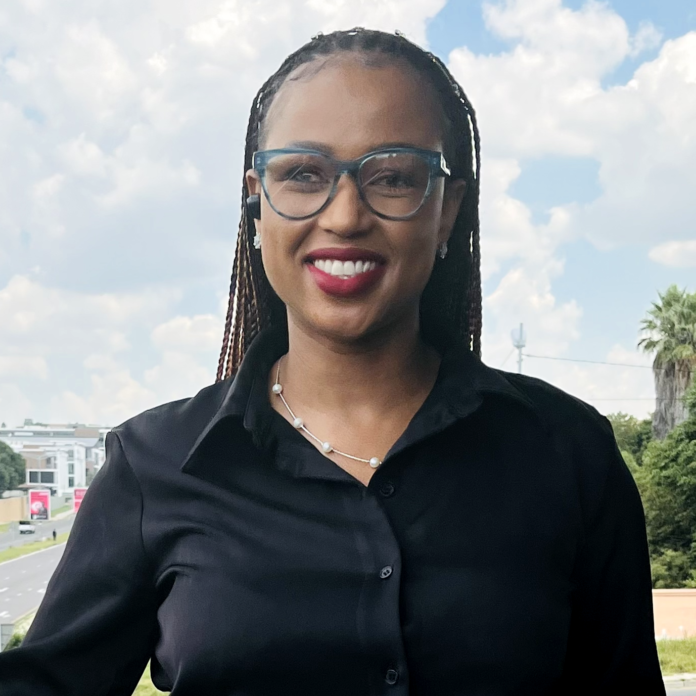
Tshidisegang Mosenyegi was promoted during her maternity leave at Infobip and became Head of Marketing for the Middle East and Africa region and comments on the importance of this moment in her life as part of the Infobip team.

“I didn’t expect the promotion only because I was on maternity leave, but I knew that my top leadership understood my efforts and results achieved in the company. My promotion is proof that Infobip recognizes its professionals through meritocracy and results, and I am happy to work in an organization that thinks this way,” she said.

According to Tena Šojer Keser, Global Developer Content Manager at Infobip, “Infobip has also supported women in the industry through its various community-building efforts. Their developer conference Shift, taking place in both Zadar and Miami this year, regularly features a high percentage of women speakers, well above the industry benchmark. On a regional level, following their acquisition of a technology news portal Netokracija, Infobip has joined efforts to level the playing field for women in the industry through Netokracija’s long-standing conference Ladies of New Business. The conference has been taking place 7 years in a row, focusing on challenges and possibilities for women in the various fields of the tech industry.” she said

Aurora Volarević, VP of Corporate Affairs and Board Member at Infobip, said; “At Infobip we are always just starting, but I’d say that one thing we certainly did not just start in promoting a well-balanced gender environment. A common sentiment might exist that tech companies have more men than women working and leading teams and projects, but at Infobip this is, happily, not the case. The representation of female employees within our company emphasizes the gender equity that has been established among departments and shows the power of our diversity. The diversity work at Infobip does not stop at gender but rather expands to the diversity of opinions, cultures, ages and more. Here we are heard and empowered no matter what. That’s the type of workplace that we aim to keep, and I’m eager to say that this is already a standard and successful path for our employees around the world. That’s more than enough reasons to celebrate International Women’s Day.”

Stories Continues after ad