Stanbic Bank
Stanbic Bank
27.6 C
Kampala
Stanbic Bank
Stanbic Bank
Home Blog Page 439

Man collapses dead during love making session

crime

Police registered an incident of sudden death of a 25-year-old businessman Ali Musitafa, of Ozu cell, Kenya ward in Arua District during a love making session.

Musitafa is said to have sustained a respiratory failure during a love making session, with girlfriend, Adania Ratio, at Avenue lodge in Arua City on January 25, 2023 at around 9pm.

The girl friend went and alerted the hotel management, who immediately alerted the police at Arua.

“The scene was visited and well documented, no trace of drugs, poison or other body influences was recovered at the scene. The body was thereafter, transferred to Arua Referral Hospital and examined. The cause of death was established to be due to respiratory failure,” Fred Enanga, the Police spokesperson said.

Death during consensual sex, can occur for a number of reasons, that include the physical strain of the activity or because of unusual extenuating circumstances.

Stories Continues after ad

“Use available resources to ensure justice”, Museveni implores judges

President Yoweri Museveni has requested Judges to use the available resources accorded to the Judiciary to ensure justice for all Ugandans.

The President said this while officiating at the opening of the 24th Annual Judges’ Conference held at Mestil Hotel, Kampala, on Monday. 

The four-day event is running under the theme: “The Judiciary Transformation Agenda: Enhanced Access to Justice.”

“What if the money is not enough, what do we do? Should we say that a country without money will have no justice? Is that what you are saying? Me, my answer is when we were in the bush, controlling the Luweero Triangle, we were having serious justice without money. I have proof for that because in Luweero I was the Chief Justice and the President. I was combining both. We had justice but no money. I have told these people that it is not acceptable to say that a country cannot defend itself if it has no money. We shall defend ourselves with or without money,” President Museveni said.

The President made the remarks in response to Chief Justice Alfonse Owiny-Dollo’s request to have the Judiciary’s budget enhanced so that they can be able to improve the arm’s infrastructural setup and recruit more judicial officers to deal with the judicial challenges they face.

“Your Excellency, when these reforms are funded and implemented, we hope to have a robust Judiciary that is accountable and capable of delivering quality and timely justice in accordance with our Vision, Mission and Strategic Plan,” Justice Alfonse Owiny – Dollo told Gen. Museveni.

However, according to President Museveni, currently, the Judiciary needs to plan well for the funds allocated to them to execute their mandate as Government comes up with other means of increasing their budget in the near future.

“In this particular case, I want to separate the strategy and the ideology from the actual decision because when I met the Chief Justice the other year, we set a target of Shs800billion for the Judiciary because by that time the Judiciary was getting around Shs190billion in a budget of Shs45Trillion. So, the Shs800billion budget target, in my view, is achievable if we plan better,” he assured.

“For us, we believe that we can have the army even without money; we can have justice even when we don’t have money or don’t have enough money but the way we stand now, we actually got some money. It is just a question of planning, not the ideology because if the ideology is ‘no money no justice’ then I don’t agree because some of the countries don’t have money at all.”

The President also urged the Judges to adopt and share with colleagues the National Resistance Movement Government’s core principles of Patriotism, Pan-Africanism, Socio-economic Transformation and Democracy if they want to be part and parcel of the system’s development agenda.

“So, these are the principles we pushed. Some of our colleagues used to say that we are wrong, but history has proved us correct. Because of those principles, when we came into power we were able to build a national political force, and a strong army and that is why Uganda has been peaceful all these years,” he added.

Chief Justice Alfonse Owiny-Dollo thanked President Museveni for understanding the critical role the Judiciary plays in the development of Uganda.

He explained that the conference is a forum where judicial officers of the Upper Bench of Uganda meet once a year to confer, share experience, audit their performance in the immediate previous year and to chat the way forward for the current calendar year.

“Your Excellency, we thank you for supporting the Judiciary agenda. We look forward to your continued support in enhancing our budget in order to enable us to achieve these milestones,” the Chief Justice said.

The Minister of Justice and Constitutional Affairs, Hon. Norbert Mao, informed the President that the Administration of the Judiciary Act which he supported throughout its process of enactment until he signed it into law is an important piece of legislation in governing the Judiciary.

“Your Excellency, once the Act is fully operationalised, I am very certain the Judiciary will be sustainably transformed into a new Judiciary that will see a tremendous reduction in and elimination of case backlog, timely delivery of justice, increased investment and economic growth as a result of investor confidence in the justice system of Uganda, taking judicial services nearer to the people, promoting peace, the rule of law and constitutionalism in the country,” Hon. Mao said in a statement read for him by the Attorney General, Hon. Kiryowa Kiwanuka.

The event was also attended by the Chief Justice of South Africa, His Lordship Hon. Justice Raymond M.M. Zondo, Hon. Justice Angelina Mensah-Homiah of the Court of Appeal of Ghana, Hon. Justice Afia Serwah Asare-Botwe of the High Court of Ghana, Ambassadors and Ugandan judicial officers among others.

Stories Continues after ad

Unlock the Secrets of Copykat Trading: How to Maximize Your Profits as a New Investor

For over ten years, Copy Trading – also known as copykat trading, social trading, auto trading, or mirror trading- has become increasingly popular and widely embraced. Thanks to social media and a faster internet connection, the spread of industry news updates, financial reports and market analysis are instantaneous.

Through the power of collective wisdom and sentiment analysis, copykat trading platforms have skyrocketed in popularity as investors develop profitable signals to enter the market with compelling trades that other traders can duplicate.

What is Copykat trading?

Copykat trading is a social trading platform that provides users with the opportunity to follow and replicate the trades of successful investors. Copykat offers an array of current data and analysis tools, as well as a vibrant community of experienced traders who can provide you with insight into the market.

Copykat is ideal for those who want to trade like a professional but don’t have the time or expertise to do it independently. New traders can quickly become informed and generate income by replicating trades from successful investors. Moreover, there’s practically no risk as they can keep track of their results and customize their financial commitment at any moment.

How does Copykat work?

Copykat trading is an automated service that allows users to copy the trades of successful investors in real-time. The platform connects with many brokers and traders, allowing users to follow their trades quickly and easily. This enables those using the Copykat platform to access market information and analysis tools like experienced traders.

With Copykat, users can conveniently monitor their results and shift the exposure of their trades whenever they want. Plus, it comes with essential risk management tools such as stop loss orders which help minimize losses in case of unexpected market shifts.

Copykat’s ranking system helps you to discover the most successful traders so you can have a guide to choose the one that suits you best.

Benefits of Copykat trading

Copykat trading is the ideal way to begin your journey into online trading. Here are some of the main benefits:

  • CopyKat makes it straightforward for you to start investing with confidence.
  • By engaging with experienced trading professionals, you can gain insights without the risk of any repercussions.
  • CopyKat trading provides the opportunity to capitalize on lucrative profits in a swift and uncomplicated fashion.
  • With no prior knowledge or expertise in the sector, you can begin with a minimal investment.

What type of social trader are you?

If you’re beginning your trading journey, the first step is to decide which type of social trader best suits your needs. In the realm of social trading, there are two main categories – copy and mirror trading.

Copytrading:

Copy-trading means that you are automatically copying another trader’s portfolio. This means that the primary trader makes all the decisions, and you copy what they do. With copy-trading, you don’t have to research or watch trends because the experienced trader you are following will make all the decisions for you.

Mirror trading:

In mirror trading, investors select a trading strategy (like what positions to open or close and how much money to spend) based on which currency pairs or indices they want to make money from. When the developer carries out the selected strategy, the same trade is automatically carried out in the investor’s account.

Final thoughts

Copykat trading offers an intuitive platform for those new to trading who want to gain experience quickly. By replicating the trades of experienced investors, you can learn from their successes without risking your own capital. With Copykat, there is no need to become a financial expert overnight or have expertise in the markets. Thanks to its comprehensive selection of educational resources and analysis tools, users can get to grips with online investing in record time. So why not give it a try?

Stories Continues after ad

Emmanuel Eratu named FDC flag-bearer for Serere County by-election

Emmanuel Eratu (in black suit) with FDC party president Patrick Amuriat

The Forum for Democratic Change (FDC) has unveiled Emmanuel Eratu as the party’s flagbearer for the Serere County by-election.

“We are pleased to announce Mr Emmanuel Eratu as our Parliamentary candidate for the Serere County by-election,” FDC said in a statement.

Unveiling the candidate during a media briefing, the party president Patrick Amuriat said their candidate is a seasoned politician and an outstanding citizen who has the capabilities of transformative legislation in the National Assembly.

“We call upon all the people of Serere to trust us. Our candidate is rated excellent and highly commendable!  We know that the Junta will unleash the money, arsenal and security services in this campaign. However, our confidence is in the people of Serere,” he added.

The Serere County MP seat fell vacant after the death of Patrick Okabe in a road accident on December 19, 2022.

Eratu contested as an independent candidate against the late MP Okabe in the 2021 elections. He came fourth with 1,035 votes compared to Okabe’s 17,826 votes.

According to the road map released by the Electoral Commission, the display of the voters’ register kicked off on January 23 and will end on February 1 in all the 138 polling stations in the county.

The Display of Parish Tribunal Recommendations for deletion from/or inclusion on the Register will be conducted for six (6) days, that is, from Wednesday 1st to Monday 6th February 2023 at the respective Parish/Ward Headquarters.

The nomination of candidates will be conducted on Thursday 9th and Friday 10th February, 2023 at the Office of the District Returning Officer, Serere.

Nominated candidates will conduct campaign meetings for nine (9) days, that is, from Monday 13th till Tuesday February 21, 2023.

Polling and tallying of results for by-election of Member of Parliament will be conducted on Thursday February 23, 2023.

The Alliance for National Transformation (ANT) leadership last week unveiled former Serere district woman member of parliament, Alice Alaso as the party’s flagbearer in the by-election.

Stories Continues after ad

TradeMark East Africa rebrands to TradeMark Africa

TradeMark East Africa has rebranded to TradeMark Africa (TMA) and simultaneously launched its West Africa operations.

Founded in 2010 in Kenya, marks TradeMark Africa expansion from its previous core operational area of East Africa and the Horn, to also support countries in West and Southern Africa.

TradeMark Africa now has a presence in fourteen countries in sub-Saharan Africa (SSA): Kenya, Uganda, Tanzania, Rwanda, Burundi, the Democratic Republic of Congo (DRC), South Sudan, Ethiopia, Somaliland, Djibouti, Malawi, Zambia, Mozambique, and Ghana.

TradeMark Africa has to date made cumulative investments of over $1.3 billion in East Africa and the Horn, to reduce the time and costs of trading across borders, and to improve export competitiveness of African businesses.

These have among other results slashed the time for traders to cross borders – by 70% on average; and for businesses to receive certification – often from many days to a number of hours. Its programmes have contributed to a 16.5% reduction in the total time it takes to transport a container on the Northern Corridor from Kenya’s Mombasa Port to Bujumbura, Burundi.

As part of the pivot to West Africa, TradeMark Africa will support the Secretariat of the African Continental Free Trade Area (AfCFTA), based in Accra, Ghana, to realise its vision of integrating the $3.4 trillion African market. TradeMark Africa will also work with regional economic communities (RECs) such as the Economic Community of West African States (ECOWAS), to boost regional economic integration and accelerate trade. Further, it will work with Member States to ensure Governments and businesses benefit practically from the opportunities presented by these shifts – in particular along the Lagos-Abidjan corridor.

The successful implementation of the AfCFTA is predicted to boost incomes in Africa by $450 billion by 2030.

At the same time, TradeMark Africa announced that its new strategy will build on and scale up on its core strengths, to focus on facilitating development of digital and green trade corridors, to position Africa as a partner of choice for global off takers; as well as promoting inclusive trade that drives down poverty levels and ensures that vulnerable groups are more integrated in trading systems.

TradeMark Africa’s Board Chairman, Amb. Erastus Mwencha said, “As a leading Aid-for-Trade (AfT) Program, a continental approach gives TMA an important opportunity to expand its impactful programming progressively, while supporting the aspirations of AfCFTA to unleash the immense impact that free trade in high value products, exists in Africa. Our key aim remains trade facilitation, just like we have always done in the last 12 years in the East and Horn of Africa region, where we were founded and have had great milestones in our programs.”

TradeMark Africa’s Chief Executive Officer, Mr. David Beer remarked, “We believe that combining a regional and national approach has always been part of our comparative advantage. With our expanded scope, we are excited now to harness the critical continental dimension to drive faster growth in trade volumes, and to support linkages between regions. TMA’s focus on reducing the barriers to trade and improving business competitiveness will also be a core element of tackling the trade challenges of the future, as we pivot towards creating green trade corridors and enhancing regional food security.”

Some of TradeMark Africa successes in the last 12 years include the construction and operationalization of 15 One Stop Border Posts (OSBPs) across East Africa, which have reduced the time taken to cross select borders by up to 89% in some cases. Moreover, TradeMark Africa has supported the implementation of 60 Single Window Information for Trade (SWIFT) Systems in multiple Government agencies, thus reducing the time and cost of acquiring trade documents, designed the Regional Electronic Cargo Tracking System (RECTS) on the Northern Corridor in East Africa, which ensures safety of cargo, and operationalized programs like Standards, Sanitary and Phytosanitary (SPS), and reduction of Non-Tariff Barrier (NTBs).

It has also supported over 200,000 women cross-border traders and small and medium enterprises.

Stories Continues after ad

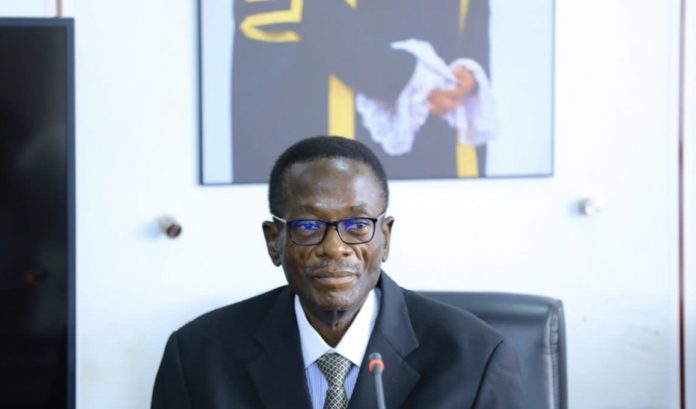
Justice Stephen Musota appointed new Chief Inspector of Courts

Justice Stephen Musota

The Chief Justice Alfonse Owiny-Dollo has appointed Justice Stephen Musota as the new Chief Inspector of Courts.

CJ Owiny-Dollo confirmed the development during the 24th Annual Judges Conference at the Mestil Hotel and Residences in Kampala today. President Museveni officially opened the four-day Conference that will run until February 2.

“I have just appointed a new Chief Inspector of Courts, Justice Stephen Musota following the unfortunate demise of Justice Rubby Opio Aweri,” CJ Owiny-Dollo said.

Justice Rubby Opio Aweri died on December 7, 2022 at Mulago National Referral Hospital in Kampala.

Justice Musota was first appointed as a Magistrate Grade One in 1984, rising to the level of Senior Principal Magistrate Grade One in 1992. He went on to work as Chief Magistrate, then as Deputy Registrar and then Registrar of the High Court.

He was appointed as a judge of the High Court of Uganda in 2004. He served as the head of the civil division of the high court. On February 8, 2018 he was then appointed to the Court of Appeal.

In November 2022, he was appointed by the President to the Supreme Court bench together with Justice Christopher Madrama and Justice Elizabeth Musoke.

The Chief Inspector of Courts position was created by the Chief Justice in his efforts to strengthen the Inspectorate wing of the Judiciary by empowering it to inspect, receive complainants and investigate cases of judicial officers and judiciary staff of all cadres.

Previously, the Inspector of Courts was being run and headed by a high court registrar, a position which made it difficult for the officer bearer to inspect and take decisive action against errant senior judicial officers in appellate courts like Court of Appeal and Supreme Court.

The Chief Inspector of Courts will, among other strategic reforms, lend support towards the Judiciary’s anti-corruption initiatives through the implementation of the Judiciary Anti-Corruption Plan of Action and strengthen accountability.

Stories Continues after ad

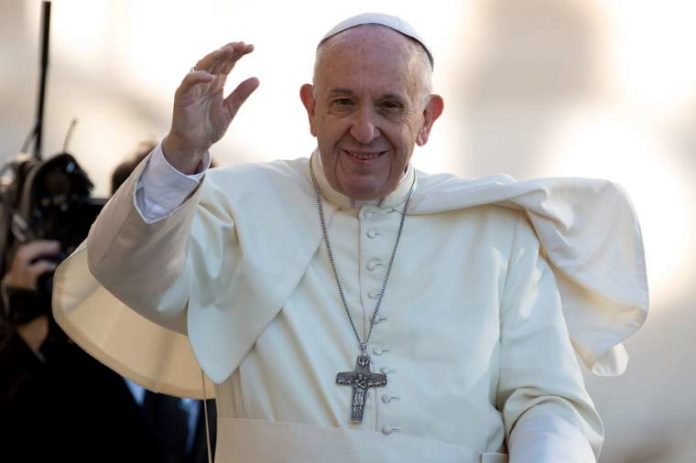
Pope Francis urges prayers for ‘pilgrimage of peace’ to South Sudan and DRC

Pope Francis

Pope Francis sets off on Tuesday as a “pilgrim of peace” to the Democratic Republic of Congo and South Sudan on 31 January – 5 February.

Ahead of his 40th Apostolic Journey abroad, the Pope read out a message to the people of the two African nations during his Sunday Angelus address.

He thanked the civil authorities and Bishops of both countries for their invitations and the preparations they have made for his visit.

The Pope also offered a heartfelt greeting to “those beloved peoples who await me.” 

“These lands have suffered greatly from lengthy conflicts,” he said.

Pope Francis noted that the DRC “suffers from armed clashes and exploitation,” especially in the east of the country.

South Sudan, he said, has been “wracked by years of war” and “longs for an end to the constant violence that forces many people to be displaced and to live in conditions of great hardship.”

Ecumenical pilgrimage of peace

In his message, the Pope recalled that he will arrive in South Sudan accompanied by Anglican Archbishop Justin Welby and Rev Dr Iain Greenshields.

“In South Sudan, I will arrive together with the Archbishop of Canterbury and the Moderator of the General Assembly of the Church of Scotland. Together, as brothers, we will make an ecumenical pilgrimage of peace.”

Pope Francis wrapped up his message with an appeal for everyone to accompany his Apostolic Journey with their prayers.

Brief overview of visit

The first leg of this papal visit will take the Pope to the Democratic Republic of Congo from 31 January to 3 February.

He will remain in the Congolese capital, Kinshasa, where he will meet with civil authorities, victims of conflict in the east, and the Church’s local ministers.

Then, on Friday, he travels to South Sudan until 5 February for a visit which seeks to bind up the wounds of the world’s youngest nation.

Pope Francis will stay in the capital, Juba, holding meetings with various Church and civil groups, including several internally displaced people (IDPs).

He will return to Rome on Sunday following a public Mass for the faithful of South Sudan.

Stories Continues after ad

UPDF applauded for serving beyond its mandate in Somalia

The United States Special Representative to the United Nations and in the United Nations Security Council respectively; Ambassador Linda Thomas- Greenfield has applauded Uganda Peoples Defense Forces’ (UPDF) efforts in Somalia.

Ambassador Thomas- Greenfield extended USA’s appreciation to Uganda and her Sector 1 UPDF-ATMIS Contingent in Somalia for supporting Somali Security Forces (SSF) beyond its own mandate and for evacuating casualties and the dead from the battlefield and especially in the hard -to-reach areas

The meeting was also attended by Ambassador El-Amine Souef, Special Representative of the Chairperson of the African Union Commission to Somalia, Ambassador Thomas Kipkosgei Chepkuto of the Republic of Kenya to Somalia, Brig, Gen. Peter Omola; Ag. ATMIS Force Commander and UPDF Contingent Commander in Somalia and Mr. Robert Mugimba; Charge D’ Affaires, at the Uganda High Commission in Somalia.

Other issues discussed were; Somali Security Forces/Somali National Army (SSF/SNA) Force generation, Concept of Operations (CONOPS) for the ATMIS drawdown Plan, Support to SSF/SNA, Financing of the ATMIS and its operations among others.

On her part, Uganda commended the United States for being a reliable partner in the fight against terrorism and for supporting the ATMIS Mission and in particular Uganda Peoples Defense force in Sector 1 that secures the whole of Mogadishu and Banadir region in Somalia.

Uganda further asserted her commitment to implementing the drawdown plan of ATMIS. Uganda continues to support the Federal Government of Somalia (FGS) including protection of key Government installations, evacuation of casualties, and the dead from the battlefields in hard-to-reach areas as well as medical support to the wounded. UPDF troops also escort the humanitarian assistance to the Internally Displaced Camps.

The meeting underscored the importance of Coordination of Actors, gradual implementation of the CONOPS, strategic drawdown process that would take into consideration the interests and safety of FGS and TCCs as well as partners. The meeting affirmed strengthened cooperation.

Ambassador Thomas-Greenfield also met with UN humanitarian groups and NGOs and reviewed U.S. and international support in response to the continued threat of famine in Somalia. They also discussed steps to improve the safety and security of local and international NGO communities, who are risking their lives to deliver therapeutic feeding to remote communities in dangerous and difficult conditions due to al-Shabaab.

Stories Continues after ad

HR practitioners urged to invest in upskilling people

Mumba Kalifungwa - Absa Bank Uganda's Managing Director (center) poses for a photo with HR practitioners during the forum

Human Resource practitioners in Uganda have been urged to constantly invest in upskilling themselves and their workforces to prepare their organisations for the future of work.

While giving the keynote address during the annual ‘Heads of HR Beginning of Year Cocktail’ held at the Kampala Serena Hotel last Friday, Mumba Kalifungwa, Absa Bank Uganda’s Managing Director said, “If you are not deliberate about investing in new skills, anticipating the future and responding to the constantly changing challenges in the overall business environment, you will be left behind.”

He added that the human resource function can be very instrumental in driving the organisation’s strategy by planning for and training employees of the future because of technological advancements and an environment defined by volatility, uncertainty, complexity and ambiguity.

According to PricewaterhouseCoopers 23rd Annual Global CEO Survey, there is an increased demand for ‘new collar’ jobs that require a combination of digital, technical and soft skills that are going unfilled in today’s tight global labor market. The report adds that the supply of people possessing STEM (science, technology, engineering, math) skills and uniquely human skills like creativity, empathy and collaboration are increasingly prized in today’s job market.

Held under the theme: “Enabling Business to achieve Strategic Objectives as the Head of HR from a CEO’s Perspective”, the forum was organised by Motivation Hub – a human resource and capacity-building consultancy and training firm – bringing together the heads of the human resources divisions of leading organizations in the country to inspire them to become better professionals within their organizations.

Pepe Minambo, the Managing Partner of Motivation Hub Ltd. said that the two key pain points of any organisation are accountability and execution and that HR can go beyond being just an enabling function, but a support function taking the lead in matters relating to strategy execution.

Stories Continues after ad

Don’t drag us into NSSF controversies – Tondeka bus boss

Tondeka Metro Company, a bus operating company, has dismissed as “rubbish” the allegations that the corporation could have illegally accessed the National Social Security Fund money to buy the buses.

Fred Senoga, the Director of Tondeka Metro Company said they should not be dragged into the ongoing personal fights at the NSSF.

“That’s comical and a waste of time,” he said. The NSSF also issued a statement on Thursday, dismissing the allegations by a Whistleblower calling for investigation against the Fund’s chairman Peter Kimbowa who previously worked as the Executive Chairman of Tondeka.

 “We would like to clarify that this is not true. The Fund has not funded any activities of the said project as alleged,” NSSF stated. 

According to sources at the Ministry of Gender Labour and Social Development, the whistleblower dossier to the Inspector General of Government is intended to blackmail Mr Kimbowa who refused to “implement illegal directives” by the Minister Betty Amongi.

“The Chairman has stuck to his guns and refused to side with minister Amongi and Sam Lyomoki who have been trying to get Richard Byarugaba[ the NSSF Managing Director] out,” the source said.

Minister Amongi has refused to renew Byarugaba’s contract over what sources say is a personal vendetta.  

Sources say the protagonist camp led by Amongi “thinks has been a barrier to the move to kick Byarugaba”.

Stories Continues after ad