Stanbic Bank
Stanbic Bank
24.7 C
Kampala
Stanbic Bank
Stanbic Bank
Home Blog Page 451

Uganda, Turkish company sign MoU to construct country’s Standard Gauge Railway

Standard Gauge Railway

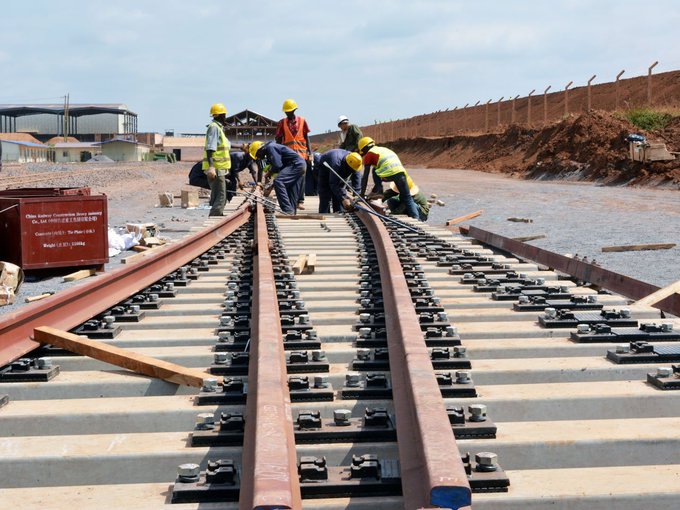
The Government of Uganda has signed a Memorandum of Understanding (MoU) with a Turkish company to construct the country’s standard gauge railway (SGR) project, effectively terminating the earlier contract signed with a Chinese firm.

Uganda had signed a contract with China Harbour Engineering Company (CHEC) to build the 273km SGR line from Malaba to Kampala at a cost of $2.2 billion. But the Chinese dithered on the project after the China Exim Bank declined to fund the project.

The SGR Project Coordinator Eng. Perez Wamburu said that Yapi Merkezi is expected to submit a response to the government’s request for a construction proposal within the next few weeks, paving the way for procurement.

Wamburu also says Yapi Merkezi is expected to bring new financiers for the project such as the UK Export Fund (UKEF).

President Museveni in 2022 directed the government to find new investors for SGR after the Chinese developed cold feet. The Chinese Exim Bank was to fund 85 percent of the project while the Uganda government was to meet 15 percent of the cost.

The introduction of the SGR passenger train in 2017 and a freight one the following year was part of a wider regional network connecting Kenya, Uganda, Rwanda and South Sudan. Each of the countries was expected to develop the part of the railway line within its borders and Kenya went ahead of the pack.

But Uganda’s section of standard railway (SGR) launched 10 years back by EAC heads of state has not moved an inch, sparking many questions from civil society.

Last year, Wamburu, the SGR project coordinator, said the government had so far compensated 4,050 out of 4,827 project affected people in Tororo, Namutumba, Iganga and Mayuge districts.

This, he said, gives the government 120 kilometres of land from Tororo through Mayuge out of 230 kilometres of the entire rail corridor.

The SGR, which is designed to provide a global competitive transport network for both freight and passengers, will specifically reduce transit time from Kampala to Mombasa from between four to six days to just a day.

The project is expected to create 150,000 jobs directly and indirectly during construction and will boost export and tourism.

Tanzania’s 1,637km SGR line is being built in phases by contractors from Turkey and China. The first phase from Dar es Salaam to Morogoro (300km) is expected to start operating next year following successful test runs.

Stories Continues after ad

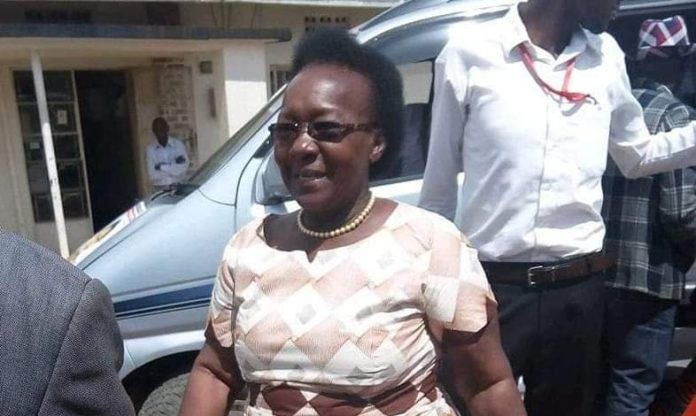
Former minister Mbaguta to be accorded official burial

Priscah Sezi Mbaguta

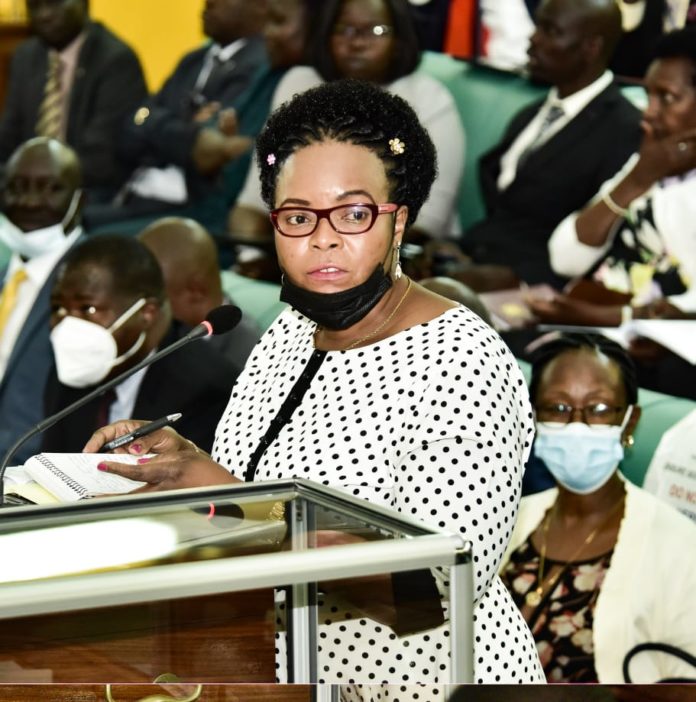
President Yoweri Museveni has directed that former Minister of State for Public Service, Priscah Sezi Mbaguta to be accorded an official burial.

This was confirmed by the Minister for Presidency, Milly Babalanda who said burial arrangements are underway.

“H.E the President has directed that fallen former Minister of State for Public Service, Hon. Sezi Mbaguta, is accorded an official funeral. All arrangements are, accordingly, underway,” she said.

Mbaguta died on Monday January 9, 2023 in her sleep at her home in Mukono at the age of 76.

She had a long and extensive public service career, starting in 1975, when she worked as the senior personnel officer, in the Public Service Commission, a position she held until 1980.

Between 1980 and 1983, she served as the principal personnel officer in the Public Service Commission, and as the chief personnel officer in the Ministry of Public Services, from 1983 until 1990.

From 1996 until 1999, she served as the acting director, human resource management, in the Ministry of Public Service. She concurrently served as the director of human resource management in the same ministry before becoming director for public sector reform.

She was appointed Minister of State for Public Service in June 2006 a portfolio she held for 10 years. In the cabinet reshuffle of February 16, 2009, and that of May 27, 2011, she retained her cabinet portfolio.

She then tried her hand at active politics and contested to be a woman MP for Rukungiri District in 2011.

Stories Continues after ad

NEMA embarks on restoration of degraded Kyangwali Mixed Land Use Project area

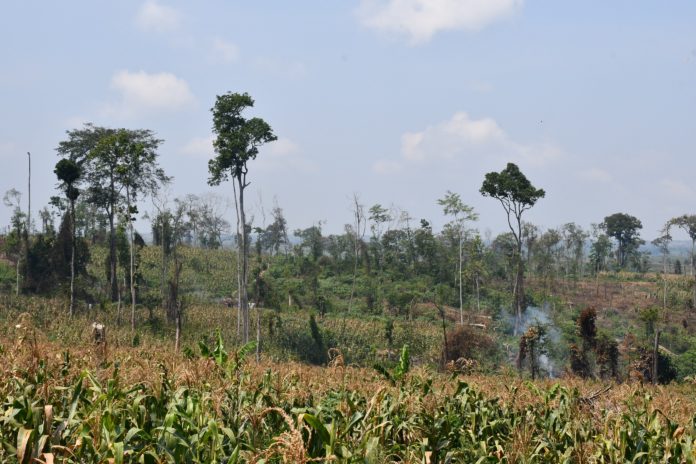
The National Environment Management Authority (NEMA) has commenced an operation aimed at stopping further encroachment and restoration of the degraded areas of Kyangwali Mixed Land Use Project in Kikuube District.

In 2020, NEMA issued Hoima Sugar Ltd an Environmental and Social Impact Assessment (ESIA) certificate to implement the project with specific conditions and project components as follows: Sugarcane Plantation, Urban Centre, Eco-tourism Centre, Cultural Site, Natural reserved forest and nature walk-ways.

Following approval of the project there was an influx of people estimated at about 40,000 both within the project area and the adjacent Bugoma Central Forest, carrying out illegal logging, charcoal burning and cultivation. This prompted intervention by the area local government and initially about 20,000 people were evicted. However, encroachment continued prompting the district, through the Resident District Commissioner (RDC), to seek NEMAs support to curb the degradation.

In September 2022, NEMA issued a Restoration Order to the developer after a review of the Environmental and Social Audit report for the project and subsequent inspections discovered non-compliance to ESIA conditions, most significantly deforestation in places that were meant to remain protected such as the eco-tourism site, cultural site and the buffer zones. The Restoration Order also cancelled the earlier approval for development of an urban centre within the ecosystem and instructed the developer to take steps to safeguard and prevent further encroachment.

The developer is finalizing the Restoration Plan for the degraded areas as directed by NEMA.

To stop further community encroachment of the ecosystem, NEMA working with the district, National Forestry Authority and the Ministry of Water and Environment is undertaking an enforcement operation in the area to among others evict encroachers to pave way for restoration of the ecosystem.

Stories Continues after ad

EACOP, ISU sign MoU to benefit University students in surveyors programme

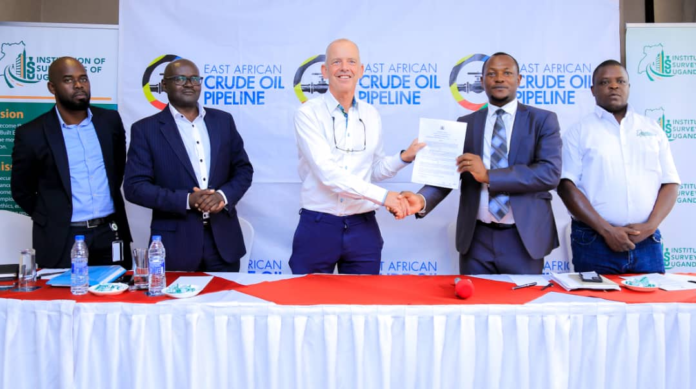
Students from Makerere, Ndejje and Kyambogo University are set to benefit from skills and knowledge development partnership between The East African Crude Oil Pipeline Company (EACOP) Ltd and the Institute of Surveyors of Uganda (ISU).

The initiative will provide a three-months training and internship placement for selected participating university students twice a year during the breaks between semesters.

EACOP and the Institute of Surveyors of Uganda (ISU) on Tuesday signed a Memorandum of Understanding to enhance competencies through training of EACOP staff and offering internship programs for university students.

Speaking during the MOU signing ceremony, EACOP Managing Director Martin Tiffen said: “This MoU is just one illustration of our national content strategy in practice that is aimed at optimising the use of Ugandan expertise, goods, and services and building capacities. This initiative will enhance the skills and knowledge of both our staff and young talented Ugandans interested in participating in the oil and gas sector.”

The Institute of surveyors of Uganda (ISU) has over 2200 members that bring together land surveying, quantity, surveying, valuation surveying, mining, and hydrological surveying professionals whose mandate is to promote professional surveying practices that can enhance the quality of services under the various surveying disciplines in Uganda.

Dr. Nathan Kibwami, President Institute of Surveyors echoed the significance of the commitment of EACOP to the partnership with the Institute of Surveyors of Uganda to facilitate the delivery of quality training to future surveyors that will work on this incredible project.

“I thank EACOP for this commendable skilling initiative and urge all University students who meet the criteria for this program and are interested in being part of the transformation of Uganda’s oil and gas industry to embrace it,” he told the press.

Stories Continues after ad

Scrutinising of evidence on the censure motion against Namuganza kicks off

Minister of State for Housing, Persis Namuganza

The scrutinising and identifying prima facie evidence on the censure motion against Persis Namuganza has kicked off today at Parliament, according to Mwine Mpaka, the committee chairman.

Earlier this month, Deputy Speaker Thomas Tayebwa named a seven-member select committee chaired by Mwine Mpaka. Other members of the committee include Wilfred Niwagaba (Ndorwa East), Mpindi Bumali (PWD), Charles Bakkabulindi (Workers), Nancy Acora (Lamwo District), Betty Naluyima (Wakiso District) and Godfrey Ekanya (Tororo North).

The Select Committee is expected to scrutinise all the evidence tabled and report back to the House within 15 days.

The censure motion against Namuganza follows after the latter’s handling of the controversial Nakawa-Naguru land giveaway.

The ad hoc committee in their report recommended that Namuganza steps aside for falsifying a presidential directive that saw the Uganda Land Commission allocate the said land to a section of investors.

Parliament, Namuganza is reported to have said, is powerless and unable to censure her in relation to her involvement in the Naguru-Nakawa land allocations.

The MPs launched the censure motion following Namuganza’s refusal to apologise to Speaker Anita Among and the MPs for her handling of the matter.

A censure does not necessarily mean the removal of a minister from Cabinet but is a badge of infamy that is almost always followed by an implicated minister’s resignation.

Parliament has in the past censured a couple of ministers.

Stories Continues after ad

NMS seeks Shs298 billion to counter decline in donor funding

NMS

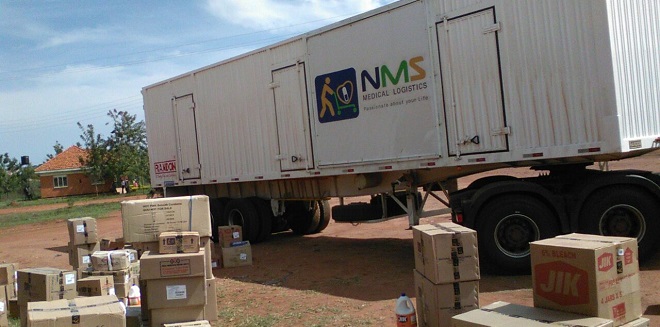
The National Medical Stores (NMS) is seeking Shs 298 billion to offset the projected funding gaps arising from the declining donor funding.

NMS General Manager, Moses Kamabare said that since donor agencies such as PEPFAR that have for long provided essential medicines such as anti-retroviral drugs (ARVs), sexual reproductive products and TB drugs have threatened to withdraw funding, government must now take full charge.

“Donors have announced that they will soon scale down on funding; we therefore have a funding gap, for ARVs next year which may reduce by Shs31 billion,” said Kamabare.

Kamabare was appearing before the Health Committee on Tuesday, 10 January 2023 where he presented NMS’ Budget Framework Paper for the financial year 2022/2023 totaling to Shs513 billion.

He said that the anticipated reduction in external funding will affect the management of malaria.
He requested for Shs35 billion to bridge the funding gaps for anti-malarial drugs.

Other NMS’s underfunded priorities where they seek Parliament intervention include immunization supplies, laboratory commodities and emergency supplies.

Legislators observed poor projections in the NMS budget and asked Kamabale to consider a revision.

Jinja South West Division Member of Parliament, Timothy Batuwa said the Shs40 billion total budget for malaria is too little compared to the population and the disease burden.

Bulambuli District Woman MP, Irene Muloni said the budget is blind about access of medicines and supplies in island communities which she said often suffers stock outs.

“Some of the islands do not have some of the invasive drugs; I wonder how you structure distribution in such areas with transport challenges,” Muloni said.

She asked NMS to address the ‘puzzle’ of high quantities of expired drugs amidst scarcity which she said has prevailed.
“Is it a procurement problem? Do we buy medicines that are about to expire?” asked Muloni.

Kole County North MP Samuel Opio asked for the progress of Covid-19 vaccines and the plan to install an oxygen plant at NMS.

Kamabare said that poor mobilization for Covid-19 vaccination had affected utilization and that over 20 million doses were soon expiring.

He said works were under way to prepare for installation of the oxygen plant at NMS by end of 2023.

Stories Continues after ad

UNEB set to release PLE results next week

UNEB Executive Secretary Dan Odong

The Uganda National Examinations Board (UNEB) will release the Primary Leaving Examination (PLE) results next week.

The Executive Secretary Mr Dan Odong told the Parliamentary Education Committee on Tuesday that marking of PLE and the Uganda Certificate of Education (UCE) exams ended before Christmas.

“The PLE exams were marked at 13 centres by 5,544 examiners. Marking of UCE examinations has also ended,” Mr Odongo said.

“We are finalizing a few things at the headquarters in Ntinda, Kampala, before we start releasing them consecutively,” he told Members of Parliament.

A total of 832,839 candidates sat for Primary Leaving Examinations countrywide.

Mr Odongo told Parliamentary reporters that the internal examinations’ security committee was sitting to consider the results for candidates suspected of involvement in malpractices.

He said the committee will then determine which results to withhold before exams are released to the public.

“The meeting starts today and will take three to four days. When that meeting is finalised, we can remove those from our results and we shall be ready to release them,” Mr Odongo said.

Mr Odongo also observed that after the security meeting, the board will seek the minister’s appointment before exams are released.

“If we secure her appointment, then hopefully the exams will be out at the end of next week,” Mr Odongo said.

UNEB is supposed to brief the Minister of Education about the performance of learners two days before the results are released to the public.

After the results are released, the selection exercise will then commence. The Senior One selection exercise is usually conducted in Lugogo where schools select candidates for their respective schools depending on the set cut-off points.

Stories Continues after ad

PICTORIAL: Businessman Ham insists Nakivubo Stadium is on course

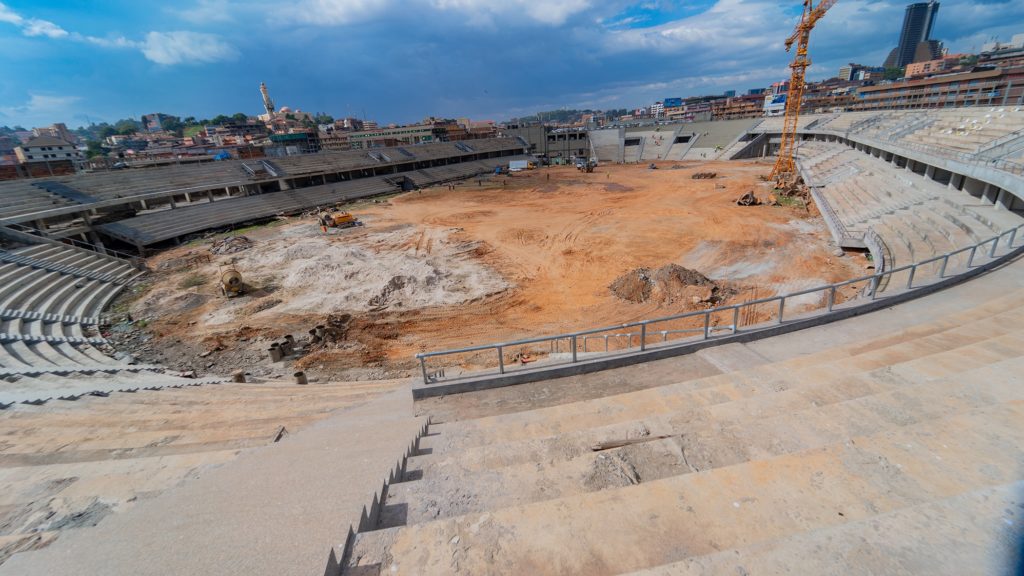
Businessman Hamis Kiggundu has insisted that redevelopment of Nakivubo Stadium is on course.

“Completion of Nakivubo Stadium with God’s blessings as a constant factor will stand as a clear illustration to all my fellow countrymen and women that yes we can develop Uganda locally collectively and proudly as Ugandans,” he tweeted while sharing photos of the works.

Ham took over the sports facility for redevelopment in 2017. Initially, the stadium was projected to end in 2019 but the construction of the facility had stalled due to Covid-19 pandemic, politics, court battles and compensation of vendors.

The Construction works are spear-headed by Roko Construction Company. The state of the art Stadium will have a modern athletic track and other indoor games plus multi-level parking of about 10,000 cars among others.

Once completed the stadium is expected to host over 35,000 people. The stadium will also host other sports such as Basketball, Netball, Volleyball and bodybuilding.

Stories Continues after ad

Emirates invests in high-speed inflight broadband onboard aircraft

Emirates Boeing 777-330ER

Emirates will offer passengers yet another opportunity to ‘fly better’, with new high-speed, inflight broadband powered by Inmarsat’s GX Aviation, onboard 50 new Airbus A350 aircraft – scheduled to enter service in 2024. The new agreement will significantly improve the passenger experience with enhanced connectivity and greater global coverage, even on flights over the Arctic.

The Airbus A350s will be the first Emirates aircraft to take advantage of Inmarsat’s Global Xpress (GX) satellite network, which powers the world’s first and only globally available broadband network, ensuring passengers can enjoy uninterrupted global connectivity, no matter their destination, including the North Pole. The advanced high-speed capabilities of the broadband will enable Emirates passengers to stay connected with family and friends, browse the internet, and enjoy social media, all from the comfort of their seat.  

The GX network that will power the Emirates inflight broadband currently consists of five Ka-band satellites and will be further enhanced with the addition of seven more satellite payloads as part of Inmarsat’s fully funded technology roadmap. This includes two Inmarsat-6s, the most sophisticated commercial communications satellites ever built, both of which are scheduled to enter service in 2023. These will be followed by three additional satellites in geostationary orbit – adding speed, capacity, and resilience – and two in highly elliptical orbit, to enable the world’s only commercial mobile broadband service for aircraft flying in higher elevations and across the Arctic, such as routes between the Middle East and North America.

Adel al Redha, Emirates’ Chief Operating Officer, said “Delivering a world-class onboard experience has always been paramount to Emirates and we understand the importance of being connected during flights. Over the years, we have worked closely with Inmarsat and our supplier partners to ensure all our aircraft offer Wi-Fi connectivity. We look forward to finding ways and options to improve the connectivity on-board our aircraft by utilising GX Aviation for our Airbus A350 fleet. The advanced capabilities being introduced by the forthcoming satellites are particularly important, as this will boost capacity across our global network, including aircraft flying over the Arctic for routes between the Middle East and America.” 

William Huot-Marchand, Inmarsat Aviation’s Senior Vice President of Inflight Connectivity, said “We are delighted that Emirates has joined the GX Aviation family. This will be the first fleet with Emirates to be equipped with our highly advanced GX Aviation solution. GX Aviation is well positioned to meet growing passenger expectations around a digital onboard experience, offering high-speed connectivity with uninterrupted global coverage across all flight routes, even over the Arctic. We look forward to working closely with Emirates on the rollout and other exciting innovations that build on its excellent history of providing a best-in-class passenger experience.”

Emirates have also introduced connectivity enhancements for Skywards members – including complimentary internet access throughout the flight for all Skywards Gold or Silver members travelling in Business Class, in addition to First Class, and Platinum members travelling in any cabin class.

Having recently won a slew of global travel and aviation awards including; ‘Best Airline in the World’ at the ULTRAs 2022, and a ‘World Class Award’, ‘5 Star Global Official Airline Rating’, and ‘Passenger Choice Award for Best Global Entertainment’ at APEX 2023, and ‘World’s Best Economy Class’, ‘World’s Best Economy Class Catering’ and for the 17th consecutive time, ‘World’s Best Inflight Entertainment’ at Skytrax 2022 – Emirates continues to deliver on its brand promise to ‘fly better’.

The plan for high-speed inflight broadband onboard A350’s is the latest addition to Emirates multi-billion-dollar investment into its onboard product and passenger experience; which also includes the largest known fleet retrofit project of 120 aircraft, extensive investment into menu development and food and beverage experiences, the planned introduction of next generation inflight entertainment systems on incoming aircraft, and a hospitality training programme designed by the world’s most renowned hotel school – Ecole hôtelière de Lausanne.

Stories Continues after ad

Uganda declares end of Ebola disease outbreak

Health workers

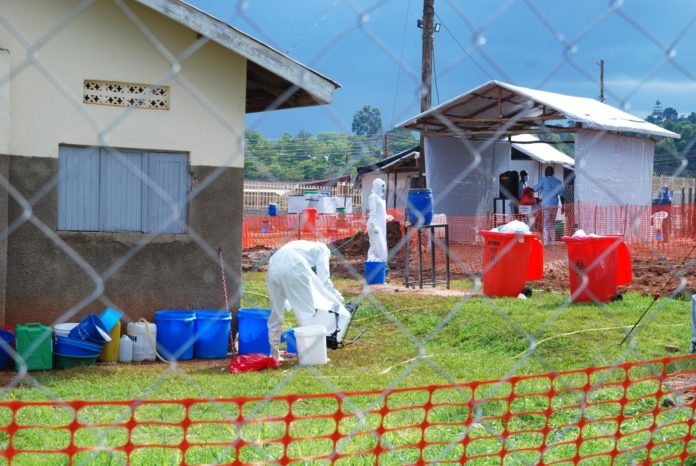
Uganda has declared the end of the Ebola disease outbreak caused by Sudan ebolavirus, less than four months after the first case was confirmed in the country’s central Mubende district on 20 September 2022.

“Uganda put a swift end to the Ebola outbreak by ramping up key control measures such as surveillance, contact tracing and infection, prevention and control. While we expanded our efforts to put a strong response in place across the nine affected districts, the magic bullet has been our communities who understood the importance of doing what was needed to end the outbreak, and took action,” said Dr Jane Ruth Aceng Ocero, Uganda’s Minister of Health.

It was the country’s first Sudan ebolavirus outbreak in a decade and its fifth overall for this kind of Ebola. In total there were 164 cases (142 confirmed and 22 probable), 55 confirmed deaths and 87 recovered patients. More than 4000 people who came in contact with confirmed cases were followed up and their health monitored for 21 days. Overall, the case-fatality ratio was 47%. The last patient was released from care on 30 November when the 42-day countdown to the end of the outbreak began.

Health authorities showed strong political commitment and implemented accelerated public health actions. People in the hot-spot communities of Mubende and Kasanda experienced restricted movements. 

“I congratulate Uganda for its robust and comprehensive response which has resulted in today’s victory against Ebola. Uganda has shown that Ebola can be defeated when the whole system works together, from having an alert system in place, to finding and caring for people affected and their contacts, to gaining the full participation of affected communities in the response,” said Dr Tedros Adhanom Ghebreyesus, Director-General of the World Health Organization (WHO). “Lessons learned and the systems put in place for this outbreak will protect Ugandans and others in the years ahead.”

This Ebola outbreak was caused by the Sudan ebolavirus, one of six species of the Ebola virus against which no therapeutics and vaccines have been approved yet. However, Uganda’s long experience in responding to epidemics allowed the country to rapidly strengthen critical areas of the response and overcome the lack of these key tools.

“With no vaccines and therapeutics, this was one of the most challenging Ebola outbreaks in the past five years, but Uganda stayed the course and continuously fine-tuned its response. Two months ago, it looked as if Ebola would cast a dark shadow over the country well into 2023, as the outbreak reached major cities such as Kampala and Jinja, but this win starts off the year on a note of great hope for Africa,” said Dr Matshidiso Moeti, WHO Regional Director for Africa. 

Soon after Uganda declared the Sudan ebolavirus outbreak, WHO worked with a large range of partners, including vaccines developers, researchers, donors and the Ugandan health authorities to identify candidate therapeutics and vaccines for inclusion in trials. Three candidate vaccines were identified and over 5000 doses of these arrived in the country with the first batch on 8 December and the last two on 17 December. The speed of this collaboration marks a milestone in the global capacity to respond to rapidly evolving outbreaks and prevent them from becoming larger.

“While these candidate vaccines were not used during this outbreak, they remain the contribution of Uganda and partners to the fight against Ebola. The next time the Sudan ebolavirus strikes we can reignite the robust cooperation between developers, donors and health authorities and dispatch the candidate vaccines,” said Dr Yonas Tegegn Woldemariam, WHO Representative in Uganda.  

WHO and partners supported Ugandan health authorities from the outset of the outbreak, deploying experts, providing training in contact tracing, testing and patient care, as well as building isolation and treatment centres and providing laboratory testing kits. Due to the joint efforts, the processing time for Ebola samples dropped from a few days to six hours. WHO helped to protect frontline health workers by organizing a steady supply of personal protective equipment. The Organization provided nearly US$ 6.5 million to Uganda’s response and an additional US$ 3 million to support readiness in six neighbouring countries. 

Although the outbreak in Uganda has been declared over, health authorities are maintaining surveillance and are ready to respond quickly to any flare-ups. A follow-up programme has been put in place to support survivors. Neighbouring countries remain on alert and are encouraged to continue strengthening their capacities to detect and respond to infectious disease outbreaks.

Stories Continues after ad