Stanbic Bank
Stanbic Bank
21.6 C
Kampala
Stanbic Bank
Stanbic Bank
Home Blog Page 450

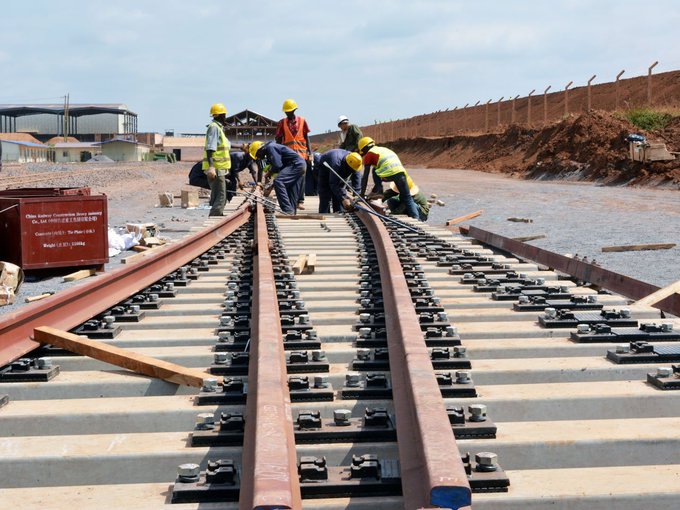
Inadequate funds slowing Standard Gauge Railway Project

Standard Gauge Railway

The Ministry of Works and Transport has attributed slow progress in the implementation of the Standard Gauge Railway (SGR) project to inadequate funds.

This, according to the ministry, has affected pre-construction activities such as land acquisition and compensation of Project-Affected-Persons (PAPs) at the first phase of the Malaba-Kampala SGR project.

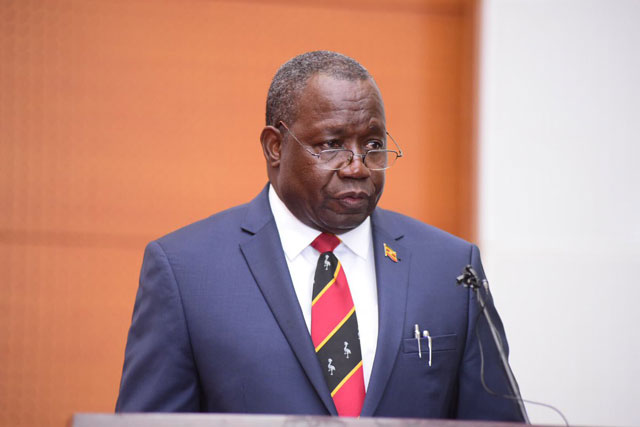
This was revealed during a meeting between Works Ministry officials led by the Minister of Works and Transport, Gen. Katumba Wamala and the Committee on Physical Infrastructure chaired by Robert Kasolo (over the SGR project on Thursday, 09 January 2023.

Eng Alfred Obong, the Construction Manager, SGR told the committee that whereas the acquisition of right of way for the SGR project is ongoing, the process is “very slow” due to small budgets.

“The plan right from 2016 has been to use at least 60 per cent of the releases to the project on compensation of PAPs. However, this has not been possible because of the reduction in the approved budgets and the subsequent releases to the project over the financial years,” Obong said.

The entire right of way from Tororo-Kampala was demarcated and gazetted in 2015 at a total land compensation cost estimate of Shs584.90 billion to be paid to 10,676 PAPs.

However, for the last eight financial years, only Shs188.38 billion has been released for the SGR project out of the approved total budgets of Shs443.49 billion of which Shs99.34 billion was spent to pay PAPs.

According to Obong, acquisition of right of way remains a big obstacle in areas like Jinja but he is optimistic that it will be solved before the end of this financial year due to the ongoing reassessments and reevaluations.

Draft reports show that in Jinja alone, the ministry requires Shs115 billion to compensate 1,600 PAPs for the 5.64km main station and 10.05km corridor for the project.

The ministry is drumming up support from Parliament to appropriate adequate funds to ensure timely compensation of PAPs to pave way for the construction that is expected to start next financial year.

“Even if the construction will take time, we must have the right of way from at least Jinja up to Tororo so that the contractor is engaged as we finalise the last leg from Jinja to Kampala in terms of compensation,” Katumba Wamala said.

Mawokota South Member of Parliament, Yusuf Nsibambi urged the minister to ensure timelines are set and met to compensate PAPS.

“We need to fix timelines on when these projects will be completed. You are giving us a lot of hope but we are not seeing the future…but indeed we have to join hands to ensure that funds are available,” Nsibambi said.

In 2008, the Heads of State of Uganda, Kenya, Rwanda and South Sudan agreed to interconnect their respective countries with an SGR network under the Northern Corridor Integration Projects (NCIP) framework and this culminated in the signing of the SGR Protocol in 2014.

Uganda is in a phased manner expected to construct the 272km Malaba-Kampala route, 762km Tororo-Gulu-Nimule-Pakwach route, 383km Kampala-Bihanga-Kasese-Mpondwe route, and another 280km Bihanga-Mirama Hills-Muko route.

The SGR project is projected to reduce the cost of transport, enhance regional competitiveness and attract foreign direct investments which will lead to higher economic growth and faster transformation.

Stories Continues after ad

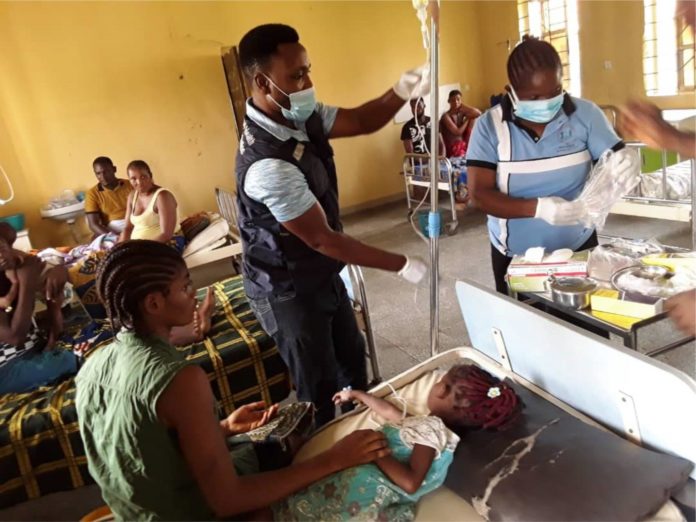
New cholera cases in Africa surging fast, reach a third of 2022 total in a month

Africa is witnessing an exponential rise in cholera cases amid a global surge. Cases recorded on the continent in the first month of 2023 alone have already risen by more than 30% of the total caseload reached in the whole of 2022.

An estimated 26 000 cases and 660 deaths have been reported as of 29 January 2023 in 10 African countries facing outbreaks since the beginning of the year. In 2022 nearly 80 000 cases and 1863 deaths were recorded from 15 affected countries. If the current fast-rising trend continues, it could surpass the number of cases recorded in 2021, the worst year for cholera in Africa in nearly a decade. Average case fatality ratio is currently almost at 3%, above the 2.3% reached in 2022, and far exceeding the acceptable level of below 1%.

The bulk of the new cases and deaths have been recorded in Malawi, which is facing its worst cholera outbreak in two decades. Malawi’s neighbours Mozambique and Zambia have also recently reported cases. In East Africa, Ethiopia, Kenya and Somalia are responding to outbreaks amid a prolonged and harsh drought that has left millions of people in dire need of humanitarian assistance. Burundi, Cameroon, Democratic Republic of the Congo and Nigeria have also reported cases.

“We are witnessing a worrying scenario where conflict and extreme climatic events are worsening the triggers of cholera and increasing its toll on lives,” said Dr Matshidiso Moeti, World Health Organization (WHO) Regional Director for Africa. “It’s critical for African countries to scale up readiness to quickly detect cases and mount a comprehensive and timely response. We are supporting governments to bolster key control measures to halt these outbreaks as quickly as possible.”

WHO is working with countries to ramp up disease surveillance, prevention and treatment measures, community engagement, as well as multi-sectoral coordination with partners and agencies to improve sanitation and provide safe water. The Organization has deployed 65 experts to five African countries, including 40 to Malawi. In addition, WHO has also disbursed US$ 6 million to kick-start emergency cholera response in Kenya, Malawi and Mozambique.

So far this year, around 3.3 million cholera vaccine doses have been delivered to the Democratic Republic of the Congo, Kenya and Mozambique—which is to take delivery in the coming days—through the International Coordinating Group on Vaccine Provision. This initiative aims to manage emergency supplies of vaccines and is a partnership of the International Federation of the Red Cross and Red Crescent Societies, Médecins sans Frontières United Nations Children’s Fund and WHO.

The increase in cholera outbreaks globally has put a huge strain on the availability of vaccines, prompting the International Coordinating Group on Vaccine Provision to temporarily suspend the standard two-dose vaccination regimen in cholera outbreak response campaigns, using instead a single-dose approach. A further surge in cholera outbreaks risks deepening the shortage.

Cholera is an acute, extremely virulent infection that can spread rapidly and dehydration results in high morbidity and mortality. However, the disease is easily treatable. Most people can be treated successfully through prompt administration of oral rehydration solution or intravenous fluids.

“Every death due to cholera is preventable,” said Dr Moeti. “This disease is much a health challenge as it is a development one. As such investments in better sanitation and access to safe water formidably complement the public health initiatives to sustainably control and end cholera.”

Effective control relies on implementing comprehensive measures including enhanced epidemiological and laboratory surveillance to detect, confirm and quickly respond to outbreaks, improving access to treatment, vaccines, safe water and basic sanitation as well as effecting behavioural change and better hygiene practices among communities.

The cholera outbreaks in Africa are occurring in the context of extreme climatic events, conflicts, ongoing outbreaks of other disease such as wild poliovirus as well as limited financial resources and strained health workforce due to the response to the COVID-19 pandemic.

Stories Continues after ad

It is a big scandal for UNEB to sell results of national examinations to media houses

UNEB Executive Secretary Dan Odong

The Uganda National Examinations Board [UNEB] is funded by the taxpayers’ money to do its mandate of managing some of the national examinations such as Primary Leaving Examinations [PLE], Uganda Certificate of Education [UCE] examinations and Uganda Advanced Certificate of Education [UACE] examinations.

Over time, we have seen major newspapers publish in detail the performance of different schools and districts in these national examinations and the public and parents are always eager to read these details in newspapers, after all, pupils and students pay fees and examination fees to sit for these examinations.

On January 27, 2023, UNEB released PLE results and the results were published in major dailies. On February 9, 2023, UNEB again released UCE results, and the public expects to read details in the newspapers. They are also waiting to read UACE results in the same newspapers, when they are released in the weeks ahead.

What is shocking, and which is a big scandal in the country, is that the newspapers have been paying UNEB to have the examinations results published. I am told the fee has been rising over time, from Shs 5 million to Shs 10 million now and this is disgusting and should be handled by responsible government agencies.

Being a government-funded agency, one would think UNEB is illegally selling copies of examination results to the media to publish. The media houses publish examination results as a matter of public interest and as such, UNEB should just give media houses examinations results free of charge, which plays the role of informing and educating the public.

I am also wondering if UNEB has been paying taxes to Uganda Revenue Authority [URA] after selling examination results to the media houses. I would also want to know if UNEB officials have this money generated from media houses in their official revenue records.

Further, I would also want to know if the Ministry of Education and Sports is aware that UNEB sells examination results to media houses to publish. I think that some officials in both institutions could have connived and are eating this money without Parliament, and cabinet knowing.

Meanwhile, I have seen one of the leading dailies in the country calling upon schools to give to bring copies of examination results to be published free of charge. I think that the media houses are tired of buying the documents from UNEB officials who are selling the results illegally.

I would also want to know if the Auditor General is aware that UNEB has over the decades been selling the examination results to the media and if the revenue can be found in UNEB’s audit books of account.

I think that the media is doing a great job by publishing examination results, UNEB must be stopped from selling the results. They eat from government coffers, parents pay examination fees, and since UNEB has never advertised that it sells national examination results, it is a national scandal to hear it sells the same to media houses who publish the same results for free.

Stories Continues after ad

Smart monitoring needed to make groundwater sustainable

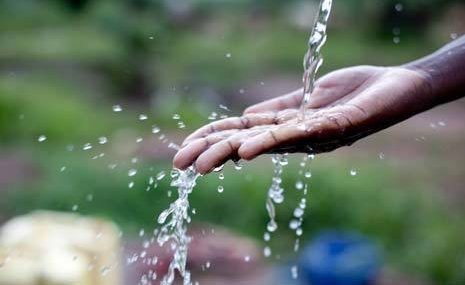
Water flowing from tap

Davis & Shirtliff has called for the strengthening of infrastructure and increased investment in groundwater monitoring to meet the rising demand for clean and sustainable access to water.

Uganda and other countries across Africa are experiencing a rise in groundwater abstraction due to rising population pressure on receding levels of freshwater resources on the impact of climate change.

Patrick Mufwoya, Davis & Shirtliff Uganda Managing Director said African countries need cutting-edge groundwater monitoring infrastructure to efficiently manage and protect these critical water resources.

“Improving groundwater monitoring in Africa will require a combination of regulatory frameworks, investment in infrastructure and capacity building, and partnerships with key stakeholders,” said Mufwoya.

Countries like Uganda will for instance need to set standards for the quality and quantity of groundwater and put-up frameworks allowing for regular testing and reporting of groundwater conditions.

Similarly, more investment in wells, sensors, and other technology that can be used to monitor groundwater resources is key in obtaining and compiling important data for better predictions of the future, especially on how the systems will respond to changing land use and climate change.

 “Groundwater monitoring is critical in helping to assess the availability and quality of groundwater resources, which can be important for planning and managing the use of these resources,” Mufwoya added.

For continuous and remote monitoring, local institutions and communities must be roped in for capacity building and training on the effective use of monitoring tools and managing groundwater resources.

However, the most critical element according to Mr. Mufwoya would be to make groundwater monitoring tools more accessible by making them affordable.

“By regularly monitoring groundwater resources, it is possible to identify areas where extraction is unsustainable and could lead to depletion of the resource. This information can be used to develop strategies to reduce extraction and protect the resource,” he said.

Stories Continues after ad

Malicious deaths, arrests, abductions, inhuman treatment are bad for democracy and national security

Mr Nabendeh Wamoto

As the president was addressing the nation on 6th February 2023 at Mbarara, where he warned and rebuked officers and men of UPDF to deviate from harassing the civilian population. This was at our 42nd birthday celebrations, a one called Coster Muhongya earlier arrested in Kasese died in a detention centre in Kireka – Kampala. The media captured prominently this warning both on 7th and 8th of February 2023.

When the Commander in Chief repeatedly cautions and or rebukes the security forces without serious sanctions meted out to the perpetrators then there are indicators that matters are getting out of hand. This is a clear example of Gen. Idi Amin’s Uganda Army who downed on the population claiming that their Commander in Chief had blessed them to use their fire arms that because guns were the soldiers’ mothers and fathers. That they (soldiers) shouldn’t therefore starve when they had their guns with them hence the country went into untold anarchy which we must not regress to.

Prolonged arbitrary detentions of innocent people and death while in custody as lately become widespread, torture especially of political suspects is on the increase in Uganda. Many cases of torture, ill treatment and detention are almost in all the new casts in all media houses every other time. These reports show that many forms of torture including suspects being shown fresh graves, dead bodies, snakes etc.

This is very chaotic and traumatic at the same time. Most of the victims are said to be supporters of former presidential candidates; Dr. Col. Kizza Besigye or NUP’s Robert Kyagulanyi Ssentamu aka Bobiwine, it (the government) has continually accused those whom it sees as its opponents of support for rebels, treason, terrorism and other forms such as severe beatings, starvation, blind folding people and dumping them in dungeons, use of electric shocks and death threats which they use to justify extreme and illegal treatment of their citizens (taxpayers). The proliferation of agencies which detain suspects in ungazetted locations without legal authorization makes it had like it is now to locate a person who might have been abducted or arrested and difficult therefore to hold the government accountable

I remember in 2004 at the inception of Uganda People’s Defense Forces Senior Command and Staff College where I was anointed to supply foods and beverages to hundreds of top commanders of East African Community region and mark you this was at the climax of Alqaeda operations in the world. A one Dr. Ongodia of Uganda Management Institute and other two tough talking Makerere university lecturers in the names of Dr. Sally Simba and Dr. Tanga Odoi also warned that many African regimes fall because of the army(ies) becoming anti-people.

The army should therefore avoid abductions, torture, wrongful or illegal arrests, and malicious accusations because this paints a hazy picture of the state as a whole.  These practices appear to be designed to discourage future opposition and political activities sometimes to produce information to use in military intelligence reports (these are unhelpful reports) for use in military operations, sometimes to secure confessions (again this is unfair to use as the basis for prolonged detention of victims or for malicious prosecutions.

I recently shared a gruesome story by one of the victims (names withheld) who told me that over 20 torture victims many of whom were held either during the 2021 elections or at the time of machete attacks in greater Masaka who were subjected to very dangerous treatment while in detention that one was beaten for hours and the soldiers fired bullets above his head. The next day his legs were tied to a tree for two days and that one Maj. General ordered officers below him to dig a hole for his prison cell where he was kept for a whole year. I thought this is bad for our democracy and our national security and stability. Here are my recommendations;

  • To allow the situation to cool down because many are angry especially the youths below 30, through political wing there must be avoidance of further torture and that those responsible be asked to account.
  • The government disbands state security agencies that have not been created by acts of parliament.
  • Increase funding for the judicial system to enable at least one branch of the High Court to be created to function in each district of Uganda.
  • Speedy and adequate compensation of victims of torture, ill treatment, arbitrary detentions and malicious prosecutions.

Nabendeh Wamoto S.P. (0776 658433)

Email: simonwamoto@yahoo.co.uk    

Stories Continues after ad

UCE results out, over 1000 withheld

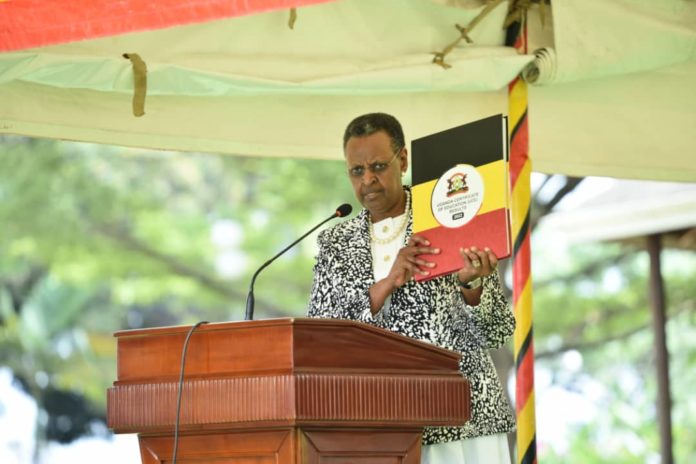
Minister of Education and Sports, Janet Museveni releasing the 2022 UCE results

The Uganda National Examinations Board (UNEB) has released results for the 2022 Uganda Certificate of Education (UCE) examinations, with 1,035 candidates results withheld for malpractice.

The senior four results were officially released today from State House, Nakasero in Kampala by the Minister of Education and Sports, Janet Museveni.

According to the UNEB Executive Director, Mr Dan Odongo, candidature increased by 16,063 (4.8%) from 333,396 in 2020 to 349,459 in 2022 reversing the decrease of 4,324 (-1.3%) that had been witnessed in the previous examination. The candidates sat from 3,703 centres. Of these, 114,181 (32.7%) were USE beneficiaries.

“A total of 1,035 results will be withheld in accordance with Section 5 (2) (b) of the UNEB Act No 1 of 2021. The number of results to be withheld has been reducing steadily at this level,” he said, adding “Physics, Chemistry, and Mathematics have been most affected by examination malpractice, with external assistance, impersonation and script substitution as common cases.”

The Uganda Prison Service examination centre registered 51 candidates and all sat. Eight passed in Division 2, 16 got Division, 26 passed in Division 4 and one failed.

Odongo said there was an improvement in performance of the large entry subjects except in Christian Religious Education, Biology and Commerce. He said Mathematics showed better performance at the Distinction level, but declined overall.

He said female candidates performed better than males in English Language however in Chemistry, the male candidates showed better performance in the higher grades – overall, a higher percentage of females obtained at least a pass. He added that performance in Biology has continued to decline as seen in the last few years.

The male candidates overall performed better compared to female candidates with 15.5 percent in the first division compared to 11.5 percent. 23.3 percent of the male candidates passed in the second division compared to 21 percent of the female candidates.

Odongo said 46,667 of the candidates scored first grade, 76,745 were in the second division, 88,690 in the third division and 117,837 in the fourth division while 15,756 failed.

He said the Board examined Chinese Language for the first time in 2022. A total of 134 candidates sat and 124 (92.5%) of them passed. The language is in addition to other major languages; French, German, Arabic, Latin and Kiswahili already are being examined.

A total of 721 Special Needs Education (SNE) candidates (389 males, 332 females) registered for the 2022 UCE examination compared to 519 in 2020. This was a large increase of 38.95% over last year. These consisted of the blind (39), those with low vision (115), the deaf (87), the dyslexics (88) and physically handicapped (94).

Parents and candidates may access results via SMS on phone using the candidate’s full index number to 6600. Headteachers and school directors can also access the results from various school portals. They will later be advised on when they can start collecting the hard copies of the results from the UNEB offices.

Stories Continues after ad

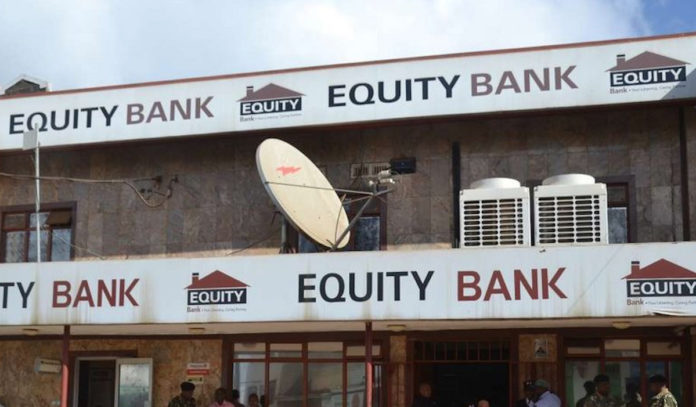
Equity Bank investigates on customer’s Shs47m alleged fraud

Equity-Bank

Equity Bank Uganda is investigating an incident where their customer lost Shs47 million in alleged fraud.

In a statement issued on Wednesday, Equity Bank said it is giving the incident due attention contrary to claims that it has been tossing around the complainant.

“Dear Customers, Attention is brought to the issue circulating on social media. We wish to confirm that the incident has been given due attention and is being handled with the seriousness it deserves,” Equity Bank said.

Equity added: “While we cannot divulge customer information, we reassure our customers and the general public that the matter has been noted and due process is being followed to resolve the same. This includes collaborating with the relevant investigative authorities. We are also in close contact with the customer to ensure that the matter is brought to closure.” 

This comes after Rose Ahebwa claimed she lost Shs47 million on her Equity Bank account on December 18, 2022.

Ahebwa, who has since opened a case with Police under Case Ref: SD 44/19/12/2022, said a few days after opening an account with Equity Bank where she deposited the money in the second week of December, she received a bank customer service call and answered all their questions.

All seemed okay but a few days later, she says she was looking into an empty account after going to make some withdrawals.

She said her attempts to get help from the bank were futile as she was tossed everywhere. She has also since sought the services of a lawyer.

Cases of fraud at Equity Bank are not new. In 2021, Edith Nakacwa lost Shs21.9 million from her account, which was done using the Eazzy Money App which she never initiated. The bank eventually refunded her money.

According to a 2020 report by Summit Project Frontline, the annual cost of cybercrime in Uganda for the 2019/20 financial year stood at Shs11.4 billion.

However, the report notes, that real cost could be much more than reported since a number of fraud cases, especially in the banking sector, are quietly handled.

The cost also includes other associated expenses such as incident response, investigations and reputational damage.  According to the report, during the period, the combined value of the economic crime cases handled stood at slightly more than Shs171 billion, with an average of Shs379 million direct loss per case.

It is worth noting that many cyber incidents in Uganda (and the East African Community at large) go unreported to protect the reputation of affected entities.                              

In 2019, it was reported that close to Shs9 billion was lost in a cyber-attack that targeted banks, mobile money operators and payment aggregators.                                          

The 2020 Uganda Police Annual Crime report– indicates that obtaining money by false pretenses was the highest crime reported under the category of economic crimes, followed by forgeries and cyber related crimes. 

Stories Continues after ad

NUP top Lawyer Anthony Wameli dead

Anthony Wameli

National Unity Platform (NUP) party Head of legal team, Anthony Wameli has died.

Wameli died in the United States of America where he has been undergoing treatment for the last two years.

He has been a human rights activist who at all costs defended violation against human rights and also at one time a lawyer of a former presidential candidate Henry Tumukunde.

He contested for Bubulo East under the National Unity Platform party flag.

“Very sad day! Just learnt of the untimely passing of our dear brother and Head of our Legal Team, comrade Wameli Anthony from the U.S. where he’s been admitted for treatment. Details will be provided in due course. May his soul rest in eternal peace,” Kyagulanyi Ssentamu, party president announced.

Stories Continues after ad

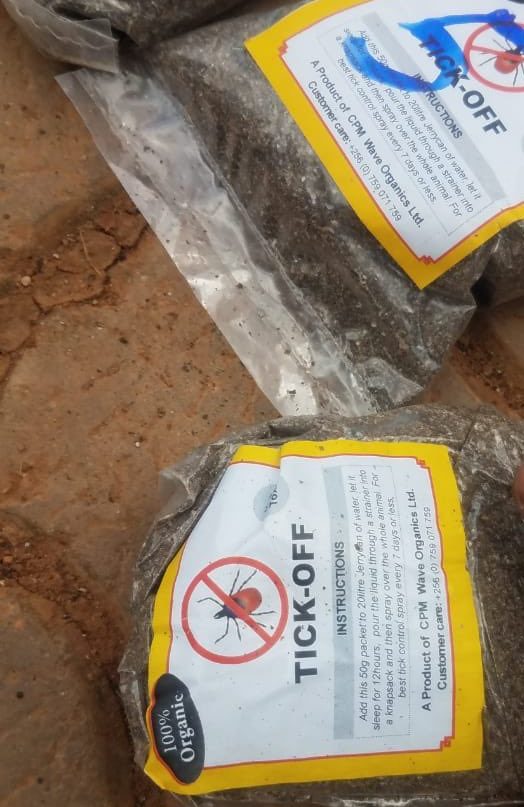
“We can’t fight anyone”, NDA responds to Pastor Kayanja over Tickoff acaricide

National Drug Authority has told Pastor Robert Kayanja that the organization cannot fight anyone who comes up to manufacture local drugs.

 “We can’t fight anyone; that’s why our teams have been engaging with you for over 30 days! When anything risks lives of Ugandans and their animals, we are duty bound,” NDA said.

Pastor Kayanja having heard that tickoff acaricide was declared counterfeit said that that NDA is trying to fight him as he tries to solve many problems.

“While others are fighting us for trying to solve our problem for one reason or the other, we will continue to seek and explore our local solutions to the effect, Now Karamoja is harvesting their own land produce to fight food insecurity. One day soon our cows will be tick free,” Kayanja said.

NDA said that they have been supporting local drug initiatives and over 200 local herbal remedies have been cleared by them

“Tick resistance isn’t fought by falsified dangerous chemicals that don’t only impact on animals but humans who consume animal products,” NDA guided Kayanja.

In the NDA investigation, the product was mixed with diazinon, a highly concentrated fumigant used to kill bedbugs, bats, and termites; Fipronil, a spray that was banned for food-producing animals because of the long withdrawal period due to the potential risks it could have on human health in addition to Benalaxyl, a fungicide which is carcinogenic composing of cancer-causing components.

The chemicals were also being mixed with animal feeds and silverfish and packaged without an expiry date, ingredient information, or warning.

Stories Continues after ad

Lack of jobs is the main driver of violent extremism in sub-Saharan Africa: UNDP

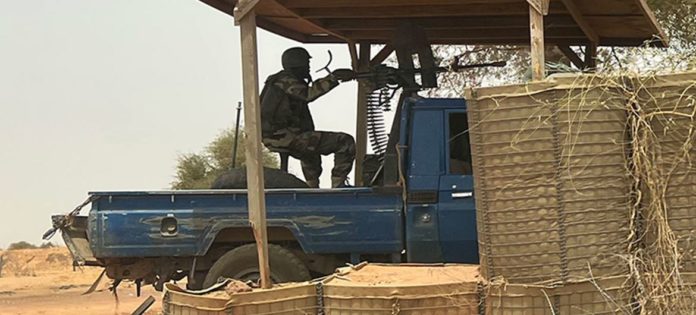
Hope of finding work is the leading factor driving people to join fast-growing violent extremist groups in Sub-Saharan Africa, according to a new report launched today by the United Nations Development Programme (UNDP).

Among nearly 2,200 interviewees, one-quarter of voluntary recruits cited job opportunities as their primary reason for joining, a 92 percent increase from the findings of a groundbreaking 2017 UNDP study.

Religion came as the third reason for joining, cited by 17 percent — a 57 percent decrease from the 2017 findings, with a majority of recruits admitting to having limited knowledge of religious texts.

Nearly half of the respondents cited a specific trigger event pushing them to join violent extremist groups, with a striking 71 percent pointing to human rights abuse, often conducted by state security forces, as ‘the tipping point’.

“Sub-Saharan Africa has become the new global epicenter of violent extremism with 48% of global terrorism deaths in 2021. This surge not only adversely impacts lives, security and peace, but also threatens to reverse hard-won development gains for generations to come. Security-driven counter-terrorism responses are often costly and minimally effective, yet investments in preventive approaches to violent extremism are woefully inadequate. The social contract between states and citizens must be reinvigorated to tackle root causes of violent extremism,” UNDP Administrator Achim Steiner said.

Journey to Extremism in Africa: Pathways to Recruitment and Disengagement” draws from interviews with nearly 2,200 people in eight countries: Burkina Faso, Cameroon, Chad, Mali, Niger, Nigeria, Somalia, and Sudan. More than 1,000 interviewees are former members of violent extremist groups, both voluntary and forced recruits.

The report explores pathways out of violent extremism, identifying factors that push or pull recruits to disengage. Interviewees most often cited unmet expectations, particularly financial expectations, and lack of trust in the group’s leadership as their main reasons for leaving. It also presents gendered data to understand violent extremism from the perspective of women.

“Research shows that those who decide to disengage from violent extremism are less likely to re- join and recruit others. This is why it’s so important to invest in incentives that enable disengagement. Local communities play a pivotal role in supporting sustainable pathways out of violent extremism, along with national governments amnesty programmes,” UNDP Preventing Violent Extremism technical lead in Africa Nirina Kiplagat said.

To counter and prevent violent extremism, the report recommends greater investment in basic services including child welfare; education; quality livelihoods; and investing in young men and women. It also calls for scaling-up exit opportunities and investment in rehabilitation and community-based reintegration services.

This report is part of a series of three reports on the prevention of violent extremism, including the report, “Dynamics of Violent Extremism in Africa: Conflict Ecosystems, Political Ecology, and the Spread of the Proto-State” which analyses the latest dynamics of violent extremist groups in Sub-Saharan Africa and provides recommendations for specific development actions.

Stories Continues after ad