Stanbic Bank
Stanbic Bank
19.2 C
Kampala
Stanbic Bank
Stanbic Bank
Home Blog Page 463

Inside US national Alan Chamberlain’s fight with Absa Bank

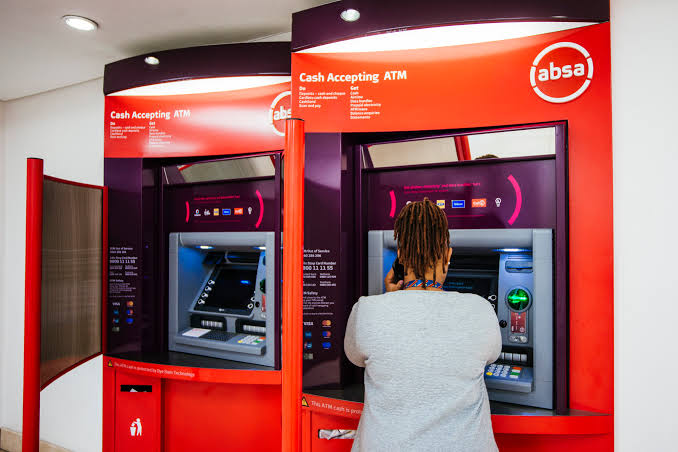
US national investing in Uganda Alan Gator Chamberlain cried foul claiming that Absa Bank, Kasese branch had fleeced him of $ 9000 USD (32.4 million).


On December 2, 2022, Alan allegedly wired 9000 USD from USAA Savings Bank San Antonio Texas USA to his construction manager Faisal Ibrahim in Kasese Uganda.


On December 5, 2022, he called USAA bank to confirm whether the funds were sent.  The bank confirmed and sent an official document including a transaction number to me via email that the first had been sent to Faisal at ABSA Bank.


He said Faisal waited for the funds to be transferred within 48 hours as per Swift banking regulations but it didn’t appear.  After he didn’t receive the funds within the required time of 48 hours he asked me to follow up with USAA.  I did so by telephone conversations approximately every three days with the same answer we have sent the money and by company wire transfer policy they have 15 days before we can initiate a request to reverse the funds”!


He said multiple times between Dec 2 and Dec. 17 that Faisal engaged the Kasese branch ABSA bank manager to assist us in the tracking of the stolen funds with the same answer ‘we have not stolen and we do not have your money. It must be your bank’s fault or they are lying saying they’ve sent the funds but did not.
“I showed and sent them copies of USAA correspondence confirming the transfer of funds but they denied receiving the funds over and over. As well the manager kept saying we need a tracking number. I kept telling him that I have given him the tracking number. It’s at the bottom of the confirmation letter but he ignored it,” he said.


Narrating his ordeal, Chamberlain told Eagle online that he probably spent eight hours at the Kasese police station and 3-4 visits filing a police case against ABSA Bank Kasese.
“I protested by lying in front of the Absa Bank Kasese doorway until the police came and told me to come file a police report. I did so but to no avail. The police went to interview the bank manager and when they asked him about the stolen funds he simply told them the company party line, ‘we do not have his money, we have not stolen his money’ and they took his word? Is this how police respond when their money gets stolen from them?” he asked.


“Let me ask this question. If I went into the bank and took $9000.00 USD from them would I be arrested and thrown into jail? I want the CEO arrested and thrown in jail! The same as me! I’m being discriminated against! White discrimination?” he said.


“After numerous attempts to recover the $9000 USD, I waited until Dec 17 that which time I was instructed by USAA Bank to recall the funds from ABSA. USAA sent three requests with no response from ABSA. Not an email, not a phone call, not a peep! They simply went silent,” he said.


On December 6, 2022, he hired lawyer Chan Masereka from Kasese to draft and send a letter of intent to sue and it was delivered to ABSA Headquarters. No response was received from ABSA as one would expect. Their arrogance was beyond belief.


He said he later and his lawyer left Kasese on January 11, 2022, to meet with the managing director of the Bank. Instead of meeting the CEO or managing director, he sent his lackey corporate general counsel and a woman security officer who set us up in a tiny glass officer barely big enough to hold four midgets much less for four tall grown adults.


“From the onset, it was obvious there was an air of defiance and arrogance of the two ABSA employees. During our heated conversation, the ABSA lawyer started referring to a “swift number”. I questioned what is a Swift number.
“I have been with the ABSA manager in Kasese ten times and he never mentions a “swift number”. He only mentioned a tracking number but never a Swift number.


This conversation was going nowhere fast so I asked the two individuals their names, phone numbers and emails and you would have thought I’d asked for the US nuclear launch codes! They unequivocally answered they were not going to divulge this top-secret information and that if wanted to communicate with them we could access them by writing to the general mailbox at ABSA.com.


He said all this was much to deal with! They were just skirting the truth. They knew the bank was illegally holding my $9000 USD. They Are blatantly breaking international banking laws!
“I got up and exited the meeting through the glass doors. I then passed through a second set of glass doors and exiting the building a went through a third set of glass doors. As I passed through the doors I pushed hard thinking they’d be difficult to open due to their size, and weight and they would have a dampening system on them to control the rate of opening and closing in case of high winds, pouring rain, etc but to my surprise, the right-hand door blew open and crashed into what I remember to be a brick planter and broke into knife-like shards of glass that would easily cut or killed a small child. No door stops to impede its travel,” he said.
He said the security team came and detained him. As well they illegally put a boot on my lawyer’s car and detained him although he had done nothing!


He said the police came and put me in an ABSA truck and took me to CPS and I was interrogated and made to write a statement of what happened. It was written and reviewed by me and the lawyer.


Although my actions were an accident I was going to be detained. As always. It’s all about the money and my lawyer came to me and said.
“You are going to be presumed guilty until proven innocent. I have negotiated a compromise. If you pay Shs 1,000,000 they will call it off even and let you go,” he said
So I paid and they released me! Then on my 8-hour bus ride back to Kasese from Kampala where I arrived home at 5:39 am, I opened my USAA Bank account and mysteriously there was $9000 USD back into my checking. Amazing huh?


“A bank that stole my money for approximately 40 days and had to be threatened with a lawsuit to return the money they never had suddenly returned it to the same bank that sent it?” he said.


The same bank who had me arrested for malicious door breaking now has returned my $9000 which they laid about never having stolen.


The above information is true and accurate to the best knowledge. This story needs to be disseminated to the general public and make to the financial world so that others will not be subjected to this abuse!


Absa bank reacts
Robinah Mukasa, the Head of Communication and Citizenship at Absa Bank Uganda said; “We would like to state that the alleged transaction was not received by Absa Bank Uganda and we have no trace of this payment in the swift system.”


She said Mr. Gator and his lawyer were informed of the same in person, and by written communication. Gator was advised to pursue his complaint with his bankers whom he instructed to affect the transfer. Further still, we have not received a swift query from Mr. Gator’s bankers.
“Despite our best efforts to support Gator get to the bottom of this issue, he visited our Head Office at Hannington Road on 11 January and reacted in an aggressive manner towards our staff, including the use of foul language and destruction of property at our premises. His behavior endangered the wellbeing of both our customers and staff, prompting the Bank to lodge a criminal complaint with police vide SD REF: 70/11/01/2023,” she said.


She said Absa bank has been transparent, and ethical, and acted appropriately in all its dealings with the complainant. The Bank is committed to safeguarding customer deposits and to continue being a reliable and trusted banking partner.

Stories Continues after ad

Delayed allowances, salaries fuel extortion at Entebbe Airport

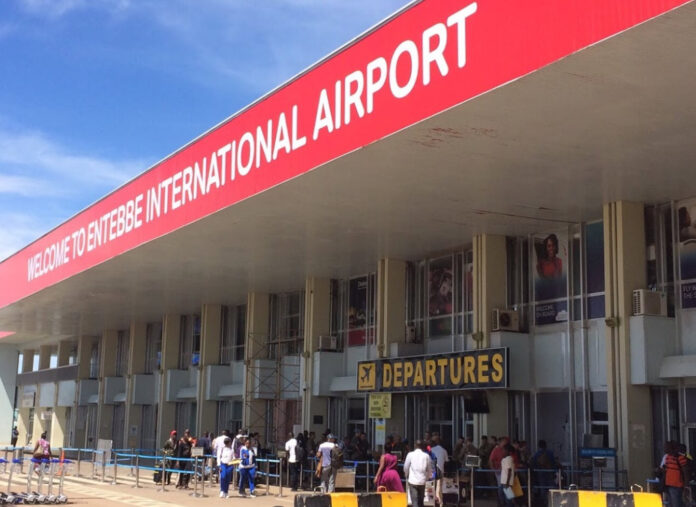
Entebbe-International-Airport

It is saddening that the majority of 95% of the staff at Entebbe Airport are always looking for possible ways to extort money from Ugandans exiting the country.


The extortion at the country’s main airport is alludes to delayed allowances and salaries.  The immigration officers allegedly ask for as low as Shs 50,000, $100 and more over unreasonable claims. They fault passengers for the sightless gesture to make them miss flights.


Passengers claim that an immigration officer identified as Prima should be relieved of her duties. She is accused of confiscating passports even when passengers have all the requirements for their particular destination.


A lot more people are complaining about the loot at the airport and asked the Civil Aviation Authority (CAA) to borrow a leaf from Jomo Kenyatta International Airport where the staff help passengers in a bid not to miss flights.
“Countless times they will even beg your Airline not to leave you, unlike Entebbe Airport where they will even fool you to re-book your flight yet they know they have deliberately delayed you. Lots of people miss life-changing opportunities because of people like Prima and the rest,” Mpiima Kalinda Mugambe said.
In Uganda, you can get a visa from an embassy only for an airport employee to stop you from boarding, until you bribe them with ($100-$200).


It is averred that Bob Byamugisha has been at the core of tormenting Ugandans traveling through Entebbe Airport and asking for bribes.
“The Airport staff is so annoying. It happened when my friend Musa Atagenda was escorting his Wakiso Giants FC player for trials abroad. The player was sent back on flimsy grounds. I intervened and he traveled. I said I will continue to engage. Surprisingly Ngobi Benard abused me.” Asan Kasingye, a former Uganda police officer said.


Yesterday, UCAA promised to investigate the allegations and asked individuals to avail them of all the possible evidence to hold the alleged officers culpable. The airport has cameras placed in strategic places for security reasons and to enable UCAA to address such issues when they occur.


“UCAA facilitates operations at Entebbe International Airport, this is done in liaison with several independent providers of key services, including, but not limited to Immigration, handling agents (NAS and DAS), airlines, Ministry of Health through port health, Security agencies, URA customs, and Ministry of Gender, Labour and Social Development (Labour externalization agents), among others,” read part of the statement.


“Unfortunately, none of the regurgitated trending videos specifically states a particular checkpoint, time, and day and flight details of when the alleged extortion may have taken place. This would help the investigations. We are contacting the parties in the TikTok videos to share with us information that can guide us to take quick action. In the past, we have investigated similar generalized claims made on TikTok, but unfortunately, no specific information was established to corroborate the claims,” added a statement.

Stories Continues after ad

Who is Bishop-elect, Enos Kitto Kagodo?

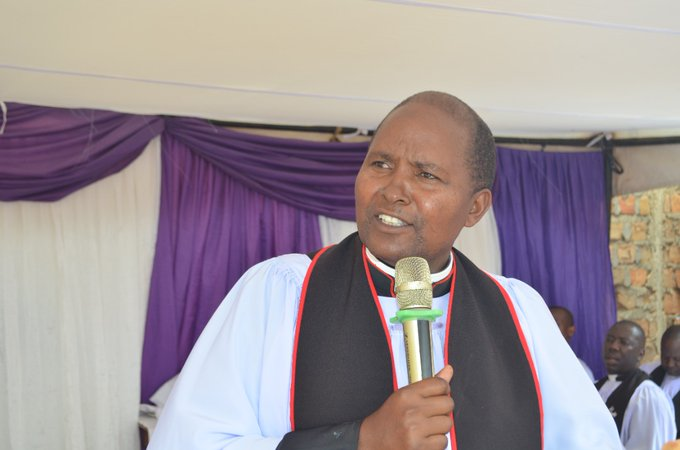
Rev. Canon Enos Kitto Kagodo was on Wednesday elected the 5th Bishop of Mukono Diocese. He will be consecrated and enthroned as Bishop on 26th February 2023 at St. Philip’s and Andrew’s Cathedral, Mukono.
Rev. Enos was born on 13th December 1968 in Nakisunga Sub-country in Mukono District. He was born again on 14th October 1994. Rev. Enos testifies, “God saved me from being a drunkard and from the life full of destructive behaviours which I had started as a juvenile.”


He earned a Master of Divinity degree and a Bachelor in Health Administration from Uganda Christian University, after receiving diplomas and certificates in the same fields.


Rev. Enos is currently the Provost of St. Philip’s and Andrew’s Cathedral in Mukono. Prior to this position, he has served as a parish priest, Archdeacon, and Diocesan Health Coordinator.


He was ordained a deacon on 9th June 2002 in Mukono Diocese and then made a priest on 12th December 2004. He has served on school management committees as well as various Diocesan Boards in the course of his ministry.
Rev. Enos is married to Catherine Namuddu and God has blessed them with seven biological children and many spiritual children.

Stories Continues after ad

How best can Uganda prepare for the next pandemic or epidemic?

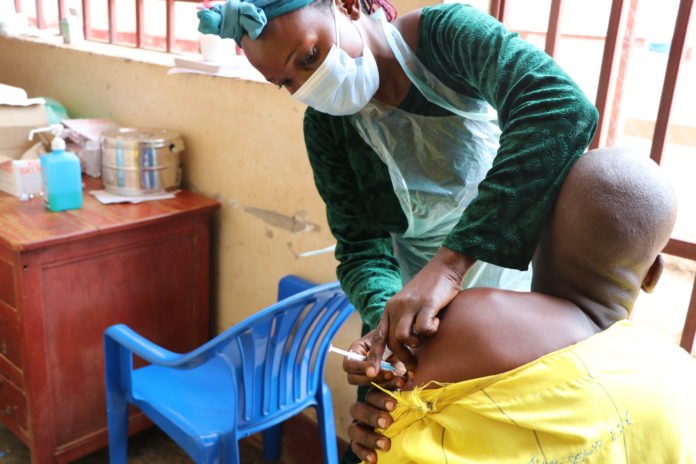
A prisoner getting a Covid-19 jab

In December 2019, the World Health Organization (WHO) confirmed the outbreak of the Covid-19 pandemic. The first cases were confirmed in Wuhan city of China. On March 21, 2020, Uganda registered its first COVID-19 case. The case was of a 36- year old Ugandan male who arrived from Dubai.


The outbreak of the pandemic presented a social and economic threat to many countries in the world, including Uganda. In response, the government developed and instituted several interventions to control and avert the effects of the pandemic on the economic and social well-being of its citizens.


The interventions included; instituting a total lockdown, closure of airports, restriction of cross-border movements, and increased surveillance among others which in turn necessitated additional funding.
Since the outbreak of the pandemic, Uganda registered 170,255 cases of Covid-19. Of the confirmed cases 100,440 recovered while 3,632 died.


In tandem, on September 20, 2022, Uganda announced the outbreak of Ebola disease. The disease was caused by the Sudan ebolavirus.
It was the country’s first Sudan ebolavirus outbreak in a decade and its fifth overall for this kind of Ebola. In total there were 164 cases (142 confirmed and 22 probable), 55 confirmed deaths and 87 recovered patients. More than 4000 people who came in contact with confirmed cases were followed up and their health was monitored for 21 days.


According to Arnold Ezama, manager of epidemics and pandemic response at the Red Cross, 75% of the emerging and reemerging diseases are Zoonotic spreading between people and animals. The diseases are caused by germs, such as viruses, bacteria, parasites, and fungi. Some can be severe and life-threatening, such as rabies, and others may be milder and get better on their own.


As we get closer to wild animals, increased global mobility, population increase, urbanization, and climate change, we are near to the next epidemic or pandemic therefore we need to be prepared. We should sensitize people about the basics to fight and prevent specific pandemics,” he said.


Ezama said pandemics don’t only affect human beings but animals and the environment. As we live in the environment, we must live in a sustainable manner. People must understand that we have a lot of resources; physical, and economic among others and we must use what we have to fight the pandemic or epidemics. As we prepare for future pandemics, we must understand communities and be able to bring services closer to them, be it vaccines, sensitization, or awareness campaigns.


Dr. Daniel Kyabayinze, Director in charge of public health at the ministry of health said Uganda has so far experienced most of the pandemics and has the capacity such as surveillance to keep a better watch on what is happening in t in regard to zoonotic diseases, vector bone diseases and viruses of respiratory origin.


“The country has a laboratory capacity in place and will give us a hinge of preparedness, Ugandans are more aware and ready to listen and take in the advice as given, alert and in tune with political will and leadership, everyone knows that we have to work together to fight both the epidemic and pandemic,” he said.


He said in the recent past, the country had laboratories, scientists, and medical supplies but it had not gone through a massive shutdown and involvement as it was with Covid-19 and therefore government must invest more in the health sector.
Dr. Louis Kamulegaya, project and research manager at Rocket Health said many telemedicine grew during the covid-19 pandemic distributing medicine in Uganda and throughout the world.


“As telemedicine, we had some challenges however we met clients’ expectations within the shortest time possible. We delivered medicines and other services to people and met their expectations just as they would have walked into a physical facility and that was possible because of accommodative logistical service in terms of lab technicians and pharmacists who met the large client numbers or traffic in the shortest time possible.


“Ministry of the health call center was pivotal in tracking and reporting of cases as well as different advertisements and a number of applications that were aiding remote follow up in terms of being able to remote report your temperature report to end the onset of new symptoms. So you find that technology is adaptable, can easily be taken on as a tool for monitoring and accessing health services,” he said.


In areas where there is no technology, Ezama said the government and stakeholders need to go back to the drawing board and invest their time in teaching people how to wash their hands, how to sleep under mosquito nets, drink boiled water, and others. We really have to invest back in the structures. The communities have social capital. They have local leaders and VHTs who can promote health education.


In the future, he envisions seamless information sharing across borders aided by technology, and an increase in the utilization of improved diagnostics, in terms of ease of diagnosing diseases. This means that innovators need to be prioritized. Researchers in laboratory technicians and Universities need to be equipped with the knowledge and be adequately funded so that we do not import at high costs and taxes but rather locally generated capabilities.

Stories Continues after ad

Shilling loses ground as dollar gains strength

The shilling lost ground during the week against the dollar with strong demand from the energy and manufacturing sectors putting the unit under pressure. As of Friday morning’s session, the local unit was seen trading at the 3675 / 3685 levels – weaker than the week’s opening of 3665 / 3675. We expect the shilling to continue trading within the 3650-3730 levels in the near term.


According to Richard Nsubuga, Trader, CIB Markets at Absa Bank Uganda, liquidity in the money markets continues to be tight with overnight funds averaging 11.81% while one week averaged 12.11%. However, we expect the market position to improve as the government releases for this quarter start to trickle-in in the coming days.


In the region, the Kenya shilling continues to be under pressure with an existing backlog of demand mainly from the energy sector. However, the fast-approaching long Chinese holiday is likely to ease off the pressure from the shilling. We expect it to trade within the 123.50 – 129.00 range in the near term.


He said the dollar index hovered around 102 on Friday as market players assessed a shower of US data released on Thursday indicating that a series of rate hikes from the Federal Reserve is already having an impact on the economy. Several Fed officials have expressed their views on a need for elevated rates for a period to cool inflation.


Crude oil rose above $81 (Shs 297685) per barrel on Friday, underpinned by an improving demand outlook in China and supply worries stemming from tightening sanctions on Russia. In a statement this week, the International Energy Agency said global consumption is likely to reach a record daily average this year on anticipated China demand.
Gold held above $1900 (Shs 6982747) an ounce, hovering near its strongest levels in nine months.

Stories Continues after ad

Public universities collect below Shs 50 billion target

Kyambogo University main building.

Public universities failed to collect over Shs50 billion from students as school fees during the Financial Year 2020/2021. This detail is contained in the report of the Public Accounts Committee (PAC) (Central) on the education sector.
The committee report responds to the red flags raised by the Auditor General’s report for the financial year. Presented by the chairperson Medard Sseggona, the report shows how five public universities failed to collect Shs52.6 billion from students which affected the smooth running of the education centers.


This was attributed to disruptions caused by the COVID-19 pandemic which did not allow the institutions to collect fees and other payables, while many students were forced to drop out.
The committee in their recommendation urged the affected universities to institute measures to collect all outstanding receivables (fees) from the students and subsequently, inform parliament of the steps taken in collecting the fees in the next six months.


“The committee notes the challenges with which public universities and schools have had to operate during the COVID-19 pandemic. However, the increase in the receivables indicates a low recovery rate of outstanding student school fees, and there is a possibility of failing to recover all the amounts due,”  Sseggona said. He added that whereas COVID-19 has since been managed and the environment has changed to allow possible collection efforts, there is no evidence that universities are making progress.


The report of the Auditor General revealed that Makerere University Business School (MUBS) had accumulated receivables to the tune of Shs 21.7 billion, while Kyambogo University failed to collect Shs23.2 billion in school fees. Mbarara University Science and Technology (MUST) and Uganda Institute of Information and Communication Technology (UICT) failed to collect Shs 4.2 billion and Shs 384 million respectively, while Kabale University failed to collect Shs 3.1 billion.
The House expressed concerns over the recurring challenges facing the education sector that among others include long outstanding payables, mischarges, and off-budget financing.

Stories Continues after ad

How Technology Is Shaping the Sports Betting Industry in Uganda

So many spheres of life have been affected by technology and its developments. One sector that has also seen a significant transformation is sports betting. When it comes to Uganda, the betting industry is not that different from other markets, albeit it might not be as developed yet. However, it is well on its way there, as technology is shaping the gambling scene of this country and allowing it to go head-to-head against the leaders in the field. Here is what you should know.

Punters are not limited by location

First and foremost, thanks to technology, punters from Uganda are not limited by location when they want to make a bet on their favorite sport. They don’t have to go down to the local betting shop and wait in line to place a wager. There is now fast internet and affordable smartphones that allow players to place bets through an app or via a browser of their choice. For that, there is no need to leave their home. However, it also means that they can bet even when on the go–in line at the bank, on their lunch break, or on the bus ride to work.

There is more data to analyze

While there is always an element of luck when engaging in sports betting, gathering some data is always recommended. Individuals can easily improve their odds of winning by looking into the sports they’re interested in, whether it’s football or boxing. There is plenty of data on previous games and players’ statistics. People can also analyze trends and use machine learning to make smart predictions.

Real-time updates are more accessible

Just like getting records of previous events is made easier so is getting real-time updates. Bookmakers create websites that contain plenty of information, including live scores of all the matches that are being played that individuals can bet on. That means that punters can know the results at any time, no matter where they are. According to this, they can decide to adjust their bet or make a new one. Even if the operator doesn’t provide this information, many other sources on the internet do.

It’s easier to do research

It’s easier to research the teams and games, but it’s also easier to research different sportsbooks. For example, there are websites like betfromafrica.com that list various online bookmakers and their pros and cons. This way, punters in Uganda can see who has the necessary licenses, who offers a wide array of bonuses, who has a hefty welcome bonus, how a deposit can be made or winnings withdrawn, and so much more.

Progress can be tracked easily

Tracking one’s progress is also a good idea. Many people tend to have a betting journal or log where they write down every bet they’ve made and whether it was successful. They also note down how much money they put on the line and how much they earned. While this can be done in a physical notebook, it can also be done using technology. Whether it’s through an app or an extensive spreadsheet, it’s easier to store, track, and analyze every wager and use this knowledge to make better decisions in the future.

Tools for bankroll management are available

Speaking of tracking how much money was spent, people can also rely on technology for bankroll management. No one wants to spend more money than they can afford and, luckily, some tools can help prevent unpleasant situations. For example, certain tools let people set a limit on how much they can use for each game or how much they can afford to lose. There are also automated bets that don’t let individuals get too attached. If someone starts feeling overwhelmed, they can even use technology to step away from betting for a period until they get back on their feet.

Safety is upgraded

Finally, the fact that online operators are putting more effort into security should also not be ignored. As they are providing operators with their names, addresses, and bank account details, players want to be sure they are protected. That is why bookmakers in Uganda are starting to invest in SSL certificates, which provide a secure connection and reassure users that their personal and financial information will be safe. Secure websites should have a little padlock next to the URL bar.

There are many benefits of introducing technological developments into the sports betting scene. From improved security to tracking progress to making more educated predictions, the advantages abound.

Stories Continues after ad

UNBS pushes to eliminate fake engine oils from Ugandan market

ON SUSPENSION: David Livingstone Ebiru, the Executive Director UNBS.

The Uganda National Bureau of Standards (UNBS) in partnership with petroleum products marketers and manufacturers has resumed the process of developing standards for engine oils.

This is aimed at ensuring that the oils currently on the market and those to be introduced in future meet the standards that are relevant to today’s technologies, consumer needs and environmental concerns.

Currently, Uganda uses the US 249 Standard. But experts and manufacturers say that the standard is obsolete and needs a review, which was halted last year. The suspension of the process followed the launch of the revision of the East African Standard for Engine Oil (EAS 159:2022) because the regional standard takes precedence over the national standards.

Currently, the available EA Standard (EAS 159:2000) is outdated and does not take into account modern automotive technologies and is therefore under review “to provide minimum requirements relevant to changing technological developments and consumer expectations.”

David Livingstone Ebiru, the Executive Director at UNBS, says that the idea to review the Uganda standard was mooted after a clash between importers of lubricants and officials clashed as the latter were enforcing regulations at the border. 

The EAC is also in the process of harmonizing the standards in the region, including the engine oil standards to ensure smooth trade. Ebiru says that UNBS has to get the new standards in place before the EAC process to harmonize the regional standards is completed so that aspects of the national standards are taken care of in the harmonized standard.

Engine oil quality requirements are guided by independent specialist institutions or automobile bodies like American Petroleum Institute-API, European Automobile Manufacturers Association-ACEA, Japanese Automotive Standards Organization-JASO and International Lubricant Specification Advisory Committee- ILSA specifications, or Manufacturers’ approvals.

This helps the manufacturers to ensure that what is put on the market is the proper type of oil. However, with the changing technology and environmental issues, as well as public health demands, there is a need to ensure that new products are improved to match those demands.

“The new standards are being developed or renewed with environmental concerns in mind. The review is mainly aimed at setting minimum API classification requirements for diesel and petrol engine oils, recognition of different classification systems other than API, like ACEA and ISO, as well as including viscosity (thickness) grade requirements for multi-grade oil,” Ebiru assured

He added, “There will also be a provision to show proof that the formulation and additive package used conforms to the claimed API classification. The new standards will ensure the minimum emission expected when certain oil is used in a vehicle.”

Henry Richard Kimera of Consumer Centre (CONSENT), said the problem with Uganda is the need to make a profit without caring about the effects of their activities, blaming both motorists and dealers of oils.

While welcoming the move to have an operational or enforceable standard, Kimera said, “The same focus used to enforce the regulations on fuel standards at petrol stations should be applied when UNBS is enforcing the engine oils standards.”

 He specifically blamed the absence of regulation of motor oils for the low quality of air, especially in areas with high numbers of motor vehicles.

The dealers, including manufacturers, importers and distributors welcomed the move of the standards as long overdue. According to motoring standards, engine oils are continually updated to provide greater protection and fuel efficiency, accommodate engine design improvements, and so address the concern over the environmental impact of engine exhaust emissions.

When this is done, according to Andrew Othieno, Manager Standards, UNBS, the oils have the ability to protect engines from wear and heating while still delivering good fuel economy with low emissions.

“Improved oils need fewer cars servicing, therefore, reducing the amount of waste oil that would rather be circulated into the environment and in turn, the user meets lower maintenance costs,” Othieno said.

However, Anthony Ogalo, General Manager of the Association of Petroleum Marketing Professionals of Uganda, says the market is always distorted by importers of fake and substandard products and those that recycle used engine oil.

On the effect of using low-grade oils, the standards body says it leads to increased costs of vehicle maintenance and repairs because using obsolete service oils may cause increased engine wear, catalyst poisoning, and filtered particle blocking as well as increased piston deposits.

“Some obsolete oils can cause unsatisfactory performance causing damage to systems that result in the increased emissions of toxic substances that damage the environment,” Ogalo said.

Stories Continues after ad

How Minister Amongi’s NSSF letter has backfired on her group

PLEASE LEAVE NSSF ISSUES TO US: Fund board tells Minister Betty Amongi

The latest information on the ongoing National Social Security Fund controversy shows the strategists of Minister Betty Amongi were behind her leaked letter.

According to sources the letter was leaked with the hope that it would damage the reputation of the Managing Director Richard Byarugaba.

But it has instead increased the controversy and it continues to damage the image of NSSF and the over 600,000 members are enraged.

Minister Amongi has denied any knowledge about the letter but it has her signature and according to the sources at the Ministry of Gender Labour and Social Development, the letter was leaked with her consent.

“She was told that the letter would seal off the fate of the embattled MD Byarugaba but the public has interpreted it differently,” the source said. Amongi who isn’t stranger to controversy.

The leaked letter also gave details how the minister and her group had met the Coordinator of Operation Wealth Creation Gen Salim Saleh whose intention is not known. However, sources say she dragged in Gen.Saleh so as to have her candidate (Patrick Ayota) named Acting MD and in turn would be made a substantive MD. Sources further say Ayota upon being named acting MD hurriedly organised a transfer of Shs6 billion which Mr.Byarugaba and board had refused to advance her in pretense that should use it to mobilize more members into voluntary saving with the fund.

The meeting between Gen. Saleh and the Minister Amongi group has attracted bad publicity for President Yoweri Museveni’s brother who is being accused of meddling in the NSSF issues.

The source said they thought mentioning that they met the powerful Gen Saleh would give them a mileage but it has instead backfired because the four-star general is said to be unhappy with dragging his name in this controversy.

The Speaker Anita Among, has directed the Minister Amongi to present a statement on the current status of the National Social Security Fund (NSSF).

NSSF, whose portfolio stands at Shs17.9 trillion has recently been marred with allegations of corruption and mismanagement – including the renewal of the contract of its former Managing Director, Richard Byarugaba who attained the retirement age of 60.

Stories Continues after ad

Bijambiya criminals attack Prison Estates boss, rob gun as he is hospitalized

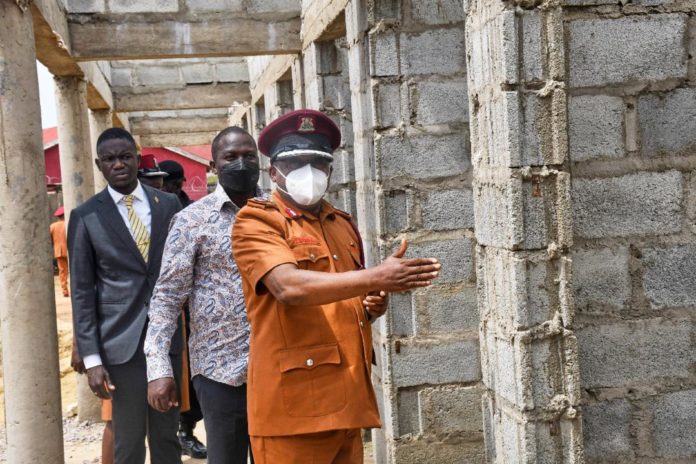
Commissioner Gervase Tumuhimbise showing houses under construction to NRM Secretary General Richard Twodong.

Gervase Tumuhimbise, the Commissioner of Prison in charge of Estate and Engineering is fighting for his life after Bijambiya criminals invaded his home attacking him, wife and daughter.

According to security sources, this happened on yesterday January 18, 2023 in the wee hours at his Katale residence in Kyengera Town Council.

Eagle Online understands that by the time of the attack, the prison boss who entitled to guards didn’t have any of his body guards at his residence. Security is all perturbed why such a top official couldn’t have security at his home.

“We are investigating why there was no security at his home and yet he is given 24 hours security detail? Imagine the officer had no guards at his residence because our initial investigations reveal that he last had guards around December 30” said a police officer tasked with investigating the matter.

According to police report, in the process of the attack, Mr. Tumuhimbise lost a gun, a star pistol No. UG PRI OO779208 236, Code 02287 with 25 ammunitions and his personal mobile telephone.

Stories Continues after ad