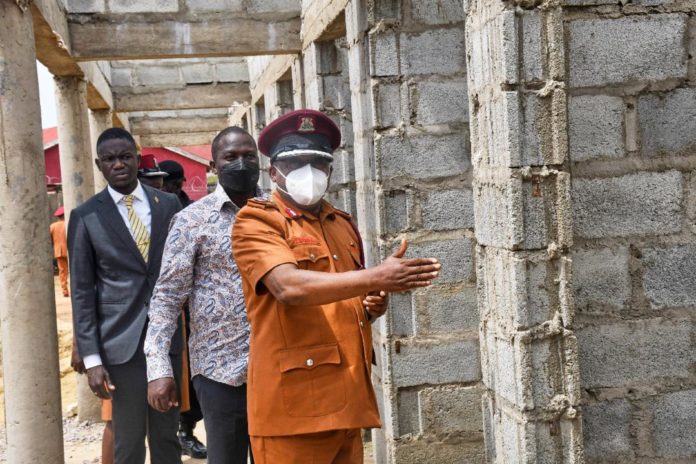
Commissioner Gervase Tumuhimbise showing houses under construction to NRM Secretary General Richard Twodong.
Gervase Tumuhimbise, the Commissioner of Prison in charge of Estate and Engineering is fighting for his life after Bijambiya criminals invaded his home attacking him, wife and daughter.
According to security sources, this happened on yesterday January 18, 2023 in the wee hours at his Katale residence in Kyengera Town Council.
EagleOnline understands that by the time of the attack, the prison boss who entitled to guards didn’t have any of his body guards at his residence. Security is all perturbed why such a top official couldn’t have security at his home.
“We are investigating why there was no security at his home and yet he is given 24 hours security detail? Imagine the officer had no guards at his residence because our initial investigations reveal that he last had guards around December 30” said a police officer tasked with investigating the matter.
According to police report, in the process of the attack, Mr. Tumuhimbise lost a gun, a star pistol No. UG PRI OO779208 236, Code 02287 with 25 ammunitions and his personal mobile telephone.
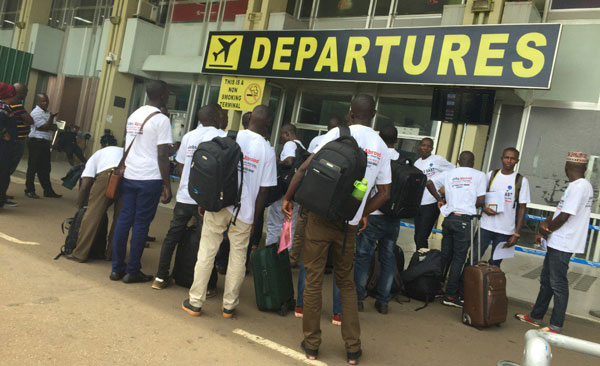
In December 2022, the government of Uganda suspended a bilateral labour export agreement with Saudi Arabia over the continuous mistreatment and torture of Ugandan migrant workers.In 2017, the government of Uganda signed a five-year labor agreement with Saudi Arabia aimed at among others promoting the welfare and rights of Ugandan migrant workers.
The Observer reported that on December 23, the Permanent Secretary for the Ministry of Gender, Aggrey David Kibenge informed recruitment agencies and pre-departure orientation and training institutions that the agreement with Saudi Arabia had been suspended effective immediately pending re-negotiations of the agreement.“This is therefore to inform you that clearance and deployment of migrant workers, approval of job orders, and training of migrant workers under this agreement are suspended with immediate effect. Note, however, that this temporary suspension does not affect migrant workers whose travel had already been cleared by the ministry, prior to this date, and are in possession of signed contracts, travel tickets, and entry visas” read the letter in part.
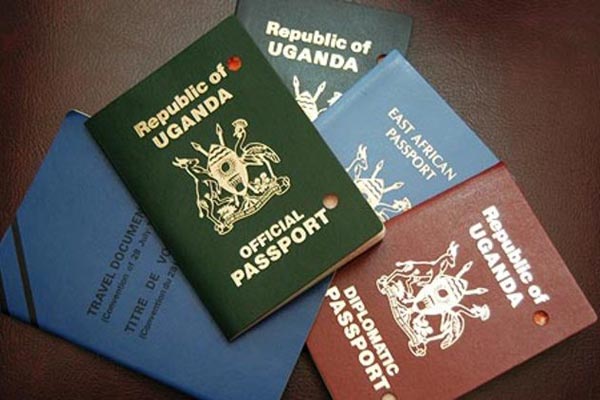
Kibenge also said that the government is pursuing other efforts for the protection of Ugandan workers. In the pipeline is the recruitment of labour attaches to follow up on Ugandan laborers abroad, strengthen embassy offices and establish a call center in Uganda to which, complaints about the welfare of Ugandan workers can be reported for action.Remittance and Revenue that was the only bilateral labour agreement that Uganda had. As of June last year, there were 235 licensed private recruitment companies. Every two years, each company pays Shs 2 million in license fees. Annually, Government collects US $1.3 billion globally from labour export business the Middle East alone sends in $700m.The government collects $30 (Shs110,000) job order fees for each eternalized worker. That money is wired directly to the Uganda Revenue Authority accounts. From August 2021 to August 2022, the government collected over Shs 12 billion from Job orders.Ministry of Internal Affairs says they process 10,000 passports every month and the biggest percentage goes to individuals seeking to work in the Middle East.According to the ministry of Gender, Labor and Social Development, there are over 150,000 Ugandan migrant workers in Saudi Arabia. Most Ugandans are employed in the informal sector as housemaids, gardeners, cargo handlers and other jobs. Eagle Online learned that in 2021, Uganda externalized 89000 Ugandans of which 79000 went to Saudi Arabia. Of the Shs79000, 75000 were female. By June 2022 Uganda had externalized 50,000 nationals and a high percentage went to Saudi Arabia.Some of the proposals in the new agreement Ronnie Mukundane, spokesperson of the Uganda Association of External Recruitment Agencies (UAERA) told Eagle Online that Saudi Arabia was the only bilateral labour agreement that Uganda had and the delay or a decision not to renew it will render hundreds of people in labour export companies jobless since the 95% of the job orders come from Saudi Arabia.Currently, the government is negotiating with Saudi Arabia to have the contract renewed. The negotiations will begin on February 6, 2023, and the agreement is scheduled to be signed on February 23, 2023, in Kampala.
“Some of the issues pointed out in the new agreement, is the observation of human rights and salary enhancement. In the recent agreement, Ugandans were earning Riyal 900 (about Shs 900,000). We proposed an increment for our people to benefit. The discussions are ongoing and a figure will be decided,” he said.Eagle Online learned that UAERA an umbrella body that brings together all labour recruitment companies suggested an increment of 400 Riyals (Shs 392,256) however Migrant Workers Voice suggested 600 (Shs588,385) to make 1500 Riyals (Shs1,4 million).The delayed renewal of the agreement is expected to fuel human trafficking into Saudi Arabia. In 2016, there was a ban for one year however over 40,000 Ugandans went to Saudi Arabia illegally and there is no one responsible for them.Our efforts to get a comment from Minister for Gender Betty Amongi and Lawrence Egulu, the commissioner in charge of Employment Services at the Ministry of Gender, Labour, and Social Development (MGLSD) were futile. She could not pick up nor return our repeated calls.
Speaking to Eagle Online, Abdallar Kayonde the President of Migrant Workers Voice said migrant workers have been sidelined. If we don’t involve ourselves in the coming agreement, we shall be left out forever, because the government intends to renew the agreement and repeat the same terms.He said the government should improvise within the same agreement and plead to ensure that the workers’ presence is recognized.“We wrote to the ministry, asking officially to have an administration as Ugandan migrant workers, which includes the Ugandan returning migrant workers and those already in Saudi Arabia because without us being inside, we cannot actually talk about anything,” he said.Migrant Workers Voice suggests an audit into Ugandans living in Saudi Arabia. They also want Saudi Arabia to account for the people who were there before. Saudi Embassy in Uganda reports that there are 200,000 Ugandans who were given visas while the Ministry of Gender said there are 150,000 Ugandans working in Saudi Arabia and UAERA says there are 165,000.“Therefore we need to form our own database. We are tired of defending people we don’t know. They walk from all angles. We don’t know them and we can’t trace their details. Sometimes have the capacity to assist them but we find difficulty in supporting these people with the right powers,” Kayonde said.He said migrant workers report cases to the association, it ends up being diverted into compromise because once labour export companies realize it’s a serious case, they begin manipulating families and victims.“We must look at that and identify who was trafficked, and who was not and this will help to fight human trafficking. We are supposed to work together for us to bargain for ourselves. It is internationally recognized and recommended,” he said adding, “That is why we are seeking an official entry as a third arm of the tripartite arrangement. Before signing the agreement, the government should come back home and organize from home.
Any person, who would look good before the public leaves home dressed well, cannot begin dressing from the public. Similarly, anyone who will look naked from the public will leave home naked,” he said.He said whoever complains, they call it drama or tainting the image of Uganda. How does that come, into place? Migrant workers have been neglected and their voices have been scattered. Whatever comes in form of those misguided missiles ends up affecting the industry and workers themselves.He said several Ugandan migrant workers have died at work but nobody has compensated them. What incentives do safe labor migration through recruitment companies bring on to Ugandan workers? There is none. No such incentives.“Several workers have been extorted by recruitment firms and other officials in the Ministry of gender. Without addressing the injustices, they are trying to put channels of extortion, systemically. Recruiters represent the employee and the employer on the other side in Saudi Arabia. Workers’ issues must be separated from the recruiters’ issues. Recruiters have an interest of profit to protect and workers have an interest of rights to protect and salaries,” he said.“We are insisting that workers should be given an administration in this country, they should manage their issues such that they can get in a good position to better ask the questions concerning their fellows. We are not infringing on anyone. And we do not want to turn into traffickers, just like how some companies wanted us to turn into,” he said.He said people monitoring employees are traffickers. How do you ask them to monitor workers? You are in a position of arresting them, suspending their licenses for trafficking workers but assigning them roles. What kind of craziness is that?“We are not against this industry because it is the only option for the country to survive on its own. It should be organized, and facilitate embassies to monitor them. Embassies are less facilitated to do their works and compromised with the diplomatic powers,” he said.
He said anyone who comes their way will be exposed including all the officers in the ministry, who have an interest in the same business. Every time we question them, they cannot answer because the questions affect them.From 2019 to date, Uganda has registered 88 deaths of migrant workers, according to the Gender ministry. Of these, Saudi Arabia has the highest number at 69. On work-related injuries, only seven have been registered since 2019 in Saudi Arabia (five) and Iraq (two).
Ugandans to benefit from Dfcu ‘Reach for More Campaign’. Under the campaign, the Bank is providing collateral-free loans (unsecured loans) of up to Shs 250 million to customers who take out personal loans, and an option of a repayment holiday of up to 75 days.
The Repayment Holiday option will allow customers to take a break from scheduled loan repayments during the campaign.The personal loan offer targets salaried and professionals earning a regular income. Customers who transfer their existing personal loans from elsewhere to dfcu Bank will be charged no arrangement fees. In addition, loan arrangement fees have been discounted to 1% for individual customers who take up new loans and 0.5% for those who top up their existing facilities at dfcu Bank between now and April 15,2023.With the Back-to-school season now well underway, the Bank has also unveiled a special package to support schools as they prepare to receive students for the new academic year. The offer dubbed “the school bridging overdraft’ allows school owners to access unsecured short-term facilities of up to 30% of their expected school fees collections, to take care of urgent working capital needs.
In addition, parents who pay their schools fees through dfcu Bank during this period will automatically enter a draw and have a chance to win up to Shs 500,000 to help cover outstanding back- to- school requirements.Robert Wanok, Head of Personal and Business Banking at Dfcu Bank, said the campaign has been launched to accelerate the dreams and aspirations of our customers during the new year. “The new year always represents new beginnings for most people. Renewed hope, dreams, ambitions, targets, that we want to see come to life. With “Reach for More” campaign, we are encouraging our customers not to lose sight of these dreams but instead partner with us to see them come true. We are staying true to our brand promise of ‘Making More Possible’ for all our customers,” he said.“The Bank is also offering mobiloans of up to Shs2 million accessible via our online banking platforms, in less than five minutes.
For parents, the mobiloans are a convenient way of sorting out urgent back-to-school requirements. Parents who pay school fees at any dfcu Branch, dfcu Agent or via dfcu internet banking will automatically enter a draw and stand a chance to win a cashback of up to Shs500,000,” Wanok added.Commenting on the campaign during the launch, Ronald Kasasa, the Head of Business Banking, reiterated dfcu support towards schools during this back-to-school period.“The beginning-of-term can be a tough period to run an institution within the education sector. Teachers’ salaries, food supplies, utility bills, educational materials, and any other day -to day essentials can put a strain on schools. Our school bridging overdraft allows school owners to access unsecured short-term facilities of up to 30% of their expected school fees collections, to take care of urgent working capital needs. The overdraft is payable in three months, which gives the school an opportunity to repay when the cash flows from tuition collections are steady and stable,” he said.The loans come with competitive interest rates, same day response ti
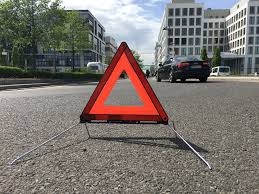
In December last year, Traffic police directed all drivers to get a pair of reflector triangles for use in case their vehicles break down, Eagle Online learned.
The directive was announced by Faridah Nampiima, the Spokesperson of Traffic Police. She said failure to have the reflectors attracts an express fine of Shs 100,000 de. She said police banned the use of tree branches with immediate effect.
The directive comes at a time when the police are cracking a whip on boda-boda riders who have no reflector jackets. Police say the move is aimed at minimizing cases of road carnage.
Traffic and Road Road Safety (Reflectors) Regulations, 2012 stipulates that all vehicles except a motorcycle shall carry on board at least two reflective emergency warning signs painted in red color. Any person who contravenes regulations commits an offense and is liable on conviction to a fine not exceeding twenty-five currency points or imprisonment not exceeding one year or both.
According to the 2020 Insurance Regulatory Authority report, Uganda is estimated to have a total of 2,302,021 cars. The number could have increased in the last two years.
A quick sample at some of the shops dealing in car spare parts, a pair of reflector triangles costs between Shs 80,000 and Shs 100,000. This implies that the owners of the 2,302,021 cars will pay Shs 184.1 billion to get triangle reflectors.
In tandem, police will collect over Shs 230.2 billion when all the car owners default on the directive.
Interviewed for this story, Nampiima said this is not a new law; it has been there since the time memorial. “When you buy a new car, it comes with these reflectors so we only need drivers to comply with traffic laws to avoid road accidents,” she told Eagle Online.
Federation of Uganda Football Association (FUFA) President Moses Magogo has unveiled MTN as the official sponsor of Uganda Cranes. The Shs 19 billion sponsorship will for five years.
Magogo hailed MTN for its unwavering support of the development of the game in Uganda.
“I thank MTN for this tremendous boost. This sponsorship package will go a long way in addressing the multiple challenges faced by the federation as well as pushing the country towards its ambition of qualifying for this year’s Africa Cup of Nations (AfCON) and 2026 FIFA World Cup among other targeted milestones,” Magogo said.
MTN Uganda Chief Executive Officer, Sylvia Mulinge said; “This sponsorship signals our commitment to continue developing football in Uganda and supporting the Cranes’ ambition of flying our country’s flag high, everywhere they go,” Mulinge said. “We’re bringing back the game to Ugandans, who are the most passionate fans of our football”
She said the sponsorship package will be used to support seven properties or programs of the federation, namely: the Uganda Cranes, the Crested Cranes, the FUFA Drum regional cup, the FUFA Juniors League, FUFA Super 8 tournament, the FUFA Super Cup, and the FUFA Annual Awards.
Key to note is that this new sponsorship deal also includes support for the Crested Cranes, which is the national women’s team. “This was a key focus for us while negotiating this partnership. It complements the effort of government and society in general in ensuring equal opportunities for all regardless of gender,” the MTN CEO said.
, Somdev Sen, the MTN Uganda Chief Marketing Officer (CMO) noted the company’s unwavering passion for Uganda’s football, over its years of operating in the country.
“MTN has enthusiastically supported Uganda’s football over the years. Together with FUFA and other stakeholders, we have registered so many wins and with them, great memories. It is therefore exciting to have this partnership and our game back with our passionate fans. We look forward to doing even more together,” he said.
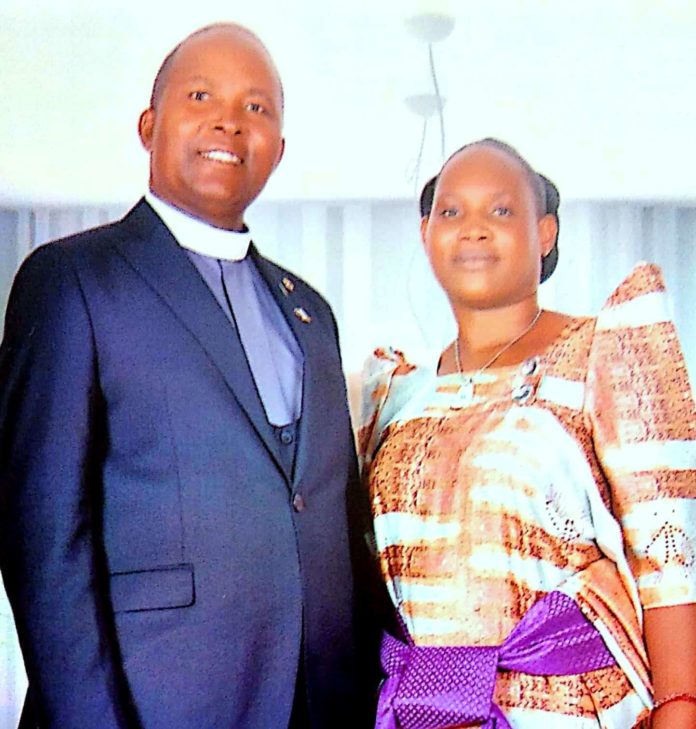
Rev. Canon Enos Kitto Kagodo with wife Catherine Namuddu
The Church of Uganda (CoU) has elected Rev. Canon Enos Kitto Kagodo, Rev. Onesimus Asiimwe and Rev. Canon Simon Akol Aisu as the next Bishops for Mukono, North Kigezi, and North Karamoja Dioceses respectively.
Rev. Canon Enos Kitto Kagodo has been elected the fifth Bishop of Mukono Diocese. He will be consecrated and enthroned as Bishop on February 26, 2023 at St. Philip’s and Andrew’s Cathedral, Mukono.
Rev. Enos was born on 13th December 1968 in Nakisunga Sub-country in Mukono District. He was born again on 14th October 1994. Rev.
He earned a Master of Divinity degree and a Bachelor in Health Administration from Uganda Christian University, after receiving diplomas and certificates in the same fields.
Rev. Enos is currently the Provost of St. Philip’s and Andrew’s Cathedral in Mukono. Prior to this position, he has served as a parish priest, Archdeacon, and Diocesan Health Coordinator.
He was ordained a deacon on June 9, 2002 in Mukono Diocese and then made a priest on December 12, 2004. He has served on school management committees as well as various Diocesan Boards in the course of his ministry.
Rev. Enos is married to Catherine Namuddu and God has blessed them with seven biological children and many spiritual children.
Rev. Onesimus Asiimwe elected 6th Bishop of North Kigezi Diocese
Rev. Onesimus Asiimwe
Rev. Onesimus Asiimwe has been elected the 6th Bishop of North Kigezi Diocese. He will be consecrated and enthroned as Bishop on March 12, 2023 at Emmanuel Cathedral, Kinyansano, Rukungiri.
Rev Onesimus was born on 24th April 1965 in Mparo, Rukiga District. He was born again on 8th January 1988.
Rev Onesimus earned a Master of Divinity from Uganda Christian University, a Bachelor of Education from Makerere University, and a Diploma in Education from the National Teachers College in Kabale.
He has attended numerous capacity building trainings locally, as well as internationally.
Rev. Onesimus is currently the Chaplain of St. Francis Chapel, Makerere University. Prior to this position, he served as the Provincial Youth and Students Coordinator where he helped develop the very influential PAYSCO (Provincial Annual Youth and Students Convention) programme.
He also served as the Chaplain to Archbishop Henry Luke Orombi, and Coordinator of the Provincial Healing, Deliverance, and Intercessory Prayer Ministry.
Rev. Onesimus is married to Florence and the Lord has blessed them with three children.
Rev. Canon Simon Akol Aisu elected 2nd Bishop of North Karamoja Diocese
Rev. Canon Simon Akol Aisu with wife Anna Aisu
Rev. Canon Simon Akol Aisu has been elected the second Bishop of North Karamoja Diocese. He will be consecrated and enthroned as Bishop on February 12, 2023 at Christ Church Cathedral, Kotido.
Canon Aisu was born on August 6, 1964 in Nabilatuk District, and was born again on 20th December 1981 at a youth conference in Nabilatuk.
Canon Aisu earned a Bachelor of Divinity degree from Uganda Christian University after receiving a diploma and certificates in the same fields.
He has also participated in a number of other capacity building training programmes.Canon Aisu is currently the Sub-Dean of Christ Church Cathedral in Kotido.
He has served in a number of positions in both Karamoja and North Karamoja Dioceses, including Archdeacon, Theological College Principal, Diocesan Secretary, and parish priest.
The Ministry of Internal Affairs has announced the closure of its offices for two days to enable passport system upgrade.
In a statement issued on Wednesday January 18, 2023, the ministry said the closure will take place on Thursday and Friday, after which the issuance of the passport books will resume on Monday next week.
This upgrade will affect all passport services; applications, scheduling appointments, enrolment (interviews), printing and collection.
“All our offices in Kampala at the Ministry Headquarters, Kyambogo, Mbarara, Mbale, Gulu; and diaspora offices in Washington, London, Ottawa, Copenhagen, Pretoria and Abu Dhabi will be shut down,” the ministry announced.
“Passport applicants will not be able to access our online services at http://passports.go.ug or schedule appointments for these two days. Enrolment and collection of passports will also not be possible,” it added.
Upon completion of the upgrade and maintenance works, applicants who had already scheduled appointments on Thursday, 19th January and Friday, 20th January 2023 will be served alongside those already scheduled on Monday 23rd and Tuesday, 24th January 2023.
“Once the upgrade of the system is complete, the Ministry promises a much more efficient system with improved services to the users. Those meant to collect passports on those particular days will also be able to pick them after. We apologize for the inconveniences caused,” they added.
The International Monetary Fund (IMF) has disbursed a loan worth $240 million (about Shs880 billion) to Uganda after its Executive Board completed the combined second and third reviews under the Extended Credit Facility (ECF).
The facility is part of the $1 billion (about 3.547 trillion) that IMF extended to Uganda in 2021 under the Extended Credit Facility programme.
In a statement issued on Tuesday, the IMF Board said it was pleased that Uganda is implementing several structural reforms to promote economic growth.
“The Ugandan authorities remain committed to their economic program amidst a challenging environment. Most quantitative targets were met in 2022. Six of the twelve structural benchmarks due between March and December 2022 have been completed,” IMF said.
“A structural benchmark on the asset declaration regime was converted into a prior action for the review and has been met. Sound program implementation in the period ahead remains important to ensure economic resilience and support the country’s social and developmental objectives,” it added.
According to the IMF, returning to the programmed fiscal consolidation path and reserve cover remains essential to keep debt sustainable and maintain external buffers.
“Enhanced domestic revenue mobilization, including via the elimination of inefficient tax exemptions, rationalization of non-priority spending, and shifting the composition of spending towards priority social areas will help achieve the fiscal objectives and address large development needs. The introduction of the Parish Development Model was a welcome development,” IMF said.
In a meeting last month, IMF said its staff and the Uganda authorities had reached a staff-level agreement on economic policies to conclude the combined second and third reviews of the 36-month ECF-financed program.
The money is a huge relief to Uganda which is heavily indebted and struggling to finance its budget.
According to the Bank of Uganda Monetary Policy report for December, Uganda’s public debt stood at Shs78.89 trillion, as of June 2022, of which Shs48.21 trillion is external debt, and Shs30.661 trillion is domestic debt.
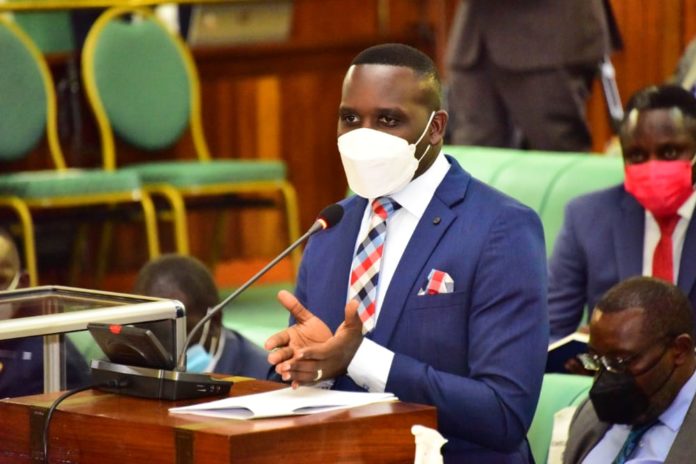
Joel Ssenyonyi, the chairperson of Parliament’s Committee on Commissions, Statutory Authorities and State Enterprises (COSASE) has accused Speaker Anita Among of refusing to allow the tabling of the report in regard to the investigations about the management of Uganda Airlines.
COSASE kicked off hearings into operations of Uganda Airlines in July following red flags raised by the Auditor General. The committee wound up its probe in September.
According to Ssenyonyi, it is now three months since the report was handed over to the Speaker but it has never been put on the Parliament’s order paper so that it is given time for debate by MPs.
“Every time I raise the matter, she says you wait, I am still reading your report. I wonder what she is reading when the report is already written. Even though we shared it one time with the MPs ahead of debate, it was removed without any clear explanation,” he says.
But Chris Obore, Parliament’s Director of Communications, says there are many reports to be debated and Ssenyonyi should be patient.
A leaked copy of the COSASE report recommended that current and past executives of Uganda Airlines should be punished for mismanagement and flouting procurement regulations.
In the 50-page report, MPs on the Commissions, Statutory Authorities and State Enterprises (COSASE) committee say the airline’s chief executive officer Jennifer Bamuturaki, who has since changed her name to Jennifer Lenkai, should refund Shs 156 million paid to online bloggers to burnish her reputation and that of the national carrier during a recent storm of bad publicity.
MPs say the controversial contract flouted procurement regulations and was mired in influence peddling.
The COSASE hearings spotlighted operations of the national carrier dogged by scandals since the company was incorporated in 2018.
The airline has had three chief executive officers and two boards of directors since. The last board was sent packing early last year to pave way for an investigation into corruption and flawed procurement deals.
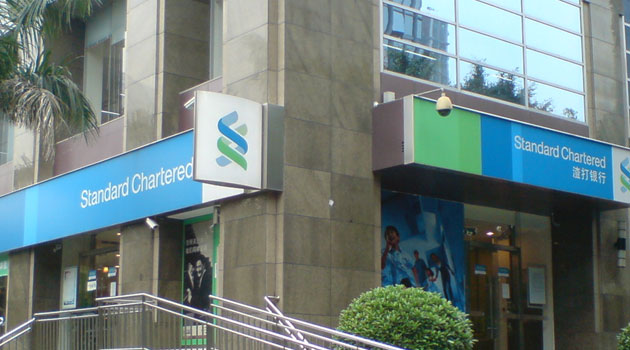
Standard Chartered Bank Uganda has launched an Employee Banking campaign dubbed “Dream Big with Standard Chartered Bank.”
The campaign that will run until 31 March 2023 offers comprehensive financial solutions and personalized services that deliver a range of benefits to suit various company’s employees’ needs.
The value-added solutions that have been unveiled to support the Bank’s individual banking clients include;
Salary/Personal Loans with high loan amounts of up to Shs 250 million, a repayment holiday of up to 75 days and discounted interest rates of as low as 16% p.a on Shs and 9% on USD. The Bank also guarantees a response on loan applications within 24 hours, or it pays Shs 500,000.
Companies and employees who open payroll or salary accounts respectively will enjoy zero monthly fees, zero ATM withdrawal or card fees, zero bill payment fees, free Standard Chartered Bank online bank transfers, free monthly eStatements, 24-Hour account access with over 70 service requests online and much more.
What’s more, all new customers who open a Digital Life Account will receive a Shs 50,000 cashback on their account when they open and fund their accounts with Shs 100,000.
Additionally, the Bank recognizes the customers’ unique priorities in life, no matter what stage of life they are. Senior management of companies will also be able to unlock access to a higher level of personalized service and expertise to create, grow and protect their wealth with Priority Banking thus build a secure future for themselves and their families.
Vicky Nakidde the Head of Personal Banking at Standard Chartered Bank while launching the campaign said: “We understand that many Ugandans have set themselves ambitious goals ranging from health, financial to spiritual aspects of their lives and we are their bank of choice to make these aspirations a reality. At Standard Chartered Bank we know that individuals’ needs vary so we take the time to customize solutions for every stage of an employee’s career journey.
“We are therefore pleased to launch a campaign that will not only help them achieve their goals but will alleviate the various burdens and stress they are experiencing especially, the financial constraints, post the festive season. With the Dream Big with Standard Chartered Bank campaign, clients are getting preferential offers on our unsecured loans, a repayment holiday with a service guarantee, a cashback when they open an account with us and all these are meant to help them kickstart and achieve their plans for the year.”
The Standard Chartered Bank’s Employee Banking proposition also offers companies and employees access to a wide selection of customized financial products and services as well as benefits like preferential offers, transactional convenience and digital services.