Stanbic Bank
Stanbic Bank
27.2 C
Kampala
Stanbic Bank
Stanbic Bank
Home Blog Page 471

MPs query selective application of tax exemptions

Parliament

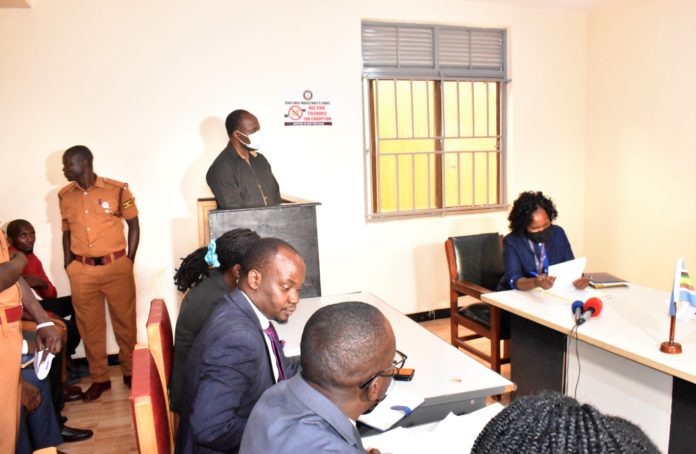
Legislators on the Public Accounts Committee (Central) have put officials from the Ministry of Finance, Planning and Economic Development to task on why tax exemptions do not cut across businesses.

The MPs raised the matter in a meeting with the ministry officials led by the Under Secretary, Dr. Edward Sengonzi Damulira who appeared before the Committee chaired by Medard Sseggona to respond to queries raised by the Auditor General for the financial year ended 30 June 2021.

According to Sseggona, there are companies that have the ability to pay but are exempt from tax.
“Do we have a policy on tax exemption? Who exempts and what are the guiding principles? If I want to be exempted, what criteria do I have to satisfy? In our economic understanding, you are collecting too much from too few,” Sseggona said.

Moses Kaggwa, the Director in charge of Economic Affairs at the ministry said the exemptions are catered for in the tax laws passed by Parliament.

He said business investments that prove to Uganda Revenue Authority (URA), to be using over 75 per cent of raw materials and workforce from Uganda, have a high chance of being tax exempt.

“For example, if you are in the business of agro-processing and you have invested US$10 million as a foreigner, or US$750,000 or US$250,000 as a citizen outside urban areas, then you are entitled to a 10 year tax holiday,” Kaggwa said.

He added that the ministry has designed a Tax Expenditure Framework that will enable the review of all tax exemptions to see if they have achieved the intended objectives regarding employment, value addition, export promotion and foreign exchange income, among others.

“The Auditor General’s office is also carrying out a parallel study on tax exemptions, and this will inform us on the next direction we can take,” said Kaggwa.

Sseggona tasked Kaggwa to present a timeline for the plan to reconsideration of the tax exemptions.  Sseggona also cited companies with tax holidays that close shop in a period close to the expiry of the tax holiday and end up registering anew.

“You find that they keep metamorphosing into new companies and for the entire duration of their stay here, they do not pay tax. Some of these companies do not even fall in the category of strategic investments,” Sseggona said.

He added that, ‘you could advise us if it is not logical to simply provide for less other than taking away the obligation to pay taxes. Where they would ordinarily pay 30 per cent, you could deduct 10 per cent’.

Agago North County MP John Amos Okot bserved that unfair tax exemptions hindered the growth of some businesses in the country and tasked the ministry to present a list of local and foreign investors who have benefitted from tax exemptions in the last three years.

“You will find that one of two businesses dealing in the same products has been given a tax holiday. This means the tax exempt person will sell at a low price at the expense of the one who has pad the burden of taxes,” Okot noted.

Moroto District MP Stella Atyang described tax exemptions as leakages in revenue collections that have been misused and hindered government’s progress in meeting its demands.

The Under Secretary said there are ongoing discussions on tax exemptions and payment of Value Added Tax (VAT).
“We are sensitive in balancing the pressure we have to collect revenue and grow the economy,” Sengonzi Damulira said.

Stories Continues after ad
UBF boss Muhangi wants boxing reinstated in schools

The President of Uganda Boxing Federation Moses Muhangi (on the right)

The Uganda Boxing Federation (UBF) has called for the reinstatement of boxing in schools in a bid to develop the sport.

The appeal was made by the President of the federation, Moses Muhangi while appearing before Parliament’s Ad-hoc Committee that is investigating the usage of funds in the sports sector on Thursday, 08 December 2022.

Muhangi said that boxing has been banned from schools without a clear reason, with the latest letter from the former state Minister for Sports, Dennis Obua showing that he is investigating the safety of the sports to school going youths.

Muhangi says that the continued ban on sports means they will only be able to rely on ghetto youth only which he says is going to cause the demise of the sport in the country.

“Thirty years ago, boxing was suspended from schools; it was again suspended by Hamson Obua in June and I find it very unfortunate because every sports thrives on grassroots development, he said adding that, ’all the sports we have in the country are in schools and they are contact sports; if you look at rugby and kickboxing, these are all allowed to be in school but boxing is not allowed’.

Muhangi appealed to Members of Parliament to advocate for the return of boxing to schools saying as it stands, the sports is being discriminated upon.

He said the federation should be given an opportunity to demonstrate the safety measures they have in place so that the sport can be reinstated.

Meanwhile, the federation also faulted the National Council for sports (NCS) for asking them to account for more funds than they received.

He said that during an international game in Senegal, they requested for Shs600 million, but the NCS gave them Shs45 million but asked them to account for the original amount. 

“Most time you go to the National Council of Sports, they say we shall buy for you air tickets and pay accommodation and then they expect you to account for It,” he said.

Muhangi also told the committee that although the government gave the NCS Shs7 billion for the Commonwealth Games in Birmingham, most of the delegates were facilitated by the organizers of the event and most of the government funds were used as per diem.

The Chairperson of the committee, Laura Kanushu tasked Muhangi to present all evidence in regards to his allegations.

“You said you were given Shs45 million and you were asked to account for Shs600 million, did you account? Have you ever accounted for money that you have not received? Can you give us what form of accountability you presented,” she questioned.

Muhangi however, said that they have not accounted for money they haven’t received and that is the source of their problem with NCS.

The committee also tasked Muhangi to present their audited books of accounts, detailed staff structure, accountability documents and their achievements to the committee.

Stories Continues after ad
Sports betting in Cameroon 2022: tips to get started

Sports betting has been very popular in African countries for many years. As a result, a large number of the most reliable betting sites have become available in different countries including Cameroon. Some betting sites offer a limited set of odds on big sports, others are vast offering a wide variety of high odds, even on exotic sports. We spend time looking for a guide for the top betting sites possible in Cameroon. And here is our choice: online betting guide Parimobile Cameroon (parimobile.cm).

Choosing the best online betting site

Since there are a large number of betting companies currently operating in Cameroon, it can be difficult to choose the best. For this reason, online platform Parimobile has established a ranking of the best online bookmakers in our country based on an objective and rational analysis. According to experts, there are several factors to take into account.

Odds

The odds play an important role when choosing the different betting houses. When the odds are higher, your winnings are increased, and a bookmaker who offers the best odds on all sports is always in the lead. This is one of the most important criteria that must be taken into account when ranking the top bookmakers.

Security

Then, the reputation of a bookmaker is also important. Although the license gives an indication of security to the players, we recommend that you register on a site that has a good reputation among the players. Thus, Parimobile only offers agencies that follow all the necessary criteria related to betting security.

Services

Types of bets, available sports markets, live betting interface, possibility to bet on mobile or on computer.

Customers support

Also very important – the customer service of the managers. Available payment methods, answers to questions are some of the many aspects that must be analyzed to decide on a bookmaker.

Discover our 7 best tips to find the best betting site:

  • Pay attention to the comments. If they are bad, then the bookmaker is not very good;
  • Check for interesting promotions and bonuses. Constant draws of large amounts of money and bonuses on deposits is a sign of good companies;
  • Find out about the minimum bet amount and the deposit;
  • Check if the company offers a mobile application;
  • Subscribe to the company’s groups on social networks. Or instant messengers. See if there’s any activity. And, if there is, it is positive or negative.
  • Discover markets and odds. Low odds will not give the opportunity to win much.
  • Evaluate the payments. Find out which payment systems are supported by the bookmaker.

News & salaries of football players

How much does your favorite player earn? Football fans are often interested in the daily life of the stars of the sports world. Therefore, the authors of the Parimobile website often publish articles on the salaries of the best players of Cameroon. You will also find a news feed about the latest matches and changes in the world of football on the website.

Bonuses & promo codes

One of the advantages of Parimobile is that it updates the information on different bonuses and promotions of Cameroon bookies. So you will find articles about current promotions at 1xBet, Betwinner, Premier bet and for other companies as well as latest promo codes for registration and free bets.

Conclusion

So Parimobile Cameroon is a really good guide for betting in Cameroon thanks to their truthful reviews about local bookmakers, latest bonuses and promo codes of betting sites, as well as news feed and articles about the life of football players.

Stories Continues after ad

UBL unveils first flavored beer, Rockshore Tropical Lager

Uganda Breweries Limited (UBL) has unveiled Uganda’s first flavored beer known as Rockshore Tropical Lager in order to meet the ever changing tastes and preferences of customers and showcases the company’s innovation amid changing consumer needs.

“Rockshore is Uganda’s first flavored beer – infused with natural tropical African fruit flavors like pineapple and passion to give consumers a new and exciting way to enjoy beer,” UBL said in a statement on Thursday, December 8, 2022.

The product was unveiled under UBL’s Innovations arm, which has brought forth products like Uganda Waragi Pineapple and Coconut, Baileys Delight, Gordon’s Pink and Tusker Cider.

It says the product was unveiled under its Innovations arm, which has brought forth products like Uganda Waragi Pineapple and Coconut, Baileys Delight, Gordon’s Pink and Tusker Cider.

Angella Mpayenda, UBL’s Innovations Project Manager said: “Both locally and internationally, we are seeing a shift in the way consumers want to experience the things that bring them together with their friends and loved ones – from food to travel, and now to beer. Rockshore is our latest response to these changes in consumers’ tastes and preferences, and we are proud to once again shock the market with yet another quality product offering.”

Emmy Hashakimana, UBL’s Marketing and Innovations Director said: “Change is a constant, and our consumers are on a continuous journey to discover more unique and diverse taste experiences. As such, our edge as a business has been to leverage the power of innovation to consistently push the boundaries of what is considered ordinary and bring forth products and experiences that align with the consumers’ craving for the extraordinary.”

Consumers have been guided to get free samples of the product and get immersed into its brand experience at the December Edition of Blankets & Wine, slated for this Sunday the 11th of December at the Lugogo Cricket Oval – with ‘Buy 1 Get 1 Free’ offers and exciting giveaways.

Stories Continues after ad

Uganda receives first batch of Ebola trial vaccines

Uganda has received 1200 doses of vaccines from World Health Organisation (WHO) which will be used in the Ebola vaccine trial. This is the first batch of the three candidate Vaccines against the Sudan Ebola virus.

The three vaccines Oxford from the United Kingdom, Sabin and Merck from USA will be evaluated for their efficacy.

The Minister of Health, Dr Jane Ruth Aceng said the country has not registered any new confirmed Ebola case in the last nine days but encouraged scientists to continue research of appropriate drugs and vaccines to prevent future outbreaks.

“It is nine days today that we have no new cases of Ebola, but that does not mean we are out of the outbreak. Uganda encourages scientists to continue research to support the provision of appropriate drugs and vaccines to prevent future outbreaks,” Jane Ruth Aceng said.

Since Uganda declared an Ebola outbreak on September 20, cases have spread across the country, including to the capital Kampala, and have claimed over 50 lives, with 22 more believed to have died before their samples were tested.

“This is a historic day for the country and the world of scientific health research. For the first time, vaccines for clinical trials are produced in less than 90 days after the start of an Ebola Outbreak. This is a remarkable effort!” the WHO Uganda incident manager, Dr Charles Njuguna said.

Uganda has been struggling to rein in the outbreak caused by the Sudan strain of the virus, for which there is currently no vaccine. But UN health agency chief Tedros Adhanom Ghebreyesus in November told reporters that vaccine trials would soon begin.

Speaking from the G20 summit in Indonesia, Tedros said a WHO committee of external experts had evaluated candidate vaccines and determined “all three should be included in the planned trial in Uganda”.

Stories Continues after ad

Government to assist bury the Late Kuuya is a perfect thing

The Late Patrick Masette Kuuya

By Nabendeh S.P. Wamoto

Former Minister for Rehabilitation-the Late Patrick Masette Kuuya was the most powerful, influential, assertive sometimes confrontational yet benevolent to say the least a “Real Minister” in the sense that he could act and inform the Principal (President Obote) later. He could be said to have been the most practical minister ever in Bugisu sub region.

He was only compared to other powerful politicians such as Chris Rwakasisi (Security), Luwuriza-Kirunda (Internal Affairs) and Edward Rurangaranga.

Kuuya single handedly endorsed my scholarship to the hotel and tourism college (Kenya Utalii College) in Nairobi. This gave me opportunity to host Mrs. Janet kataha Museveni and her then children and later I was entrusted with the task of ring-fencing the regional army generals’ food from the then marauding Alqueda terrorists. To me the late Kuuya launched me into the foregoing contribution to the state of Uganda and the rest of the East African Community region’s security and stability.      

President Milton Obote would only address the late Kuuya as “My son” to emphasize their great relationship  

For starters, Bamasaaba did a very big task to the independence of Uganda. Uganda would not have been due for internal self-rule in 1962, had it not been Bugisu’s Arabica coffee foreign account (Foreign account). It is needless to say, however, that the rest of Uganda except Buganda’s contribution rode on Bugisu’s Arabica coffee fortune to secure political freedom. Bamasaaba shall always demand to be respected for that.

The Bamasaaba were also credited for producing exemplary, committed servant-leaders and scholars of international reputation. For example, former Chief Justice George Masika, Prof. Timothy Wangusa, Prof. Dani Wadada Nabudeere, the late Natoolo Masaaba who single handedly waged a demonstration from the present day Mooni against Bukedi district who wanted to lay claim on the land that hosts the present day Mbale City, the late Joshua Wakholi former minister of Public Service and Cabinet Affairs in Obote I government, the just deceased Patrick Masette Kuuya the former minister of Rehabilitation in Obote II government, the late James Wambogo Wapakhabulo, the late Perezi Musamali, the late Jack Maumbe Mukhwana and many others. History has it that in the late 60s, 70s and early 80s the Uganda Judiciary was half-way occupied by prominent, legal men and women from Bugisu. It is also said that because of the then strenuous post-Imbalu (circumcision) counselling that induct Bugisu men into hard work, bravery, dignity, confidence and of corrupt-free tendencies.

The Bamasaaba in the mid-70s denied the brutal and damaging regime of Idi Amin the all-important foreign exchange by smuggling Arabica coffee across the border to Kenya (Chebukube market) and this quickened Amin’s government to its knees and eventually collapsed.

The current president of the republic of Uganda, Gen. Yoweri K. Tibuhaburwa Museveni was inducted and received his initial ideological classroom training in 1965 at Lumumba Research Bureau in Namakwekwe Mbale City under the tutelage of comrade, son of the soil Masaba Natoolo but either by default or deliberate, H.E. the president didn’t document this in his Mustard Seed record on the two occasions.  

The popular skirmish that happened on 22nd January 1973 at Maumbe Mukwana’s house No.49 was the climax of the first rebellion against Idi Amin’s government in Bugisu. Young men such as Mpima Wahu Kazimoto, Martin Mwesiga led by Yoweri Museveni were already plotting incursions, but when they had gone to the said Malukhu Estate, soldiers from the military police barracks conducted a cordon and search operation and when they approached house No.49 the then rebels attempted to flee, the two were gunned down but their colleague now president Museveni managed to jump out of the house, ran through the trench into then Nashibisho Forest Reserve, used the thick grass leaving behind their vehicle the Volkswagen Beetle 1600 packed at Maumbe’s compound.

In Maumbe’s house there was a young student boy called Sebastian Namirundu who the soldiers identified later as an accomplice of the Museveni rebels. He was therefore with Tom Masaaba charged in Court Martial convicted to a frightening firing squad at King George VI stadium – the only stadium then in Mbale. Namirundu was shot six times in the chest but it took the intervention of the then Uganda Army physicians to confirm his death after again 6 whole minutes of waiting for his head to bow down in vain (the myth still continues to this day that God did not want the young innocent boy to die). 

Nabendeh S.P. Wamoto (+256 776 658433)

Stories Continues after ad

#Covid-19 burden lessens in Africa, vigilance crucial as year-end season begins

#Covid-19 vaccine

While Africa is witnessing its lowest level of new COVID-19 cases since the onset of the pandemic, a recent four-week rise the first such sustained increase in four months underscores the criticality of maintaining vigilance as the end-year holiday season sets in.

The continent recorded the four-week long rise until 20 November, but the number of new cases dropped slightly over the past two weeks ending on 2 December, breaking the upward trend. However, the new cases reported in late November account for less than 10% of cases recorded in the same period in 2021 and 2020. While deaths rose by 14% in the week ending on 27 November from the week before, they were low at 53 approximately 4% of the deaths recorded in the same period in 2021 and 2020. The current COVID-19 caseload is not exerting any significant strain on health facilities, with hospitalizations remaining low.

“Despite the recent uptick, there is hope that Africa will be spared the challenges of the previous two years when surging cases and deaths withered normal life and caused deep devastation. While the current trends keep the pandemic under control, we are carefully monitoring its evolution. We must remain vigilant, continue to increase vaccination coverage and be ready to adopt more stringent preventive measures, if necessary,” said Dr Matshidiso Moeti, World Health Organization (WHO) Regional Director for Africa. “The investments made in the COVID-19 fight over the last three years are paying off, with the region better able to cope with the virus and its health emergency response systems bolstered.”

In 2022, the overall decreasing pandemic burden in Africa is easing pressure on national public health resources, allowing countries to further bolster disrupted health services and increase focus on other health priorities such as routine immunization, disease surveillance and response to other outbreaks.

With revamped surveillance, the region has so far this year reported 106 outbreaks and health emergencies linked to humanitarian crises, almost 17% more compared with 2021 and nearly the same as the pre-pandemic level in 2019. Around 25 vaccine-preventable disease outbreaks have also been reported in 2022. Thirteen were reported in 2020 and 19 in 2021, according to a WHO tally.

Response to the COVID-19 pandemic across Africa has helped countries to reinforce key public health emergency response measures including diagnosis and testing, critical care, and infection prevention and control. The improvements can help the continent handle not only COVID-19 but other outbreaks.

At the onset of the pandemic, the average number of intensive care unit beds was around 3 per 100 000 people, below the WHO recommendation of a minimum of 5 per 100,000. With the support of WHO and partners, 70% of countries in the region have met the standard of intensive care unit beds.

Medical oxygen production has also been boosted. Medical oxygen production has also been boosted. In 2019, the continent had 2600 oxygen concentrators and now has 6901. In addition, WHO has supported nine countries to set up and maintain oxygen production plants, increasing the region’s production by 7.9 million litres a day—enough to treat 1130 critically care patients per day. While care of critically ill COVID-19 patients has improved, countries need to further strengthen their capacities to cope with a sudden surge in cases sparked by a new lethal and transmissible variant.

A WHO assessment of more than 5100 health facilities in 18 countries on 14 infection prevention and control indicators (such as COVID-19 screening at facility entrance, isolation of suspected cases and use of personal protective equipment) found a significant improvement, with a score of 67% in November 2022, up from 54% in July 2020. WHO recommends that facilities score above 75% and with sustained effort this is possible in 2023. Strong infection, prevention and control in health facilities are critical for preventing the spread of a range of infectious pathogens such as Ebola and COVID-19.

Africa has made huge improvements in genomic sequencing. Around 105 000 sequences were produced in 2022 compared with 58 610 the year before.

With new cases at a low level in recent months testing and genomic sequencing have dropped. As part of a move to integrate COVID-19 into routine health services, WHO is recommending that countries adopt testing strategies that focus on detecting new cases, particularly in vulnerable populations such as the elderly or those with comorbidities to reduce severe disease; and detecting new cases to limit transmission and to monitor viral epidemiology and evolution.

Only 26% of Africans are fully vaccinated against COVID-19 and while countries such as Cameroon continue to carry out mass vaccination campaigns, others have begun integrating COVID-19 vaccination into routine immunization and primary health care services.

 “As we move into 2023, it is time to bring COVID-19 out of an emergency response mode and integrate it into routine health care,” said Dr Moeti. “We are already seeing countries such as Ghana and Nigeria taking the lead on this, and I encourage others to do so as well.

Stories Continues after ad

Government confirms no renewal of Umeme contract in 2025

Umeme Limited logo

The government of Uganda has revealed that Umeme’s 20 year contract will not be renewed when it expires in 2025.

In a statement released on Thursday, Umeme indicates that the company has received information from the Ministry of Energy on the issue.

“Pursuant to Rule 36 (1) (a) and (b) of the Uganda Securities Exchange (USE) Listing Rules, 2021 the Company is required to amongst others disclose to its shareholders and the general public new developments in its sphere of activity which are not public knowledge and which may lead to material movements in the ruling price of its listed securities,” reads part of Umeme statement.

“As disclosed in its Prospectus at the Initial Public Offering, subsequent Annual Reports and Public Disclosures, Umeme Limited holds a 20-year Concession from the Government of Uganda, whose natural term expires on 30th March 2025. The concession is enshrined in several binding Concession Agreements,” added the statement.

However, the company is committed to perform its duties of power distribution diligently up to 2025 when the contract will expire.

“The Company has formally received written communication from the Government of the Republic of Uganda, notifying it that the current Concession will continue to run until its natural end in March, 2025 as stipulated in the Concession Agreements after which, there will be no renewal,” Umeme said.

Umeme added, “The Company remains committed to performing its obligations as per the existing Concession Agreements and will continue to operate and maintain the electricity distribution system in line with prudent utility practice to ensure continued service delivery through to the end of the Concession.”

Stories Continues after ad

Kiwanda, Namayanja lecture Mukono leaders on service delivery

Deputy Secretary General, Rose Namayanja

The National Resistance Movement (NRM) party vice chairperson for central region, Godfrey Kiwanda Ssuubi, and the Deputy Secretary General, Rose Namayanja, have tasked party leaders from Mukono district to assist the government with manifesto implementation within their areas of jurisdiction to ensure service delivery among citizens during a meeting at the Colline Hotel in Mukono municipality

“We are the party in power. And so the manifesto is in place for us to implement. Face the public servants and ask them difficult questions concerning accountability,” Namayanja said.

She added that by doing so, the government would fulfill its pledges and promises, thereby improving people’s lives.

Namayanja said initiatives like the Parish Development Model and the Emyooga program aim to provide soft loans to people with small or medium enterprises to expand their businesses and reduce household poverty.

In terms of mobilizing support, the deputy secretary general urged party leaders to avoid threats in favor of persuading potential supporters while on a mission to reclaim victory in the central region. 

“Our strategy should be to explain the achievements of the NRM government over the years and the plans yet to be fulfilled,” she said.

Kiwanda called upon leaders to follow up on the proper utilization of district road funds that are used for maintenance. This will improve access roads, thereby facilitating quick transportation of goods to markets.

He asked the leaders to remain committed to supporting the leadership of President Yoweri Museveni, who for years has proven his capacity to steer the country forward.

The Vice Chairman cautioned leaders against disunity and intrigue and urged them to focus on building proper structures that will strengthen the ruling party.

The senior manager for communication and public relations, Mr. Rogers Mulindwa, advised the leaders to engage in the battle against propaganda and disinformation from the opposition supporters.

The district leaders thanked the senior party cadres for taking the initiative to resolve conflicts among the area leaders and pledged to work with the government to foster unity in the area and enhance service delivery.

The meeting followed Prime Minister Rt. Hon. Robinah Nabbanja’s engagements in the region to assess government services.

Stories Continues after ad

Kenya launches bid to co-host Africa Cup of Nations in 2027

AFCON Trophy

Kenya intends to bid to co-host the 2027 Africa Cup of Nations alongside Uganda and Tanzania.

The Kenyan government has sanctioned the plan, with the ultimate aim of qualifying for the men’s World Cup for the first time in 2030.

The Harambee Stars have played at the Nations Cup just twice since 1993, and were barred from qualifiers for the 2023 finals because the country was serving a ban from global football.

That sanction, imposed by world governing body Fifa, was lifted last month.

However, Kenya would need to invest in stadia and infrastructure to be able to host the tournament.

Cameroon used six venues to host the delayed 2021 edition earlier this year, while Kenya has just one stadium approved for international games by the Confederation of African Football (Caf).

That is the Nyayo National Stadium, which is in the capital Nairobi.

Kenya was stripped of the right to host the 2018 African Nations Championship four months before the finals because several venues were not ready to stage the event.

A statement from the Kenyan government said its cabinet had “sanctioned the revitalisation of football as a key cog of our nation’s social fabric” in a bid “to revive the prospects of Kenyan football”.

“This national effort will encompass the rebuilding of the national men’s team and women’s team,” the statement added.

“Cabinet noted that the joint bid would deploy the power of sports in furthering regional integration.”

Potential co-hosts alongside Kenya for the 24-team tournament would be neighbouring Uganda and Tanzania, but neither have commented on the statement by the Kenyan government.

Botswana and Namibia have already announced a joint bid for the 2027 edition of the Nations Cup.

Meanwhile, Caf’s process to choose a new host for the 2025 finals is still ongoing, with a deadline on 16 December for finalised bids – including documents, proposed host cities and government guarantees – to reach its Cairo headquarters.

The finals were initially awarded to Guinea, but the West African country was stripped of hosting rights at the start of October because of a lack of suitably advanced infrastructure and facilities.

Guinea had nearly a decade to prepare for the finals, having originally been named as host of the 2023 Nations Cup in 2014, but were then asked to host in 2025 instead.

Last month Ivory Coast’s government signed a formal hosting agreement with Caf for the 2023 Nations Cup, which will actually take place in early 2024.

Stories Continues after ad