Stanbic Bank
Stanbic Bank
28 C
Kampala
Stanbic Bank
Stanbic Bank
Home Blog Page 486

Government to assist bury the Late Kuuya is a perfect thing

The Late Patrick Masette Kuuya

By Nabendeh S.P. Wamoto

Former Minister for Rehabilitation-the Late Patrick Masette Kuuya was the most powerful, influential, assertive sometimes confrontational yet benevolent to say the least a “Real Minister” in the sense that he could act and inform the Principal (President Obote) later. He could be said to have been the most practical minister ever in Bugisu sub region.

He was only compared to other powerful politicians such as Chris Rwakasisi (Security), Luwuriza-Kirunda (Internal Affairs) and Edward Rurangaranga.

Kuuya single handedly endorsed my scholarship to the hotel and tourism college (Kenya Utalii College) in Nairobi. This gave me opportunity to host Mrs. Janet kataha Museveni and her then children and later I was entrusted with the task of ring-fencing the regional army generals’ food from the then marauding Alqueda terrorists. To me the late Kuuya launched me into the foregoing contribution to the state of Uganda and the rest of the East African Community region’s security and stability.      

President Milton Obote would only address the late Kuuya as “My son” to emphasize their great relationship  

For starters, Bamasaaba did a very big task to the independence of Uganda. Uganda would not have been due for internal self-rule in 1962, had it not been Bugisu’s Arabica coffee foreign account (Foreign account). It is needless to say, however, that the rest of Uganda except Buganda’s contribution rode on Bugisu’s Arabica coffee fortune to secure political freedom. Bamasaaba shall always demand to be respected for that.

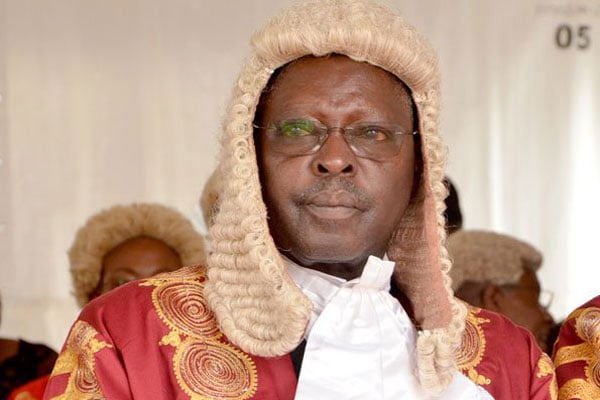
The Bamasaaba were also credited for producing exemplary, committed servant-leaders and scholars of international reputation. For example, former Chief Justice George Masika, Prof. Timothy Wangusa, Prof. Dani Wadada Nabudeere, the late Natoolo Masaaba who single handedly waged a demonstration from the present day Mooni against Bukedi district who wanted to lay claim on the land that hosts the present day Mbale City, the late Joshua Wakholi former minister of Public Service and Cabinet Affairs in Obote I government, the just deceased Patrick Masette Kuuya the former minister of Rehabilitation in Obote II government, the late James Wambogo Wapakhabulo, the late Perezi Musamali, the late Jack Maumbe Mukhwana and many others. History has it that in the late 60s, 70s and early 80s the Uganda Judiciary was half-way occupied by prominent, legal men and women from Bugisu. It is also said that because of the then strenuous post-Imbalu (circumcision) counselling that induct Bugisu men into hard work, bravery, dignity, confidence and of corrupt-free tendencies.

The Bamasaaba in the mid-70s denied the brutal and damaging regime of Idi Amin the all-important foreign exchange by smuggling Arabica coffee across the border to Kenya (Chebukube market) and this quickened Amin’s government to its knees and eventually collapsed.

The current president of the republic of Uganda, Gen. Yoweri K. Tibuhaburwa Museveni was inducted and received his initial ideological classroom training in 1965 at Lumumba Research Bureau in Namakwekwe Mbale City under the tutelage of comrade, son of the soil Masaba Natoolo but either by default or deliberate, H.E. the president didn’t document this in his Mustard Seed record on the two occasions.  

The popular skirmish that happened on 22nd January 1973 at Maumbe Mukwana’s house No.49 was the climax of the first rebellion against Idi Amin’s government in Bugisu. Young men such as Mpima Wahu Kazimoto, Martin Mwesiga led by Yoweri Museveni were already plotting incursions, but when they had gone to the said Malukhu Estate, soldiers from the military police barracks conducted a cordon and search operation and when they approached house No.49 the then rebels attempted to flee, the two were gunned down but their colleague now president Museveni managed to jump out of the house, ran through the trench into then Nashibisho Forest Reserve, used the thick grass leaving behind their vehicle the Volkswagen Beetle 1600 packed at Maumbe’s compound.

In Maumbe’s house there was a young student boy called Sebastian Namirundu who the soldiers identified later as an accomplice of the Museveni rebels. He was therefore with Tom Masaaba charged in Court Martial convicted to a frightening firing squad at King George VI stadium – the only stadium then in Mbale. Namirundu was shot six times in the chest but it took the intervention of the then Uganda Army physicians to confirm his death after again 6 whole minutes of waiting for his head to bow down in vain (the myth still continues to this day that God did not want the young innocent boy to die). 

Nabendeh S.P. Wamoto (+256 776 658433)

Stories Continues after ad

#Covid-19 burden lessens in Africa, vigilance crucial as year-end season begins

#Covid-19 vaccine

While Africa is witnessing its lowest level of new COVID-19 cases since the onset of the pandemic, a recent four-week rise the first such sustained increase in four months underscores the criticality of maintaining vigilance as the end-year holiday season sets in.

The continent recorded the four-week long rise until 20 November, but the number of new cases dropped slightly over the past two weeks ending on 2 December, breaking the upward trend. However, the new cases reported in late November account for less than 10% of cases recorded in the same period in 2021 and 2020. While deaths rose by 14% in the week ending on 27 November from the week before, they were low at 53 approximately 4% of the deaths recorded in the same period in 2021 and 2020. The current COVID-19 caseload is not exerting any significant strain on health facilities, with hospitalizations remaining low.

“Despite the recent uptick, there is hope that Africa will be spared the challenges of the previous two years when surging cases and deaths withered normal life and caused deep devastation. While the current trends keep the pandemic under control, we are carefully monitoring its evolution. We must remain vigilant, continue to increase vaccination coverage and be ready to adopt more stringent preventive measures, if necessary,” said Dr Matshidiso Moeti, World Health Organization (WHO) Regional Director for Africa. “The investments made in the COVID-19 fight over the last three years are paying off, with the region better able to cope with the virus and its health emergency response systems bolstered.”

In 2022, the overall decreasing pandemic burden in Africa is easing pressure on national public health resources, allowing countries to further bolster disrupted health services and increase focus on other health priorities such as routine immunization, disease surveillance and response to other outbreaks.

With revamped surveillance, the region has so far this year reported 106 outbreaks and health emergencies linked to humanitarian crises, almost 17% more compared with 2021 and nearly the same as the pre-pandemic level in 2019. Around 25 vaccine-preventable disease outbreaks have also been reported in 2022. Thirteen were reported in 2020 and 19 in 2021, according to a WHO tally.

Response to the COVID-19 pandemic across Africa has helped countries to reinforce key public health emergency response measures including diagnosis and testing, critical care, and infection prevention and control. The improvements can help the continent handle not only COVID-19 but other outbreaks.

At the onset of the pandemic, the average number of intensive care unit beds was around 3 per 100 000 people, below the WHO recommendation of a minimum of 5 per 100,000. With the support of WHO and partners, 70% of countries in the region have met the standard of intensive care unit beds.

Medical oxygen production has also been boosted. Medical oxygen production has also been boosted. In 2019, the continent had 2600 oxygen concentrators and now has 6901. In addition, WHO has supported nine countries to set up and maintain oxygen production plants, increasing the region’s production by 7.9 million litres a day—enough to treat 1130 critically care patients per day. While care of critically ill COVID-19 patients has improved, countries need to further strengthen their capacities to cope with a sudden surge in cases sparked by a new lethal and transmissible variant.

A WHO assessment of more than 5100 health facilities in 18 countries on 14 infection prevention and control indicators (such as COVID-19 screening at facility entrance, isolation of suspected cases and use of personal protective equipment) found a significant improvement, with a score of 67% in November 2022, up from 54% in July 2020. WHO recommends that facilities score above 75% and with sustained effort this is possible in 2023. Strong infection, prevention and control in health facilities are critical for preventing the spread of a range of infectious pathogens such as Ebola and COVID-19.

Africa has made huge improvements in genomic sequencing. Around 105 000 sequences were produced in 2022 compared with 58 610 the year before.

With new cases at a low level in recent months testing and genomic sequencing have dropped. As part of a move to integrate COVID-19 into routine health services, WHO is recommending that countries adopt testing strategies that focus on detecting new cases, particularly in vulnerable populations such as the elderly or those with comorbidities to reduce severe disease; and detecting new cases to limit transmission and to monitor viral epidemiology and evolution.

Only 26% of Africans are fully vaccinated against COVID-19 and while countries such as Cameroon continue to carry out mass vaccination campaigns, others have begun integrating COVID-19 vaccination into routine immunization and primary health care services.

 “As we move into 2023, it is time to bring COVID-19 out of an emergency response mode and integrate it into routine health care,” said Dr Moeti. “We are already seeing countries such as Ghana and Nigeria taking the lead on this, and I encourage others to do so as well.

Stories Continues after ad

Government confirms no renewal of Umeme contract in 2025

Umeme Limited logo

The government of Uganda has revealed that Umeme’s 20 year contract will not be renewed when it expires in 2025.

In a statement released on Thursday, Umeme indicates that the company has received information from the Ministry of Energy on the issue.

“Pursuant to Rule 36 (1) (a) and (b) of the Uganda Securities Exchange (USE) Listing Rules, 2021 the Company is required to amongst others disclose to its shareholders and the general public new developments in its sphere of activity which are not public knowledge and which may lead to material movements in the ruling price of its listed securities,” reads part of Umeme statement.

“As disclosed in its Prospectus at the Initial Public Offering, subsequent Annual Reports and Public Disclosures, Umeme Limited holds a 20-year Concession from the Government of Uganda, whose natural term expires on 30th March 2025. The concession is enshrined in several binding Concession Agreements,” added the statement.

However, the company is committed to perform its duties of power distribution diligently up to 2025 when the contract will expire.

“The Company has formally received written communication from the Government of the Republic of Uganda, notifying it that the current Concession will continue to run until its natural end in March, 2025 as stipulated in the Concession Agreements after which, there will be no renewal,” Umeme said.

Umeme added, “The Company remains committed to performing its obligations as per the existing Concession Agreements and will continue to operate and maintain the electricity distribution system in line with prudent utility practice to ensure continued service delivery through to the end of the Concession.”

Stories Continues after ad

Kiwanda, Namayanja lecture Mukono leaders on service delivery

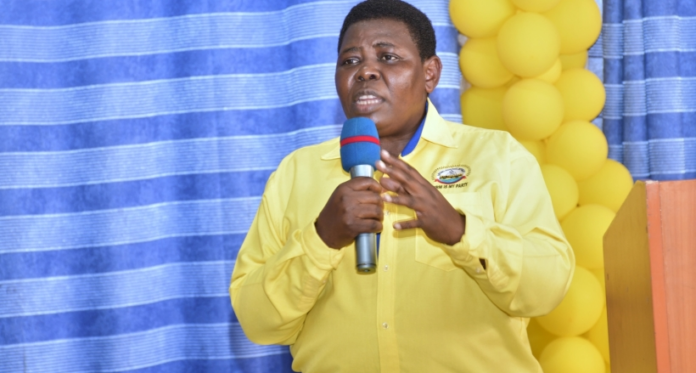
Deputy Secretary General, Rose Namayanja

The National Resistance Movement (NRM) party vice chairperson for central region, Godfrey Kiwanda Ssuubi, and the Deputy Secretary General, Rose Namayanja, have tasked party leaders from Mukono district to assist the government with manifesto implementation within their areas of jurisdiction to ensure service delivery among citizens during a meeting at the Colline Hotel in Mukono municipality

“We are the party in power. And so the manifesto is in place for us to implement. Face the public servants and ask them difficult questions concerning accountability,” Namayanja said.

She added that by doing so, the government would fulfill its pledges and promises, thereby improving people’s lives.

Namayanja said initiatives like the Parish Development Model and the Emyooga program aim to provide soft loans to people with small or medium enterprises to expand their businesses and reduce household poverty.

In terms of mobilizing support, the deputy secretary general urged party leaders to avoid threats in favor of persuading potential supporters while on a mission to reclaim victory in the central region. 

“Our strategy should be to explain the achievements of the NRM government over the years and the plans yet to be fulfilled,” she said.

Kiwanda called upon leaders to follow up on the proper utilization of district road funds that are used for maintenance. This will improve access roads, thereby facilitating quick transportation of goods to markets.

He asked the leaders to remain committed to supporting the leadership of President Yoweri Museveni, who for years has proven his capacity to steer the country forward.

The Vice Chairman cautioned leaders against disunity and intrigue and urged them to focus on building proper structures that will strengthen the ruling party.

The senior manager for communication and public relations, Mr. Rogers Mulindwa, advised the leaders to engage in the battle against propaganda and disinformation from the opposition supporters.

The district leaders thanked the senior party cadres for taking the initiative to resolve conflicts among the area leaders and pledged to work with the government to foster unity in the area and enhance service delivery.

The meeting followed Prime Minister Rt. Hon. Robinah Nabbanja’s engagements in the region to assess government services.

Stories Continues after ad

Kenya launches bid to co-host Africa Cup of Nations in 2027

AFCON Trophy

Kenya intends to bid to co-host the 2027 Africa Cup of Nations alongside Uganda and Tanzania.

The Kenyan government has sanctioned the plan, with the ultimate aim of qualifying for the men’s World Cup for the first time in 2030.

The Harambee Stars have played at the Nations Cup just twice since 1993, and were barred from qualifiers for the 2023 finals because the country was serving a ban from global football.

That sanction, imposed by world governing body Fifa, was lifted last month.

However, Kenya would need to invest in stadia and infrastructure to be able to host the tournament.

Cameroon used six venues to host the delayed 2021 edition earlier this year, while Kenya has just one stadium approved for international games by the Confederation of African Football (Caf).

That is the Nyayo National Stadium, which is in the capital Nairobi.

Kenya was stripped of the right to host the 2018 African Nations Championship four months before the finals because several venues were not ready to stage the event.

A statement from the Kenyan government said its cabinet had “sanctioned the revitalisation of football as a key cog of our nation’s social fabric” in a bid “to revive the prospects of Kenyan football”.

“This national effort will encompass the rebuilding of the national men’s team and women’s team,” the statement added.

“Cabinet noted that the joint bid would deploy the power of sports in furthering regional integration.”

Potential co-hosts alongside Kenya for the 24-team tournament would be neighbouring Uganda and Tanzania, but neither have commented on the statement by the Kenyan government.

Botswana and Namibia have already announced a joint bid for the 2027 edition of the Nations Cup.

Meanwhile, Caf’s process to choose a new host for the 2025 finals is still ongoing, with a deadline on 16 December for finalised bids – including documents, proposed host cities and government guarantees – to reach its Cairo headquarters.

The finals were initially awarded to Guinea, but the West African country was stripped of hosting rights at the start of October because of a lack of suitably advanced infrastructure and facilities.

Guinea had nearly a decade to prepare for the finals, having originally been named as host of the 2023 Nations Cup in 2014, but were then asked to host in 2025 instead.

Last month Ivory Coast’s government signed a formal hosting agreement with Caf for the 2023 Nations Cup, which will actually take place in early 2024.

Stories Continues after ad

Justice Ruby Opio Aweri to be accorded official burial

The fallen Supreme Court Judge Justice Ruby Opio Aweri will be accorded an official burial, Eagle Online has learnt.

Justice Opio died yesterday at Mulago National Referral Hospital at the age of 69. His death was announced by Chief Justice, Alfonse Chigamoy Owiny-Dollo.

According to the Minister for Presidency Milly Babalanda, President Yoweri Museveni has directed that the fallen Judge be accorded an official burial.

“President has directed that the fallen Justice Ruby Opio Aweri is accorded an official funeral befitting his status. Accordingly, all arrangements are now underway. May Justice Aweri’s soul rest in eternal peace,” Babalanda said.

Born in Dokolo District in 1953, Aweri held a Bachelor of Laws from Makerere University, a Diploma in Legal Practice from the Law Development Centre and a Master of Laws also obtained from Makerere University.

His career started in 1982, as a legal assistant in Soroti District. In 1983, Opio Aweri was appointed a Grade One magistrate. He gradually rose through the ranks and in 1998, he was appointed a judge of the High Court.

In 2014, he was promoted to the Uganda Court of Appeal. In September 2015, he was elevated to the Supreme Court of Uganda. In August 2017, the Judiciary named him as the new Chief Inspector of Courts on a three-year term.

Stories Continues after ad

Picfare Group breaks silence on quitting Ugandan market

Picfare Group of Companies, which is engaged in stationery and printing in Uganda, has dismissed reports that it is on the verge of closure.

Richard Mubiru, the company’s Corporate Affairs Director, explained that they are winding up some entities within the group, which are dormant.

“Such entities include: Picfare Trading Co. Limited, Picfare Jinja Limited among others as detailed in The Monitor Newspaper of Wednesday 07/12/2022,” Mr Mubiru said.

“The Group would like to clarify as follows: (i) that the companies being wound up in accordance with the Law have been DORMANT. As such, with the view to ensuring compliance with the law, these are formally being closed for better compliance,” he said.

Mr Mubiru explained that other group companies like Southern Range Nyanza Limited, Picfare Industries Limited and Hooky Property Developers are fully functional and shall remain serving Ugandans as always.

 “There is therefore no need to be worried of missing out on any of the Group brands/services.  Lastly, the Group is eternally grateful for the business support over the years that explain the raging debate on social medial. The Group will continue serving you even better,” he added.

Founded by Mr Kishor Jobanputra, who is also the board chairman, the company has been engaged in stationery and printing in Uganda since 1981.

Stories Continues after ad

CDF Mbadi commends UPDF medics for fighting Ebola

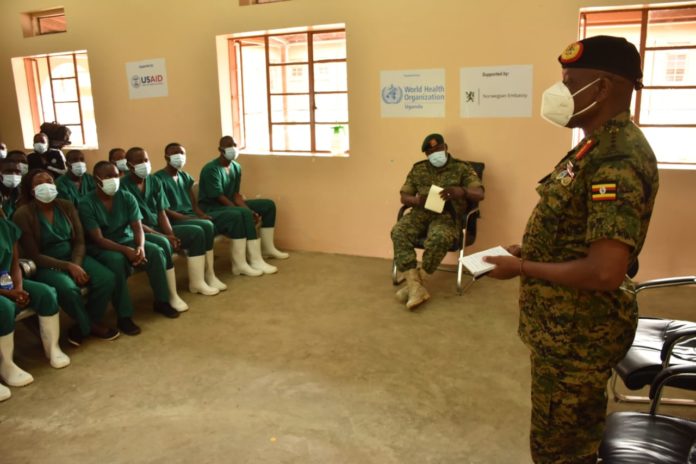
The Chief of Defence Forces (CDF) Gen Wilson Mbadi has commended the Chieftaincy of Medical Services for their role in fighting the deadly Ebola Virus Disease.

Speaking to doctors, nurses and other specialists who have been treating Ebola patients at Entebbe Regional Treatment Center, Gen Mbadi praised the withdrawing medics for a job well done.

The withdrawn team of 25 medics, both military and civilians, were urged to remain on standby until the country is declared Ebola-free.

He lauded UPDF medics for cooperating with the civilian authority to curb the deadly disease, saying that the act also falls within the army’s mandate of cooperating with civilian authority in emergency situations to foster harmony and understanding.

The CDF expressed his gratitude to the US Government, Ministry of Health and other Development Agencies for their role in enhancing defence capabilities, which includes; timely response to crisis or pandemics, among others. “Your effort has enabled the investment sector to thrive without any set back, tourists are still coming into our Country since the Ebola Virus has tremendously been mitigated,” remarked Gen Wilson Mbadi.

He concluded by noting that UPDF is a professional and disciplined force with vibrant health system, and acknowledged the President and Commander-In-Chief of the UPDF H.E Yoweri K Museveni for his role in building a professional army that has protected the country.

The Incident Commander Lt Col Dr. Bossa Kyobe applauded the UPDF leadership for extending medical services to the civilian community.

He reported that 29 cases were confirmed at the treatment unit, 6 of which were children, had 25 recoveries and 4 confirmed deaths.

The Director for Clinical services (MOH) Dr Charles Olaro thanked UPDF for the patronage and sacrifice.

On their part, medics commended UPDF for prioritizing health matters.

In addition to the constructed treatment unit; UPDF, MOH and Development Partners also trained medics and donated protective equipment, among others, to medics at Entebbe Regional hospital.

The Chief Defence Forces was also accompanied by the Officer Commanding Entebbe Treatment Unit (Medical Microbiologist) Maj Dr. Daniel Bulwadda, UPDF Medical Officers and Men.

Stories Continues after ad

URA urged to sensitise traders on new tax system

MP Mwine Mpaka

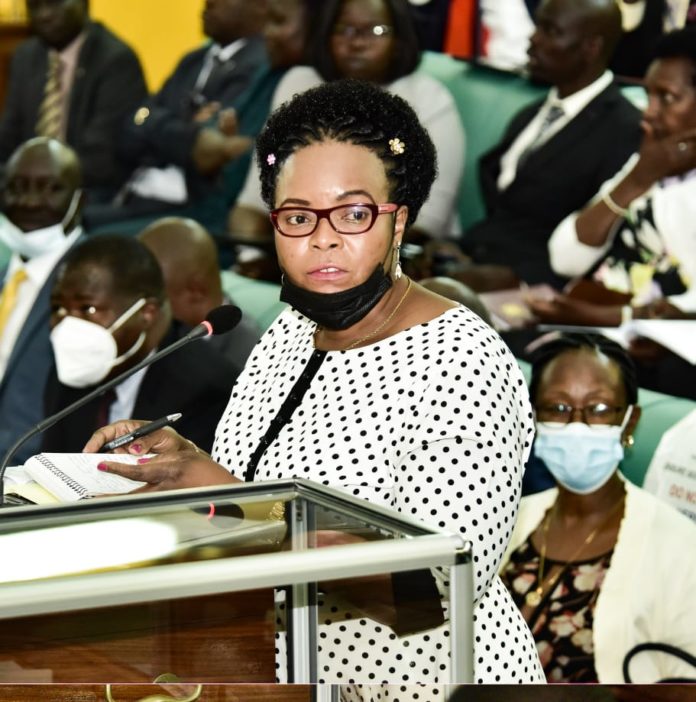
Parliament calls for sensitization of traders before the full implementation of the Electronic Fiscal Receipting and Invoicing System (EFRIS).

The House chaired by Deputy Speaker, Thomas Tayebwa on Wednesday, 07 December 2022 adopted the report of the Committee on Tourism Trade and Industries recommending changes in the invoicing system.

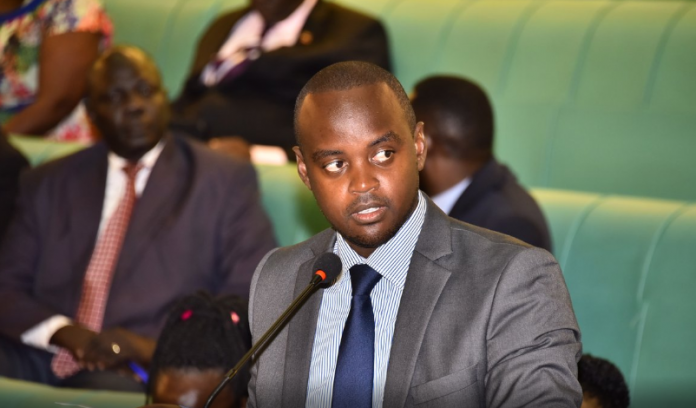
According to the committee report presented by Chairperson, Mwine Mpaka, the implementation of the EFRIS by the Uganda Revenue Authority (URA) in May 2020 was meant to improve business efficiency and reduce costs of compliance through improved record keeping among taxpayers

However, the committee observed that the system meant to  mitigate tax administration shortfalls is hurting traders.

“This system was supposed to be installed in trader’s premises under the instruction of a consultant so that all transactions can be reflected on the URA systems. URA informed the committee that they undertook several engagements with individual businesses and associations in preparation for the implementation,” Mwine Mpaka said.

The committee noted that although the system will help URA in tax collection, , traders  need to be sensitized since it involves costs of hiring extra staff to run it.

“The committee recommends that URA extends the implementation of the EFRIS by not less than one year during which period, it should invest in education, publicity, sensitization and offering of technical support to all traders to effectively implement and utilize the system,” Mpaka said.

He added that the system sometimes faces network challenges that affect the sale of goods.

Some MPs however, proposed that government should instead install the system for the Traders.

Nakawa East Member of Parliament, Ronald Balimwezo said that several businesses are struggling and government needs to support them by installing the EFRIS.

“To cure this, let government procure these machines and install them for the people otherwise, we need to do a lot in making sure that we increase the tax base,” he said.

Nakaseke Central  MP Allan Mayanja noted that the EFRIS machines are expensive to install and that URA has put a very high fine on people who do not have them.

The Minister of State for Finance Planning and Economic Development, Henry Musasizi appealed to the members to support the EFRIS saying it will help in revenue collection.

Otuke County MP, Paul Omara equally supported the system saying the country is struggling with raising revenue. He however, said URA should take more time to educate people.

“I think this is one of the most innovative systems that URA has undertaken to broaden our tax base and to allow the loopholes in tax collection to be closed. I am a manufacturer and we have implemented this programme and we are doing well,” he said.

The committee also recommended that government establishes policies that limit discretion in the selection of companies receiving tax incentives and that it applies specific criteria for any company to become eligible for tax incentives in the Ugandan economy.

Stories Continues after ad

Minister Namuganza faces censure

Minister of State for Housing, Persis Namuganza

Parliament has passed a motion that could see the Minister of State for Housing, Persis Namuganza censured for derogatory remarks and disrespectful conduct.

Following investigations, the Committee on Rules, Privileges and Discipline found Namuganza to have specifically insulted the leadership of Parliament for instituting an adhoc committee to investigate her over the Naguru-Nakawa land allocations.

It was alleged that Namuganza also took to social media and television questioning the operations, powers and integrity of the presiding officers of Parliament to form adhoc committees.

The Committee on Rules was then tasked to investigate the allegations and observed that the statements made by Namuganza on social media imputed improper motives on Parliament.
“Her statements therefore, were an affront to the dignity of Parliament; they denigrated public trust and confidence in the integrity of the Office of the Speaker, members and the institution of Parliament and brought the House and its members into disrepute,” the report read in part.

Busiro East County MP Medard Sseggona said that humility is a strong virtue a leader needs to possess and must be always exercised. He added the minister should have realised her mistake and apologised.
“Humility is not a sign of weakness but rather a sign of greatness of any leader. The committee conducted a thorough investigation and found your behaviour foul throughout the inquiry; you should apologise,” he added.

Kilak South County MP Gilbert Olanya noted that the words by the minister on all forms of media to describe Parliament were uncalled for and showed disrespect.
“We need the appointing authority of ministers, being the President, to rescind the appointment of Namuganza and give us ministers who respect the code of conduct and have respect for Parliament,” he said.

Kazo County MP Dan Atwijukire stated that the concern highlighted in the report is the dignity of Parliament and whether as legislators they are doing enough to preserve it.

Atwijukire added that his greatest dismay is seeing ministers perpetually insult and demean Parliament as an institution.
“Ministers need to remember that they are temporarily on the Front Bench and must therefore, watch their conduct towards Parliament because most of them originated from it as back-bench Members of Parliament,” he said.

Bunya South MP Iddi Isabirye said that the most important course of action for Namuganza would be to apologise for mistakes because, ‘it is human to err’.

Bukooli County MP Solomon Silwany implored fellow members to stand with the recommendations of the committee for the sake of protecting the sanctity of Parliament.
“Nobody is above the law and one loses nothing to act with dignity by conducting themselves within the boundaries of the rules governing this August House; we must defend the institution to the dot,” he said

Silwany noted that the debate of the report and final decision on the matter must be for the sake of upholding discipline and good conduct of leaders accountable to Parliament.

However, Namuganza held that she had petitioned the Constitutional Court on the recommendations.

When pressed further for an apology from the Prime Minister, Robinah Nabbanja and other legislators, she said that, ‘If I hurt anyone in anyway, I regret’.

However,  Sseggona noted that by her conscious, the minister was reluctant to apologise even after being persuaded by the Prime Minister.
“What we witness is a cosmetic apology from the minister saying, ‘if I have…’ insinuating that she does not recognise her mistakes and disrepute for Parliament; she should not be coerced to apologise,” he added.

Sseggona then moved a motion to amend the report to provide for the commencement of the censure of Namuganza.
 
The Deputy Speaker, Thomas Tayebwa said he had not received any communication regarding Namuganza’s move to petition the court over the committee report.

Following the passing of the motion, the Deputy Speaker guided that any Member of Parliament could kick start the censure process.

Stories Continues after ad