Stanbic Bank
Stanbic Bank
21.2 C
Kampala
Stanbic Bank
Stanbic Bank
Home Blog Page 491

Police impound 6,374 motorcycles in 2 days

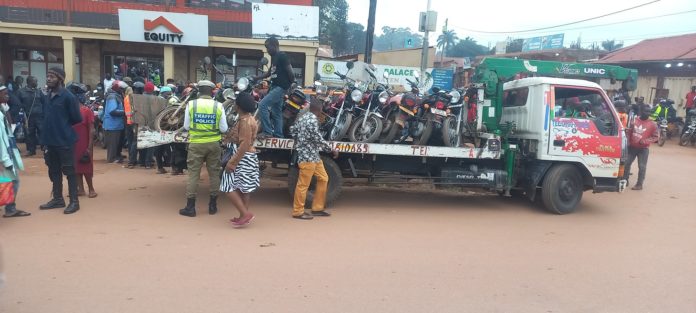
6,374 motorcycles were impounded country-wide in the last two days in the crackdown operation, the spokesperson for the Directorate of Traffic and Road Safety, Faridah Nampiima has confirmed.

She said the operation, which is geared towards ensuring road safety, will continue until all boda-boda riders abide by the traffic police regulations.

“We are on day three of the operation on motorcycles, mainly targeting crash/safety helmets and retro-reflective jackets. A total number of 4,926 EPS tickets were issued to offenders while 1,448 motorcycles are pending at the stations,” she said.

Nampiima also thanked the general public for their support and the riders who have complied. 

The operation came after the police released a compilation of CCTV footage of boda-boda accidents in Kampala and its suburbs which claimed people’s lives.

Boda-boda accidents remain the largest contributor to fatal accidents, in which at least an average of 1,918 people are killed annually, according to the 2021 Annual Crime and Traffic/Road Safety report. This stands at an average of four deaths per day.

Stories Continues after ad

National Science Week kicks off at Kololo Airstrip

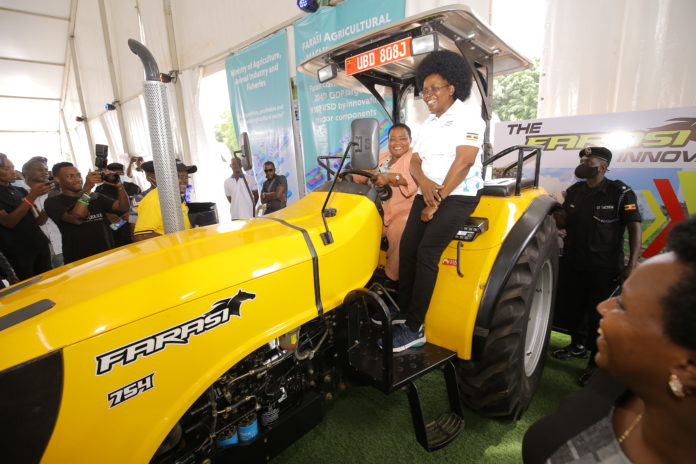
The PM - Hon. Robinah Nabbanja (L) & Minister for Science, Technology & Innovation - Dr. Monica Musenero (R) pose for a picture with the Farasi Tractor

The 2022 National Science Week kicked off yesterday at the Kololo Airstrip, and will run until 10th November. This year’s Science week spans a series of events including a public exhibition showcasing Ugandan innovations, an Investor Summit to drive investment into Ugandan science technology and innovation ventures and various topical panel discussions bringing together various players within the science, and technology and innovation value chain.

“Science and technology hold the key to the present and future development of Uganda and as a government, we are aware that to escape from poverty, investment in science and technology education is the key. This annual event is important as it brings together various players within the value chain to chart a way forward for Uganda’s science, technology and innovation,” said Dr Monica Musenero, the Minister of Science, Technology and Innovation during the official opening of the Science Week.

Running under the theme,“Uganda in 2040; The Future We Want Through Science Technology & Innovation”, the event is open to the general public and attendance is free of charge.

Over 200 exhibitors in Science, Technology and Innovation – specifically in the fields of Pathogen Economy. Aeronautics and Space Science; The Future of Infrastructure; Industry 4.0; Mobility and Productivity Acceleration, Import Substitution; Export Promotion and the science of support services.

These showcased innovations such as vaccine development, robotics, agricultural value addition and food products, pesticides, the future of green mobility through automotive innovation, and vehicle manufacturing, among others.

“This year’s theme is tied to the future we envision for Uganda as we all need to acknowledge the need for innovation to drive national and economic development. Technological advancement drives economic growth and global competitiveness with at least 50% of global economic development being attributable to innovations and investment in science, technology and innovation,” Dr Musenero added.

To address the challenge of funding for early-stage science, technology and innovation ventures, the National Science Week will host a Science, Technology and Innovation Investor Summit. Attendance from key financial players including venture capitalists and commercial banks is expected.

“We are proactively paving the way for our science, technology and innovation start-ups to secure the funding they require for viable projects. Through this event, we will act as a bridge and provide a platform for innovators to pitch their ideas to potential investors and secure the support they need,” Dr.Musenero noted.

The Science Week will culminate in a closing ceremony on 10th November over which H.E the President will preside.

This year, the National Science Week will majorly focus on Aeronautics and Space Science; Mobility (Indigenous Motor Vehicle Manufacturing); Pathogen Economy; Industry 4.0+; Infrastructure Innovation; Productivity Acceleration; Import Substitution; and Export Targeted Science, Technology and Innovation.

The 2019 Global Innovation Index ranked Uganda 102 out of 129 countries, lagging behind Kenya, Rwanda and Tanzania in 77th, 94th and 97th place, respectively.

According to NDP III, the government will invest in the development of a solid eco-system by incorporating science education in primary, secondary and university curricula thereby making science and technology accessible at all levels of learning, partnerships between university research institutions and industry to make it attractive for human capital development and raising awareness of how research can drive high technology innovation and wealth creation.

“Through this activity, we intend to create awareness of value addition resulting from science, technology and innovation, foster strategic partnerships with various stakeholders including the public and private sector, and enhance the market potential of indigenous products in the region and globally to enhance Uganda’s competitiveness both within the region and globally,” Dr Musenero said.

The National Science Week is organised by The Secretariat of Science Technology and Innovation (STI) in the Office of the President which takes the lead in integrating STI into the national economy in order to drive development.

Stories Continues after ad

Legislators demand better remuneration for medical interns

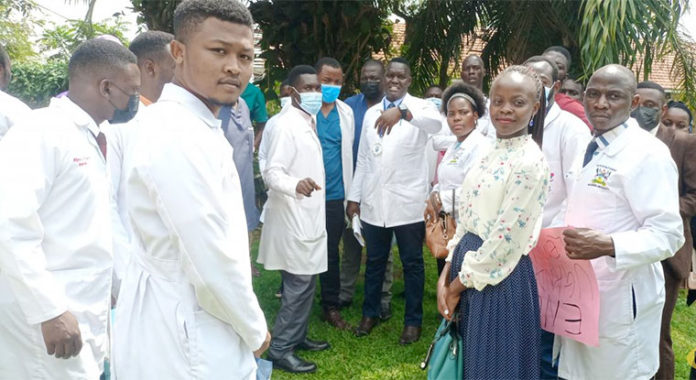
Medical Interns

Speaker Anita Among has directed the Minister for Health to table before the House evidence that allowances of medical interns have been paid.

This followed several disputing statements from Members of Parliament after the State Minister for Health, Margaret Muhanga informed the House that the interns had called off the strike after being paid.

“Dentists and doctors were paid shs2.5 million, pharmacists shs2 million and nurses and midwives shs1.5 million,” said Muhanga.

The Minister, however, attributed the delay in payment to less funding to the ministry

“July and August were paid from the first quarter but releases were inadequate and thus, we paid September and October in this quarter,” Muhanga added.

However, Buikwe South MP Lulume Bayigga disputed the minister saying that he had been in a meeting of the health committee where the interns asserted that they had not been paid. “They told us that they have not called off the strike, and they have not been met by the Ministry of Health,” he said.

Kole North MP, Samuel Opio said that the medical interns also raised concerns about salary discrepancies which have not been addressed.

“The President directed that the interns be paid half of the salaries of their seniors but the Ministry of Health has decided to apply their own salary scale,” Opio said.

Speaker Among directed the minister to lay before the House documentation to show that the interns had been paid. “It is not fair to say that these people have been paid when they haven’t. You rather pay them first before paying MPs,” she said.

The Speaker noted that the strike by the interns came at a risky time and urged government to ensure the matter is solved.

“The timing of this strike is worrying especially with the outbreak of Ebola and all other sicknesses,” she said.

The Leader of the Opposition, Matthias Mpuuga observed that the delay to remunerate intern doctors has affected health service in hospitals across the country.

“People are complaining about patients not attended to because somebody is casually attending to duty. This is unacceptable. Will the Minister give information to the House on how many lives were lost and who is accountable for this criminal negligence,” Mpuuga said.

The Speaker also tasked the Prime Minister to present an update to the House on the establishment of the Salary Review Commission.

The Minister for Public Service, Muruli Mukasa said the appointment of the Commission’s Board Members is in its final stages and the names will be presented to Parliament in two weeks.

“The discussions on the Salary Review Commission are almost concluded through Cabinet and the Board shall be presented to Parliament in two weeks,” Muruli Mukasa said.

Stories Continues after ad

MPs pressure finance ministry to release funds to the sports sector

Speaker Anita Among

The remarkable performance by Uganda’s national netball team, the She Cranes has re-ignited discussions on the prioritization of the sports sector with Parliament directing government to ensure funds allocated in the 2022/2023 financial year are released.

The She Cranes emerged fifth in the First Five Netball Series in New Zealand over the weekend. The team beat the number one ranked Australia 32-30.

Speaker Anita Among said that such performances are evidence that government should prioritise sports.

“I would like to congratulate our girls and as we go for budgeting, we need to make priority on sports. As women, we should support our girls,” Among said.

She tasked the Ministry of Finance to give a timeline in which the funds tor for the first and second quarters will be released.  

“It is so disappointing that much as this House ring-fenced money for sports, the money was not released as per what was appropriated. Sports is a very good tool for mobilization,” she said adding that, “it is the best thing for tourism. When you have a sports team that is performing wonders, then the country is being sold”.

Bukooli County Central Solomon Silwany asked the Speaker to direct the Minister of Finance to re-commit to release the funds.  

“The Ministry of Finance has adamantly refused to support the sports fraternity. We need to invite the Minister for the fourth time to come and re-commit himself that he is going to give the Ministry of Sports all money appropriated as per the budget,” said Silwany.

The Minister of State for Privatisation and Investment, Mrs. Evelyn Anite said that the Ministry of Finance will make a commitment towards release of funds on Wednesday, 09 November 2022.

“The reason why we were not able to release the money in totality was because in the first quarter, we did have challenges of resource mobilization owing to the fact that we had just come out of the aggressive Covid-19 and were not able to mobilise revenue from our taxpayers,” said Anite.

She added that ‘the good news is that this has gone to the past and we have been able to mobilise resources and we will release the money that was appropriated by Parliament in totality’.

Bugiri Municipality MP, Asuman Basalirwa linked challenges in the sports sector to what he described as, ‘archaic laws’

“Part of the problem relates to the law that governs sports in this country. That even explains why government delays to release money and some of the related confusion in the sports sector,” said Basalirwa.

He blamed government for frustrating the efforts of Budiope East MP, Moses Magogo to introduce the National Sports Bill.  

“Was it deliberate for government to frustrate our Bill? Why are you not bringing the Bill now and why are we suffering?” Basalirwa wondered.

Parliament deferred the first reading of the Bill, with government arguing that there is a need for further consultations on the financial implications.

Magogo was scheduled to table the Bill on 09 March 2022 but the then Government Chief Whip, Thomas Tayebwa said that the Bill had several connotations of financial implications which require co-sponsorship.

Among however, directed Magogo to table the Bill for its first reading on Wednesday, 09 November 2022 saying that any harmonization should have been done during committee stage.

“The Bill was basically coming for the first reading. I don’t see a reason why somebody should be stopped from exercising his constitutional rights to bring a private members’ Bill,” said Among.

Government Chief Whip, Mr. Hamson Obua, formerly Minister of State for Sports explained that the Bill was halted pending review of the sports policy.

Stories Continues after ad
Consumer Protection Bill in the offing

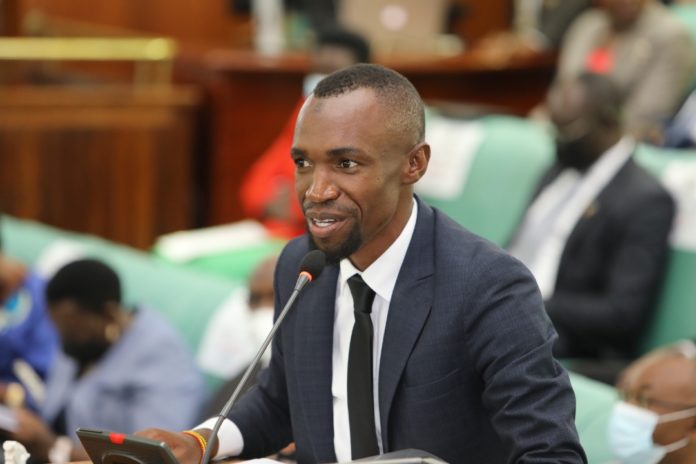
Bukoto West Member of Parliament, Muhammad Ssentayi

Parliament has granted Bukoto West Member of Parliament, Muhammad Ssentayi leave to introduce the Consumer Protection and Management Bill.

Although the proposal was meant to be presented by the Chairperson of the Committee on Trade, Tourism and Industry, Mr. Mwine Mpaka, the Speaker Anita Among used her discretion to suspend the rule to allow Ssentayi to present.

Ssentayi who moved the motion on Tuesday, November 8, 2022 said that the enactment of a consumer protection law in Uganda will enable the setting of standards for the quality, safety and reliability of goods.

He said that the bill will provide for remedies actionable in law in case of non-compliance with those standards as well as prohibit unfair or misleading trade practices.

Ssentayi stated that the failure to enact legislation that specifically provides for the legal protection of consumers in Uganda will continue to undermine the quality of goods produced and supplied in Uganda.

He said that this will also put consumers in a weaker position than those with whom they deal, depriving them of their money’s worth and product value and continuing to escalate the violation of the right to equal protection under the law.

Ssentayi added that currently, the laws regulating the protection of consumers are scattered.
“A consumer protection law is necessary to offer protection to consumers not only against fraud and dishonesty in commercial dealings but also oppressive bargains and qualitatively deficient goods and services,” he said.

Buhweju County MP Francis Mwijukye said the bill will help in standardization and dealing with consumer exploitation.

He said that those who are aggrieved can now seek redress because of this bill.
“We have had a situation where the government directs banks not to increase interest, and loan officers not to exploit people, but this is still happening. We believe we need this law to promote fairness and equity,” he said.

Although government through the Deputy Attorney General, Mr. Jackson Kafuuzi sought to halt the process of introducing the bill stating that the government was also in the process of preparing the bill, Speaker Anita Among ruled that the process continues.

Stories Continues after ad

ZTE releases B5G Technology Whitepaper at 5G Summit in Italy

B5G Technology Whitepaper

ZTE Corporation (0763.HK / 000063.SZ), a global leading provider of information and communication technology solutions, has officially released the Beyond 5G Technology Whitepaper at 5G Summit 2022 in Italy. The whitepaper aims to lay a technical foundation for the whole ecosystem to boost digital transformation in Beyond 5G phase, and fulfill 5G potential to benefit individuals, businesses, governments and societies.

The whitepaper begins with GSMA Intelligence’s profound insights into the global industry trend, challenges to operators, standard development, and potential industry verticals. Based on its scenario-driven and value-oriented principles, ZTE screens some key potential technologies in the Beyond 5G phase. The company analyses not only the characteristics of each technology, but also the scenarios and value services in the future.

In addition, some technologies in the whitepaper have been developed into prototypes and are being verified together with operators. For instance, the RIS (Reconfigurable Intelligent metaSurface) and base station synergy solution can efficiently solve the continuous coverage challenge of mmWave bands, and provide double guarantee of rate and coverage for value areas. Another case is integrated sensing and communication, ZTE innovated it together with computation and control, enriching new applications such as facility security and vehicle-road synergy.

The core mission in the B5G phase is to help 5G create greater value, optimize and solve development problems, and leverage the digital economy to propel economic recovery.

Moving forward, ZTE will actively provide products and solutions to meet various scenario requirements. Also, the company will cooperate with more industry partners, operators, distributors, and industry verticals, to further accelerate digital transformation, and to reshape a new digital landscape and achieve the win-win digital economy in beyond 5G stage.

Download the B5G Whitepaper

Stories Continues after ad

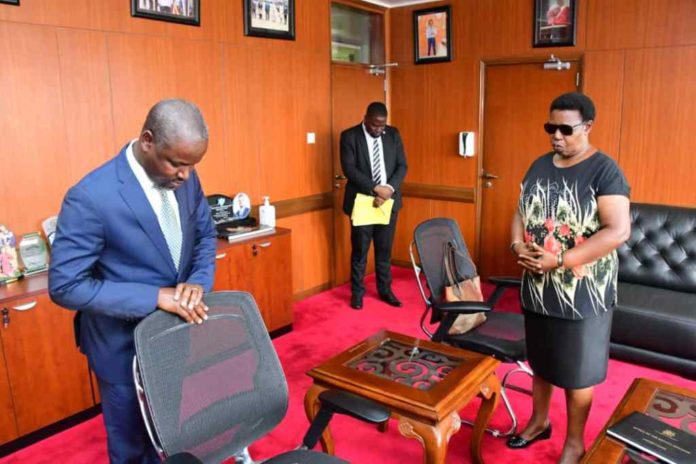
Miria Matembe offers a motherly prayer to Thomas Tayebwa  

Miria Matembe offers a prayer to Thomas Tayebwa  

Dr. Miria Koburunga Matembe has prayed for the Deputy Speaker of Parliament Thomas Tayebwa and asked God to remove any wrong person around him.

“I want to thank you Lord for your son, the Right Honorable Thomas Tayebwa,” Dr. Matembe prayed during a courtesy call to the deputy speaker on Tuesday.

Dr. Matembe who worked in the Ugandan government as Minister for Ethics and Integrity from 1998 to 2003, after which time she became a member of the Pan-African Parliament representing Uganda said Tayebwa who is only 41, holds a position of great responsibility and that he needs God’s guidance and protection.

“I was telling him that at his age, he is equal to my third born but you have been able to give him this position of Honor and responsibility Lord God. Because your word says that all authority comes from you. I want to pray that you continue to bless him in this seat,” she prayed, asking God that “you make him like David”.

“That in his heart, you put it in him like David decided to shepherd his people with a skilful hand and integrity of the heart. Will you give him that integrity of heart that you gave to your King, whom you loved most, King David,” Dr Matembe, who was a member of the Constitutional Commission that created the Ugandan Constitution prayed.

She petitioned God to bless whatever the Deputy Speaker touches and also guide him all the time that “he looks to you all the time.”

‘May you give him an undivided heart that he may fear you with all his heart and praise you forever. May you protect him, May you guide him, May you be his rock forever,” Dr. Matembe, a strong proponent for and an advocate of women’s rights in Uganda said in a prayer to God.

Dr. Matembe has been a lecturer of law and English at the Chartered Institute of Bankers, also in Kampala.

A lawyer by profession, Matembe is also the author of several articles and a book, Miria Matembe: Gender, Politics, and Constitution Making in Uganda, on women in politics.

Dr. Matembe is a former member of the Pan-African Parliament.

While serving there, she was chairperson of the Committee on Rules, Privileges and Discipline, a permanent committee of the parliament.

Tayebwa said Dr. Matembe’s prayer was motherly and thanked her for interceding for him.

“Our personal prayers can move mountains, but the most powerful of all; the sincerest; the most effective prayer is one from a mother. When mothers pray, God listens. Thank you Mama Miria Matembe for interceding for me; for turning my office into the Lord’s meeting venue. Amen!, Tayebwa wrote on Twitter.

Dr. Matembe’s endorsement of Deputy Speaker comes only two days after the West Ankole Diocese Bishop, Rev. Johnson Twinomujuni backed Tayebwa’s firm position on homosexuality and abortion.

Bishop Twinomujuni described both practices as unchristian and ungodly.

Bishop Twinomujuni, a critic of homosexuality also praised Tayebwa’s resolve to protect the Ugandan and Church values and moral fibre intact amid mounting pressure from the western world.

Stories Continues after ad

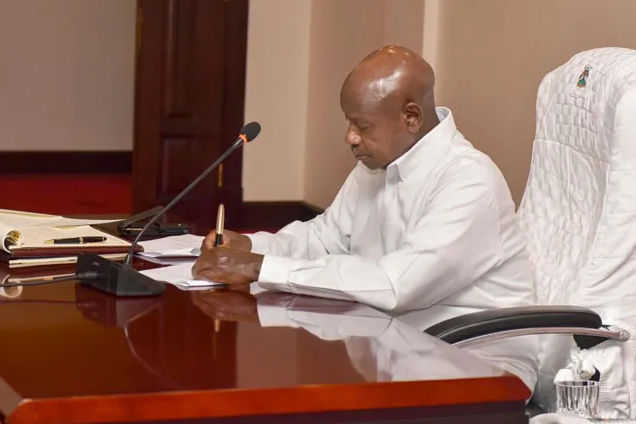
Europe’s failure to meet its climate goals should not be Africa’s problem

President Museveni

News from Europe that a vast windfarm is being demolished to make way for a new open-pit coal mine is the reprehensible double standard we in Africa have come to expect. As Europeans switch their coal-fired plants back on while still demanding fossil-fuel generation remains beyond the pale for Africans. It makes a mockery of Western commitments to climate targets and their promises to help speed African development all in one breath.

We are told that these are only temporary measures, needed to mitigate the energy shortages caused by the war in Ukraine. As soon as the conflict ends, the race to a renewable future will recommence.

In Africa, we believe what we see, not what we hear.

We see hundreds of millions of our own citizens without access to electricity. We see climate-compulsive Western investment in African energy funneled into wind and solar that creates intermittent electricity and not the consistent baseload generation required to power factories or produce employment. We see Europeans with jobs made possible by diverse means of electricity production, and Africans with neither, forcing tens of thousands to make life-threatening crossings of the Mediterranean Sea to Europe.

For some years we have been told fossil fuel investment in Africa for Africans is unacceptable. More recently, through a multi-Western country agreement, a moratorium has even become legally binding. Now with Europe reinvesting in its own fossil fuel power industry to bring mothballed power plants back online, in a truly perverse twist we are told new Western investment in African fossil fuels is possible—but only for oil and gas resources that will be piped and shipped to Europe. This is the purest hypocrisy.

We will not accept one rule for them and another rule for us. We will not allow African progress to be the victim of Europe’s failure to meet its own climate goals. It is morally bankrupt for Europeans to expect to take Africa’s fossil fuels for their own energy production but refuse to countenance African use of those same fuels for theirs.

When decisions like these are being made, and without a shred of self-awareness or honor, it is no surprise some of my counterparts call for reparations or handouts. But this is the last thing Africans need or most want. Dialing down the brazen double-standards is what we desire, along with the lifting of the moratorium on fossil fuel investments for Africa herself so we can meet the needs of our own people.

With this head-spinning pietism, neither should it surprise when Africans look elsewhere for investment that comes without lectures attached. The surfeit of Chinese energy investment in Africa in recent decades can be seen through this prism. More recent arrivals, including the Turks and Indians, are helping build the infrastructure Africans need to raise their continent out of poverty and onto the world stage. Even our old friend the United Kingdom —shorn these days it seems due to Brexit of some of the pretension that still seeps from their near neighbors—is taking a more “enlightenment” approach.

If Africa was to increase electricity production just by using her known reserves of natural gas, the continent’s share of global emissions would rise from 3 percent to just 3.5 percent. Instead, Western money has poured into wind and solar projects that receive applause from the virtuous in the corridors of Congress and the chancelleries of Europe—but leave Africans without electricity when the wind does not blow, and the sun does not shine.

Africa needs to diversify, not restrict its methods of energy production. For every wind or solar array, we need continuous baseload power produced by thermal, mini-hydro, natural gas, and in time, also nuclear. Even the International Energy Agency (IEA), recently in lock-step with Europe’s African fossil fuels investment moratorium, has changed its tune—now calling for Africa to be empowered to use gas and other hydrocarbons for industrialization.

$25 billion per year—less than was spent in six months this year on Western arms to the Ukraine conflict—would, according to IEA estimates, raise 600 million people out of energy poverty by 2030 through such diversification. Africa could repay this with the proceeds from energy investments, and it would be possible to employ and grow millions out of poverty. If Europe still will not help, then we will get there through our own endeavors and with the support of the willing who do not sermonize.

Europe’s failure to meet its climate goals should not be Africa’s problem. But that continent’s determination to write one set of rules for Europeans and a different set for Africans makes it so. It means Europe is complicit in forcing poverty on Africa, and that is not acceptable and will not stand. Should no climate agreement be signed at COP 27 in Egypt this week, we should all recognize who is responsible.

Yoweri Kaguta Museveni

President of the Republic of Uganda

Stories Continues after ad

Uganda Hippos qualify for U-20 Africa Cup of Nations

Uganda Hippos players celebrate a goal.

The Uganda U-20 Men’s National Football Team, The Hippos, have qualified for next year’s U-20 Africa Cup of Nations.

The Hippos defeated Sudan 2-0 in the semifinals of CECAFA Zonal Qualifiers on Tuesday in Khartoum.

Two second half goals from Rogers Torach and Captain Isma Mugulusi ensured Uganda secured a place in the final – meaning they qualify for the continental showpiece in next year’s tournament to be played in Egypt.

In the other semi final match, South Sudan with face off against Ethiopia – to find out the other team that will represent CECAFA region.

This will be Uganda’s second successive appearance at the final tournament. In 2021, they reached the final on their maiden appearance but lost to Ghana.

Nine of the twelve teams that will participate have already been confirmed; Uganda, Egypt, Tunisia, Senegal, The Gambia, Nigeria, Benin, Mozambique and Zambia.

Players born January 1, 2003 or later are eligible to participate in the 2023 Africa U-20 Cup of Nations. The tournament will be played between February and March next year.

Stories Continues after ad

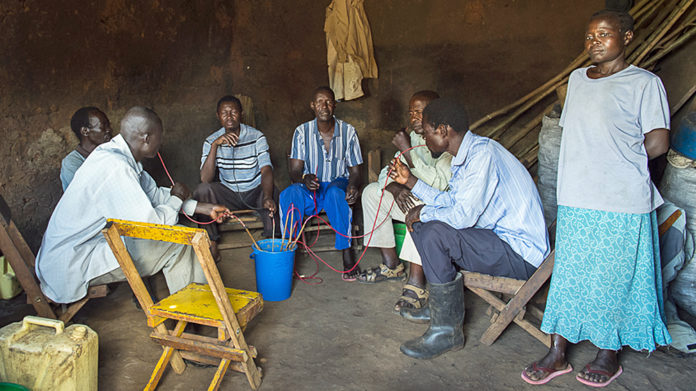
Drinking hours to be regulated if new law passes

Drinkers enjoy a central pot of home-made alcohol in a kafunda

Tororo District Woman Representative, Sarah Opendi will introduce the Alcohol Control Bill that seeks to regulate drinking.

The Private Member’s Bill seeks to repeal the current legislation that includes, the Liquor Act, the Portable Spirit Act, and the Enguli (Manufacturing and Licensing) Act, all enacted in the 1960s which have become obsolete to address contemporary challenges of excessive consumption of alcoholic drinks.

Opendi is concerned that the harmful use of alcoholic drinks causes a high burden of disease and has significant social and economic consequences like domestic violence that often results in harm to people.

She said that the Bill will comprehensively address the regulation of the manufacture and importation, sale and consumption of alcoholic drinks.

She also wants the law to regulate the promotion and advertisement of alcoholic drinks as well as the treatment and rehabilitation of persons affected by alcoholic drinks among others.

“The current legislations have their weaknesses and we need stringent measures or penalties to control the consumption of alcohol and also its production in the country,” Opendi said.

Opendi added that although they cannot stop people from drinking alcohol, the government can regulate it the drinking hours.

Terego District Woman MP Rose Obiga recounted the devastating effects of unregulated consumption of alcohol citing ‘City 5’, a local potent gin produced by City 5 Distillers in Arua City that killed at least 15 people in August this year.

 “Recently, we lost a big number of our people; I would like to allude to the fact that many heavy alcohol consumers do not take care of their families. It iss a major source of domestic violence, failure to pay school fees, take care of their children and wives,” she said.

Equally, Amuru District Woman Representative, Lucy Akello said that the Bill will help curb the production, sale and consumption of dangerous brands of alcohol that have become too cheap to consumers including children in the country.

Busiro County East MP Medard Lubega Sseggona condemned the proponents of the Bill for sexualizing it.

 “By saying that people fail to take care of children and wives, what happens to the wives who drink?” he questioned.

Anita Among however said that it was a fact that when people drink too much alcohol, many of them fail to take care of their families.

 In 2019, the Ministry of Health formulated the National Alcohol Control Policy that guides stakeholders’ actions by all relevant stakeholders to reduce the harmful use of alcohol but the policy has not been well considered and implemented.

Notably, the World Health Organization Global Status Report on Alcohol and Health of 2018 ranked Uganda among the top alcohol per capita consuming countries in Africa.

Uganda was also ranked the leading per capita consumer in East Africa.

Stories Continues after ad