Stanbic Bank
Stanbic Bank
18.3 C
Kampala
Stanbic Bank
Stanbic Bank
Home Blog Page 492

SMEs urged to embrace technology

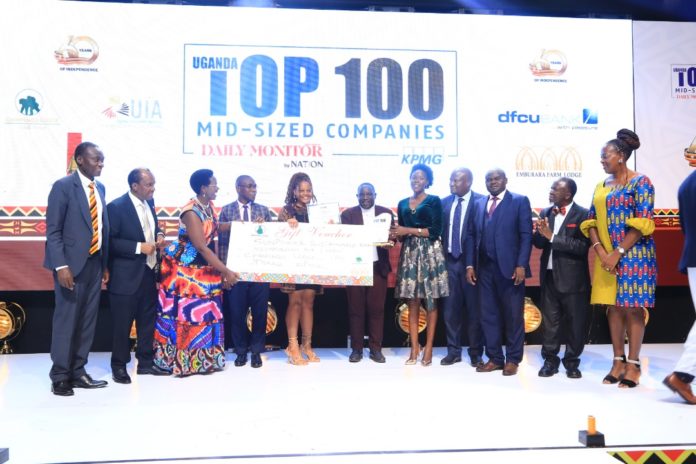
Winners pose with the invited guests at the Top 100 Gala Dinner

State Minister of Finance for Investment and Privatization, Anite Evelyn urged Small and Medium Sized Enterprises to explore regional and international markets to grow during the Top 100 gala dinner at Hotel Africa on 1st December 2022.

She made the remarks while giving her address as the Guest of Honour at the event organized by Daily Monitor, KPMG, Uganda Investment Authority and dfcu Bank. 

She said: “As the Government, we are deliberate with our support to SMEs and Investors, because to fight unemployment, we need more entrepreneurs and job creators. We want Uganda to be the number one investment destination in Africa. The only way we can achieve that is by encouraging entrepreneurs such as you.”

“The President isn’t only promoting regional integration but the African market and international markets. The East African market has 300 million people, that’s a large market pool for you to play in. Do not focus only on our borders, look beyond Uganda. We decided to dedicate two years to promote only domestic investors.”

The Uganda Top 100 mid-sized companies’ program has been running since 2009 with the objectives of identifying Uganda’s fastest-growing medium-sized companies that display business excellence and showcasing some of the country’s most successful entrepreneurship stories. 

The survey was organized this year under the theme ‘creating synergies and sustainable business models sufficient for accelerated growth.’ This year saw over 100 SMEs recognized, and special categories for companies that exceeded the Shs25 billion turnovers graduated into Club 101. This is an exclusive club of the former top 100 that has surpassed the ceiling revenue cup of 25 billion in annual turnover.

Speaking at the event, Mathias Katamba, the Chief Executive Officer, of dfcu Bank reiterated the bank’s commitment to serving the SMEs in Uganda in their quest to become multi-national companies. He said the bank has the financial, resource and human capacity to help SMEs advance. 

“As dfcu Bank we are pleased to be part of the SME Top 100 initiative for the sixth year running. This initiative resonates with us because it brings to the forefront the outstanding achievements of some of Uganda’s most successful and dynamic companies. Uganda is one of the fast-growing entrepreneurial countries in the world and through the Top 100 initiative, we are certain that these entities will be able to improve many businesses, empower people and benefit from alternative sources of financing,” Mathias Katamba remarked. 

He added that “dfcu Bank is committed to supporting your businesses, not only in continuing to trade as is but also in providing access to finance for the investment required to support SMEs in their journey toward a long-term prosperous future.” 

Among the challenges faced by SMEs include; high taxes, competition from substandard products, stringent credit terms, insufficient start-up capital, and delays to pay debts, among others.

Ibrahim Mbosa, Assistant commissioner for Public and Corporate Affairs, at Uganda Revenue Authority, reassured the SMEs of the regulator’s support in helping them become tax compliant to benefit and grow in the long run.

“We are undergoing a revolution, gone are the days when we were harshly reminding you to pay taxes. We are becoming more friendly so that you can comply. We want to put a human face to taxation. We have embraced technology; we welcome you as SMEs to also utilize them,” he urged. 

Despite the strides, we have a mountain of tax collection given to us by you; that is to collect over 25.5 trillion shillings this year. We have about 2.7 million taxpayers, yet the population is high, and the tax burden is on a few that is why we need to widen the tax base. To do that, we have to work together, we want to have honest conversations on how we can work together as enablers of growth,” he said.

Stories Continues after ad

International boxing president visits Uganda, commissions construction of a Boxing Academy

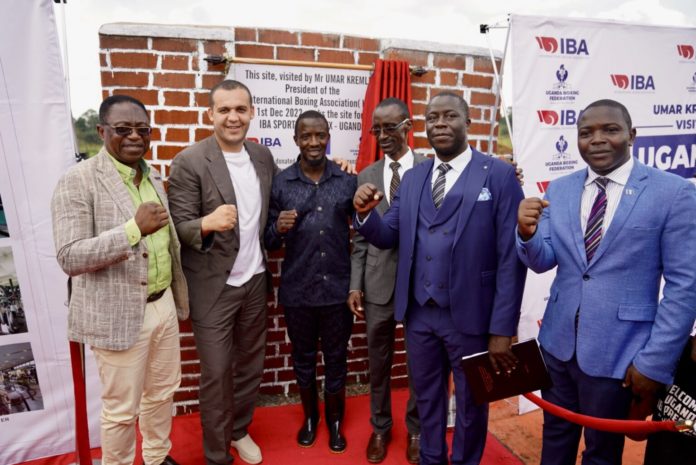
The President of International Boxing Association (IBA), Umar Kremlev paid a one-day visit to Uganda under the hospitality of the Uganda Boxing Federation (UBF)  and government authorities of the country.

This is the first time Uganda is hosting the leadership of the International boxing body.

One of the main purposes of the visit was the launch of the construction of a Boxing Academy.

The president took part in a ceremony where the foundation stone of the future Academy in the Kingdom of Buganda was laid.

On behalf of IBA, President Kremlev gifted to young athletes and coaches boxing equipment.

“To see how dreams of young athletes come true is the most important part of the whole mission of IBA. Athletes need to be raised inside their country to glory its flag and anthem. The mission of sports officials is to create conditions for it,” Mr. Kremlev said.

Different meetings with stakeholders as Representatives of National Council of Sports, Ministry of Education and Sports, Speakers of Parliament and Prime Minister of Buganda Kingdom took place.

“The creation of the future Academy is a huge step towards the growth of boxing in Uganda, it will help us in many ways, for example we will be able to host continental and international events here which will benefit the country in many ways,” the President of the Uganda Boxing Federation Moses Muhangi said.

Stories Continues after ad

MPs call for improved funding to Uganda’s foreign missions

The Chairperson of the Committee on Foreign Affairs, Hon. Fred Opolot, presenting the Committee Report on their oversight visit to the Uganda High Commission in London to Parliament

Members of Parliament have called on Government to provide adequate funding and other necessary support to Uganda’s missions abroad, to ensure their smooth operations.

The MPs were debating a Report on an oversight visit to the Uganda High Commission in London, presented to the House on Thursday, 01 December 2022.

The Chairperson of the Committee on Foreign Affairs, Fred Opolot, said that the foreign service allowance paid to officers has hardly been adequate to meet the increasing cost of living. He added that the rates were last revised in 2009.

“The Ministry of Finance should review and consider the priority budget proposals submitted by missions in the 2022/2023 budget, to enable them effectively discharge their mandate,” Opolot said.

The Committee recommended that Government ought to enhance all foreign service allowances.

Speaker Anita Among observed that allowances given to Ambassadors and representatives in foreign missions are insufficient to facilitate their work.

“These people are paid in Uganda Shillings but when they exchange to the currencies of the countries they are in, it comes to insufficient money. What they are paid is often less than the cost of living,” she said.

“If someone is living in Russia and we appropriate money for them and it is not released, how do you expect them to survive? These people need money to operate,” Among added.

The Speaker also observed that many buildings that belong to Uganda in foreign countries are dilapidated, reiterating the need for urgent sufficient funding for necessary rehabilitations to be done.

The Opposition Chief Whip, John Baptist Nambeshe, noted that the lack of a well documented National Foreign Policy presented an impediment to the National Development Plan (NDP III).

Dokolo district Woman MP Cecilia Ogwal, queried the continued funding to the Foreign Affairs Ministry for foreign missions, in the absence of a foreign policy.

“Is it procedurally right for the Foreign Affairs Ministry to continue asking for money for development and recurring budgets, when they do have a policy that shows us where the money is going?” Ogwal asked.

The Minister for General Duties, Justin Kasule Lumumba, told the House that the foreign policy in use, albeit undocumented, is guided by the Constitution.

Bufumbira County East MP Nsaba Buturo proposed that Parliament looks into the state of affairs of the country’s missions abroad, so as to ensure good representation.

“The world is changing. If you cannot invest in commercial diplomacy, then your influence in the world will be minimal,” he said.

Soroti Municipality MP Herbert Ariko emphasized the need to ensure adequate remuneration for foreign service officers.

“Our foreign service staff still get an allowance of US$4000. The cost of renting an apartment in Moscow costs between US$2500 and US$ 3000. These people have families and should be able to subsist within such economies,” said Ariko.

Speaker Among tasked the Prime Minister to present a foreign policy before the commencement of the budgeting process by the House.

The Report was adopted by Parliament.

Stories Continues after ad

Patrick Ayota re-appointed NSSF Deputy Managing Director

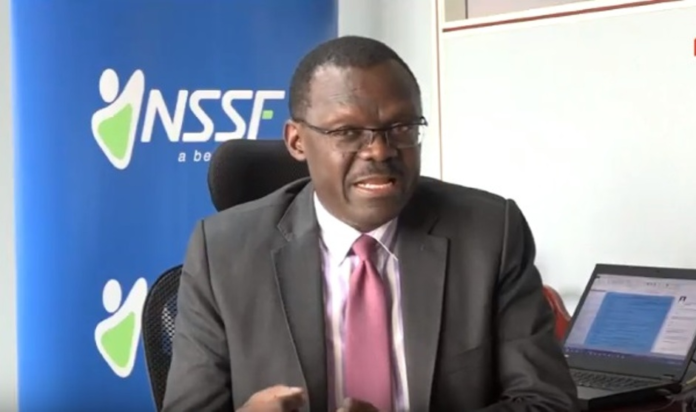
NSSF Deputy Managing Director, Patrick Ayota

Patrick Ayota has been re-appointed Deputy Managing Director of National Social Security Fund (NSSF) for a five-year period with effect from 30th November 2022.

In a statement issued on Thursday, 01 December 2022 by Patrick Ocailap, on behalf of the chairman of Board of Directors at NSSF, he announced that Ayota will also serve as acting NSSF Managing Director as the process of appointing a substantive one is completed.

“The processes leading to the appointment of the Managing Director have taken longer. In the interim, the Deputy Managing Director will take care of this office until these processes are concluded,” Ocailap said.

“The Board assures NSSF members, stakeholders and the public that the Fund remains stable, and its operations are running normally,” he added.

Ocailap said this appointment is in accordance with Sections 39 and 40 of the National Social Security Fund (NSSF) Act (Cap 222), as amended.

Richard Byarugaba’s tenure as NSSF MD ended at the end of November, according to the contract he had signed. However, sources say President Museveni has approved his reappointment on another five-year contract.

The Minister of Finance Matia Kasaija and some members of the board have hailed Byarugaba for ‘turning the fund around’, including reducing the number of scandals involving loss of money, the digitization of the Fund’s operations and the turnaround time for different services.

The National Social Security Fund Uganda is a multi-trillion Fund mandated by the Government through the NSSF Act, Cap 222 (Laws of Uganda) to provide social security services to employees in the private sector.

The recent amendments in the NSSF Act transferred the mandate to appoint the Managing Director and the deputy from the Ministry of Finance, Planning and Economic Development, to the Ministry of Gender and Social Development with the advice of the Board of Directors.

Stories Continues after ad

South Korea gov’t to offer 50,000 doses of Monkeypox Vaccine to African Union

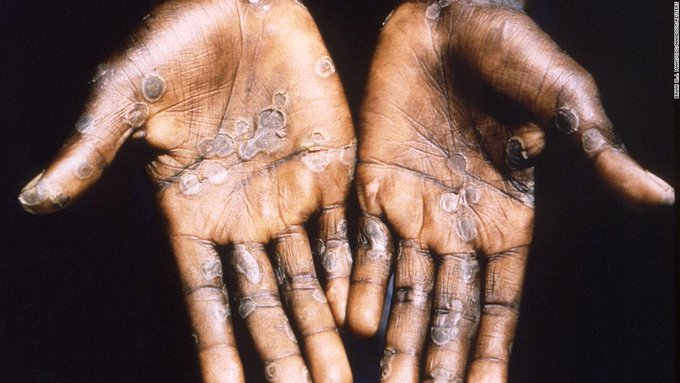
MonkeyPox

The South Korean Government is set to donate 50,000 doses of the Monkeypox (Mpox) vaccines to the African Union. This will be Africa’s first weapon against the outbreak ever since it began.

In July, the U.N. health agency designated monkey pox as a global emergency and appealed to the world to support African countries. Further, they did this to avoid repeating the catastrophic vaccine inequity that plagued the outbreak of COVID-19.

Africa Centres for Disease Control acting director, Dr. Ahmed Ogwel revealed the categories to receive top priority. He said health workers and those living in the most affected areas will be given first priority.

“Our criteria will look at countries that are reporting a lot of cases, deaths and whether they have the capacity to deliver the vaccines to where it is required,” Dr. Ogwel said in a virtual press briefing.

13 out of the 55 African countries are currently dealing with an active outbreak of monkeypox which is now known as the Mpox. Most of these cases have been registered in Nigeria, Ghana and the Democratic Republic of Congo.

The CDC also revealed its concern about the accelerated spike in cases in DR Congo. In the past week alone, the country has registered 51 new cases and four deaths.

Mpox is a known epidemic in west and central Africa. But until the disease caused unusual outbreaks in Europe and USA, health officials hadn’t given vaccines a single thought. So far, Africa has reported 1,047 new cases and 202 deaths.

Stories Continues after ad

2023 Netball World Cup: Uganda drawn in group D

She-Cranes players

The Netball World Cup 2023 (NWC2023) draw took place at the East London Convention Centre, South Africa, confirming the four pools for the first stage of the tournament.

Ahead of the draw, the 16 qualified teams, were seeded according to their World Netball World Ranking on 3rd November 2022.  The top 8 seeds were then placed into pools A to D. The two remaining teams in each of the four pools were drawn at random in two stages.

Uganda’s She Cranes were pooled in Group D alongside New Zealand, Trinidad & Tobago, and Singapore.

The four countries carrying the hopes of Africa are South Africa, Malawi, Uganda, and Zimbabwe. Hosts South Africa find themselves in pool C paired alongside Jamaica, Wales, and Sri Lanka.

Eleven-time world champs Australia are in pool A with Tonga, Zimbabwe, and Fiji while pool B is made up by England, Malawi, Scotland and Barbados.

The 2023 Netball World Cup will take place in Cape Town from 28 July – 6 August 2023.

Pool A: Australia, Tonga, Zimbabwe, Fiji

Pool B: England, Malawi, Scotland, Barbados

Pool C: SA, Jamaica, Wales, Sri Lanka

Pool D: New Zealand, Uganda, Trinidad & Tobago, Singapore

Stories Continues after ad

Protect SACCOs in new MDI law – Speaker Among

Speaker Anita Among

Speaker of Parliament, Anita Among, has instructed the House Committee on Finance scrutinizing the Microfinance Deposit-Taking Institutions (Amendment) Bill, 2022 to ensure inclusion of laws that protect members of Savings and Credit Cooperatives (SACCOS).

The Speaker gave the directive during the plenary sitting on Thursday, 01 December 2022.

She said that SACCOs help to ensure financial inclusion among communities in terms of programs like Emyooga and the Parish Development Model (PDM).

“SACCOs are not regulated by Bank of Uganda. The Institution only regularities tier one, two and three financial institutions, and not tier four where SACCOs belong,” Among said.

She added that it is key for the new law to have inclusions for SAACOs so that they are passed by the House.

The Speaker alluded to the first annual Microfinance and Savings Group Conference which she officiated at while highlighting the key role played by SACCOs in Uganda.

The Microfinance Deposit-Taking Institutions (Amendment) Bill, 2022 was tabled before Parliament on Tuesday, 22 November 2022. It allows microfinance deposit-taking institutions to offer services related to Islamic banking, agent banking and bank assurance, among others.

According to the Uganda Cooperative Savings and Credit Union Limited, there are 1,368 registered SACCOs.

The newly introduced Parish Development Model has required communities that intend to benefit from the funds to subscribe to SACCOs.

Stories Continues after ad

SafeBoda exits Nigeria

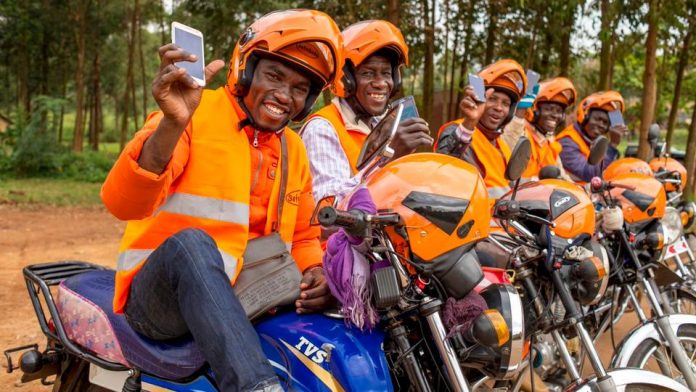
Safe boda riders

Ugandan bike-hailing startup, SafeBoda is reportedly exiting Nigeria.

According to Techpoint.Africa, SafeBoda wants to focus on “bringing the company to profitability by deepening its core transportation offering” in Uganda, its largest market.

Recall that SafeBoda also exited Kenya in November 2020, less than two years after expanding its services to the country.

The company said this was due to the negative effects of COVID-19 on its operations.

SafeBoda is reportedly exiting Nigeria because the “current state is not economically viable and unfortunately requires significant investment at this challenging time in the global economic landscape.”

Officially launched in Kampala, Uganda in 2017, SafeBoda claims to be upending the offline market for local motorcycles known as boda-bodas in Uganda and Okadas in Nigeria.

It launched in Ibadan, Nigeria, in December 2019 but began operations in March 2020.

This March, the company announced that it had completed over 3 million rides, and 50,000 deliveries with over 10,000 riders and 100,000 passengers.

In August 2022, SafeBoda announced a car-hailing service, SafeCar, in Kampala and one month after, it also launched in Ibadan, Nigeria.

It is, however, unclear at the moment whether its exit from Nigeria will also impact its car-hailing service.

Stories Continues after ad

Pope Francis to visit DRC, South Sudan in January 2023

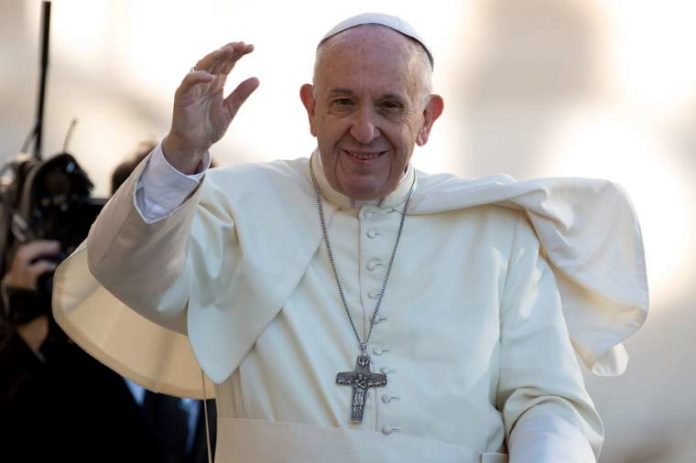
Pope Francis

Pope Francis has confirmed his delayed trip to Congo and South Sudan for 31 January to 5 February 2023, cutting out a stop in Congo’s conflict-ravaged east but fulfilling a years-long wish to accompany other Christian leaders to the young nation of South Sudan.

The Vatican on Thursday published the itinerary of the trip, which had originally been scheduled for last July but was postponed because Pope Francis was undergoing therapy for his strained knee ligaments. The 85-year-old Francis is still using a wheelchair, but has made other foreign trips in the meantime, suggesting that he can go through with even challenging itineraries.

The new itinerary roughly matches the original, with one significant exception: Initially the pope had planned to celebrate Mass in the eastern Congolese city of Goma en route to South Sudan. Now, Francis will meet in the Congolese capital, Kinshasa, with a delegation of faithful and “victims” from Goma.

Tens of thousands of Congolese have been displaced, with many heading toward Goma, amid renewed clashes between government soldiers and M23 rebels in Congo’s mineral-rich east. A cease-fire to end the latest round of fighting was supposed to go into effect last week.

After the Congo leg of the trip January 31 – February 2, Francis will be joined by the archbishop of Canterbury, Justin Welby, and the moderator of the General Assembly of the Church of Scotland, the Right Rev. Iain Greenshields, for a first-ever ecumenical peace trip by the leaders of the three Christian churches, to Juba, South Sudan, from Feb. 3-5.

 There, the three will celebrate an ecumenical prayer service together, and meet with displaced South Sudanese.

 The visit seeks to boost a 2018 agreement aimed at ending civil war. It has been in the works for years, but has been repeatedly postponed because of the security situation on the ground, and then in July because of Francis’ health.

 Welby and Greenshields both welcomed word that the trip would go ahead.

 “I am genuinely humbled at the opportunity to support our brothers and sisters in South Sudan in the search for peace, reconciliation and justice,” Greenshields said in a statement, which noted that the Church of Scotland had been invited to “represent the Presbyterian family due to its strong partnership with the Presbyterian Church of South Sudan.”

 Welby, for his part, added that all three leaders shared a desire to “stand in solidarity” with the people of South Sudan.

 In one of his more memorable gestures, Francis in 2019 invited South Sudan’s rival leaders to the Vatican for a prayer and knelt down and kissed their feet in begging them to make peace.

Stories Continues after ad

Maintaining reform momentum is essential to strengthen pension systems, says OECD

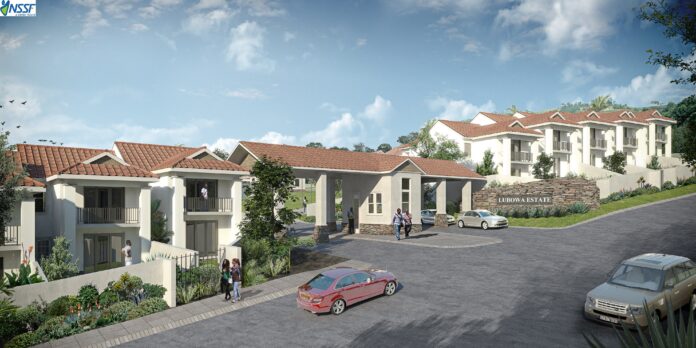
NSSF Lubowa houses.

The current financial and economic uncertainty, as well as the rising cost of living, may lead policy makers, regulators and supervisors to postpone reforms that could improve their pensions systems. However, delaying needed reforms would put at risk the well-being of current and future pensioners. Policy makers should continue to improve pension systems, according to a new OECD report.

The OECD Pensions Outlook 2022 says that pension arrangements in which retirement savings are invested to accumulate assets that will finance pensions (asset-backed pension arrangements) have been growing in the last two decades in most OECD member countries. Total assets earmarked for retirement represented just over 100% of total OECD GDP at the end of 2021. These arrangements play a key role in diversifying the sources of retirement funding.

“Strong retirement systems will be important to protect the living standards of our aging population as demands on these systems continue to grow,” OECD Secretary-General Mathias Cormann said. “The challenges are global, with jurisdictions all around the world facing similar challenges in the context of lower growth, high inflation and financial market uncertainty while responding to the implications of population ageing. We will need to continue to develop and strengthen a multi-pillar system that combines different types of pension schemes which supplement one another and diversify risks.”

To help countries improve the robustness of retirement systems and build peoples’ trust that their best interests are considered, the report includes a series of recommendations on how to introduce, develop and strengthen asset-backed pension arrangements. These schemes should complement, and never substitute, pay-as-you-go public pensions, and be designed to diversify the sources to finance retirement and make pension systems more resilient to the challenges they face, such as ageing populations.

These guidelines, building on the February 2022 OECD Recommendation of the Council for the Good Design of Defined Contribution Pension Plans, recognise the importance of occupational and personal pension arrangements that are increasingly an integral part of most countries’ overall pension system, and in some countries, the main component.

Employers can play an important role in the provision of asset-backed pension arrangements, according to the report. Reinforcing their role requires balancing the advantages, such as designing plans that fit the needs of employees, with the potential challenges, such as cost, complexity and administrative burden.

Improving their design also requires promoting low-cost and cost-efficient arrangements that will be reflected in the fees charged. However, policy makers and regulators need to consider the impact that different fee structures may have on individuals saving for retirement and on providers.

This edition of the Outlook also highlights the need for regulators and supervisors to ensure the appropriateness of mortality assumptions, as these are crucial to ensure the sustainability of lifetime retirement income for pensioners. It also provides policy guidelines on how to design, introduce, and implement non-guaranteed lifetime retirement income arrangements, which protect members from the longevity risk of outliving their savings without obliging further contributions from the sponsor to maintain benefit levels.

Working with over 100 countries, the OECD is a global policy forum that promotes policies to preserve individual liberty and improve the economic and social well-being of people around the world.

Stories Continues after ad