For years, Kampala’s skyline steadily drifted toward glass towers, aluminum panels and imported finishing materials that came to dominate Uganda’s modern construction industry. Traditional face brick architecture, once visible on some of the country’s most admired buildings, slowly faded from major commercial developments as developers embraced foreign inspired designs.
But one businessman has quietly changed that narrative.

Through some of Uganda’s most recognizable real estate projects, city tycoon Sudhir Ruparelia has led the revival of face brick architecture, transforming the once overlooked construction style into one of the defining features of modern urban development in Kampala.
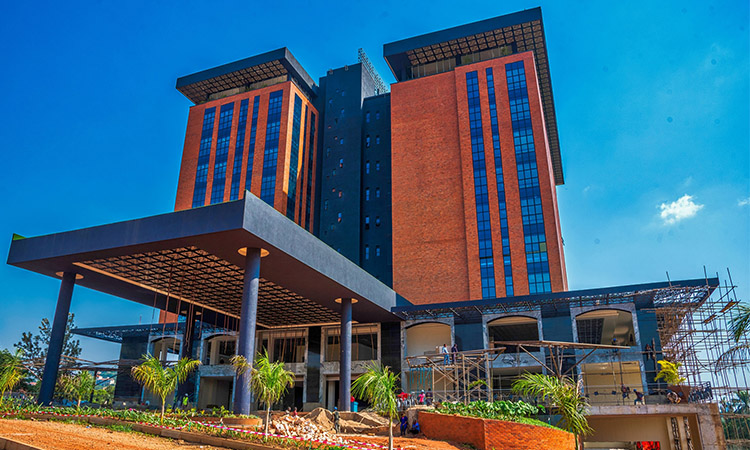
From Kingdom Kampala to the newly unveiled RR Tower One at the RR Pearl Business Park and the ongoing redevelopment of Kabira Country Club, Sudhir’s projects have increasingly embraced exposed face bricks, blending contemporary architecture with a distinctly African and locally rooted identity.
What was once viewed by many developers as an old-fashioned design has now become one of the most sought-after architectural trends in Uganda’s high-end real estate market.

Historically, Uganda’s face brick industry was largely associated with Uganda Clays Limited, which for decades remained one of the country’s leading producers of clay bricks and roofing products. While face bricks were previously common in institutional buildings, schools and older residential homes, their use in premium commercial developments had significantly declined over the years.
According to tycoon Sudhir, the face bricks for Kingdom Kampala and Kabira are from the Kawempe-based face brick makers, while for RR Tower One, he bought them from Masaka.
However, the rise of Sudhir’s large scale projects has gradually reignited demand for the material, prompting other manufacturers and suppliers to enter the market as developers increasingly turn back to locally inspired construction finishes.
At Kingdom Kampala, Sudhir introduced a modern blend of glass, steel, and exposed brick textures that immediately distinguished the building from many of the city’s conventional office complexes. The development became one of the earliest high-profile projects to demonstrate that face brick architecture could successfully compete within modern commercial real estate while still maintaining elegance and sophistication.
The same design reappears more prominently at RR Tower One, where warm brick finishes have been integrated into the skyscraper’s premium Grade A office design. The tower, part of the RR Pearl Business Park development along Yusuf Lule Road, has since become one of the most talked about additions to Kampala’s skyline.
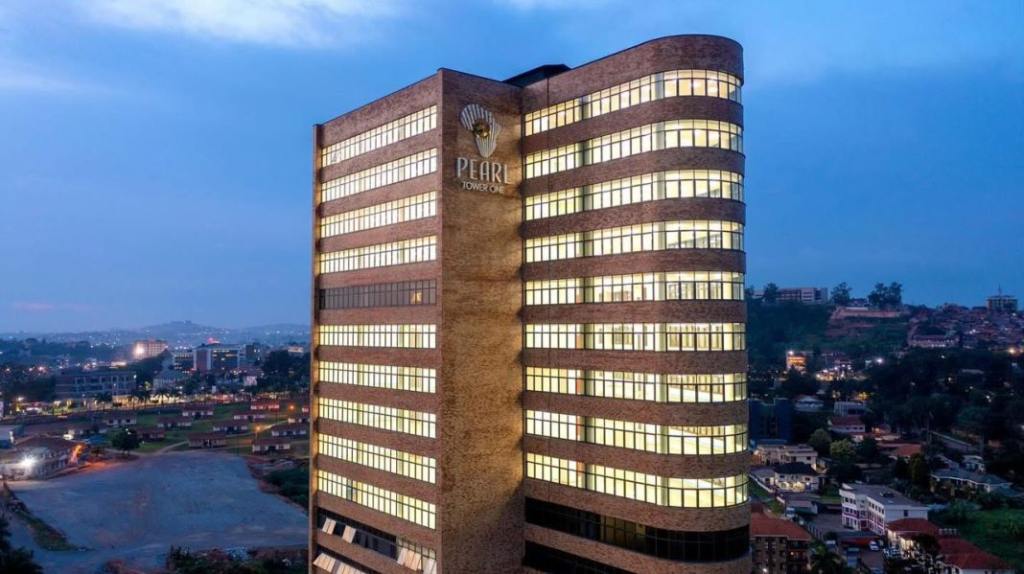
The renewed use of face bricks has helped restore confidence in local architectural identity at a time when many developers were heavily relying on imported styles and materials.
Face bricks offer several practical advantages, including durability, reduced maintenance costs and resistance to weather damage compared to painted walls, which often fade or crack over time. The bricks also provide natural texture and thermal efficiency, making them increasingly attractive for Uganda’s tropical climate.
The influence of the trend is now spreading far beyond Sudhir’s own projects.
Several private developers, estate owners and hotel investors across Kampala, Wakiso and Mukono have increasingly adopted exposed brick finishes in apartment complexes, luxury homes and commercial buildings.
Many of these projects are directly drawing inspiration from Sudhir’s developments, which have helped redefine how modern Ugandan buildings can incorporate local materials without sacrificing luxury or international appeal.
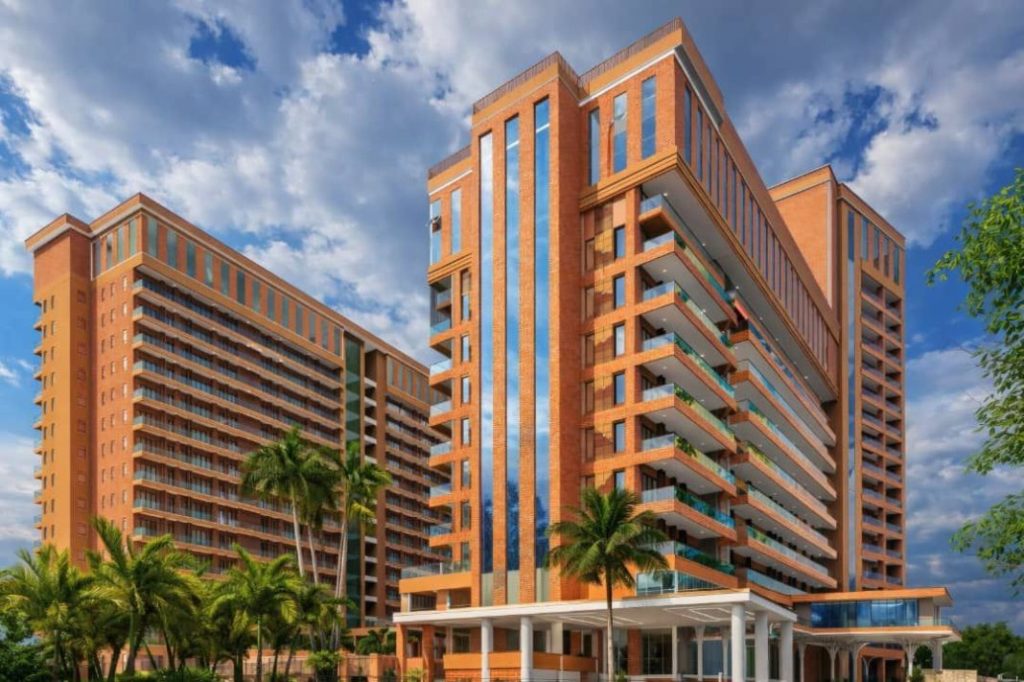
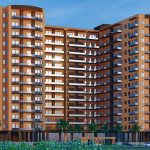
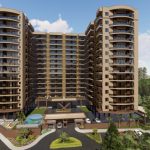
The transformation is perhaps most visible at Kabira Country Club in Bukoto, where artistic impressions of the upcoming redevelopment reveal extensive use of modern face brick finishes alongside glass facades, landscaped walkways and contemporary urban designs. The redevelopment, being undertaken through Meera Investments, will include more than 360 luxury serviced apartments, shopping areas, restaurants, conference facilities and a high rise five star hotel tower.
The revival of face brick architecture is also creating renewed opportunities within Uganda’s local construction materials industry, encouraging investment in modern brick production and reducing dependence on imported finishing products.
Today, many architects view face brick construction not simply as a return to traditional building styles, but a sustainable, durable and culturally grounded urban development.
And at the center of that shift stands Sudhir, whose projects are increasingly reshaping Kampala’s skyline with a style that reconnects modern real estate with Uganda’s architectural heritage.