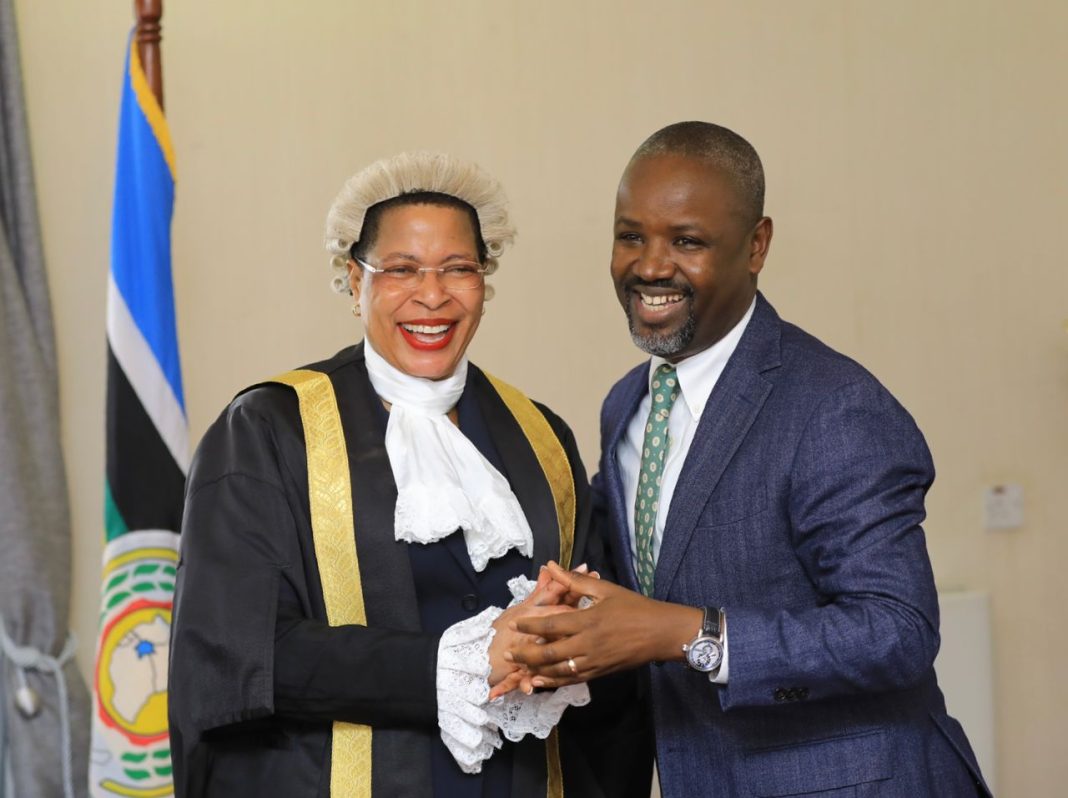
The ongoing corruption investigations at Parliament have now triggered one uncomfortable question within the political establishment: why has Deputy Speaker Thomas Tayebwa remained largely untouched as security agencies tighten the noose around former Speaker Anita Among and senior parliamentary officials?
For days now, Uganda has watched serious scenes unfold around Parliament and properties linked to Among as joint teams from the Criminal Investigations Directorate, UPDF and other state agencies intensify investigations into allegations of corruption, money laundering, illicit enrichment and questionable expenditure of public funds.

The investigations commenced this week when security operatives sealed off the offices of Among and Clerk to Parliament Adolf Mwesige, declaring parts of Parliament an active crime scene as forensic teams combed through documents, electronic devices and procurement records.
But for now, attention is increasingly shifting toward Tayebwa, who served at the centre of Parliament’s leadership structure during many of the controversial expenditures now attracting public scrutiny.
Questions are now emerging over whether the state is deliberately shielding the Deputy Speaker, whether investigators have already absolved him of wrongdoing, or whether authorities could eventually turn him into a state witness in the investigations surrounding Parliament’s financial dealings.

The silence from investigators regarding Tayebwa has only deepened speculation.
While security agencies have raided properties linked to Among, impounded luxury vehicles, sealed offices and widened investigations into parliamentary networks, no similar public action has so far been directed at the Deputy Speaker.
The development has raised questions among sections of the public who argue that Parliament’s top leadership operated within the same financial and administrative structure, making it difficult to separate one office bearer from major decisions that passed through the institution.
Under Parliament’s structure, the Parliamentary Commission oversees administration, procurement, welfare and expenditure decisions within Parliament. The commission is chaired by the Speaker and includes the Deputy Speaker alongside other top government officials and commissioners.
This has now reignited debate about whether investigations focusing heavily on Among while remaining silent on Tayebwa risk creating a perception of selective justice.
Some of the controversial expenditures currently under scrutiny were not isolated actions undertaken by one individual.
Among the most controversial was the 2022 procurement of luxury Mercedes Benz S500 AMG Line vehicles for Among and Tayebwa, a transaction that triggered public outrage at the time due to the enormous cost to taxpayers.
The vehicles reportedly cost between Shs2.4 billion and Shs2.9 billion after Parliament approved procurement processes that were extravagant at a time when ordinary Ugandans were grappling with rising commodity prices, unemployment and pressure on social services.
Although Parliament defended the procurement as a necessary replacement of an ageing fleet, the transaction became symbolic of what critics described as excessive spending within the institution.
Questions are now being raised about whether everyone involved in approving, processing and benefiting from such expenditures will eventually be subjected to the same level of scrutiny.
The controversy has also revived memories of the disputed service awards in which Parliamentary Commissioners reportedly shared about Shs1.7 billion, causing outrage and political divisions within Parliament.
The payments became one of the most politically damaging scandals associated with Parliament’s leadership after reports emerged that several commissioners benefited from the funds.
If the investigators are serious about cleaning up Parliament, then all officials connected to the institution’s financial decisions should equally face scrutiny.
The debate intensified further after security agencies dramatically descended on Among’s residences in Kololo, Kigo and other locations in operations that investigators said were linked to corruption and money laundering inquiries.
Security teams later extended the operation to Parliament itself, sealing off offices linked to the Speaker and the Clerk to Parliament.
Images and reports from Parliament showed heavily armed operatives surrounding the Speaker’s wing as forensic investigators entered offices carrying evidence collection equipment.
Yet despite the investigations, Tayebwa has remained publicly quiet.
The silence has become even more politically sensitive following endorsements from Chief of Defence Forces Muhoozi Kainerugaba indicating that Tayebwa will retain his position as Deputy Speaker in the next Parliament.
That endorsement has now raised sensitive questions within political circles about whether the Deputy Speaker is viewed differently within the ongoing anti-corruption drive.
In case these investigations stop at Among and a few parliamentary officials, the public could interpret the crackdown as politically selective rather than institutionally impartial.
Leaving Tayebwa completely outside the investigations risks damaging public confidence in the fight against corruption.
More so if the investigations continue to focus heavily on Anita Among while remaining silent on other top parliamentary leaders, the process could easily be interpreted as unfair targeting. In Teso, where Among enjoys strong political backing, some supporters are already quietly questioning whether their daughter is being singled out while others who served within the same leadership structure appear untouched. Many now say the state must handle the investigations carefully and transparently to avoid leaving Ugandans with the impression that some officials are protected while others are sacrificed.
Anita Among is now seen as a sacrificial lamb yet Tayebwa is being protected. The question is now asked whether Tayebwa is protected because he is from the favored region of the country or.
There are also growing fears that failure to widen investigations could generate political resentment within sections of the ruling National Resistance Movement, especially among supporters of Among who may interpret the situation as targeting one individual while protecting others within the same leadership structure.
The issue has become even more delicate because Parliament’s major financial decisions ordinarily pass through multiple layers involving technical officers, accounting authorities and members of the Parliamentary Commission.
That is why questions continue to emerge over whether the Deputy Speaker never participated in approving allowances, procurement arrangements or welfare expenditures now under public scrutiny.
Ugandans are also asking whether Tayebwa and other senior officials benefited from the controversial service awards that became one of Parliament’s biggest scandals.
Others are questioning whether the Clerk to Parliament, as accounting officer, and other senior administrators who authorize expenditure can entirely escape accountability if wrongdoing is eventually established.
The expanding investigations have also widened beyond Parliament’s top offices.
Several legislators and political operatives linked to Among are increasingly finding themselves under scrutiny over alleged suspicious financial transactions and political mobilisation networks allegedly built during her tenure as Speaker.
Reports have linked investigators to alleged inquiries into parliamentary procurement deals, movement of huge sums of money and networks of individuals believed to have benefited from influence within Parliament.
The investigations have already transformed Parliament into the centre of Uganda’s latest political earthquake.
But the biggest unanswered question remains whether the state intends to widen the net fully or whether some officials will remain untouched.
For many Ugandans, the issue is no longer simply about Anita Among.
It is increasingly becoming about whether the country’s anti-corruption institutions can pursue accountability without fear, favour or political calculations.
There is also speculation that investigators could strategically rely on insiders within Parliament’s leadership structure to strengthen cases against other officials.
That possibility has now raised debate over whether Tayebwa could eventually emerge not as a suspect, but as a critical state witness in the broader investigations surrounding Parliament’s financial management.
At the moment, however, authorities have remained largely silent on the Deputy Speaker’s exact status within the investigations.
Neither CID nor the Inspectorate of Government has publicly clarified whether Tayebwa has been questioned, cleared or remains under review as investigations continue.
That silence is precisely what is now feeding public suspicion.
Many Ugandans argue that if the state truly intends to restore confidence in public institutions, then investigations must leave no room for perceptions that some individuals are protected while others are sacrificed.
The unfolding corruption storm at Parliament has already shaken the country’s political establishment.
But how investigators handle questions surrounding Tayebwa may ultimately determine whether the anti-corruption campaign is seen as a genuine institutional clean-up or merely another politically selective purge dressed as accountability.