Stanbic Bank
Stanbic Bank
18.9 C
Kampala
Stanbic Bank
Stanbic Bank
Home Blog Page 519

Traders petition Parliament over cost of doing business

Deputy Speaker Tayebwa has received a petition from KACITA over what they termed as unfair taxation regime.

Traders under the Kampala City Traders Association (KACITA) have petitioned the Deputy Speaker of Parliament, Thomas Tayebwa, on the high costs of doing business and prayed that government stops selective giving of tax waivers.

KACITA led by their Chairperson, Thadeus Musoke, said that following the COVID-19 pandemic, several of their members lost property to banks due to unpaid loans and are struggling to get back to business.

“Our loans accumulated, we tried to engage different government agencies and the banks but what was designed to help us was not effective enough because currently banks are auctioning buildings and property and the business communities cannot access top-ups,” Musoke said during the meeting held at Parliament Building on Tuesday, 27 September 2022.

Musoke also said that during an earlier meeting with the President, they requested the designing of a special fund to support traders to market Ugandan products through the “Build and Buy Uganda” programme, a request that has not been implemented to date.

The traders prayed that Parliament prevails over the Central Bank, which sets a high Central Bank Rate (CBR) used to implement or signal its monetary policy stance leading to high interest rates.

They also called for a fair tax regime arguing that traders have been affected by the new tax policy that pushed the import duty tax on garments from 25 to 35 percent or US$ 3.5 per kilogram. Musoke said the high costs of doing business is also affecting their business as traders.

The Association also proposed that government should stop giving out tax exemptions that only benefit a few business persons, but instead introduce non-tax incentives like subsidies on utilities and expanding the transport sector to ensure a conducive environment.

Responding to the petition, the Deputy Speaker, Tayebwa, hailed KACITA for choosing dialogue over protests, which are not productive.

He urged KACITA to self-regulate to ensure that they produce standard products for both local use and export.

He also appealed to the traders to export more, stating that focus on imports puts a lot of pressure on the Ugandan economy and currency.

Later, during the plenary sitting, the Deputy Speaker, referred the petition to the committee on Trade, Tourism and Industry to scrutinize the concerns of members and report back to the House.

Stories Continues after ad

Gov’t to release Shs30 billion for coffee, tea seedlings

Finance Minister Matia Kasaija

Government has agreed to release Shs30 billion towards the supply of seedlings to coffee and tea farmers, the Minister of Finance, Matia Kasaija, has said.

“We shall release the money to Uganda Coffee Development Authority and National Agricultural Advisory Services as per the budget. I need to check with the Treasury, but we shall release the money as soon as possible,” said Kasaija. 

He made the reassurance while making a statement on the supply of coffee and tea seedlings during plenary sitting on Tuesday, 27 September 2022. 

He however clarified that the demand for seedlings stands at Shs93 billion, and that the release to be made in this financial year does not include the excess of Shs60 billion.  

“The money in the budget is not sufficient to cover all the seedlings in nursery beds. There is need for an additional Shs60 billion which will be paid in the next two financial years,” Kasaija said. 

He said that the additional supply of seedlings will be done through the Savings and Credit Associations under the Parish Development Model (PDM). 

He explained that up until 2021/2022 financial year, government policy had been for Uganda Coffee Development Authority (UCDA) and National Agricultural Advisory Services (NAADS) to procure seedlings from certified coffee and tea nursery operators. 

“However, government has since decided to transfer funding previously appropriated for procurement of seedlings from UCDA and NAADs to PDM starting this financial year, 2022/2023,” said Kasaija. 

The Minister of Agriculture, Frank Tumwebaze, said that the Ministry will ensure that seedlings are supplied, once the authorisation is given.

“We have won one step, the Minister of Finance has allowed supply of seedlings, even if there is no money, as long as the Minister of Finance and the Permanent Secretary and Secretary to Treasury  write and authorise supply, it will take place,” he said. 

He added that the Ministry of Agriculture together with that of Finance, will work out modalities on verification of coffee farmers and suppliers. 

“We shall verify who has been supplied such that you do not come and tell us that air was supplied. The Treasury is tight, every penny paid must be accounted for. Verification should be left to Ministry of Agriculture,” said Tumwebaze. 

Deputy Speaker, Thomas Tayebwa, appealed to the Ministers to expedite supply of seedlings, taking into account the rainy season which ends in a few months. 

“What we need are the seedlings, you will pay these people later. The pressure is based on the fact that rains are not waiting. We want you to authorise responsible entitities in line with appropriated funds then we start the process,” said Tayebwa. 

He also advised the Minister of Finance to appropriately handle the supply of seedlings that were not budgeted for in the 2022/2023 financial year budget. 

Leader of the Opposition, Mathias Mpuuga, acknowledged the limited funding, but called for proper implementation of the 2022/2023 financial year budget.   

“The demands of our people are legitimate. We can agree to work with what is available, we shall support you. We ask of you to move decently, government must move as per the plan. Stick to the budget and we shall not demand for more,” Mpuuga said. 

Stories Continues after ad

The Rise of Online Gaming in Africa

The gaming industry is typically aimed at Japan, Europe, and America. However, over the last few years, mobile gaming has helped to break open the doors and flood the African market. Throughout the entire continent, both classic and new titles are being enjoyed by a wealthy community. According to Ventures Africa, the gaming industry brought in a whopping $590 million in revenue – a figure set to increase. 

Looking Back

We only need to go back around five years to see Africa’s completely different gaming landscape. The majority of gamers had to venture outside to visit an internet cafe – an alien concept to the Western World. However, in 2022, the gaming industry began to boom because of the rise in readily available smartphone technology. 

According to African News, the number of gamers in Africa has risen from 77 million in 2015 to 186 million – a figure that will continue growing. If you break down this figure, 24 million of these gamers live in South Africa which is the largest share of the total. 

Largest Markets

We’ve already established South Africa holds the majority of the market, with an estimated 40% of the population playing video games. PC and console games are popular here, but they’re only largely available to the middle class. Therefore, the most popular gaming market is monopolized by mobile gaming, including these sites for online gambling in Uganda, where you will find the safest online gaming websites. 

Africa-Inspired Games

Africa is full of diversity, with many different cultures spread across the continent. Therefore, there’s no surprise that plenty of video games are based around Africa. The gaming population of Africa loves seeing their own country translated into video games. One example of such a game is Mzito, which is a 2D platformer; players must liberate Africa by beating down corruption. The game is designed to inspire Africa – hence the symbolism. Therefore, if you’re an American gamer, you likely won’t enjoy the game. 

Counter-Strike: Global Offensive

Africa enjoys first-person shooter games just as much as everyone else, and CS:GO is just about as good as it gets. The game is completely free on Steam, and the multiplayer mode is a crowd pleaser. This terrorist vs. marine shooter game has even helped create professional gamers out of Africa, which is a testament to its success. 

Worldwide Classics

Some games are relatable worldwide, including FIFA, which is busy inspiring the African gaming community. Soccer is extremely popular in Africa, so it’s good news that FIFA has a high-quality mobile version of the game. When translated to mobile, the same stunning graphics and player selection options are available, which is a huge appeal to Africa.  

The gaming industry in Africa is bringing in millions for the country, and its value is only going to continue growing. Accessibility to smartphones and the development of tech infrastructure are responsible for the rise in popularity of online gaming in Africa. In the future, as the price of technology decreases, we expect that more African gamers will own consoles and PCs, which will help level the playing field with the rest of the world.

Stories Continues after ad

Mudavadi eats big as President Ruto unveils cabinet

President William Ruto chairs his first full cabinet meeting at State House Nairobi on September 27, 2022.

Two week after taking oath of office as  Kenya’s fifth head of state, President William Ruto on Wednesday unveiled his Cabinet members.

The unveiling of the cabinet came shortly after he held his inaugural cabinet meeting with former cabinet secretaries who served under former President Uhuru Kenyatta.

Addressing the nation from State House Nairobi, the President unpacked to Kenyans the men and women who he entrusted with the responsibility of delivering his manifesto to Kenyans.

Amani National Congress (ANC) party leader Musalia Mudavadi has been appointed the Prime Cabinet Secretary.

Ruto also announced that Director of criminal investigations George Kinoti has called it quits.

During the unveiling of his cabinet, the President announced that  Inspector General of Police Hillary Mutyambai has proceeded on terminal leave.

Mutyambai had six months left before retiring.

“After discussing with Mutyambai, I have accepted his terminal leave,” Ruto said.

Ruto said he has also received the resignation of the director general of CID Kinoti.

“I have transmitted the same to the National Police Service to proceed with advertising that position,” Ruto said.

Ruto said they will get someone to act in the place of Kinoti.

Full List

Prime Cabinet Secretary – Musalia Mudavadi

2. Interior – Kithure Kindiki

3. National Treasury-Njuguna Ndung’u

4. Public Service and Gender – Aisha Jumwa

5. Defence – Aden Duale

6. Water, Sanitation & Irrigation – Alice Wahome

7. Foreign and Diaspora Affairs -Alfred Mutua

8. Trade – Moses Kuria

9. EAC – Rebecca Miano

10. Roads – Onesmus Kipchumba Murkomen

11. Lands – Zacharia Mwangi Njeru

12. Tourism – Peninah Malonza

13. Agriculture – Mithika Linturi

14. Education – Ezekiel Machogu

15. Energy and Petroleum – Davis Chirchir

16. Sports – Ababu Namwamba

17. Cooperatives and MSMEs – Simon Chelugui

18. Mining – Salim Mvurya

19. Labour – Florence Bore

20. Health – Susan Wafula

21. Communication – Eliud Owal

22. Environment & forestry – Roselinda Soipan Tuya

Attorney General – Justin Muturi

National Security adviser – Monica Juma

Secretary to the cabinet – Mercy Wanjau

Stories Continues after ad

DRC Ebola outbreak declared over, Uganda boosts response

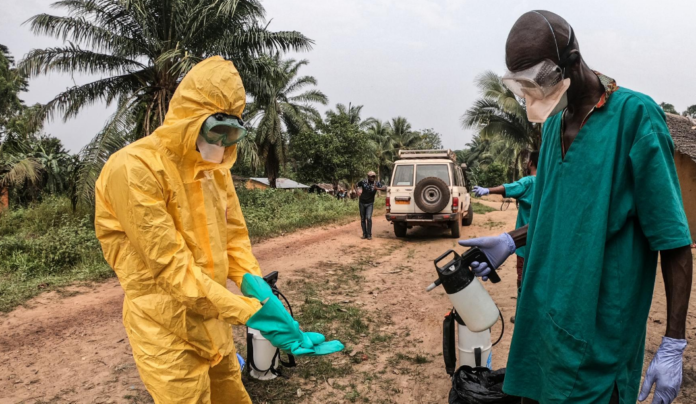
Health workers

The Democratic Republic of the Congo today declared the end of an Ebola outbreak that re-emerged six weeks ago in the country’s North Kivu Province. The announcement came as neighbouring Uganda races to curb an unrelated outbreak declared last week.

With only one case confirmed, the just-ended outbreak was one of the Democratic Republic of the Congo’s least catastrophic. A previous outbreak – the country’s 14th in which there were four confirmed cases and five deaths – was declared over on 4 July this year.

The Ebola outbreaks in the Democratic Republic of the Congo have been caused by the Zaire ebolavirus – one of the six species of the Ebola genus. Uganda is fighting a fast-evolving outbreak of Sudan ebolavirus, with 36 cases (18 confirmed and 18 probable) and 23 deaths reported as of the 25 September.

In the Democratic Republic of the Congo, improving Ebola outbreak readiness and response is paying off. Only a few days after the outbreak in North Kivu was declared, the health authorities rolled out a vaccination drive using the ring strategy. More than 500 people were vaccinated including 350 contacts, contacts of contacts and frontline workers. Nearly all the 182 people who had come into contact with the initial case were monitored over 21 days and cleared once confirmed as not being at high-risk.

Analyses of samples taken from the confirmed case showed that the outbreak was genetically linked to the 2018–2020 Ebola outbreaks in North Kivu and Ituri provinces—the country’s longest and largest. Although the current outbreak in North Kivu has been declared over, health authorities are maintaining surveillance measures and remain ready to respond to any flare-ups.

 “The Democratic Republic of the Congo has built up impressive expertise in controlling the virus and we can marshal the lessons learnt to beat back the Ebola outbreak in Uganda,” said Dr Matshidiso Moeti, World Health Organization (WHO) Regional Director for Africa. “While an effective vaccine is not yet available for the Sudan ebolavirus, this is just one tool. We can and have brought Ebola to heel with robust contact tracing, detection, isolation of cases and good supportive care.”

In Uganda, the Sudan ebolavirus outbreak has now affected three districts: Mubende, Kyegegwa and Kassanda across 120 kilometres. To date, 399 contacts have been identified and are being monitored as the search continues to identify other people who may be at-risk. Uganda has strong testing capacity for Ebola, with 5000 tests currently available for use.

There are 30 people undergoing care—13 of whom are confirmed to have Ebola and 17 of whom are suspected to have contracted the disease. While there is no specific treatment for Sudan ebolavirus, those who are sick are receiving supportive care, which significantly improves their prognosis. An isolation unit has been set up in the Mubende Regional Referral Hospital and preparations are underway for an additional Ebola Treatment Unit. WHO has also deployed three viral haemorrhagic fever kits with medical supplies, medicines and personal protective equipment. More kits will be deployed based on need.

WHO is supporting Uganda to improve readiness in health districts which have not reported any Ebola cases by building on previous preparedness efforts and providing refresher trainings for clinicians on surveillance, case detection and management. The Organization is strengthening infection prevention and control in health facilities and is supporting simulation exercises in high-risk districts.

Additionally, WHO is assisting rapid response teams in neighbouring countries to strengthen case investigation, contact tracing and working with communities, as well as prepositioning critical medical equipment and supplies including personal protective equipment in high-risk countries.

Through its Contingency Fund for Emergencies, WHO is providing US$ 500 000 to support Uganda’s Ebola control efforts and another US$ 300 000 from its preparedness programme to support readiness activities in the neighbouring countries.

Stories Continues after ad

Housing Finance Bank launches Gov’t Securities Portal

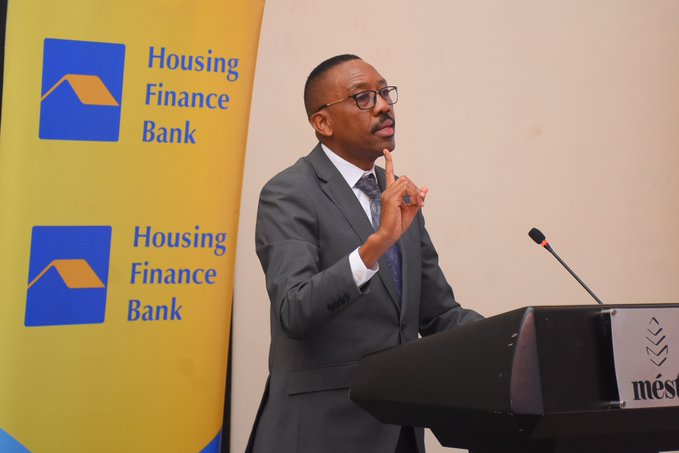
Michael Mugabi, the Managing Director of Housing Finance Bank

Housing Finance Bank has launched the Government Securities Portal for customers who invest in treasury bonds and bills.

In 2020, Bank of Uganda appointed Housing Finance Bank as a primary dealer to ensure investors and market customers have easy access to treasury bonds and bills.

Robert Nyehangane, Treasury Head, Housing Finance Bank said to buy Treasury Bills or Bonds, you need a Central Securities Depository (CSD) account. With the portal, you can open a CSD account within an hour and a Housing Finance Bank account.

“Customers can invest as low as Shs 1,000. Please embrace this journey as we accumulate wealth,” Nyehangane said.

Peace Ayebazibwe Kabunga, the Executive Director of Housing Finance Bank said; “Our customers, you are the reason we exist. We want to thank you for choosing to bank with Housing Finance Bank and we are committed to our promise to continue giving you convenience through digital transformation.”

“You can transact and invest from the comfort of your home. As long as you have internet, you can invest for yourself and your family. Be it at your farm, or in the diaspora, there is no need to come to Uganda to buy government securities,” she said.

Michael Mugabi, the Managing Director of Housing Finance Bank said; “To our customers, continue celebrating with us, identify with us, and be part of this journey and milestone as we commemorate what I call ‘empowering you, our customers.”

“What you just witnessed here is basically a situation where we empower you. That is what banking is coming to. A customer who is empowered in terms of knowledge, information, financial opportunities, and prospects.”

He said Housing Finance is the first bank in this country to launch a securities portal. 

“From us to you, the customers that have graced this event, we are happy to be celebrating this key milestone where we empower you,” he said.

Dr. Charles Abuka, Executive Director of Operations at Bank OF Uganda (BOU) said BoU is interested in financial markets because of a very simple reason. The only sure way to alienate poverty is for a country to widen and deepen its financial markets.

“The government of Uganda and the Bank of Uganda as its agent have engaged in efforts to widen & deepen financial markets because they are important for growth and have poverty-reducing effects the world over.”

“Housing Finance Bank has been a primary dealer since the adoption of the Primary Dealership System in 2020. It is our pleasure to see our indigenous banks competing on an equal footing with international banks,” Abuka said.

Stories Continues after ad

Planned pregnancies can reduce health care expenditure on teenage mothers

Teenage mothers

Exploring the cost of inaction on teenage pregnancy, Dr. Betty Kyaddondo, Director of Family Health at National Population Council (NPC), has noted that the Out-of-pocket expenditure of 1.28 trillion Shs (362.5 million USD) on health care by teen mothers is equivalent to 43% of the Ministry of Health budget and the government health expenditure on teenage mothers’ health care is 246.9 billion Shs (70 million USD). 

“If no action is taken, teenage pregnancy will continue with 50% of teenagers at risk, and about 64% teen mothers will not complete primary education level. Also, about 60% of teen mothers will end up in peasant agriculture work,” she warned.

Dr. Kyaddondo added that annually more than Shs645 billion (184million USD) will be spent on health care for teen mothers and education of their children.

Anne Alan Sizomu, Programme Specialist- Adolescent and Youth Sexual and Reproductive Health at UNFPA noted that ending teenage pregnancy requires multi-sectoral approach where everyone is involved, as this will help to reduce the level of dependency of children born by teenagers.

“Most of the time, the adolescents who are getting pregnant are not income earners, they are children. When we have many getting pregnant in one year, very few will make it out of subsistence agriculture. Therefore, the cycle of poverty will continue and the chances of children of teenage mothers being able to go to school, with the existence of Universal Primary Education (UPE) may be very minimal,” she added.

Teenage pregnancies contribute to 20% of the infant deaths and 28% of the maternal deaths. Teenage pregnancy negatively impacts social development at the individual, family and country levels. It is an enduring bottleneck to attaining the Sustainable development Goals. (SDGs)

Bunyoro Sub Region is a leading teenage pregnancy hotspot, with five districts (Kagadi, Kikuube, Hoima, Masindi, and Kiryandongo) being among the teenage pregnancy hotspots, and the sub counties of Kyangwali (Kikuube District), Bweyale Town Council (Kiryandongo District), Mutunda (Kiryandongo District) & Kabwoya (Kikuube District) being among the 12 leading adolescent pregnancy hotspot sub counties in the country.

Dr. Rogers Ampwera, the Executive Director Naguru Teenage Information and Health Centre (NTIHC) noted that for the past 27 years, the center has been providing “Youth Friendly Responsive” Adolescent Sexual and Reproductive Health and Rights (ASRHR) services and information primarily targeting young people aged 10-24 years old. These include; general medical services, counselling services, HIV testing, Condom distribution, antenatal and postnatal services, family planning and others.

He further noted that creating awareness about young people’s sexual reproductive health and rights is being done through health talks, interactive speeches, debates, interactive clubs and radio talk shows.

“We have around 33 youth corners in different districts aimed at serving young people with quality responsive SRHR services. So, our model of youth friendly services is to make sure that it’s a One-stop Centre, when a young person walks in whether they have flu or fever, our job is to make sure that we take them on, counsel them and identify any other issue affecting them,” he said.

He added that young people can always get all the information they need by calling the Muvubuka helpline 0800311222 to speak to a qualified health service provider.

Statistics from the United Nations Populations Fund (UNFPA) indicate that nearly half (46.1%) of the births by the teenagers are unintended pregnancies, and 1 in every 4 girls aged between 15-19 years have begun childbearing.

Stories Continues after ad

Top Kenyan lawyer Gicheru found dead in Nairobi as ICC waits to deliver ruling

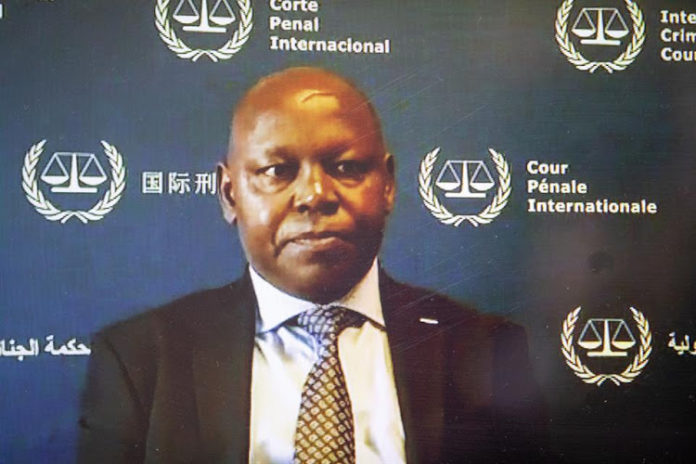
Lawyer Paul Gicheru

Lawyer Paul Gicheru’s sudden death at his Karen home on Monday has ignited memories of mysterious deaths of other individuals linked in one way or the other with Kenyan cases at the International Criminal Court.

Like Gicheru’s death whose cause is yet to be known, some of the other individuals who were linked to the ICC cases also died mysteriously. 

Gicheru was a suspect at the ICC in relation to the alleged interference of witnesses in the case against President William Ruto and former journalist Joshua Sang. All the cases were dropped for lack of evidence.

The lawyer surrendered to the ICC on November 2, 2020, pursuant to an arrest warrant issued on March 10, 2015, by The Hague.

He was accused of allegedly bribing witnesses to either recant their testimonies or refuse to testify in the crimes against humanity case against Ruto and Sang.

The charges were in relation to the violence that erupted after the 2007 election and the case was still ongoing.

But on September 26, he was found dead at his Karen home.

“He had late lunch and felt unwell and went to bed but he did not wake up,” police said.

On January 6, 2015, the decomposed body of Meshack Yebei, a key witness in the Ruto case, was discovered at Man Eaters Park in Voi by a forest ranger after he was reportedly abducted on December 28, 2014.

The resultant autopsy revealed that he died after being hit on the head with a blunt object.

ICC said it had offered him protection in a safe location but he returned home to his home at Kaptebee village in Eldoret, Uasin Gishu county.

The then Director of Public Prosecutions Keriako Tobiko ordered police to carry out a “speedy and thorough investigation” into his murder. The murder remains unresolved.

In May 2016, then Cord leader Raila Odinga released the names of ten people he claimed would-be witnesses in Kenya’s ICC cases but he claimed they had disappeared.

He spoke during the requiem mass of slain Nairobi businessman Jacob Juma at the All Saints Cathedral in Nairobi.

In his speech, Raila said there is a system and a philosophy in Kenya which believes in murders, produces murders and believes, wrongly so, that the way to sort out differences and eliminate competition, whether real or imagined, is through extra-judicial killings.

“That philosophy has claimed many lives from independence to date. In the aftermath of the post-election violence, a chain of would-be witnesses were systematically eliminated through extra-judicial killings,” Raila said.

Alongside Yebei, Raila named Njoroge Gichere, George Njoroge Wagacha alias “Afco”, Timothy Mburu Gatira, Anthony Mwenje alias “Noriega”, Maina Diambo, Naftali Irungu alias “Marcus” and Charles Ndungu Wagacha.

Wagacha, then acting Mungiki chairman, and treasurer Irungu, were shot dead on April April 29, 2008 as they drove to Naivasha Prison when they were killed.

Raila also named Njuguna Gitau Njuguna and John Kituyi, a former editor and publisher for the Mirror Weekly who lived in Eldoret.

Kituyi, 61, was killed on April 30, 2015, at Eldoret’s Pioneer estate, three months after Yebei.

His family said he was walking home in the evening when assailants pounced on him, hitting him severely on the head.

His third-born daughter, Angela, told reporters she received a call from a boda boda operator familiar to his father at around 8.30 pm informing him that his father had been seriously injured and rushed to hospital.

“We rushed to the hospital and found doctors trying to resuscitate him,” she said.

At the Reale Hospital where the journalist was rushed, the ICU was fully booked. 

He was taken to Eldoret Hospital where he succumbed to his injuries.

There was, however, no official confirmation that the individuals named by Raila were ICC witnesses.

Stories Continues after ad

Health Development partners mobilized to end Ebola outbreak in Uganda

Health partners visiting Ebola-affected areas

The leadership of the Ugandan Ministry of Health, the World Health Organization (WHO), and other health partners visited the Ebola-affected areas of Mubende district on 24 September to assess the health situation, understand the gaps and strengthen the response to the Ebola outbreak in the country.

The delegation was led by the Minister of Health, Dr. Jane Ruth Aceng, and accompanied by the WHO Officer-in-Charge, Dr. Bayo Fatunmbi, representatives of various health development organizations and implementing partners, and three members of the Ugandan Parliament.

Starting with the National Task Force meeting at the City Hall in Mubende district, Health Development and implementing partners discussed the situation of the outbreak and engaged in their various capacities to support the response. They highlighted the need to strengthen community surveillance and risk communication as basics in any response outbreak.

“Ebola is real, and we need to eradicate this outbreak as early as possible. The cases we already have in the country are enough and we can’t afford to lose more. Let’s all mobilize our resources being technical, financial, or operational to tackle the outbreak,” Dr. Jane Ruth Aceng Acero, the Minister of Health in Uganda.

“Since the beginning of this pandemic, WHO has always stood by the government to prevent its spread. We have deployed our staff and mobilized operational resources to Mubende district to strengthen the response in case management, risk communication, Infection Prevention, and Control, community engagement, and surveillance,” Dr. Bayo Fatunmbi, WHO Cluster Lead for Communicable and Non-Communicable Diseases.

The team further visited communities composed of Community leaders, Village Health Teams, and other members to raise awareness of the outbreak and encourage them to corporate in the response.

“If you know any person with Ebola or who is a contact, please report. Early diagnosis is very important to reduce the death risk. I want to encourage Village Health Teams to move doors to doors to identify people with signs and symptoms of Ebola,” Dr. Jane Ruth added.

Health Development partners also visited some possible centers in Madudu district where Ebola health Centres can be installed for a quick response.

Since the Ebola outbreak was reported in Uganda on 20th September 2022, the country has so far registered 31 cases and 19 deaths as of 24th September 2022.

WHO has deployed its staff to support the response in the affected districts. The organization has supported the training and deployment of the Rapid Response Teams (RRTs) and provided the Mubende Regional Referral Hospital with three Ebola kits to manage Ebola patients and save lives.

WHO support has also enabled the development of the National Response Plan and the activation of District Task Forces (DTFs) in 10 high-risk districts, including Mubende, Sembabule, Kyankwanzi, Kampala, Mityana, Kyegegwa, Gomba, Kiboga, Kassanda, Kazo, Kakumiro, and Kibaale.

There are several vaccine candidates for Sudan Ebola virus in development. Experts will examine these vaccines and see whether they can be used in Uganda. However, other health measures such as swift detection, community engagement, isolation of patients, and early supportive care have proven to save lives in similar outbreaks.

The population is encouraged to report all signs and symptoms of Ebola, including sudden onset of fever, headache, intense body weakness, muscle pain, sore throat, vomiting, bloody diarrhea or urine, and bleeding from a body opening.

Stories Continues after ad

NSSF members to earn 9.65% interest rate

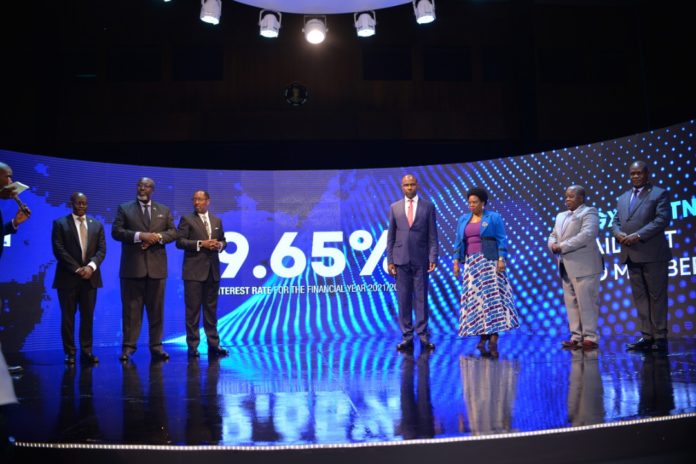
The National Social Security Fund (NSSF) has announced a 9.65 per cent interest rate for its members for the year ended 30th June 2022.

This was declared by the Minister of State for Finance (General Duties), Mr. Henry Musasizi during the 10th Annual Members’ Meeting held at Kampala Serena Hotel today morning.

“In exercise of the powers conferred on me by section 35 of the NSSF Act, I have the pleasure to declare an interest rate of 9.65% to be paid as interest to the members of the fund for 2021/22,” Minister Musasizi announced.

The interest rate translates into Shs1.38 trillion in total which will be credited to the members’ accounts.

The rate is however lower than the 12.15 per cent interest paid by the Fund in the previous financial year 2020/21 and this has been attributed to the implementation of the midterm access that was introduced earlier this year.

According to the fund’s Managing Director, Richard Byarugaba, a total of Shs1.9 trillion was paid out in midterm access benefits to members.

“The effects of the global geo-politics affected regional markets, our economy and the Fund. Our growth was slower on contributions, compliance rates dropped, real estate products became more expensive and our equity portfolio was affected, however, we remained resilient,” Byarugaba said.

He said contributions only grew by 9 per cent, voluntary contributions grew by 5000 new members on the employee side and 1000 on the employer side.

The Fund balance sheet size grew by 11 per cent from Shs15.56 trillion to Shs17.25 trillion. According to Byarugaba, this growth is consistent with the combined growth in investments driven by contributions and income generated net of benefits paid out.

Byarugaba said that this year, they accelerated Real Estate projects and fostered their Environmental, social, and corporate governance (ESG) agenda through the Hi-Innovator Program. “So far we have created over 1300 jobs, 700 entrepreneurs and provided our business advisory services through the Financial Literacy Program,” he said.

The NSSF Board Chairman Peter Kimbowa said; “The future of the Fund is data, knowledge got from data and building capabilities that will provide real-time accurate and precise data around what we are doing by embracing systems thinking as we find solutions.”

Kimbowa said as a board, the road ahead is going to be marked by transforming the intra-technology company and making sure that they leverage data and will embed data and analytics to grow existing legacy projects and new ones.

“The board also considers talent as scarce capital. We aim to invest in re-skilling, multi-skilling, micro-skilling, and up-skilling as an everyday activity to have the very best that we can have,” he added.

Stories Continues after ad