Stanbic Bank
Stanbic Bank
19.2 C
Kampala
Stanbic Bank
Stanbic Bank
Home Blog Page 520

EAC states urged to liberalise Airspace

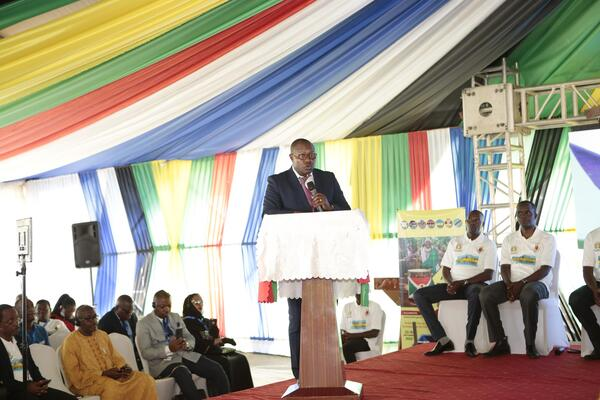
hairperson of the East African Tourism Platform (EATF) Fred Odek

The East African Community (EAC) Partner States have been urged to liberalise their airspaces and open up skies to promote the tourism industry in the region. The EAC comprises Uganda, Kenya, Tanzania, Rwanda, Burundi, South Sudan and DR.Congo.

According to the Chairperson of the East African Tourism Platform (EATF) Fred Odek, the existing different restrictive Bilateral Air Service Agreements (BASAs) among the Partner States were disrupting the harmonisation of air transport services in the region.

Odek, made the plea on September 25th 2022, while speaking during the official opening of the 2nd East African Community (EAC) Tourism Expo in Bujumbura, Burundi where he called upon the Partner States to finalise the EAC regulations to facilitate the liberalisation of air travel in the region.

“The Partner States should also grant rights to each other the 1st, 2nd, 3rd, 4th and 5th freedoms in line with the Yamoussoukro Decision of which all Partner States are signatories,” He said, 

He added that by working together, Partner States could ease mobility to benefit travel in the region

Mr. Odek said that airfares in the East African region remain extremely high due to the lack of open skies and heavy taxes levied by Partner States’ governments.

The EATF Chairperson hailed the East African Single Tourist Visa and use of national IDs as travel documents across the region as some of the best policies that had been formulated by the East African Community.

Describing the tourism sector as one of the leading sources of foreign exchange earnings for the region, Odek disclosed that based on GDP losses by region, EAC tourism was the second most affected region globally by the pandemic after Central America.

“Nonetheless, this sector is resilient and one of the most important to get our economies back on a growth path,” He said.

He added, “In 2022, we are experiencing a recovery as the COVID-19 pandemic has been contained in most of our key source markets and international travellers are now fully confident to travel, however, arrivals and revenues are still less than 2019 levels”.

He said that the hospitality sector had also suffered but was steadily recovering with COVID-19 health regulations having been eased and most Partner States now allowing tourists to enter without the COVID-19 test requirements.

The EATC official said that the Ukraine conflict has impacted negatively on tourist arrivals in East Africa and especially for destinations like Zanzibar where Russia and Ukraine were the key source markets.

He said that the war in Ukraine has also affected air travel costs in the region due to the increasing costs of fuel and other commodities.

Burundian Vice President Prosper Bazombanza officially opened the expo that is expected to run up to 30th September, 2022 with the last three days dedicated to an excursion across the country for tour operators and exhibitors participating in the expo.

Also present at the event were Burundi’s Minister for Commerce, Transport, Industry and Tourism, Madam Marie Chantal Nijimbere, EAC Affairs Minister Ezechiel Nibigira, the Director of the Productive Sectors at East African Community, Jean Baptiste Havugimana, and the Mayor of Bujumbura, Gen. Jimmy Hatungimana, among other dignitaries.

Stories Continues after ad

Museveni to address the nation on Ebola

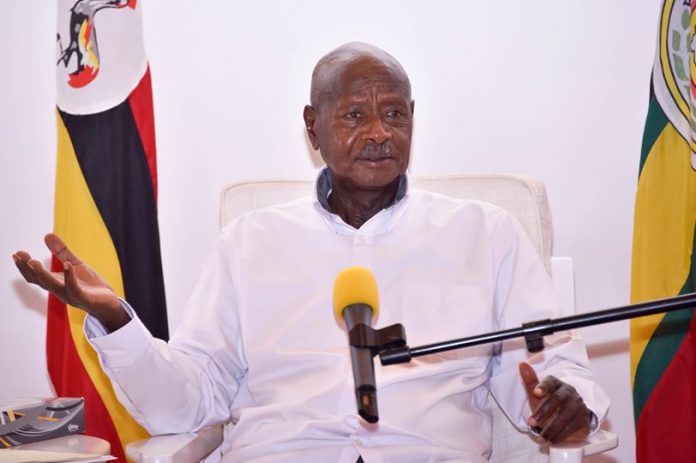
President Yoweri Museveni

President Yoweri Museveni is expected to address the nation on issues of national importance, including the Ebola outbreak tomorrow Wednesday, September 28.

This has been confirmed by the senior presidential press secretary, Mr. Sandor Walusimbi.

The president’s address comes at a time when the Ministry of Health has so far confirmed 36 cases, with 18 confirmed and 18 probable.

23 deaths have so far been registered, with 5 of those confirmed with 18 still probable. Samples from the suspected cases are being taken to Uganda Virus Research Institute (UVRI) for testing.

Meanwhile, 35 are active cases on admission.

Districts where confirmed and suspected cases have been reported include Kassanda, Kisoro, Kakumiro, Mubende, Kyegegwa, and Lyantonde.

The Health ministry continues to appeal to the population to adhere to preventive measures and report any suspected cases to nearby health facilities or authorities.

Ebola is transmitted through contact with the blood, stool or fluids of an infected person and objects that have been contaminated with body fluids from an infected person.

Some of the symptoms are high body temperatures, fatigue, chest pain, diarrhoea, vomiting, unexplained bleeding, and yellowing of the eyes.

Stories Continues after ad

One arrested over illegal trade in petroleum products

Police Kampala Metropolitan North have arrested Bangi Stephen, a 38-year-old businessman, for dealing in petroleum products without a license.

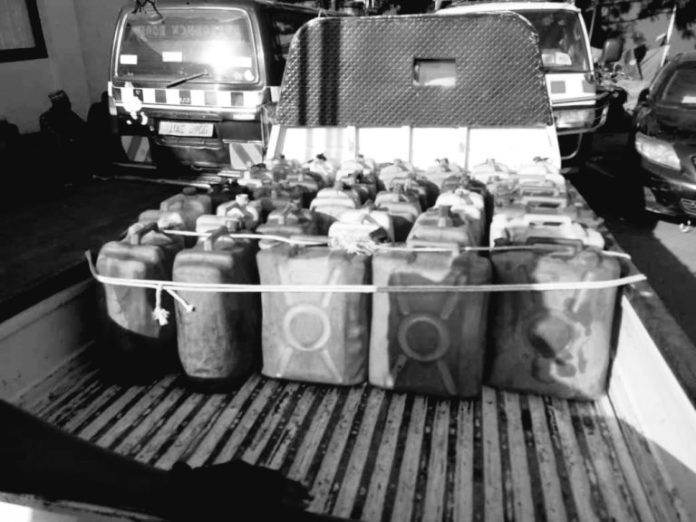
A raid was conducted at the home of Bangi, in Quata zone, Kanyanya ward, Kawempe division, in Kampala district, and was found with 30,000 litres of diesel, that was parked in jerrycans.

He was also found ferrying more fuel in a mobile fuel tanker, registration number, UBG 128E, and was charged with dealing in Petroleum Products without a trading license.

Upon interrogation, the suspect admitted to dealing in diesel fuel, without a license and in a non-gazetted facility, that is within his compound.

Police spokesperson Fred Enanga said there were no firefighting measures, and no escape route in case of a fire outbreak or disaster. “It has serious environmental related threats to the neighborhood. The fact that an Environmental Impact Assessment (EIA) was not done, makes it difficult, to establish whether, there are any spill-over effects, in the neighborhood or not,” Enanga said.

“We advise the public not to consume or buy such fuel products from unauthorized outlets, due to the potential of consuming adulterated fuel that may cause damage to your motor vehicles, motorcycles or other machines.”

Enanga said they are awaiting additional reports from NEMA and Ministry of Energy and then forward the file to the DPP. He further cautioned all other illegal dealers in Petroleum products, without appropriate licenses, to ensure they obtain them, so as to remain in the business, on legitimate grounds.

Stories Continues after ad

Internal Affairs runs out of passports, Otafiire apologises

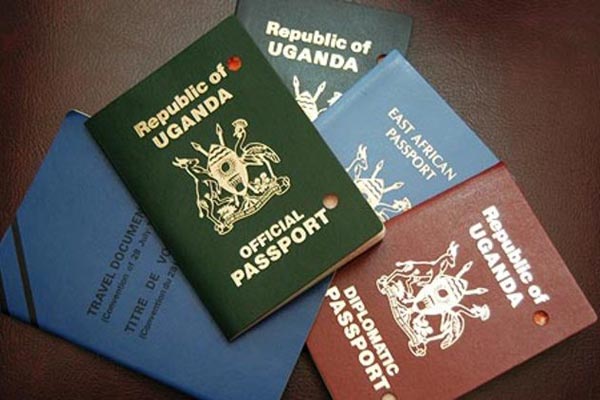
Passports

The Minister of Internal Affairs Gen Kahinda Otafiire has confirmed that the ministry has run out of new passports.

Otafiire however apologized for the delay in issuing of the passports, saying the company which was contracted to supply booklets seems to have some shortcomings.

“We apologise for the delay in issuance of passports. The company contracted to supply booklets seems to have some shortcomings but we are working around this problem,” Otafiire said.

“Please bear with us, the situation will improve soon,” he added.

The Deputy Speaker, Thomas Teyebwa, last week tasked the Minister of Internal Affairs to explain the continued delays in processing of the new electronic passports.

He gave the directive following a matter of national importance raised by Nakawa Division East MP, Mr. Ronald Balimwezo, during plenary sitting on Tuesday, 20 September 2022.

Balimwezo said that since introduction of the e-passports, applicants are subjected to waiting periods of over three months before their travel documents are issued. 

Government launched the Ugandan East African e-passport in 2018, phasing out the Ugandan machine-readable passports. Subsequently, Ugandans were given up to April 2022 as the deadline to acquire the new e-passports.

An ordinary passport costs Shs250,000 and its production must take approximately two weeks while an express passport costs Shs400,000 with a production period of three to five days.

Stories Continues after ad

Opposition MPs kick off consultations on Copyright law

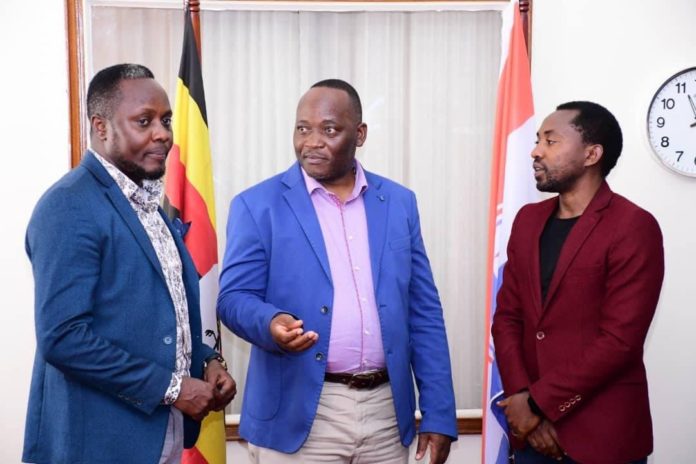
LoP Mathias Mpuuga (centre) chats with MP Hillary Innocent Kiyaga (left) and Hannington Bugingo

Opposition MPs have started holding stakeholder engagements with a view of improving a draft private Members’ Bill that seeks to amend the 2006 Copyright and Neighbouring Rights Act.

The Bill is sponsored by the Shadow Minister for Culture and Performing Arts, also Mawokota North MP, Hillary Innocent Kiyaga (NUP).

The first stakeholder meeting was held on Friday, September 23, 2022, at Parliament under the chairmanship of the Leader of the Opposition in Parliament (LOP), Mathias Mpuuga, and drew the participation of officials from the Ministry of Justice and Constitutional Affairs led by the Deputy Solicitor General, Pius Biribonwoha, Uganda Registration Services Bureau (URSB) and representatives from the arts industry.

The proposed amendment seeks to close gaps in the 2006 law to recognize and protect the rights of a composer of artistic work and to streamline the registration of copyrights among others.

The Registrar General, Mercy Kainobwisho told the meeting that while her agency, URSB recognizes that there are gaps in the existing law coupled with implementation challenges, there is no need for a Private Members’ Bill her entity had already engaged Uganda Law Reform Commission to process an amendment that would lead to the domestication of international treaties on copyright and audiovisual performances.

“The provisions of this Bill and the proposed amendments of the current Act may be parallel to the steps URSB is taking to amend the Act,” Kainobwisho said.

Her submissions were however challenged by MPs, Abdulhu Byakatonda (Ind., Workers), Geoffrey Kayemba Solo (NUP, Bukomansimbi South) and Kiyaga. Their concerns were amplified by artistes, Hannington Bugingo (comedian) and Sylver Kyagulanyi from the Copyright Institute.

“We wish to have this law amended in the areas of regulation, administration and protection. Regulation is so pertinent because we already have an existing issue with [Uganda Communications Commission] UCC,” Kyagulanyi said in reference to the stage plays and public performance rules which were announced by UCC in 2019.

“We the creatives need to be regulated but what UCC is doing is an exhibition of the gap in the current law. UCC is using a 1964 draconian law – The Stage Plays and Public Entertainment Act which ought to be repealed. UCC would be within their mandate if they try to regulate broadcast but are trying to [stretch their mandate] to the regulation of everything including creativity and creative work,” he added.

The meeting later agreed to a harmonization of the positions of the two sides and hold joint consultations to have the legislation processed within the current financial year.

“With these very good proposals, if we don’t sit and agree on the issues as we have heard them, we [risk] talking about the 2022 law the same way we are talking about the 2006 law,” Biribonwoha said.

Stories Continues after ad

Catholic priest arraigned for allegedly sodomising 10 children

Sostenes Soka (who is covering his face with a jacket) being brought before the Resident Magistrate's Court

A Catholic priest in Moshi, Sostenes Soka, who was being held by the police has been arraigned today, September 26, at the Resident Magistrate’s Court in Tanzania for allegedly raping and sexually assaulting more than 10 children. He was arrested on September 20.

The children are pupils whose identity has been protected are in Standard Six and Form One who were attending the teachings for the first communion and confirmation.

It is claimed that every time the clergyman gave each of the children between TSh3,000 and TSh5,000 at the end of his exploits.

While the Kilimanjaro Regional Police Commander, Simon Maigwa, has not confirmed or denied the arrest of the priest, the Regional Commissioner, Nurdin Babu has confirmed the incident saying “it is a disgraceful incident”.

The event, which is the first in the Kilimanjaro region involving a large number of pupils, has raised alarm for parents who had planned to march to the Prime Minister, Kassim Majaliwa’s office.

It is believe that the parents had planned the demonstration because the authorities had developed cold feet to arrest the ‘man of God’ who had become a threat in their midst.

It was only after the Police had got wind of the planned demonstration that they arrested the priest on September 20, a day before the Prime Minister’s visit.

“We cannot confirm whether he has been arrested or not, but it is something that we are continuing to investigate to get to the root of the issue, because these are allegations that are being levied against a church leader,” said the RPC, Simon Maigwa.

According to reliable sources after the parents found out that their children were subjected to such acts, they reported to the relevant agencies including the leadership of the Catholic Church, Moshi and the Police.

Stories Continues after ad

Ambassador Jan Sadek applauds Uganda for granting religious freedom

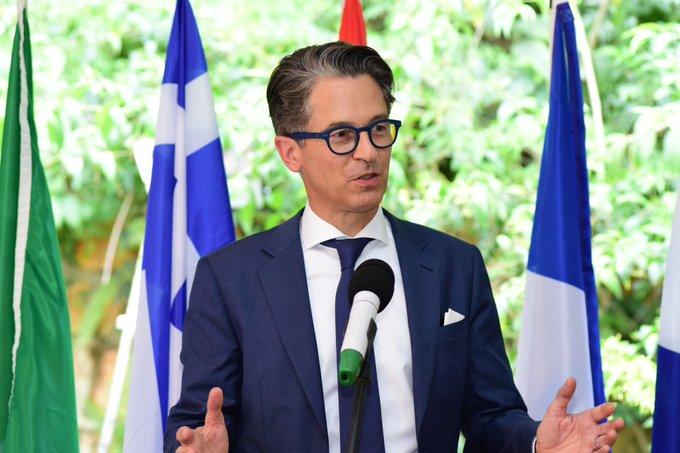
Ambassador Jan Sadek

The Ambassador-designate of the European Union Jan Sadek has applauded Uganda for granting religious freedom.

According to the 2014 Census, 39 percent of Ugandans are Roman Catholic, 32 percent Anglican, 11 percent Pentecostal Christian, and 14 percent Muslim, while other religious groups and those with no religious affiliation constitute five percent. Agnostics and atheists combined are only 0.2 percent. Thus, over 99 percent of Ugandans are affiliated with some religion.

Speaking during the annual event to mark International Day of Democracy in Uganda, Sadek said the widespread and varied religious practice speaks to the extent of religious freedom in Uganda. The Constitution of Uganda in Article 21 provides that no Ugandan should be discriminated against on the grounds of her or his religion or creed.

“Politics and religion should certainly not be put into a competition; both are fully needed in well-functioning societies. Nations and people need the moral compass provided by faith and hope, whether it is provided by religion or any other form of spirituality. But nations and people also need those political debates and an open political environment guaranteeing freedom of expression, of assembly and political participation of all,” he said.

He called for recognition of the wisdom of leaders who have been able to preach religious tolerance and freedom of belief as a way of promoting a multicultural environment and developing a sense of belonging to a nation. Uganda is certainly an example of a country where religious leaders have played this role.

Combating in an impartial way, all forms of religious intolerance, discrimination, and violence against persons based on religion or belief must be a priority for all states and for the international community. At the same time, religious leaders should ensure that their pastoralist role is kept separate from partisan politics.

Challenges exist in every country, and in Uganda Sadek said he is aware of reports that members of the Muslim faith have been unfairly targeted by security operations and that some faith-based organizations were affected when NGOs were suspended last year.

“The links between religion and democracy provide a fascinating ground for discussion. Ugandan history bears examples of the sometimes conflicting relations that exist between moral authority and political power. The tragedy of the Martyrs of Uganda is one of the key moments in Uganda’s history that certainly influenced rulers and people in the way they consider both the importance of religion and its relation to political power,” he said.

Jimmy Spire Ssetongo, a lecturer at Uganda Martyrs University said some religious leaders have remained critical and have been reminded by the government to stick to their work and not meddle in politics.

At the 16th Coronation anniversary of Omukama Solomon Gafabusa of Bunyoro in 2010, President Yoweri Museveni used the analogy of Olubimbi (digging allocations) to demonstrate that politicians, religious, and cultural leaders each have their role.

In a subtle threat, Museveni said that if one suddenly abandoned their lubimbi and crossed into another person’s, he/she could easily have his head cut off and become a casualty. “I have never baptized anyone, though I know how they baptize. I am a Christian but I do not baptize—that is not my role”, he added. Ironically, religious leaders who actively join the government side are welcomed with open hands and some are directly appointed into political positions.

“It is possible that, following the constant reminders to not trespass, out of fear, some religious leaders have in self-preservation decided to either tread very carefully, withdraw from politically sensitive matters, or operate on an evasive level of generality – such as in making blanket calls to all Ugandans to be fair to each other.”

Spire said there is also the awareness that being seen as a critic of government can come with other survival costs to religious institutions and individual leaders. Some religious leaders have raised concerns about spies being planted amongst them and divisions being sowed in their spaces in ‘divide and rule strategies.

“There is as well an emergent category of churches built around individuals. Without national and international structures, they know they are more vulnerable than their institutionalized colleagues. They can be very easy targets of state repression. Some of these have carefully studied aspects of existential desperation in the country and constructed their religiosity around those – poverty, relationship challenges, unemployment, disease, etc. With promises of spiritual and mystical intervention, they financially exploit their followers. Because the state can always find good reasons for closing them, such church leaders know that their security is either in aligning with government interests or remaining silent about government shortcomings.”

Stories Continues after ad

USPA cautions sports journalists to stay away from Rugby games

A scuffle as New Vision journalist Johnson Were is attacked by Warriors Rugby Club player, Gabriel Aredo.

The Uganda Sports Press Association (USPA) has cautioned its members and all sports journalists to stay away from rugby games.

This follows an assault on New Vision photo journalist, Johnson Were by Warriors Rugby Club player Gabriel Aredo during a semifinal game between Kobs and Heathens RFC in Bugembe, Eastern Uganda on Sunday.

The warning was issued by USPA President Patrick Kanyomozi in a statement released on Monday morning. Were who is also USPA’s General Secretary was covering the Kyabazinga 7s Rugby circuit.

According to reports, the Chairperson of the Nile Special 7s organising committee Erasmus Aredo confronted former Rugby Cranes player Alex Mubiru for standing very close to the touchline and a fight ensued.

During the scuffle, Warriors player Gabriel Aredo joined his brother Erasmus to provide support in the fight. In the meantime, Were was taking pictures of the events.

“On realising that he [Were] was capturing images of the ugly incident he [Aredo] charged at him [Were] with an intention of grabbing his camera, hence the physical assault which left the camera lens seriously damaged,” Kanyomozi wrote in the statement.

“We strongly condemn this attack on our colleague and senior executive member and we call upon Uganda Rugby Union to bring the culprit to book and hold everyone involved accountable.

“In the meantime, we advise our members to stay away from Rugby games until this matter is resolved to its logical conclusion. This is for their safety and it takes immediate effect,” the statement further reads.

Kanyomozi revealed that the matter has been reported to Police and pledged the association’s full support to Mr. Were in his pursuit of justice.

The Uganda Rugby Union is yet to make a comment about the matter.

Stories Continues after ad

Financial experts tip Ugandans on viable investments in digital era

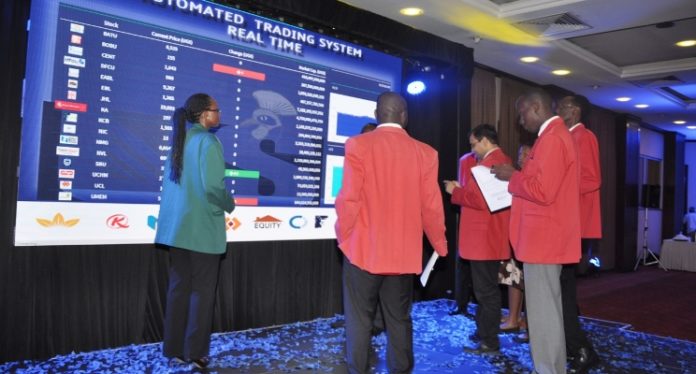
Trading-at-USE

Financial experts have offered choices on investments in the digital era that its customers can tap into and grow further financially.

In a Twitter Space held under the theme “Making Viable Investments In The Digital Era”, Robert Nyehangane, the Head Treasury at Housing Finance Bank (HFB), said investments largely rely on two parameters; return and risk.

“What that means is that the level of return also moves with the risk of whatever that you go with. It also starts with saving. We (Housing Finance Bank) on-board whoever is saving. With Shs100, 000 for “omuntu wawansi” (ordinary person), you can open a bank account, save and build a capital base,” Nyehangane said.

He further explained: “Let’s push ourselves into a saving culture. If you have built your savings, we give you an option to buy government securities. These are almost risk free assets. You are investing with the government. The returns are really high. It’s an asset that you can invest in. You have to complete a form (available on our website) and take it to the branch but you must open a CSD account (an asset account) with Bank of Uganda.”

Nyehangane says corporate bonds are another opportunity Ugandans can invest in.

“You can invest in that bond. It’s an investment vehicle,” he said, adding that investment in the real estate sector is the other option worth considering.

He however said that all these investment vehicles have different levels of risk.

According to Nyehangane, HFB has the capacity to take on a customer and walk with them.

“The Bank takes a customer through the pros and cons in whichever decision they choose to make,” he said.

He asked potential investors in the digital era to carry out due diligence.

“Make sure the entity that you are going to be dealing with is a legal company. That entity must be a regulated entity. That means that the liquidity that you put in has some kind of security. You must understand the products and services of what you are getting into. If you don’t understand what you are getting into, you are shooting in the dark. You are the first line of defence. Do a bare minimum to protect your investment,” Nyehangane said, adding that Housing Finance Bank is a partner to look to in terms of investments in the digital era.

Patience Bayenda, Head Products at HFB, said that it is not the richest people that are making the most savings.

“It’s not that the person earning the most is saving the most. You have to make a deliberate decision to put aside some money. The money seems to be calling for problems and all sorts of expenditure but it’s not how much you have. Make a decision, stick with it and educate yourself,” Bayenda said, adding that the bank is very passionate about creating awareness.

Bayenda advised investors to ‘take care of themselves’.

“Even if you are with the right entity, take care of yourselves. Don’t share PINs. Protect your financial information and guard it against people who can hack it from anywhere in the world,” Bayenda said.

She noted that COVID-19 has changed the way in which “we do our business” and that Housing Finance Bank has made it easy for customers to access products and services online, despite boasting 17 branches and over 500 agents across the country.

Xeno Founder and Chief Executive Officer, Aeko Ongodia, said that investments are being challenged by the myth of quick returns.

“It’s not a get-rich-quick thing. That’s a myth. Anything that comes to you and there is quick money is really speculation. You are not investing. You have to invest for a reason to the extent that you can articulate that reason well. Sometimes people come to us expecting supernormal returns. You have to know what a normal return is. It’s a return of an asset that is accessible to everyone in that space and it has little to no risk. A normal return would be a return on a one year treasury bill. People usually want to have a very high return with little or no risk,” Ongodia says.

Stories Continues after ad

Victims of Anti-Terrorism bill face 20 years in prison

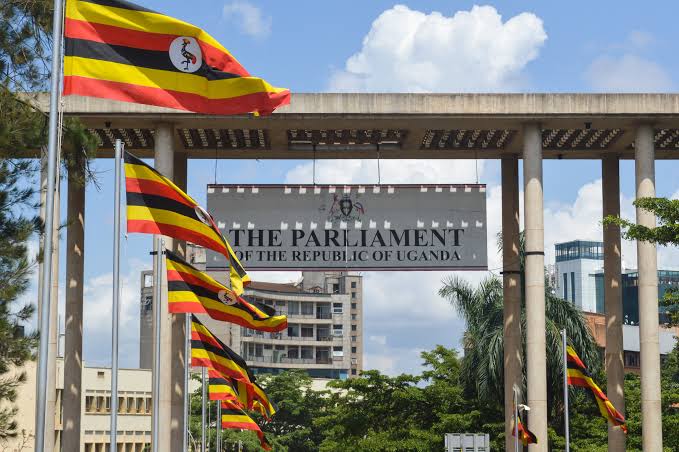
Parliament

Victims of the just passed Anti-Terrorism Amendment Bill are set to face 20 years in prison, Eagle Online has established.

Last month, the government through Norbert Mao, the Ministry of Justice And Constitutional Affairs table tabled before Parliament the Anti-Terrorism Amendment Bill. The bill seeks to provide for the offence of proliferation financing and for related matters.

Following the third reading on August 30, 2022, the Parliament Chaired by Speaker Anita Among passed the Anti-Terrorism Amendment bill. The bill was sent to President Yoweri Museveni to sign into law or send it back to parliament for review or scrutiny.

The tabling and passing of the bill followed the adoption of Uganda’s Anti-Money Laundering and Counter-Terrorist Financing (AML/CFT) Mutual Evaluation Report (MER) in 2016. The MER contains an assessment of Uganda’s AML/CFT legal and regulatory regime.

The MER highlighted several matters that Uganda needs to address in its AML/CFT legal and regulatory framework for Uganda to be considered compliant with the FATF Recommendations.

Recommendation seven of the FATF recommendations requires countries to implement targeted financial sanctions to comply with the UN Security Council Resolutions relating to the prevention, suppression, and disruption of proliferation of Weapons of Mass Destruction and its financing.

According to the Financial Action Task Force (FATF), Proliferation financing is the act of providing funds or financial services which are used, in whole or in part for the manufacture, acquisition, possession, development, export, tans-shipment, brokering, transport, transfer, stockpiling or use of nuclear, chemical or biological weapons and their means of delivery and related materials in contravention of national Laws or where applicable, international obligations.

The two-clause bill seeks to amend section two of the Anti-Terrorism Act, 2002 to insert a new section ‘9B’ after Section 9A to provide for the offence of proliferation financing and make consequential amendments to section 32A to incorporate the aspects of proliferation financing.

Section ‘9B’ subsection one of the bill stipulates that any person or organisation commits the offence of proliferation financing where the person or organisation makes available an asset; provides a financial service or conducts a financial transaction and the person knows that, or is reckless as to whether, the asset, financial service or financial transaction is intended, in whole or in part, to facilitate any of the proliferation financing activities, regardless of whether the specified activity occurs or is attempted.

Subsection two (a) prohibits the manufacture, production, possession, acquisition, stockpiling, storage, development, transportation, sale, supply, transfer, export, transhipment or use of nuclear weapons; chemical weapons; biological weapons; or materials related to nuclear weapons, chemical weapons, biological weapons or radiological weapon that are prescribed by regulations or restricted or prohibited under any enactment relating to export or import controlled measures.

The bill also blocks the provision of technical training, advice, service, brokering or assistance related to any of the activities under Subsection two (a)

“Any person or organisation that contravenes subsection (l) is, on conviction, liable to imprisonment not exceeding twenty years or a fine not exceeding five hundred thousand currency points or both.” shows subsection three of the bill

 “Where an organisation commits an offence under this section, any officer, director, or agent of the organisation who directed, authorized, assented to, acquiesced in or participated in the commission of the offence is a party to the offence is liable to the punishment for the offence,” shows section four of the bill.

Stories Continues after ad