Stanbic Bank
Stanbic Bank
25 C
Kampala
Stanbic Bank
Stanbic Bank
Home Blog Page 519

Fighting in eastern DRC is having a devastating impact on children

It is estimated that over the course of a week about 40,000 people have been displaced in Rutshuru territory including about 6,500 people who are reported to have fled to Uganda.

UNICEF has expressed its utmost concern about the serious damage to children caused by recent fighting in the east of the Democratic Republic of Congo (DRC).

Violence has intensified over the last week after a period of relative calm, presenting aid agencies with a major humanitarian and logistical challenge.

Thousands of people have been displaced from the towns of Rutshuru and Kiwanja on the eastern side of the country, near the border with Rwanda and Uganda.

Many of those displaced are children – some unaccompanied – travelling on foot or by overladen motorcycles towards the city of Goma and other areas to flee the fighting.

It is estimated that over the course of a week about 40,000 people have been displaced in Rutshuru territory including about 6,500 people who are reported to have fled to Uganda.

That is in addition to about 200,000 people who were displaced over the last year before the latest surge in violence.

UNICEF is calling on all parties to the conflict to respect international humanitarian law and to protect children in particular.

“The latest fighting is having a devastating impact on children and their families,” said UNICEF’s Goma Office head Jean Metenier.

“They have been forced to flee their homes with only their most essential possessions. While some displaced people can live with family members thousands of people have been rendered homeless.

“That is why UNICEF is working around the clock to provide assistance to children and their families.”

UNICEF and partner NGOs are providing access to safe water and sanitation, child protection, essential emergency household goods, medicine, nutrition and emergency education to displaced families as they move to safer locations.

Stories Continues after ad

Prison warder shoots two fellow staff dead in Buikwe District

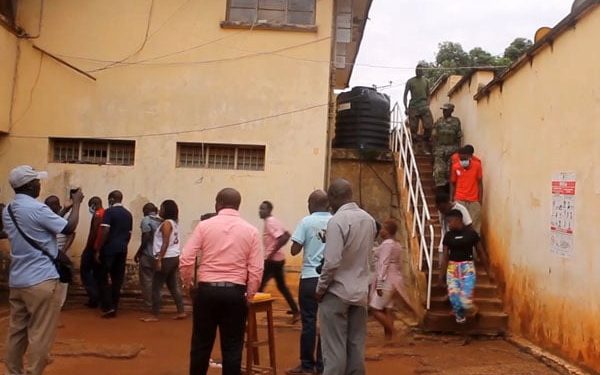
Otim Jacob, a 28-year-old prison warder No. 16734 at Bugungu Y.O Government prison in Buikwe district has shot two fellow staff members dead.

The deceased are No. 16699 wardess Abwot Eunice, 25 years old and No. 18061 warder Namanya Edward aged 29 at the same station.

Frank Mayanja Baine, Uganda prisons Spokesperson confirmed the incident saying that it occured in the morning where Otim signed for a gun to go for general duties but unfortunately shot the fellows. 

“The incident occurred at around 07:15 am in the morning when Otim Jacob signed for a gun to go for general duties only to head to the Senetry where Abwot Eunice was working and shot her dead instantly. On hearing the sound of the gun, the second sentry warder Namanya Edward came to establish the cause of the shooting. Unfortunately he was shot by Otim,” Baine confirmed.

“After shooting the two dead, Otim tried to commit suicide but failed. He was thereafter subdued by other staff on duty and detained,” he added.

Police were called in immediately and took over the crime scene,exhibits and the culprit for further management.

The late wardess Abwot Eunice hails from Laroo Sub-County, Gulu District and late warder Namanya Edward is from Rwamucucu Sub- County, Rukiga District.

Stories Continues after ad

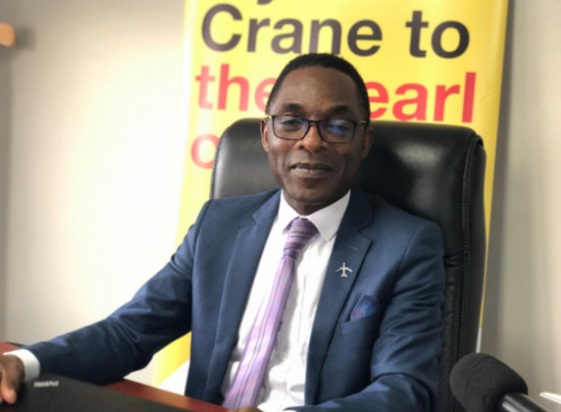
Former Uganda Airlines CEO Muleya acquitted on charges of disobeying IGG orders

Cornwell Muleya

Former Uganda Airlines boss Cornwell Muleya has been acquitted on charges of disobeying lawful orders of the Inspector General of Government (IGG).

On May 23, 2022, the IGG summoned Muleya to provide documents regarding the mismanagement of Public funds, procurements, and recruitment of staff at Uganda Airlines. But Muleya failed to comply without any justifiable reason leading to his arrest on June 22nd for disobeying the lawful summons.

Buganda Road Court Grade One Magistrate, Asuman Muhumuza today ruled that Muleya’s failure to appear before the IGG was excusable since it was proved that he was out of the country and he was ill upon his return.

In his defence before court, Muleya produced air tickets indicating that he had travelled out of the country. He also produced a medical document showing that he had been put on bed rest for two days.  Muleya at the time was battling with the offence of disobedience of lawful orders issued by the Inspectorate of Government.

On April 21st, 2021, the Works and Transport Minister, Edward Katumba Wamala sent Muleya and 12 other top officials of the airline on forced leave on the orders of President Yoweri Kaguta Museveni to pave way for investigations into allegations of financial mismanagement, collusion, and nepotism in staff recruitment among other issues.

In February 2022, the Works and Transport Ministry Permanent Secretary terminated Muleya’s contract forcing him to file a complaint with Wakiso District Labour Office on April 4th, 2022 citing unlawful termination of his contract. However, the labor office referred the matter in which, Muleya is seeking more than Shs3 billion to the industrial court.

According to Muleya, the said suspension was illegal on two grounds; the Permanent Secretary of the Works ministry had no power to suspend him under the governance structure of the airline and that the power vests exclusively in the Board of Directors. He adds that it was illegal because it exceeded the maximum period of four weeks allowed under Section 63 (2) of the Employment Act, 2006.

Stories Continues after ad

Police detains 13 members of Ebola burial team for violating SOPs

Police in Mubende District have detained 31 people, including 13 volunteers attached to the Uganda Red Cross Society medical team after they were allegedly found in a bar drinking, contrary to the Ministry of Health guidelines announced to contain the spread of Ebola in the country.

President Museveni earlier this month ordered Kassanda and Mubende districts, the epicenter of the outbreak, to be put under lockdown, imposing a travel ban, a curfew and the closure of public places.

Wamala Regional police spokesperson, Ms Rachel Kawala said on Sunday that during their Saturday night operations to enforce curfew, they rounded up 31 people found violating lockdown rules.

The Red Cross volunteers were among 24 people found at around 10pm drinking alcohol at Homeland Bar and Guesthouse in Katogo village, West division in Mubende municipality, according to Ms Kawala. The other suspects were picked from different places in the district.

“Last night (Saturday) we had an operation and we arrested 31 people for violating presidential directives and guidelines on fighting Ebola. At least 24 of them were arrested from Homeland Bar and Restaurant, out of which 13 are health workers attached to the Red Cross and part of the burial team for Ebola victims,” she said.

She said they will be charged with doing a negligent act likely to spread diseases.

“No one is above the law and our operations will remain ongoing,” she warned.

 Dr Joseph Kasumba, the Red Cross operation manager said their volunteers were arrested from their rented residence where they had returned after a long day.

“Yesterday, there was a team which came back very late yet they had a goat roasting [ceremony] to cleanse themselves, given what they go through during day (burial ceremonies for Ebola victims). Police rounded them up from the place we rented for them for easy monitoring, not in a bar”, he said.

In a Sunday evening statement, the humanitarian organisation said they were investigating the arrest.

“We note that the volunteers were arrested from the guest house which is their residence hosting the safe and dignified burial team. Uganda Red Cross is part of the Ebola task force and one of the custodians of the Ebola prevention guidelines. More so, the volunteers have a code of conduct that guides their work and is in tandem with the Ebola prevention guidelines. Those involved will be investigated and Management will use the findings to take necessary action (s). URCS management reiterates its commitment to adhering to the Ebola prevention guidelines in fulfilling the tasks assigned in the Ebola pandemic response,” the statement reads.

Last week, police arraigned 152 people in Mubende court presided over by grade one magistrate, Paul Nkeddi, after they were arrested for violating the lockdown measures. They were charged with doing a negligent act like spreading Ebola Virus Disease which has so far infected 128 people with 34 deaths registered.

According to the latest updates from the Ministry of Health, 40 people have so far recovered from the virus but 2,183 contacts are listed for follow up.

Stories Continues after ad

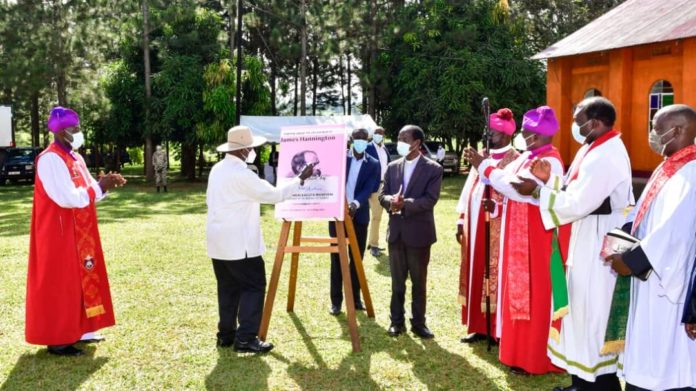
Museveni pledges to develop Bishop Hannington Site

Museveni pledges to develop Bishop Hannington Site

President Yoweri Kaguta Museveni has pledged government’s commitment towards developing Bishop Hannington Site in Mayuge District, Busoga Diocese to match the standard of Uganda Martyrs Museum, Namugongo.

“We will develop this site systematically. I propose that we begin with a Museum to act as an information centre and then a magnificent Church, and other developments later. Develop a master plan for the site and government will develop it like we have been doing for several other projects.” President Museveni said.

He called for food security and encouraged people to use the available land to establish income generating projects to fight household poverty.

“I have always disagreed with small land owners who grow sugar cane on all their land. You should think about using the small land available for growing food crops, fruits, coffee, dairy cattle rearing, poultry, hatchery, piggery if you are not a Moslem and palm oil because I have been told it brings much money.” President Museveni said.

He pledged total support towards preparations for this year’s Uganda Martyrs Day commemoration in Namugongo where Dioceses from Eastern Uganda will be leading.

The Archbishop of Church of Uganda, The Most Rev Dr Stephen Samuel Kaziimba Mugalu who was the main celebrant called for fast tracking of gazetting Bishop Hannington Day, a public holiday.

He said that the blood that was shed for Bishop Hannington and other Martyrs is the seed of faith in Uganda and all over the world.

“Bishop James Hannington is the only European Martyr who died here in Uganda. We have been requesting government for a very long time to gazette 29th October, a national holiday but we keep getting frustrated.” Archbishop Kaziimba said.

In response, the President committed to follow up on the matter during a Cabinet sitting on Monday.

The Rt Rev Patrick Wakula, the Bishop of Central Busoga Diocese whose Diocese was leading this year’s celebrations said that the taskforce established by the President to fast tack the re-development of Busoga University began but called for doubling efforts in operation.

He also said that the Diocese is planning to launch the construction the Diocesan Cathedral on St. Paul’s Day in January next year.

Rt Hon Rebecca Kadaga, the 1st Deputy Prime Minister; Rt Hon Lukia Nakadama Isinga, 3rd Deputy Prime Minister; State Ministers; Hon David Bahati, Hon Persis Namuganza, Hon Dominic Gidudu among others attended the function.

Stories Continues after ad

Germany commits €68.8 million in grants to Uganda

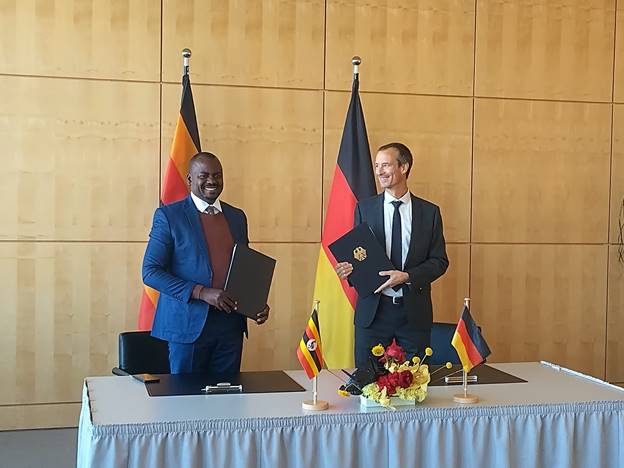
Head of Ugandan and German delegations signing the summary records firming up the new commitments worth EUR 68.8 million.

Uganda and Germany successfully concluded government negotiations on the framework for development cooperation for the next two years. Germany committed a total amount of EUR 68.8 million in grants. The new commitment will particularly focus on improving climate adaptation and resilience, e.g. through support to the sustainable management of forests.

Germany extended and up-scaled the bilateral cooperation with Uganda in the focus areas of; Transformation of agri-food systems, focusing on rural development and agriculture; Peaceful and inclusive societies, focusing on refugees and host communities as well as good governance (accountability, anti-corruption, public finance management) and civil society and; Climate and Energy, focusing on renewable energy and energy efficiency and climate adaptation and resilience.

Ugandan-German cooperation aims at fostering Uganda’s sustainable development by creating jobs for the youth and woman, promoting private sector development, enhancing access to electricity or by strengthening the role of civil society in public processes.

Climate change is one of the defining global challenges of our time. Forests – through their carbon storing function – help mitigate climate change while, particularly true for Uganda, the forest cover has been dramatically decreasing. Therefore, a new focus under the focus area Climate and Energy will be the support to the sustainable management of forests and sustainable forestry.

A total of EUR 18 million will go to the protection of forests. In doing so, a particular focus will be on increasing the benefits from forests to local communities and on forest-related value chains. 

In addition, EUR 7.5 million will go to the promotion of renewable energy and energy efficiency. The support will include the creation of “green” jobs in the energy sector, e.g. solar technicians.

A further EUR 7.5 million goes to strengthen agriculture and rural development under the area Transformation of agri-food systems. Central to this support will be climate-smart agriculture, the development of sustainable value chains as well as – in the light of Germany’s so-called feminist development policy – the strengthening of woman as key actors for rural development.

EUR 6 million will go to the support to good governance and civil society, which will include the promotion of accountability, human rights and civil society. One working area will be the strengthening of social accountability, where public institutions and civil society organizations work together to ensure accountability in public processes.

To support the implementation of the Common Refugee Response Framework (CRRF), EUR 7.8 million will go to the strengthening of water supply and sanitation infrastructure for refugee settlements and host communities. While this program focuses on strengthening the local service providers, a further EUR 22 million will target the construction of (climate-resilient) infrastructure in the water and sanitation sector in Northern Uganda.

All German programs support Uganda in implementing its National Development Plan III, the Agenda 2030 and the Sustainable Development Goals (SDGs) as well as the Agenda 2063 of the African Union.

The (biannual) negotiations took place in Berlin, Germany, and were the first negotiations after the outbreak of the Covid-19 pandemic to bring together the Ugandan and German delegation in person.

The talks resulted in the signing of a summary record on 12 October 2022 by Hon. Haj Kyeyune Haruna Kasolo, State Minister for Finance, Planning and Economic Development (Micro Finance), for the Ugandan side and by the Head of the East Africa Division of the Federal Ministry of Economic Cooperation and Development, Mr. Marcus von Essen, as head of the German Delegation.

Stories Continues after ad

Ugandan troops awarded medals for Somalia tour of duty

The Ugandan battle group XXX111 has been awarded the African Union medals for its role in the peace and stabilisation of Somalia. The award ceremony was held to mark the end of the one year duty in the African Union Transition Mission in Somalia (ATMIS). A new commander of the incoming troops was also instated.

The outgoing battle XXX111 consisted of 1817 men and officers who occupied areas of Mogadishu city, Albiska, Alboa, Lantabur and Beldogole. They operated with eight forward operating bases (FOBs) and participated in safeguarding the 12 internally displaced people’s camps in the area.

The new Battle group XXXV1 will be taking over the responsibilities in the area.

The ATMIS force commander Lt Gen Diomede Ndegeya applauded the outgoing Uganda military for its role in securing the parliamentary and presidential elections, Mogadishu city and the base camp.

The remarks were delivered by the ATMIS deputy force commander in charge of operations Maj Gen Williams Tshume during the medal awarding ceremony.

“We feel proud, and appreciate you for the job well done. You deserve this Africa union medal, because you have earned it,” he said.

The group was also recognised for acting as cushioning the area against the Al Shabaab rebels. They acted as blocking forces to stop the rebel group infiltration of Mogadishu by dominating entrances into the city.

According to Ugandan military contingent commander Brig Gen Keith Katungi the group maintained a civil military relationship with the people in the areas they were protecting.

He thanked them for following the Uganda People’s Defence Forces (UPDF) tradition of being pro people.

Col. Ezra Mwinyi was the battle group commander.

The incoming battle group XXXV1 will be led by Col John Musiitwa.

Stories Continues after ad

MTN Marathon raises Shs4 billion throughout the years

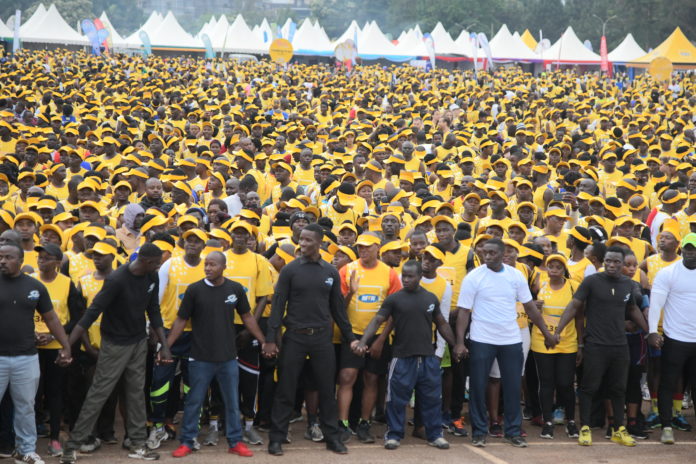
Participants at the MTN Kampala marathon

The MTN Kampala marathon is the biggest professionally run charity marathon in the region for the last 17 years garnering up to Shs4 billion plus monetary contributions over the years.

The MTN Kampala marathon was birthed in 2004 with MTN Uganda’s objective of doing good in the communities in which it operates.

Proceeds from the maiden MTN Kampala marathon in 2004 were used to support expectant mothers in the Internal Displaced Peoples (IDP) camps in Northern Uganda. The mothers who hardly had any belongings and a safe space to stay needed mama kits that would ease their child delivery process. This project was implemented by Uganda red cross.

From 2004 to 2006 the MTN Kampala marathon brought together over 7,500 participants that collectively raised Shs 82,500,000 towards the same cause for expectant mothers in IDP camps, in northern Uganda.

The goal then shifted toward the provision of resettlement kits from 2007 to 2009 to people who had been relocated back into communities having left the IDP camps in Northern Uganda. A total of Shs185 million was collected from over 46,500 people to cater to the refugees’ resettlement.

From 2010 to 2014, the MTN Kamala marathon dedicated its proceeds to water and sanitation in different communities in Northern Uganda. Different kinds of water points like boreholes were installed in the districts of Kiryandongo, Amuria, Nakapiripirit, and Kotido to improve the water supply and hygiene in these communities. In this period the marathon managed to raise close to Shs 1.5 billion from 98,000 participants.

The water points greatly improved the livelihoods of the people in these communities as they received access to clean water and no longer had to travel long distances to the water collection points.

From 2015 to 2016,Shs 1 billion was collected from 40,000 MTN Kampala marathon participants, and the proceeds were injected into the education sector, particularly in the installation and improvement of government schools around Kampala city.

A total of 10 schools got ultra-modern and hygienic toilet facilities. These schools were Kitante P/S, Kisaasi P/S, Kitebi P/S, Police P/S Nsmbya, Naguru Katali P/S, Nakasero P/S, Namungoona P/S, Munyonyo Church of Uganda P/S and Kampala school for the handicapped.

The toilets were fitted with biogas digesters to make biogas that serves the important purpose of preparing timely meals for the students using clean, effective, and environment-friendly energy.

This saved the schools from incurring high costs for cooking materials such as firewood and in turn contributed to the preservation of the environment by reducing deforestation.

In 2017 the marathon proceeds of Shs600 million were used for the improvement of maternal health and the reduction of cancer exposure in 2 facilities and one school by replacing the asbestos iron roofs. The beneficiaries were Buganda Road primary school, Komamboga, and Kiswa health centers.

Since 2018, the marathon proceeds were committed to a new cause of improving maternal health care across the country.

A total oShs600 million was collected over the two years from over 35,000 runners and the MTN Foundation made an additional contribution of Shs400 million bringing the proceeds to a whooping Shs 1.1 billion. The collected funds were used to refurbish and equip 4 health centers (HC IV) in the country.

The health centers included Muyembe HC IV in the Bulambuli district. Karugutu in Ntoroko district, Kalangala HC IV in Kalangala district, and Kawempe women and children’s hospital in Kampala.

After a two-year break, the MTN Kampala Marathon is back focusing on the still-pressing issue of maternal health. Proceeds from this year’s Marathon shall be used to improve maternal and newborn services in four selected health facilities across the country. The beneficiary health facilities include Kisenyi and Kawaala health facilities in the suburbs of Kampala plus Kachumbala and Kaboongin the Teso and Karamoja sub-regions respectively.

MTN Uganda with support from partner companies including Stanbic bank, Rwenzori beverages, NBS sports, Huawei, and New Vision with Uganda Athletes Foundation is organizing the 17th edition of the MTN Kampala Marathon, under the theme, Run for babies.

The MTN Kampala Marathon has, over the years raised over Shs 4bn and benefitted several people in the communities where beneficiary projects have been implemented.

Stories Continues after ad

Museveni meets UAE’s One Mobility Group, urges cooperation with Kiira for mass public transport system

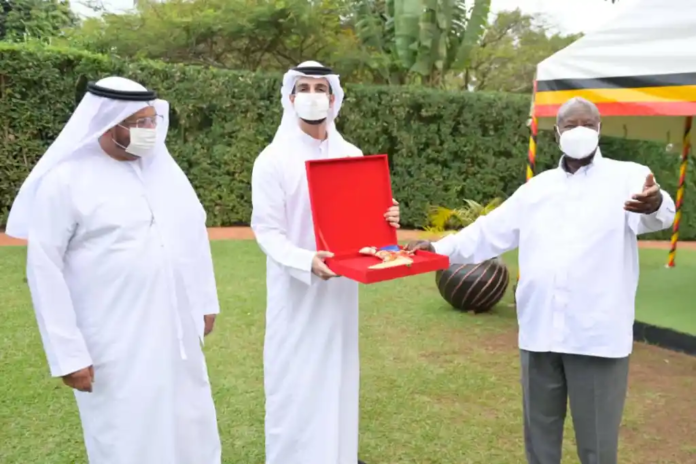
President Yoweri Museveni on Thursday met a delegation of United Arab Emirates (UAE)-based One Mobility Group at State House Entebbe. The group is a multi-national company that owns and operates companies that deal with all means of private and public transport along with the ancillary services.

During the meeting, the Group expressed interest to extend their services to Uganda by improving Kampala’s mass public transport system.

President Museveni gave them a go ahead but on condition that they must use buses made or assembled from Uganda.

“I’m very glad to hear that idea. The only point I would have added, you seem to have already worked on it because those buses I want them to be made here. You should use buses either made or assembled here because that is what we are planning. We are planning to make the buses using those people of Metu and Kiira Motors,” Mr. Museveni said.

“If you can come in and work with them to operate, that will be very good. You must work with them. We don’t want to use imported buses, we want to use our own buses here,” he further told the visiting delegation.

The President also suggested that the Prime Minister, Rt. Hon. Robinah Nabbanja calls for a meeting between One Mobility Group, Kiira Motors and Metu to see how they can move forward together.

“The benefits of this initiative are very clear; less traffic jam , less fuel  and time saving,” he added.

The Vice Chairman of One Mobility Group, Mr. Omeir Mohamed Omeir Yousef AlMheiri assured Gen. Museveni that they are very much ready to work with the two local bus manufacturing companies in order to achieve a common goal of putting an end to the traffic congestion in Greater Kampala Metropolitan Area.

“We have got broad interests in Uganda and we are here particularly today regarding the Bus Rapid Transport System. We are very keen to be part of the public transport system and we are looking forward to that with the help of our government and the support of the Ugandan government as well,” Mr. Mohamed stated.

“We are very much open to work with everyone here as long as it fits the international standards and in terms of supply if they can meet the required timeframe, we shall be more than happy to work with anyone. At the end of the day, our aim is to provide a more affordable solution to the people of Uganda to move around in a more effective manner.”

The group which so far manages and operates public transport in Abu Dhabi, other Arab Countries, North Africa, Tanzania and Kenya also plans to integrate the minibuses and boda bodas into this system.

“Your Excellency, there are millions of Ugandans travelling from sub urban areas to the city on a daily basis and that means that there’s so much time wasted in traffic and that translates to costs and expenses to the government. So with this system, we are looking to find an effective and a more lively solution to Ugandans to be able to travel efficiently,” Mr. Mohamed noted.

From managing the tremendously successful Fast Rent a Car, One Mobility Group has evolved to preside over a plethora of companies ranging from car hire, limo, taxi services and public transport services and maintenance facilities, excelling in each of these fields.

The company has grown from strength to strength, adopting a highly ambitious, quality-driven, goal-orientated business methodology that evolves with the market needs and requirements.

The meeting was also attended by Uganda’s Ambassador to UAE, Mr. Zaake Kibedi who led the One Mobility Group delegation,

Mr.Ahmed Abood Saleh Al Boasy Al Yafei – the Group Chief Executive Officer and Mr. Istvan Csuzi – the Group General Manager.

Stories Continues after ad
Contact tracers and Village Health Teams take on Ebola in Uganda

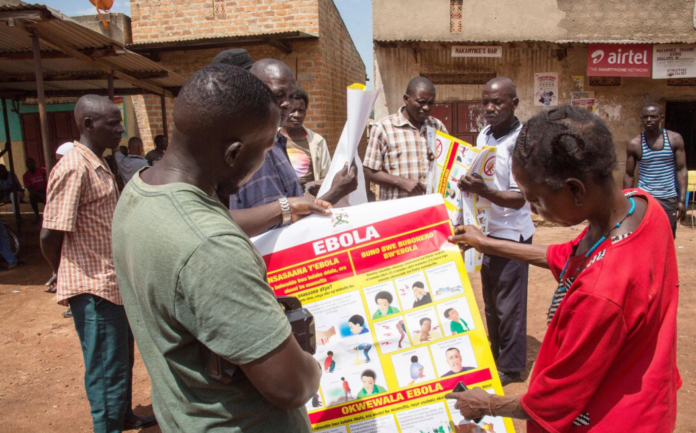
Ebola contact tracers

Since an Ebola outbreak was declared in Uganda on 20 September, health assistant Nyangoma Kirrungi has been on the frontline of the country’s response day in and day out, working as a contact tracer in Madudu sub-county, one of the areas affected by the outbreak.

With support from World Health Organization (WHO) and partners, the Ugandan Ministry of Health has trained and deployed around 300 contact tracers like Kirrungi, who play a critical role as the country looks to curb the spread of the disease.

As part of surveillance team, Kirrungi follows up an average of 40 contacts a day. “I work closely with the investigation unit,” she explains. “Once they record a confirmed case of Ebola, my team and I go to the field to follow up with the patient’s contacts to ensure that they are symptom-free and then we remain on alert to identify and report symptoms should they develop.”

According to Dr Bernard Logouomo, the Ministry of Health Surveillance Team Lead in Mubende District, another Ebola-hit area in the country, contact tracing is key to ending the outbreak. “When the community cooperates in the response and contacts are identified, it becomes easier to contain the disease,” he says.

Contact tracers follow a questionnaire designed to assess if a contact has Ebola symptoms. Every contact tracer works with a maximum of 10 village health workers, who are volunteers trained in diseases surveillance. Recruited by communities, village health teams help build trust and overcome fears among responders.

In addition to the deployment of contact tracers, two hotlines were created for communities to report suspected cases. Investigators follow a list of questions designed to assess the need to dispatch an ambulance or a clinical officer. Once a case in confirmed, a case investigation team establishes a list of contacts, depending on where the patient was likely to have been infected and who they may have met afterwards.

After contacts have been located and screened, village health teams take over to monitor them for any symptoms for 21 days ‒ the Ebola incubation period. Beyond this important supporting role, these teams also provide invaluable assistance in raising awareness of the disease within their communities. Since the start of the epidemic, the Ministry of Health has trained over 1200 village health team members, also with support from WHO and partners.

With only 25% of contacts followed up every day in the first days of the outbreak, contact tracing quickly improved. By mid-October, nearly 94% of 552 contacts were seen and monitored daily for 21 days.

Lydia Nasamba, a market trader and a resident of Madudu, has been a member of a local village health team for more than eight years. “Every day at 3pm, I go to the sub-county community radio station, where I raise awareness about Ebola ‒ its symptoms, preventive measures and how to report cases,” she says. “After that, I visit the identified contacts in my community to check their health status.”

While the contribution of people like Kirrungi and Nasamba is a crucial component of Uganda’s Ebola response, they face numerous daily challenges, including a lack of personal protective equipment and reliable transport. Contact tracers are often faced with community members’ fear of being stigmatized or isolated in a health facility, which puts people’s livelihood at risk. Contacts may also not be home when contact tracers visit them, which makes it difficult to monitor them on daily basis.

With support from the United States Agency for International Development and the Norwegian government, WHO has provided four Ebola kits to Mubende Regional Hospital and redeployed 108 technical staff to assist with case management, risk communication, community engagement and laboratory testing.

Back on the ground in Madudu, nothing will deter Kirrungi from the task at hand. “Since I have been involved in the Ebola response, I feel like I am saving lives. I have learned that if all contacts are identified and treated, the disease will disappear,” she says. “That’s what motivates me every day.”

Stories Continues after ad