Stanbic Bank
Stanbic Bank
24.5 C
Kampala
Stanbic Bank
Stanbic Bank
Home Blog Page 525

Presidents Ruto and Suluhu, Gen Jeje Odong attend Queen’s burial

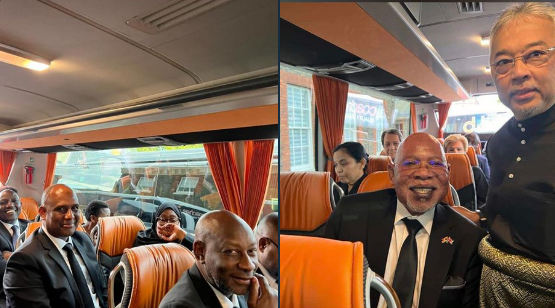
Odong in a bus with the president of Kenya William Ruto, the president of Tanzania Samia Suluhu, and other leaders.

President Museveni has delegated the minister of Foreign Affairs Minister Maj. Gen. Jeje Odong to represent him at the send-off ceremony of the deceased Queen of the United Kingdom Her Majesty Elizabeth II.

Odong was sighted in a bus with the president of Kenya William Ruto, the president of Tanzania Samia Suluhu, and other African leaders as they made their way to Westminster Hall for the State Funeral Service for Britain’s Queen Elizabeth II.

Queen Elizabeth II has been buried in the King George VI Memorial Chapel, together with her husband, Prince Philip, who died in 2021. The queen’s father, King George VI, her mother Elizabeth Angela Marguerite Bowes-Lyon, and sister Princess Margaret are also buried in that chapel.

Elizabeth Alexandra Mary II, Queen of the United Kingdom and the other Commonwealth realms, as well as the oldest living and longest-reigning British monarch, died 8 September 2022 at the age of 96 at Balmoral Castle, Aberdeenshire in Scotland.

She was the Queen of the United Kingdom of Great Britain and Northern Ireland from February 6, 1952, to September 8, 2022. In 2015 she surpassed Victoria who served for 63 years and seven months to become the longest-reigning monarch in British history at 70 years.

Elizabeth was the elder daughter of Prince Albert, duke of York, and his wife, Lady Elizabeth Bowes-Lyon. She was Queen of the United Kingdom and other Commonwealth realms from 6 February 1952.

Following her death, Prince of Wales, Charles III was enthroned as King of the United Kingdom and 14 other Commonwealth realms. He acceded to the throne on 8 September 2022. At the age of 73, is the oldest person to assume the British throne.

Stories Continues after ad

Nomination of candidates for EALA elections kicks off

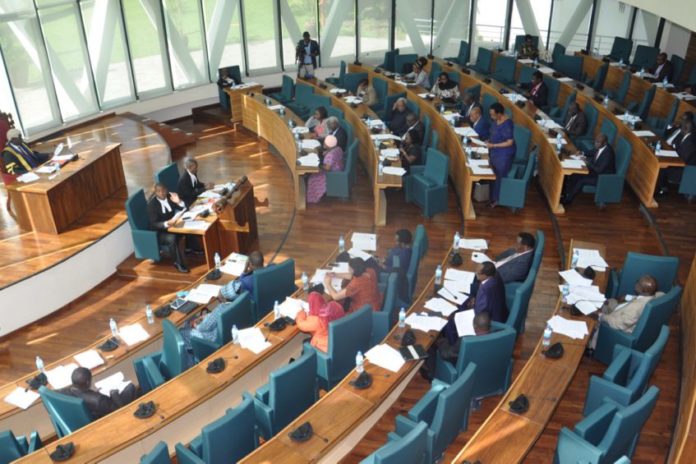
MPs in a sitting at the East African Legislative Assembly

Parliament has declared the nomination for the candidates for the Members of Parliament to the East African Legislative Assembly. The intending candidates shall pick nomination forms from the office of the clerk starting today on Monday, 19th to tomorrow 20th Tuesday, September 2022 by 5:00pm.

During the nomination exercise, the clerk to parliament, Adolf Mwesige said all candidates will be subjected to a verification committee that is set to be formed tomorrow.

“Candidates shall be nominated either under a political party, or as an independent candidate. For a person nominated under a political party, the party must be represented in Parliament. In this case the party’s Secretary General or a person authorized shall endorse the candidate,” Mwesige said.

The clerk added that each candidate or aspirant will be accompanied by not more than ten persons at the nomination venue and no convoys of vehicles are permitted to accompany the candidates at the Parliament building.

The campaigns and voting for all candidates duly verified and approved by Parliament shall be conducted in Parliament on Thursday, 29th September 2022 starting at 10:00 am.

The qualifications for the candidates are; Be a citizen of Uganda, qualify to be elected as an MP, not an MP currently, not a Minister, and should bear proven experience/interest in EAC. They shall also pay a nomination fee of Shs3,000,000.

Parliament has so far nominated four independent candidates and among them are; Jacqueline Amongin, Dr. Dennis Kapyata, Daniel Muwonge, and Stella Kiryowa and Justice Forum (JEEMA’s) Kateregga Mohamed.

Stories Continues after ad

UNAIDS urges donors to fully fund the Global Fund to Fight AIDS, Tuberculosis and Malaria

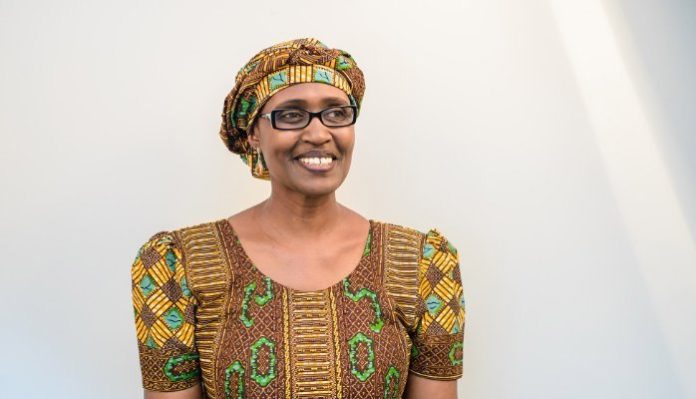
UNAIDS Executive Director Winnie Byanyima

UNAIDS has called on countries and donors to fully fund the Global Fund to Fight AIDS, Tuberculosis, and Malaria by pledging a total of at least US$ 18 billion (Shs 68.7trillion) at the Seventh Global Fund Replenishment Conference hosted by President Biden in New York this week.  

Speaking at the opening, on behalf of the United Nations family, the Executive Director of UNAIDS Winnie Byanyima said, “Millions of lives are at stake, along with the health of us all. A successful replenishment of the Global Fund to Fight AIDS, Tuberculosis and Malaria is essential to get the world on track to end three of today’s most devasting epidemics and instill resilience into national health systems capable of withstanding tomorrow’s shocks.”

In its July report, In Danger, UNAIDS revealed that the AIDS response is under serious threat from COVID-19 and the economic crisis, compounded by a continued decline in resources. It showed that while HIV infections should be continuing to decline in all countries, one in five of the world’s countries house rising new HIV infections. The rate of new infections globally only fell by 3.6% between 2020—2021, the smallest annual decrease since 2016. 

The report showed that women and girls continue to be disproportionally affected. A new HIV infection occurred every two minutes among young women and girls aged 15—24 years old in 2021. Children are also being left behind currently only around half (52 percent) of HIV-positive children were on life-saving medicines compared to 76 percent)  of adults.

“Now is the time for leaders to invest in their promise to end the AIDS epidemic by 2030 and to give children and young people a fighting chance at life,” said Ms. Byanyima.    

Since the Global Fund was established in 2002, UNAIDS has supported more than 100 countries to attract, implement and leverage Global Fund investments for HIV making sure the money gets to people most in need. However, in recent years international solidarity in the fight against HIV has been weakening. 

In 2021, international resources available for HIV were six percent lower than in 2010. The HIV response in low- and middle-income countries is US$ 8 billion (Shs 30.5trillion) short of the US$ 29 billion (Shs 110trillion)needed by 2025 to get the world on track to end the AIDS pandemic as a global health threat by 2030.

There are encouraging signs. The United States of America has announced that it will pledge US$ 6 billion to the Global Fund Replenishment contingent on the US$ 18 billion (Shs 68.7trillion) target being achieved in full. Other donors such as Germany and Japan have already announced increases of 30 percent in their funding pledges to the Global Fund for programs covering the period 2024—2026. At its sixth replenishment conference, donors pledged US$ 14.02 billion to the Global Fund.

“This will be our most strategic step to get ahead in our fight against current and future pandemics, said Ms. Byanyima. “The Global Fund’s model of responsive, inclusive, and transparent funding will enable our collective success. But only if it is fully funded.”  

Stories Continues after ad

Court further remands Sipapa

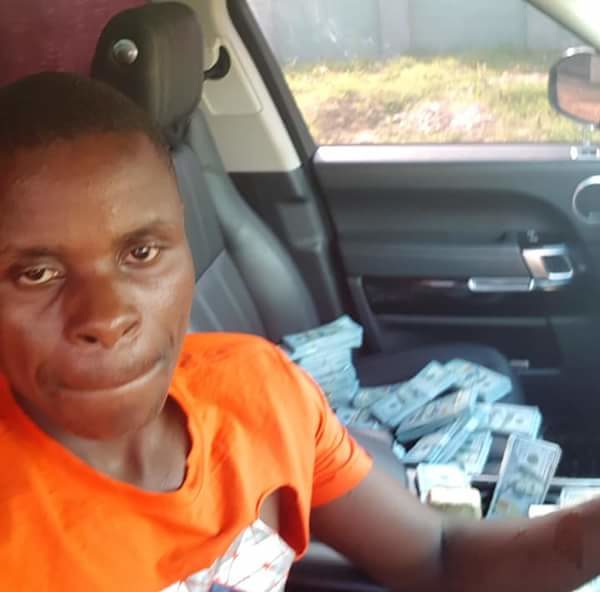
Sipapa

Makindye Magistrate Court has further remanded City socialite Olim Charles, aka Sipapa to Luzira Prison.

Appearing before Lorna Patience Tukundane, a grade one magistrate at Makindye Chief Magistrate’s Court in Kampala alongside his girlfriend Shamira Rukia Nakiyemba, Sipapa was further remanded till 10th October.

The socialite faces six counts of aggravated robbery allegedly committed between 2014 and 2022.

On September 6, 2022 the Directorate of Crime Intelligence arrested, Sipapa who was on the Police wanted list for an alleged Aggravated Robbery, which occurred at the home of Jacob Arok, in Kawuku-Bunga, on the night of 28th August 2022.

A group of thugs broke into the home of the victim, after applying suspected chloroform, on the occupants who were asleep. The thugs ransacked the home and robbed cash of USD 429,000, 4 iPhone, 2 Apple laptops, a DELL laptop, gold Jewellery for his wife, and a 65” Sumsung TV among others.

On September 13, 2022, police said the Directorate of CID in close coordination with the Directorate of Forensics, established 12 other cases that were linked to Sipapa. The crimes stretch from the year 2014 – 2022.

“This new development arose after his fingerprints and DNA samples were across our Databases and scientifically matched. This implies that the accused was one of the perpetrators at the respective scenes of crime in Bugolobi, Kabalagala, Kira road, and Jinja road, Kiwatule, Ntinda, and Kyanja Jomayi, among others,” Police said.

Stories Continues after ad

Ukraine troops leave DR Congo peacekeeping mission

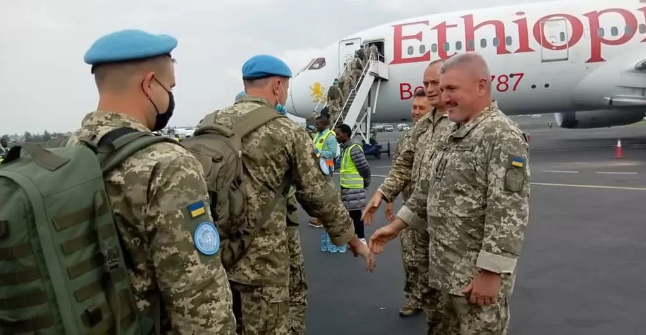
The 250 Ukrainian troops with the UN peacekeeping mission in the Democratic Republic of Congo have returned home to help fight Russian forces.

When the withdrawal of Ukraine’s aviation unit was announced in March, diplomats warned it could leave the UN mission seriously short of helicopters.

These are vital in the fight against the various rebel groups based in the thick forests of eastern DR Congo.

The eight Ukrainian helicopters made up about a third of the UN fleet.

Since the Russian invasion in February, Ukraine had already pulled out its troops from the other UN peacekeeping mission where they had been deployed.

Jacques Ndjoli, who serves on DR Congo’s parliamentary defence committee, told the BBC the withdrawal was relatively serious, however he pointed out that bringing peace to the country was primarily the responsibility of the Congolese army.

As the Ukrainians left DR Congo, the Brazilian commander of the UN force, Gen Marcos da Costa, said “their 10 years of immense contribution” was greatly appreciated.

The UN mission in DR Congo, Monusco, is already under pressure in the country.

It is widely criticised for failing to do enough to restore peace in the east, where numerous armed groups have operated for three decades, killing, raping and looting the region’s rich minerals resources such as gold and diamonds.

In July, 36 people, including four UN peacekeepers, died when protesters ransacked UN buildings in cities in eastern DR Congo.

After 22 years in the country, the mission is supposed to be winding down but no date has been set for its operations to end.

It is one of the largest and most expensive of the UN’s 12 peacekeeping missions.

Stories Continues after ad

Gov’t to charge taxes on Facebook Ads

URA CG John Musinguzi Rujoki

Uganda Revenue Authority Commissioner-General John Rujoki Musinguzi has revealed that starting on October 1, Uganda government will start earning Value Added Tax (VAT) from non-resident electronic service providers, including social media tech firm, Facebook.

“As of October 2022, Facebook ads in Uganda will be subject to a value-added tax (VAT) at the applicable local tax rate,” Meta, the owner of Facebook said on the weekend.

“This applies to advertisers whose “Sold to” the country (Uganda) on their business or personal address is set to Uganda and who haven’t added their tax identification number (TIN) to their Facebook ad account,” the company added.

VAT will be added whenever users’/advertisers are charged for their ads, regardless of whether they are purchasing Facebook ads for business or personal purposes.

“As VAT is added on top of charges, you won’t reach your billing threshold faster, but you may be charged more than your billing threshold amount. If you pay for Facebook ads with a manual payment method, VAT is accounted for at the applicable rate when your ad account is funded to determine the total balance available,” Facebook said.

The taxman is yet to announce this new development but in a recent public notice, the URA notified all non-resident suppliers of electronic services to collect, file and pay this tax.

These services include the following when offered remotely; online advertising, online music streaming, movie streaming services, websites, web- hosting or remote maintenance of programs and equipment, supply of software and software updates, supply of images, text and information, access to databases and self-education packages.

The others include music, films and games of chance, political, cultural, artistic, sporting, scientific and other broad casts and events including television etc.

According to Section 16(2) (d) of the VAT Act, URA is empowered to charge VAT on electronic services supplied to a recipient in Uganda.

The Act provides that a non-resident person (NR) is considered to have made a taxable supply in Uganda, where electronic services are supplied to a non-taxable person in Uganda.

A non-taxable person in this case refers to a person who is not registered for VAT.

“This provision applies to non-taxable persons because taxable persons already pay this VAT under the reverse charge mechanism,” experts said.

Although this legal provision was first enacted in 2011, URA could not collect this VAT then due to undefined provisions for how the Non-residents would account for the VAT once charged. As a result, section 31A was introduced in July 2020 stipulating that Non-residents account for this tax every quarter on the 15th day of the first month following the end of a quarter.

While many countries around the world implement this measure, Uganda becomes the fourth African country to take this up after South Africa, Nigeria and Kenya.

URA has made initial contact with many of the non-resident service providers such as Google, Microsoft, Netflix, Meta, Spotify, Zoom, Amazon, Apple, Bolt, Uber etc and some of these entities have registered and paid the tax due.

The tax man expects to collect at least Shs5 billion in taxes from this measure.

This development is one of the steps Uganda is making towards collecting taxes from the e-Commerce economy.

Like most countries around the world, Uganda is considering levying income tax on the Non-resident entities targeting the income they source in Uganda, a discussion that is still ongoing on the global stage spearheaded by Organisation for Economic Co-operation and Development (OECD).

In a detailed notice, Facebook has asked users to add their Tax ID into payment settings for accountability.

“In the Payment settings, you can add your TIN so that it’s shown on your ads receipts. If you add your TIN to your account: Facebook doesn’t add VAT to your purchase of Facebook ads, and you’re responsible for self-assessing and paying Uganda VAT under reverse charge in accordance with Section 5(1)(c) of Uganda Value Added Tax Law,” the statement guides.

Under the new arrangement, Meta/Facebook will submit users’ information with the Uganda Revenue Authority.

However, Facebook remains banned in Uganda since January 2021 and can only be accessed through a Virtual Private Network (VPN).

Stories Continues after ad

Micho names Uganda Cranes squad for Libya, Tanzania friendlies

Uganda Cranes coach Milutin 'Micho' Sedrojevic.

Uganda Cranes Head Coach Milutin Sredojevic (Micho) has named the team that will travel to Libya for two international friendly matches next week.

The squad composed of 22 players largely will take part in a Tri-Nations tournament in Libya.

Uganda Cranes will face Libya on Wednesday 21st September before taking on Tanzania three days later.

The team will depart Uganda on Sunday (at 6:30PM) aboard Ethiopian Airlines ET 335. They conducted a training session on Sunday at Phillip Omondi Stadium.

The foreigh based contingent of Steven Sserwadda, Abdu Aziiizi Kayondo, Musa Ramathan, Giosue Bellagambi, Sadat Anaku and Derrick Kakooza will link up with the the team in Libya from their club bases.

It should be noted that the local based legion entered camp on Tuesday and played in the two Tonny Mawejje’s testimonial matches.

Travelling squad

Goalkeepers: Giosue Bellagambi (Huddersfield Town FC), Denis Otim (Express FC), Denis Kiggundu (Vipers SC)

Defenders: Gavin Kizito Mugweri (SC Villa), James Begisa Penz (URA FC), Abdu Aziizi Kayondo (Royal Monarchs), Derrick Ndahiro ( URA FC), Ibrahim Juma (Leganes FC), Musa Ramathan (Cincinnati FC), Kenneth Ssemakula (SC Villa), Hassan Jurua (KCCA FC), Hillary Panuel Mukundane (Vipers SC)

Midfielders: Bobosi Byaruganga (MFK Vyskov), Steven Serwadda (New York Red Bulls),Abdukarim Watambala (Vipers SC), Isma Mugulusi (Unattached), Bright Anukani (Vipers SC)

Forwards: Titus Ssematimba (Wakiso Giants FC), Derrick Kakooza (Valmiera), Sadat Anaku(Dundee FC), Rogers Mato (KCCA FC), Richard Basangwa (Gaddafi FC)

Stories Continues after ad

Documentary on International Cooperation for Peace in Mindanao Premieres in the Philippines

A documentary film about the international peacebuilding efforts for Mindanao in the Philippines, one the world’s long-term conflicts sparked by violence that left over 120,000 deaths and millions of displaced persons since the 1960s was released and screened in the Philippines.

In celebration of the National Peace Consciousness Month, a peace documentary titled “Great Legacy” premiered in a cinema in Davao City on the evening of September 6, 2022. Around 500 representatives from the government, education sector, media, as well as civic society leaders, religious leaders across the country and peace advocates from Mindanao have attended.

The documentary was produced by SMV Media Group, a broadcast company based in Seoul, South Korea, in collaboration with Heavenly Culture, World Peace, Restoration of Light (HWPL), an international non-profit organization affiliated with the UN ECOSOC advocating for global peace. The film showcased HWPL and actors who engaged in peace-related activities in Mindanao.

Davao City Mayor Baste Duterte congratulated by saying, “By showing people documentaries and films on peace, we may encourage more to be one with us in our peacekeeping and peacebuilding efforts for our communities.”

HWPL’s peace movement in the Philippines started when HWPL Chairman Lee Man-hee, a Korean war veteran and peace activist, visited Mindanao several times since 2013. He mediated a civilian peace agreement signed by Archbishop Emeritus Fernando Capalla and then Maguindanao Governor Esmael “Toto” G. Mangudadatu on January 14, 2014 in General Santos City. Before the audience of 300 people including politicians, university professors, religious leaders, and students, the representatives on that day promised to cooperate in ceasing the conflict and building peace especially in the Mindanao region which has long suffered the aftereffects of war.

This agreement became the starting point of HWPL in raising public awareness about peace not only in Mindanao but throughout the Philippines, based on the universal principles of mutual understanding, respect, and harmony. HWPL’s peace initiatives include law enactment for peace, interfaith dialogues, peace education, and youth and women empowerment, which has brought leaders in different countries to support peace in Mindanao.

In the film, Martin Lee Hojian, former chairperson of the UN Human Rights Commission of the United Nations, praised HWPL led by Chairman Lee, and the Filipino people who had a keen passion for peace. Also, Nabil Tirmage, Asia Pacific Broadcasting Development Organization program manager, said that the civil peace agreement in 2014 is an “amazing case of realization of peace that the world should study”.

“The conflict in Mindanao has been a major variable in not only in Southeast Asian but global situation. The establishment of peace in Mindanao was a global task and required constructive intervention from the international community. In particular, it will be possible to understand through this documentary film that the efforts at the private sector, like HWPL in Mindanao, are the foundation for peace to settle down,” said an official of HWPL. SMV Media Group announced that the documentary film will be accessible through various channels in different countries including broadcasting stations and multiplex theater

Stories Continues after ad

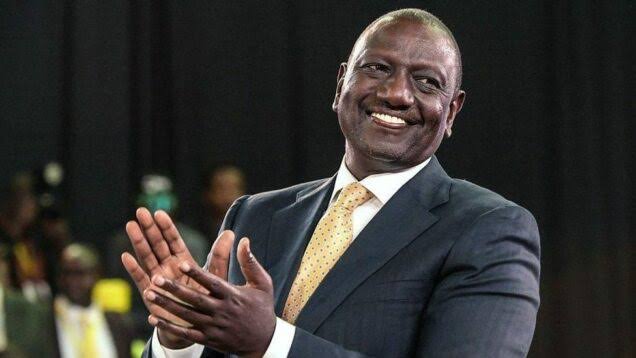
Kenyan President Ruto praises NSSF Uganda for steady growth

President William Ruto.

Kenyan president William Ruto has praised Uganda’s National Social Security Fund (NSSF) for its steady growth.

Ruto said even though Uganda have a smaller economy than Kenya, NSSF Uganda continues to have a huge pension scheme.

“Savings is what gives us the resources for investment. In fact, the norm is investments is actually a function of savings. You can only invest if you have faith. Today we are among the least, savers in our continent,” Ruto said.

“Tanzania has a better saving, better saving culture than us. They have a smaller economy than us, Uganda have a huge pension scheme bigger than ours. And they have a smaller economy. So we have to rethink, we have to change and the people from our professionals working with the people from NSSF will be here tomorrow morning so that we can take you through what we need to do.

“Today we have savings of like maybe 1.5 trillion, which is very small. It is not even I think a 10th of what is in the savings of Uganda, Nigeria. So we will take through them the motions so that we are all clear, because good people, we have no option but to change this country, and we are the people who are going to change it.”

NSSF Uganda is a quasi-government agency responsible for the collection, safekeeping, responsible investment, and distribution of retirement funds from employees of the private sector who are not covered by the Government Retirement Scheme.

It is the largest pension fund in East Africa with total assets of about Ush16.86 trillion as of March 2022. Richard Byarugaba serves as the Managing Director and Chief Executive Officer of the Fund.

Stories Continues after ad

Understanding the Genesis of Muhammad Nsereko’s Law

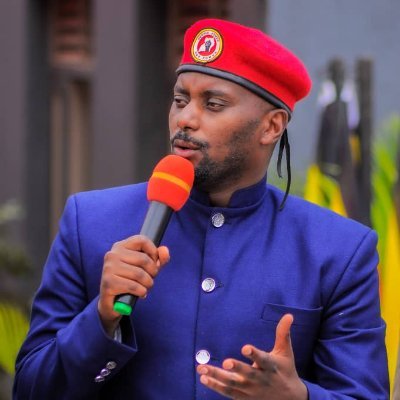
David Lewis Rubongoya

By David Lewis Rubongoya

Following the 2009 Kayunga protests, the regime banned public meetings popularly known as Bimeeza and withdrew licences from several radio stations, including CBS. That opened a new phase of repression using the law. 

In 2013, they passed the Uganda Communications Commission Act which gave UCC sweeping powers to withdraw licences for media stations that will be deemed troublesome, in the name of enforcing minimum broadcasting standards. And since then, media houses have been treading cautiously. Many are apparently operating on provisional licenses. They will remind us whenever a guest goes bare knuckles, that the views expressed are not of the station, but those of the guests. The fear is apparent.

EFFECTIVELY THEY HAD FOUND A WAY OF CONTROLLING MAINSTREAM MEDIA. 

The next problem was how to deal with public gatherings. 

Following the 2011 Walk to Work Protests, the regime became desperate to ban all public gatherings of a political nature. 

In 2013, they enacted the Public Order Management Act (POMA) which effectively required every citizen to get police permission before organising or participating in any demonstration. How the POMA has been used to crack down dissent since then is well known world over. To date, there are people rotting at Kitalya, Luzira and other prisons for several years for going against this draconian law. The very mover and arch-defender of the law, Amama Mbabazi faced its wrath at some point, just like the present law is bound to catch its mover and supporters. 

AND SO, THROUGH THE PUBLIC MANAGEMENT ACT, THE REGIME EFFECTIVELY BANNED PUBLIC GATHERINGS AND DEMONSTRATIONS. 

The next challenge for the regime was social media! 

With public gatherings banned and media stations severely restricted, the regime thought it would have a smooth sail. But since the advent of the People Power Movement in 2018, the regime found itself with a new problem to deal with, and that was social media! As more and more young people expressed contrary views on social media, the regime felt threatened. 

They immediately introduced a daily social media tax of 200 UgX called OTT. That did not deter people. Those who had the means paid it, while others bypassed it using VPN. Frustrated and desperate, they decided to ban Facebook in Uganda, which remains banned to-date. 

But the people still by-passed the ban using VPN networks. And so it has been a huge challenge to them. They could rig elections with impunity, carry out abductions and illegal arrests and exercise all manner of illegalities, but they couldn’t prevent citizens from expressing their disgust and discontent with the corrupt and inept regime via Facebook, tiktok, twitter, etc. 

In between, a new problem emerged for the regime. That was in form of the People Power dresscode comprised of red berets, red overalls, etc. These dressings emboldened the people and are a symbol of resistance! As they became widespread all over the country, the regime immediately gazetted them in accordance with the UPDF Act, and said they belong to the military henceforth. This has since been used to abduct, torture and detain thousands and charge them before the military court. 

But the social media problem persisted for the regime. They have been relying on Section 25 of the Computer Misuse Act to abduct, arrest, torture and detain several social media users for being so critical to the regime or exposing its dark side. As we speak, several journalists and online activists are on the run or in exile for fear of being abducted or violently arrested over their publications on social media. 

But it is now clear that according to the regime, that provision was not enough for repressive purposes, because the highest punishment is 480,000/= and/or imprisonment for one year or less. Secondly, it requires the offended person to come and testify that their peace has been disturbed or their privacy infringed upon. Of course no regime official wants to embarrass themselves testifying how they want to muzzle criticism. 

That is how the regime decided to enlist Muhammad Nsereko’s services! His law effectively bans the use of social media and other electronic mechanisms to criticise the regime and its officials. Under that law, 

1. You cannot record someone’s voice or video without authorisation.

2. You cannot share information about or that relates to another person without authorisation. 

3. You cannot write, share or send information about anyone which is likely to demean, ridicule or degrade another person.

4. You cannot share unsolicited information with anyone. 

5. The punishment for doing any of these things will range from paying fines of up to fifteen million shillings,  and imprisonment of up to 7 or 10 years, depending on which section you have violated. In addition, a person convicted under Nsereko’s law will not be allowed to hold public office for 10 years. You can see who the target is! 

You can imagine what the military regime can use this law for! If Gen. Museveni has been using a knife to deal with the threat of social media, Nsereko has now handed him a machete. If he has been using a stone, he now has a hammer. In terms of unconstitutionality, this law goes far beyond all the repressive laws highlighted above. 

History will be harsh not only to the oppressors, but mostly to those who aided the oppressors in oppressing the people.

The beauty is that repressive laws have never stopped any regime from falling. No single law has ever stopped the people from eventually reclaiming their power and sovereignty. They could have since forgotten, but this fact was captured aptly by the NRA while in the bush, in their book Mission to Freedom, Page 2. “The right of rebellion against tyranny has been recognised from the ancient days to the present day by men of all creeds…..It transcends any narrow laws enacted by petty dictators and despots.”

Our struggle will end in victory!

Stories Continues after ad