Stanbic Bank
Stanbic Bank
25 C
Kampala
Stanbic Bank
Stanbic Bank
Home Blog Page 526

UNBS grants free certification to over 500 MSMEs

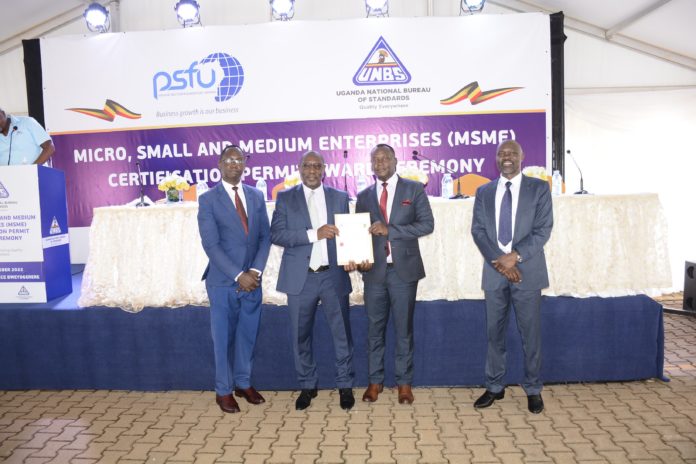
The Uganda National Bureau of Standards (UNBS) with support from Private Sector Foundation of Uganda (PSFU) has granted free product certification (Q-Mark) to over 500 Micro-Small and Medium Enterprises (MSMEs) who are producing over 700 Products across various sectors as part of the COVID 19 Economic Recovery and Resilience Response Program (CERRRP).

According to Mr. David Livingstone Ebiru, the UNBS Executive Director, this is part of the Bureau’s interventions to subsidize the cost of product certification as one of the measures to improve the safety and quality of locally manufactured products and increase their access to both domestic and international markets.

He highlighted additional interventions taken by the Bureau to reduce the cost of doing business for the MSMEs which include automation and online access of UNBS Services and decentralization of Testing Laboratories and other Conformity Assessment Services to the Regional Offices of Mbale, Gulu and Mbarara.

Mr. Ebiru reiterated the need for a Special Fund to support MSMEs certify their products for the initial year so that they can meet the minimum safety and quality standards required to access the Markets. He applauded the Private Sector Foundation of Uganda (PSFU) for considering UNBS request to help the financially constrained MSMEs who were facing challenges with payment of certification charges.

He however decried the poor quality culture among MSMEs, especially those involved in informal production from ungazetted locations such go-downs, backyards and garages which are responsible for the high prevalence of substandard products on the Market.

Ebiru therefore appealed to Enterprises involved in any form of manufacturing and production to formalize their businesses and operate in an open so in order to benefit from available interventions aimed at supporting them improve the quality of their products. He also urged the Start-Up MSMEs to focus on production of one product at a time in order to effectively manage their quality and optimise the cost of certification. The beneficiary Enterprises have been granted UNBS Q-Mark Permits for the initial 1st year and are expected to sustain payment for subsequent renewals of these Permits thereafter.

The Project Manager for the COVID-19 Economic Recovery and Resilience Response Program, Mr. Allan Ssendyona thanked UNBS for optimising the use of the $500,000 fund to certify more MSMEs than the original number estimated. He pledged additional support to MSMEs who are committed to producing quality products and will ensure their progress is closely monitored.

Mr. Steven Asiimwe, the Executive Director of the Private Sector Foundation of Uganda (PSFU) assured the MSMEs of the emerging markets within the Region and beyond which can absorb most of the Ugandan made products so long as they can meet the required quality and quantity.

He informed MSMEs of other opportunities available to support the youth and women, as well as those involved in exports. He thanked the Bureau for being a reliable and an effective partner in implementing such critical interventions which are aimed at supporting the growth of the private sector and pledged more collaborations in the future.

Mr. Charles Musekuura, the Chairperson of the UNBS National Standards Council (NSC), committed to ensuring that the costs of product certification are affordable in order to promote the quality culture among manufacturers they are expected to voluntary comply with the standards in order to reduce the cost of enforcement by UNBS.

He urged the MSMEs to also pay close attention to Branding and Packaging of their products which are equally critical in making their products competitive on the market. He congratulated the beneficiaries of the UNBS-PSFU free certification scheme and encouraged them to sustain implementation of quality standards in their businesses going forward in order to reap the benefits in the long run.

The Minster of Trade, Industry and Cooperatives, Mr. Francis Mwebesa thanked the Private Sector Foundation of Uganda (PSFU) for complementing Government’s effort of reducing the cost of doing business by funding the over 500 MSMEs who are struggling from limited access to financing due to the high interest rates and lack of collateral security used for borrowing from the Financial Institutions. He appreciated the intervention of improving the quality of locally made products so that they can be competitive on the market, especially for Export Markets. He pledged continued Government support to the Private Sector who are key Partners contributing to economic development and transformation of the Country.

Stories Continues after ad

ZTE unveils new broadband solutions and products at Network X 2022

ZTE

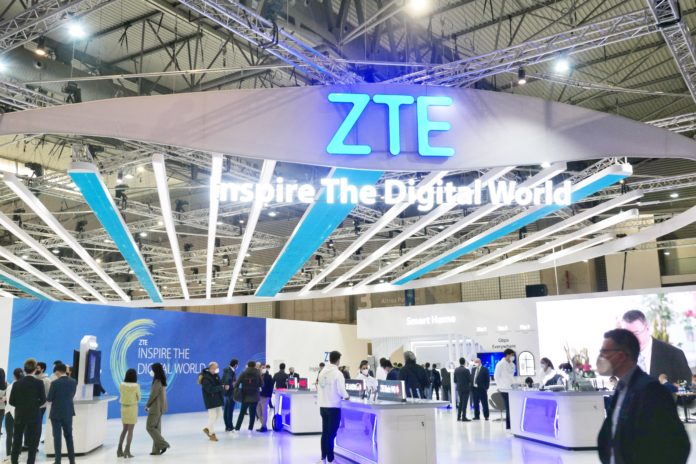
ZTE Corporation (0763.HK / 000063.SZ), a global leading provider of information and communication technology solutions, has launched fiber to the x (FTTx) and connected home-themed series of broadband solutions and products during an event held during Networks X in Amsterdam, Netherlands. The launch event attracted more than 100 groups of customers and sparked widespread interest in the industry. The newly-released solutions and products will help promote the development of innovative broadband services and accelerate the process of fiber transformation globally.

The FTTx-themed series consists of a 50G PON&10G PON Combo solution, the Light ODN solution, and a business optical gateway. ZTE believes that optical networks should feature simple deployment, smooth upgrades, and easy operation and maintenance (O&M). For the evolution from 10G PON to 50G PON, ZTE suggests using a 50G PON&10G PON Combo solution that allows operators to first deploy optical line terminals (OLTs) in the central offices and then install XG-PON, XGS-PON or 50G PON optical network units (ONUs) on demand on the user premises. ZTE’s Light ODN solution is based on the pre-connectorization technology to enable lightweight optical distribution unit (ODN) deployment. Thanks to the technology, the solution achieves zero splicing and plug-and-play, thereby greatly shortening the deployment time.

In addition, the solution employs visualization techniques to light up the dark pipes and dumb resources of the ODN, making the network visible, manageable and maintainable. During the event, ZTE also launched an innovative business optical gateway, the ZXA10 P610, which is designed for use by hotels and small enterprises. The gateway is a 1U pizza-box device that provides 10G PON and Ethernet ports in the uplink and GPON, 10G PON, and Ethernet ports in the downlink. It can be used as either an OLT or ONU to flexibly meet the user’s needs.

The connected home-themed series consists of a fiber to the room (FTTR) solution and the industry’s first Wi-Fi 7 XGS-PON optical network terminal (ONT). The ONT, whose model number is ZXHN F8748Q, carries a Wi-Fi chip. It provides four spatial streams in the 2.4 GHz, 5 GHz and 6 GHz bands respectively, enabling a maximum theoretical rate of 19 Gbps. The ONT supports the multi-link operation (MLO) and multi-resource unit (MRU) technologies, thus greatly reducing the average latency for multiple users and increasing the maximum throughput by three times per user. Therefore, the ONT can better provide the high-bandwidth, multi-device connectivity needed by the home and enterprise scenarios of the future.

At the event, ZTE also released an FTTR solution and four FTTR products as part of the solution, that is, 1) the industry’s only FTTR main ONT with both XGS-PON and 2.5GE ports, 2) a Wi-Fi 6 GPON main ONT, 3) a Wi-Fi 6 GPON room ONT, and 4) a panel ONT that supports power over fiber (PoF). All the FTTR products support the Wi-Fi 6 and EasyMesh technologies to provide users with a whole-home gigabit-plus broadband experience. The panel ONT allows operators, real estate developers, equipment vendors, and communities to jointly explore business models where the ONT is installed as part of home building to accelerate the development of smart homes.

As a leader in the broadband field, ZTE constantly bolsters its foundational capabilities and strengthens technological innovation in a bid to offer global customers superior products and services. ZTE’s broadband products have been deployed by over 270 operators in more than 100 countries and regions. In Q2 2022, ZTE ranked first globally for PON ONT shipments, according to data from research firm Dell’Oro Group.

Stories Continues after ad

New GUINNESS WORLD RECORDS™️ the Most Registered Blood Donation with over 70,000 Blood Donors in South Korea

Korean volunteers were listed in the GUINNESS WORLD RECORDS™️ for the challenge of Most people to sign up as blood donors online in 24 hours. On 1st of October the youth volunteer group ‘WE ARE ONE’ completed online blood donation applications for 71,121 volunteers for 24 hours to challenge the World Record.

The record challenge of the 70,000 blood donors was prepared to raise awareness of the importance of blood donation to overcome the blood shortage caused by COVID-19, led by We Are One, a Korean youth organization conducting the ‘Life ON Youth ON’ blood donation campaign.

WHO Global Status Report on Blood Safety and Availability
According to the Global Status Report on Blood Safety and Availability published by the WHO in June 2022, shortages of blood have impacted all countries during the COVID-19 pandemic. Also in January 2022, the American Red Cross announced that US is facing a national blood crisis – its worst blood shortage in over a decade.

Through ‘Red Connect’, the official blood donation smartphone application of the Korean Red Cross, all the volunteers completed the application for blood donation in 24 hours from 8:00 am on October 1st to 8:00 am on October 2nd. This is about seven times the previous world record of 10,217 (8 hours) held by India.

Mr. Junsu Hong, the head of WE ARE ONE, said, “It was possible not only because of the volunteers, but also the Korean Red Cross officials working at the forefront to solve the blood shortage, and the IT company that developed an efficient blood donation application system. In that sense it has great significance. I believe COVID-19 can be defeated when we are all one,” he said.

Since its launch on July 30 this year, WE ARE ONE has been conducting the ‘70,000 blood donation’ campaign since August 27. As of the 11th, a total of 43,811 people completed the blood donation, and it is planned to complete the blood donation of 70,000 people by November.

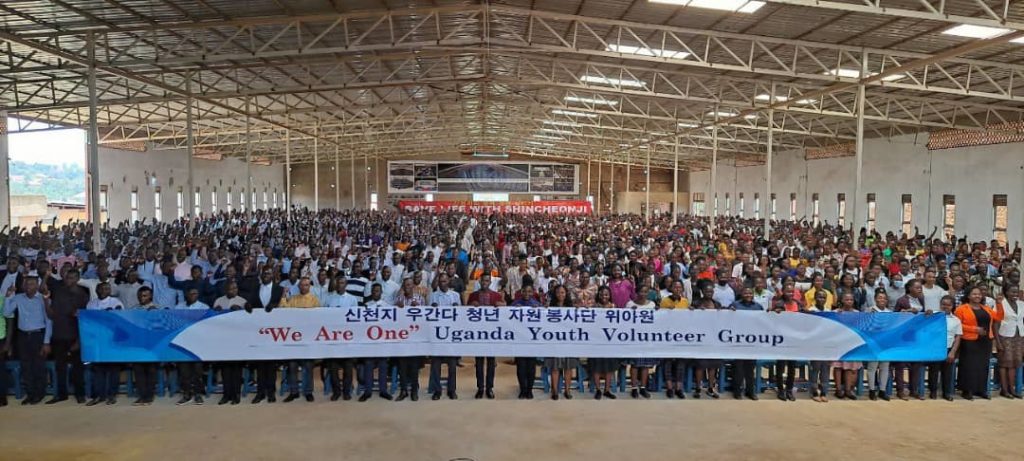
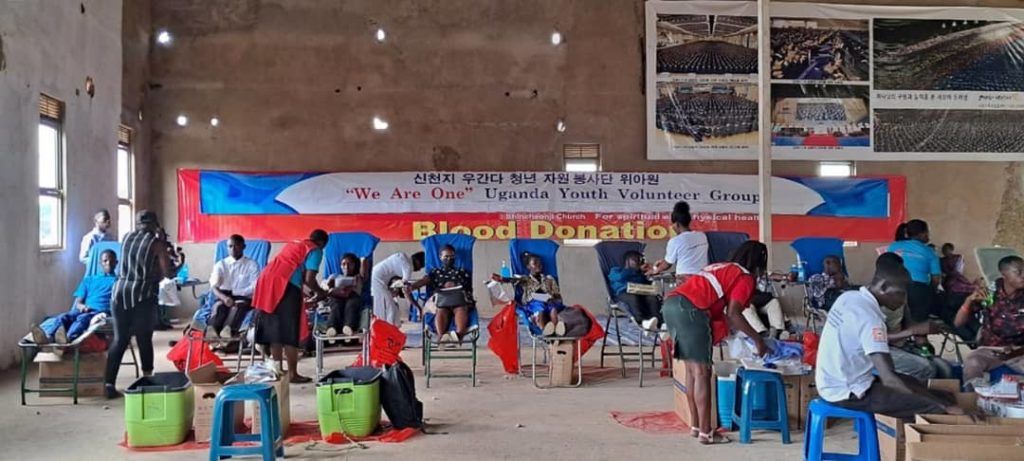
In Uganda, in the mean time, the shincheonji youth group was inaugurated on 24th of September and it have conducted a large scale group blood donation  on 9th Oct 2022 , 574 units were collected with 2025 people and practiced love of neighbors

The official record is accessible in the GUINNESS WORLD RECORDS™️ website. https://www.guinnessworldrecords.com/world-records/714849-most-people-to-sign-up-as-blood-donors-online-in-24-hours

Stories Continues after ad

Carrefour Uganda joins forces with Rocket Health against breast cancer

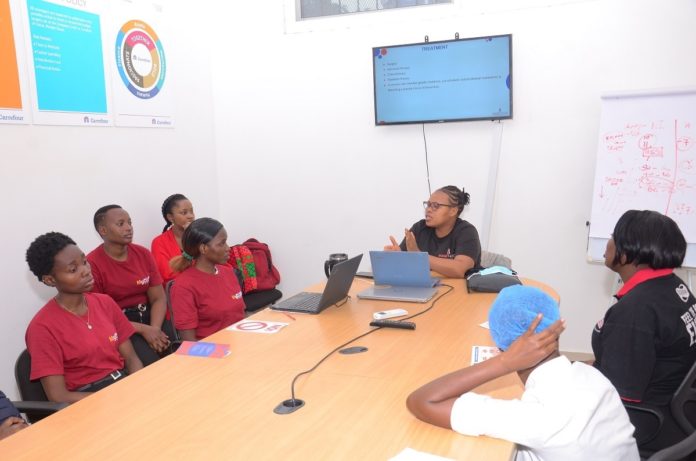
Dr Hope Atwine (Center) from Rocket Health during the Breast Cancer Awareness Health talk at Carrefour Lugogo.

In honour of Breast Cancer Awareness Month, Carrefour – owned and operated by Majid Al Futtaim in Uganda – has today partnered with Rocket Health Uganda to launch a three-day campaign to create awareness on combatting the disease among its staff. The campaign is a cornerstone of Carrefour’s social investments in women’s advancements and health, uniting all team members in the fight against Breast cancer.

The Breast Cancer awareness campaign kicks off at the Carrefour store at Oasis Mall on October 18 to promote the benefits of regular checks while helping team members to act on lifestyle changes and patterns. This initiative further highlights Rocket Health’s healthcare professionals, who can offer excellent support, materials and advice.

Franck Moreau, Regional Director of Carrefour East Africa at Majid Al Futtaim Retail, said: “Carrefour is committed to helping our colleagues reach their well-being goals and we are proud to partner with Rocket Health for this year’s Breast Cancer Awareness month. During the campaign, Rocket Health will provide screening and counseling to all our team members, both male and female, across all our 7 stores in Uganda.”

According to the Uganda Cancer Institute, breast cancer is the second leading cause of cancer death among women in Uganda – after cancer of the cervix – due to its late detection. The campaign is designed to support Carrefour colleagues and the surrounding community in their efforts in early detection and screening.

Dr. David Musinguzi, the Chief Executive Officer of Rocket Health, said: “We are aware that uptake of breast cancer screening among women in the younger age ranges is low mainly because they are fearful of what they could find. We are glad that Carrefour is making a significant effort to encourage its staff to make regular checks for early detection and prevention of Breast cancer. We believe our joint efforts throughout this campaign will lead to reducing cancer risks, detection and celebrating more staff birthdays for years to come.”

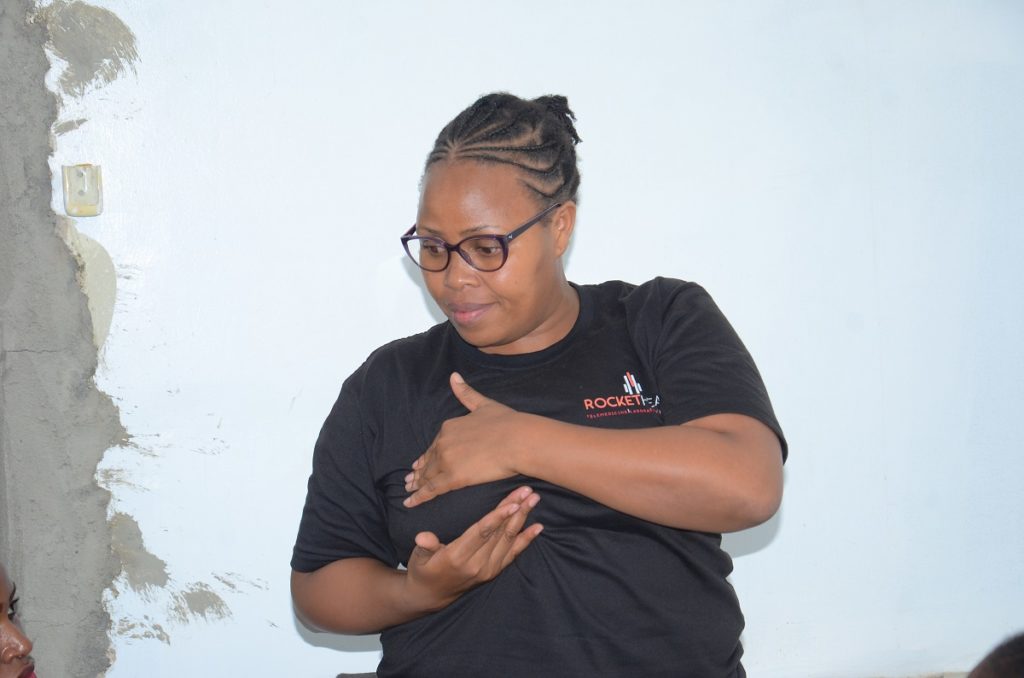
Dr Hope Atwine demonstrating how to carry out Self Breast Examination to Carrefour staff during the Breast Cancer Awareness engagement at their stores.

All Carrefour colleagues will have access to health information on the company wellness hub, with targeted communications and reminders to all team members on the importance of self-checking and following up on symptoms.

Stories Continues after ad

Pre-trial session for Gen Katumba Wamala attempted murder suspects set for November

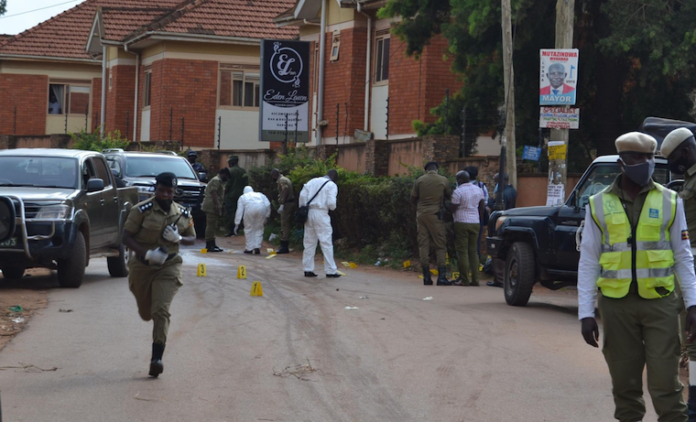
Gen Katumba Wamala attempted assassination scene

The International Crimes Division Court has set November 14 as the date for the pre-hearing session of eight suspects implicated in the attempted murder of the Minister Of Works and Transport Gen. Katumba Wamala.

The suspects include; Muhammad Kagugube, Sirimani Kisambira, Abudalllah-Aziz Ramadhan Dunka, Kamada Walusimbi, Habib Ramadhan Marjan, Yasin Nyanzi, Hussein Serubula and Huzaifah Wampa.

The group faces murder, attempted murder, aggravated robbery, rendering services to a terrorist group, financing terrorism activists and belonging to a terrorist organization.

Gen Katumba was on June 1, 2021 shot at by unknown gunmen who were riding on motorbikes along Kisota road in Kisaasi. The incident left both his daughter Brenda Nantongo Wamala and his driver Sgt  Kayondo Haruna dead.

Prosecution also avers that on May 29, 2019, while at Cheap general hardware, Nansana in Wakiso district the suspects together with others still at large with malice aforethought unlawfully caused the death of Jimmy Atukuru, Frank Anania, Abaho Frank Mutsinda and Amim Bugembe who they shot dead.

The suspects allegedly stole Shs385 million from Tedrin Nalule, the cashier of Cheap General Hardware. The group has also been charged with the murder of Burton Okoti on April 27, 2019, at City Shoppers Supermarket Kanyanya, Mpererwe, Kawempe division in Kampala district.

Prosecution contends that after shooting Okoti to death, the accused made off with Shs2.2 million from Precious Kayesu and another Shs4.5 million from Aisha Nakafeero. The prosecution also alleges that suspects attempted to murder Jalia Nantambi on the same date and at the same venue.

It is also alleged that while at Denovo Bakery, Kalerwe-Kawempe division in Kampala district on September 16, 2017, the suspects killed five people including Special Police Constables Hussein Mubiru and Moses Kalungi. The other victims were identified as Angello Nantongo, Evarest Hakizza and Edward Ssenyonzi.

The suspects’ lawyers led by Geoffrey Turyamusiima asked that all the suspects appear before court during the pre-trial session. “We expect evidence against our clients rotating from way back in 2017 till the last year 2021,” he said after court session.

Stories Continues after ad

ZTE wins design award IDEA for S200A smart speaker STB

S200A Smart Speaker STB

ZTE Corporation (0763.HK / 000063.SZ), a global leading provider of information and communication technology solutions, has been rewarded the International Design Excellence Awards (IDEA) 2022 as a finalist for its S200A smart speaker set-top box (STB) powered by Android TV™ OS, in recognition of its unique styling and innovative design. 

S200A smart speaker STB has a novel design, blending the traditional Chinese aesthetics with a modern compact and elegant appearance. Its fabric-swathed upper half delivers a soft and cozy feel, while its plastic lower half makes it easier to plug in or unplug interface components. S200A is made of recyclable plastic materials and uses biodegradable paper pulp for packaging. The whole device strictly complies with the CCC and EU RoHS directive.

In addition to the outstanding design, S200A is a hybrid end device converging 4K STB and smart speaker. It provides users with high-quality audio-visual entertainment and with hands free voice control built in with Google Assistant, users can set aside their remote and simply use their voice to search and access entertainment, control their TV and smart home devices, and more. It also allows users to switch between the smart speaker mode and STB mode in just one click, extending the application scenarios.

As a world-leading provider of home media terminals, ZTE has been committed to the high-quality product R&D and application. To date, ZTE’s STBs have been deployed by more than 140 customers in over 45 countries around the world. Moving forward, by virtue of its innovation capacity, a wide variety of products and superior after-sales support, ZTE will keep offering global customers superior solutions and services.

Stories Continues after ad

Why Telecommunication companies are victims of caller line identification spoofing fraud

A few weeks ago, Kenya’s newly elected President, William Ruto on his maiden trip to Dar es Salaam, congratulated Tanzania for joining the One Network Area.

The One Network Area (ONA), is a regional framework mooted in 2014 where East African countries, Uganda, Kenya, Rwanda, South Sudan, and now Tanzania, agreed to eliminate charges for roaming voice calls among member states to make voice calls cheaper and promote business and regional integration.

As such, member countries through their respective communication regulators agreed to eliminate the USD9 cents per minute tax on all international incoming calls thus maintaining a uniform USD4 cents across the EA region.      

This bold step also came with commercial benefits to companies such as MTN and Airtel which own telecommunication networks on both sides of a common border to integrate their regional cellular coverage into a one-network roaming area and offer their international customers services at domestic rates.

However, as with all good things, international fraudsters found an avenue to benefit from this harmonization of rates through Caller Line Identification Spoofing, also so-called simboxing or grey trafficking.

Caller Line Identification Spoofing (simboxing) is a practice in telecommunication where a person or group of people usually fraudsters, set up a device that can take up several SIM cards (a SIM box) and use it to complete international calls it receives from the Internet as voice over IP (VoIP) and in turn serve them to the in-country mobile network subscribers as local traffic. The SIM boxer thus bypasses the international rates and often undercuts the prices charged by local mobile operators.

With the ONA initiative, the termination call rate within the member states is USD 4 cents per minute, and the international incoming calls from regions outside of ONA vary between USD10 and US$31 cents per minute depending on the country that fraudsters have exploited.

Currently, Kenya charges the lowest international call rate for countries outside ONA of USD10 cents, followed by Rwanda with USD22 cents and Uganda with USD25 cents per minute. South Sudan charges an international calls rate of US$31 per minute for countries that are outside the ONA arrangement.

The disparities in international call termination for countries outside the ONA agreement has given fraudsters an opportunity to exploit the cost difference especially for calls coming from more expensive countries like Nigeria thus denying the local telecom companies revenue and consequently the tax revenue that would accrue to the exchequer.  

For instance, fraudsters earn between USD 1 cents and USD 27 cents per minute which would have been revenue to the telecoms as the government loses USD9 cents per minute as the tax due to rerouting traffic to countries in the region and disguising it as originating from the ONA member state.

This comes as MTN Uganda is allegedly accused of involvement in Caller Line Identification spoofing leading to a loss of revenue for the government.

The report authored by Brendan A. Wadri to President Yoweri Museveni on June 27, 2022, titled “Massive Telecommunications Fraud Detected in MTN Uganda,” also claims that the telecom failed to detect and correct the high volume of ONA fraud terminated to Uganda through their networks in Rwanda and South Sudan.

As illustrated earlier, the telecom industry argues that there’s no telecommunication company that will intentionally involve itself in simboxing because it doesn’t benefit them in any way, especially in regions like East Africa where tariff rates have been harmonized to lower the cost of international calls.

Besides stringent local regulatory framework in most countries, these telecom companies have international licensing protocols and partnerships with other telecom companies worldwide and would not want to put their reputation at risk

It appears that fraudsters interested in routing their international calls through the One Network Area to other countries, may take a liking to a country like Kenya which presents a better opportunity since it has lower international termination rates compared to other countries in the region.”

According to industry sources, international call traffic has been on a steady decline across the world including East Africa, owing to various reasons including the increasing spread and use of data and applications that offer free calls.

Available information indicates that the country’s top telecom companies have invested in systems that track incoming international calls and they usually reconcile with the government records on a monthly basis.

Knowledgeable sources in Uganda say that the regulator has a system in place that tracks incoming calls and their termination and prepares a report every month which is shared with the key players.  It is at this stage that in the event that there are discrepancies, then, a particular telecom is invited to reconcile the differences.

The rapid adoption of digitization in almost all aspects of business and commerce including payments and the critical role telecommunication plays in making this possible means that fraudsters will always be on the prowl with the hope of cashing in on loopholes that may exist especially because of differences in market policy and regimes.

Perhaps the initiators of ONA may need to go back to the drawing board to work out what needs to be done to close the existing gaps while ensuring that local telecom operators and the government are not denied the much-needed revenue accruing from services that are still needed by consumers.

Stories Continues after ad

Coffee exports drop as value increases by 6.73%

Farmer picks coffee

Coffee exports in September 2022 amounted to 503,695 60-kilo bags worth US$ 71.22 million (Shs 272.2 billion). This comprised 464,118 bags of Robusta valued at $62.19 million (Shs 237.7billion) and 39,577 bags of Arabica valued at $ 9.03 million (Shs 34.5 billion).

This was a decrease of 14.13 percent in quantity but an increase of 6.73 percent in value compared to the same month last year. By comparing the quantity of coffee exported and type in the same month of the last Coffee Year (September 2021), Robusta decreased by 14.72 percent in quantity but an increase of 3.57 percent in value. The quantity of Arabica exports decreased by 6.43 percent and increased by 35.09 percent in value.

The decrease in exports was mainly attributed to lower yields this year that were characterized by drought in most regions. This led to a shorter main harvest season in Central and Eastern regions and also reduced harvests from Greater Masaka and South-Western regions.

Coffee exports for 12 months (Coffee Year 2021/22) totaled 5.85 million bags worth US$ 876.43 million (Shs 3.3trillion) compared to 6.50 million bags worth US$ 630.01 million (Shs 2.4trillion) the previous year (The coffee year 2020/21). This represents a decrease of 9.90 percent in quantity but an increase of 39.11 percent in value.

The average export price was US$ 2.36 (Shs 9,022) per kilo, one U.S cent lower than US$ 2.37 (Shs 9061) per kilo realized in August 2022.

Robusta exports accounted for 92 percent of total exports slightly higher than 91 percent in August 2022. The average Robusta price was US$ 2.23 (Shs 8525) per kilo, three cents higher than the previous month. Washed Robusta fetched the highest price of US$ 2.48 (Shs 9481) per kilo. It was followed by Organic Robusta at US$ 2.46 (Shs 9405) per kilo. The share of Sustainable/washed coffee to total Robusta exports was 2.48 percent slightly higher than 1.48 percent in August 2022.

Ugacof (U) Ltd had the highest market share of 15.91 percent compared to 17.28 percent in August 2022. It was followed by Louis Dreyfus Company (U) Ltd 10.37 percent (6.37 percent); Kyagalanyi Coffee Ltd 10.31 percent (8.99 percent) Ideal Quality Commodities Ltd 9.81 percent (8.48 percent); Kawacom (U)Ltd 8.91 percent (4.75 percent) Olam Uganda Ltd 6.46 percent (8.02 percent); Touton Uganda Ltd 5.86 percent (11.95 percent); Ibero (U) Ltd 4.36 percent (4.60 percent; Grainpulse Ltd. 3.82 percent (2.67 percent); and Export Trading Company (U) Ltd 3.55 percent (3.48 percent).

Coffee Exports by Destination

Italy maintained the highest market share of 39.15 percent compared with 39.67 percent last month. It was followed by Sudan 12.86 percent (10.20 percent), Germany 11.46 percent (13.83 percent) India 6.69 percent (7.75 percent) and Morocco 5.97 percent (3.37 percent).

Coffee exports to Africa amounted to 120,295 bags, a market share of 24 percent compared to 93,988 bags (19 percent) the previous month. African countries that imported Uganda coffee included Algeria, Sudan, Morocco, Tunisia, South Africa, Somalia, Egypt, Libya and Kenya. Europe remained the main destination for Uganda’s coffees with a 61 percent import share the same as in August 2022.

Foreign buyers of Uganda Coffee

The top 10 buyers held a market share of 72 percent of total exports the same as the previous month. Sucafina led with a market share of 13.72 percent compared to 16.41 percent in August 2022. It was followed by Louis Dreyfus 10.30 percent (6.30 percent); Olam International 8.74 percent;(10.59 percent); Ecom Agro-Industrial 8.56 percent (4.60 percent) Volcafe 8.14 percent (8.34 percent); Altasheel Import & Export Enterprises 6.46 percent (4.47 percent); Touton Geneve 5.86 percent; (11.95 percent) Bernhard Rothfos 4.42 percent (4.76 percent), Hamburg Coffee 3.64 percent (1.82 percent) and Cofftea (Sudan) 2.64 percent.

Global Situation

World coffee production for 2022/23 is forecast to reach 175 million bags which is an increase of 7.8 million bags from the previous year as Brazil’s Arabica crop enters the one year of the biennial production cycle.

The effect of the Brazilian drought and frost which occurred in the previous year on its 2022/23 harvest though has not been quantified yet. If the damage is high, the global production forecast might be revised downwards.

Global consumption is expected to increase by 1.81 million bags to 167 million with the largest increase in European Union, the United States, Japan and Brazil. World exports are forecast to be higher on gains in Brazil and Indonesia. Ending stocks are expected to be 2.1 million bags higher than last year to be 34.7 million bags following last year’s sharp drawdown.

Outlook for October 2022

 Coffee exports are projected to be 450,000 bags. The main harvesting period season in Greater Masaka and Southwestern regions ended. It was affected by a dry spell, especially in Bukomansimbi and Sembabule districts. Exporters are likely to draw down their stock levels to fulfill contractual obligations with the buyers as they prepare for the main harvest in Central and Eastern regions.

Stories Continues after ad

Number of Kenyan athletes banned for doping in 2022 hits 25

Athletics track

The number of Kenyan athletes banned for doping this year has reached 25 after Ibrahim Mukunga Wachira and Keneth Kiprop Renju, became the latest runners to be provisionally suspended for alleged doping offences.

Renju became national champion over 10,000m in April, and also won half marathons in Prague and Lisbon and a 10km race in Lille this year.

The Athletics Integrity Unit (AIU) said the prohibited substance methasterone was present in a sample provided by the 26-year-old.

Meanwhile, the AIU said Mukunga Wachira had tested positive for norandrosterone.

Methasterone is an anabolic androgenic steroid, while norandrosterone is a metabolite derived from nandrolone, also an anabolic androgenic steroid.

The pair become the latest Kenyans to be embroiled in drugs scandals, with over 200 of their compatriots involved in doping cases since 2017.

Last week the AIU banned marathon runner Mark Kangogo for three years for the use of norandrosterone and triamcinolone acetonide, a glucocorticoid.

Meanwhile, 2021 Boston Marathon winner Diana Kipyokei was provisionally suspended after testing positive for the latter substance.

The list could grow since more cases that are yet to be revealed are at the Anti-Doping Agency of Kenya (ADAK).

Kenya was placed in the top category of the World Anti-Doping Agency’s compliance watch list in 2016.

Stories Continues after ad

UCE Exams: Police investigates Verona College Kamuli over alleged malpractices

Michael Kasadha, the Kamuli regional police spokesperson

The territorial police of Kamuli are investigating UNEB examination invigilators, the Head Teacher, laboratory technician and 34 students of Verona College Kamuli over allegations of examination malpractices. 

According to Michael Kasadha, the regional police spokesperson, it is alleged that on October 18, 2022 while waiting for their turn to do examinations, 34 students were found discussing suspected examination materials.

“Preliminary investigations suggest that 64 candidates were to sit for the chemistry practical examinations at the center. However, given the limited space, candidates were divided into two groups of which one was in the examination room and another of 34 candidates in the waiting room,” he said .

It is during monitoring that the UNEB scout found the ones in the waiting room sharing suspected examination materials.

“It is suspected that there was no thorough check up of students prior to entering the examination room. Exhibits of evidential value were recovered and statements of the suspects were recorded as further inquiries are ongoing,” he said.

Stories Continues after ad