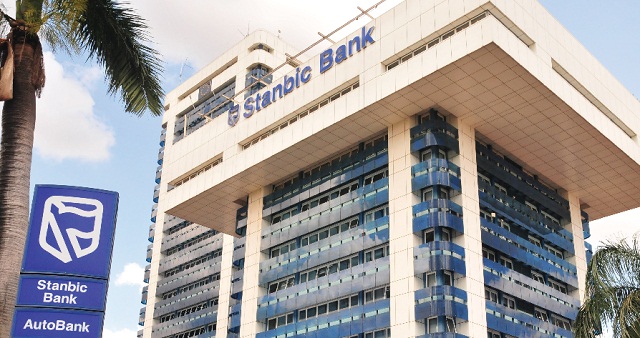
Stanbic Bank
Stanbic Bank
21 C
Kampala
Stanbic Bank
Stanbic Bank
Home Blog Page 534

SUEZ acquires EnviroServ, South Africa’s largest waste management company

SUEZ together with Royal Bafokeng Holdings (RBH) and African Infrastructure Investment Managers (AIIM) completed the acquisition of EnviroServ Proprietary Holdings Limited and its subsidiaries (“EnviroServ”) after having received the approval of the local antitrust authorities, in accordance with the terms announced on 9th June 2022.  This acquisition will enable SUEZ to reinforce its positioning as an international leader in industrial and municipal waste treatment activities and to strengthen its position on the African continent.

Founded in 1979, EnviroServ collects, treats and disposes of general and hazardous waste to treatment and disposal facilities across South Africa, Mozambique and Uganda.  With a staff of

2,200 people and a turnover in excess of 80 million euros, it is the only player in South Africa with full national coverage and a complete offering for industries (including on-site management, collection, treatment, remediation and related services).  EnviroServ’s portfolio of customers includes a high number of multinational firms operating in the petrochemicals, manufacturing, metallurgical and mining sectors.

EnviroServ contributes to the circular economy by recycling 125 000 tons and managing 1.7 million tons of hazardous and general waste per year.  The company owns and operates a fleet of 175 specialised waste-transport vehicles, 10 treatment and disposal sites and manages a further 5 facilities within the 3 countries where it operates.  Thanks to the large portion of local shareholding , EnviroServ will remain committed to retaining its B-BBEEE Level 1 rating, the highest Broad-Based Black Economic Empowerment possible.

The new shareholders’ ambition is for EnviroServ to grow as the undisputed leader of environmental services in South Africa and the region, leveraging on its strong capabilities and SUEZ’s support to invest in infrastructure and operations, enrich its commercial offer and develop new waste treatment modes contributing to a more circular economy.

Sabrina Soussan, Chairman and CEO of SUEZ: “I am thrilled by EnviroServ joining SUEZ Group:  this is a team with a unique track record over the last 40 years, which enabled the company to become the leader in hazardous and non-hazardous waste treatment activities in Southern Africa.  I am convinced that SUEZ can further nurture the profitable growth of EnviroServ with additional references, best practices, innovation and investments.  I am equally convinced that the team’s skills, expertise and talents will support SUEZ Group in expanding its activities in South Africa as well as in other geographies.  With all Group employees, I would like to welcome our new colleagues and look forward to a bright, common future.”

Albertinah Kekana, CEO of RBH: “As the first waste and water management platform investment for RBH, we are pleased that the EnviroServ acquisition is now complete.  This is an opportunity to further diversify our portfolio and grow our exposure in the circular economy.  We look forward to working with our partners as we strive to make a meaningful contribution and respond to the sustainable development agenda.”

Dean Thompson, CEO of EnviroServ: “The delivery of sustainable waste solutions to the African market is a critical need for the continent.  EnviroServ Waste Management, a leading and environmentally responsible waste management company, is looking forward to the wealth of knowledge and experience that our new shareholders will bring to the South African waste markets.  This will further enhance our existing product and service offering and create a robust platform for innovation and growth.”

Present on the African continent since the construction of the Sherbine water treatment plant in Egypt in 1948, SUEZ has built more than 500 drinking water and sanitation plants that service most African capitals.  SUEZ is notably present in Morocco, Egypt, Senegal, Tunisia and Côte d’Ivoire.

Stories Continues after ad

Stanbic PMI: Improving demand supports private sector growth

Stanbic Bank

The headline Stanbic Purchasing Managers’ Index posted 51.6 in September, up from 50.5 in August and the highest in five months as business conditions improved for the second successive month, although the latest reading was still below the series average of 52.5.

Released on September 5, the report contains the latest analysis of data collected from the monthly survey of business conditions in Uganda’s private sector.

David Kamugisha, the Head of Trading, Global Markets at Stanbic said, the decline in purchasing activity, which has led to declining inventories for the first time since September 2021, may indicate a possible decline in production in the short to medium term.

He said, “Businesses remained upbeat about the next 12 months premised by higher demand and the potential for price pressures to ease. Signs of improving demand contributed to a strengthening of business conditions in September as output and new orders increased. On the other hand, employment and purchasing activity dipped and costs continued to rise.”

The survey, sponsored by Stanbic Bank and produced by S&P Global, has been conducted since June 2016 and covers the agriculture, industry, construction, wholesale and retail, and service sectors.

The headline figure derived from the survey is the Purchasing Managers’ Index (PMI) which provides an early indication of operating conditions in Uganda.

The PMI is a composite index, calculated as a weighted average of five individual sub-components including, New Orders (30%), Output (25%), Employment (20%), Suppliers’ Delivery Times (15%) and Stocks of Purchases (10%).

Readings above 50.0 signal an improvement in business conditions in the previous month, while readings below 50.0 show a deterioration.

Commenting on the latest findings, MulaloMadula, Economist at Standard Bank said, “While still below the series average, the PMI is at its highest level in five months and has been in expansionary territory for the second consecutive month. The index’s persistence below the series average corroborates other data showing healthy, but below average growth.”

Madula said output and the growth of new orders, supported by expansion in demand, indicates a resilient business environment.

However, new orders for exports continue to decline, according to the survey. Moreover, adverse weather conditions this year could flatten productivity in the coffee sector and limit net exports.

Growth drivers

According to the index, strengthening demand conditions helped to support rises in output and new orders during September, in both cases for the second month running.

Growth was seen in the agriculture, industry and services sectors, but reductions were signaled in construction and wholesale & retail.

Despite improvements in output and new orders, Ugandan companies scaled back employment and purchasing activity. Workforce numbers were down for the fourth month running amid further signs of spare capacity, while input buying decreased for the second time in the past three months.

Important to note, however, was that lower purchasing activity fed through to a first reduction in stocks of inputs since September last year.

During the month, input prices continued to rise, with higher costs for cement, construction materials, electricity, and food products including sugar, fuel and pesticides all mentioned.

Companies also increased their salaries for the first time in three months amid rising living costs. With input costs increasing, firms also raised their own selling prices, extending the current sequence of inflation to 13 months.

Business confidence remained positive, with close to three-quarters of respondents predicting a rise in output over the next 12 months. Optimism reflected hopes that customer numbers and sales will rise alongside higher demand, with the potential for price pressures to ease.

Stories Continues after ad

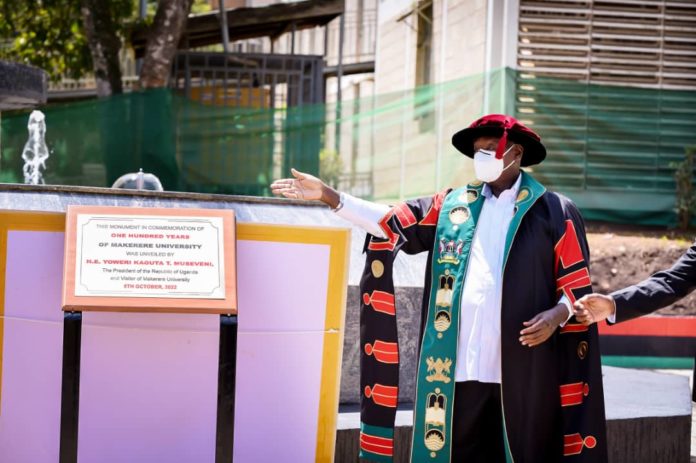
Makerere University celebrates 100 years of existence 

President Museveni at Makerere University for the grand centenary celebrations.

Makerere University, a well-known oldest institute in East Africa has today celebrated 100 years of existence in providing excellent services. Opening its doors to only 14 students in 1922, Makerere has grown to become one of the most prestigious Universities in Africa and the World over.

The centenary celebrations are under the theme, “Leveraging the 100 Years of Excellence in Building a Transformed Society”.

Makerere University’s alumni include presidents and prime ministers, among them Joseph Kabila (Democratic Republic of Congo), Julius Nyerere and Benjamin Mkapa (Tanzania), Mwai Kibaki (Kenya), and Milton Obote and Ruhakana Rugunda (Uganda).

Writers such as Ngugi wa Thiong’o from Kenya and David Rubadiri from Malawi, scholars and political activists such as Stella Nyanzi and Bobi Wine are also Makerere alumni.

Speaking at the event, Prof. Barnabas Nawangwe, the Vice Chancellor, said that nobody would have predicted that something that began with 14 bare feet students in grass thatched huts would evolve into what we have today.

“I pledge total commitment to Makerere University to ensure that our institution remains on the path to nurturing graduates and producing research responsible for national development,” Prof Nawangwe said.

Prof. Ezra Suruma, the Chancellor however challenged the Makerere lecturers to mind the quality of education and ethical content delivered to the students.

“I want to challenge the lecturers to put emphasis on the ethical content of education and that the character of our graduates is less important than the skills put in the field,” he said.

He added that the quality of service is still a challenge and this should be worked upon through sustainable and robust skilling of graduates in the different institutions.

Prof. Ezra Suruma: “It is my sincere prayer that Makerere will continue to lead the country in robust production of tomorrow’s leaders.”

Remembering the political move, Prof. Suruma said, “In 1980, I was a senior lecturer in Makerere and together with Joshua Mugyenyi we started the Uganda National Patriotic Movement which later became the National Resistance Movement. Makerere played a footnote in the foundation of NRM.”

Deputy Speaker, Thomas Tayebwa gave his journey to Makerere and the prosperous achievement in his life after passing through the gates of this great institution. “In 2001, with a metallic suitcase and Shs4,500 school fees for Makerere. I came to Makerere with no relatives in the government but today, I am Deputy Speaker of parliament.. I am one of the testimonies from the government.”

Tayebwa also highlighted the fact that rich students dominate the government scholarships. He says the scholarship system should be changed, “We are coming with a proposal so that children who should benefit from the scholarships, benefit.”

President Museveni, the special guest, said that he is one of the people who refused to come to Makerere. All his three choices were Dar-es-Salaam University because he wanted to be near Nyerere who always fronted for East African integration.

He said “The primacy of social change is technology and innovation. The Africans brought fire, domesticating of animals and crops and invention of iron. How did Africans lag behind? When the Europeans invented gunpowder, for us we didn’t know about it.”

He appreciated the science and technology faculties and applauded the administrators to put more emphasis in research and innovation.

“I congratulate Makerere, especially the science department. This is why I said 70% of scholarships should go to sciences. Recently I said salaries of scientists should be increased. Science is the Prima of society,” President Museveni said.

Stories Continues after ad

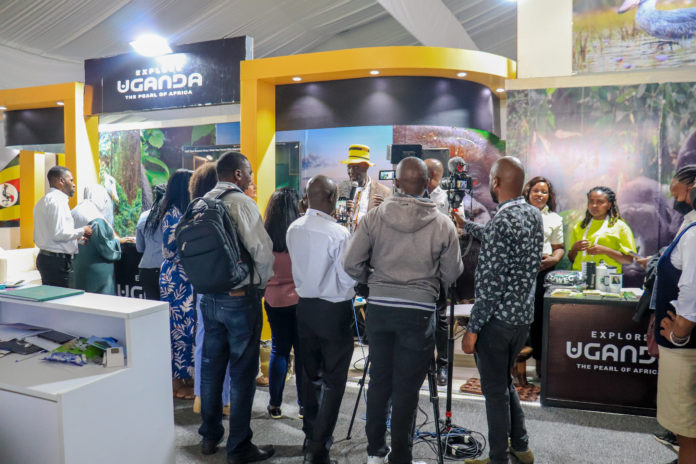
Uganda takes tourism promotion to Magical Kenya Tourism Expo 2022

Uganda at the Expo

Uganda is currently participating in the 11th edition of Magical Kenya Tourism Expo that started on 5th up to 7th October 2022 at the Bomas in Nairobi.

The Uganda Tourism Board (UTB) team at the expo is comprised of Director Ronald Kaggwa and Deputy CEO Bradford Ochieng together with staff in the marketing department. Uganda’s marketing contingent include Uganda Wildlife Authority, Uganda Wildlife Education Conservation Centre, Uganda Airlines, the private sector represented by tour operators, hoteliers among others.

This year’s expo has attracted over 200 exhibitors, 160 hosted buyers with travel trade and international media across over 30 countries from the globe.

Uganda’s participation in the Expo is key in positioning the country’s tourism products and services to the globe. Kenya as a country has previously contributed over 60% of inbound visitors making it a strategic source market for Uganda.

While at the Expo, Uganda Tourism Board will leverage on this opportunity to emphasize the new refreshed destination brand Explore Uganda – The Pearl of Africa that positions Uganda as a unique tourism destination.

To show case Uganda to the world, the board has so far hosted a media briefing and MKTE cocktail ‘night of magic’ which has already generated a lot of interest and traffic to destination Uganda exhibition stall. Other events planned include hosted buyer hangout, tourism board dinner, ATTA networking cocktail, closing cocktail and a speakers’ appreciation dinner.

UTB Director Ronald Kaggwa on the sidelines of the Expo revealed that tourism is listed among the foundational elements of the economy under Vision 2040. “In order to take advantage of the numerous opportunities available, it is imperative to aggressively market our destination, bring forward the brand image, reputation and Uganda’s unique identity,” he said.

Bradford Ochieng, UTB Deputy CEO noted that the board was working closely with Market Destination Representatives Ministry of Tourism, Wildlife and Antiquities and its agencies like Uganda Wildlife Authority (UWA), Uganda Wildlife Education Centre among others, private sector and development partners to market tourism destination Uganda.

“UTB is working to not only increase the number of tourists, but also add value on their spending. This will subsequently stimulate increased investments that create employment and inclusive development of the country,” he said.

Stories Continues after ad

Ex-Cop in Thailand kills 34 at day-care center

A former policeman killed 34 people on Thursday in a mass shooting at a children’s day-care center in Thailand, with media reporting the gunman later shot and killed himself.

The victims included 22 children as well as adults, police said in a statement.

Police colonel Jakkapat Vijitraithaya from Nong Bua Lam Phu province said the gunman went home and killed his wife and child after the mass shooting.

Prime Minister Prayut Chan-O-Cha on Thursday ordered an urgent probe after a former police officer murdered more than 30 people, most of them children, in a rampage at a nursery.

“Concerning this horrifying incident… I would like to express my deepest sorrow and condolences to the families of the dead and injured,” Prayut wrote on his official Facebook page, adding that he had told the national police chief to “fast-track an investigation.”

Earlier, police said a manhunt was under way for the shooter, and a government spokesman said the prime minister had alerted all agencies to apprehend the culprit.

Mass shootings are rare in Thailand even though the rate of gun ownership is high compared with some other countries in the region, and illegal weapons are common.

In 2020, a soldier angry over a property deal gone sour killed at least 29 people and wounded 57 in a rampage that spanned four locations.

Stories Continues after ad

International Theological President in Uganda for National Prayers Breakfast

The President of the International Theological Institute, Prof. Christiaan Alting von Geusau is in Uganda for the 24th National Prayer Breakfast, going to be held at State House Entebbe on October 8.

Prof. Geusau, who is also the president of the International Catholic Legislators Network, was received at Entebbe International Airport by Members of Parliament including Francis Aogon of Kumi municipality, Francis Mwijukye of Buhweju, Kahonda Donozio of Ruhinda County and Dr. Nicholas Kamara of Kabale Municipality.

The National Prayer Breakfast event organized annually by the Parliament of Uganda on the eve of independence, converges political leaders from across the political divide and denominations and for 2022 is under the theme: Arise and Build- picked from Nehemiah 2:18. The scripture talks about how God led the children of Israel in the task of rebuilding the broken walls of Jerusalem.

According to David Bahati, the Chairman of the Uganda Parliamentary National Prayer Breakfast Fellowship and State Minister of Industry, the theme is timely considering that Uganda, like the rest of the world, is embarking on the post-COVID-19 economic recovery.

“For the last two and half years, we have experienced the effects of the COVID-19 pandemic that is now fading away. But God has sustained our health, our economy, and our communities,” said Bahati.

Adding: “We have what it takes to build our country and it is time to arise to accomplish the mission since Uganda is endowed with minerals, a good climate, and a young population full of energy.”

Parliament has an active prayer breakfast fellowship with the membership of about 200 Members of Parliament that weekly assemble on Thursdays for prayers and discussions on leadership.

President Yoweri Museveni and First Lady Janet Museveni have attended all the ceremonies since its inception. Museveni says he introduced it after a visit to the United States. Many countries including the US, Kenya, Israel, Nigeria, and others organize prayer breakfasts annually.

The event is also annually attended by the Vice President, Speaker of Parliament as the chief host, Chief Justice, Deputy Speaker of Parliament, Deputy Chief Justice, Prime Minister, and several other government leaders, political and business leaders.

Personalities who have attended the event in Uganda include former Burundi President, Pierre Nkurunziza, Kenyan President William Ruto, and senators from the US, Nigeria, and Kenya among others.

It is the fourth time the interfaith annual event organized by the Parliament of Uganda is being held at the State House since the outbreak of the COVID-19 pandemic to control the number of physical participants. The larger population is expected to electronically follow the event on mainstream and social media.

Before COVID19, the event was annually held at Hotel Africana and used to attract participants from the United States, Nigeria, DRC, Kenya, Burundi, South Sudan, and other countries.

Stories Continues after ad

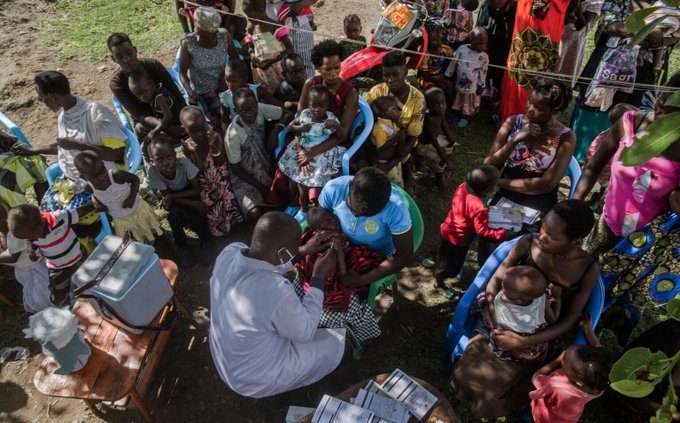
Uganda receives $1.5m from Japan to improve tracking of under-immunized and unimmunized children

Japan gives UNICEF US$1.5 million to improve tracking of under-immunized and unimmunized children. Photo; UNICEF/Tibaweswa

The Government of Japan has provided a US$1.5 million (Shs5,710,860,000) contribution to the United Nations Children’s Agency – UNICEF, to support the Government of Uganda to improve tacking of under-immunized and unimmunized children at community level.

UNICEF will utilize the funds to roll out a digital health information system that will help reach unimmunized and under-immunized children with required vaccines, and those targeted for COVID-19 vaccination; assist health workers to plan for vaccination supplies; and track COVID-19 vaccination.   

A recent “zero-dose” survey conducted in four urban districts revealed that there is still a significant number of children who are either not immunized or under-immunized. Before a child celebrates their 1st birthday, they should have received BCG, Diphtheria-HepB-Hib, Hepatitis B, OPV, IPV, Rotavirus, Yellow Fever, Measles-Rubella, PCV vaccines. 10-year-old girls in school and community are required to receive the HPV vaccine.

The absence of an accurate or near-accurate source of the actual number of children who have defaulted on vaccine doses, complex data collection forms, lack of a simplified way to visualize stock status, defaulters, and children due for immunization in each month, difficulty in ensuring accurate monitoring of vaccine stocks, receipts and deliveries are some of the challenges impacting the way immunization services are delivered.

Once the digital tracking system is implemented, the Ministry of Health and partners will be able to improve the quality of services and coverage to reach the unimmunized and under-immunized wherever they are through outreaches and improved planning.

350 health workers and 60 Ministry of Health and Regional Referral Hospital officials will directly benefit from this innovation while 1.3 million under 5 children in the pilot districts of Kamuli, Kampala, Kamwenge, Lamwo, Mukono, Ntungamo and Wakiso, will benefit indirectly. The intervention will also benefit 10 million under five children at national level and 21 million vaccinated children aged 12-18 years that will be vaccinated against COVID-19. The project targets are to be realized by the end 2024.

“The Government of Japan is pleased to announce a US$1.5 million contribution to UNICEF, to support the Ministry of Health to implement a digitized health information microplanning system that will address challenges experienced in the delivery of immunization services and to achieve Universal Health Coverage (UHC). In addition, at the 8th Tokyo International Conference on African Development (TICAD 8) held in August 2022, Japan pledged to work on countermeasures against COVID-19, promotion of UHC, strengthening of health and medical systems, and building better health security. This cooperation is an embodiment of this pledge”, says H.E. Fukuzawa Hidemoto, the Ambassador of Japan to the Republic of Uganda.

With the financial support from the Japanese Government, UNICEF’s intervention will contribute to the improvement of estimation of “zero-dose” children and better identification of where such children are located at the lower community level within the districts.

UNICEF Representative to Uganda – Munir Safieldin (Phd.), says collecting accurate data in a timely manner will improve the immunization coverage specifically through better estimates as to the quantity and location of the target population at the community level. With this funding from the Government of Japan, the Ugandan government with support from partners will be able to better manage routine and supplementary immunization, COVID-19 vaccination, vitamin A supplementation, deworming and community nutrition screening data for Uganda.”

UNICEF will work closely with the Ministry of Health Uganda National Expanded Programme on Immunization, Health Information Management Division, Community Health Department to implement the project.

Stories Continues after ad

Equity Launches a High-Tech Support Centre

As one of the strategies to further improve customer experience and deliver services to its customers conveniently, Equity bank has launched a high-tech contact centre. The new Contact Centre will allow the Bank to deliver improved support conveniently to the nearly 1.6 million customers 24/7.


Customers will be able to interact with highly trained customer relationship officers using state-of-the-art technology to document, categorise and resolve their issues. The contact center has a capacity to accommodate 70 customer relationship officers and shall handle all customer queries, and complaints in the 5 languages widely spoken across Uganda. The languages are English, Luganda, Runyakitara, Luo, and Swahili which were carefully selected to match the Bank’s branch footprint.

The implementation of the new Contact Centre follows Equity’s strategic objective to become a massive retail bank that is highly digitized. In recent years, the bank has grown its customer base from 800,000 in 2019 to nearly 1.6 million customers currently making it the fastest growing financial institution in the country. The new contact centre fits well into the bank’s digital agenda by providing the capabilities to serve customers conveniently online through voice and social media channels.


“We have grown in leaps and bounds and are now working to revolutionise our customer’s experience by creating a culture of obsession with customer service starting with onboarding through to when our customers interact with us. We are building a culture of superior service to address all customer experience pain points, ensure system accessibility, availability, and stability, through digitized operations,’ said the Managing Director Samuel Kirubi

‘We have built standardized processes and procedures to create synergies that have similar experience for customers and staff, as well as deliver a true Equity brand experience driven by the ONE EQUITY principle,’ Kirubi added

Customers who have previously been affected by the long queues in branches can now reach the bank through the contact centre virtually or via phone call instead of visiting branches.

“At Equity, it is important that exceptional service accompanies our product offering. We have therefore intentionally made significant investments in technology specially designed with the customer in mind. However, technology alone is not enough to meet the needs of our customers.  We have combined it with a team of highly trained professionals who have extensive knowledge and are committed to exceptional service aligned to best practices within the banking industry,” Mr. Kirubi added.

The contact centre shall complement other business transformation initiatives the bank is focusing on, to enhance its digital banking capabilities and product offering.

In addition to handling customer complaints and queries, the new Contact Centre shall also support Equiduuka agents and merchants.

Stories Continues after ad

Best Games Set in Africa

Video games take inspiration from all parts of life. Depending on the genre of the game, developers may borrow from ancient history, modern advancements, or even geographic settings. The combinations are too great to count—and the continent of Africa has a seemingly endless reel of stimulating places, traditions, and lifestyles.

The most recognizable of these are jungle themes and settings. For example, online slots offer players dozens of genres to choose from. Along with mythology and ancient cultures, common themes related to Africa include jungle and savannah backgrounds with animal symbols and audio clips. NetEnt, for example, has a whole series of Silverback-themed slots.

Another common callback to Africa in gaming is ancient history. The continent has been home to some of our world’s most developed cultures, which have influenced life around the globe. Ancient Egyptians made advances in medicine and astrology, while leaders like Mansa Musa in Timbuktu built wealthy empires and fostered centers of culture and knowledge.

These periods and leaders are regularly covered in historical adventure video games, including the Assassin’s Creed series (covered below). Think you know the top video games set in Africa? Check out the list below to see if you’ve got them all.

Assassin’s Creed: Origins

Ancient Egypt

The concept of the Assassin’s Creed franchise is simple: an order of assassins seeks to maintain order and peace while working in the shadows. The series, from Ubisoft, has explored some of the most varied times and places in the world—the Ptolemaic period in Egypt included.

2017’s Assassin’s Creed: Origins sees players become Bayek, who wants to reunite with his family on the Nile after many years apart. Along the way, gamers will be treated to historically accurate depictions of architecture, social organization, and, of course, life and culture in the ancient world.

Uncharted 4

Madagascar

This action-adventure series closely mirrors Assassin’s Creed in terms of taking gamers around the globe. In the fourth installation, players will be taken to the coasts of Madagascar as they hunt down a lost treasure in a place called King’s Bay. Though the sequence in Madagascar is limited, developers went above and beyond to recreate life on the island. Specifically, there are depictions of the many plants and animals unique and indigenous to Madagascar—lemurs included.

X-Men Origins: Wolverine

Angola

If you enjoy retellings of Wolverine, one of the most infamous superhuman X-Men characters, then you’ll enjoy this game. The project covers the life and origins of Wolverine, named Logan. The first scenes in the video game are set in Angola as a series of mutant-led attacks begin to spread panic.

Gamers will first need to navigate the jungle and then into temples in order to stop Stryker, the game’s villain. Coming full circle, gamers who near the end of Origins will see a return to Angola—this time, under Logan’s own terms.

Street Fighter III

Kenya

One of the most famous video game series of all time created an ode to Africa upon its release back in 1997. Japan’s Capcom studio released its Street Fighter III: New Generation with Kenya in mind. The game has only eleven characters, one of whom is Elena, a Kenyan princess who isn’t afraid to throw down in the ring.

Elena uses a fighting style similar to the Brazilian art of capoeira. Her best moves involve the feet and legs, which are even incorporated into striking moves. Elena’s unique techniques and backstory helped her become one of the game’s most beloved players.

Fast & Furious Crossroads

Morocco

As a recent 2020 release, Fast & Furious Crossroads was designed to give both gamers and fans something to talk about. Though the title has since received lukewarm reviews, the character depictions have seen a positive reception, along with the game’s extensive track choices—Morocco included.

Along with locations like New Orleans, USA and Barcelona, Spain, players must also navigate through Moroccan streets if they want to complete their mission. Players can choose a single-player mode or invite their friends to race through locations inspired by Rabat and Fez with them.

Stories Continues after ad

Global progress in reducing extreme poverty grinds to a halt

The world is unlikely to meet the goal of ending extreme poverty by 2030 absent history-defying rates of economic growth over the remainder of this decade, according to a new World Bank study. The study finds that COVID-19 dealt the biggest setback to global poverty-reduction efforts since 1990 and the war in Ukraine threatens to make matters worse.

The Bank’s latest Poverty and Shared Prosperity Report provides the first comprehensive look at the global landscape of poverty in the aftermath of the extraordinary series of shocks to the global economy over the past few years. It estimates that the pandemic pushed about 70 million people into extreme poverty in 2020, the largest one-year increase since global poverty monitoring began in 1990. As a result, an estimated 719 million people subsisted on less than $2.15 a day by the end of 2020.

“Progress in reducing extreme poverty has essentially halted in tandem with subdued global economic growth,” said World Bank Group President David Malpass. “Of concern to our mission is the rise in extreme poverty and decline of shared prosperity brought by inflation, currency depreciations, and broader overlapping crises facing development. It means a grim outlook for billions of people globally. Adjustments of macroeconomic policies are needed to improve the allocation of global capital, foster currency stability, reduce inflation, and restart growth in median income. The alternative is the status quo—slowing global growth, higher interest rates, greater risk aversion, and fragility in many developing countries.”

The report indicates 2020 marked a historic turning point—when the era of global income convergence yielded to divergence. The poorest people bore the steepest costs of the pandemic: income losses averaged 4% for the poorest 40%, double the losses of the wealthiest 20% of the income distribution. Global inequality rose, as a result, for the first time in decades.

Strong fiscal policy measures made a notable difference in reducing COVID-19’s impact on poverty. In fact, the average poverty rate in developing economies would have been 2.4 percentage points higher without a fiscal response. Yet government spending proved far more beneficial to poverty reduction in the wealthiest countries, which generally managed to fully offset COVID-19’s impact on poverty through fiscal policy and other emergency support measures. Developing economies had fewer resources and therefore spent less and achieved less: upper-middle-income economies offset just 50% of the poverty impact, and low- and lower-middle income economies offset barely a quarter of the impact.

“Over the next decade, investing in better health and education will be crucial for developing economies, given the severe learning losses and health-related setbacks they suffered during the pandemic,” said Indermit Gill, the World Bank’s Chief Economist and Senior Vice President for Development Economics. In a time of record debt and depleted fiscal resources, this will not be easy. Governments will need to concentrate their resources on building human capital and maximizing growth.”

The new report is the first to provide current and historical data on the new global extreme-poverty line, which has been adjusted upward to $2.15 a day to reflect the latest 2017 purchasing-power-parity data. Extreme poverty fell dramatically across the world from 1990 through 2019, the latest year for which official data are available. But progress slowed after 2014, and policymakers now confront a tougher environment: Extreme poverty is concentrated in parts of the world where it will be hardest to eradicate—in Sub-Saharan Africa, in conflict-affected areas, and in rural areas.

Sub-Saharan Africa now accounts for 60% of all people in extreme poverty—389 million, more than any other region. The region’s poverty rate is about 35%, the world’s highest. To achieve the 2030 poverty goal, each country in the region would need to achieve per-capita GDP growth of 9% per year for the remainder of this decade. That’s an exceptionally high hurdle for countries whose per-capita GDP growth averaged 1.2 percent in the decade before COVID-19.

National policy reforms can help restart progress in reducing poverty, the report finds. Stepped-up global cooperation will also be necessary. In fiscal policy, governments should act promptly on three fronts:

Avoid broad subsidies, increase targeted cash transfers: Half of all spending on energy subsidies in low- and middle- income economies goes to the richest 20 percent of the population who consume more energy. Cash transfers are a far more effective mechanism for supporting poor and vulnerable groups.

Focus on long-term growth: High-return investments in education, research and development, and infrastructure projects need to be made today. In a time of scarce resources, more efficient spending and improved preparation for the next crisis will be key.

Mobilize domestic revenues without hurting the poor. Property taxes and carbon taxes can help raise revenue without hurting the poorest. So can broadening the base of personal and corporate income taxes. If sales and excise taxes do need to be raised, governments should minimize economic distortions and negative distributional impacts by simultaneously using targeted cash transfers to offset their effects on the most vulnerable households.

Stories Continues after ad