Stanbic Bank
Stanbic Bank
18.5 C
Kampala
Stanbic Bank
Stanbic Bank
Home Blog Page 544

WHO bolsters Ebola disease outbreak response in Uganda

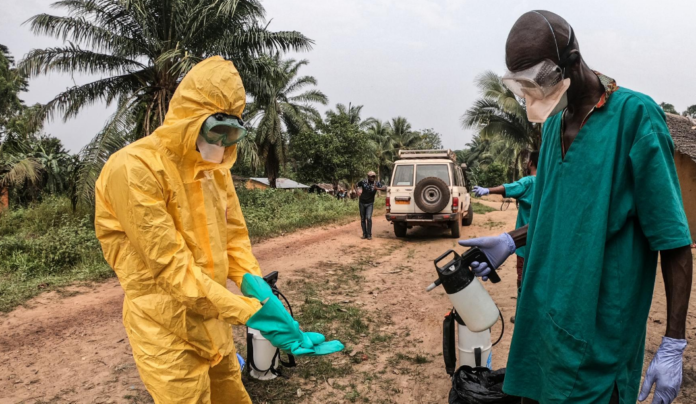
Health partners visiting Ebola-affected areas

In an accelerated effort to scale up response to the Ebola disease outbreak in Uganda, World Health Organization (WHO)has delivered medical supplies, and logistics and deployed staff to support the national authorities in halting the spread of the virus.

So far, seven cases, including one death, have been confirmed to have contracted the Sudan ebolavirus, one of the six species of the Ebolavirus genus. Forty-three contacts have been identified and 10 people suspected to have caught the virus are receiving treatment at the regional referral hospital in Mubende, the district where the disease was confirmed this week, making it the first time Uganda has detected the Sudan ebolavirus since 2012.

Mubende is in the central region of Uganda and is about a two-hour drive from the capital Kampala and sits along a busy road leading to the Democratic Republic of the Congo. There are gold mines in the area, which attract people from different parts of Uganda, as well as other countries. The mobile nature of the population in Mubende increases the risk of the possible spread of the virus.

WHO has deployed a technical team to Mubende district to support surveillance, infection prevention and control and the management of cases. The Organization is also assisting in the activation of surveillance structures in neighbouring districts and is repurposing its country-based staff to bolster the response. In addition, five international experts will be deployed, with numbers increasing if needed.

 “We are acting quickly and decisively to draw the reins on this outbreak. Our experts are already on the ground working with Uganda’s experienced Ebola control teams to reinforce surveillance, diagnosis, treatment and preventive measures,” said Dr Abdou Salam Gueye, Regional Emergency Director with the WHO Regional Office for Africa. “Africa’s stronger homegrown emergency readiness is proving ever more crucial in tackling outbreaks such as Ebola.”

Due to Uganda’s previous outbreaks and the threat of importation of cases from neighbouring Democratic Republic of the Congo which has fought several outbreaks, WHO and the Ministry of Health have collaborated on many preparedness activities, the last such exercise was in August 2022, where nine Ugandan clinicians were trained on how to manage viral haemorrhagic fevers and are now working in the response.

WHO already has six viral haemorrhagic fever kits in Uganda, and one has been delivered to Mubende. While there are no therapeutics that specifically treat Sudan ebolavirus species, early identification of cases and treatment of symptoms greatly increase the chances of survival.

Current evidence shows that ERVEBO vaccine, which is highly effective against the Zaire ebolavirus, doesn’t provide cross-protection against the Sudan ebolavirus.

There are at least six candidate vaccines against Sudan ebolavirus which are in different stages of development. Three of them have Phase1 data (safety and immunogenicity data in humans) and the remaining are in the preclinical evaluation phase. 

The WHO Research and Development Blueprint team is in contact with all developers and is leading a collaborative effort involving international experts to determine which vaccine(s) may be suitable for additional evaluation during this outbreak (and if doses with required standards are available) should more cases be confirmed. A CORE protocol for their evaluation exists and WHO will discuss the proposed next steps with the Ugandan authorities to seek their approval.

WHO held a press conference today led by Dr Patrick Otim, Health Emergency Officer, Acute Events Management Unit, WHO Regional Office for Africa. He was joined by Dr Kyobe Henry Bbosa, Ebola Incident Commander, Ministry of Health of Uganda; Dr Ana Maria Henao-Restrepo, Co-Lead Research and Development Blueprint for epidemics, WHO Health Emergencies Programme; and Dr William A. Fischer II, Director of Emerging Pathogens at Institute for Global Health and Infectious Diseases and Assistant Professor of Medicine in the Division of Pulmonary and Critical Care Medicine, University of North Carolina.

Stories Continues after ad

Parliamentary Vetting Committee clears 28 candidates vying for EALA MP seats

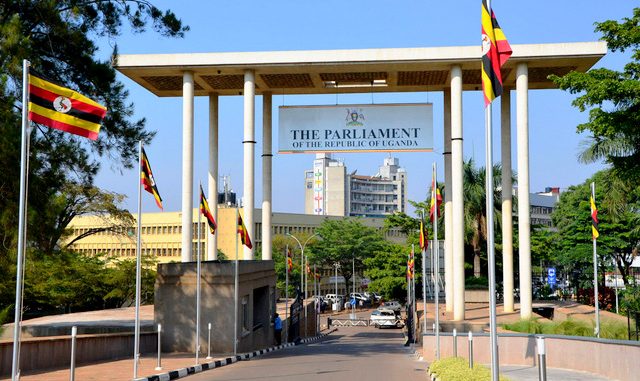
Parliament of Uganda

The Parliamentary Vetting Committee on the East African Legislative Assembly (EALA) has cleared all 28 candidates for campaigns ahead of the elections slated for this month.

Campaigns are slated for Thursday, 29 September 2022, which will be followed by voting on the same day. According to the Rules of Procedure (12) 1, the nine members of the East African Legislative Assembly representing Uganda shall be elected by Parliament. The first term of the six EALA NRM aspirants ends this year on December 17.

On Monday, September 19, 2022, parliament kicked off a two days nominations exercise for candidates vying for EALA parliamentary seats. The clearing of the 28 candidates end speculations of cancellation of close to 18 candidates over academic qualifications and name differences.

The 28 candidates include six from the National Resistance Movement (NRM). They include;  Rose Akol Okullo, Mary Mugyenyi,  Dennis Namara,  James Kakooza, Stephen George Odongo, and Paul Musamali.

The candidates from other political parties are; Harold Kaija from the Forum for Democracy (FDC),  Gerald Siranda from the Democratic Party (DP),  Fred Ebil (Uganda People’s Congress) and  Mohamad Kateregga of Justice Forum (Jeema).

The independent candidates are  Joseph Tindyebwa, Fred Luyinda,  Josephine Lolem, and  Moses Ategeka.

The other independent aspirants nominated on Monday were  Veronica Kadogo, Jacqueline Amongin,  Julius Bukyana, Dennis Kapyata, Daniel Muwonge,  Stella Kiryowa, Phiona Rwandarugali and  Patience Namara Tumwesigye. 

Others are Mr Ambrose Murangira, Mr Allan Muyinda, Mr Ronex Tendo Kisembo, Mr Lauben Bwengye, Mr Gilbert Agaba, and Ms Salaama Nakitende.

Stories Continues after ad

One dead, six injured in Mpigi fatal accident

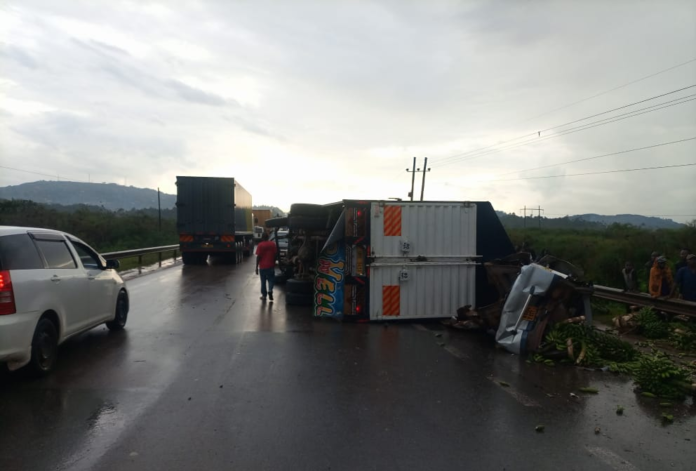
Police at Mpigi has today registered a fatal accident at Kavule swamp along the Kampala-Masaka highway.

The accident involved motor vehicle reg no. UBE 141A (Fuso fighter) that was loaded with matooke and was travelling from Masaka side heading to Kampala.

The vehicle overturned and fell on the lane of Kampala to Masaka, found a toyota Noah reg no. UAZ 401K (blue in colour) which was brushed on the sides of the driver side in the process of sliding.

So far one female adult has been confirmed dead and around six victims rushed to Double Cure hospital for first aid treatment.

Stories Continues after ad

Chief Justice urges Museveni to appoint more Justices to Supreme Court bench

The Chief Justice, Hon. Justice Alfonse Owiny-Dollo

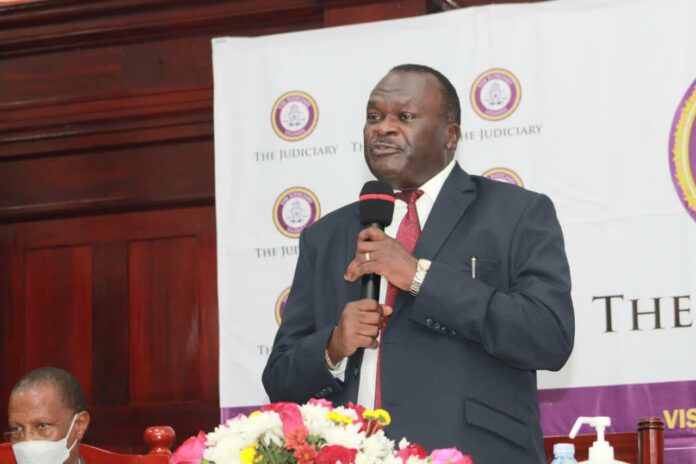
Chief Justice of Uganda, Alfonse Owiny Dollo, has asked President Museveni to appoint more Justices to the Supreme Court bench to help in solving the problem of case backlog.

He made this appeal while speaking at the 5th Benedicto Kiwanuka memorial lecture at the High Court Grounds, Kampala on Wednesday. According to Dollo, the Judiciary is struggling with the problem of case backlog because of limited manpower.

He further said this is still a big challenge for them. It, therefore, explains their plan to recruit at least 10 High Court judges this Financial Year.

Additionally, he said he intends to deploy more judges into the Commercial Court and at the Land Division, where big sums of money and land resources, respectively, are tied up.

He said that if more judges are recruited, the backlog of cases will significantly reduce and it will enhance access to justice services.

“Your Excellency, please allow me to seek your indulgence regarding the Supreme Court. I appeal for the appointment of Justices of the Supreme Court. This is to fill the acute staffing gap and allow us to deal with the case backlog. This has grown at that Court by 16.4 percent to 333 cases out of 686 last Financial Year (2021/2022) up from the previous 286 cases out of 614 cases during the previous F/Y 2020/2021. This growth of case backlog is mainly because the Court is not fully constituted,” Justice Dollo said.

He applauded  the president for the Administration of the Judiciary Act, 2020 through which much has been gained. However, he stressed the much-needed administrative recruitment, promotion, and discipline of our Staff.

Similarly, he commended the president for the support he has given to the Judiciary, both financially, and security-wise.

Meanwhile, yesterday 21st September marked 50 years since Benedicto Kiwanuka, the first Black Chief Justice of Uganda died.

Stories Continues after ad

Museveni gifts new motorcycles to riders at Kingdom Kampala stage

Boda-boda riders

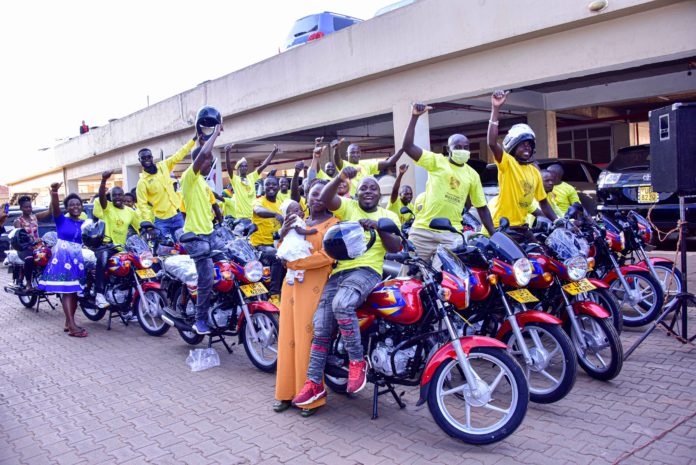
President Museveni has gifted 24 boda-boda riders operating at the Kingdom Kampala stage with brand new motorcycles.

State House comptroller Jane Barekye handed over the motorcycles to the beneficiaries on behalf of the president.

Museveni was fulfilling a pledge he made to the group on the 25th of March 2022, as an incentive to boost the group’s business.

In a message to the riders who attended the function with their wives, he advised them not to sell these motorcycles, avoid drunkenness and focus on working for the betterment of their lives and families.

New motorcycles

Mr. Wasswa Hussein the chairman of Kingdom Kampala Boda Boda stage, applauded the President for this gesture, adding that the motorcycles will enable them to increase their daily income and support their families.

Stories Continues after ad

UNAIDS applauds donors for pledging to fight AIDS, Tuberculosis and Malaria

UNAIDS Executive Director Winnie Byanyima

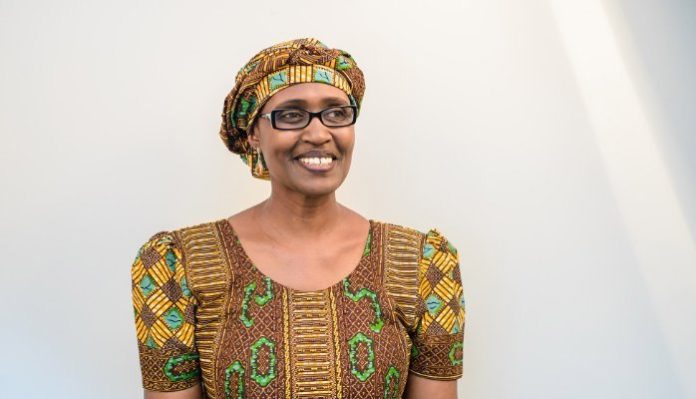
UNAIDS has applauded donors for increasing their contributions to the Global Fund to Fight AIDS, Tuberculosis and Malaria (Global Fund). Donors pledged US$ 14.25 billion (Shs 55trillion) to support efforts to end the three pandemics with more funding set to come. Donors made their pledges at the Global Fund’s Seventh Replenishment Conference hosted by the President of the United States Joe Biden. 

“Leaders from around the world who have committed resources today are life savers. They have made an investment in the future of children, young people and those facing the disproportionate burden of global inequalities, especially young women and girls. They are helping to build resilient health systems and be better prepared to face emerging threats to global security,” said Winnie Byanyima, Executive Director of UNAIDS. 

Countries rose to the challenge of increasing funding by 30 percent, demonstrating their confidence in the strong leadership of the Global Fund and its partners. The United States continued its position as a leader in global health by pledging US$ 6 billion (Shs 231trillion), committing to invest US$1 billion (Shs 3.8trillion) for every US$ 2 billion (Shs 7.7trillion) pledged by the rest of the world. Canada, Germany, Ireland, Japan, Luxembourg, Portugal, Spain and South Africa all increased their funding by 30 percent. A notable contribution came from the Republic of Korea which increased its contribution by 300 percent to US$ 100 million (Shs 385.9 billion). 

Developing countries, many tackling large HIV epidemics also stepped up in support of the Global Fund. Burkina Faso increased its contribution by 100 percent, Uganda and Togo increased by 50 percent, Kenya by 40 percent, and Cote d’Ivoire by more than 30percent. The Central African Republic, Eswatini, Malawi, Nigeria, Tanzania, Rwanda and Zimbabwe all made contributions to the Global Fund despite facing huge fiscal challenges, exacerbated by current global crises.

“I am truly humbled to see so many developing countries, that are themselves facing multiple crises, and yet still made increased pledges to the Global Fund. I commend them,” said Ms Byanyima.

France, the European Commission and the Bill and Melinda Gates Foundation all made important contributions to the Global Fund while Canada made an additional pledge of CAD 100 million for pandemic preparedness and called for increased financial contributions to UNAIDS and other partners working to end AIDS, TB and malaria.

Two major donors are still to pledge, the UK and Italy, both of whom reiterated their support to the Global Fund and indicated they will be pledging in the coming weeks. UNAIDS urges them to match the 30% increase of their peers to get closer to the Global Fund US$ 18 billion (Shs 69.4trillion)  target. 

This replenishment has mobilized the biggest global commitment to the Global Fund to date, in a context where challenging currency fluctuations made significantly increased contributions from European donors less visible when counting pledges in US dollars. 

UNAIDS congratulates Donald Kaberuka, Chair of the Global Fund Board and Peter Sands, Executive Director of the Global Fund. This achievement is a strong endorsement of their leadership of the Global Fund by member states and private donors, and of our collective efforts to fight AIDS, TB and Malaria. 

The HIV pandemic remains a global crisis claiming a life every minute but ending AIDS by 2030 is possible if countries continue to be bold in their financial contributions and work together to tackle inequalities. The actions needed to end AIDS will help protect the health and rights of everyone, strengthen economic development, and leave the world better prepared for future pandemic risks.

UNAIDS will continue to work closely with the Global Fund in a joint effort to end AIDS. Since the creation of the Global Fund in 2002, UNAIDS has supported more than 100 countries in leveraging and implementing Global Fund resources—ensuring the funds are available and reach the people most in need.

Stories Continues after ad

Can One Of The Five African Teams Create World Cup History?

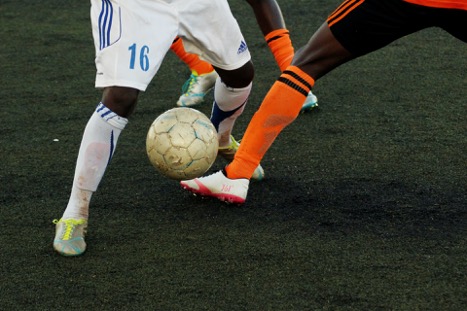
Photo by Jannik Skorna on Unsplash

The hopes of one continent hinges on five nations seeking to make history. Morocco, Senegal, Cameroon, Tunisia and Ghana will represent Africa in the showdown event in Qatar at the end of the year, as the world gears up for the 22nd edition of the FIFA World Cup. 32 teams from across five confederations will go head-to-head in 8 venues across the Arab nation to decide who takes the golden trophy home.

The World Cup has long eluded African teams from taking center stage. The best performances have been executed by three nations – Cameroon (1990), Senegal (2002) and Ghana (2010) – with all three reaching the quarter-final stages, as Bleacher Report mention it in their list of the greatest African teams on the biggest stage of them all.

This year could prove to be a new dawning in terms of African greatness. Let’s take a close look at the five African teams in the mix for the 2022 World Cup –

  • Senegal

Reigning AFCON champions Senegal present Africa’s best chance in the 2022 FIFA World Cup after beating fellow favorites Egypt on their way to securing a place at the finals. With a team full of superstars – from star stopper Kalidou Koulibaly and mazy winger Sadio Mane to shotstopper Edouard Mendy and defender Abdou Diallo. If there’s an African nation capable of staging an upset, Senegal have arguably the strongest chance of them all. However, they will have to better Qatar and Ecuador, if not the Netherlands, in order to secure a place in the Round of 16.

Group A: Qatar, Ecuador, Senegal, Netherlands

  • Tunisia

African minnows Tunisia beat Mali 1-0 over two legs to book their tickets to Qatar, but they will know that the World Cup will be anything but easy, especially considering the group they are in. It’s hard to see Tunisia take points off Denmark and France, even if they manage to oust Australia in the group stages. The Eagles of Carthage look the least likely of all the African teams to carve a path to the Round of 16.

Group D: France, Australia, Tunisia, Denmark

  • Ghana

Just like Senegal, the Black Stars secured their place by bettering fellow African heavyweights Nigeria in the final qualification stage. It is near impossible to forget how they almost went to the semi-finals in 2010, only to cruelly be denied by Luis Suarez’s shenanigans and the eventual penalty shootout misfortune, which the BBC aptly described. Their fourth World Cup appearance could prove fruitful though, but they will need to better some really strong nations on the way, including Cristiano Ronaldo’s Portugal, South American dark horses Uruguay and South Korea led by Heung-min Son.

Group H: Uruguay, South Korea, Ghana, Portugal  

  • Morocco

The Atlas Lions have chances to upset the odds if their players can manage to squeeze the best of their abilities when it matters the most. Stars such as Achraf Hakimi, Nayef Aguerd, and Sofiane Boufal can make a difference. Noussair Mazraoui and Hakim Ziyech will most probably make a return after their falling out with previous coach Vahid Halilhodzic, giving Morocco a good chance to aim for a high finish, especially if they beat Canada and muster a point off Croatia. However, the sudden managerial change might be too hot to handle as the start date nears by.

Group F: Canada, Morocco, Belgium, Croatia

  • Cameroon

Arguably in the toughest of all groups, Cameroon seem likely to struggle to advance past the group stages despite their rich history in the competition. The Indomitable Lions are the most successful African nation in the World Cup, having qualified more than any other from the continent. But their recent downturn of form since the start of the century is a red flag one needs to consider. All three other nations in their group will be out for blood, and Cameroon are bound to be targeted for all three points.

Group G: Brazil, Serbia, Switzerland, Cameroon

African teams may have failed to get beyond the last eight since the initial tournament in Uruguay 1930, but 2022 presents a realistic chance for at least one of them to enter the last four for the first time ever.

According to betting sites such as SBO, Senegal are placed as top favorites to excel among all the five African teams present, with Ghana and Cameroon trailing the AFCON champions closely. Morocco and Tunisia are held in low regard by bookmakers. By referring to sites such as the one mentioned above, a great deal can be learnt regarding how to place one’s hand. Players, whether old or new, can also benefit from a whole range of rewards and bonuses such as free bets, cash backs, accumulator schemes and loyalty points.

Stories Continues after ad

Cheptegei misses out as Police contingent is flagged off for Inter-forces Games

Joshua Cheptegei

A 200 man Police contingent has this Wednesday been flagged off for the 16th edition of the Inter-forces games happening in Kasese.

Police Athletics Club star Joshua Cheptegei was ruled out of the games with a hamstring and calf injury he suffered while representing the country at the recent World Athletics Championships 2022 Oregon in the USA.

Olympic Champion Peruth Chemutai has been included in the team for the Games.

The selected 35-player-team also includes, the 2018 Commonwealth Games Champion Stella Chesang, National Cross-country champion Mercyline Chelangat, Cannes 10K silver medallist Abel Sikowo and reigning junior women champion Patrick Scarlet Chebet.

The team was seen off by the Assistant Inspector General of Police (AIGP) Charles Birungi at Kibuli Training School in Kampala. AIGP Birungi is the Director Welfare, Production and Sports in Uganda Police.

Addressing the travelling contingent, the director urged the sports team to be exemplary, disciplined and focused since they are representing the entire force.

“You are carrying our flag. Don’t go there and misbehave, protect the image of our institution since this is a disciplined force and you are all prepared for the challenge.” AIGP Birungi cautioned the team.

He also appreciated the athletes team that scooped silver in the field tracks that were held in Bombo Military Barracks where Police won 30 medals (10 gold, 8 silver and 12 bronze) to come second.

“We do appreciate the performance displayed so far. The institution is interested in sports and we are looking at how best we can support it for improvement.” He added.

He was flanked by the Assistant Commissioner of Police (ACP) Abu Kalule who is the head of sports and physical fitness in the force. ACP Kalule reiterated that the different disciplines are ready to compete and retain the overall winner’s trophy.

The contingent is headed by Commissioner of Police (CP) Muluya Moses who expressed commitment to spearhead the team in achieving its objective in the competitions.

The 2022 games are seen as a unifying factor that will bring together the armed forces as they socialize, identify, grow and promote talent.

The other competitors at the games are are Uganda Wildlife Authotiy (UWA), Uganda Peoples’ Defence Forces (UPDF), and Uganda Prisons Services (UPS) 

The 16th edition is hosted by Uganda Wildlife Authority and its held at Queen Elizabeth national park.

Stories Continues after ad

#OutToLunch: Let us have coffee over affordable housing

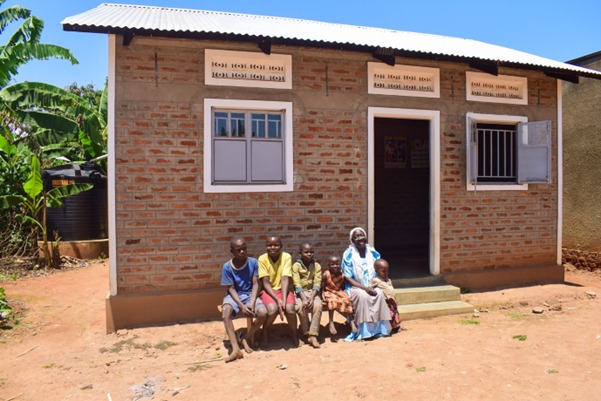
Photo caption: Jesca Magemeso, 58, poses for a family portrait with members of her household in front of their home in Buwaiswa Village, Buwaaya Sub- County, Mayuge District

By Denis Jjuuko

There are skits on social media of a landlady called Nakayiza. She can visit her tenants at any time and if she finds them eating chicken or meat, she wonders how they can be enjoying expensive foods while still renting. She castigates them for being such poor planners who enjoy life’s excesses instead of becoming landlords like herself.

But if the tenant made a mistake of not inviting her to partake in the meal and/or giving her a drumstick and gizzard, they would be in trouble. She would grab the saucepan and go with it telling them to report her to whoever they want and see if they would still live in her houses. She always strikes at meal time. Nakayiza is hilariously brutal to her tenants especially those who may be in arrears.

Nakayiza may be drama and she excels at it but her script writers know exactly what happens in the communities especially informal settlements where the majority of urban dwellers live in Uganda. Like Nakayiza, tenants in real life face such dehumanizing landlords every day.

Yet as Uganda’s population continues to grow, so is the need for decent housing especially in urban areas. Uganda is one of the most urbanizing countries on the continent thereby putting pressure on already strained housing facilities. The country has a deficit of about 2.3 million housing units and growing by about 200,000 annually.

Lack of proper housing leads to diseases and increases household poverty. A person fearing when Nakayiza would strike wouldn’t be able to have a decent meal at home. One time she complained of a family eating avocado yet a necessary food for children’s growth. But also, one wouldn’t be able to concentrate at anything because they spend all their time fearing when Nakayiza would strike.

This calls for more investment in affordable decent housing. By affordable I mean a house the majority of people would be able to own over a long period of time say 10 to 30 years. People would consider that they have a stake in the country and will work hard to ensure they can own the property at one stage in their lifetime thereby leading to economic growth.

I recently came up a report titled “A Ladder Up: The construction sector’s role in creating jobs and rebuilding emerging market economies,” commissioned by Habitat for Humanity and it had some interesting findings. For “every US$1 million in construction output creates an average of 97 jobs across countries ranging from 43 jobs per US$1 million in Mexico to 182 jobs per US$1 million in India,” the report reads.

I believe in Uganda, one US$1m invested in housing could create as many as 500 jobs. From informal workers such as porters and bricklayers to professional workers such as architects and engineers. No need to mention indirect workers at steel factories and the entire value chain and money paid to government for permits and such other things.

According to Habitat for Humanity Uganda, a two-bedroom affordable house in an urban area cost approximately Shs35m or US$9,000 (doesn’t include the cost of land). So, with US$1m, one can be able to build at least 100 houses in an urban area. In a not so urban area, the cost is Shs25m.
These numbers could go further down if the government lowered taxes on construction materials and there were massive projects planned so that they could enjoy economies of scale. Banks could be incentivized to provide affordable financing. Residential construction has a lot of potential.

“Investment in residential construction, in particular, represents a potential win-win for low- to middle-income countries, as it creates quality jobs while filling a massive void in affordable housing,” the report mentioned above further reads.

An investment of just US$1m in a community would change it forever. Once people aren’t worried of returning home during the rainy season when the landlord has removed one of the iron sheets, they would be able to push their other dreams.

As we have seen with Nakayiza and landlords like her, commercial tenants don’t go through the humiliation that residential tenants face. When a commercial tenant defaults, the landlord simply locks up the premises. The tenant’s family isn’t dehumanized. So residential housing for the country’s development is where we should put much more emphasis. It is high time we seriously had coffee on affordable housing.

The writer is a communication and visibility consultant. djjuuko@gmail.com

Stories Continues after ad

NSSF launches construction of Temangalo Housing Estate

National Social Security Fund (NSSF) has launched the construction of the Temangalo Housing estate. Located approximately 17 kilometers from the city center, the Estate consists of 3,500 houses.

The construction of phase one of the estate started in October 2021 and comprises 550 units; 200 bungalows, 100 townhouses, 50 villas, 200 apartments, and infrastructure and amenities like a water treatment plant, green spaces, public playgrounds, and a soccer pitch, among others.

Phase one is scheduled to be completed in June 2024 and 350 out of 550 units are already on the ground. When completed, the cheapest house will go for Shs 90 million.

Speaking at the launch, Richard Byarugaba, the Managing Director of NSSF, “We shall spend Shs 104 billion on phase one. Our underlying objective is to develop mixed-use affordable housing designed to accommodate different income classes. NSSF members will have a rent-to-own option at Temangalo, book and pay ‘rent’ towards your house.”

NSSF team led by the Managing Director Richard Byarugaba.

“We invest in real estate in order to achieve the Fund’s overall investment objective of earning a return for members, we seek to maximize return while minimizing risk, transforming neighborhoods, and creating jobs,” Byarugaba said.

In fulfilling its mandate, the NSSF Board of Directors will ensure that there is secure, profitable, and effective financial management, and 78 per cent of the project’s portfolio is invested in fixed income, 15 percent equities, and seven percent real estate.

The Fund’s investment mandate is vested in the Board of Directors, in consultation with the Minister of Finance Planning and Economic Development. The investment policy seeks to ensure a proper long-term asset mix, diversification, and prudent risk management.

Stories Continues after ad