Stanbic Bank
Stanbic Bank
18.5 C
Kampala
Stanbic Bank
Stanbic Bank
Home Blog Page 546

11-year-old boy in Mpigi commits suicide

crime

Police in Mpigi have registered a disturbing incident of teen suicide of a one Kasule Arafat, an 11-year-old Primary four pupil of Kabira UMEA Primary School, who committed suicide by hanging.

Police spokesperson Fred Enanga said that at about 8am, the victim reported to school, but did not attend classes. He disappeared from the school and a search was conducted, only to find him dead, and the body hanging on a mango tree, at St. Luke Catholic Church, Kyanja, which is located about 250 metres from the school. The body was taken to Gombe Hospital for Post -mortem.

“It is so devastating to the friends, the school and the community for such a young child, to die because of overwhelming hopelessness or frustration. All parents, siblings, classmates, and neighbours were left wondering what could have driven him and how they could have prevented it from happening,” Enanga said.

Most teenagers commit suicide due to the pressure to perform academically, act responsibly and or the pressure to fit in socially among fellow teenagers. Young people with mental health problems – such as anxiety, depression, bipolar disorder, or insomnia – are at a higher risk for suicide thoughts.

“We therefore, urge parents, guardians and local leaders, to watch out for things that increase the risk of suicide among teens. These include; a psychological disorders especially depression, bipolar disorder and alcohol, drug abuse, feelings of distress, irritability or agitation, feelings of hopelessness and worthlessness, that often come with depression, previous suicide attempts, family history of depression or suicide, emotional, physical or sexual abuse, lack of a support network, poor relationships with parents or peers, and feelings of social isolation, struggling with their gender or unsupportive family,” Enanga said.

Enanga reminded parents to know the warning signs, so that teens who might be suicidal, can get the help they need. “Some adults fell that kids who threaten to hurt themselves are just doing it for attention. This can increase the chance of them hurting/harming themselves.”

Stories Continues after ad

EALA ELECTION: 15 seek nomination in crowded race on day one

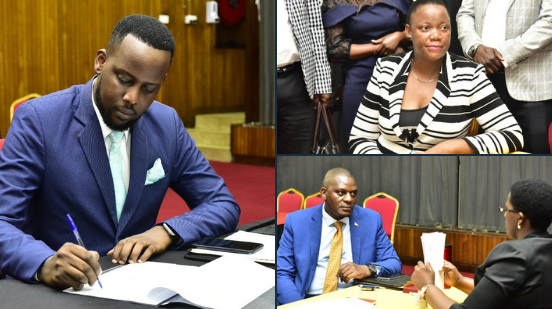
EALA contestants

Fifteen contenders for the East African Legislative Assembly (EALA) representative slots, including former MPs Jacquiline Amongin and Veronica Kadogo, have sought nomination in the crowded race to the regional Parliament.

With nominations ending Tuesday, 20 September 2022, the number is expected to intensely increase, especially because major political parties represented in the House are yet to register their candidates.

So far, the Justice Forum (JEEMA) solely represented in the House by MP Asuman Basalirwa (JEEMA, Bugiri Municipality) has presented the only political party sponsored candidate in the pack of 15, after signing in its Secretary General, Mr Mohamed Kateregga.

The other candidates include Salaama Nakitende, Gilbert Agaba, Ambrose Murangira, Allan Muyima, and journalist Julius Bukyana, Ronex Tendo Kisembo, Lauben Bwengye, Patience Naamara Tumwesigye, Stella Kiryowa, Dr Daniel Kapyata, and Daniel Muwonge.

Thereafter, a committee in line with Rule 12 of the Rules of Procedure of Parliament will vet the contestants for their suitability and qualification, and the Speaker will on Wednesday, 21 September 2022 announce to the House the names of successful candidates, which names will also be gazetted and published in print media in line with Appendix B of the Rules of Procedure.

Campaigns are slated for Thursday, 29 September 2022, which will be followed by voting on the same day.  

Last week, the ruling National Resistance Movement (NRM) party chairperson, President Yoweri Museveni, said the party will be sticking with its current six representatives.

Aspirants are paying a non-refundable nomination fee of Shs3 million.

Stories Continues after ad

Uganda backs Education Plus initiative to prevent HIV infections

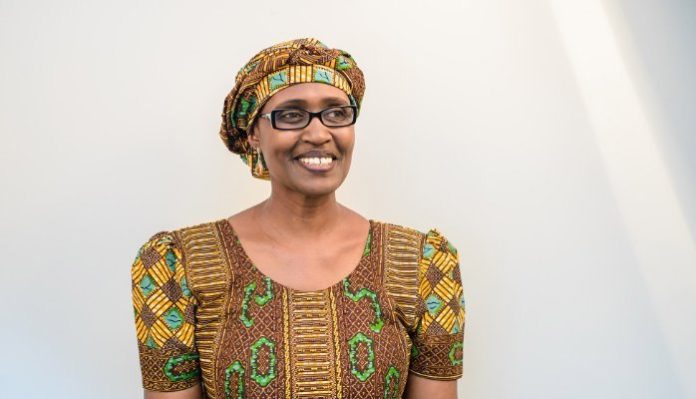
UNAIDS Executive Director, Winnie Byanyima

At least 12 African countries have committed to Education Plus, a bold initiative to prevent HIV infections through free universal, quality secondary education for all girls and boys in Africa, reinforced through comprehensive empowerment programs.

The 12 African Education Plus champion countries are Benin, Cameroon, Eswatini, Gabon, Gambia, Lesotho, Malawi, Senegal, Sierra Leone, South Africa, Uganda, and Zambia.

Speaking on the Leaders Day of the Summit on behalf of the Education Plus movement, the Executive Director of UNAIDS, Winnie Byanyima said, “School saves lives. We are coming together to champion the right for a girl to be in a classroom and in a safe classroom. Keeping girls in school helps ensure their rights and prevents HIV. We know that if a girl completes secondary education, the risk of infection reduces by 50 percent. That’s why we’ve teamed up with UNESCO, UNFPA, UNICEF, and UN Women, with governments and with civil society, to champion the education and empowerment of adolescent girls in Africa to stop new HIV infections.”

Through Education Plus, champion countries across Africa are bringing sectors together to fight inequalities by ensuring access to and completion of secondary school, protecting girls and young women from HIV infection, sexual violence, teenage pregnancies, and early marriages, and creating opportunities for access to education, health, and jobs.

Sierra Leone, an Education Plus champion, has been reforming its education system since 2018, enrolling an additional one million learners in four years. Speaking at the Summit President Julius Madda Bio said, “We have adopted a radical inclusion policy and have achieved gender parity in school enrollment. Girls can now be educated from primary through to university free of tuition fees, and pregnant girls can once again go to school. Education is not a luxury, it is a right. We must rally the international community behind the global initiatives being launched.”

International partners shared their backing for the initiative. Franz Fayot, Minister for Development Cooperation and Humanitarian Affairs, Luxembourg said, “The risks of acquiring HIV and the challenges in accessing services in sub-Saharan Africa are very real and are compounded by stigma and discrimination, as well as legal and financial barriers. Financing to support education systems to deliver gender-transformative education is urgent. It will save lives and have a hugely positive impact on economies.”

Joyce Ouma, a young leader from the Education Plus hub, shared why young women’s movements are backing the initiative: “Some of us are still denied sexual and reproductive health information and services and sexuality education because of our age and this has a devasting impact on our lives. As young women living with HIV, we face discrimination, stigma, and violence perpetrated within school environments and cannot easily seek essential medical care. Transforming education means we face these gloomy statistics head-on. I urge leaders to listen and act on our collective concerns for better systems.”

UNAIDS latest report, In Danger, released in July this year showed that in sub-Saharan Africa 4 900 young women and girls (15-24 years old) acquired HIV every week in 2021. Once a person contracts HIV they require life-long treatment. In 2021 in sub-Saharan Africa, 22 000 adolescent girls and young women died of AIDS-related illnesses.

Fostering investments in access to health, education, and jobs gives results. Girls and their communities and countries reap multiple social and economic benefits from their completion of secondary school. An extra year of secondary school can increase women’s wages by 15-25 percent. Educating adolescent girls and young women in Africa could add US$ 316 billion or 10 percent to GDP in the period 2025 if each country makes advances in gender parity in schooling.

The United Nations Secretary-General recognized girls’ education and empowerment as crucial for development, “Girls’ education is among the most important steps to deliver peace, security, and sustainable development everywhere,” said Antonio Guterres.

Stories Continues after ad

Boda-boda riders to benefit from new Shs200m campaign

Boda-boda riders are set to benefit from a new campaign where they will win over Shs 200 million worth of prizes including 12 brand new motorbikes, fuel, airtime, t-shirts, and reflector jackets.

This campaign dubbed ‘Saawa ya ku yiliba’, will run for a period of 12 weeks at Shell fuel stations and targeted retail outlets across the country. To participate, riders will need to purchase Shell Advance at any participating retail outlet to receive an entry coupon. All entry coupons will be logged into a portal where winners will be drawn weekly. Lucky winners will be notified by SMS on the same mobile numbers indicated on their respective draw entry coupons. Riders that participate weekly have a chance to win lots more.

 “It gives us great pleasure to bring this exciting campaign to our esteemed boda-boda riders, especially with the current economic pressures. Through this campaign, riders that purchase Shell Advance will be entered into a draw for a chance to win exciting prizes every week. We value the boda-boda rider and have taken steps to improve the rider experience at our sites over the years, said Alex Tusingwire, Head of Business Lubricantsat Vivo Energy Uganda.

Adding, “Our rider offer currently includes formulated motorbike engine oil called Shell Advance for boda-bodas. We also offer our boda-boda riders dedicated motorbike fuelling points called Shell Boda Spots at our Shell service stations and motorbike service points called Shell Motorcare Express specifically operated by professional motorbike mechanics. We continue to look for opportunities to add value to these amazing customers.”

“For the next 12 weeks, we will give away one motorbike every week to a lucky winner. In this way, we are contributing to improved livelihoods and sustained household incomes for the boda-boda rider. The motorbikes can be used as a means of private or public transport, thereby stimulating job creation and increased income generation for the community,” said Tusingwire.

 “I encourage boda-boda riders across the country to participate weekly. Anyone could be the lucky brand-new motorbike winner. Riders need to participate every week to increase their chance of winning each week. I also caution all participants to be keen on con men, as all rewards will be issued at select Shell fuel stations only. To our boda-boda customers, get your motorbikes ready, pick up a pack of Shell Advance, and may the best rider win,” said Herbert Egesa, Lubricants Brand Manager, Vivo Energy Uganda.

Shell Advance is specially formulated to deliver better engine cleaning and protection so that riders can enjoy retained horsepower and more fuel savings. Shell Advance has a range of products to suit different bike engine types including Shell Advance AX3 (Advance Red) and Shell Advance AX5 (Advance Yellow) which are suitable for the 4-stroke engine while Shell Advance 2T is for 2-stroke engine oils.

Stories Continues after ad

Uganda, Israel sign defence, security cooperation MoU

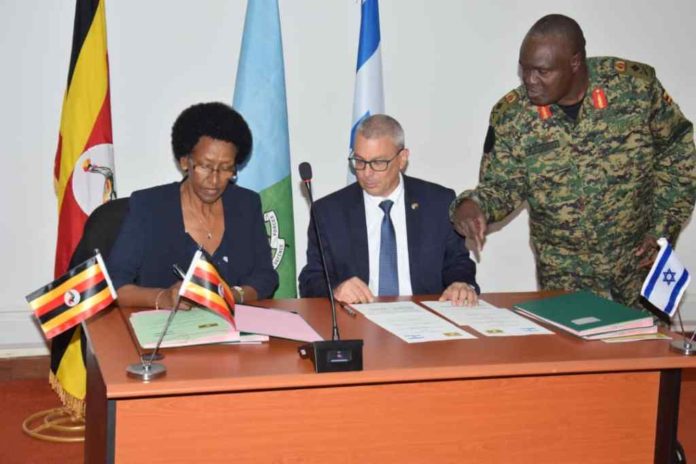
Defence PS Rosette Byengoma signing an MoU on behalf of Uganda with the Israelite delegation

Uganda, through the Ministry of Defence has signed a defense and security Memorandum of Understanding (MoU) with Israel which will facilitate joint cooperation in addressing threats such as terrorism.

The agreement aims at renewing and strengthening the existing historical relationship between the two countries on matters concerning defence, security, and welfare, among areas of cooperation.

The Ministry of Defence and Veteran Affairs Permanent Secretary Mrs. Rosette Byengoma signed on behalf of the Uganda Government while Mr. Asaf Dvir signed for the Israel Defence Forces (IDF).

Mrs. Byengoma, in her remarks, commended the existing relationship between Uganda and Israel.

She thanked the Israel Government for supporting Uganda’s social economic transformation agenda, adding that Israel has played a big role in building Uganda’s air defence capabilities.

“Israel has helped us to strengthen our different branches of the military, more especially in the Air force and Air Defense. Your invariable expertise and support have, to a greater extent, made our air space safer, and for this, we are grateful,” Mrs. Byengoma observed.

She lauded Israel for supporting the Uganda Peoples’ Defence Forces (UPDF) in training, provision of modern equipment and availing opportunities for technological transfer to cope with the emerging global threats like terrorism, cyber-crime, youth bulge and environmental changes, among others.

Mrs. Byengoma further called for loyalty and commitment to the signed legal framework, saying that it will fasten government transactions in many areas of mutual interest. “I believe this product will facilitate smooth engagements between the two parties,” she noted.

The head of delegation SIBAT, Mr. Asaf Dvir thanked the Uganda Government and UPDF Leadership for pacifying the country. “On behalf of the Israel Ministry of Defence (ISMOD), we would like to transfer our appreciation to the leadership for this process and also for the continued relationship in the future,” he said.

He promised to commit to the existing historical relationship on defence and security cooperation. “We are delighted to share our experience and knowledge with our allies on issues that deal with economic development, cultural transformation, defence and security cooperation, among others,” said Mr. Asaf.

The Israel government has always collaborated with UPDF in the field of training, intelligence collection, air space management and border protection, among others.

The meeting was also attended by the Deputy Chief of Defence Forces Lt Gen Peter Elwelu, Deputy Commander Land Forces Maj Gen Sam Okiding, Chief of Military Intelligence (CMI) Maj Gen James Birungi, Chief of Legal Services Maj Gen Kagoro Asingura, Defence Spokesperson Brig Gen Felix Kulaigye, Honorary Consul of State of Israel in Kampala Mrs. Ishta Kutesa Muganga, and Col Eyal Ruso from Israel Defence Forces, among others.

Stories Continues after ad

Uganda declares Ebola outbreak

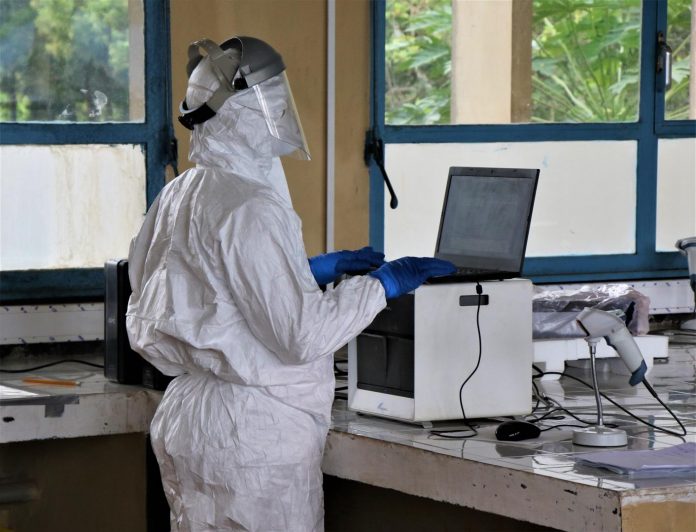
Health authorities in Uganda have declared an outbreak of Ebola after a case of the relatively rare Sudan strain was confirmed in Mubende district in the central part of the country.

The Uganda Virus Research Institute confirmed the case after testing a sample taken from a 24-year-old male. This follows an investigation by the National Rapid Response team of six suspicious deaths that have occurred in the district this month. There are currently eight suspected cases who are receiving care in a health facility.

“This is the first time in more than a decade that Uganda is recording the Ebola Sudan strain. We are working closely with the national health authorities to investigate the source of this outbreak while supporting the efforts to quickly roll out effective control measures,” said Dr. Matshidiso Moeti, World Health Organization (WHO) Regional Director for Africa. “Uganda is no stranger to effective Ebola control. Thanks to its expertise, action has been taken to quickly to detect the virus and we can bank on this knowledge to halt the spread of infections.”

There have been seven previous outbreaks of the Ebola Sudan strain, with four occurring in Uganda and three in Sudan. Uganda last reported an outbreak of Ebola Sudan in 2012. In 2019, the country experienced an outbreak of Ebola Zaire. The virus was imported from the neighboring Democratic Republic of the Congo which was battling a large epidemic in its northeastern region.

WHO is helping Ugandan health authorities with the investigation and is deploying staff to the affected area. The Organization has dispatched supplies to support the care of patients and is sending a tent that will be used to isolate patients.

While ring vaccination of high-risk people with the Ervebo (rVSV-ZEBOV) vaccine has been highly effective in controlling the spread of Ebola in recent outbreaks in the Democratic Republic of the Congo and elsewhere, this vaccine has only been approved to protect against the Zaire strain. Another vaccine produced by Johnson and Johnson may be effective but has yet to be specifically tested against the Sudan strain.

Ebola is a severe, often fatal illness affecting humans and other primates. It has six different strains, three of which (Bundibugyo, Sudan, and Zaire) have previously caused large outbreaks. Case fatality rates of the Sudan strain have varied from 41% to 100% in past outbreaks. Early initiation of supportive treatment has been shown to significantly reduce deaths from Ebola.

Stories Continues after ad

Victoria University, HESFB sign MoU for students loan scheme

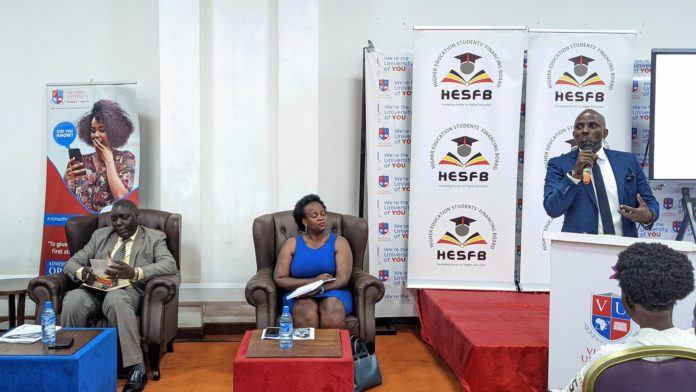
Victoria University has signed a Memorandum of Understanding with Higher Education Students Financing Board (HESFB).

The student loan scheme was launched at the institution on Monday during the orientation of new entrants.

Dr. Lawrence Muganga the University Vice Chancellor expressed sincere gratitude upon HESFB’s interest of taking on their students to benefit from the scheme.

“There are some students who would like to attain their academic dreams through Victoria University but do not have financial beef, this scheme will surely come to their rescue,” said Dr. Muganga.

He added that the University is result oriented and help students attain their dreams. He also informed the congregation that Victoria University is now fully chartered and is now able to extend every service related to upbringing students of high value in academics.

Wanyama Michael, the Executive Director of the Board said that since the Board was instituted in 2014, it has been helping to secure academic financing to students who are not fully capacitated to incur their academic dues.

He revealed that for 8 years now the Board has so far helped over 12,780 students. He allayed fears amongst students and parents that the loan is not attached to collateral securities, saying it only needs a student with qualifications accepted to higher institutions.

HESFB is a body under Education ministry instituted by law to offer Uganda’s students aid to attain their academic dreams through extending to them affordable loans to cover their academic journey.

The body extends loan to only Science students, special cases from Social Sciences and the Disabled.

Stories Continues after ad

Presidents Ruto and Suluhu, Gen Jeje Odong attend Queen’s burial

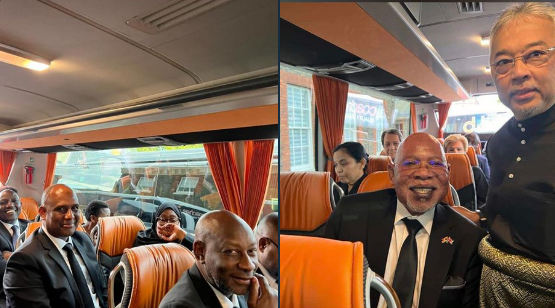
Odong in a bus with the president of Kenya William Ruto, the president of Tanzania Samia Suluhu, and other leaders.

President Museveni has delegated the minister of Foreign Affairs Minister Maj. Gen. Jeje Odong to represent him at the send-off ceremony of the deceased Queen of the United Kingdom Her Majesty Elizabeth II.

Odong was sighted in a bus with the president of Kenya William Ruto, the president of Tanzania Samia Suluhu, and other African leaders as they made their way to Westminster Hall for the State Funeral Service for Britain’s Queen Elizabeth II.

Queen Elizabeth II has been buried in the King George VI Memorial Chapel, together with her husband, Prince Philip, who died in 2021. The queen’s father, King George VI, her mother Elizabeth Angela Marguerite Bowes-Lyon, and sister Princess Margaret are also buried in that chapel.

Elizabeth Alexandra Mary II, Queen of the United Kingdom and the other Commonwealth realms, as well as the oldest living and longest-reigning British monarch, died 8 September 2022 at the age of 96 at Balmoral Castle, Aberdeenshire in Scotland.

She was the Queen of the United Kingdom of Great Britain and Northern Ireland from February 6, 1952, to September 8, 2022. In 2015 she surpassed Victoria who served for 63 years and seven months to become the longest-reigning monarch in British history at 70 years.

Elizabeth was the elder daughter of Prince Albert, duke of York, and his wife, Lady Elizabeth Bowes-Lyon. She was Queen of the United Kingdom and other Commonwealth realms from 6 February 1952.

Following her death, Prince of Wales, Charles III was enthroned as King of the United Kingdom and 14 other Commonwealth realms. He acceded to the throne on 8 September 2022. At the age of 73, is the oldest person to assume the British throne.

Stories Continues after ad

Nomination of candidates for EALA elections kicks off

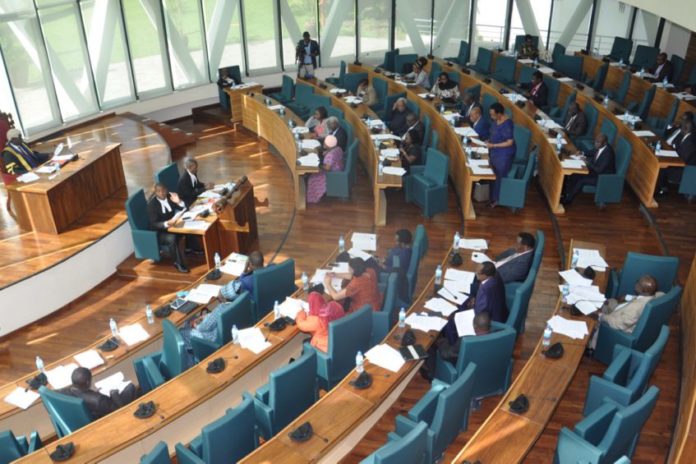
MPs in a sitting at the East African Legislative Assembly

Parliament has declared the nomination for the candidates for the Members of Parliament to the East African Legislative Assembly. The intending candidates shall pick nomination forms from the office of the clerk starting today on Monday, 19th to tomorrow 20th Tuesday, September 2022 by 5:00pm.

During the nomination exercise, the clerk to parliament, Adolf Mwesige said all candidates will be subjected to a verification committee that is set to be formed tomorrow.

“Candidates shall be nominated either under a political party, or as an independent candidate. For a person nominated under a political party, the party must be represented in Parliament. In this case the party’s Secretary General or a person authorized shall endorse the candidate,” Mwesige said.

The clerk added that each candidate or aspirant will be accompanied by not more than ten persons at the nomination venue and no convoys of vehicles are permitted to accompany the candidates at the Parliament building.

The campaigns and voting for all candidates duly verified and approved by Parliament shall be conducted in Parliament on Thursday, 29th September 2022 starting at 10:00 am.

The qualifications for the candidates are; Be a citizen of Uganda, qualify to be elected as an MP, not an MP currently, not a Minister, and should bear proven experience/interest in EAC. They shall also pay a nomination fee of Shs3,000,000.

Parliament has so far nominated four independent candidates and among them are; Jacqueline Amongin, Dr. Dennis Kapyata, Daniel Muwonge, and Stella Kiryowa and Justice Forum (JEEMA’s) Kateregga Mohamed.

Stories Continues after ad

UNAIDS urges donors to fully fund the Global Fund to Fight AIDS, Tuberculosis and Malaria

UNAIDS Executive Director Winnie Byanyima

UNAIDS has called on countries and donors to fully fund the Global Fund to Fight AIDS, Tuberculosis, and Malaria by pledging a total of at least US$ 18 billion (Shs 68.7trillion) at the Seventh Global Fund Replenishment Conference hosted by President Biden in New York this week.  

Speaking at the opening, on behalf of the United Nations family, the Executive Director of UNAIDS Winnie Byanyima said, “Millions of lives are at stake, along with the health of us all. A successful replenishment of the Global Fund to Fight AIDS, Tuberculosis and Malaria is essential to get the world on track to end three of today’s most devasting epidemics and instill resilience into national health systems capable of withstanding tomorrow’s shocks.”

In its July report, In Danger, UNAIDS revealed that the AIDS response is under serious threat from COVID-19 and the economic crisis, compounded by a continued decline in resources. It showed that while HIV infections should be continuing to decline in all countries, one in five of the world’s countries house rising new HIV infections. The rate of new infections globally only fell by 3.6% between 2020—2021, the smallest annual decrease since 2016. 

The report showed that women and girls continue to be disproportionally affected. A new HIV infection occurred every two minutes among young women and girls aged 15—24 years old in 2021. Children are also being left behind currently only around half (52 percent) of HIV-positive children were on life-saving medicines compared to 76 percent)  of adults.

“Now is the time for leaders to invest in their promise to end the AIDS epidemic by 2030 and to give children and young people a fighting chance at life,” said Ms. Byanyima.    

Since the Global Fund was established in 2002, UNAIDS has supported more than 100 countries to attract, implement and leverage Global Fund investments for HIV making sure the money gets to people most in need. However, in recent years international solidarity in the fight against HIV has been weakening. 

In 2021, international resources available for HIV were six percent lower than in 2010. The HIV response in low- and middle-income countries is US$ 8 billion (Shs 30.5trillion) short of the US$ 29 billion (Shs 110trillion)needed by 2025 to get the world on track to end the AIDS pandemic as a global health threat by 2030.

There are encouraging signs. The United States of America has announced that it will pledge US$ 6 billion to the Global Fund Replenishment contingent on the US$ 18 billion (Shs 68.7trillion) target being achieved in full. Other donors such as Germany and Japan have already announced increases of 30 percent in their funding pledges to the Global Fund for programs covering the period 2024—2026. At its sixth replenishment conference, donors pledged US$ 14.02 billion to the Global Fund.

“This will be our most strategic step to get ahead in our fight against current and future pandemics, said Ms. Byanyima. “The Global Fund’s model of responsive, inclusive, and transparent funding will enable our collective success. But only if it is fully funded.”  

Stories Continues after ad