Stanbic Bank
Stanbic Bank
17.1 C
Kampala
Stanbic Bank
Stanbic Bank
Home Blog Page 553

Money Markets were solid during the week trading within 9% to 10% levels

Ugandan currency

The currency continued to trade within a tight range between the 3790 – 3835 range during the week with balanced activity on the supply and demand side, Catherine Kijjagulwe, Head of Trading at Absa Bank Uganda said.

She said the current range-bound trading within the Shs 3780 – Shs 3870 range is likely to hold in the short term until we see significant activity on either side.

Money Markets were liquid during the week with overnight yields trading within the nine percent to 10 percent levels. Bank of Uganda held a Shs 550 billion 5-year and 20-year Treasury Bond auction that was well subscribed and yields cleared at averages of 16.250 percent and 18.5 percent respectively. Bank of Uganda will hold a Shs 285 billion Treasury Bill auction on Wednesday 14th September 2022.

She said the narrative is the same for the Kenya shilling which continues to remain weak against the dollar with continued demand against limited inflows maintaining trading within the 120.00 -127.000 trading range. On Tuesday 13th September, William Ruto will be sworn in as the 5thPresident of the Republic of Kenya and he is determined to focus on unifying the country.

There was continued demand for dollars during Thursday’s trading session supported by lower jobless claims data and, a commitment by the Federal Reserve Bank to raise interest rates, to curb rampant inflation.

The Euro strengthened very briefly on Thursday as the European Central bank raised the benchmark rate by 75bps to 1.25 percent with signals of further hikes soon to tame inflation. The Euro closed the day at $0.9994 (Shs 3804).

The Pound weakened on Thursday after the passing of Britain’s longest-serving Monarchy having initially strengthened momentarily during the day on Prime Minister Liz Truss’ plan of action to cap energy bills for the next 2 years, to cushion the UK economy from the aftermath of the energy crisis. The pound touched lows of $1.1458 (Shs 4362) and ended the session at $1.1500 (Shs 4378).

Crude oil prices dropped on Thursday with the continued decline in global demand due to China’s lockdown and global recession fears as Central Banks continue to aggressively hike their benchmark rates. OPEC  though still in talks to reduce production to mitigate sharp drops in oil prices. Brent crude traded at  $91.48 (Shs 348,286) a barrel, West Texas Intermediate traded at $85.33 (324,871) indicating a seven-month low in oil prices. Gold traded at $1713 (Shs 6.5milion) an ounce.


Stories Continues after ad

Dfcu appoints three new executives

Susan Sharon Kabedha

Dfcu Bank has named three new executives: Susan Sharon Kabedha as Head of Human Capital, Peter Mugenyi as Head of Data Analytics, and Andrew Katende who joins the Bank as Head of Business Technology.

Susan Sharon Kabedha – Head of Human Capital

In this role, Susan will be responsible for the implementation of the Human Capital strategy through driving a high-performance culture, talent management and succession planning, employee engagement, learning and development, employee relations, and employee wellbeing.

Susan joins dfcu from Stanbic bank where she brings a wealth of knowledge from a rich career spanning over 20 years. She worked for over 5 years as a Senior Human Capital Business for Corporate and Investment Banking and prior to that, as a Human Capital Business Partner for Business and Commercial Clients as well as supporting the regions.

She also worked in the insurance industry for over 13 years starting at Minet Uganda and later at CIC insurance group as the Human Resource Manager.

Susan holds a diploma in Business Management, a Bachelor’s degree from Makerere University Kampala, and is an Associate of the CIPD UK. She is also a member of the Human Resource Managers Association of Uganda and the Elevate HR Community.

Peter Mugenyi – Head of Data Analytics

Peter will be responsible for providing execution of enterprise data frameworks consistent with dfcu’s goals and objectives. In addition, he will oversee the development, implementation, and management of financial and data science models to aid in value-mining, identifying new opportunities, and deriving meaningful insights to aid in decision making.

A data science creative and practitioner, Peter brings a wealth of experience in Data Analytics spanning over 7 years from the Financial Services and Pension sectors.

Prior to joining dfcu, Peter worked with NSSF Uganda in the Operations department in several capacities as a Data Scientist, Supervisor of Data Analytics, and Ag. Data Science Manager. He also worked with Stanbic Bank Uganda in the Information Technology department as an I.T Channels Officer and Data Scientist.

He holds a Bachelor of Science in Computer Engineering (1st Class) from Makerere University with notable accreditations including Certified MIT Data Science & Machine Learning practitioner, Certified Data Scientist – the University of the Witwatersrand – SA, Microsoft Professional Data Scientist, SAFe – Scaled Agile Framework Practitioner to mention but a few.

Andrew Katende – Head of Business Technology

In this role, Andrew is responsible for overseeing the Bank’s Information Technology operations and infrastructure and has direct responsibility for developing and establishing IT policies and systems that will support the bank’s business strategies.

Andrew brings to the bank a wealth of experience in information technology spanning over 17 years. He has served at the Senior Management level for over 10 years in the telecommunication industry. He has extensive experience in building and leading teams in a multi-cultural environment as well as delivering on large and complex IT projects. He brings a combination of technical knowledge and managerial experience that will be invaluable as we move forward with the formulation and execution of our business plans and technology strategies.

Most recently, Andrew served as the Head of Operations at Ericsson Uganda looking after Ericsson’s operations in Tanzania, Rwanda, Kenya, Zambia, Madagascar, and Malawi. Prior to that, he was the Head of Operations Assurance at Ericsson Rwanda and Ericsson Tanzania for a period of over eight years. He also worked with Airtel Uganda for several years in various capacities within IT, VAS, and the technical department.

Andrew holds a Bachelor of Science in Computer Science (Honors) from Makerere University and a Postgraduate diploma in computer science from Makerere University.

Stories Continues after ad

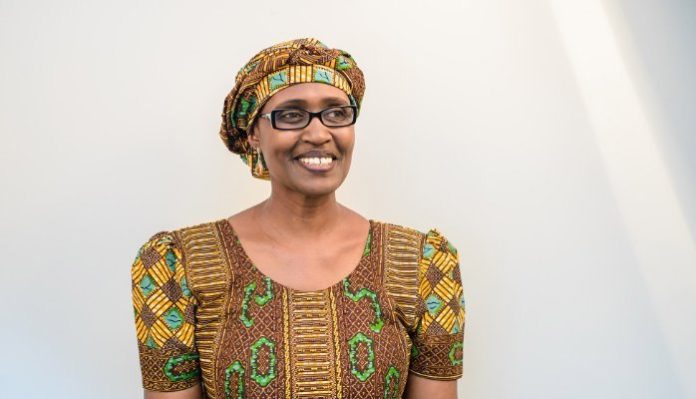
Winnie Byanyima commends Germany’s pledge of Shs4.9 trillion for the seventh Global Fund Replenishment

UNAIDS Executive Director Winnie Byanyima

UNAIDS has welcomed Germany’s pledge of €1.3 billion (Shs4.9 trillion) for the seventh replenishment of the Global Fund to Fight AIDS, Tuberculosis, and Malaria, an increase of 30% on the country’s contribution of €1 billion (Shs 3.8trillio) made in 2019.

The announcement is a significant step toward reaching the goal of raising at least $18 (Shs 69.1trillion) when President Biden hosts the 7th Global Fund Replenishment Conference in New York later this month.

“This announcement demonstrates Germany’s continued leadership in global health, its commitment to multilateralism, and its determination to save millions of lives by ending AIDS, tuberculosis, and malaria by 2030,” said UNAIDS Executive Director, Winnie Byanyima.

 “This is an investment in young people’s health and wellbeing, particularly of young women and girls  and it will strengthen global security by instilling resilience into systems needed to protect all of us from emerging health threats. I look forward to other donors matching Germany’s increase in funding.”

The United States is the Global Fund’s largest donor and has pledged $6 billion (Shs 23trillion) for the organization’s 7th replenishment contingent on the $18 billion (Shs 69.1trillion) target being fully met. Last week, Japan announced that it was increasing its contribution to the Global Fund by 30% to more than $1 billion (Shs 3.8trillio).

The Global Fund Replenishment Conference takes place from 19 to21 September at a time when funding for the HIV response remains under intense pressure. In 2021, international resources available for HIV were 6% lower than in 2010. Overseas development assistance for HIV from bilateral donors other than the United States has fallen by 57% over the last decade. The HIV response in low- and middle-income countries is US$8 billion short of the US$29 billion needed by 2025 to get the world on track to end the AIDS pandemic as a global health threat by 2030.  

To maximize the effectiveness of their investments to the Global Fund, donors are also being urged to fully fund the Joint United Nations Programme on HIV/AIDS. UNAIDS is present in 70 countries worldwide working in partnership with governments, civil society, and communities, collecting the data that shapes the HIV response, advocating for the reversal of harmful laws and policies to create an enabling legal environment, working for an end to HIV-related stigma and discrimination, and challenging the inequalities driving the HIV pandemic among vulnerable and marginalized groups of people. 

UNAIDS’ latest report In Danger shows that recent crises have knocked the global AIDS response off track, with HIV infections on the rise in 38 countries. It shows also that the end of AIDS by 2030 is possible if leaders act boldly together.

The announcement of Germany’s increase was made in Berlin by the Federal Minister for Economic Cooperation and Development, Svenja Schulze, at the Get Back On Track international conference organized by civil society organizations, including Action Against AIDS Germany.

Stories Continues after ad

New cyber law spells out tough penalties for offenders

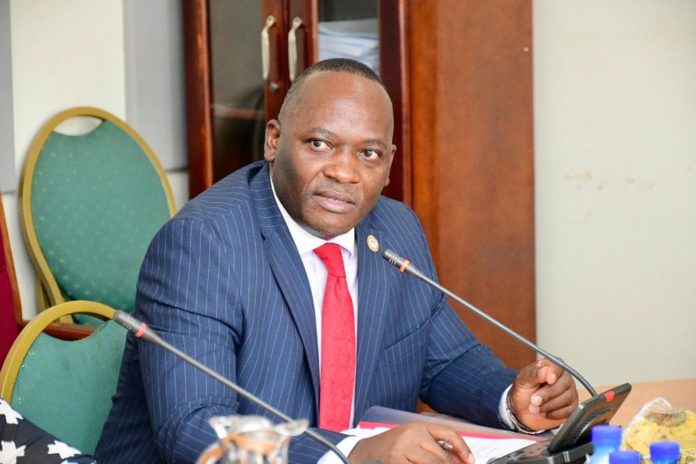
MP Muhammad-Nsereko

Parliament has passed the Computer Misuse (Amendment) Bill, 2022 privately moved by Kampala Central MP Muhammad Nsereko which imposes tough penalties for cyber-crimes.

The Computer Misuse (Amendment) Bill, 2022 sought to amend the Computer Misuse Act, 2011 to enhance the provisions on unauthorised access to information or data; prohibit the sharing of any information relating to a child without authorisation from a parent or guardian; to prohibit the sending or sharing of information that promotes hate speech.

With deletion of clauses that sought to bar convicts under the law from holding public office or running for elections in 10 years, the rest of the clauses unanimously sailed through uncontested, with Mawogola County South MP Gorreth Namugga dissenting.

A new clause in the bill, proposed by the ICT committee chairperson, Moses Magogo, defined social media and created penalties for computer users who take refuge in pseudo accounts.

The clause reads: “A person who uses social media to publish, distribute or share information, prohibited under the laws of Uganda or using disguised or false identity, commits an offence”.

A person who manages an account of an organisation where this happens will be held liable for the commission of the offence, the bill provides.

The clause proceeded to give a diverse definition of social media to mean, “a set of technologies, sites, and practices which are used to share opinions, experiences and perspectives, and includes YouTube, WhatsApp, Facebook, Instagram, Twitter, WeChat, TikTok, Sina Weibo, QQ, Telegram, Snapchat, Kuaishou, Qzone, Reddit, Quora, Skype, Microsoft Team and Linkedin”.

A person who commits the offence under the clause in issue shall, on conviction, suffer either a fine of Shs16 million, five years in jail or both fine and imprisonment.

Social media accounts that are verified will be presumed to be owned by the persons in whose names the accounts are run, unless the contrary is proved.

Also, a person whose telephone numbers and or email addresses have been used in creating social media, will be personally liable for prosecution for offences committed under the act as amended.

Magogo justified the clause as being intended to “provide for the regulation of social media”.

The bill also criminalised and defined unsolicited information, but excused commercial adverts from the categorisation, granting advertisers the liberty to share information with target audiences.

“For the purposes of this section, “unsolicited information” means information transmitted to a person using the internet without the person’s consent, but does not include an unsolicited commercial communication,” partly reads clause 5.

In her minority report, MP Namugga said the bill was unconstitutional and implored the House not to pass it.

“The entire bill should not be left to stand as part of our laws as all the clauses are already catered for in existing legislation and in some instances offends the Constitution of the Republic of Uganda; the fundamental rights to access information electronically and to express oneself over computer networks are utterly risked by this bill,” she said.

She added: “lf passed into law, it will stifle the acquisition of information; the penalties proposed in the bill are overly harsh and disproportionate when compared to similar offences in other legislations; this bill if passed, will be a bad law and liable to constitutional petitions upon assent.”

Kazo County MP Dan Atwijukire processed the bill on behalf of its mover, Muhammad Nsereko.

Stories Continues after ad

Mpuuga calls for overhaul of 1995 Constitution

Former LoP Mpuuga

The Constitution of the Republic of Uganda should be overhauled as it is no longer representative of the aspirations of the people, the Leader of the Opposition in Parliament (LOP) Mathias Mpuuga, has urged.

“A constitution is an outcome of the people’s consensus. At least there was some basic consultation that led to the promulgation of the 1995 Constitution. Is it still the same document? Is it a culmination of the people’s consensus? Why are we running away from that conversation?” the LOP wondered.

Mpuuga made the remarks at the launch of the multiparty youth forum, a platform that brings together youth leaders from the different political parties and civil society groups to build a generational consensus for progress.

The launch was held Protea Hotel in Kololo, an upscale Kampala suburb on Wednesday, 07 September 2022.

“I want to see young people raise their voices to ask potent questions that will herald a durable constitutional order,” Mpuuga said and further encouraged the youth leaders not to shy away from involvement in discourses on the future of Uganda.

Drawing from his experience going through the mentorship programme of the DP, Mpuuga said that parties have to adopt deliberate efforts to nurture future national leaders than keeping youths in a position where they cannot articulate their respective party ideologies.

“Between the 40-year-olds and the 70-year-olds, there is a gap, and that void became too big because of our history; a history of one man takes it all, and therefore, there was no opportunity for political organisations and institutions to organise, build, incubate, mentor and deploy young people,” Mpuuga said.

The forum is a culmination of engagements between the Netherlands Institute for Multiparty Democracy (NIMD) and leaders of the youth leagues of the six major political parties with representation in Parliament namely; National Resistance Movement (NRM), National Unity Platform (NUP), Forum for Democratic Change (FDC), Democratic Party (DP), Uganda People’s Congress (UPC), Justice Forum (JEEMA) and People’s Progressive Party (PPP).

Stories Continues after ad

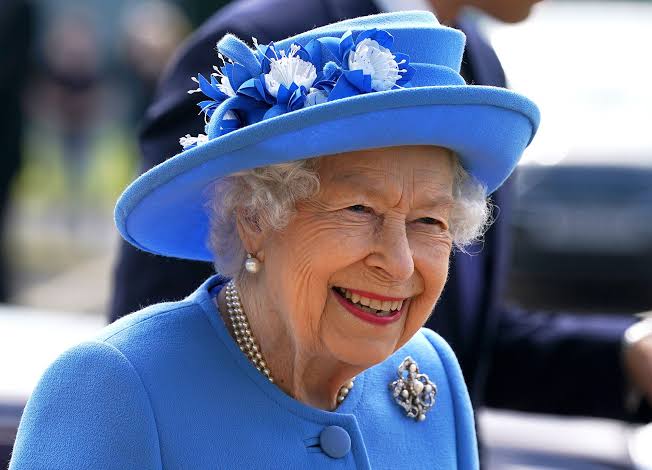
Queen Elizabeth II dies at 96

Queen Elizabeth II, the UK’s longest-serving monarch, has died at Balmoral aged 96, after reigning for 70 years.

Her family gathered at her Scottish estate after concerns grew about her health earlier on Thursday.

The Queen came to the throne in 1952 and witnessed enormous social change.

With her death, her eldest son Charles, the former Prince of Wales, will lead the country in mourning as the new King and head of state for 14 Commonwealth realms.

In a statement, Buckingham Palace said: “The Queen died peacefully at Balmoral this afternoon.

“The King and the Queen Consort will remain at Balmoral this evening and will return to London tomorrow.”

All the Queen’s children travelled to Balmoral, near Aberdeen, after doctors placed the Queen under medical supervision.

Her grandson, Prince William, is also there, with his brother, Prince Harry, on his way.

Queen Elizabeth II’s tenure as head of state spanned post-war austerity, the transition from empire to Commonwealth, the end of the Cold War and the UK’s entry into – and withdrawal from – the European Union.

Her reign spanned 15 prime ministers starting with Winston Churchill, born in 1874, and including Liz Truss, born 101 years later in 1975, and appointed by the Queen earlier this week.

She held weekly audiences with her prime minister throughout her reign.

At Buckingham Palace in London, crowds awaiting updates on the Queen’s condition began crying as they heard of her death.

The Queen was born Elizabeth Alexandra Mary Windsor, in Mayfair, London, on 21 April 1926.

Few could have foreseen she would become monarch but in December 1936 her uncle, Edward VIII, abdicated from the throne to marry the twice-divorced American, Wallis Simpson.

Elizabeth’s father became King George VI and, at age 10, Lilibet, as she was known in the family, became heir to the throne.

Within three years, Britain was at war with Nazi Germany. Elizabeth and her younger sister, Princess Margaret, spent much of wartime at Windsor Castle after their parents rejected suggestions they be evacuated to Canada.

After turning 18, Elizabeth spent five months with the Auxiliary Territorial Service and learned basic motor mechanic and driving skills. “I began to understand the esprit de corps that flourishes in the face of adversity,” she recalled later.

Through the war, she exchanged letters with her third cousin, Philip, Prince of Greece, who was serving in the Royal Navy. Their romance blossomed and couple married at Westminster Abbey on 20 November 1947, with the prince taking the title of Duke of Edinburgh.

She would later describe him as “my strength and stay” through 74 years of marriage, before his death in 2021, aged 99.

Stories Continues after ad

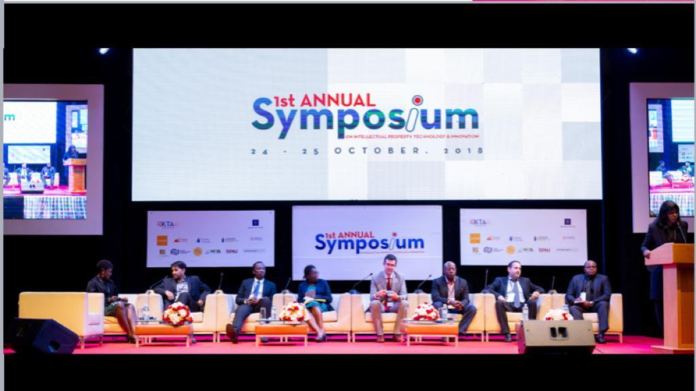
KTA Advocates to hold the fifth Annual Symposium on Law, Technology, and Innovation

KTA Advocates Formerly, Karuhanga Tabaro & Associates is set to hold the fifth Annual Symposium on Law, Technology, and Innovation.

Under the theme; Achieving Uganda’s National Development Plan(NDP) III Goals; How Intellectual Property, Digital Trade, and the fourth industrial revolution can Facilitate an Inclusive and Robust Digital Economy, the symposium is slated to take place on the 20th and the 21st of October 2022 at the National ICT Innovation Hub Nakawa.

The symposium seeks to facilitate a dialogue between policymakers and members of different industries who have an integral role to play in the acceleration of Uganda toward a robust digital economy. Particularly, the symposium shall serve as an avenue through which those empowered to implement the digital transformation program can consult with stakeholders on key issues related to the program.

The two days event shall address the role of the digital transformation program in the EAC regional integration and the opportunities it holds for Uganda’s economy as well as the creation of a regional digital economy.

“It also seeks to give policymakers direction on how best to implement IP into policy and have meaningful results. The desired result is availing policymakers with valuable insight into how IP can be used to realize the objectives of NDP III as well as how policy can support digital trade and technologies to lead to economic growth. Lastly, the symposium aims to sensitize the public about the financial benefits of IP in the Fourth Industrial Revolution (4IR) era,” reads part of the statement

According to a statement released by KTA advocates, the Symposium will consist of panel discussions, plenary sessions, break-out sessions, presentations, and speeches by government officials, civil society organizations academics, trailblazers in the technology industry, business actors, and representatives from industry organizations, research institutions, business associations and development partner organizations all of who play a key role in creating and influencing policy and the economy.

“The plenary sessions will allow different makers and creators, the government, academics, and other relevant sectors to discuss key issues, giving informed opinions on the processes of enhancing innovation for social economic transformation. The break-out sessions will allow for more in-depth and technical analysis of salient issues arising from the thematic focus of the conference,” reads part of the statement

The symposium convener shall host an exhibition for startups and entrepreneurs to showcase and market their innovations and products. Among the exhibition, stalls shall be one set up by KTA Advocates and URSB which shall disseminate information about trademark registration and shall offer clients discounted trademark application services and post-registration trademark maintenance.

The event shall include a pitch competition wherein selected startup entities shall present their business concepts to a panel of judges with the winner taking home a prize. The Symposium shall establish a call center where participants may dial in and contribute / or ask questions.

The symposium shall be a hybrid event hosted physically at the National ICT Innovation Hub Nakawa and virtually on YouTube, Facebook, and other online platforms determined by the convener and the organization committee.

The event will end with a live podcast recording of The Big Conversations by Ordinary People Podcast at the MCI Media Hub Kabalagala which will host experts in IP disseminating knowledge on copyright law in Uganda. This shall be followed by a live show performance by Xpressions UG.

KTA Advocates (Formerly, Karuhanga, Tabaro, and Associates) is a specialized award-winning IFLR recommended and a WTR1000 top-tier law firm that focuses on technology, media, telecommunications, intellectual property, and construction law.

The firm provides real-time legal solutions at each step of its client’s business decisions. Alongside its special commercial expertise, the firm’s team of specialized attorneys provides full legal service across various sectors like corporate governance, project finance, international trade, dispute resolution and arbitration, tax finance, civil and commercial litigation, employment, and real estate and property.

Stories Continues after ad

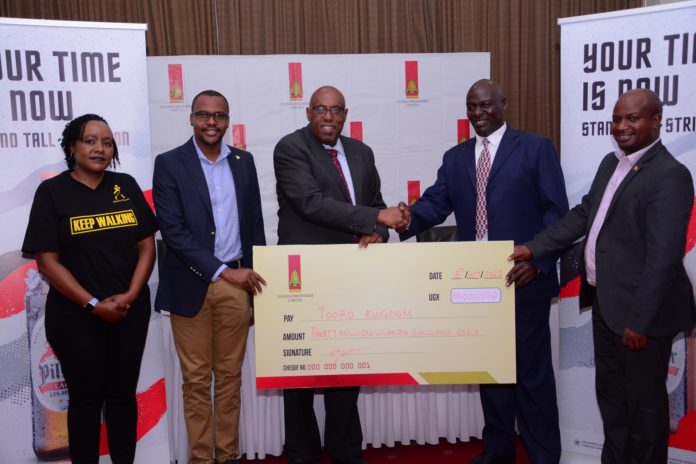
Tooro Kingdom gets Shs30 million for 200th year anniversary

Tooro Kingdom has received Shs 30 Million donation geared towards facilitating the coronation activities to take place on 12th September.

These celebrations are held annually to commemorate the anniversary of the coronation of the Omukama of Tooro, His Majesty King Dr. Oyo Nyimba Kabamba Iguru Rukidi IV.

Speaking at the handover, the Board Chairman of Uganda Breweries Mr. Japheth Katto said that much like Tooro Kingdom, Uganda Breweries, the oldest brewery in Uganda has enjoyed a rich heritage and history due to the passion that Ugandans have for upholding great cultural and heritage institutions.

“200 years of Tooro Kingdom is indeed a showcase of the rich cultural heritage and resilience of the people of Tooro. It shows the people’s zeal in protecting and upholding this great institution and that kind of strength in character resonates with us as Uganda Breweries and with Pilsner Lager, commonly known as the King’s Beer.”

The Shs 30 million from Uganda Breweries Limited through the Pilsner Lager brand was received by Peter Sunday Rusoke, the Minister of Culture of Tooro Kingdom who led a delegation from the kingdom.

“In our 200-year existence, we have relied on the goodwill of first our people and then, stakeholders from outside the kingdom to support us to continue doing the good work that we do in growing our communities through various activities. We are happy that Uganda Breweries has remained a consistent partner, supporting the Tooro Kingdom and in particular our Empango festivities through the years.”

The Brand Manager for Uganda Breweries Edgar Kihumuro said that Pilsner as a brand recognizes the importance of culture and cultural functions in bringing people together something that the brand Pilsner strives to uphold.

“We do this through sponsorship of various cultural festivities like this one, previously the Achooli Cultural Festival, the Bunyoro Coronation Anniversary, and Bamasaba Sports Tournament, to mention a few. “We are a brand that is deeply rooted in the culture and heritage of the Ugandan fabric.”

“Pilsner, aptly known as the Kings Beer, recognizes the important role that culture plays in bringing people together for everyday celebrations, just like our brand. So, our contribution is a way to support Tooro Kingdom as it continues to celebrate its rich history,” Kihumuro said.

Stories Continues after ad

Miss Tourism to be crowned at Serena Hotel

Miss Tourism Uganda is this month scheduled to crown this year’s beauty queen. The Colorful event is scheduled to take place on 23rd September 2022 at Serena Hotel on 23rd September 2022.

This year’s edition is being held under the theme, “Rethinking Tourism”, as the pageant celebrates 10 years of existence.

Over the years, Miss Tourism Uganda has been promoting tourism awareness in Uganda through pageantry and several other initiatives such as conservation, cultural preservation, fashion, Music, and art in partnership with Uganda Wildlife Education Center (UWEC), Uganda Tourism Board (UTB) and the Ministry of Tourism.

Speaking during the launch at the Uganda museum early this year, Allan Kanyike the Chief Executive Officer (CEO) of Miss Tourism Uganda said Miss Tourism Uganda revealed that this year’s edition will showcase the achievements of Miss Tourism Uganda for the last 10 years.

“This time around, it’s not the continuation of the past pageants. It is a new start. We want to give it a new image and life. We want to build trust among the people. We want it to be prestigious and glamorous,” he said.

The search for beauty queens has been conducted in different regions and over the weekend they crowned the finalists of the Buganda region, Northern Region and Kigezi Region ahead of the grand finale at Serena Hotel.

This year’s queen will take over from Susan Kahunde Adyeri, the reigning Miss Tourism Uganda from Toro Region.

Stories Continues after ad

Museveni praises NSSF for Lubowa Housing Project

Museveni

President Museveni this afternoon praised the National Social Security Fund-NSSF for the long term Housing Project called the Solana Lifestyle and Residences (Lubowa Housing Project) worth $400 million.

When completed, the Solana Lifestyle and Residences will be the largest project in East Africa, comprising 2,750 residences, that is apartments, townhouses, bungalows, and villas.

Speaking at the event, Museveni appreciated the NSSF Managing Director, Richard Byarugaba for being a good manager and investing in such a big project that will yield much profits in the near future. 

“I am very happy with this project. This is a good initiative and I want to congratulate NSSF for this big investment,” Museveni said.

However,  he said that Byarugaba is a good manager but a poor strategist.

“Byarugaba, you are a good manager but a poor strategist. I instruct you to visit Minister Kasaija for some lectures,” Museveni said.

He went ahead and encouraged Ugandans to get involved in economic agriculture, manufacturing, entertainment, and income accumulating services like boda boda and driving.

“NRM is struggling so much to get all Ugandans into a money economy. You must create wealth for yourself and your household, stop working for ekida kyonka (working for stomach satisfaction),” he said.

Museveni also appreciated the tremendous work by the late Ivan Kyayonka, the former Board Chairman who ignited the project.

According to NSSF Managing Director, Richard Byarugaba, the project will help solve the problem of housing in the country.

“There are about 13 million people in urban centers in the country. Over 50% of Ugandans by 2050 will be in cities and above 35 million people in total yet housing is an integral part in developing our nation. This project will reshape the future of housing in this country since it will have a multiplier impact,” Byarugaba said.

He noted that in the first phase of the project, 73.3 million dollars has been spent while employing over 1500 people directly and 3200 people indirectly.

“We have invested close to $31 million on construction materials that have been sourced from local industries and have created over 1,500 direct jobs and 3,200 indirect jobs through construction of this project. These numbers will increase as we implement the next eight  phases,” he said.

Byarugaba said the units are to be sold on a rent-payment model where one pays a small percentage of the total cost of the unit and starts living in it as he pays rent and on completion of the money, they officially own.

Stories Continues after ad