Stanbic Bank
Stanbic Bank
18.5 C
Kampala
Stanbic Bank
Stanbic Bank
Home Blog Page 578

Gov’t bows to pressure, calls striking teachers for a dialogue

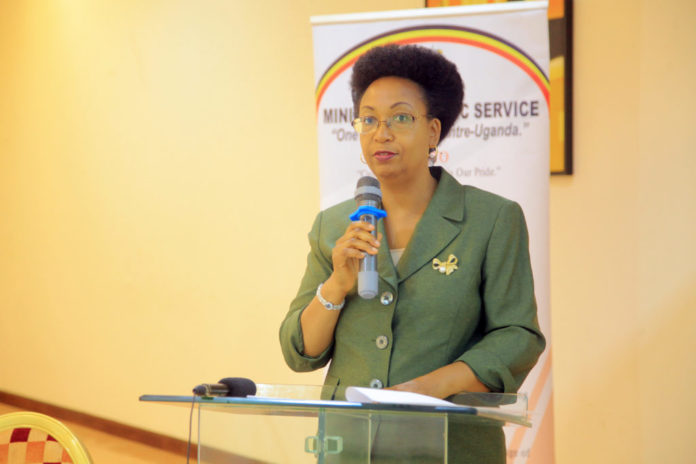
Catherine Musingwire Bitarakwate,the Permanent Secretary Ministry of Public Service

The government has bowed to pressure following a two days ultimatum given to the Arts teachers to return to their work stations.

On June 15, 2022, teachers under Uganda National Teachers Union (UNATU) staged industrial action citing discriminatory salary enhancement and government’s failure to honour collective bargaining agreement signed in 2018.

Next Financial year, the Government allocated Shs735 billion towards enhancement of Science teachers’ salaries. According to the proposed salary scale, a science teacher who holds a degree will earn Shs 4 million from Shs 1.1million. A grade five teacher will earn Shs 3 million from Shs 796,000.

Last week, Mrs. Catherine Bitarakwate Musingwiire, the permanent secretary to the ministry of public service, ordered teachers to resume their duties at their respective work station by 24th July 2022 and any teacher who doesn’t comply with this call will be regarded as having absconded from duty and resigned from public service in accordance with section A-N of the public service Standing orders 2021.

Zadock Tumuhimbise, the chairperson of UNATU has since urged teachers to go on with the strike till the enhancement of their salaries.

“We have received the intimidating letter as expected. Whatever we are doing is within the provisions of the law. We are very safe. Our legal teams are on course to make a response to the letter. Soon our official spokesperson will give us a detailed update. Otherwise; the Industrial Action is still on course. Keep consistent,” he said.

Earlier today, Bitarakwate petitioned the secretary of UNATU Filbert Baguma calling for a meeting over the staged industrial action.

“We invite you and four members of the Union executive for a meeting with the ministry of public service on Friday July 1, 2022,” Bitarakwate said.

Mr. Baguma has since denied receiving any letter from public service.

Stories Continues after ad

Prof. Balunywa to MSMEs: Government is legislating you out of business

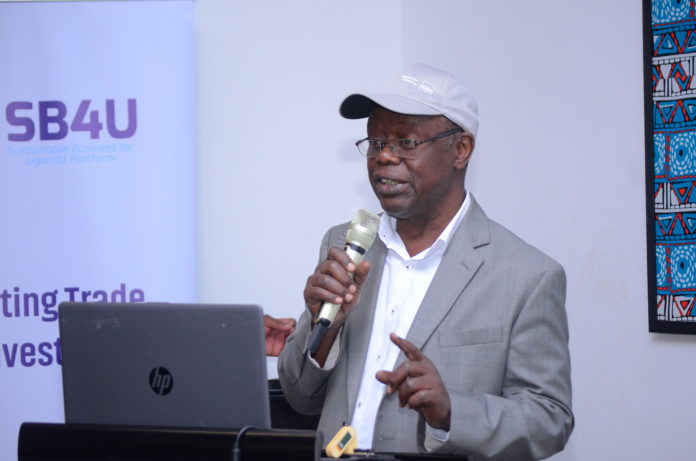
Prof. Wasswa Balunywa - Principal of Makerere University Business School (MUBS)

Many government regulations are hindering the growth of small businesses, according to Prof. Wasswa Balunywa – the Principal of Makerere University Business School (MUBS).

While speaking to SME owners at Onomo Hotel during a forum commemorating WorldMedium, Small and Micro Enterprises (MSMEs) day, which is celebrated every 27thof June, Balunywa said, “There is too much regulation by the government, and businesses don’t seem to be aware. They are legislating you out of business.”

He added that in recent years, Uganda is strengthening regulations, many of which are copied from usually developed countries and adopted here, which in turn hinder business growth.

The forum was organised by the Sustainable Business for Uganda Platform (SB4U) – a partnership between the European Union, Private Sector Foundation Uganda (PSFU) and the Government of Uganda.

While addressing attendees during the dialogue, Caroline Adriaensen, the EU Delegation’s Head of Cooperation, said, “Even though MEMEs are the drivers of the Ugandan economy – constituting over 90% of the private sector and contributing approximately 2.5 million jobs,Ugandan MSMEs often exhibit low levels of productivity, high levels of informality and face incredible challenges to survival and growth.”

The SB4U Platform was created to address three critical hurdles for private sector development, namely: inadequate workforce skills as compared to the needs of the private sector, limited access to finance for the private sector, and endemic corruption linked to economic activities.

Through the platform, the European Union funds the “Skills, Attitude, Governance and Anti-corruption” (SG+) Programmeto reduce the skills gap; tackle access to finance through the EU-Uganda portfolio on Access to Finance and identify key responses to support anti-corruption efforts in collaboration with the public and private sectors.

The forum also featured a panel discussion that had several MSME business owners share their entrepreneurial journeys and was filled with wisdom on how they overcame the challenges they have faced.

Dennis Ngabirano, CEO of Psalms Food Industries Limited who creates the Sumzsnacks advised MSMEs to develop healthy business systems to increase their chances of becoming bankable.

“When we attempted to apply for big financing from Ugandan Development Bank (UDB), the checklist had over 30 requirements. When I did some self-evaluation, I realised that I could fulfil 31 out of the 36 requirements, and these are cultures, systems and lifestyles that have to be adhered to by entrepreneurs because they can push you to another level.”

Stories Continues after ad

KCCA to launch Parish Development Model training center  

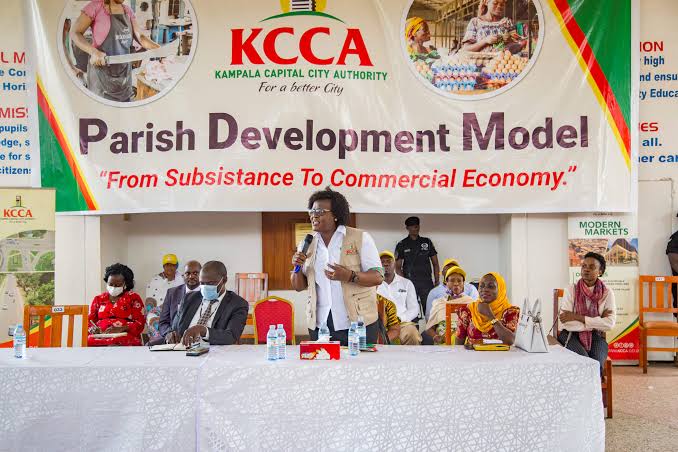
KCCA Executive Director, Dorothy Kisaka during the briefing on KCCA’s readiness

The Kampala Capital City Authority (KCCA) is to establish a Parish Development Model (PDM) ‘school’ in a bid to cause positive mindset change towards the implementation and success of the strategy.

This was revealed by the KCCA Executive Director, Dorothy Kisaka during the ministerial briefing on KCCA’s readiness on the implementation of PDM that was held at Hotel Africana on Monday.

At the ministerial briefing KCCA technical team presented a State of readiness for PDM in Kampala Capital City.

“At KCCA we have envisioned a PDM school for continuous training of our people in Kampala. We will use it to provide enough information to cause a mindset change and bring everyone on board for the success of this strategy,” Kisaka said.

She revealed that without prioritisation of community mobilisation and mindset change, the well thought out idea of PDM may not be attained.

Kisaka noted that PDM is key to the transformation of Kampala into a smart city since it is people centered.

“Under the Smart City initiative our biggest focus is people; the others are technology and infrastructure. To us PDM is an opportunity to advance the Smart City initiative which everyone needs to support,” Kisaka said.

PDM is a multi-sectoral strategy to create socio-economic transformation by moving 39% households out of the subsistence economy into the money economy.

“We continue spreading the gospel of development according to the gospel of PDM. We want everyone on board for the program to move smoothly,” Kisaka said.

KCCA views city dwellers as agents of economic growth and development, not a burden and thus encourages them to participate in the development of the city ‘

“There are 99 parishes in Kampala which will benefit from PDM. That is 99 opportunities for Kampala Smart City,” Kisaka said.

She says citizen involvement and participation in the development process will translate into country ownership.

On Tuesday, the Ministers will start the division visits starting with Central and Lubaga, then Nakawa and Makindye on Wednesday and Kawempe on Thursday.

The grand finale* will be at City Hall on Saturday July 2.

“Our aim is that all our city leaders are well briefed including all political and technical leaders,” Kisaka said.

Denis Galabuzi Ssozi, the National Coordinator for PDM welcomed the KCCA’s idea of having a school and continuous training of stakeholders about PDM.

He also called on Kampala people to be organised in off taking enterprises along the agricultural value chain.

Galabuzi said the PDM is targeting Ugandans along the agriculture value chain.

Those to benefit include those involved in roasting maize, selling chapati, fresh food, frying popcorn or in any related business along the agricultural value chain in Kampala

The state minister for Kampala City and Metropolitan Affairs, Kabuye Kyofatogabye asked city leaders to align their thinking to the realization of PDM.

“You are the people going to fail or make this program succeed. Educate people about this program and let it be a success. Our people have to be saved from poverty,” Kyofatogabye says.

During the event Anisa Nabisere, the KCCA PDM focal person gave a brief on the readiness of KCCA to successfully implement this change maker government strategy for social and economic transformation.

Nabisere said the city is on course to implement the program; a PDM secretariat is already in place, ward administrators were recruited and sensitizations are ongoing.

She also reported that enterprise registration is ongoing, data collection is ongoing and Sacco’s are being registered.

According to Nabisere at least 60% of the households have been with majority from slum areas and are mainly headed by women.

At least 97 Sacco’s have been registered, 1,200 enterprise groups, 42,000 beneficiaries registered.

The Nakawa Division Mayor Paul Mugambe urges that politicians should be equipped with enough information on PDM.

The ministerial briefing was attended by the mayors, RCCs, KCCA directors, Town Clerks, OWC officers, Parish Administrators, and community development officers among others.

Stories Continues after ad

Muni University Vice Chancellor Prof. Christine Dranzoa is dead

Prof. Christine Dranzoa

The Vice Chancellor of Muni University Prof. Christine Dranzoa has passed on. Her death was confirmed by the University Administration.

Prof. Dranzoa died this morning at Mulago National Referral Hospital where she was admitted over unrevealed health complications.

 “We have just received the sad news of the untimely death of our dear Vice Chancellor, Prof. Christine Dranzoa who passed on at 3:30 am this morning. An official communication will be made later in the day,” the University said on twitter.

Prof. Christine Dranzoa has also been the Chairperson Executive Committee Inter University Council for East Africa (IUCEA).

Stories Continues after ad

Professor Denis Byarugaba discusses ‘How to prevent the next Pandemic’

Professor Denis Byarugaba

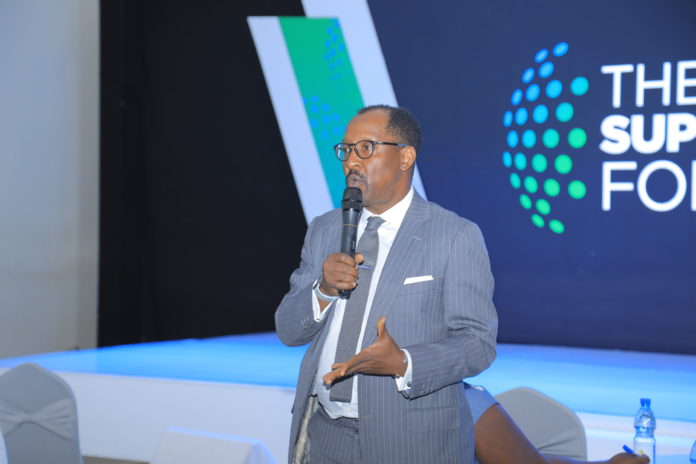
“Prevention of the next pandemic, whether a recurrence of Covid-19 or a new outbreak, will require significant investment from the Finance and Banking sector in order to minimize the negative economic and human effects,” remarked Professor Denis Byarugaba, Makerere University Professor of Microbiology and member of the Governing Council of Uganda National Academy of Sciences, during the ACI Uganda Dealers’ meeting hosted by dfcu Bank at Golden Tulip Hotel in Kampala.

ACI Uganda is a member-driven and policy-focused industry body that represents participants in Uganda’s financial markets. Currently ACI Uganda’s membership is composed of industry participants from the treasury departments of the 24 licensed commercial banks. It is affiliated to ACI Financial Markets Association (ACIFMA) and aims to promote greater cooperation between regulators and financial markets participants, build Professional networks, improve technical skills and knowledge among dealers, protect and improve the reputation of all financial markets participants, and support by giving back to communities through sustainable corporate social responsibility programmes.

Speaking on the topic ‘How to Prevent the Next Pandemic’, Professor Byarugaba noted that“We will need to scale up investment in different aspects of the health care value chain such as human capital to man surveillance centres and manage patients. We also need to invest in the Public Health Care system to ensure the availability of ambulances, supplies, protective equipment, blood, and other important requirements. These investments require partnerships between the public and the private sector and this is how you as financial market players come in.”

Asked how to overcome the hesitancy that surrounds uptake of the virus, Byarugaba noted that vaccines go through a very rigorous process to be approved for human use,even in emergency situations. Healso called upon Ugandans to utilize social media for good instead of discouraging vaccine usage.

dfcu Bank’sHead of Financial Markets, Julius Kateera highlighted some of the effects that Covid-19 has had on the population, such as increased extreme poverty and increased unemployment.

“The International Monetary Fund expects to raise its forecast that the COVID-19 pandemic will cost the global economy $12.5 trillion through 2024. We therefore felt it prudent to organize an engagement to discuss where the health and banking sectors intersect in the efforts to prevent or prepare for the next pandemic,” he said.

“History has shown us that pandemics have been a part of human existence. The only difference is the effect that they have, and the levels of preparation required to be able to survive them,” Kateera concluded.

Stories Continues after ad

NSSF supports local firms to increase their competitiveness

Richard Byarugaba, the NSSF Managing Director

The National Social Security Fund (NSSF) has put in place initiatives to support local firms’ capacity, growth and competitiveness for better business opportunities. The initiatives that are already in practice include, the NSSF Suppliers Forum, access to finance through advance payments for high value works, reserve of services, supplies or works to local firms in accordance with the PPDA guidelines as well as an innovation program dubbed the  Hi-innovator in partnership with Mastercard Foundation where  small and growing businesses receive entrepreneurial skills and funding of up to 30,000 USD.

Richard Byarugaba, the NSSF Managing Director, revealed this strategy at the 6th Annual NSSF Suppliers Forum, held at Mestil Hotel. The forum is a platform for NSSF’s current and prospective suppliers, procurement professionals and the business community to get the latest business opportunities from the Fund as well as best practices in procurement and supply chain management

“Our procurement report for the FY 2021/22 indicates that local firms receive 90% of business from the Fund albeit of low value while only 10 per cent goes to international firms,” Byarugaba said.

The low uptake of high value contracts by local firms was attributed to inadequate finances, low technological adoption, price fluctuations of materials and inadequate skills among others.

He advised local suppliers to develop long term business strategies that go beyond just participating in a tender, skilling workforce especially in emerging technologies and management of complex projects and establishing partnerships.

“In line with our10-year strategy, it is evident that the Fund needs more innovative solutions in growing the business, extending coverage across the country at a low cost and improving member experience. These are areas local firms should take advantage of,” Byarugaba added.

The Fund also unveiled the available business partnership opportunities for the next financial year 2022/23 where local firms could compete. These include opportunities in real estate, information technology systems, office equipment and motor vehicles.

Participants were also exposed to opportunities in the oil and gas sector.

Stories Continues after ad

Police arrest two suspects linked to Mukono supermarket robbery

The Flying Squad Unit and Mukono Police have in custody two suspects, highly linked to the aggravated robbery of Spice Supermarket, located Ku Ssatu, in Namubiru ward, Mukono Central Division in Mukono Municipality on the 25th June 2022.

The two suspects were sighted on the eve of the robbery, while drinking at Cloud 9 bar, near the supermarket. They include Mugalu William, a 24-year-old resident, of Nasuuti cell, Ntawo ward, Mukono Central and Mbogo Sam, a 23 year old, resident of Nasuuti cell, Ntawo ward, Mukono municipality. They were clearly identified by one of the witnesses who clearly saw them escaping from the scene.

Police Spokesperson Fred Enanga said: “We are now working towards the recovery of the gun and identifying other members of the gang, who appear to be an amateur group. Such groups are usually desperate, panicky more high risk and willing to use violence.”

“They shot a bullet through the computer, which injured Ssekandi Irene, through the stomach and exited from the back. We wish her quick recovery. A team of counsellors from CID Headquarters has been dispatched to offer counselling services to the victim.”

“Although attacks on supermarkets have not been so regular, we anticipate more retail crimes on supermarkets, mobile money points, retail shops, markets etc, which continue to be at risk, due to high levels of unemployment among the youth, use of drugs, change in criminal tactics, where robbers attack softer targets with lesser security, such as supermarkets and the opportunity of get-away. Other than guns, knives, machetes, screw drives and other sharp objects are used.”

“As the Joint Security Agencies, we have deployed more manpower both overt and covert in Mukono, to help dismantle the criminal gangs behind retail crimes. We also call upon the public to strengthen their neighbourhood watch programs and also boost security measures like connecting their alarms to police stations and deploying a sufficient number of private security guards.”

Stories Continues after ad

UNBS holds practical training on standards for the food & beverage sector

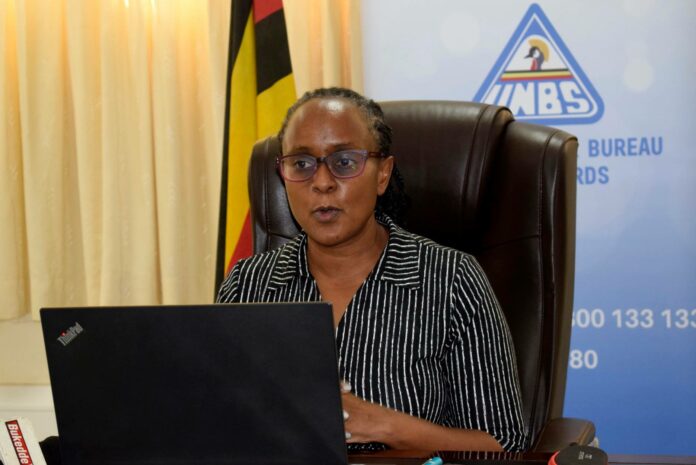
UNBS Deputy ED-Standards, Ms. Patricia Bageine Ejalu

Uganda National Bureau of Standards (UNBS) hosted the first-ever practical training on the implementation of standards.

The training, which was conducted in a factory setting at Negonja Organics Ltd, was focused on the importance of standards in the food sector, its impact on fair trade practice and consumer health protection, harmonization of food standards for import, export as well as domestic production and consumption. The hands-on session was organized to impart practical knowledge and skills by a local manufacturer who has succeeded in exporting the certified products to the US.

Speaking at the inaugural training, the Deputy Executive Director-Standards Ms. Patricia Ejalu reiterated the UNBS commitment to supporting the industry in implementing standards.

“This initiative is designed to develop and deliver specific practical skills to address the requirement for all manufacturers in the food and beverage sector to adhere to standards and there is no better way to learn than from one of your own in the same sector,” she said.

She added that manufacturers had consistently requested for similar trainings to get a better understanding of implementing standards in their processes.

The session took a closer look at the benefits of adhering to standards in the sector, as well as the journey Negonja Organics Ltd took to implement food related standards that require good manufacturing practices (GMP), good hygiene practices (GHP) and food handling processes and the right tools to deliver quality products successfully.

The proprietor of Negonja Organics, Mr. Stephen Barasa noted that standards had made his products relevant to the target market because UNBS has helped ensure that his products are of the highest quality to remain competitive.

“Certification of products is the only way to go if one wants to survive in the market. We could have had the mind-set that we were doing a job but we need the competent authority who is mandated to affirm that the quality we are claiming to produce is actually true,” Mr.Barasa said.

He further urged fellow manufacturers to make UNBS their ally in order to consistently deliver high quality products to their customers.

UNBS continues to provide capacity building for the industry to promote the relevant standards and ensure their implementation in order to boost business. 

Stories Continues after ad
Pesapal Uganda licensed by Bank of Uganda

Pursuant to the National Payments Systems Regulation, 2021, Pesapal Uganda has received a Payment System Operator license from the Bank of Uganda.

Pesapal has been at the forefront of the Digital Payments revolution in Africa for over a decade. By leveraging technology to make financial services affordable, convenient, and secure, Pesapal is empowering tens of thousands of merchants and millions of consumers in markets across Africa to thrive.

According to Pesapal Uganda Country Director Martin Barungi:  “At Pesapal, we give people and businesses better ways to pay and get paid. Now, with the Bank of Uganda’s regulatory greenlight, we will be able to hunker down in our continued effort to change the face of digital financial services in Uganda as a key stakeholder of its financial ecosystem.”

The authorization, he said, gives Pesapal a license to drive cashless transactions and related benefits, including financial inclusion and convenience, by simplifying the processing of payments and expanding how, what type and how fast businesses can get paid and access their funds.

“We are delighted to have received the license from Bank of Uganda as this development sets us on course to revolutionize the digital payment ecosystem with innovative, convenient and secure digital financial services,” Ms. Emmy Rono, Pesapal Uganda Country Manager noted.

“Consumers, in any context – shoppers, tourists, visitors, and businesses can make multi-currency transactions (UGX, USD etc.), from any scheme (Visa, Mastercard, American Express etc.) – either online, in a 3-D Secure environment, or in store, using the Pesapal POS machine, seamlessly.”

Pesapal’s vision is to Empower Africa to access affordable, convenient, and secure digital financial services that drive sustainable growth. We believe this formal foray into the Pearl of Africa, the source of the Nile, is a fitting step towards this future.

Stories Continues after ad

Wakiso Giants appoint John ‘Ayala’ Luyinda as Head Coach

John ‘Ayala’ Luyinda unveiled by Wakiso Giants

Uganda Premier League side Wakiso Giants have announced the appointment of John ‘Ayala’ Luyinda as their new Head Coach.

Luyinda signs a two year contract from next season until June 2024, with the option to extend for a further year.

Sula Kamoga, Chief Executive Officer, said: “The club has taken time to assess John Luyinda and we believe he has the necessary tools and skills that can help them prosper and excel. We continue to commit as we have always done to support him and the technical team in all ways.

“We were impressed with his commitment and vision he has for the club and despite being a young coach, he has garnered enough experience to steer the club to another level in terms of performance.”

John Luyinda said: “It’s a great honour and privilege to be appointed coach of this highly ambitious club and am ready for the huge challenge.

“In our conversation, I found that we share similar vision and the philosophy of the club especially from last season is one that I believe in as a coach and promise to work hard to develop a team that will be successful.”

Luyinda has worked with experienced Ugandan coaches like George Nsimbe, Mike Mutebi, Morley Byekwaso and Abdallah Mubiru in the capacity of assistant coach.

Stories Continues after ad