Stanbic Bank
Stanbic Bank
18.3 C
Kampala
Stanbic Bank
Stanbic Bank
Home Blog Page 605

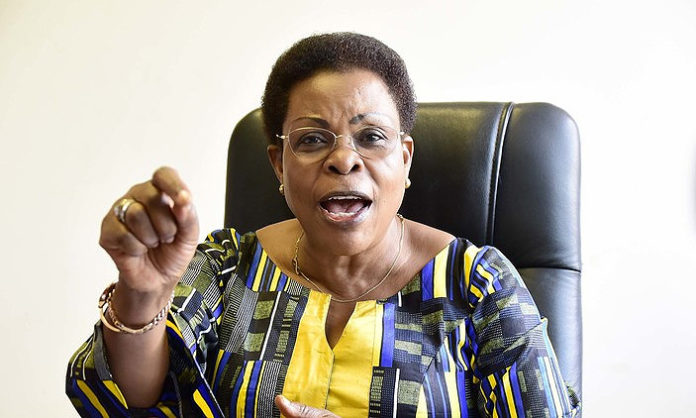
Rev. Rebecca Nyegenye elected Board Chairperson of Church Missionary Society-Africa

Rev Canon Dr Rebecca Nyengeye

The Very Reverend Canon Dr. Rebecca Nyegenye has been elected Chairperson of the Board of Directors of Church Missionary Society-Africa.

The election happened at the Board of Director’s meeting at Biblica Conference Centre in Nairobi, Kenya on 18th May 2022.

Dr. Rebecca is currently the Provost of All Saints Cathedra, Kampala. Before her appointment as the Provost, she served as the Chaplain of Uganda Christian University. She is a holder of PHD in biblical studies.

Rebecca is passionate about Christian Mission with particular emphasis on discipleship. She values prayer and intercession as a driver of mission and is a preacher and teacher of the gospel.

She is married to Dr. Wilson Nyegenye and together they have three adult children in addition to raising many.

Dr. Rebecca succeeds Rev. Canon Dr. John Senyonyi who served as a board member for six years, three of which he was chairman of the Board.

The communication of her election was made by Rev Canon Dr. Moses Bushendich the International Director, CMS-AFRICA to Church of Uganda leaders.

Stories Continues after ad

UBTS seeks law to punish persons selling blood

Sylvia Mulomi, Absa Bank Uganda's People Function Director, donates blood as part of the celebrations to mark two years since the launch of the Absa brand in Uganda

Officials from the Uganda Blood Transfusion Services (UBTS) have called on lawmakers to pass legislation that will nip in the bud the practice of selling blood to patients.

Meeting members on the Public Accounts Committee (PAC – Central Government) on Thursday, 19 May 2022, to respond to the Auditor General’s queries for the year ending June 2021, UBTS revealed that patients are often forced into paying for blood at hospitals due to its urgent need.

“We do not have any legislation in regard to this. If somebody is found selling blood, what would be the legal implication? This is something lawyers are trying to look into,” said Susan Acana, the Quality Manager at UBTS.

She added that UBTS has set up registration documentation in hospitals to ensure accountability for blood received and transfused is done and that blood units sent out to different hospitals are marked with the ‘Not for sale’ notice.

Hon. Asuman Basalirwa, the chairperson, said the sellers of blood are liable for charges of corruption, abuse of office and obtaining money by false pretense.

“The Penal Code, the Anti-Corruption Act, the IGG Act and the Public Health Act among others, have some penal provisions that will catch anyone selling blood. We have not had a test case, perhaps people have been found and released,” said Basalirwa.

Hon. Sarah Opendi (NRM, Tororo District Woman MP) said blood is a consumable within health facilities along with other government property like medicines and supplies, which are not supposed to be for sale.

“There is corruption in government hospitals where they will tell you there is no blood but if you pay, it is made available. There are also private-for-profit hospitals that charge for blood transfusion, yet this blood is gotten from UBTS for free,” Opendi noted.

Micheal Mukundane, the Coordinator for the National Blood Bank said it is difficult to apprehend individuals selling blood in hospitals, because the issue is not reported adequately.

“It has been going on as an allegation and it has become hard to catch these people because they do not issue receipts and it is never indicated on the patient’s bill. All health facilities pick blood at zero cost and should give it out at zero cost,” Mukundane noted.

He said that UBTS carries out publicity to educate Ugandans that blood in health facilities is not for sale, as well as appealing to the public to donate blood.

Opendi tasked UBTS to seek the good will from some media houses to publicise its activities under their social corporate responsibility.

Dr Dorothy Kyeyune, the UBTS Director told the committee that publicity and mobilisation was delegated to the Uganda Red Cross Society, through funding appropriated by Parliament.

Mukundane explained that much as there is budgeting for publicity of UBTS under the Red Cross, it is not sufficient enough to execute the task and make an impact on activities like blood donation.

Basalirwa, however, urged the team to work within the available means to execute their mandate.

“We recognise that along the way, the resource envelope may not be enough but you must maximise the little you have,” he advised.

Stories Continues after ad

Army gets Shs64 billion for operations in DR Congo

UPDF in DR Congo

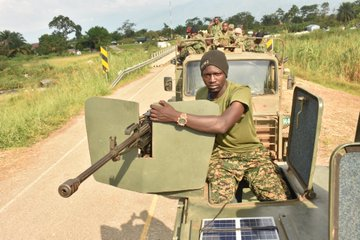
Parliament has approved Shs152 billion to facilitate the Uganda Peoples’ Defence Forces (UPDF) offensive operations in the Democratic Republic of Congo (DRC) and Karamoja sub region.

Shs64.5 billion of the approved Shs152 billion, will facilitate UPDF to flush out the Allied Democratic Forces (ADF) militants in DRC in the ongoing joint operation with the country’s armed forces (FARDC) codenamed “Operation Shujaa” while Shs87.5 billion will be spent to pacify Karamoja sub region in a disarmament exercise, code named “Usalama Kwa Wote” loosely translated to mean “Peace for All.”

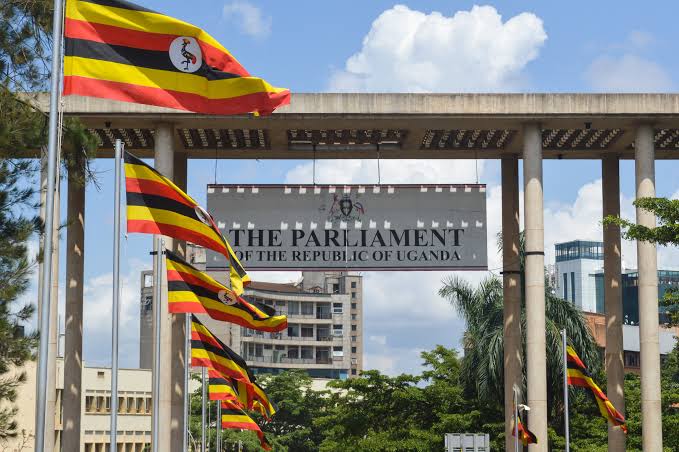
This is part of the Shs617.9billion Supplementary Schedule No.2 for Financial Year 2021/2022 that Parliament approved during the plenary sitting on Thursday, 19 May 2022.

The Minister of State for Finance (General Duties), Hon. Henry Musasizi, said that supplementary expenditure which is coming barely a month to the new financial year has been warranted by expenditure pressures from 10 Votes to cater for salary shortfalls, emerging security concerns and other critical activities. He assured the House of the guaranteed source of funding.

“This supplementary will be funded into two categories; Shs510.3 billion will be financed by additional [domestic] borrowing, while Shs107.6 billion will be funded by additional local revenue and external financing,” Musasizi said.  

Part of the approved supplementary expenditure (Shs77billion) has been allocated to State House for classified expenditures, while Shs86.3 billion has been allocated to the Office of the President to cater for external financing from EXIM Bank for the National Science, Technology, Engineering and Innovation Skills Enhance Project.

Shs25 billion has been allocated to Ministry of Works and Transport to facilitate works on security roads in Karamoja region, while Shs251.7 billion will go to meet wage shortfalls under various Central and Local Government Votes.

Among other expenditures include; Shs2.5billion for Ministry of Gender, Labour and Social Development to facilitate election of the Office bearers for the Uganda Muslim Supreme Council, Shs1 billion for Fort Portal Catholic Diocese and Shs600 million for Greater Ankole Diocese to facilitate preparations for the Uganda Martyrs Day celebrations 2022.

Prior to passing the supplementary budget, Members of Parliament questioned some of the expenditures as unnecessary, non-critical and result from government’s poor planning. This is in relation to Shs251.7 billion to pay salaries in Local Government.

“Salaries are a statutory deduction; I do not understand how government can budget for salaries and we still get a shortfall. This is one area that has been abused by government,” Budadiri West County MP, Hon. Nathan Nandala-Mafabi, said.

Minister Musasizi said the wage shortfalls resulted from unforeseen recruitments from the Executive.

“We passed the current budget on 31 May 2021 and it became operational in July. However, on 8th of June 2021, the President appointed ministers and among the ministers he appointed some were ex officio members. He also appointed presidential advisors, RDCS and made promotions in the army among others. All these were not envisaged in the current budget,” Musasizi said.

Stories Continues after ad

IGG Beti Kamya rushed to hospital after sudden heart attack before COSASE meeting

IGG Beti Kamya

Information reaching Eagle Online desk indicates that the Inspector General of Government (IGG) Beti Kamya has been reportedly hospitalized after suffering a sudden heart attack before appearing to COSASE meeting

Kamya reportedly collapsed after a sudden sharp pain to her heart and was rushed to a yet to be identified hospital in Kampala by her daughter.

According to our source, Kamya was slated to appear before the Committee on Commissions, Statutory Authority and State Enterprises (COSASE) over controversial land disputes during her reign as Minister of Lands.

COSASE chairperson Joel Ssenyonyi says he received the information of her health condition from Kamya’s daughter.

Kamya is on the spot for using her position to wrongly allocate land to investors at Nakawa-Naguru estate, in Nakawa Division, Kampala.

She was recently grilled by COSASE on how Anil Damani, Seven Hills and Internal Medicines Virginia were allocated land at the Nakawa-Naguru estate.

Kamya is said to have written a letter on May 6, 2020 to the Uganda Land Commission(ULC) while still Minister of Lands demanding allocation of 15 acres of land to Internal Medicine Virginia to construct a research hospital facility .

Kamya responded saying the letter was for emphasis to support an applicant to do what the President had directed.

“Allocation [of land] to Virginia took too long. The presidential directive allocating this land I think goes beyond when I was Minister for Kampala. I found it there but these people [investors] had been moving up and down until the Cabinet made a definite decision,” she told the committee in April .

Stories Continues after ad

Committee Report: MPs call for reduction of Excise Duty on opaque beer

Parliament

The Committee on Finance, Planning and Economic Development has released a report on Excise Duty (Amendment) Bill, 2022 after it was referred for scrutiny in March 2022.

The Bill was released on Wednesday aiming at amending the Excise Duty Act, 2014, to provide for the definition of fruit juice, un-denatured spirits and vegetable juice. In terms of opaque beer, fermented beverages and plastics, the bill seeks to provide for an incentive regime for citizen and foreign investors whose investment capital is USD 5 million and USD 35 million respectively.

Stability of the Excise Tax Regime

The committee observed that there is a need to enable proper planning and implementation of investment plans by enterprises through a predictable and stable tax regime. Any new tax measure should therefore be thoroughly scrutinized to assess its impact on macro-economic stability and competitiveness of the sector in line with National Development Plan three and the policy of export promotion and import substitution.

The Mps however recommended that the Government develops an Excise Duty regime spanning for two to three years to facilitate proper planning.

The Excise Duty on opaque beer

The Committee observed that there is need to reduce excise duty on opaque beer from 20 per cent or Shs 230 per litre to 12 per cent or Shs 150 per litre.

“The Excise Duty Act 2020 excluded alcoholic Kombucha drinks among items paying a 12 per cent or Shs 150 tax regime. As with opaque beer, kombucha drinks are locally sourced and manufactured. It therefore serves the segment of the population that would in the alternative resort to illicit trade, or untaxed and non-taxable products such as local brew, tonto, ajono, mulamba, malwa, and kwete,” MPs observed.

“Kombucha is an applied term to mean fermented sugary tea solution with a combination of yeast and bacteria,” manufacturers told the MPs.

 MPs were further informed that the kombucha product contains two categories; Alcoholic kombucha and non-alcoholic kombucha. The Committee learnt that both alcoholic and non-alcoholic kombuchas undergo fermentation processes, although they differ on the number of days spent in fermentation.

“The Excise Duty (Amendment) Bill, 2022 is amended to include non-alcoholic kombucha under the category of products in a reduced tax regime of 12 per cent or Shs 150 whichever is higher. However, due to the high fermentable nature of kombucha, only 2 per cent of kombucha products remain non-alcoholic as they would require long-term costs of refrigeration to maintain them in a non-alcoholic state,” the Committee stated.

The Committee therefore recommended that there be reduction of the Excise Duty on opaque beer to 10 per cent or Shs 100 per litre whichever is higher.

The Committee further recommended that the Excise Duty on alcoholic Kombucha drinks be reduced to 12 per cent or Shs 150 tax regime. Whilst this will encourage more manufactures of the alcoholic kombucha to become tax compliant and join the formal sector thereby expanding the tax base.

Digital Tax Stamps

The Committee further noted that Digital Tax Stamps (DTS) increases the costs of exports as companies are forced to change branding designs just to incorporate the DTS, especially for export products.

The MPs noted that on average, tax accounts for between 45 per cent and 55 per cent of the price of a final product. The Committee further noted that in particular, the Excise Duty regime is reviewed on an annual basis and yet investment is planned for a period of 3-5 years.

The committee recommended that Digital Tax Stamp (DTS) payments be restructured to consider the increased Excise Duty collections, to ensure the government and country benefits commensurately from this solution. More so DTS be applied only to tax-payers who have proven to be continuously under-declaring the right excise duty payable.

The Committee further observed the need to promote local content through the development of a separate tier/threshold for new innovative products which utilize local raw materials, mainly in the agriculture industry. This should consider products at the introduction stage to enable them to benefit from the sunk costs (research) since targeting them for tax discourages innovations and reduces the expected revenue development through the value chain – especially supply chains. 

The Committee recommended that a separate excise duty threshold be developed for innovative products that promote the utilization of local raw materials, mainly in the agriculture industry.

 Definition of fruit juice

The Committee observed that “fruit juice” has been redefined in the Bill to mean unfermented liquid extracted from the edible part of a fresh fruit whether the extracted liquid is diluted or not.

The Committee was informed that the proposed re-definition of fruit juice goes against the conventional definition of juice, as provided for in the UNBS Standards that are aligned with international definitions and classifications of juice

“Re-defining juice in the manner proposed in the Amendments will bring raw materials (juice pulp and puree) under Excise Duty levies and also lead to double taxation because fruit puree and pulp will attract Excise Duty as will the final products they are used to manufacture; the juice itself,” Committee justified.

Furthermore, instating excise duty on pulp will mean that the cost will be extended to farmers in form of reduction in prices. The rationale is to exclude puree for industrial use, but maintain the tax on ready-to-drink juice, whether diluted or not, and to avoid double duty on both the puree and the final fruit juice

The Committee however recommended that the bill be amended to define “fruit juice” as, “unfermented liquid extracted from the edible part of a fresh fruit whether the extracted liquid is diluted or not but does not include fruit Duree for industrial use that is not ready for final consumption.” This redefinition will ensure that there is no double taxation of both the fruit pulp- raw material and the fruit juice itself.

Excise Duty on Plastics

The Committee also observed that the Excise Duty Amendment Bill 2022 seeks to increase Excise Duty on bags of polymers of ethylene and other plastics to 40 per cent or 4000, whichever is higher. This amendment is meant to ensure that all plastic product manufacturers and importers would directly contribute to the government to ensure a clean and healthy environment and ensure the 3 R’s that is, Reduce, Reuse and Recycle, which are international practices for plastic products. This tax has been able to contribute about Shs 60bn towards the government consolidated fund.

The Committee was informed by Uganda Plastic Manufacturers and Recyclers Association that although the above was reached by negotiation, it has still proved too high and led to the closure of some of their member factories. The Committee therefore revealed that from the above, that the high Excise Duty on plastics is not justified and recommended that the act be deleted.

Stories Continues after ad

Nile Breweries to maintain beer prices amidst the rising prices of commodities

Onapito Ekomoloit, Nile Breweries Legal and Corporate Affairs Director.

Nile Breweries has officially announced that they shall maintain the prices of their beer, despite the negative economic pressures faced by businesses across the board. And this is deliberate to enable consumers to continue to enjoy their favorite beers as they cope with the economic hardships.

 “We understand that prices of most commodities, including the raw materials we use to make beer, have increased across the country. However, we also understand that Ugandans are still trying to recover from the upheaval that was the Covid-19 lockdown,” said Onapito Ekomoloit, Nile Breweries Legal and Corporate Affairs Director.

The company explained that since the economic hardships have hit everybody, increasing the prices for their products would be foolhardy.

“We want to stand with all Ugandans during these hard times and get through them together where we can. That is why we are maintaining our current beer prices despite market pressures and the increasing cost of production.”

The company however noted that the decision for maintaining the beer prices is not a guarantee that change in pricing will never happen.

Nile Breweries said the prevailing situation will always determine what they do.

“In the immediate future our mission is to offer the best products to our consumers. We have been with them for years, we understand issues that affect them, and we want to move at their pace as they go through these hardships,” Onpito noted.

The company warned sellers against hiking prices for their products, adding that the recommended retail prices have since been circulated on their social media platforms for the members of the public .

“We need all our sellers to respect the recommended retail prices and if you find anyone selling our beers at a higher than recommended prices or claiming that we have increased our prices, please inform us and we shall follow up,”  said Molly Horn, the NBL Trade Marketing Manager .

The development comes a few weeks after the company’s direct competitors; Uganda Breweries announced an increase in their beer prices to match with the soaring inflation in the country.

Stories Continues after ad

Makerere Scholar detained in Opondo’s Office for ‘attacking’ Minister Kasaija

Prof. Nuwagaba

Vincent Nuwagaba, a Makerere University scholar is renowned for being ruthless and intolerant towards mediocrity which he accuses Finance Minister Matia Kasaija of perpetuating in Uganda. Nuwagaba’s chance to make his case came on Tuesday when Kasaija went to the Media Center to address reporters and government officials about the activities of the budget month leading up to the budget reading day.

Having been let into the Uganda Media Centre premises by the relaxed security operatives who thought he was one of the journalists coming to cover the media event, the ruthless Vincent Nuwagaba (renowned for his militancy and eloquence) walked straight to the raised platform where the ill-fated Kasaija was speaking from and attempted to wrestle him on the ground.

A terrified Kasaija raised an alarm calling for help from his bodyguards, Ofwono Opondo and other government and URA officials present. A nervous-looking Kasaija vigorously screamed as Nuwagaba vigorously moved to hit his head using the microphone he had already grabbed from its stand. The 40-year-old Nuwagaba told Kasaija that Ugandans weren’t ready to tolerate him anymore, reading to them a helpless budget because he himself is a fake Minister ever telling lies to citizens.

“What sort of budget are you talking about? You are nobody and I’m a Professor,” Nuwagaba barked.

 Kasaija, while looking at his host Opondo as if to ask come to my rescue, implored Nuwagaba to sit down, something the randy scholar from Mitooma’s Kigarama Parish Kamabere village shouted it was now or never.

“I have been looking for this opportunity to attack and humiliate you (Kasaija) publicly for such a long time and today God has answered my prayers,” Nuwagaba said.

 Nuwagaba told Kasaija he can’t be or act civilly the way the Minister was demanding because civility can clearly not work anymore in Museveni’s Uganda. Nuwagaba told Kasaija he can’t comply with his orders to sit down because “by the way I’m superior to you Minister in everything.”

A nervous Kasaija, not used to meeting such tired and fearless Ugandans, resignedly shot back saying “it’s very okay Professor you are indeed superior to me.” Kasaija later said he had forgiven his attacker prompting the relentless Nuwagaba to tell him there was nothing to be forgiven about.

On subsequently being subdued by the mean-looking body guards, Nuwagaba was detained in one of the dark rooms at Uganda Media Center near Executive Director Ofwono Opondo’s office. Kasaija was lucky and must have eaten his chicken escaping the Vincent Nuwagaba attack without physical wounds  because years ago, Prof Tarsis Kabwegyere, who was a Minister like Kasaija is today, wasn’t that lucky.

Back then the militant Nuwagaba, then a resident of Lumumba Hall, thumped Kabwegyere who had driven to Makerere in a government car to promote the scrapping of the term limit provisions from the Constitution to allow Gen Museveni remain President beyond 2006.

Nuwagaba called it a ‘sad’ term and told Kabwegyere it was an insult for a whole Professor to drive to Makerere, his Alma Mater, to promote the same. What Vincent Nuwagaba, now Deputy Speaker Thomas Tayebwa and other militant students did to Prof Kabwegyere that day was an act of extreme torture because they physically went after him and police had to intervene to rescue the equally comical Professor whose clothes got torn and was on the verge of being undressed. 

Stories Continues after ad

MPs call for termination of coffee agreement

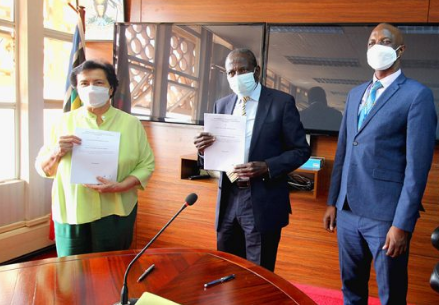
Signing of the coffee deal

Parliament unanimously called for the termination of the agreement between Uganda Vinci Coffee Company Limited (UVCCL) and the Government, which sought to grant the company monopoly over the coffee sector.

The report of the Committee on Trade, Tourism and Industry on the alleged unfair terms of the Memorandum of Understanding (MoU) between government and UVCCL further directed government to report back to Parliament within six months of adoption of the report.

Presented by the Committee Chairperson, Hon. Mwine Mpaka during plenary on 18 May 2022, the report revealed that the agreement was illegal as it contravened the Constitution and other tax laws.

“Article 8(a) of the Constitution was infringed upon by the agreement when the execution of the agreement was concluded without the input of coffee farmers who are the owners of coffee beans which are being granted to UVCCL by the agreement,” read the report in part. 

The committee further observed that the structural adjustments that government undertook between 1981 and 1990 led to the liberalisation of Uganda’s coffee sector and yet the agreement introduces monopoly into the coffee industry which is against the principle of liberalization. 

“The committee observes that the agreement creates monopoly in favour of UVCCL to the purchase of superior quality coffee beans from Uganda by restricting government from registering any contracts or acknowledging any arrangement for the export of coffee beans,” Mwine Mpaka said.

The committee discovered that UVCCL failed to commence the construction of the US$440 million coffee factory when it was allocated 25 acres of land in Namanvanve Industrial Park.

“The committee was informed that whereas government had spent colossal amounts of money to grade, fence, backfill the land allocated to UVCCL at a tune of Shs7 billion and relocated the power lines near the proposed facility site, UVCCL had not commenced, nor undertaken any activity as envisaged in the agreement,” Mwine Mpaka read.

It was also recommended that government should consider extending appropriate incentives to the already existing 47 local companies that are doing value addition as well as fast-track the capitalization of Uganda Development Corporation to invest in soluble coffee plant.

“The already existing 47 local processors are in the business of adding value including roasted coffee beans, roasted and ground coffee as proposed by the Vinci Coffee Company. This is being done without similar incentives as those proposed in the UVCCL agreement,” the report read.

The MPs recommended that officials who committed government to such illegalities should be penalized as a deterrent measure to avert similar occurrences.

According to the committee’s findings, the agreement signed on 10 February 2022 revealed that whereas Government represented by the Minister of Finance and Secretary to the Treasury, the agreement was not signed by UVCCL.

“The representative from UVCCL, Ms. Enrica Pinetti signed as a witness and no one signed on behalf of UVCCL. The committee notes that under the article and MoU of UVCCL, it is only a director, secretary or person appointed by the board who has the right to authenticate a document affecting the company,” said Mwine Mpaka.

Mwine Mpaka said that the agreement can be challenged as not binding on UVCCL.

Mwine Mpaka also refuted allegations that the committee’s recommendations were influenced by President Yoweri Museveni.

“Some findings leaked in the media and the President invited the committee. We sought guidance from the Speaker who gave us a go ahead to meet the President,” said Mwine Mpaaka.

He said that President Museveni agreed with most of the issues raised but emphasized that the biggest problem has been on value addition.

“He recommended that three months should be given to cater for revision of the agreement as opposed to termination, which may have far-reaching implications,” Mwine Mpaka added.

Hon. Abed Bwanika (NUP, Kimaanya-Kabonera Division) who was the chief petitioner against the agreement contended that government should have consulted stakeholders in the coffee sector before signing the agreement.

“How can government give an individual company to determine the price of coffee and export it against the will of Ugandans. Coffee is a heritage for the people of Uganda. It is God given, a strategic commodity and at the centre of the country even before independence,” Bwanika said.

Budadiri West County MP, Hon. Nandala Mafabi pointed out that coffee is the leading foreign exchange earner and giving monopoly to a foreign company means sending all the forex benefits to that country.

“Such agreements are very dangerous. If you were given a license in 2014 and up to now you have not constructed a coffee factory, then you do not know what coffee is. Tomorrow, we shall deliver 600 packets of roasted coffee to confirm that if you empower locals, they have capacity,” Nandala Mafabi said.

The Leader of the Opposition, Hon. Mathias Mpuuga recommended that a caveat should be put on the land that was allocated to UVCCL to stop further activity on it, ‘since the nature of the agreement did not stop the company from carrying out any activity on the land, even after its termination’.

“Any attempt by the company to try and litigate, those are other matters; we have to on our part protect the Ugandans,” Mpuuga said.

He also applauded the MPs for supporting the report in solidarity, saying that whereas it started in the Shadow Cabinet, the whole House took interest in the matter.  

“We must all legislate for prosperity. I support that the report is adopted with amendments. The committee observed that the agreement was potentially not signed. Does that agreement exist in form and function? Has the law changed? We need the Attorney General to clear us on that,” Mpuuga said.

The Attorney General, Hon. Kiryowa Kiwanuka said that government will look into the recommendations and report back.

“The law has not changed. If the agreement is null and void, it is null and void. We shall look into the recommendations and we shall be happy to report back,” said Kiryowa Kiwanuka.

On 12 April 2022, Hon Abed Bwanika raised a matter of national importance pertaining to the agreement between government and UVCCL. He was concerned that the agreement would eliminate the people of Uganda that are involved in coffee production and would give monopoly of purchase and export of coffee from Uganda to UVCCL.

Stories Continues after ad

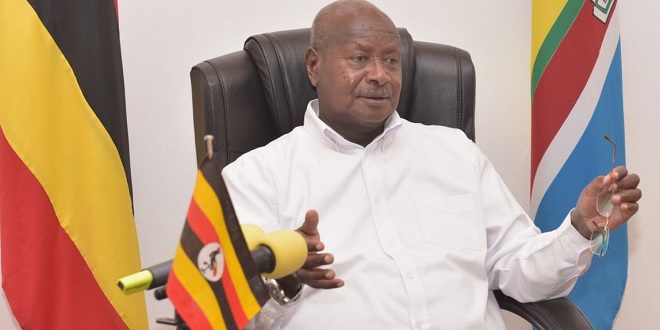
Museveni to address nation on the current economic situation

President Yoweri K. Museveni

President Yoweri Kaguta Museveni is this Sunday expected to address the nation about the current Economic situation. The address has been confirmed by Nabusayi Lindah Wamboka, the Senior Press Secretary to President Museveni.

“President Museveni will this Sunday May 22, 2022 at 8 pm address the Nation on the current Economic situation. The address will be broadcast live from Nakasero State Lodge. Please save date and tune in, to all Television and Radios,” she tweeted.

The president is expected to speak about the skyrocketing prices of essential commodities in the country.

Mr. Matia Kasaija, the Minister for Finance Planning and Economic Development has since blamed the skyrocketing price of commodities to high prices of fuel and Russia’s invasion of Ukraine. Currently, most of the prices of essential commodities in the country have doubled.

Stories Continues after ad
IGP Ochola boosts Commonwealth Games-bound Police athletes

SSP Kalule Abu with Joshua Cheptegei

The Inspector General of Police, IGP Okoth Martin Ochola has extended a financial boost to Police marathon athletes ahead of the 2022 Commonwealth games due 28th July in Birmingham, United Kingdom.

The financial assistance was delivered by Senior Superintendent of Police, (SSP) Kalule Abu on behalf of the IGP during his courtesy visit to Police Athletics Training Camp in Kapchorwa.

“The IGP has appreciated your efforts, endurance and discipline exhibited as you participate in different field tracks trials,” Kalule told the Commonwealth Games- bound athletes.

He further applauded them for not only representing the Police Force, but also lifting Uganda’s flag high.

Kalule noted that the IGP had promised to promote all Special Police Constables (SPC) into full Police officers and all the paper work is in progress.

“Continue being disciplined, focused and supportive to one another. This will help you achieve more as you build your career on track and in Uganda Police Force,” he advised.

The package from the IGP will cater for the athletes’ welfare to lift and boost their morale and stay at the high altitude training camp.

Team manager Ali Ngainoka and Coach Njia Benjamin appreciated the financial aid rendered to the athletes and promised to work harder in spearheading the team towards achieving the objectives and talent development.

11 Police athletes made the national team roster that will represent Uganda at the upcoming Commonwealth games. The team is headlined by world champion, ASP Joshua Cheptegei and IP Chemutai Peruth.

Some of the upcoming young talent include; SPC Kiplagat Victor, SPC Chesang Priscar and SPC Chemistu Janat who will be taking part in the World Junior Championships in Colombia next month.

The same team will also represent at the Inter Forces games and the East African Police Chiefs Organization games (EAPCO) earmarked for September 2022.

Stories Continues after ad