Stanbic Bank
Stanbic Bank
19.6 C
Kampala
Stanbic Bank
Stanbic Bank
Home Blog Page 608

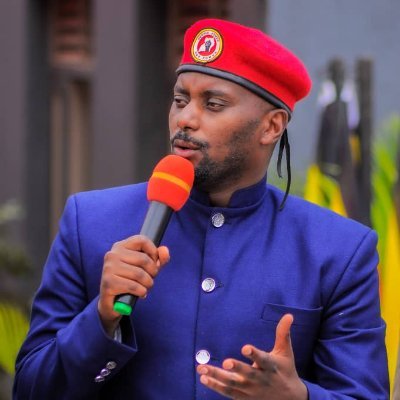
Police holds Rubongoya, his driver for threatening violence in Omoro

David Lewis Rubongoya

Police in Kampala have arrested the General Secretary of National Unity Platform (NUP) David Lewis Rubongoya and his driver Agaba Godwin Joseph on allegations of threatening violence.

According to Kampala metropolitan police spokesperson Patrick Onyango, on 26th May 2022 at about 1200hrs in Omoro County, Rubongoya used Motor vehicle registration Number UAS 490Z Toyota land cruiser white in colour and threatened Acheng Ruth vide Omoro SD reference 19/26/5/2022.

Onyango said the two are set to be transferred to Omoro pending trial.

Rubongoya and the NUP team were conversing votes for Toolit Simon Akecha who lost to National Resistance Movement (NRM) Andrew Oulanyah, the son of the late Speaker of Parliament Jacob Oulanyah.

The Omoro parliamentary seat fell vacant following the death of Jacob Oulanyah. Oulanyah died on 20th March 2022 in Seattle, USA barely two months after he was admitted in February this year and was laid to rest on Apr 8, 2022.

Stories Continues after ad

Stanbic Bank, Prudential launch joint Medical Insurance Cover for Ugandans

With Shs 600, 000 (USD166) investment, Stanbic customers are now able to acquire for themselves and loved ones, annual medical insurance cover of up to Shs 20million this, courtesy of Stanbic MediProtect, a joint offer by the bank and Prudential Uganda.

Unveiled at a press conference in Kampala, today, MediProtect is open to Stanbic Bank Uganda customers and any of their nominated dependents, irrespective of age.

Ugandans can choose between three MediProtect packages based on affordability with the least priced policy being Silver accessible at Shs  600,000 per annum, which allows policy holders to enjoy medical cover worth up to Shs 20m in annual value.

The Gold package whose premium costs Shs 1,000, 000 offers up to Shs 70m in medical cover value for a year while Platinum category available at Shs 2 million gives policy holders nearly Shs 120million in annual value and a long list of benefits.

Without a national health insurance programme the Stanbic Bank MediProtect is the closest a Ugandan without formal medical cover from an employer can get an affordable health insurance.

MediProtect cover can be accessed by policyholders at over 380 medical outlets across the country that are affiliated to Prudential Uganda.

Pandemic lessons

Sam Mwogeza, Stanbic Bank’s Executive Head for Consumer Banking said, “MediProtect is a direct lesson from our experience as a country in the last two years of the Covid-19 pandemic—we are offering a solution that enables every Stanbic Uganda customer to get medical insurance for themselves, relatives and loved ones and be assured of accessing professional medical care when they fall ill.” 

Although medical insurance is fast growing in Uganda, 2018 research by Insurance Institute of Uganda found that only 5 percent of Ugandans had health insurance; most of those are on corporate medical schemes sponsored by their employers.

“At the height of the Covid-19 pandemic, we lost many of our people who couldn’t afford medical bills even those deemed to be relatively well off, financially, were drained of all their cash savings due to prolonged hospitalisation.

So, as leaders in our respective industries, we have decided to do something about it; to give our clients the opportunity to secure their lives such that they can afford to take care of their medical bills,” said Dogo Singh, the Head of Bancassurance at Stanbic Bank Uganda.

Tetteh Ayitevie, CEO Prudential Uganda said, “our purpose at Prudential is to help people make the most out of life and we believe that Stanbic MediProtect is a demonstration that we are dedicated to helping individuals and families in every step of their health, wealth, and wellness journey; by ensuring they can afford good medical care, which is core to good health.

We are therefore happy to partner with Stanbic Bank to provide this health insurance Plan and urge all Stanbic Bank’s customers to cover their relatives, friends and loved ones.”

Flexible cover

Stanbic MediProtect is a flexible insurance cover allowing clients who already have an insurance cover by virtue of their employment, to buy a medical insurance package for their loved ones and dependents who may not fall under their employer’s cover.

The product also covers advanced age adults of up to 75 years and can be accessed by anyone regardless of geographical location through Stanbic Bank’s website.

Stanbic MediProtect has been designed with the customer’s needs in mind offering solutions to pre existing barriers to the uptake of medical insurance. Stanbic Bank and Prudential Uganda believe that this product will be the start to every family actively ensuring that all its members and close relatives are covered against medical emergencies.

According to Paul Nagemi, the Chief Health Officer at Prudential Uganda, this product underscores the importance of having something set aside for a rainy day including both savings and health insurance.

“We are glad to not only unveil this partnership with Stanbic Bank Uganda but also launch this unique product that will enable customers to add as many beneficiaries as they want to, at very affordable contributions.

The beneficiaries can be their immediate, extended family or financial dependents. This product provides competitive outpatient (dentistry, optical antenatal and inpatient benefits in over 200health facilities countrywide,” he said.

According To the World Health Organization Global Expenditure database, an estimated 38% percent of Uganda’s health expenditures are paid by individuals through out-of-pocket costs, followed by development partners (41%), the government (16%), and others (5%).

Stories Continues after ad

Chronic staff shortfalls stifle Africa’s health systems – WHO study

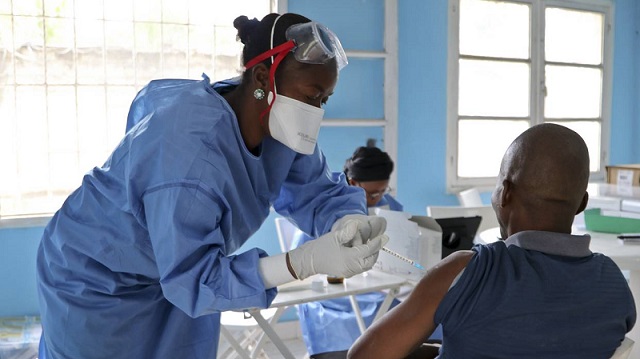
Vaccination

A serious shortage of health workers in Africa is undermining access to and provision of health services even though countries in the region have made efforts to bolster the workforce, a new World Health Organization (WHO) study finds.

The study, titled “The health workforce status in the WHO African Region: findings of a cross-sectional study” published this week in the British Medical Journal Global Health and which surveyed 47 African countries, finds that the region has a ratio of 1.55 health workers (physicians, nurses and midwives) per 1000 people. This is below the WHO threshold density of 4.45 health workers per 1000 people needed to deliver essential health services and achieve universal health coverage.

Only four countries (Mauritius, Namibia, Seychelles and South Africa) have surpassed the WHO health worker-to-population ratio.

The region’s health workforce is also unevenly distributed by country, ranging from 0.25 health workers per 1000 people in Niger (the region’s lowest) to 9.15 health workers per 1000 people in the Seychelles, the highest in the region.

There were approximately 3.6 million health workers in the 47 countries surveyed as of 2018. Thirty-seven per cent of them are nurses and midwives, 9% are medical doctors, 10% laboratory personnel, 14% are community health workers, 14% are other health workers, and 12% are administrative and support staff.

Africa’s long-standing health worker shortage stems from several factors, including inadequate training capacity, rapid population growth, international migration, weak governance of the health workforce, career changes as well as poor retention of health personnel. It is projected that the shortage of health workers in Africa will reach 6.1 million by 2030, a 45% increase from 2013, the last time projections were estimated.

 “The severe shortage of health workers in Africa has daunting implications. Without adequate and well-trained workforce, tackling challenges such as maternal and infant mortality, infectious diseases, non-communicable illnesses and providing essential basic services like vaccination remains an uphill battle,” said Dr Matshidiso Moeti, WHO Regional Director for Africa.

Globally, the Western Pacific region which includes Australia, China, Japan and Malaysia had the highest number of doctors at 4.1 million, and 7.6 million nurses in 2020, a report on human resource for health by the WHO Director-General to the 2022 World Health Assembly showed. The European region had 3.4 million medical doctors and 7.4 million nurses. Comparatively, the African region had around 300 000 doctors and 1.2 million nurses.

To reinforce Africa’s health system, it is critical to address the persistent shortages and poor distribution of the health workforce. Countries need to significantly increase investments for building the health workforce to meet their current and future needs. Strong measures are also needed to boost training and recruitment of health workers as well as to improve their deployment and retention.

Several African countries have made progress to plug the deficit, however, the WHO study published this week acknowledges that resolving the health workforce shortages remains difficult due to the complexity and the scope of the issue.

Stories Continues after ad
Gov’t gives two days ultimatum for striking teachers to resume their duties

A teacher in class

The Ministry of Public Service has given two days ultimatum for all striking teachers to resume their duties.

On June 15, 2022, teachers under Uganda National Teachers Union (UNATU) staged industrial action citing discriminatory salary enhancement and government’s failure to honour collective bargaining agreement signed in 2018.

Mrs. Catherine Bitarakwate Musingwiire, the Permanent Secretary said government is committed toward salary enhancement for all public officers.

“This is evidenced by the phased salary enhancement that has so far been achieved, its implementation will continue within the available resources. For example, in the last two years we have had to put aside other priorities to deal with the survival of against Covid-19. The priority of the government was addressing Covid-19 not salary enhancement,” she said.

She said the current enhancement for science teachers was informed by the available resources, the number of teachers involved and the impact that can be made by the scientists to the development of this country.

“We have no doubt that you agree that we need an educated workforce in all aspects of life but more in science. This in our view will attract and retain the critical skill that is required by the country at this material time.”

Whereas teachers like other government employees have rights and freedom enjoyed under constitution and others laws, including the right to withdraw labour, Bitarakwate  said the current industrial action by members of UNATU is illegal and in breach of principals and spirit of the law  particular section 7 (2)(a) and (b) and 8 (1) and (3) and Public Service Negotiating, Consultative and Dispute Settlement Machinery Act 2008 and Recognition Agreement signed and this Act because neither has UNATU a notice to strike nor had the Dispute Settlement Machinery been exhausted.

“The claim that the strike had been ongoing since 2019 and hence there was no need for new notice is both fallacious and not legally tenable. We have noted with concern that you and your members have decided to close schools. We wish to advise you that no teacher, whether on strike or not, has the legal right or jurisdiction to close a public school without the concurrence of the government,” she said.

She said while the government is committed to working with all parties towards achieving better salaries for public servants, teacher’s demands for salary enhancement cannot be addressed in the financial year 2022/2023.

She urged teachers to resume their duties at their respective work station by 24th July 2022. Any teacher who doesn’t comply with this call will be regarded as having absconded from duty and resigned from public service in accordance with section A-N of the public service Standing orders 2021.

“Teachers who are not willing to work under the prevailing terms and conditions are free to withdraw their labour provided for under section A-N of the public service Standing orders 2021. Teachers who don’t agree to the above to seek legal redress in courts of law,” she said.

She urged town clerks and Chief Administrative officers to take stock of teachers present and submit absent teachers by the 30th June 2022 for eventual removal from payroll.

 Zadock Tumuhimbise, the chairperson of Uganda National Teachers Union (UNATU) said; “we have received the intimidating letter as expected. Whatever we are doing is within the provisions of the law. We are very safe.”

“Our legal teams are on course to make a response to the letter. Soon our official spokesperson will give us a detailed update. Otherwise; the Industrial Action is still on course. Keep consistent,” he said.

Stories Continues after ad
Court of Appeal throws out Busongora South MP

Mujungu Gideon Thembo

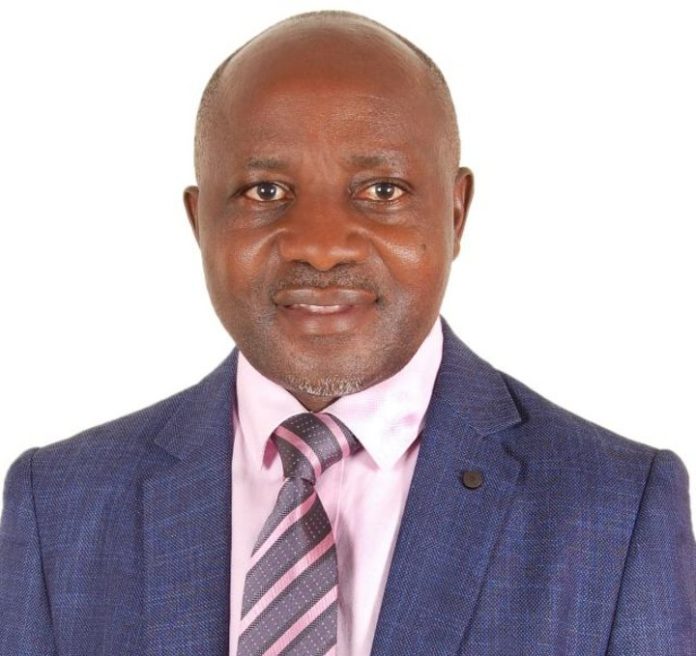
The Court of Appeal has ordered for a by-election in Busongora South after nullifying the victory of Mujungu Gideon Thembo (NRM).

This comes after former MP Mbaju Jackson, who contetsed as an Independent appealed Mujungu’s victory.

The by-election was ordered on grounds of electoral malpractice in three polling stations in Kasese District. Court found out that dead people had voted.

Three Justices of Appeal led by Fredrick Egonda Ntende overturned the decision of the High Court in Fort Portal and allowed Mbaju Jackson’s election appeal with costs.

The same court has also confirmed Dr Ruyonga Joseph as the elected MP for Hoima West Constituency in Hoima District and dismissed the election appeal of Kasule Ismail with costs for being misconceived and lacking merit.

Kasule Ismail had accused the Incumbent MP Dr. Ruyonga of voter bribery.

The Court of Appeal also confirmed Abdu Adidwa as the elected MP for Bukooli South Constituency in Namayingo District and dismissed the election appeal of Mayende Steven with costs for failure to prove that Adidwa didn’t possess the requisite academic qualification.

Stories Continues after ad

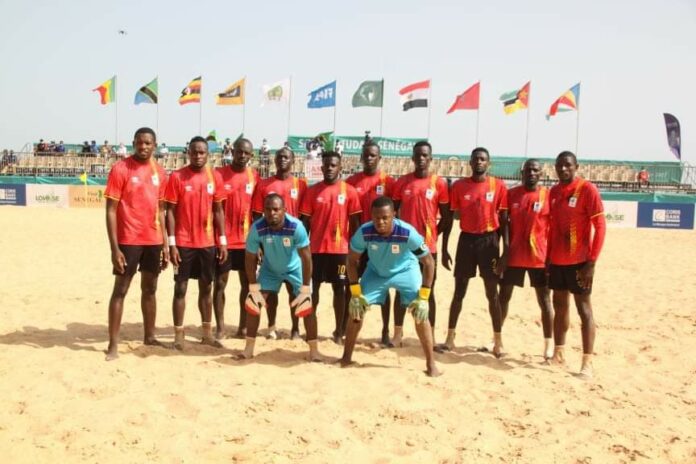
Sand Cranes to know Beach Soccer AFCON opponents on Friday

Sand-Cranes team

The draw for the Beach Soccer Africa Cup of Nations 2022 will be conducted on Friday, 24 June 2022 in Maputo, Mozambique.

The Uganda Sand Cranes, who are ranked 5th out of the 14 teams to be engaged in this qualifying phase, have been placed in pot 1.

The Beach Soccer Africa Cup of Nations Mozambique 2022 will be held from 21 to 30 October 2022.

The seven qualified teams will join 2021 runners-up Mozambique who qualify automatically as hosts.

Engaged Teams: Cameroon, Comoros, Cote D’Ivoire, Egypt, Ghana, Libya, Madagascar, Malawi, Morocco, Nigeria, Senegal, Seychelles, Tanzania, and Uganda.

Pot 1: Uganda, Tanzania, Madagascar

Pot 2: Seychelles, Comoros, Malawi

Pot 3: Senegal, Morocco, Egypt, Nigeria

Pot 4: Côte d’Ivoire, Libya, Ghana, Cameroon

The teams have been distributed according to ranking and geographical criteria.

Stories Continues after ad

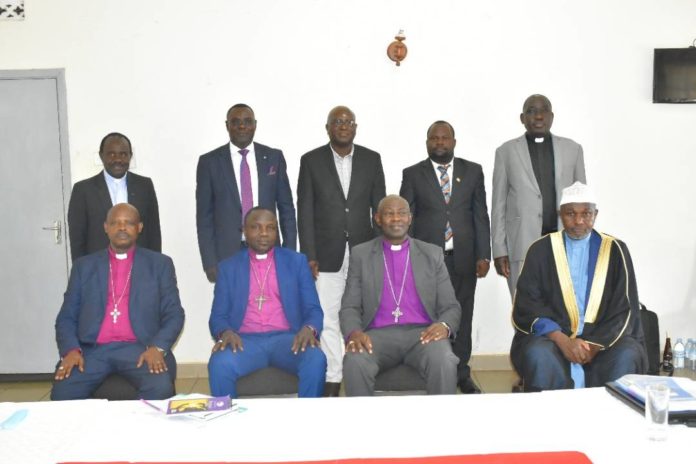
Archbishop Kaziimba meets East African religious leaders over ongoing conflict in DRC

Archbishop Kaziimba meets East African religious leaders

The Archbishop of Church of Uganda The Most Rev Dr Stephen Samuel Kaziimba has convened a meeting of senior religious leaders from the East African Region to discuss the ongoing conflict in Eastern Democratic Republic of Congo.

The meeting held today under the auspices of the Inter Religious Council of Uganda at Namirembe Guesthouse in Kampala was attended by His Eminence, Sheikh Shaban Ramadhan Mubaje – Grand Mufti of Uganda/Co-Chair African Council of Religious Leaders; Bishop Francis Karemera representing The Most Revd. Dr. Laurent Mbanda – Primate of Rwanda; and The Most Revd. Dr. Ande Georges Titre – Primate of DRC.

Archbishop Kaziimba, the convener the meeting and Chairperson of the Inter Religious Council of Uganda said the meeting was to re-affirm their commitment on peace, security and democracy in Democratic Republic of Congo and the East African Community at large.

In a joint Statement by the Senior Religious Leaders, there is need to respect the fundamental principles enshrined in the United Nations Charter and Constitutive Act of the African Union.

The Statement further reads;

….Considering that respect for Human Rights represents a fundamental guarantee against threats to peace and internal security of states.

Determined to build on the principles of peace and dialogue found in the Holy Scriptures.

Considering that people in all their diversities are created in the image of God and are equal before Him.

We are deeply troubled by the situation in Eastern Democratic Republic of Congo. We are particularly concerned by the loss of life and property that has been brought about by the conflict, including the increase in the refugee crisis, tribal and national sentiments, xenophobic tendencies which could result into a genocide.

The current situation in the Eastern Democratic Republic of Congo combined with economic downflow characterized by the increase in the prices of goods and services within the region threatens to undermi undermine the aspirations of the East African Community.

As religious leaders, we appreciate the steps being taken to integrate the Democratic Republic of Congo into the East African Community. We urge the political leadership to urgently use this framework to resolve the ongoing crisis. The East African people share the same destiny and everything must be done at our disposal to ensure their survival.

We call upon all those that are caught up in the conflict to embrace dialogue as a means for resolving their aggrievances.

We acknowledge the strains and pressures that the refugee host countries and communities maybe going through but we encourage them in the spirit of good neighborliness to provide a conducive environment for their brothers and sisters who are running for their lives.

We call upon the international community to reach out with humanitarian assistance to those that have been affected by this conflict and the countries where they have settled.

In the spirit of Genesis 4:9-10, “The Lord said, “what have you done? Listen Your brother’s blood cries out to me from the ground”, we feel challenged to intervene on behalf of our suffering brothers and sisters. We intend to convene senior religious leaders from the region under the auspices of the East African Inter-Religious Council in partnership with All Africa Conferences of Churches (AACC), Council of Anglican Provinces of Africa (CAPA), Association of Member Episcopal Conferences in Eastern Africa (AMECEA), Africa Council of Religious Leaders (ACRL) and Fellowship of Churches and Councils in the Great Lakes and Horn of Africa (FECCLAHA) to discuss a framework for accompanying our political leaders in the region towards sustainable peace.

We pray for our brothers and sisters in Eastern Democratic Republic of Congo that feel aggrieved and frustrated by this conflict to exercise restraint and tolerance to other ethnicities and nationalities as we all work towards lasting peace.

Stories Continues after ad

21 Days of Y’ello Care Campaign: MTN equips over 700 people with digital skills

The Western Region MTN Business Manager, Denis Harindimana (6L) handed over goats, fencing material and farm supplies to the Bunusya abarema twetungure association in Mbarara

MTN Uganda has today donated computers and a WiFi router and a multi-purpose printer to the Nakawa Market vendors Association as it concludes its staff volunteerism campaign dubbed 21 Days of Y’elloCare. This follows a series of community outreach projects simultaneously executed in various parts of the country since last week. Today, also marked the MTN Y’ello Care Day across the MTN footprint.

Similarly, an MTN staff team in Mbarara also reached out to the Bunusya Abarema Twetungungure association in Mbarara today, with a donation of goats, fencing materials, and farm inputs as well as a digital training session to support the group of farmers on their path to recovery following the disruptive Covid-19 pandemic, as part of the MTN 21 Days of Y’ello Care campaign.

The annual campaign that is always executed within the first 21 days of June, was this year held under the theme: “Empowering Communities to Drive Economic Recovery” with a keen focus on digital skills training and digital job creation to spur economic recovery among disadvantaged communities that were adversely affected by the Covid-19 pandemic. The digital upskilling aspect of the campaign is hinged on MTN’s strategic priority to build digital skills for digital jobs in alignment to the company’s Ambition 2025 Strategy.

Dorcas BatwalaMuhwezi, the MTN Uganda General Manager, Customer experience reaffirmed that it was heart-warming for the staff of MTN Uganda to once again dedicate their time, financial resources, and skills, to the communities in a bid to uplift them socio-economically, following the drastic effects of the Covid-19 pandemic.

“Our decision of empowering communities to drive economic recovery after Covid-19 through digital training, upskilling, and knowledge sharing will indeed create lasting and sustainable change in our communities”, Muhwezi said adding that the recovery packages donated by MTN Uganda to all the groups will go a long way in positively impacting their respective enterprises.

Representing the Permanent Secretary of the Ministry of ICT and National Guidance, Fred Kitoogo, the Principal of the Uganda Institute of Information Technology Communication lauded MTN for fostering digital inclusion among the grassroots communities.

“A lot of the economic transformation that we seek as a country can only be realized if we narrow the digital gap in our country. As such, I thank MTN for deliberately equipping the disadvantaged communities with digital skills that shall go a long way in supporting their economic endeavours,” Kitoogosaid.

Under this year’s 21 Days of Y’ello Care, MTN Uganda has reached out to a total of 10 communities including the Tesobar Deaf Carpentry group in Lira, Tubalera VTC deaf carpentry group in Jinja, Tweyombeke disabled group in Fort portal, the Bunyusa group in Mbarara, the Kamwokya I women tailoring group in the Kampala central division, the glorious widows’ group in Makindye, the Rays of Hope entrepreneurship group in Kawempe,missionaries of the poor orphanage in Mengo as well as the Nakawa Market Vendors’ Association in Nakawa division.

All the groups underwent digital upskilling training sessions delivered by MTN staff, to help them harness the power of digital usage to bolster their economic activities through various digital channels that resonate with the current digital era.

To commemorate the MTN Y’ello care day, MTN Uganda today held a series of digital training sessions targeting at least 300 participants in a bid to further close the imminent digital gap, as envisioned in MTN’s ambition 2025. Over 700 people have been equipped with digital skills under the MTN Y’ello care campaign this year.

In addition to the digital training sessions, MTN also organized 4 crash courses in financial resilience, corporate structure soap making, and backyard farming as a way of driving that much-needed economic tenacity and recovery.

The MTN team also engaged in a community cleaning session before handing over assorted items to support the Nakawa market vendors’ group in their economic activities.

Launched in 2007, 21 Days of Y’ello care is a global award-winning staff initiative that has seen MTN staff step out of their offices every year, to make a difference in the lives of the communities within which they work.

MTN is committed to adding economic value by contributing to society through its programs focused on digital education, digital upskilling, and digital skills training. The company believes that reducing the digital skills gap will help address issues of digital and social inequalities while at the same time ensuring the sustainability of the business that strongly believes that everyone deserves the benefits of a modern connected world.

Stories Continues after ad

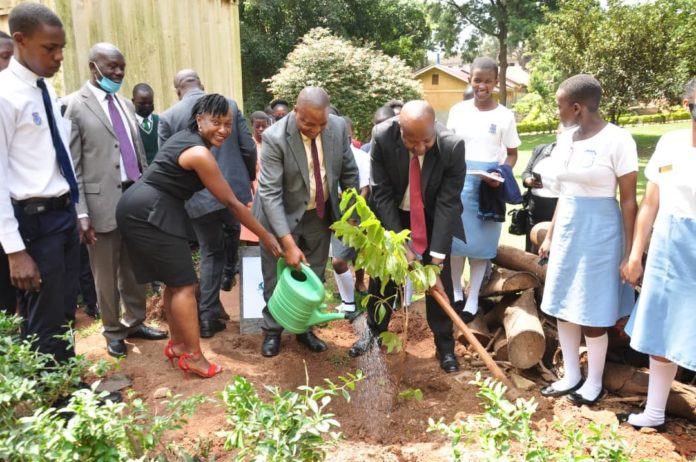
Over 30 Schools to participate in the Climate Change Innovation Challenge

Watering the plant

Standard Chartered Bank Uganda in partnership with ECOTRUST have launched a USD 18,565 (Shs 69,450,000) Climate Change Innovation Challenge.

The challenge was launched by the Lead Forest Officer, Ministry of Water and Environment; Bob Kazungu at Old Kampala SS. The Climate Change Innovation Challenge is one of the bank’s long month planned environmental initiatives.

The Climate Change Innovation Challenge will drive secondary school students in the Kampala Metropolitan Area to use their critical-thinking and research skills to come up with innovative solutions to environmental issues affecting their communities. The Innovation Challenge core objective is to further advance the Bank’s bold STAND  ‘Accelerating Net Zero’. Five innovative proposals will each be funded to a tune of USD1,000 to implement the ideas.

Further, the Bank will partner with Buhimba Farmer’s Union under the employee volunteering programme in the implementation of a tree cover restoration project for smallholder farmers in Kikuube district in the Albertine Rift Region.

Margaret Kigozi the Head, Corporate Affairs Brand and Marketing of Standard Chartered Bank Uganda said; “The youth are an important constituency in the conservation of biodiversity and have a huge impact on it. They are energetic, technology-savvy, constantly evolving, oriented to problem-solving and often propagate active consumerism. Their strong comprehension on sustainability which advocates for reduction in footprints and improved quality of life across sectors and industries is essential for the future. We are therefore excited to see several schools coming on board and eager to take part in this Climate Change Innovation Challenge and wish all the participants the best as they compete for the top spots as the rewards will be lucrative.”

Bob, the Lead Forest Officer Ministry of Water & Environment, commended the Bank and its partners for this initiative stating; “On behalf of the Government of Uganda, I wish to heartily thank Standard Chartered Bank Uganda and its implementing partners for supporting Government efforts by investing in involving the youth in promoting environmental conservation as well as appealing to the consciousness of the entire nation to be more proactive in finding solutions to solve the environmental challenges we are all faced with today.”

He said the innovation challenge is indeed a good example of ‘best practices’ in the fight against climate change associated effects and as Government we pledge our continued collaboration with the bank in your climate change journey.

“ I  appeal to various communities to all play a role in solving this issue by first and foremost changing their mindset towards environmental conservation by proactively planting trees at every opportunity and changing their impact on the environment by for instance using alternative fuels that don’t require tree cutting as well as adopting environmentally friendly behaviours and options. Together I am certain we shall navigate the various devastating climate change challenges we experience today,” he said

 Schools participation Process;

Invitations to participate in the Climate Change Innovation Challenge will be sent out to at least 30 (thirty) schools within the Kampala Metropolitan Area.

The participating students are expected to develop a solution to an environmental issue affecting their school or community. The students report on the problem and their proposed solution through a clear “action plan” and an itemized budget in line with the activities set in the proposal.

The proposals are to be submitted via email to scbchallenge@ecotrust.or.ug by 5 pm on the 3rd of July 2022 in advance of the final pitching by 10 shortlisted schools to be held on 8th of July 2022.

 The shortlisted school – teams will be invited to the pitching event and will be given 10 minutes to present their action plans In front of a panel of judges.

The winning ideas will be recognized and awarded at the event on 8th July 2022. The top five winners will each receive USD 1000 whilst the other participants will also walk away with gifts courtesy of Standard Chartered Bank Uganda.

Stories Continues after ad

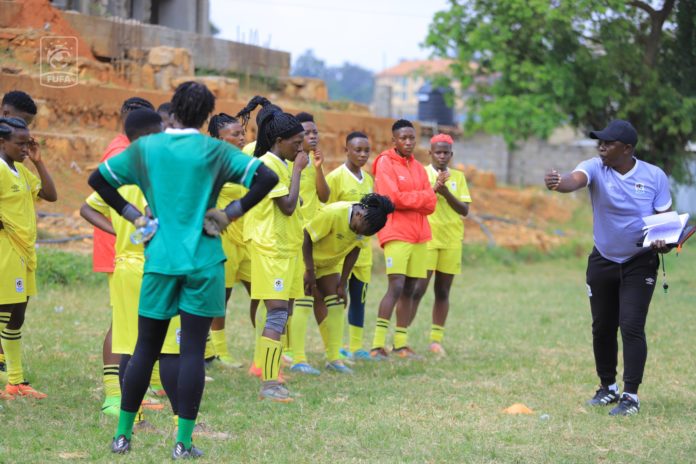
Coach Lutalo names final Crested Cranes squad for Women’s Africa Cup of Nations

Coach Lutalo during training

Crested Cranes head coach George Lutalo has announced the final squad that will feature at the forthcoming TotalEnergies Women Africa Cup of Nations in Morocco.

Lutalo revealed a list of 26 players in a press briefing held at FUFA house.

The final squad has three goalkeepers including captain Ruth Aturo, seven defenders, six midfielders and ten forwards.

Ruth Aturo will be deputized by Hasifah Nassuna.

Lutalo lauded the efforts that have been behind the team in its preparations for the upcoming continental showpiece.

“We had smooth preparations since last year. We played COSAFA and recently CECAFA where the team emerged Champions. I believe these tournaments have helped us to get the Skelton of the team and I’m confident the final squad named will help us attain the set targets,” he said.

The contingent will depart Uganda for Morocco on Wednesday Morning and the team will have a ten-day training camp in Marrakesh.

Uganda is in Group A alongside hosts Morocco, Burkina Faso and Senegal.

Crested Cranes Squad

Goalkeepers: Ruth Aturo (Katkan Tyovaen Palloillija FC, Finland), Vanessa Edith Karungi (B93, Denmark), Daisy Nakaziro (Uganda Martyrs H/S Lubaga, Uganda)

Defenders: Asia Nakibuuka (Kawempe Muslim LFC, Uganda), Sumaya Komuntale (Tooro Queens FC,Uganda), Yudaya Nakayenze (Lindey Wilson College, USA), Aisha Nantongo (Kawempe Muslim LFC, Uganda), Margret Namirimu (She Corporate FC, Uganda), Bira Nadunga (Olila High School, WFC, Uganda), Lukia Namubiru (Kampala Queens FC, Uganda)

Midfielders: Hasifah Nassuna (UCU Lady Cardinals FC,Uganda), Joan Nabirye (Vihiga Queens, Kenya), Phionah Nabbumba(She Corporate FC, Uganda), Riticia Nabbosa (Lady Doves FC, Uganda), Shamirah Nalugya (Kampala Queens, Uganda), Sheeba Zalwango (FC Amani, DR Congo), Tracy Jones Akiror (AFC Ann Arbor)

Forwards: Viola Nambi (FC Dornbirn Ladies, Austria), Sandra Nabweteme (Unattached), Fazila Ikwaput (Lady Doves FC, Uganda), Ritah Kivumbi (Mallbackens IF, Sweden), Fauzia Najjemba (BIIK Shymkent, Kazakhstan), Joanita Ainembabazi (Rines SS WFC, Uganda), Lillian Mutuuzo (Kampala Queens FC, Uganda), Margret Kunihira (Kampala Queens, Uganda), Zaina Nandede (Kampala Queens, Uganda)

Group stage Fixtures:

Sunday 3rd July; Senegal vs Uganda – 6pm

Tuesday 5th July; Uganda vs Morocco – 11pm

Friday 8th July; Uganda vs Burkina Faso – 11pm

Stories Continues after ad