Stanbic Bank
Stanbic Bank
18.4 C
Kampala
Stanbic Bank
Stanbic Bank
Home Blog Page 611

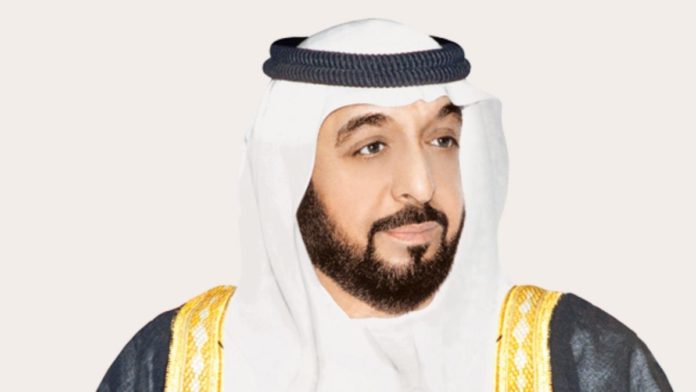
UAE President Sheikh Khalifa dies at 73

Sheikh-khalifa

One of the richest monarchs in the world, President Sheikh Khalifa bin Zayed al-Nahyan of the United Arab Emirates, has died at the age of 73.

Sheikh Khalifa was president of the UAE since 2004, but his role had been largely ceremonial since he suffered a stroke in 2014.

His half-brother, Mohamed bin Zayed al-Nahyan, is now in charge of state affairs.

The al-Nahyan family is believed to have a fortune of $150bn (£123bn).

As well as being president of the UAE, Sheikh Khalifa was also the ruler of Abu Dhabi, the oil-rich capital of the seven emirates which comprise the UAE.

News of his death was announced by the official WAM news agency.

The ministry of presidential affairs declared 40 days of mourning with flags at half-mast from Friday, and work suspended in the public and private sector for the first three days.

Sheikh Khalifa took over as the UAE’s second president in November 2004, succeeding his father as the 16th ruler of Abu Dhabi.

In the first decade of his rule, he presided over a major restructuring of both the federal government and that of Abu Dhabi.

But after his stroke, he was rarely seen in public, although he continued to issue rulings.

US President Joe Biden paid tribute to Sheikh Khalifa, saying he “was a true partner and friend of the United States”.

“We will honour his memory by continuing to strengthen the longstanding ties between the governments and people of the United States and the United Arab Emirates,” Mr Biden said.

Under the UAE’s constitution, the vice-president Sheikh Mohammed bin Rashid al-Maktoum, ruler of Dubai, will act as interim president.

The federal council, which brings together the rulers of the seven emirates, must meet within 30 days to elect a new president.

Stories Continues after ad

EC nominates Andrew Ojok Oulanyah for Omoro County by-election

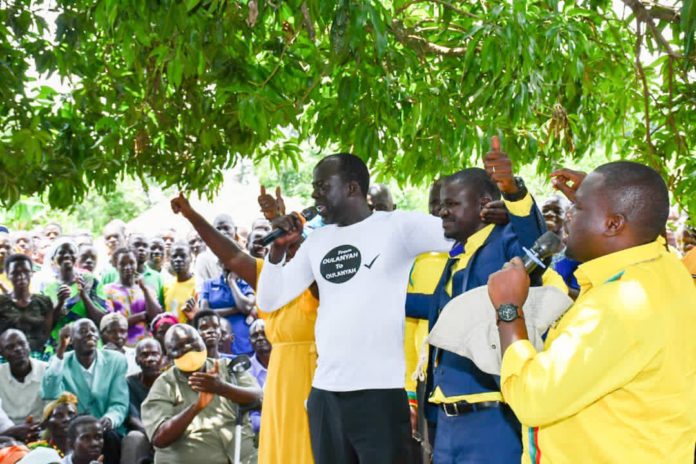
Former Aruu County MP Odonga Otto who has been opposed to Oulanyah's leadership even threatening to contest against him one time surprised many when he endorsed his son while donning a white t-shirt 'from Oulanyah to Oulanyah'

The National Resistance Movement (NRM) candidate Andrew Ojok Oulanyah, a son to the late Speaker of Parliament Jacob L’Okori Oulanyah has been nominated to contest for Omoro County parliamentary seat.

Appearing before the Omoro District Returning Officer, Kagona Moses, Ojok was accompanied by the NRM Secretary General Richard Twodong, Former Wakiso District woman MP Rosemary Sseninde, Party spokesperson Emmanuel Dombo and other members.

Speaking after nomination, Mr. Ojok said: “I am here to complete the projects which my father had started. He started a lot of projects and to the sad note he could not complete them. I’m ready to lead my people. I also believe the State House, NRM, the people of Omoro County and Parliament will stand with me.”

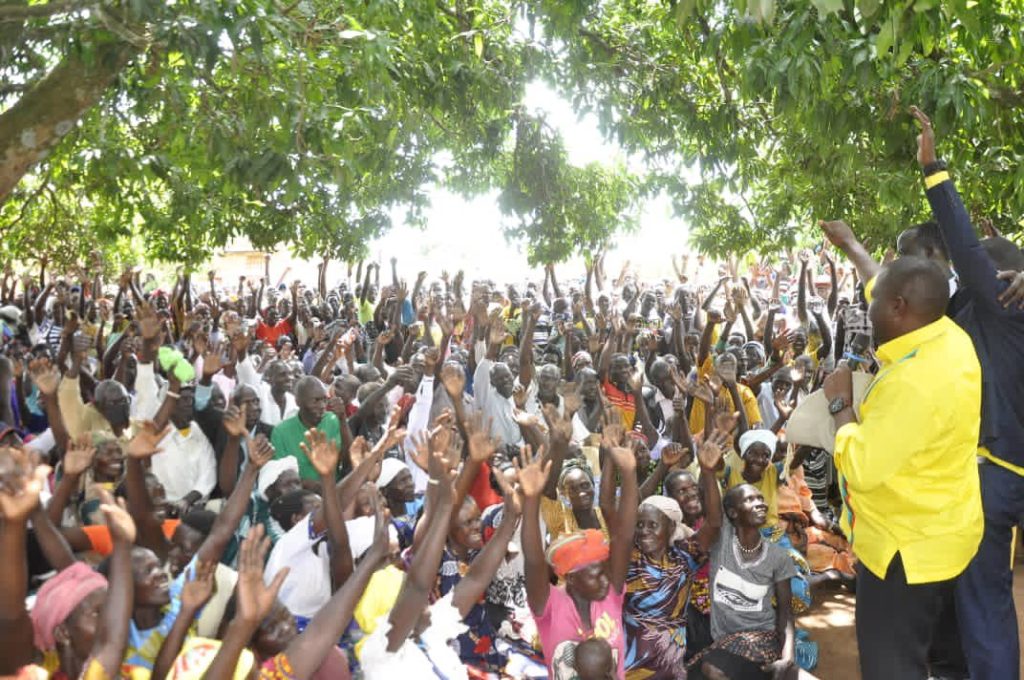
The former Aruu County MP Odonga Otto rallied the people of Omoro to vote for Ojok to complete all the projects which were started by the Late Oulanyah.

“I am here to support my son Andrew Ojok Oulanya for the position of MP Omoro County. Let him go to parliament and finish the work that his father had started.” Otto said

The NRM Secretary General applauded the people of Omore for overwhelming support and urged them to turn up on the polling day to vote for the deceased’s son.

“I would like to thank the people of Omoro County for receiving Ojok Andrew Oulanyah’s candidature with overwhelming support. I equally thank them for supporting the NRM party and President Yoweri Museveni,” Twodong said.

Onen Jimmy Walter (Independent), Ondonga Terence (Independent), Tolit Simon (National Unity Platform) and Kizza Oscar (Alliance for National Transformation) were also yesterday declared nominated to contest for the seat of Directly-elected Member of Parliament.

The seat fell vacant following the death of Speaker of parliament Jacob L’Okori Oulanyah. Oulanyah died on 20th March 2022 in Seattle, USA barely two months after he was admitted in February this year and was laid to rest on Apr 8, 2022.

According to the secretary to the Electoral Commission Mulekwah Leonard the by-election will take place on 26th May 2022 at the designated polling stations in Omoro constituency, Omoro District.

Stories Continues after ad

No funds for coffee seedlings in the next financial year – Gov’t

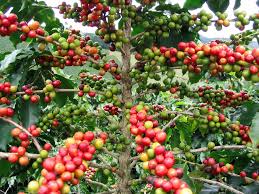
Mature coffee tree

Government will not provide funds for coffee and tea seedlings in the next financial year.

According to the Minister of Finance, Planning and Economic Development, Hon. Matia Kasaija, this has been triggered by the revenue short falls arising from the Covid-19 pandemic and its effect on the economy.

“At the beginning of this financial year, the economy was recovering from the effects of COVID-19. This resulted into short falls in revenue collections and budget cuts for government to accommodate various needs and expenditures,” Kasaija said.

He said government will however, use the Parish Development Model (PDM) funds to extend agricultural inputs including coffee seedlings to farmers.

“Operationalisation of PDM will ensure access to a number of wealth creation funds including funds for coffee and coffee seedlings amounting to Shs44.6 billion and Shs32 billion respectively,” Kasaija told MPs during the plenary sitting on Thursday, 12 May 2022.

MPs said this was betrayal to farmers who have been accustomed to supplying seedlings to government and those who have been receiving seedlings from government.

The Deputy Speaker, Thomas Tayebwa, wondered how the strategy would work.

“We have people who have seedlings in nursery beds, and they know government has been buying these seedlings every year. You also have farmers whose gardens are ready and they are used to receiving seedlings. Now you wake up all of a sudden and say people are going to buy seedlings under the PDM which you have not sent,” Tayebwa said.

The Deputy Speaker added that Parliament has received petitions from coffee farmers about the inadequate funding to the sector in the current financial year.

Kasaija had revealed that only 87 per cent of the approved budget for Uganda Coffee Development Authority was released.

“We are requesting that you release 100 per cent of money for coffee seedlings; it was not among the money frozen by government. We need to know if all the money for National Agriculture Advisory Services has been utilised,” he said.

Legislators requested Kasaija to allow nursery bed operators whose seedlings have matured to sell to farmers and get a refund from government.

“MPs that represent coffee growing communities get a lot of calls on this issue.  Would it be right for government to make a commitment  to citizens allowing them to have the coffee seedlings distributed in hope that when government gets money, they will be paid?” asked Godfrey Katusabe (FDC,  Bukonjo County West).

The Chairperson of the Committee on Agriculture, Animal Industry and Fisheries, Hon. Janet Okori Moe said coffee trees in the Elgon and Rwenzori regions need to be replaced but expressed fears that there will be no replacements if government suspends funding to the sector.

“It is difficult to understand how a farmer in those regions will be able to do the stamping and replacing of the old coffee trees,” she added.

Kasaija agreed to this arrangement but reiterated that his ministry would be able to pay farmers in a period of two to three years. He said this would apply to both coffee and tea seedling farmers.

“As a man in charge of this economy I know people have grown seedlings both for coffee and tea; the season is running out, people are crying, we shall give permission to nursery operators to sell what they have in gardens and we shall pay them in two to three years,” Kasaija said.

Stories Continues after ad

Security beefed as Somalia prepares for presidential elections 

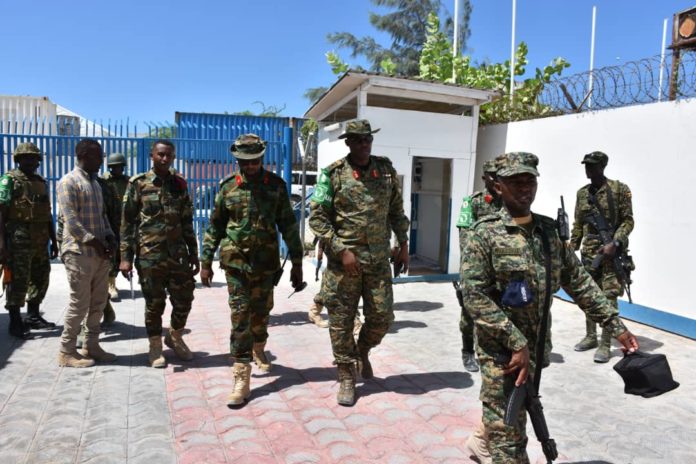
Security has been beefed up in the Somali capital Mogadishu as final preparations for the election of the President of the Federal Government of Somalia are finalized. Security was heightened as manifested by the increased presence of security personnel.

Brig Gen Keith Katungi, the Ugandan military Contingent commander in Somalia, in whose sector the elections will be held was physically at the elections venue to brief and deploy his officers.

Joint patrols among different Somalia security forces, including Somalia National Army (SNA) Somalia National police, National Intelligence and Security Agency (NISA) were conducted within Mogadishu city.

Brig Gen Katungi is closely working with the National security election committee chairman Gen Abdi Hassan Hijar, who also doubles as the Police Chief of Somalia National police (SNP). However, the inner security, including securing of the venue is under the Uganda Peoples Defence Forces.

The final process leading to the election of the President, expected on Sunday 15th May 2022, begun on 11th May with candidates presenting their manifestos and programs to the electorate.

The presentations and debates are expected to last 3 days.

The electorate comprises 372 Members of Parliament elected from federal member states. 275 are elected from regions by clan leaders and constitute the lower house, while 54 of the electorates form the upper house also known as the Senate.

Brig Gen Keith Katungi met several stakeholders including the newly elected speaker of the Upper house, Hon Abdi Hashi Abdullahi and briefed him on the security arrangements for the MPs among other issues.

Hon Abdi Hashi thanked Brig Gen Katungi for the work done since the election and swearing in of the Speakers of both houses late last month. “We are satisfied with the security arrangements so far,” Hon Abdi told Gen Keith Katungi.

Brig Gen Katungi met his officers yesterday for the final orders and briefing. He assured them of his full support and urged them not to hesitate calling him for clarification of any order. “You have executed tougher tasks before, this isn’t any different,” he affirmed to them. “We are running the last lap as far as election security is concerned, so ‘Kaza mukanda’ (tighten your belt) he emphasized.

More than 35 candidates have so far been cleared by the 17-member Parliamentary Task Force Election Committee under the chairmanship of Hon Abdulgani. They include the current president of the federal government of Somalia HE Mohammad Abdullahi Mohammad, popularly known in Somalia as ‘Farmajoo’ who is seeking re-election for a second term.

Others are former presidents Sharif Sheikh Ahmed, (2009-2012) and Hassan Sheikh Mohamud who reigned from 2012-2017. Former Prime Minister Hassan Khair Ali is also contesting. One woman is contesting for the highest seat in the land, Fauzia Yusuf Adam. A former Deputy Prime Minister 2012-2014 and Minister of Foreign Affairs. She offers an alternative to an office traditionally considered a preserve of males in a highly patriarchal Somali society.

Stories Continues after ad

Gov’t lifts suspension on Link buses

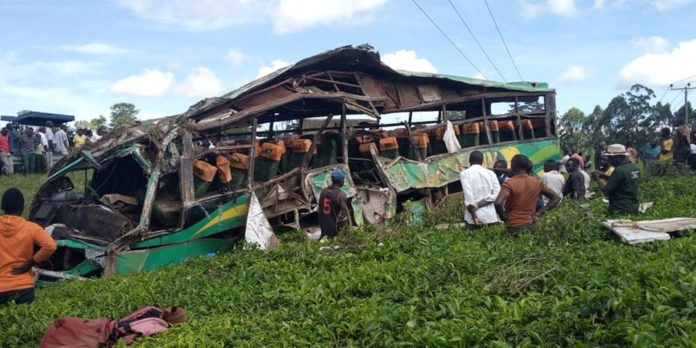
Government has finally agreed to lift the two week suspension that had been imposed on Link Bus company after the grisly Fort Portal accident last week.

A preliminary report by government on the accident has since blamed human error on the side of the bus driver to have been the cause of the accident.

Government consequently suspended Link buses for a period of two weeks as investigations into the grisly accident continue.

However, on Friday, the Works and Transport Minister, Gen Edward Katumba Wamala told journalists that government has finally lifted the suspension.

“Having gone all through processes and convinced that Link Bus has taken necessary process to address the challenges and have put in place measures to address gaps that were there, we have taken decision to lift the suspension against Link buses,” Gen Katumba said.

“They can start going back to the routes and also address some of the gaps created by their absence.”

He said the lifting of the suspension also came after the bus company offered to foot bills for burial arrangement and medical treatment for  the dead and injured respectively.

According to the Transport Minister, only buses  and drivers that have been verified by the ministry will be allowed back onto the road.

The development comes on the backdrop of meetings and promises by the management of the bus company to come good.

In a May, 12 letter to the Minister of Works and Transport, the Link Bus company Managing Director, Solomon Nsimire promised to come good on ensuring their drivers follow the set guidelines while on the road in the wake of the grisly accident involving one of their vehicles.

He said that since 2019, the company has been carrying out regular defensive driving trainings for its drivers both internally and those organized by the ministry.

“Following this accident, we recalled all our drivers for a three day defensive driving training and this was against conducted by UDSA and officials from Uganda Police. Our periodic training program will continue to be implemented,” Nsimire

The Link Bus Managing Director says will review and strengthen the conduct of their drivers to ensure they avoid a repeat of the grisly accident.

“We are going to review our disciplinary measures so that errant drivers are appropriately dealt with, including dismissal for those who persistently violate traffic regulations.”

“We shall work with our managers to ensure that drivers are given adequate time to rest so as to avoid fatigue which at times contributes to accidents.”

The management of the bus company said they would strengthen the driver disciplinary committee to help ensure drivers adhere to set standards.

“We are to strengthen this committee to ensure it can look into the life styles of drivers after work to ensure they get enough rest. Going forward, we are going to involve this committee in in the recruitment process of new drivers to ensure we hire competent drivers,” the Link Bus company Managing Director said.

Stories Continues after ad

Uganda Airlines: We should all fly with it

Ambassador Henry Mayega

The Yoweri Museveni administration, a couple of years ago decided to reinstate the national carrier, Uganda Airlines, for good reasons namely, and first, to spur tourism in the country, enable global citizens have direct access to Uganda rather than going through other destinations, diminish the exploitation of others who were overcharging Ugandans, improve regional connectivity, supersize national pride – like all other players do anyway. There were other beneficial spin-offs considered like creating employment opportunities to Ugandans in form of cabin crew, airline administrative support, operations agents, avionic technicians, flight dispatchers, aviation meteorologists, crew schedule coordinators, flight instructors as well as spurring comestible service providers.

Initially founded in May 1976 and headquartered at Entebbe, the carrier commenced operations in 1977 and ran into precarious management as well as financial issues in the 1990s – the underlying contributary factors to the career’s malaise of the incessant political instabilities of the 1970s and 1980s notwithstanding. While plans were underway to salvage it via privatisation, a matter remotely known to the recessing and innumerable critics as well as hecklers of the Yoweri Museveni administration, the then intending bidders, including British Airways and South African Airways, that had exhibited take-over interest eventually withdrew and, as a result, the carrier was liquidated in May 2001.

After judicious blueprinting and mapping out possible lucrative destinations, the carrier’s Dubai route was exquisitely launched during the famed 2020 Expo Dubai thanks to its dexterous CEO , Janifer Bamuturaki and team who are doing superbly in terms of upsurging our presence in the middle eastern skies. 

With the current fleet size of six plying to twelve destinations, the sky is the limit as to what the career can achieve over time; although there is no one-size-fits-all quick fixing to ensure that UA remains particularly competitive, the government and UA will have to interrogate the following documented aviation precepts: one, the choice to go heavily regional and avoid being sucked into the gymnastics of competing on a grand international scale in the short run; the adjacent geographical theme is particularly important because our regional trade volumes  and by extension, cargo, as well as human traffic are burgeoning by the day. This is not to suggest that we, forever, should remain localised to the current terminals, no. Long-haul destinations like Guanzhou, China, India’s populous cities and London, UK are particularly attractive due to historical and traditional mercantile reasons.

Every country may, of course, have their well-considered reasons for towing either of the two options: operating at a regional or a robustly grand international scale. 

Secondly, it should be a prudent requirement for government technocrats who officially globetrot using public funds to fly the national carrier where applicable as we (Uganda Embassy staff – Abu Dhabi) are doing in an act of patriotism to ensure steady cash-flow to the operations of the UA rather than donating to others – an ongoing practice of conventional wisdom by Kenya Airways and a couple of others to buttress their national carriers in an increasingly competitive aviation industry. It is worth noting that UA panes are the latest versions of their models and as such they are particularly alluring. This measure will, ideally, need the administration’s support to ensure compliance otherwise UA competitiveness may risk remaining a largely pipe dream.

Thirdly, it is always recommended to master-plan and maintain a uniform fleet – one that is not procured from innumerable manufacturers. The spin-off of this is: it lowers the maintenance costs because that single manufacturer gives you favourable and significant maintenance costs as a result of specialization and readily available standard extra-parts inventory. In otherwards, the more the suppliers/manufacturers of your aircrafts, the higher the maintenance costs due to multiple model series procurements as well as regulatory roadblocks.

Fourthly, the actual aircraft that makes up a uniform fleet is a significant aviation decision. It has a direct relationship with fuel efficiency and performance which are key in the short-to-medium-range flight segment management.

Lastly but not least, there are other contributary factors to the wellness and success of airlines that include superb service, profitability, uncompromising approach to safety and security, ethical business approaches as well as effective management. These things are within reach of the UA.   

Ambassador Henry Mayega

Deputy Head of Mission

Uganda Embassy

Abu Dhabi, UAE

Stories Continues after ad

Dfcu changes bank tariff after poor performance

dfcu bank

DFCU bank has announced that it is changing the bank tariff following a string of poor results in terms of profits recorded over the years.

A Bank Tariff means any fee schedule in respect of any fees for the opening, operation and maintenance of any Account or the provision of any Service.

“Dfcu bank wishes to advise customers that the bank’s tariff is changing effective 13th June 2022. The new tariff will be displayed al all branches,” the bank said in a notice.

The move suggests that bank is adjusting in their operations to offset the decline in profits.

DFCU released its results for the year ending December 31, 2021 showing that its profits had shrunk by a significant 45.7% to Shs13.2 billion from Shs24.3 billion in 2020, sending shockwaves amongst its major shareholders.

“DFCU bank like some other players in the market experienced a drop in profitability by 45% in 2021. However, the bank posted most of its income from earnings on interest on loans, but almost experienced a wipeout of this income due to provisioning for bad loans that accrued in the wake of the Covid 19 crisis,” Mathias Katamba, the bank’s Managing Director said.

The Board of the bank then suggested that no dividends would be extended to the shareholders in the wake of enlisting a drop in profits of Shs11 billion so that it can keep the financial institution with enough liquidity to deal with any possible emergency.

Its asset performance for the last five years has generally been minimal, from Shs3,030.6 billion in 2017, down by 4.7% to Shs2,888.3 billion in 2018; rising by 2.9% to Shs2,972 billion in 2019; again, rising by 19.1% to Shs3,539.4 billion in 2020, before slumping by 10.2% to Shs3,177.6 billion in 2021.

Further, overall, in these 5 years, Compounded Annual Growth Rate in assets has been a mere 1%. Yes, a mere 1%.

Big shareholders, according to insider sources, are waiting for the Annual General Meeting (AGM) to see how to revamp the struggling bank. Some top executives are likely to leave after the AGM.

Dfcu’s scandalous acquisition of Crane Bank put BoU in bad light to the extent that sections of the public began to question the integrity of the top managers. Former deputy governor Dr Louise Kasekende and Bagyenda left unceremoniously.

The sale of Crane Bank was a curse to both BoU and dfcu more so that it brought about court cases that the majority owner of Crane Bank Sudhir Rupareria won.

Stories Continues after ad

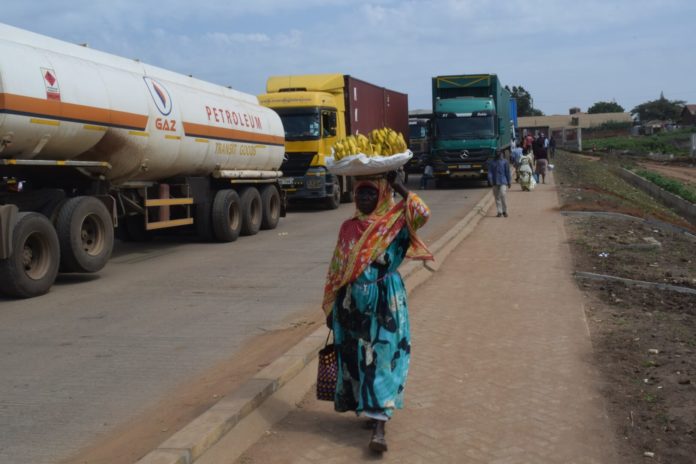
Uganda, Kenya in bilateral talks over fuel restrictions

Fuel trucks

Uganda is in talks with Kenyan over the latter’s decision to restrict the allocation of fuel to neighbouring countries amidst the global fuel crisis.

The Minister of State for Energy and Mineral Development, Hon. Sidronius Opolot Okasai during the plenary sitting on Wednesday, 11 May 2022 called for calm as Uganda engages Kenya over the trade restriction that is likely to worsen fuel prices in Uganda.

“The Ministry of Energy and Mineral Development is aware of the directive issued by the Government of Kenya. This is a very important matter to the two brotherly states of Kenya and Uganda.  I wish to request the House to allow the high level negotiations to proceed as we keep you updated on the outcomes,” Okasai said.

The minister was responding to a concern raised on the Floor of Parliament last week by Hoima East Division MP, Hon. Patrick Isingoma Mwesigwa regarding Kenya’s recent decision to restrict the allocation of shares of fuel to neighboring countries so as to address fuel outages in their own local market.

According to Okasai, the Kenyan government has directed oil marketing companies to ration the supply of fuel in favour of Kenya’s internal use.  

Apparently, Kenya will retain 60 per cent of the fuel for its internal use and allow transportation of only 40 per cent to other neighbouring countries.

On 05 May 2022, Hon. Isingoma informed the House how the Kenyan Government has decided to localise two ships; MT Campo, which carries about 133.5 million litres of petrol and MT Elka Athina which carries about 104.7 million litres of diesel with a purpose of restricting the supply of fuel to other countries.

Stories Continues after ad

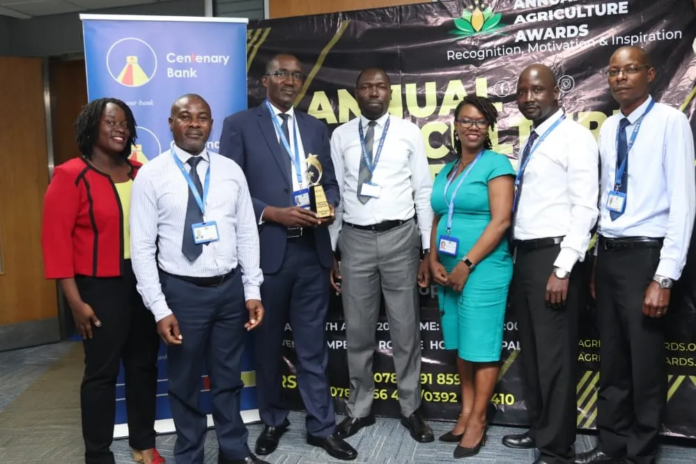
Centenary Bank ranked top Agriculture Financer of the Year

Receiving the award on behalf of the Bank, Emmy Paul Opolot the Manager, Linkage Banking, thanked the agriculture sector for recognizing the bank saying the bank was committed to ensuring agriculture products are scaled out to reach the farmer.

Centenary bank beat five other institutions which included Post bank, Stanbic bank, Pride Microfinance, Equity bank, and Opportunity bank all nominated for the Agri finance year award.

Centenary Bank has been ranked the top agriculture financer of the year 2021 during the Annual Agriculture Sector Awards. The awards were organized by the Ministry of Agriculture, Animal Industry and Fisheries and partners.

The award was handed over by the state minister for agriculture and Patron of the awards, Honorable Kyakulaga Bwiino who appreciated Centenary Bank for supporting the farmers and commended their efforts in ensuring the sector’s growth.

“I am honored to hand over this maiden grand award of agriculture financer of the year award to Centenary bank and I continue to implore you to support the agriculture sector through enabling flexible access to agriculture finances by our farmers and agriprenuers,” said Hon. Bwiino.

The awards are aimed at setting a culture of appreciating good service and ensuring good motivation for all players.

Receiving the award on behalf of the Bank, Emmy Paul Opolot the Manager, Linkage Banking, thanked the agriculture sector for recognizing the bank saying the bank was committed to ensuring agriculture products are scaled out to reach the farmer.

“We appreciate this award, we believe it is well deserved since Agriculture is one of the areas we prioritize at our bank. Our agriculture portfolio continues to grow bigger and this will go a long way to inspire and motivate the bank further,” Opolot said.

According to the International Trade Administration, in the fiscal year 2020/2021, agriculture accounted for about 23.7% of GDP, and 31% of export earnings and UBOS statistics estimate that about 70% of Uganda’s working population is employed in agriculture.

Centenary bank beat five other institutions which included Post bank, Stanbic bank, Pride Microfinance, Equity bank, and Opportunity bank all nominated for the Agri finance year award.

Stories Continues after ad

Heart Institute grilled over undeclared donor funding

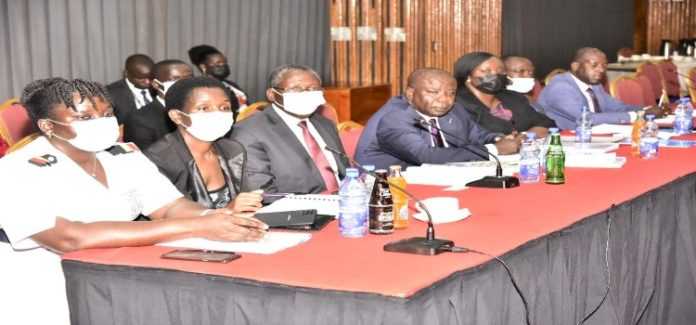
Officials from the Uganda Heart Institute appearing before Parliament's Public Accounts Committee

Officials from the Uganda Heart Institute (UHI) have been grilled for flouting financial laws and guidelines after it did not declare Shs1.76 billion from development partners to the Treasury.

The officials led by the Executive Director, Dr John Omagino, were on Wednesday, 11 May 2022 appearing before the Public Accounts Committee (Central Government) chaired by Hon. Medard Sseggona to respond to queries in the report of the Auditor General for the year ended 30 June 2021.

In the report, the Auditor General noted that the heart institute received Shs1.76 billion in off-budget financing which was not declared to the Treasury and therefore, not appropriated to the entity by Parliament.

According to the Auditor General, off-budget financing distorts planning and may result in duplication of activities.

Dr Omagino told the committee that whereas the funds were received directly from development partners for undertaking research activities, the institute will henceforth comply with the law in regards to declaration of any external funds.

“Management has noted the issue raised [by the Auditor General] and for any subsequent offers, systems will be put in place to ensure that UHI complies with the law,” Dr Omagino said.

His response triggered questions from the MPs as to why UHI, an autonomous body charged with coordinating the prevention and treatment of cardiovascular disease in the country, did not comply with the law.

Section 43(1) of the Public Finance Management Act, 2015 states that all expenditure incurred by government on externally financed projects in a financial year shall be appropriated by Parliament while paragraph 29 of the Budget Execution Circular for the financial year provides for declaration of any funds from an external agency.

“As an institute that employs accountants, you should be aware of the Public Accounting Standards of this country especially in regards to disclosure of funds. Anything in control of government must be declared to government. How did it happen that these funds from development partners were not declared to the Treasury?” Kumi Municipality MP, Hon. Silas Aogon asked.

Agago North County, Hon. John Amos Okot, said such suspicious undertakings are a recipe for misappropriation of funds and should be thoroughly scrutinised.

However, Dr Omagino dispelled the suspicion saying the funds were dispensed to serve its intended purpose as guided by the development partners.

“This money was from development partners and it was to facilitate research which is to inform policy. This money comes to the same account which is monitored by government systems and even when we are spending it, it is still monitored,” Dr Omagino said.

The committee chairperson emphasised that it is a legal requirement for agencies to declare any form of external or donor funds to the Treasury for accountability purposes.

“It is not that the money is lost – it is just a procedural issue that the Auditor General is raising as to why the procedures were not followed. We are avoiding a scenario where one does not declare funds with the intent to misappropriate it,” Sseggona said.

Omagino, however, insists that the funds were declared to the Treasury and promised to adduce evidence to the committee.

“Since you are insisting that the funds were declared, provide it in writing and show us the evidence that indeed you notified the Treasury and also show us how you used this money because money from donors is also audited,” Sseggona added.

UHI was given until Friday, 13 May 2022 to submit the required documents for scrutiny.

Stories Continues after ad