Stanbic Bank
Stanbic Bank
19.4 C
Kampala
Stanbic Bank
Stanbic Bank
Home Blog Page 611

21 Days of Y’ello Care drive: MTN reaches out to Vulnerable Groups in Rubaga and Masaka Youths

MTN's Jimmy Ssempuuma (2L) hand over a symbolic coffee seedling to Fr. Deusdedit Ssekabira (3L) and the members of the Masaka Diocese Youth Organisation

As the MTN staff continue their 21 Days of Y’ello care (21 DOYC) drive aimed at supporting communities to drive economic recovery, the company’s staff has today digitally upskilled and offered recovery packages to The Missionaries of the poor, a Rubaga-based charity home that offers shelter to orphans and homeless people.

Some of the youths in the community got lessons on how to use the computer and internet, create emails, search for business tutorials on YouTube, and more in the MTN Internet bus.

John Walusimbi, an ICT trainer on the MTN Internet bus, said there is a high turn-up of youths in the community who are eager to explore the knowledge of Information Communication Technology.

Alex Mutagaya a resident in Rubaga said that he has been educated on how to access videos teaching about tailoring on YouTube but didn’t have a smartphone or a computer to rehearse the steps.

On realizing such challenges, MTN has equipped and supported the Missionaries of the Poor Group with computers for digital skills to enable them to thrive in the digital era, printers, sewing machines, wheelchairs, and scholastic materials.

Other donations are; 200 Kilograms of sugar, 200 Kgs of maize floor, 200kgsof beans, a sewing machine, blankets and hygiene supplies including: sanitizer, liquid soap, adult diapers, surgical gloves, and toilet rolls among others.

Brother Zoachim Lakra, the proprietor of the home joyfully thanked the MTN team for the overwhelming contributions and suggested that this giving may continuously go to other disadvantaged groups that need a restoration for their groups too.

“MTN has not left us as orphans and indeed May God bless you with all the works of your hands,” said Lakra.

In his remarks, Richard Yego, the Managing Director of MTN Mobile Money Services, thanked the MTN staff for engaging in the community activities and sharing their digital skills with the vulnerable groups.

“We are pleased to strengthen our communities by helping them regenerate their businesses and empowering youth and disadvantaged persons to develop in their societies,” said Yego.

In resonance with Yego, Micheal Sekkade, the General Manager of Human Resources at MTN, says this 21 Days of Y’ello Care campaign creates love between MTN and the many that it supports, which he affirms is a virtuous edge for the company and the public.

Masaka 21 Days of Y’ello Care

Still today, another group of Staff members also reached out to the Masaka Diocesan Youth Organisation under the same campaign. MTN Uganda is going to support the training of up to 2,000 youths in coffee growing, which is a lucrative cash crop in Masaka, as a way of helping them achieve economic growth.

In an event presided over by Fr. Deusdedit ssekabira, the Maska Diocese youth leader, MTN’s Jimmy Ssempuuma also added that MTN will support the youth in harnessing the power of digital skills to better manage their coffee-growing enterprise, such as using the internet to find more innovative ways tending to their coffee plantations, adding value to their coffee as well as finding the right market for it.

The MTN 21 DOYC is an annual MTN staff volunteerism campaign that secures high participation levels of MTN staff in high-impact social projects to uplift and empower the local communities in which the company operates.

Held under the theme; Empowering Communities to Drive Economic Recovery, this year’s MTN 21 DOYC is aimed at supporting 10 entrepreneurship groups of women, youths and disadvantaged populations across Uganda in their recovery from the adverse economic effects of the Covid-19 Pandemic.

The groups that have been supported so far include; Focus for Life development in Kawempe Division, the Women Tailoring group in Kamwokya, the Jinja-based Tabulera Kawuma deaf carpentry as well as the Lira-based Teso bar Deaf Carpentry.  The other groups that are yet to be supported include; the disabled association of Fort Portal, the Bunusya abarema twetungure association in Mbarara, the Glorious widows of Makindye, and the Nakawa Market Vendors Association.

MTN has been extending digital skills training and donating a relief cash package worthUgx.8Million to each group, as a way of boosting their businesses. In addition, MTN staff are undertaking cleaning exercises and donating cleaning equipment to the communities.

Stories Continues after ad

Shamira Nabadda selected for Women’s Africa Cup of Nations

Nabadda

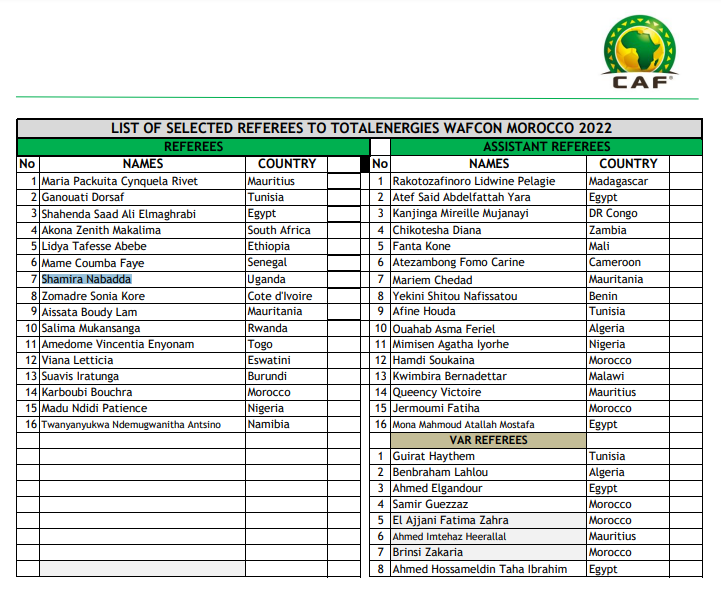
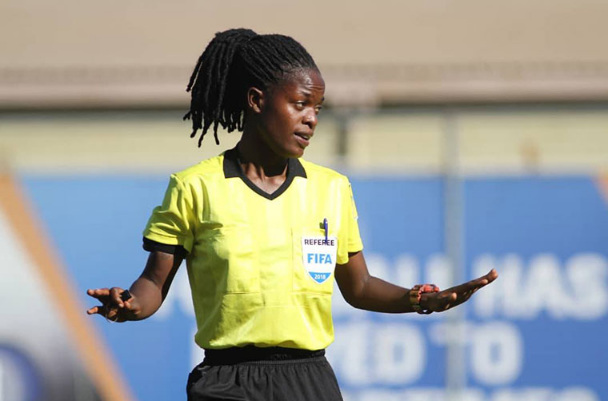
Shamira Nabadda is the only Ugandan referee to have been selected by CAF for the upcoming TotalEnergies Women’s Africa Cup of Nations Morocco 2022.

The tournament will be played between 2nd July and 23rd July 2022 in Rabat and Casablanca.

The list comprises of 16 referees, 16 assistant referees and eight Video Assistant Referee (VAR) from 24 countries have been selected following a rigorous process.

Nabadda is an experienced centre referee with a Fifa badge who has officiated at tournaments like the Copa Coca-Cola schools tournament, the Fufa Women’s Elite League and the Uganda Premier League since 2016.

According to Caf, the process started a few years ago with 226 women match officials that were evaluated over the period – a product of CAF’s mission to improve the standard of match officiating in Africa and creating world class referees.

Rwandan Salima Mukansanga, who made history at the TotalEnergies Africa Cup of Nations Cameroon 2021 by becoming the first woman to referee a match at the competition and was recently selected as the only women referee from Africa to FIFA World Cup Qatar 2022 headlines the list alongside Bouchkra Karboubi (Morocco) and Carine Atezambong (Cameroon) – all part of that historic game in Cameroon.

CAF Director of Refereeing Eddy Maillet said: “Africa has made serious leaps in the development of women match officials. This final list compromises of currently the best in the continent. It took us a long time to get here. The several workshops and training camps we held assisted us in getting to the final decision.

“It was essential for us to bet on top quality, refereeing being one of the main priorities of CAF. And to fine-tune the last details, we are organizing a preparation course for all the referees of the competition, starting from 25 June 2022 in Rabat.”

The training and development of the referees included practical sessions in matches. CAF has been encouraging women referees to officiate at men national leagues in the continent.

The opening match of the TotalEnergies Women’s Africa Cup of Nations, Morocco 2022 will feature hosts Morocco and debutants Burkina Faso on 2 July 2022 Prince Moulay Abdellah Complex, Rabat.

Uganda Crested Cranes will open their campaign against Senegal on 3rd July before facing hosts Morocco on July 5 and end the group stage with Burkina Faso on July 8.

Stories Continues after ad

WHO supports the leadership role of Africa Centre for Disease Control and Prevention

Vaccination

The World Health Organization (WHO) welcomes the continental drive to strengthen the architecture of pandemic preparedness and response in Africa. This is critical for protecting and saving African lives as evidenced by the Covid-19 pandemic.

WHO fully supports the ongoing process led by the Africa Union to strengthen the Africa Centre for Disease Control and Prevention (Africa CDC) and applauds its elevation to an autonomous body.

WHO welcomes the ongoing discussion led by the Africa CDC on a potential continental pandemic declaration mechanism. It is important to assess the benefits and the risks for African Member States. Such a mechanism could reduce Africa’s dependence on others but could also trigger more travel and trade restrictions and isolate the continent as occurred with the emergence of the Omicron variant of the COVID-19 virus.

Fifty-four African Member States are also currently contributing to the new global architecture for health emergency preparedness, response and resilience led by WHO. Given increasing global interconnectivity, which we have seen with COVID-19, this negotiation will determine how Africa will be protected from outbreaks arising elsewhere and how to manage health emergencies originating in Africa.

Concerns over how the global and continental processes will work together, as well as questions over Africa CDC’s authority to declare public health emergencies of continental security led several African Member States to approach WHO for advice. Due to these requests, WHO understood there was a need to share advice more broadly and our African country representatives briefed their government counterparts.

One WHO official in a country office developed a brief to help inform his health authorities. Contrary to media reports, this was not an official document and was not widely circulated.

WHO believes a careful reflection on the interfacing between the declaration of a public health emergency of continental security and the global process would be of benefit.

As a long-standing partner and proponent of the Africa CDC, WHO fully applauds its elevation into a more robust and responsive institution as defined by Member States.

WHO commends the Africa CDC’s work to date and supports further strengthening this essential institution, which as it becomes more fully resourced and empowered will take on a critical role in ensuring better health for all people across the African continent.

WHO has been pleased to support the Africa CDC since the beginning, helping with its establishment by seconding a senior official who served as Deputy Director during the organization’s first two years and by providing funding and technical collaboration.

A Memorandum of Understanding governs our partnership and our staff work in tight collaboration on key health issues such as the COVID-19 pandemic and strengthening public health capacities of countries. This collaboration is critical to ensuring our Member States get consistent advice and complementary support from both organizations.

We look forward to a continued fruitful collaboration which will lead to the Africa we all want, where everyone is protected from diseases and has access to quality and affordable health care.

Stories Continues after ad

Three ADF suspects arrested in Luweero

Suspects

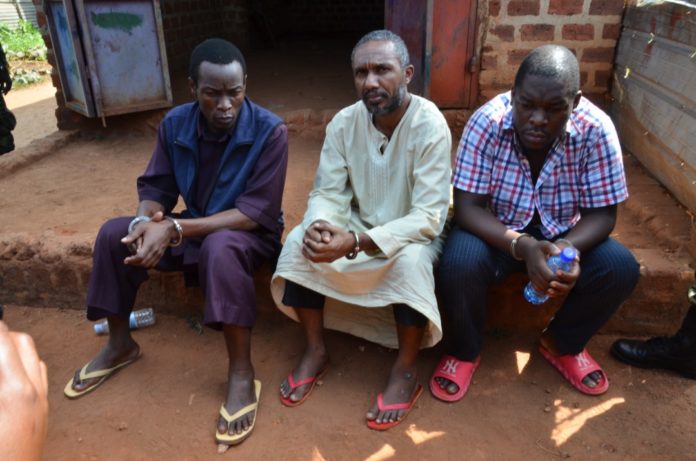
Security personnel have identified a man by the names of Umar Ajobe and his two colleagues, a resident of Kikuba Jinja village, Kasana PWD (Public Works, Department) parish in Luweero District to be part of the Allied Democratic Forces (ADF).

The residents of the village have overtime been suspicious of Umar because none of his family members was allowed to associate with the mates in the village.

“Umar’s household doesn’t go to the mosque or any other place in the vicinity and neither do his children go to school” said one of the locals.

Umar Ajobe who is suspected to be an ADF ally owns a set of houses along Bombo Road, Luweero Town Council where he lives with his wife and eight (8) children. He operates a welding station infront of his home. He is believed to be under the leadership of Akiba Kabanda, a suspect of the November twin bombs that terrorised Kampala City.

It is believed that Umar has been training his young children in acts of terrorism as confirmed from his 7-year-old son who told the security personnel and the press at the premises that he could reassemble a riffle.

While talking to the press, the LC 3 Councillor of the village Mr. Lawrence Mwesigye was so remorseful on this incidence in his area and acknowledged that, on many accounts he has not believed the government on such incidences and has always believed them as fabricated stories, but was astonished to find it in his village.

The area Defence secretary Mr. Abudu Kivumbi witnessed to have met a young girl (one of Umar’s daughters) on one account and on asking where she resides, she answered “Banziba” translated to ” I was kidnapped” This triggered him to ponder more into this matter and later handed it to the area police.

The Defence Spokesperson Brig Gen Felix Kulayigye, urged the local leaders of the area present at the scene to always be vigilant and endeavor to know their residents, their families and their areas of origin.

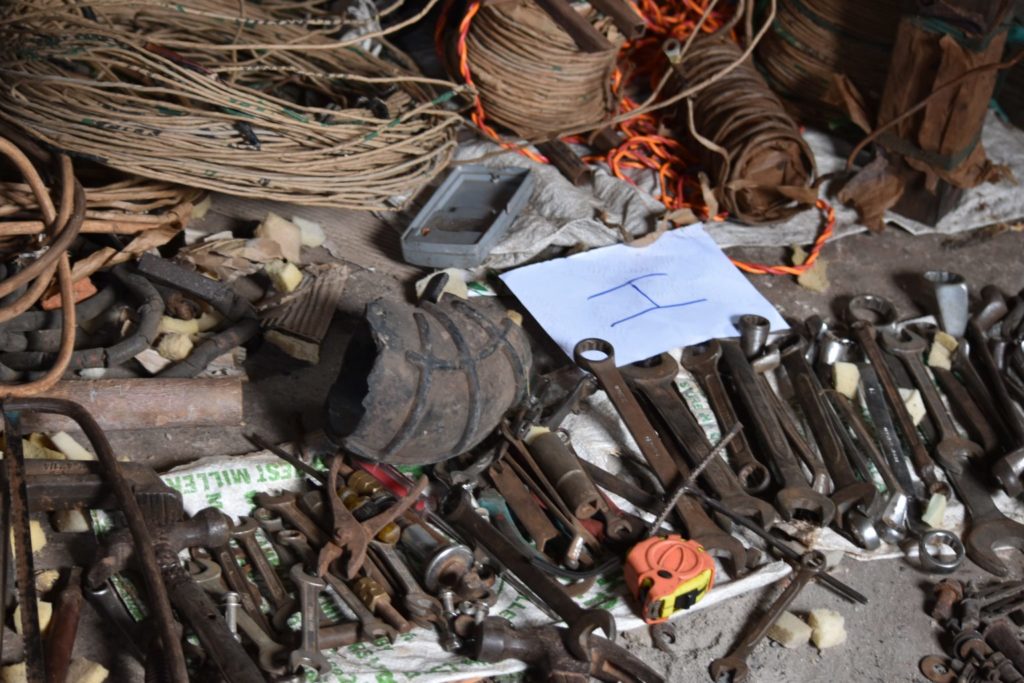
A number of items were recovered at Umar’s home residence such as mortars, transformers, gun powders, gun cleaners, silencer gun and Vehicle Borne Explosives among others.

The suspects have been taken to Crime Intelligence Directorate in Bukoto for more interrogation.

Stories Continues after ad

“We are looking at a loss of $5m” – Tycoon Sudhir tells Billionaire Tomorrow

Sudhir-Ruparelia at flower factory

It takes a real billionaire to keep a cool head and stay investing when you wake up on a hot Kampala morning to find out you’re about to lose $5 million inincome. Just another hard day’s night for Ugandan billionaire Sudhir Ruparelia who plans to double his fortune estimated at $1.2 billion, against the turmoil of world economic uncertainty.

In the first few months of 2022, it looked so good for Sudhir Ruparelia’s hot rose business, on 80 hectares of land, near the cool deep waters of Lake Victoria in Entebbe. The future was looking good as the year unfolded. The rose farm paid its workers overtime to live on the farm so it could keep serving the lucrative European markets throughout COVID-19.

As the world economy staggered to recovery the roses of Uganda were selling strongly through the famed flower market, in Amsterdam, where the rules may be tough, but the hard currency contracts are solid and regular.

“This year we had $20 million dollars of contracts signed and everything looked hunky-dory , it was beautiful,” says Ruparelia.

Then war broke out in Ukraine sending the markets into chaos. Most of Ruparelia’s Entebbe reared roses were in the supermarkets of Germany France and Britain where money is tight.

“In the first three months of the war, our partners and buyers came back and said please help us; our consumer demand has gone down by at least 25 per cent ,let’s downsize our orders by 25 per cent… For consumers in Europe, that was the cost of heating and filling up their cars. Exporting every day about half a million roses. Going to have to find new markets for at least 125,000 flowers a day. Four million roses a month to move?”

Ruparelia has cut costs and tried to sell to new supermarkets in Britain, but financially the damage has been done.

“I see a lot of tough times ahead because a lot of countries, over the last two years, have been borrowing money and printing it creating inflation in their own countries,  mainly the western world, they have printed money and they can’t even control their own inflation now. Russia and Ukraine war has brought an increase in prices and all these people who printed money are now levying heavy taxes on their population and you are finding consumer demand has gone down tremendously.”

When the European economy sneezes the Ugandan economy can catch a cold.

“Our problem is the fuel which is all imported, but hopefully in a few years’  time, we will have our own fuel. We are all facing huge price rises. If you are a farmer who produces food and transports it to the cities; when you transport to the cities there is a huge cost in transportation,” says Ruparelia.

“Here in Uganda we are back on our feet and we hope in the next 10 to 12 months we will be at pre-2019 levels where the economy is growing at six to seven per cent. At the moment we are about four per cent”

Ruparelia believes that the impending oil boom in Uganda – awaiting investment, infrastructure and expertise – is the key to the country’s prosperity.

“Oil agreements have been signed in Tanzania and the oil corporations are going to invest about $15 billion in the next few years and mobilization has started. By the end of this year, you will see a huge number of people coming into this country to start the operation – so that is a very positive thing for us,” he says.

“The government of Uganda should export about 200,000 barrels a day that will probably get about $3 billion in revenue – so for a country like Uganda that will completely change the dynamics here.”

The oil business is likely to bring prosperity through the multiplier and Ruparelia’s hotel and property empire is almost certain to earn a large slice of the hard currency expected to tumble in.

“For us we are not interested in the direct oil business its controlled by government and corporate. However, we have a big role to play in all the service delivery to the oil industry.

It is going to be a huge, huge,  plus for Uganda. Anybody  serious in business; Uganda is the place to be right now.”

Through COVID-19 and the economic turmoil of the last decade, Ruparelia keeps his head and keeps on investing.

Ruparelia has $200 million sunk in eight construction  projects including a

65,000 square metre hotel extension, an office block of 35,000 square metres A new office development starting this year. He believes entrepreneurs can get between

18 and 25  per cent returns on real estate in Uganda.

“We have invested so much for the last 30 years. This is the time we are going to double and triple our wealth.”

The billionaire of Kampala is also trying to open up a new market in the construction business. His company is building  156 apartments and condominiums in the belief that there is a strong emerging market among middle-class Ugandans and the expatriates expected to follow the oil boom.

“It is incredible, we haven’t even launched yet and already 30 per cent of the apartments are gone,” he says…

On the financial side, Ruparelia, since the last time we spoke in 2021, has regained control of the bank he built – Crane Bank – through a string of drawn-out court cases. Now he is following up with a $340 million lawsuit in London against 15 parties whom, he claims, bought his bank for a song. He has two legal teams working on the case in London.

“We have a very high chance of going through and a very strong argument so my belief is we are on strong ground.”

The billionaire believes the world economy is set for more turmoil this year; a sentiment backed up by an economic outlook statement by Fitch Ratings on June 13.

“Recent lockdowns in China are adding to global manufacturing supply-chain pressures. Energy and food supply disruptions from the Russia-Ukraine war are having a swifter impact on European inflation than expected. Inflation pressures are also building in the services sector, particularly in the US and UK, where tight labour markets are boosting nominal wage growth. Fitch has revised up its inflation forecasts widely and sharply, particularly for Europe in 2H22,” says Fitch Ratings.

“We have lowered our world 2022 GDP growth forecast by 0.6pp since the March GEO to 2.9%. The biggest revision is to China where we now expect growth to fall to 3.7% this year, down from 4.8% in March. We have revised down our growth forecasts for the US by 0.6pp to 2.9% and eurozone by 0.4pp to 2.6%. We have cut our world growth projection for 2023 by 0.1pp to 2.7%. The lockdown in Shanghai will lead China’s GDP to fall in sequential quarterly terms in 2Q22 and with the ‘dynamic-zero’ Covid-19 policy still in place, we do not see a swift bounce back. In the eurozone, inflation will drag on consumers’ real incomes, and German industry is being hit by supply-chain disruptions and the China slowdown.”

Ruparelia believes the struggles of northern hemisphere economies could play into the hand of emerging African economies like Uganda.

“The cost of borrowing is going to go up from the European western point of view. They need to control inflation and the only way they can control inflation is through interest rates. If interest rates are raised in the west it is going to affect the rest of the world. So, we feel, despite all of this there is still a lot of money out in the west and they need to invest somewhere.”

That somewhere could be Uganda, he feels, if the nation can come up with good projects, increased infrastructure and decreased bureaucracy.

“It can take six months to get planning permission here, but, in the UK, it can take up to two years, so it is not all bad here,” he says.

“The usual problem is here you might have electricity buzz one of your transformers, you have You have the authorities other members of parliament, everybody wants to get involved in everything you do. This is the kind of problem we have here and what is also interesting is in Europe and South Africa you can plan your things many years ahead in terms of development. In this part of the world we have management by crisis meaning you wake up in the morning and find what are your immediate problems and you resolve these first. Then you go to your office and do your business.”

What would Ruparelia say to African entrepreneurs who have also lost millions or, maybe, merely sitting amid the ruins of their street corner business?

“Sorry mate, try again, don’t give up.”

Stories Continues after ad

Activists launch campaign to save world’s largest wetland

Sudd swamp

A concerned group has petitioned South Sudanese lawmakers over the illegal exploitation of the Sudd Wetlands and its ecosystems.

The group, in a petition, demanded that the current illegal dredging exercise that was illegally signed by the Ministry of Water Resources and Irrigation with Egypt be immediately suspended until a local homegrown solution has been found.

These solutions, according to the petition, must be informed by science with the participation of the general public as well as communities affected by floods.

“[We] demand that the National Assembly summon, amongst others, the Minister of Water Resources and Irrigation, the Minister of Foreign Affairs and International Cooperation, the Minister of the Environment and Forestry, and the Governor of Unity State to answer questions about the subject matter,” partly says the petition.

Officials from several government ministries, including the president’s office, and Unity State officials publicly contradicted each other on the arrival of equipment for the project to dredge and clear vegetation in tributaries of the River Nile.

The concerned citizen’s coalition also demanded that the national assembly forms a fact-finding mission to Unity State to ascertain that the equipment is not being assembled to be used for any illegal dredging of any river in South Sudan.

“Save The Sudd Campaign demands that South Sudanese experts in the field and related fields take the lead in facilitating feasibility studies, research, and dialogues to find home-grown solutions to the flooding and other challenges associated with the swamps,” further stressed the 14 June, 2022 petition.

Meanwhile, the group advocated for an inclusive dialogue that includes communities living within the swamps’ vicinities who depend on its vast resources for their livelihoods and those affected by flooding from surrounding swamps.

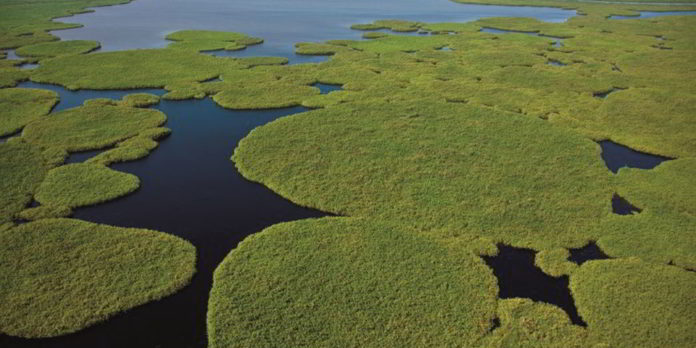
The ‘Save the Sudd campaign’ is an initiative to rescue a vast swamp formed by the White Nile‘s Baḥr al-Jabal section. The area, which the swamp covers, is one of the world’s largest wetlands and largest freshwater wetland in the Nile basin.

Stories Continues after ad

Crane Bank continues to haunt Dfcu as 2021 provisions continue to eat away shareholder value

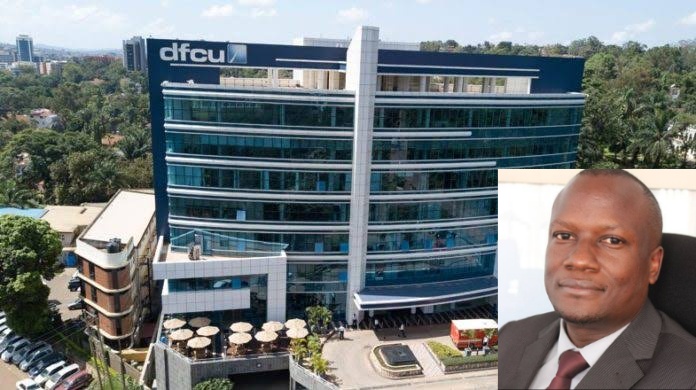
Dfcu Headquarters. Insert is MD Mathias Katamba

When Dfcu controversially bought Crane Bank Limited (CBL) in January 2017, it immediately became one of the most profitable banks in Uganda as the former owners of CBL cried for the loss of their bank.

Dfcu’s Crane bank acquisition boosted its profitability in 2017 with net profit nearly tripling to Shs127 billion, up from Shs46. 27 billion in 2016 and Shs37 billion in 2015. That year only Stanbic Bank, the largest bank in the country by assets, could come near Dfcu.

To achieve the milestone above, Dfcu rode on the loans it had acquired from CBL, which was unfairly closed by the Bank of Uganda (BoU) in October 2016, for allegedly being undercapitalized.

Lowest net profit since 2007

Dfcu’s low loans uptake explained, CBL in picture

Like already said above, Dfcu benefited a lot from the loans acquired from CBL. When they ended, Dfcu fell into trouble. They could not innovate the new ways of selling loans.

The financial statement of Dfcu for 2021 confirms how important were the acquired CBL loans: “Loans and advances declined by 15.03 per cent in step with fair value losses on other financial instruments reducing by 38.87 per cent to Shs30.86 billion ($8.60 million) largely held up by loans acquired from the purchase of Crane Bank.”

Remember that Abdu Katuntu’s COSASE inquiry established that CBL was unfairly closed by BoU. And BoU’s Benedict Sekabira confirmed that CBL before it was closed only needed about Shs150 billion to stay afloat, yet his colleagues then Justine Bagyenda and Louise Kasekende claimed BoU had sunk in CBL Shs478 billion for liquidity purposes, even though BoU officials then failed to account for all the money.

To protect its bad business with Dfcu, BoU officials wanted CBL shareholders to pay about Shs397 billion, allegedly embezzled. They would sue Sudhir Ruparelia and Meera Investments, all belonging to Ruparelia Group of Companies. But Mps in the 10th Parliament said CBL shareholders could not pay Shs397 billion because they never accessed it.

However, in the ruling delivered by the Supreme Court of Uganda in February 2018, the Supreme Court upheld the earlier rulings of the High Court and Court of Appeal that the BoU) pay the costs of the Shs397 billion case the central bank and Crane Bank Limited (CBL) in Receivership lodged against Sudhir Ruparelia and Meera Investments, alleging that the respondents had swindled Shs397 billion from the former CBL.

In his ruling of August 26, 2017, Justice David Wangutusi agreed with Sudhir and Meera Investments that CBL in Receivership had no capacity to sue because it had no locus Operandi, awarding costs of the suit to the respondents. BoU rushed to the Court of Appeal and the ruling of the High Court was upheld to their dismay.

Remember that in the Shs 200 billion transaction Dfcu was misled by BoU to believe that 48 CBL branches then belong to the bank, which was not the case. It could be stripped of the branches in a legal battle by Crane Management Property Services, the rightful owner of the branches.

Since then, Dfcu has had bad business, seeing its growth in different business lines coming down. That is why its post-tax earnings in the financial year 2021 fell 61.32 per cent to Shs9.31 billion, underperforming our end-of-year estimates by 80.57 per cent.

Latest Financial Statements

According to the latest financial statements, the reduction in Dfcu’s earnings was due to higher provisions that spiked 384.32 per cent to Shs148.36 billion, exceeding the cumulative provisions over the prior 5-years (2016-2020) of Shs 134.89 billion ($37.57 million).

As a result, Dfcu’s credit loss ratio (CLR) jumped to 9.84 per cent, far above 1.73 per cent that Dfcu reported in 2020 and the 5-year average CLR of 3.56 per cent.

Non-performing loans nearly doubled with a 191.25 per cent jump moving the NPL ratio to 18.17 per cent from 5.30 per cent in 2020 (FY2021 local listed peer bank average NPL: 7.43 per cent).

New income less than 2020 figures

Despite the sharp reduction in FY2021 earnings, total incomes rose to Shs450.14 billion ($125.37 million), but remained 5.03 per cent below our FY2021 projected revenues of Shs473.97 billion ($133.51 million).

Net interest income up

Dfcu’s strategy to move away from expensive deposit funding may have paid off as net interest income (NII) rose 17.10 per cent further improving net interest margins (NIMs) to 11.29 per cent from 9.92 per cent in 2020.

Return on investment down

While the group appears to have made modest improvements to the cost to income (FY2021: 49.79 per cent versus FY2020: 62.99 per cent), the impact of provisions depressed return on assets (ROaA) to 0.28 per cent from 0.75 per cent and return on equity (ROaE) to 1.57 per cent relative to 4.14 per cent last year.

Financial Highlights:

Revenues improved 8.55 per cent to Shs450.14 billion ($125.37 million) supported by a 34.55 per cent increase in non-interest income to Shs95.34 billion ($26.55 million). Interest income was up 3.19 per cent to Shs354.80 billion ($98.82 million) with interest on government and other securities rising by 6.30per cent to Shs 63.27 billion ($17.62 million).

Operating expenses dropped by 4.24 per cent to Shs183.52 billion ($51.11 million) from Shs191.64 billion ($53.37 million) lowering the cost to income to 49.79 per cent from 62.99 percent.

 Impairment losses up five-fold

However, impairment losses rose five-fold (384.32 per cent) to Shs148.36 billion ($41.32 million) from Shs30.63 billion ($8.53 million) in 2020. 

Total assets slump 

Total assets for the group were down 10.34 per cent to Shs3.14 trillion ($873.63 million) attributable to an 88.52 per cent drop in marketable securities.

However, Dfcu saw its liabilities drop by 12.49 percent to Shs2.54 trillion ($708.18 million) from Shs2.91 trillion ($809.27 million) attributed to declines in both customer deposits and borrowed funds by 12.07 per cent each, a 12.73 per cent drop in subordinate debt and provisions shrinking by 13.10 per cent to Shs2.19 billion ($609.95 million).

Shareholders’ equity flat

Shareholders’ equity was flat with a gain of just 0.19 per cent to Shs594.03 billion ($165.44 million) from Shs592.91 billion ($165.13 million) in 2020. Retained earnings increased by 14.04 per cent to Shs390.12 billion ($108.65m) from Shs342.10 billion ($95.28 million).

Stories Continues after ad

Africa steps up targeted #Covid-19 vaccination of most at risk people

Peace Piwang, Chief Human Resource Officer of Housing Finance Bank receiving the COVID-19 jab.

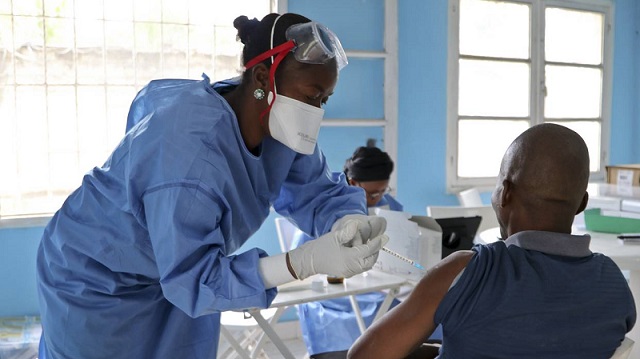
Africa is intensifying #Covif-19 vaccination of high-risk population groups with some promising signs. Nearly 50% of health workers and people over the age of 60 are fully vaccinated against the virus in countries reporting data to World Health Organization (WHO).

The data from June 2022 from 31 countries reporting on COVID-19 vaccinations of high-risk groups shows a significant increase compared with the end of December 2021 when only 33% of health workers and 10% of seniors were fully vaccinated. WHO recommends 90% vaccination coverage for health workers and 80% coverage for people over 60.

Only two African countries (Mauritius and Seychelles) have fully vaccinated 70% of their total population. Rwanda is expected to achieve this target by the end of the month based on the pace of its current uptake, bringing to three, the number of countries in Africa reaching the 70% global target by the end of June.

However, Africa has a largely youthful demography, with 45% of the continent’s population under the age of 18. In a bid to use vaccines strategically, most countries are targeting their adult population. WHO is recommending to countries with low vaccination coverage to focus on high-priority groups health workers, older adults and people with comorbidities. The continent’s coverage of people over 18 years is estimated at 34%, significantly higher than the 18% full coverage in the general population. Nine countries have fully vaccinated more than 70% of their adult population, while 21 have reached more than 40% of adults.

“Having been beset by poor access to doses, costly delays and shortfalls, Africa’s COVID-19 vaccination progress so far is no mean feat,” said Dr Matshidiso Moeti, WHO Regional Director for Africa. “Africa’s youthful population has helped the continent weather the COVID-19 pandemic. While protecting young people at high-risk of COVID-19 is paramount, focusing efforts on vaccinating older people, health workers and other vulnerable populations will ensure we stay a step ahead of the virus.”

WHO recommends that countries continue to focus on high-priority populations such as health workers, people with comorbidities and older people, and to diversify vaccination delivery strategies, combining vaccination in fixed health facility sites with efforts to take vaccination to the communities through mass vaccination campaigns and intensification of routine immunization activities.

To date, at least 31 countries have planned mass vaccination campaigns until end of the year. During mass vaccination campaigns, WHO recommends that countries set up bespoke mobile teams for targeted vaccination of high-priority groups. Learning from the experience of HIV testing and treatment, provider-initiated COVID-19 vaccination should be offered in primary health care and in special units offering care to people with comorbidities such as HIV, diabetes, cardiovascular diseases and cancer.

WHO and partners are focusing support on countries that risk falling behind. Fourteen African countries with less than 10% vaccination coverage are to receive multi-partner country support, with WHO stepping up efforts to strengthen the management of COVID-19 vaccination data in its assistance to these countries, many of which are also grappling with humanitarian crises and/or diseases outbreaks.

Over the past week, the number of new COVID-19 cases in Africa marginally increased following a sustained three-week decline. This slight uptick was due to the recent surge in cases reported in East and North Africa. As of the 13 June 2022, there were 11.9 million COVID-19 cases in Africa, including 254 442 deaths.

Stories Continues after ad

Post Budget dialogue: Experts call for voluntary payment of taxes

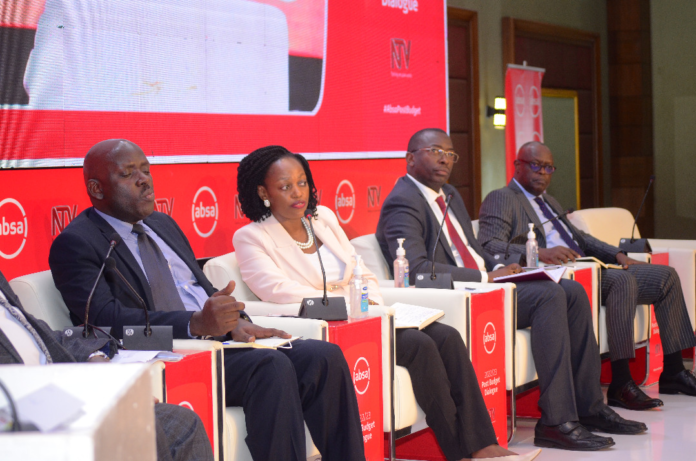
Post National Budget dialogue panelists

On Tuesday the Minister of Finance Planning and Economic Development, Matia Kasaija presented Shs 48 trillion budget for 2022/2023 financial year, prioritizing security.  

Under the theme ‘Full monetization of the Economy through commercial agriculture, Industrialization, market access and digital transformation’; Kasaija said the total resources available for government expenditure will be obtained from both domestic and external sources.

Speaking at the Post National Budget dialogue earlier today, Mr. Mumba Kalifungwa, Managing Director of Absa Bank Uganda said the budget came at a time when the country is facing economic disruptions created by Covid-19 the pandemic coupled with various external shocks including tighter global financial conditions, high inflation rates, elevated debt burdens and fiscal consolidation.

“As the Absa Bank, we are shall be investing where there is need be it Agricultural sector, tourism and risk management to boost economic recovery,” he said.

Mr. Patrick Ocailap, the Deputy Secretary to the Treasury, the budget is anchored on the National Development Plan (NDP) III. The Government intends to grow the economy and create wealth for more households. To achieve this Uganda Revenue Authority (URA) indents to collect Shs 23 trillion.

Since the government allocated Shs 100billion for Parish Development Model (PDM), the preaching should start from Parliament noting that they are going to be equipped with the essential elements that must be delivered to the parishes to galvanize support.

Given the economic situation in the country, Ocailap said the current strike against the shooting commodity prices is not necessary and advised the energy should be utilized to do other things and leave our youths in the centers to access Emyooga funds and boost their businesses.

Patience Rubagumya, Commissioner for Legal Services and Board Affairs at URA said the tax body would have loved new measures coming in to increase our collection. Following the outbreak of covid-19, a lot of businesses are struggling.

Since the reopening of the economy, March to May, the tax body has registered surpluses, showing the country’s economic resilience and recovery. Businesses are picking up slowly and we should be able to improve our performance.

“We need to create stability in the fiscal space. We have had complaints from our taxpayers that we need to create stability. I am glad that we did not change the tax regime this year. The tax compliance is really low. It is not just about the duty of URA to collect taxes, we need everybody to be in this conversation,” she said.

“I like the fact that URA has found a way to incorporate the collection of taxes from digital service providers to ensure that tax collections not only affect the consumers of their services but the providers as well.” Michael Segwaya, the Chief Finance officer of Absa bank said.

The next financial year, URA aims at collecting Shs 23 trillion, an increment of Shs 3 trillion. Segwaya said the increment in collections needs a lot of thinking on how the country will manage to balance tax collections in the current environment.

He said Uganda needs to sit down with our neighbors and get the value of the Democratic Republic of Congo (DRC) being part of the East African Community (EAC). Despite political instabilities, DRC has a big market for the rest of the EAC member states.

“We must facilitate agriculture to manage the climate change that is coming. We must keep wetland wet,” he said.

Mr.Patrick Ayota, the Deputy Managing Director of the National Social Security Fund (NSSF) the markets are inefficient. There are markets in Kenya but the inefficiency of it allows things to be blocked. Therefore Uganda needs to take this fight to where the market is.

Richard Mubiru, Director At Uganda Industries Manufacturing Association said the government should know that choices have consequences. “We need to make the choice of giving people money and let them be part of the money economy.

Stories Continues after ad

NSSF, VISA, Centenary launch first social security Smart Card in East Africa

Richard Byarugaba, the NSSF MD who is praised for strategic investment.

The National Social Security Fund (NSSF), Visa and Centenary Bank have unveiled a three-in-one social security smart card which embeds NSSF functionality, bank functionality and a loyalty program.

The card forms a critical component of the Fund’s digitalization strategy which is geared at leveraging new technology to improve efficiencies, customer experience and ultimately make savings a way of life for Ugandans. It will support the Fund’s transition from a laminated membership card to a functional Chip and PIN plastic option.

Using the card, the Fund’s members will be able to directly withdraw their NSSF savings upon qualification, deposit and withdraw money from their bank accounts, pay bills, make transactions online,at ATM’s and Point of Sale terminals. In addition, they will access exclusive deals from selected merchants.

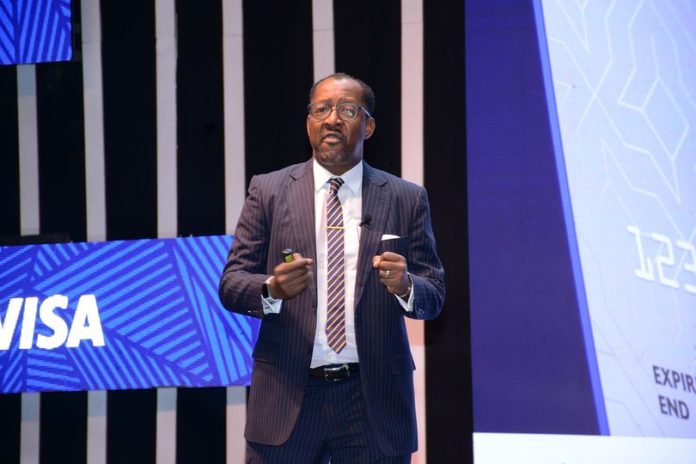
Speaking at the launch, Richard Byarugaba, the Fund’s Managing Director said the innovation will go a long way in driving financial inclusion and promote service delivery to its over 2 Million members.

“For a long time, we have wanted to replace the laminated membership cards with more functional cards that can allow members access more than viewership of their account balance. I am glad that this dream has finally come to fruition. I believe that this will greatly improve our customers’ experience” he said.

Byarugaba said “The smart card complements our digital claims process, providing easy and faster validationfor qualifying members to withdraw their savings in a timely manner. This shows that we are on the right track to realizing improved turnaround time for benefits processing to one day, by 2025.”

The Smart card comes in two forms namely, the Debit smart card and the Prepaid smart card. The debit card comes with an NSSF Smart Life bank account that can be opened at Centenary Bank whereas the Prepaid smart card can be loaded with funds and this card is available to both customers and non- customers of the Bank. Both cards can be used to make purchases at any Visa enabled points worldwide. Members have an option of choosing their card of preference.

Under the partnership, Centenary Bank will provide NSSF members with direct banking services while Visa will facilitate the financial transactions at any of their locations worldwide.

Joseph Balikuddembe, the Executive Director Centenary Bank said, “As a bank on its journey to becoming a SMART Bank by 2026, we are honored to be part of this game changing innovation in the pension industry. We do believe it will enhance customer convenience and NSSF members will enjoy banking services across our 81 branches, point of sale machines, 192 ATMs and 5,200 agents. The debit and prepaid cards come with a SMART life account that targets existing and new NSSF members with free card and free charge account coupled with great card discounts from our partner merchants.”

Thembeka Ngugi, Visa Senior Director for Sub Saharan Africa reiterated Visa’s commitment to delivering safe, secure and reliable payment solutions that meet the needs of customers.

She said, “We are delighted to welcome NSSF members to the Visa network where they can enjoy secure and convenient financial services. Embracing digital payments and a potentially cashless society is where the future lies. Visa is investing more than ever in our global assets, infrastructure, and digital capabilities to reshape the future of commerce. Digital payments, such as those enabled by Visa, are a first step to financial inclusion, which is why we are investing new ways to reach everyone by offering benefits that will transform their payments experience.”

Bank of Uganda Acting Governor, Michael Atingi-Ego, who was chief guest at the launch, applauded the NSSF, Centenary Bank and Visa for the innovation saying it was in line with the Central Bank’s financial inclusion agenda which promotes access and usage of financial services. He also assured members of the safety of their funds while transacting with the banks.

Requirements for acquiring the NSSF Smart card include the NSSF number and the National ID.

Stories Continues after ad