Stanbic Bank
Stanbic Bank
19.2 C
Kampala
Stanbic Bank
Stanbic Bank
Home Blog Page 650

Africa’s #Covid-19 vaccine uptake increases by 15%

Vaccination drive

Africa’s #Covid-19 vaccine uptake rose by 15% between January and February as several countries embarked on mass vaccination drives to expand coverage and protect populations against the adverse health impacts of the virus.

Around 62 million doses were administered across the continent in February up from 54 million in January. The uptick was driven mainly by vaccination campaigns in populous countries including Democratic Republic of the Congo, Ethiopia, Kenya, and Nigeria. To boost the COVID-19 vaccine uptake in Africa, World Health Organization (WHO), UNICEF, Gavi, the Vaccine Alliance, and partners are supporting mass vaccination drives in at least 10 priority countries to reach 100 million people by the end of April 2022.

A mass vaccination campaign in Ethiopia, for instance, pushed up the number of doses administered by 136% between 23 January and 6 March 2022. In Kenya, a two-week mass vaccination drive in early February saw an average of 200 000 people vaccinated daily compared with 70 000 per day before the campaign. Tanzania, while not yet carrying out mass vaccinations, witnessed an increase of 152% in vaccine uptake between January and February.

 “The vaccination drives have ignited a positive momentum against the pandemic in Africa. With every additional person vaccinated, the weaker the power of COVID-19 over our lives becomes,” said Dr Matshidiso Moeti, WHO Regional Director for Africa. “While this progress is welcome, the pace of vaccination across the continent needs to increase nine-fold if we are to reach our target of vaccinating 70% of the population by June 2022.”

To date, the continent has fully vaccinated just 15% of the adult population. Of the 714 million doses received so far, 435 million or 61% has been administered.  Fifteen countries are yet to reach 10% of their population fully vaccinated. Twenty-one African countries have fully vaccinated between 10% and 19% of their populations. Five countries have fully vaccinated between 40% and 69% of their populations. Only Mauritius and Seychelles have surpassed 70% vaccination coverage.

Early lessons learned from the multi-partner support being provided to countries show that diversifying vaccination delivery strategies including mass vaccination campaigns and strong community engagement enable countries to reach large numbers of people quickly. Political commitment and strong leadership at all levels are key to producing positive results. Effective coordination and sufficient funding to support operational costs are pivotal to the success of the COVID-19 vaccination programme.

As Africa strives to step up vaccine uptake, it is witnessing a sustained decline in COVID-19 cases. Reported cases have fallen for nine straight weeks since the peak of the fourth pandemic wave in early January. The continent reported a 10% decline in cases in the week ending on 13 March compared with the week before. Deaths declined by 37% over the same period.

 “Although the continent is reporting fewer and fewer cases, this does not signal the end of the pandemic. We must maximize on this opportunity to protect as many people as possible with the vaccine and close all the avenues for a COVID-19 resurgence,” Dr Moeti said. “As COVID-19 risk perception among populations decreases and preventive measures are relaxed, our challenge is to ensure that countries continue scaling up vaccine uptake.”

Stories Continues after ad

Uganda receives $300,000 from Iceland to boost water, sanitation and hygiene in 600 schools 

School Children

The Government of the Republic of Iceland has given UNICEF US$300,000 (approx. 1.1bn Uganda Shillings) to provide critical hand washing facilities and supplies to 400 government-aided primary and secondary schools across the country, to control the transmission of Covid-19.

An additional 200 schools supported by UNICEF in 2020-2021 will receive Water, Sanitation and Hygiene (WASH) supplies only. The supplies to be given to the 600 schools with the Government of Iceland funding are: liquid soap, bleach, boots, gloves, cleaning mops, sprayers, and alcohol-based sanitizers to promote proper hygiene practices in the benefiting schools. To support adequate use of the WASH packages, the benefiting schools will ensure availability of water and manpower for effective cleaning of school facilities and hygiene promotion.

The schools will also receive several child friendly posters reminding schoolchildren about the importance of personal hygiene and handwashing with soap and clean water.

Provision of safe water, sanitation and hygiene conditions plays an essential role in protecting populations from infections during pandemics including the COVID-19 outbreak. Moreover, availability of water remains crucial to support personal hygiene including handwashing with clean water and soap as a key preventive measure of COVID-19 and regular cleaning and disinfection within the school premises.

The support from the Iceland Government is timely now that schools are continuing with Term One lessons. With this contribution, UNICEF through the Ministry of Education and Sports, respective district local governments and school administrations will boost hygiene and keep schoolchildren safe in selected schools amidst the COVID-19 pandemic.

“Iceland is committed to supporting efforts towards eradication of disease, illiteracy and poverty globally. In Uganda, the COVID-19 pandemic has had adverse effects on health, learning, and livelihoods of communities. The most affected are children especially girls, and youth. The WHO and CDC emphasize handwashing with soap as a practice that could protect about 1 out of every 3 young children who get sick with diarrhea and 1 out of 5 young children with respiratory infections including COVID-19. This improves school attendance leading to improved child development,” said Þórdís Sigurðardóttir, Head of Mission, Embassy of Iceland.

“As a country that upholds human rights in all its strategic interventions, Iceland recognises the role played by UNICEF in promoting the rights and wellbeing of every child globally. We are glad to contribute to UNICEF’s mission through our modest support that will be used to improve handwashing facilities and practises in 600 schools in Uganda,” she asserted.

In Uganda, schools have been open since January 2022. To ensure they remain open, investments in infection prevention and control through adequate water, sanitation and hygiene facilities are key and will contribute to limiting exposure to the disease and probability of its transmission amongst pupils, students, teachers, and non-teaching staff within the schools.

“Inadequate WASH services in schools and communities can result into poor health and increase several diseases like diarrhoea, infections, malnutrition, water-borne diseases among others which all hinder the growth of children. With this additional funding from the Iceland Government, UNICEF will contribute to the reduction of water-borne and poor hygiene related diseases in 600 schools,” said Dr. Munir Safieldin, UNICEF Representative in Uganda.

“As the Government of Uganda continues to contain the spread of COVID-19, it is important that schools remain open to benefit millions of children currently catching up on what was missed when schools closed. The Iceland support will ensure safe and continued learning to benefit children especially the most marginalized that were most affected by the pandemic,” Dr. Safieldin added.

Stories Continues after ad

USA sanctions Alain Goetz and African Refinery over Congo gold illicit trade

Alain Goetz

The United States government on Thursday took action against Belgian businessman Alain Goetz and his African Gold Refinery (AGR) for smuggling millions of dollars worth of precious metal from conflict areas in DRC.

“The U.S. Department of the Treasury’s Office of Foreign Assets Control (OFAC) sanctioned Alain Goetz, the African Gold Refinery in Uganda, and a network of companies involved in the illicit movement of gold valued at hundreds of millions of dollars per year from the Democratic Republic of the Congo (DRC),” the US Treasury said in a statement.

“The illicit movement of gold provides revenue to armed groups that threaten the peace, security, and stability of the DRC. Today’s action was taken pursuant to Executive Order (E.O.) 13413, as amended by E.O. 13671, which targets, among other things, individuals and entities involved in activities that threaten the peace, security, or stability of the DRC or that undermine democratic processes or institutions in the DRC. Our action demonstrates the U.S. commitment to disrupt the illicit mineral trade and encourage mining sector transparency.” 

More than 90 percent of DRC gold is smuggled to regional states, including Uganda and Rwanda, where it is then often refined and exported to international markets, particularly the UAE. In eastern DRC, where there are approximately 130 active armed groups, the gold trade is a major driver of conflict.

“A network of armed groups, smugglers, and companies generates illicit revenue from the gold industry through forced labor, smuggling, or by extorting payments from miners. These actors use revenue from gold to finance armed conflict and enrich themselves while depriving the DRC of tax revenue and disregarding the environment and local communities,” the statement read.

Conflict gold provides the largest source of revenue to armed groups in eastern DRC where they control mines and exploit miners,” said Under Secretary of the Treasury for Terrorism and Financial Intelligence Brian E. Nelson. “Alain Goetz and his network have contributed to armed conflict by receiving DRC gold without questioning its origin. Treasury has been very clear: global gold markets, at every step of the supply chain, must engage in responsible sourcing and conduct supply-chain due diligence.”

“The United States supports private sector adoption of supply chain due diligence procedures in mineral supply chains, including ones for precious metals and gemstones. Today’s action shows that given the multiple threat finance concerns throughout these supply chains, due diligence is a key tool for the private sector to mitigate risks from U.S. and international sanctions regimes.”

Additionally, U.S. companies that are required to file a Conflict Minerals Report to the Securities and Exchange Commission must exercise due diligence on the source and chain of custody of their conflict minerals, including gold. The due diligence measures must conform to a nationally or internationally recognized due diligence framework, such as the Organization for Economic Cooperation and Development (OECD) Due Diligence Guidance for Responsible Supply Chains of Minerals from Conflict-Affected and High-Risk Areas.

“Today’s action is also in line with the United States’ continued support for international recognition of the importance of supply chain due diligence as captured by UNSC Resolution 1952 (2010) and the commitments by regional states and the International Conference on the Great Lakes Region (ICGLR) set out in the 2010 Lusaka Declaration to Fight the Illegal Exploitation of Natural Resources in the Great Lakes Region.”

As a result of the sanctions, all property and interests in property of Alain Goetz and AGR that are in the United States or in the possession or control of U.S. persons are blocked and must be reported to the Office of Foreign Assets Control.

In addition, any entities that are owned, directly or indirectly, 50 percent or more by one or more blocked persons are also blocked. Unless authorized by a general or specific license issued by OFAC or otherwise exempt, OFAC’s regulations generally prohibit all dealings by U.S. persons or within (or transiting) the United States that involve any property or interests in property of designated or otherwise blocked persons.

ALAIN GOETZ (GOETZ)

Goetz is a businessperson from Belgium who operates the African Gold Refinery (AGR) in Uganda, as well as companies in the UAE that receive illicit gold from mines in regions of DRC that are controlled by armed groups, including the Mai-Mai Yakutumba and Raia Mutomboki that are involved in destabilizing activities in South Kivu, DRC. Goetz’s gold network has extensive refining and transport capabilities and sources gold from DRC, Kenya, South Sudan, and Tanzania.

In 2014, Goetz incorporated AGR and has maintained ownership or control of AGR since then through his majority ownership of an offshore holding company in the Seychelles, AGR International Ltd., which holds virtually all of the shares of AGR, making Goetz the overall beneficial owner and/or shareholder of AGR. Since establishing AGR, Goetz has held multiple leadership positions in the company, including chief executive officer and director, and has been involved in AGR’s gold trading activities.

In 2018, Goetz acknowledged that AGR refines about 150 kilograms of gold from the DRC per week, or approximately 8.5 tons per year, valued at $496 million. This amounts to almost all of Uganda’s total gold exports in 2018, which were approximately 10 tons and valued at $515 million.

Goetz was designated pursuant to E.O. 13413 for being a leader of AGR, for having acted or purported to act for or on behalf of, directly or indirectly, AGR, and for being responsible for or complicit in, or having engaged in, directly or indirectly, support to persons, including armed groups, involved in activities that threaten the peace, security, or stability of the DRC or that undermine democratic processes or institutions in the DRC, through the illicit trade in natural resources of the DRC.

AFRICAN GOLD REFINERY (AGR)

Since 2016, AGR has sourced illicit gold from mines in regions of DRC that are controlled by armed groups, including the Mai-Mai Yakutumba and Raia Mutomboki that are involved in destabilizing activities in South Kivu, DRC. AGR has a refining capacity of 219 tons per year and is considered one of the largest gold refineries in Africa, after refineries in South Africa and Ghana. AGR and Goetz acknowledged that a share of the gold AGR refines comes directly from mines in the DRC and has taken over a significant portion of the market for gold trafficked from the DRC.

AGR was designated pursuant to E.O. 13413 for being responsible for or complicit in, or having engaged in, directly or indirectly, support to persons, including armed groups, involved in activities that threaten the peace, security, or stability of the DRC or that undermine democratic processes or institutions in the DRC, through the illicit trade in natural resources of the DRC.

The following entities were also designated pursuant to E.O. 13413 for being owned or controlled by, or for having acted or purported to have acted for or on behalf of, directly or indirectly, Alain Goetz:

Agor DMCC is a UAE-based gold refinery that imports gold from AGR and is owned or controlled by Goetz.

AGR International Ltd. is a Seychelles-based holding company owned or controlled by Goetz.

Alaxy is a Belgium-based management company that is owned or controlled by Goetz.

CG – Vastgoed Invest is a Belgium-based holding company owned or controlled by Goetz.

Goetz Gold LLC is a UAE-based gold trading company that is owned or controlled by Goetz. In 2020, Goetz rebranded Goetz Gold LLC to PGR Gold Trading LLC.

Premier Gold Refinery LLC is a UAE-based gold refinery that imports gold from AGR and is owned or controlled by Goetz.

Orofino is a Belgium-based holding company that is owned or controlled by Goetz.

WWG Diamonds is a Belgium-based holding company that is involved in mining activities and is owned or controlled by Goetz.

Stories Continues after ad

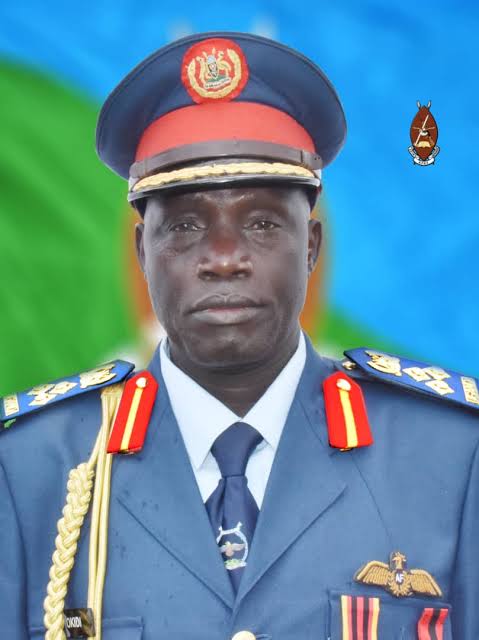
Museveni appoints Maj. Gen. Okidi as Deputy Airforce Commander

Charles Okidi

President Yoweri Museveni has appointed Maj Gen Charles Okidi as deputy Airforce Commander to replace Maj Gen Emmanuel Katsigazi who was recently appointed the Deputy Inspector General of Police.

Maj Gen Okidi has been the Chief of Staff Airforce.

He previously served as President Museveni’s pilot from 2014 to 2017.

His appointment as Museveni’s pilot came after he successfully flew the Mi17 helicopter over Mt Kenya but other three helicopters crashed and killed their crew members.

He has been replaced by Brig Gen Gonyi who has been Deputy Chief of Military Intelligence.

Brig. David Gonyi has also been replaced by long serving intelligence officer Col Abdul Rugumayo

Stories Continues after ad

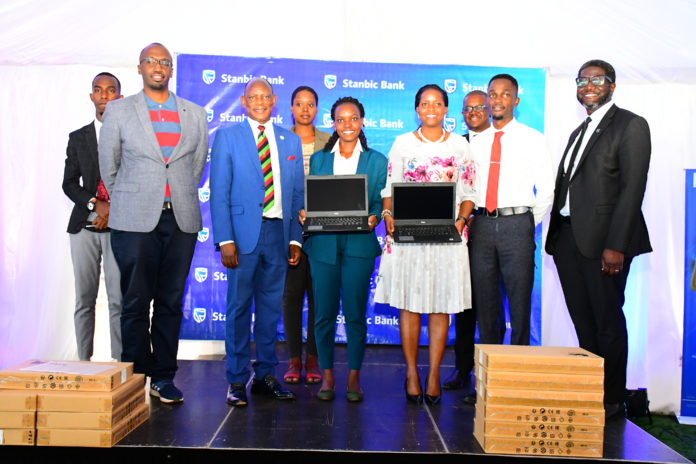
Stanbic Bank explains intentions behind #OneStepCloser campaign

A creeping social media hashtag #OneStepCloser that has been gaining popularity in recent weeks can now be firmly linked to Stanbic Bank Uganda, as the lender’s new brand campaign aimed at rallying Ugandans to pursue their dreams and rebuild their businesses after the pandemic.

In a statement to the press, Daniel Ogong, Stanbic Bank Uganda’s Head of Marketing and Customer Experience says the brand campaign is aimed at cheering Ugandans to believe and not to give up on their dreams with Stanbic Bank as their partner.

“Every story should be placed in context and ours as a country is very clear we have just returned from nearly two years of a pandemic induced lockdown, the economy was half at work with critical sectors such as education, and entertainment, down, this affected businesses with many losing revenues while others closed entirely,” said Ogong.

According to Ogong, the #OneStepCloser campaign aims at reassuring Ugandans that no matter what they have been through, they shouldn’t give up on their dreams and that every effort they invest helps them to get closer to achieving their bigger goals.

“Our role in the customer journey towards their respective dreams has always been that of a facilitator, inline with our business purpose driving Uganda’s growth. As the economy reopens fully, we are committed to ensuring that all our customers get closer to achieving their dreams while sharing their success stories to inspire others to believe it can be.

Emma Mugisha, the Stanbic Bank Uganda Executive Director and Head of Business said “when schools reopened after 2years of no work, we waived all their accrued unpaid interest on outstanding loans for the period ending December 31, 2021, that way, we were able to give them the opportunity to start afresh on a new slate.

For Ugandans in different sectors of the economy, we knew that most of them had spent their operating capital to survive through the lockdown; what we are now doing is to give money to SACCOS at interest rates of as low as 10% (for agriculture based Saccos) and 12.5% for general sector saccos, to ensure that they lend money to millions of their Ugandan members, at affordable rates to allow them rebuild their businesses.”

According to Sam Mwogeza, Stanbic Bank Uganda’s Executive Head for Consumer Banking, the bank is planning for all sectors of the economy and designing personalized products to address their respective needs.

“We have done something unique for the education sector, health workers, lawyers, farmers and university students and soon, we will unveil something exciting for women and youth—this way, we are walking the talk of driving Uganda’s growth,” said Mwogeza.

Stanbic Bank is Uganda’s largest commercial lender and publicly listed on the local stock market under the trading name Stanbic Uganda Holdings Limited (SUHL); other subsidiaries under SUHL include Stanbic Business Incubator Limited, Stanbic Properties Limited, SBG Securities, and FlyHub.

In March 2020, Anne Juuko was unveiled as Stanbic Bank Uganda’s first female Chief Executive, succeeding Patrick Mweheire. It’s among Uganda’s largest taxpayers and also employs nearly 2000 Ugandans with 53 per cent of them being women.

Recently, the London based Global Brands Awards recognized Anne Juuko as the best female banking CEO for 2021, acknowledging her role in leading Uganda’s largest commercial bank through a pandemic while managing to sustain its profitability.

Stories Continues after ad
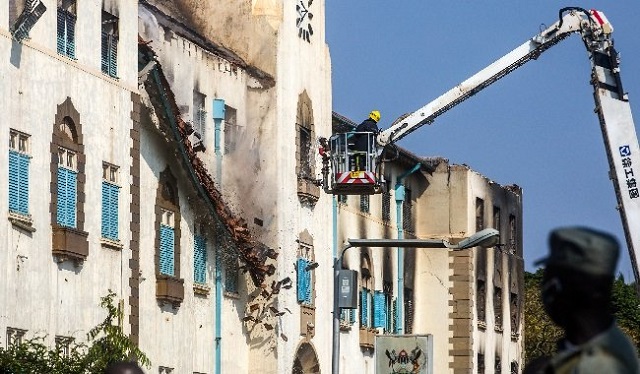
Makerere main building reconstruction estimated to be Shs20.5bn

The reconstruction of the Makerere main building will cost Shs20.5 billion, the Vice-Chancellor Professor Barnabas Nawangwe has revealed. The university handed over the building to Excel Construction Company on Monday this week.

“Excel Construction Company quoted Shs20.5 billion, which is close to their own estimate of about Shs21 billion. Excel Construction Company competed against M/S V-Con Construction (U) Ltd, Zhaughuo Oversees Construction Engineering Co Ltd, Krishna Construction Co. Ltd, Jiangsu CJI Uganda Co. Ltd, China Nanjing International Ltd, Scaffold Engineering and Amp Construction Ltd, Canaan Construction Co Ltd, Sadeem Al Kuwait and Reliable Engineering and Decor Ltd,” Prof. Nawangwe said.

Prof. Nawangwe went ahead to task the contractor to accomplish the reconstruction with in seven months.

“We gave instructions that the contractor should ensure the main work in [Makerere University’s] main building is completed by the date when we have the 100-year celebration climax (8th October 2022),” Prof Nawangwe remarked.

Fire gutted the iconic building popularly known as the Ivory Tower in 2020. After over a year, the university hopes that the old building will be demolished, a new structure set up and work completed by September 8, 2022, before the centennial celebrations. Cabinet resolved to reconstruct the building following recommendations made by a committee set up to assess the structural integrity of the structure.

As a result, the cabinet directed the Ministry of Finance to release Shs 21 billion as per the university estimate. While the exterior design for the new main building will remain intact, the interior will be redesigned. Engineer Christina Kakeeto, the Director of Estates and Works at Makerere University explained that the interior redesign is intended to accommodate modern facilities like lifts.

In addition, only a few departments will be housed at the new main building according to resolutions from the university council. These include the Office of the Vice-Chancellor and his deputies together with the University Secretary.

The rest of the departments like human resources, public relations and finance will find new office space. However, Nawangwe notes that while the Shs 20.5 billion is sufficient for the reconstruction, there would be a need for over Shs 4 billion for furnishing the new structure.

To raise money for refurbishing, the university is planning to launch a fundraiser among Alumni and well-wishers. Nawangwe notes when the main building was gutted by fire, only the Master Card Foundation raised US$1 Million which was put to aiding recovery from the fire.

The 79-year-old building was the face of the University that appeared on postage stamps, postcards, advertising boards, academic journals and national currency over the years.

Stories Continues after ad

MP Zaake challenges his removal from Parliamentary Commission

MP Zaake

Mityana Municipality MP, Francis Zaake has petitioned Court challenging his removal from parliamentary commission. In a secret ballot conducted last week, of Parliament, 155 out of 161 members voted for his removal from the Parliament Commission.

Through his lawyers led by the Lord Mayor Erias Lukwago, Zaake said that parliament had no quorum to have him removed from the commission. He wants the court to nullify parliament’s decision and order for his reinstatement as commissioner of parliament.

He accused the Rules Committee members of Receiving Shs 6m worth taxpayers money as a reward for participating in the Committee proceedings that resulted in his removal from office.

Zaake’s removal followed Parliament’s adoption of the report of the Committee of Rules, Discipline and Privileges with amendments presented by Chairperson, Abdu Katuntu.

The vote followed debate of the report of the committee that found Zaake in breach of public trust and confidence. Zaake was probed for statements he made on social media disparaging the Deputy Speaker, Anita Among.

During plenary sessions to honour Parliament and staff who had participated in the East African Legislative Assembly Games in Arusha, Tanzania the Deputy Speaker said although Zaake was reportedly tortured and had a broken leg, he brought back a gold medal for Parliament. This prompted Zaake to go on social media where he authored the statements for which he was found guilty.

Stories Continues after ad

EC kicks off verification of Administrative Units ahead of Women Councils elections

EC chairman Justice Simon Byabakama.

The Electoral Commission has kicked off a 10-day verification exercise aimed at verifying all the administrative units (villages and parishes) across the country.

The field exercise according to Justice Simon Byabakama, the Electoral Commission Chairperson, will run up to Saturday, March 26, 2022 in all districts and cities across the country.

“The Commission will conduct the verification/confirmation of administrative units in a participatory manner, and particularly in consultation with the respective District/City administrative leadership,” Justice Byabakama stated.

The verification exercise is part of preparatory activities for the conduct of women councils and committees’ elections (from the village to the national level) 2022, and administrative units (LC1 and LC2) Elections in August 2023.

The current Women Councils and Committees were elected during the period July – August 2018, and the Executive Committee of the National Women’s Council was constituted on 23 – 24 August 2018. According to the National Women’s Council Act, the terms of office of the said Councils and Committees is four (4) years, implying their term will expire in August 2022. 

The current Village/Cell (LC 1) and Parish/Ward (LC 2) Committees were elected in July 2018. According to the Local Government Act, the term of office of the said Executive Committees is five (5) years, implying their term will expire in July 2023.

The elections were conducted in a total number of 60,800 villages/cells and 8,387 parishes.

Since 2018, the number of Administrative Units in Uganda has increased and the current statistics as per the Electoral Commission database show 10,259 parishes and 70,512 villages/cells, the Districts/Cities are 146, Sub Counties/Towns/Municipal Divisions are 2,211, and Wards in the cities are 431.

Procedures of verification

Justice Byabakama noted procedure for the verification and confirmation of Administrative Units exercise will be as follows:

Stage 1: Desk Verification Exercise (EC Headquarters and District/City Offices)

a. Request for list of administrative units from the Ministry of Local Government and the respective Districts/City Local Governments for harmonisation with the Electoral Commission database;

b. Comparison of the submitted lists with the Electoral Commission database to confirm the legality of the administrative units, that is, creation by Statutory Instrument;

c. Confirmation of placement of the administrative unit (village/cell) in the respective higher administrative level (parish/ward);

d. Compiling of lists of units of variance for verification and confirmation during the field exercise;

Stage 2: Field Verification Exercise

a. Stakeholder mobilisation and engagement to create awareness on the purpose of the verification exercise;

b. Recruitment and training of verification officials

c. Preparation and production of materials for the verification exercise;

d.Delivery of materials to districts/cities;

e. Conduct of verification meetings at the sub county level;

f. Retrieval of verification returns to the district and finally the Electoral Commission headquarters;

Stage 3: Verification of Returns to produce a harmonised list of Administrative Units

a. Compilation of verified returns

b. Display of the verified and harmonised list at the sub county level;

c. Receiving and hearing any objections against inclusion/omission of administrative unit(s), and determining the complaints arising out of the verification exercise;

d. Publication of final harmonised list of administrative areas;

e. Dissemination of the final harmonised list to stakeholders;

“The verification and confirmation of Administrative Units countrywide is, therefore, a very important exercise in preparation for the smooth organisation and conduct of the Women Councils and Committees and the Administrative Units (LC 1 and LC 2) Elections,” Byabakama said.

“The Commission, therefore, urges all stakeholders to take note of the period for the exercise, and to participate in the confirmation of the Units in accordance with the above guidelines.”

Summary Programme for the Conduct of Verification of Administrative Units, March – May 2022

Calendar

Field verification of Administrative Units: 17th – 26th March 2022

Processing of verification returns: 30th March – 8th April

Display of verified Admin Units at District and Sub County Headquarters: 11th – 20th April

Processing of verification returns after display and production of final lists of Administrative Units: 22nd April – 4th May 2022

Transmission of soft copy of the verified administrative units to Political Parties: 13th May 2022.

Stories Continues after ad

Lands State Minister Sam Mayanja faces it rough in Nakawa-Naguru Ad-hoc Committee Inquiry 

The Minister of State of Land Dr. Sam Mayanja faced it rough before the Nakawa-Naguru Ad-hoc Committee when he failed to answer several questions from Members of Parliament regarding the saga of land allocation.

Mayanja who decided to appear before the committee after the senior minister, Judith Nabakooba refused to appear before the Nakawa-Naguru Land Committee. Ms Nabakooba reasoned that the matter they want to ask her is before the Court. 

Mayanja, stubbornly disregarded Minister Nabakooba’s reasons and decided to appear and explain.  He blamed Uganda Land Commission for always following the former Ministers for Lands who used to give them orders to issue land titles to the beneficiaries of Nakawa-Naguru Land. 

“I am totally shocked why the Uganda Land Commission was just issuing land titles, because this is a body which is independent, they are appointed by the president not the Minister for Lands,” Mayanja said.   However, Bugiri Municipality Member of Parliament Asuman Basalirwa Said that Sam Mayanja is doing a disservice to the Ministry. “Mr Minister you are becoming academically unnecessary, don’t cause problems to the president”.

Minister Nabakooba recently disowned Dr. Mayanja who had earlier claimed that he was instructed by Nabakooba to write to President Yoweri Museveni over the same saga but Nabakooba has come out distancing herself from her junior state that she never instructed anybody to write to the president.

How events unfolded

Last year, the then State Minister for Housing and Urban Development, Dr. Chris Baryomunsi, said the land has been earmarked for the construction of a specialized medical centre.

“The Naguru-Nakawa land was government land where they had constructed low cost houses in the 1960s but we came up with an idea to develop modern housing units. However, Opec Prime Properties did not have the capacity. Government usually gives developers five years to execute projects but they failed,” Dr. Baryomunsi said last year while presenting the 2016-2021 National Resistance Movement party manifesto report on housing sector performance in Kampala.

The minister added that the land in question had been repossessed by the Land Commission on behalf of the government. He said the medical hub will complement the Naguru-China Friendship Hospital, the Iran Hospital, and the Uganda Heart Institute, which has also been given 10 acres from the same land for purposes of constructing a new health facility, as well as a Kenyan medical company and another company from the United States of America.

Stories Continues after ad

Hamis Kiggundu: “I can’t fight my King; it is misconceived individuals tainting my image”

City businessman Hamis Kiggundu popularly known as Ham.

City Business man Hamis Kiggundu has revealed that he can’t fight the Kabaka of Buganda Ronald Muwenda Mutebi but instead there are misconceived individuals trying to taint his image.

Kiggundu said while clarifying the contested land between him and the Buganda Land Board.

Earlier this month, Buganda Land Board (BLB) petitioned police seeking its intervention to stop construction of a road and drainage channel through Plot 273, 38, 87, 99,110 and others allegedly belonging to Buganda Kingdom.

The kingdom averred that Kiggundu illegally created official kingdom Milo land, free hold title composed of WAK 6104, FOLIO 25, Block 273, Plot 23977 and the same are under cancellation proceeding at the Ministry of Lands.

According to Kiggundu, the said land is a Freehold land granted by Wakiso District Land Board and the Freehold Land Titles were issued in November 2019 by Wakiso District Land Office. The subject land falls under ‘Public Land’ formerly Plot 20 and referred to as, ‘Total Lake Area’, originally measuring approximately 289.34 Acres.

“Private Mailo land on Kyadondo Block 273 Plots 87, 99,110 & others, land at Kigo shares boundaries with the public land (already described above),  mainly comprising; Mirembe Villas, Kigo Prisons, part of Serena Kigo land, taking part of the Munyonyo Spur Road outwards beyond  the Munyonyo Spur,” he said.

He said it is composed on Final Certificate (F.C 18454) formerly Plot 96 and originally measuring approximately 16 Square miles and 228 Acres.

Kiggundu under Kiham Enterprises Uganda Limited is in advanced stages of building an Integrated Sports Complex called Ham Sports Club.

It accommodates three state  of the art football playgrounds (including two training grounds), two Olympic size swimming pools, World Class Gym, four basketball  courts, four tennis courts, four netball courts, all indoor games,  accommodation facilities and a grade four medical health facility.

He welcomed the joint boundary opening exercise of both the Freehold land titles comprised on Kyadondo Block 273 Plots 23974, 23975, 23976, 23977 and the Kabaka Private Mailo land comprised on Kyadondo Block 273 Plots 87, 99,110.

The boundary opening is aimed seeking clarifications and ascertaining the true location of both properties and as a way of confirmation that truly, the two properties are separate, do not overlap into one another, one is a Private Mailo land whereas the other is Public land, and that the only common identifier of the two properties is the shared Plot Boundaries and the fact that they all fall in the same Block and County.

Stories Continues after ad