Uganda’s President, Yoweri Museveni, while meeting in Kampala, the AU’s committee that is championing Africa’s representation on the UNSC of which Uganda is one, recently, demanded for the reformation of the UN Security Council.
The most tantalizing question here is “what if African representation on the UNSC is granted, would the permanent members lose their badge of honour?” Certainly not. What the president and other Africans are yearning for is: Let the bumptious permanent members of the UNSC whose individual decisions affect our collective whole situate rationality before geopolitics. In a “one size fits all” stance, the US, UK, France, Russia and China -all of them nuclear-weaponized, represent three continents on the council namely North America, Europe and Eurasia/Asia respectively; that renders Africa, South America and Australia unrepresented!
That unrepeatable configuration was shoved down our throats after “world war II.” Its persistence for this long is attributable to, particularly, the lack of cohesion amongst Africa’s leaders and the recalcitrant and immutable UNSC members. And, therefore, when Africa’s finest leaders, among them Yoweri Museveni, articulate passionately against that injustice, they should be unreservedly supported to create that requisite bigger tool box for this noble pursuit. Although those responsible for committing that inequity against us won’t recant in the short run they will in the long run since they’re teetering on the brink of failure.
To bring Ugandans to speed, all permanent members of the UNSC have vetoing powers over that body’s decisions. The rest of pack, 10 in number and rotational/non-permanent members, are elected by the General Assembly for two -year terms and have neither vetoing power nor voting rights whence rendering them rubber-stamps.
That self-arrogation of power by those immutable members partly allows them to dominate the globe minus being quizzed. Interestingly, sponsoring motions in the UNSC is another arduous hurdle usually punctuated with intense lobbying and resource spending that many small countries can’t afford!
As this reform debate rages on, the current global social-economic and political realities will only be justly served when and how that membership is restructured as well as making the rules of procedure fairer. UNSC decisions require nine yes votes; a terrible lacuna, for instance, if the entire pack of permanent members connived with some four unsuspecting non-permanent members or worse still, if three over-reaching permanent members coerced six gullible developing countries into supporting their unpopular position and a single permanent member abstains, a bad decision ensues. The UNSC has, in its current form and composition, had its fair share of gaffes; in the case of, for instance, Resolution 912; “The Genocide Rescue Brigade,” as mass killings were unleashed in Rwanda in 1994, the UNSC wanted the under-pinned UN peacekeeping force scaled down. The all-powerful US permitted then SG Boutros Boutros-Ghali to determine the size and mandate of the mission with undertones of reducing it. Eight days later, the SG appealed for its expansion since its size was incredibly insufficient. The US blocked that expansion and the massacres continued unabated! There are several other ill-conceived, pointless or just plainly bad resolutions adopted by that New York-based club due to power abuse that can ably be checked through reforming the UNSC.
Essentially, most motions are sponsored by the powerful and the US has additional advantages over the rest of the pack because one, it headquarters the UN and simultaneously the UNSC. Two, the US is the biggest sponsor of UN activities. The day when all of us stumble on these realities and vehemently support leaders like President Museveni in our urgent quest to have that “animal” – the UNSC, reformed, Africans will move a notch higher in terms of global visibility.
Surprisingly, former President D.J. Trump, who many ill-advised Africans hated with a passion, except me, spoke of reforming the UN when his administration still lasted. His successors went mum about the matter because theirs has been amassing power to themselves both at home and at the UN.
The Finance Committee of Parliament has pinned the Office of the Auditor General (OAG) over unaudited accounts of classified expenditures, amounting Shs6.8 trillion.
Lawmakers who were receiving the 2022/2023 budget of the OAG from the Auditor General, John Muwanga on 24 January 2022, also accused the audit body of neglecting other heavily funded entities including oil companies and the infrastructure sector.
Hon Muwanga Kivumbi (NUP, Butambala County) said that Parliament relies on the Auditor General to scrutinise the expenditure of Ministry of Defence since it is a classified budget.
“You have differed audits totaling Shs5 trillion and yet you are going to districts where there is no money,” said Muwanga Kivumbi.
He added that focus should be directed to oil companies, saying that government is spending colossal sums of money on Production Sharing Agreements.
“Oil companies have not been audited since 2011. These companies are heaping government with all manners of loans and yet we are not seeing value for money,” Muwanga Kivumbi said.
Committee Vice-Chairperson, Hon Jane Pacuto said that continued failure to audit huge government expenditures leaves Ugandans hopeless.
“Under classified audits, you had planned to do 13 but you have carried out only 3. What hope do you give the country that you are capable of auditing? Is it that you do not have the capacity or resources? Tell us so that we can support you,” she said.
Hon Moses Aleper urged (NRM, Chekwi County) the OAG to shift from carrying out financial audits to auditing for value for money, arguing that this will ensure that MDAss spend wisely.
“This is in line with the new programme based budgeting whose objective is value for money,” said Aleper adding that, ‘emphasis should be put on implementation of recommendations so that you can ably report on the outcome of the audit’.
Committee Chair, Hon Kiwanuka Keefa questioned the criteria the audit body uses to select agencies to be audited.
“With the limited resources, how do you determine the agencies to be audited in a given financial year?” wondered Kiwanuka.
Hon Herbert Tayebwa (NRM, Kashongi County) tasked the Auditor General to justify why the OAG should not be disbanded saying that despite the body’s existence, corruption is on the rise.
“Office of the Auditor General should be able to track budget implementation and discover any mischarges but because they connive with Ministries, Departments and Agencies to conceal corruption, they cannot,” Tayebwa said.
Hon Paul Omara (Indep., Otuke County) however, blamed the challenges in the OAG on insufficient budgets saying that majority of the differed audits are a result of budget shortfalls.
The Assistant Director Audit, in charge energy, Bob Godwin Mande attributed the slow progress in auditing of oil companies to the legal frameworks which provide for back and forth negotiations.
“We have so far audited Production Sharing Agreements for 2015 and we have recoverable amount for Uganda of US$29 billion. We also have first management letters for the agreements audited for the years, 2016 and 2019. At the end of this year, we shall update the 2018 audit on the PSA and start with that of 2020,” he added.
The Assistant Auditor General, Steven Katerega informed the MPs said that all infrastructure projects under Uganda National Roads Authority (UNRA) and Kampala Capital City Authority (KCCA) are audited annually.
“These entities are audited on value for money and not financial audits because they are allocated huge budgets,” he said.
He however, told the MPs that OAG requires an additional Shs16 billion next financial year to audit the energy and infrastructure sector.
“There is demand to critically focus on the energy and infrastructure sectors and yet the funds allocated might not enable us audit those sectors,” Katerega said.
In the 2022/2023 FY, the OAG has been allocated Shs67 billion and Katerega said that the body requires Shs161 billion leaving a shortfall of Shs93 billion.
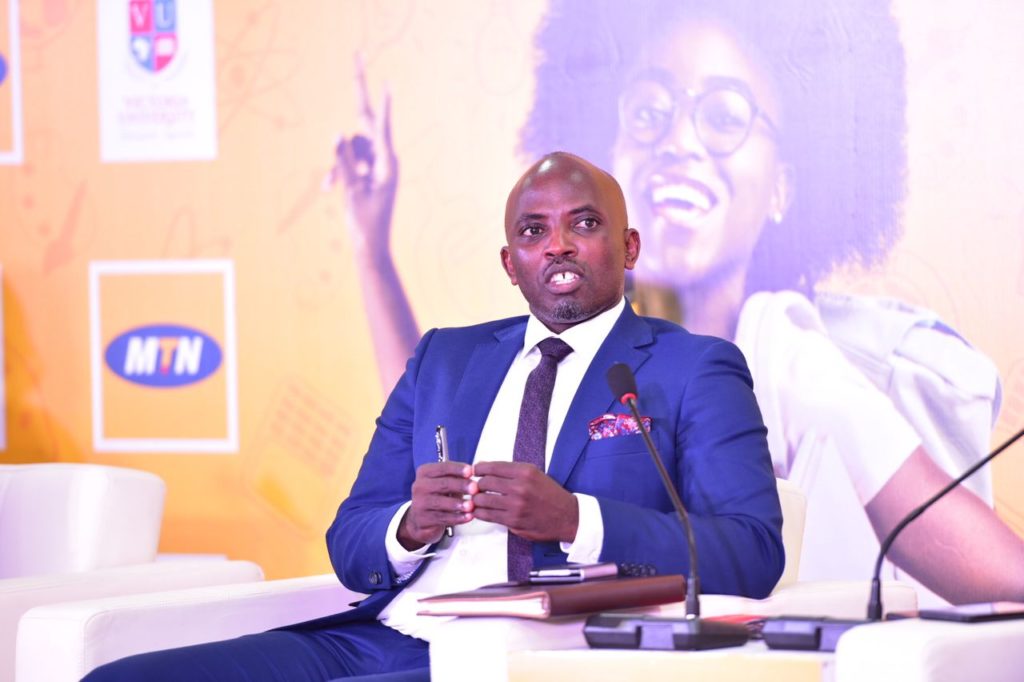
Victoria University has launched a partnership with MTN Uganda which will see 10 scholarships awarded to teens across the country.
Through this partnership, MTN Pulse and the university will provide 5 full and 5 partial scholarships to Pulsers to commence studies in the University’s March intake.
Victoria University will have 2 intakes with one starting in March and another in September.
The partnership between the two seeks to enable teens attain further education for a prosperous future.
Dr. Lawrence Muganga, the Vice Chancellor Victoria University says the university is unique with outstanding skills that help its students create knowledge through experiential learning.
Dr Lawrence Muganga
When you go to Victoria University, you are assured that you will graduate with 2-3 years’ experience and you also have an opportunity to be accorded a job placement through their partner organizations within and out of the country.
Muganga says: “We are the only university in East Africa that is implementing an experiential learning model through our work integrated learning program; the priority of this program is to make sure that every student of the university is placed in a real job to gain real experience needed in the labor market.
“So when you come to Victoria University we will teach you experience,” he said.
Victoria University, is one of the best universities in Uganda, and stands out as a centre of academic excellence. It offers a fresh and intellectually stimulating environment that nurtures critical thinkers.
The university was opened in August 2010 and has the capacity, the facilities and determination to revitalize higher education in Uganda and in the region. It is committed to playing a leading role in bringing and developing high quality, student–centered learning opportunities based on standards of excellence that are unique, innovative and difficult to match.
It is centrally located in the heart of Kampala City and on the main public transportation routes coupled with ample parking space.
NSSF Managing Director Richard Byarugaba, is credited with growing the fund.
Lobbyists have started mentioning names of who should become next Bank of Uganda boss after the January 23 passing on of Emmanuel Tumusiime-Mutebile, the former Governor who had held the juicy position since 2001. Before that, the late Tumusiime-Mutebile served among others, as Finance Ministry’s Permanent Secretary and Secretary to the Treasury (PSST).
The late Tumusiime-Mutebile’s reign at BoU was a success according to local economists and politicians, even though the closure of seven commercial banks, some before his reign, tainted the image of BoU and that of Tumusiime-Mutebile, as the chief executive of that institution that regulates the banking sector in the country.
The Tumusiime-Mutebile leaves behind his deputy Dr Michael Etingi-Ego who was only appointed recently after the unceremonious departure of Dr Louis Kasekende, whose contract could not be renewed by President Yoweri Museveni, following a series of controversies and infighting at BoU.
The late Tumusiime-Mutebile, who once clashed with MPs, is credited for taming inflation in Uganda over the years by running a robust monetary policy that has seen inflation maintained at a single digit for most of the years of his reign, notwithstanding the stability of the Ugandan shilling. The country awaits if the late Tumusiime-Mutebile will accorded a state funeral, given his star contribution to the country.
That aside, this news website has obtained names of Ugandans who analysts and seconders say could succeed the late Tumusiime-Mutebile as Governor BoU. Some are outsiders while others have worked at BoU before:
Richard Byarugaba
Richard Patrick Byarugaba, a professional accountant and banker, is the current Managing Director and Chief Executive Officer of East Africa’s biggest retirement pension fund, National Social Security Fund (NSSF). Since August 2010 when he was first appointed, Byarugaba has steered NSSF to greater heights as the Fund is the envy of similar organisations in the region.
NSSF has more than US $4 billion in assets under his management. His supporters say Byarugaba knows Uganda’s economy well and that if appointed BoU boss he will introduce new changes especially aimed at ensuring that the banking sector is well regulated, given that the stability of commercial banks a key component that attracts foreign investment. He formally worked with the defunct Nile Bank as Managing Director.
His reign at NSSF has seen the Fund invest in real estate and stock markets. While interest payments to members has gone up, notwithstanding efforts to recruit new contributors to the Fund. His supporters say Byarugaba is an NRM cadre who has worked with banks such as defunct Global Trust Bank, Barclays Bank and Standard Chartered Bank. Among other boards, he served on the board of Uganda Institute of Banking and Financial Services.
Dr Michael Etingi-Ego
Deputy Governor, Dr Michael Atingo-Ego
Holding a PhD in economics, Dr. Michael Etingi-Ego is the current Deputy Governor at BoU. He assumed that post on April 23, 2020 after being appointed by President Museveni. Insiders at BoU say so far so good for him. Analysts say he could be elevated to BoU Acting Governor as the search for the right person to replace Tumusiime-Mutebile goes on. “We hope he will be elevated to the helm of BoU,” said a top manager at the central bank. However, another staffer at BoU said it will be very difficult for Ego to become BoU Governor.
“He only came here recently, he cannot be promoted so soon,” she said, adding that Kasekende could have been promoted but for political reasons, he was not. “Ego will face the same challenge and he will remain Deputy Governor,” she said.
Etingi-Ego has worked with the International Monetary Fund (IMF) and Management Institute of Eastern Southern Africa (MEFMI). However, the same source says Etingi-Ego undoing is that he isn’t a team player as he minds less about the great goals of the institutions.
Keith Muhakanizi
Keith Muhakanizi
The former Ministry of Finance Permanent Secretary and Secretary to the Treasury, Keith Muhakanizi, according to some economists is another ideal person to replace the late Tumusiime-Mutebile. Muhakanizi had been working hand in hand with Tumusiime-Mutebile on the economic matters of the country. Muhakanizi comes from Kigezi region just as the late Tumusiime-Mutebile. This could slightly favour him, according to analysts well versed with Museveni’s appointing of senior government officials.
Muhakanizi is credited for being strict on allocation and usage of public funds by officials. He always advocated spending according to available resources. He always clashed with politicians over expenditure.
His supporter, a politician from Kigezi, says Muhakanizi can do the job. “Muhakanizi succeeded the late Mutebile at the Finance Ministry and did wonders. He could as well replace him at the Bank of Uganda,” said Muhakanizi’s supporter, adding that Muhakanizi is an astound economists who can push BoU to greater heights. However, his only undoing will be his health as he is in and out of the hospital in recent times.
Prof Augustus Nuwagaba
Renowned economics scholar Prof. Augustus Nuwagaba
Prof. Augustus Nuwagaba is an international consultant on economic transformation and senior lecturer at Makerere University. He has written many papers showing how Uganda can transform from a pleasantly to a modern society. His supporters think Museveni has not utilized the knowledge this professor possesses. Nuwagaba, who also hails from Kigezi is passionate about wealth creation, through fighting poverty amongst the masses. Nuwagaba has always castigated government officials who are corrupt. He would like to see Uganda fully commercialized. He is a wealth creation expert and he is qualified in application of Central Bank monetary policy on commercial bank competitiveness, says Wikipedia.
Ramathan Ggoobi
Ramathan Ggoobi, the Permanent Secretary, Ministry of Finance
Ramathan Ggoobi, who taught economics at Makerere University Business School is the current Ministry of Finance Permanent Secretary and Secretary to the Treasury, having replaced Keith Muhakanizi on July 15, 2021. A policy analyst, Ggoobi has presented papers on how Uganda can transform from low income to middle income status.
He also cries of corruption in the country and is an advocate of having resources put into productive sectors of the economy so that the country exports to earn foreign exchange but also limits on imports to have a favorable balance of payments (BoP). Alongside other government officials, he is working to ensure that the BUBU Policy aimed at stimulating production and consumption of Ugandan goods and services, is implemented across the country.
Prof. Wasswa Balunywa
Prof. Wasswa-Balunywa
A scholar in management, leadership and entrepreneurship, Juma Wasswa Balunywa is credited for contributing to the development of Uganda’s commerce as an educator and manager. He is credited for developing Uganda College of Business Studies, Nakawa before it transformed into Makerere University Business School (MUBS) where he is the Principal, even though his efforts to keep MUBS independent of Makerere University were fruitless.
On many occasions, Balunywa has been tipped as ideal replacement for Tumusiime-Mutebile, even though he swerved on the board of BoU.
Maria Kiwanuka
Ms Maria Kiwanuka
A as well as a businesswoman, Maria Kiwanuka, is a former Finance Minister serving between May 27, 2011 to March 1, 2015. She also worked with the World Bank. Gender enthusiasts say Kiwanuka should be appointed new BoU Governor. They say no woman has held that position since Uganda got independence in 1962. “As a woman, I would like women like Maria Kiwanuka become BoU Governor,” a gender specialist told this reporter, adding that Kiwanuka dedicated worker who can set standards at BoU. Kiwanuka is a Senior Presidential Advisor.
Patricia Ojangole
CEO of Uganda Development Bank, Patricia Ojangole.
An accountant and bank executive, Patricia Ojangole is the current CEO of Uganda Development Bank, the country’s only development finance institution. She joined the Bank as head of internal audit. Her supporters say she can manage the job of BoU Governor, as her work involves connecting with BoU as she provides cheap development loans to Ugandan enterprises.
Prof. Ezra Suruma
Makerere University Chancellor, Dr. Ezra Suruma
An economist, banker and an academic, former Finance Minister Prof. Ezra Suruma who is the Head of Prime Minister’s Delivery Unit still commands respect in some circles and they think he should be given the chance to run BoU despite his advanced age. They say Suruma not only knows the economics of the country but that he has been in the NRM system for a long time. “Suruma knows what Museveni wants and he can deliver since he served at BoU as director of research as well as deputy governor,” said a politician from Ankole, adding that Suruma has contributed to the development of many pro-development policies and strategies in Uganda.
The next BoU Governor is expected to redeem the image of that institution but also may work under new guidelines that have been suggested. For instance, that the governor and his deputy should not appear on the BoU Board, if the principle of checks and balances is to be applicable in that institution.
The Forum for Democratic change (FDC) has eulogized the governor of Bank of Uganda (BoU) Emmanuel Tumusiime-Mutebile who passed on yesterday.
The Central Bank Governor died yesterday at Aga Khan Hospital where he was admitted over diabetes-related complications. Eagle Online exclusively reported on January 4, 2022 that the economist was admitted to the Kenyan Health facility after he collapsed on 31st December 2021.
His death in Nairobi speaks volume about the ailing health facilities in the country. Speaking earlier today, the Party President Patrick Oboi Amuriat said Mutebile did not have to die in office because has been unwell for a number of years and ought to have vacated office.
“We believe Mutebile was held hostage by Mr. Museveni and struggled throughout his tenure at BoU to stabilize the shilling he undermined by printing extra money to sustain the regime. Because of the over-hatching influence of the regime on the bank of Uganda, the economy is on drip,” Amuriat said.
As a central bank governor, the former legislator said he was the regime’s principal economic advisor and he takes a big share of the blame for its failed economic policies. He said BoU was turned into a Museveni wallet. Remember the first Shs 19 billion bailout to Hassan Bassajjabalaba, NRM Chairman for entrepreneur’s league then and the Shs 142 billion fictitious compensation to the same man.
Mutebile has been on and off duty over the deteriorating health conditions. He was put on daily dialysis because his kidneys had weakened and they couldn’t do their excretion job. He was in September last year admitted at Nakasero hospital for a full week. He was later discharged and continued to be monitored from his Kololo based home. He was admitted to Cleveland hospital in Abu-Dhabi till December when he was discharged.
The 72 year old, whose contract was renewed on January 12th, 2021 for five years, has been at the helm of the central bank since 2001. He is the longest serving Chief Executive in the Bank of Uganda’s history. He is credited with many of the sound economic policies adopted by the Uganda government at the urging of the central bank during the 1990s and the first decade of the 2000s.
Amidst Covid-19 pandemic Mutebile and his team have kept Uganda’s economy generally stable. Inflation has been contained within the BOU target of 5% and the Shilling has remained stable against major currencies.
Mutebile was born on January 27 1949 in Kabale district Kigezi sub-region. He attended Kigezi College Butobere for his O-Level studies and then went to Makerere College School for his A-Level studies.
In 1970, he enrolled at Makerere University to study economics, where he was elected president of the university Students’ Guild.
He was forced to flee Uganda in 1972 after he gave a speech publicly criticizing the expulsion of Asians from the country by President Idi Amin; he fled to England and was able to finish his studies at Durham University graduating with an upper-second in Economics and Politics. In October 1974, he began his post-graduate studies at Balliol College, Oxford.
He returned to East Africa to Tanzania at the University of Dar es Salaam to lecture and conduct research while pursuing his doctorate in economics.
Between the year 1979 and 1984, Tumusiime-Mutebile was appointed to several government positions in Uganda ranging from Deputy Principal Secretary to the President at State House in 1979, to Undersecretary in the Ministry of Planning in 1981 where he rose to Senior Economist and then Chief Economist in 1984. In 1992, he was appointed Permanent Secretary to the newly combined Ministry of Finance Planning & Economic Development, a merger that he had advocated while working under Minister of Finance Gerald Ssendaula.
Police have urged the proprietors of bars and the revelers to observe the Standard Operating Procedure (SOPs) to curb the spread of Covid-19 Pandemic.
Last month, President Yoweri Museveni ordered the reopening of bars, cinema halls, musical shows and other entertainment after two year’s lockdown. He lifted curfew on all sectors of the economy except boda-bodas, a component in the transport sector.
Many bars have since started dusting the places preparing to host revelers tonight. Some bar owners have however made it clear that they will not allow unvaccinated people into their drinking places.
Speaking earlier today Fred Enanga, the spokesperson of Police said; “When you are in some of these entertainment places, observance of COVID-19 SOPs is very tricky especially when people are dancing. It is important that proprietors of the night economy properly manage and deploy qualified staff in crowd control.”
“The ball is in the hands of everyone to ensure that we don’t lose this chance to start moving freely at night. The President said if the situation degenerates, we will go back to lockdown.” he said adding, “that restriction on boda bodas is still on. We shall be enforcing at 7:00 pm. Ensure you have means if you are going to a club. To boda bodas and those who use them, you are reminded that the curfew on boda boda is still on.”
Several singers have since turned up on their various social media handles welcoming their colleagues for the two years lockdown. “Big boys turn up the keys. Don’t miss out today at Levels,” Moses Ssali aka Bebe Cool said on Facebook.
On her Twitter handle, Singer Sheeba Kalungi welcomed her supporters from the two years lock down “Allow me to welcome you from the Lock Down,” she said.
Fly Emirates has launched a new offer for passengers visiting Dubai with friends and family, when booking by February 6, 2022.
Two or more passengers traveling to Dubai from January 24, 2022 to April 30 2022 will have the opportunity to save 25% on fares when traveling together.
This special offer is valid for two or more travelers who book a return trip to Dubai in Economy or Business Class between January 24, 2022 and February 6, 2022 on the same booking reference. The offer is also available via travel and call center agents and Emirates Retail shops.
In addition to this exclusive new offer, there are plenty more ways to save on your Dubai getaway with Emirates and take advantage of its incredible winter sun, beaches, outdoor dining and events.
Emirates customers visiting and traveling through Dubai anytime during the final two months of Expo 2020, will be eligible to receive a free Emirates Expo Pass for every flight ticket booked with the airline. Customers traveling to or via Dubai anytime until March 31, 2022, get to explore the city for less with My Emirates Pass Expo2020 Dubai. Enjoy exclusive discounts and benefits at over 500 retail, dining, and recreational attractions by simply showing their Emirates boarding pass.
Customers can earn 1 Skywards Mile for every 1 minute spent in Dubai until March 31 2022. Existing and new Emirates Skywards members who sign up for the program before March 31, 2022, can benefit from the offer Mile a Minute, and will earn up to 5,000 Skywards Miles.
Dubai remains one of the world’s most popular holiday destinations, especially during the winter season, and visitors can choose from an array of hotels to stay at, to suit all budgets, as well as exciting entertainment, dining and shopping options for all ages. From sun-soaked beaches and heritage activities to world class hospitality and leisure facilities, Dubai offers a variety of world-class experiences.
As international borders reopen and travel restrictions ease, Emirates has resumed passenger services to over 120 destinations and currently operates five weekly passenger flights from to Dubai.
Dubai safely re-opened for international business and leisure visitors in July 2020, and it remains one of the world’s most popular holiday destinations. From sun-soaked beaches and heritage activities to world class hospitality and leisure facilities, Dubai offers a variety of world-class experiences. It was one of the world’s first cities to obtain a Safe Travels stamp from the World Travel and Tourism Council (WTTC) which endorses Dubai’s comprehensive and effective measures to ensure guest health and safety.
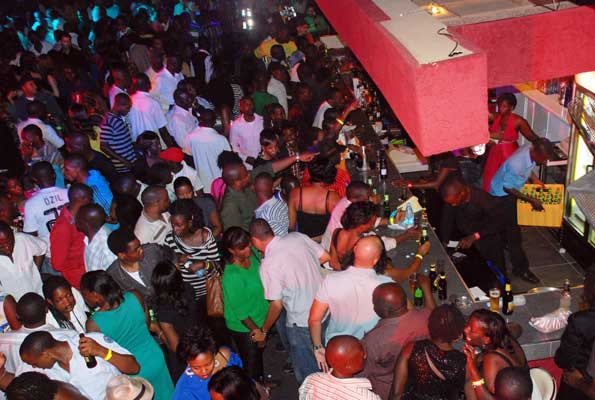
Several bars and entertainment places are in a jovial mood after being cleared to reopen nearly two years since they were closed over Covid-19.
In several parts of the country, several bar owners were seen dusting up and mopping their places as the economy fully lifts all Covid-19 related restrictions, including curfew effective Monday, 24 January 2022.
In Masaka and Fort Portal cities, the bar owners and the residents said they are also excited to return to these happening places.
In Fort Portal, by 6:00 am, the workers in the bars had already reported to work, doing some cleaning and other preparations. The bar owners are, however, sceptical on whether people will have money to come to these leisure places.
In Mbarara and Kampala, some events have already pinned posters advertising many music shows.
By midnight, people in Hoima were posting pictures with captions “Tuli Wawelu”. A number of bar owners have also renovated them as they await their first clients after over two years of closure.
At Dreams Club in Moyo, the structures have been renovated, the staff that had been laid off because of the pandemic have been recalled. Empty crates are being taken to be refilled.
But government has warned the public against laxity in observing SOPs.
Information minister Chris Baryomunsi said: “The reason we are reopening is to revive the economy. The responsibility of the bars will depend on the owners. They should ensure social distancing and that the people who come to these bars have masks.”
“The President said that should the situation get out of hand, we shall go back to having the restrictions. I expect us all to be responsible. If some people are getting drunk, they should be advised to start their journey home. We shall be doing inspections and may close places not following the COVID19 guidelines,” he added.
Dr. Chris Baryomunsi urged that the curfew for the boda bodas is both a COVID-19 related and a security issue.
“The boda boda riders should take heart. We are going to the bars are now in full operation.sit and discuss this with the scientists and guide on this issue,” he added.
Police spokesman Fred Enanga re-echoed the same warning while at the press conference at Media Center in Kampala also warned about observances of SOPs
“When you are in some of these entertainment places, observance of COVID-19 SOPs is very tricky, for example, when people are dancing. It is important that proprietors of the night economy properly manage and deploy qualified staff in crowd control,” he said on Monday.
The fallen Bank of Uganda (BoU) Governor Prof Emmanuel Tumusiime-Mutebile will be laid to rest on 31st January 2022, Eagle Online has learnt.
The Governor passed on yesterday at Aga Khan Hospital where he was admitted over diabetes-related complications. Eagle Online exclusively reported on January 4, 2022 that the economist was admitted to the Kenyan Health facility after he collapsed on 31st December 2021.
According to a tentative burial program released by the Minister of Information Dr Chris Baryomunsi, the deceased’s body will arrive tomorrow and there will be vigil at home in Kololo and on Thursday, his body will be taken to parliament to pay tribute to the fallen Governor of BoU.
“On Friday there will be official service at Kololo and the body will be flown to Kabale. We have agreed with the family members that he will be laid to rest on Monday, 31st January 2022,” Baryomunsi said.
Mutebile has been on and off duty over the deteriorating health conditions. He was put on daily dialysis because his kidneys had weakened and they couldn’t do their excretion job. He was in September last year admitted at Nakasero hospital for a full week. He was later discharged and continued to be monitored from his Kololo based home. He was admitted to Cleveland hospital in Abu-Dhabi till December when he was discharged.
The 72 year old, whose contract was renewed on January 12th, 2021 for five years, has been at the helm of the central bank since 2001. He is the longest serving Chief Executive in the Bank of Uganda’s history. He is credited with many of the sound economic policies adopted by the Uganda government at the urging of the central bank during the 1990s and the first decade of the 2000s.
Amidst Covid-19 pandemic Mutebile and his team have kept Uganda’s economy generally stable. Inflation has been contained within the BOU target of 5% and the Shilling has remained stable against major currencies.
Mutebile was born on January 27 1949 in Kabale district Kigezi sub-region. He attended Kigezi College Butobere for his O-Level studies and then went to Makerere College School for his A-Level studies.
In 1970, he enrolled at Makerere University to study economics, where he was elected president of the university Students’ Guild.
He was forced to flee Uganda in 1972 after he gave a speech publicly criticizing the expulsion of Asians from the country by President Idi Amin, he fled to England and was able to finish his studies at Durham University graduating with an upper-second in Economics and Politics. In October 1974, he began his post-graduate studies at Balliol College, Oxford.
He returned to East Africa to Tanzania at the University of Dar es Salaam to lecture and conduct research while pursuing his doctorate in economics.
Between the year 1979 and 1984, Tumusiime-Mutebile was appointed to several government positions in Uganda ranging from Deputy Principal Secretary to the President at State House in 1979, to Undersecretary in the Ministry of Planning in 1981 where he rose to Senior Economist and then Chief Economist in 1984. In 1992, he was appointed Permanent Secretary to the newly combined Ministry of Finance Planning & Economic Development, a merger that he had advocated while working under Minister of Finance Gerald Ssendaula.
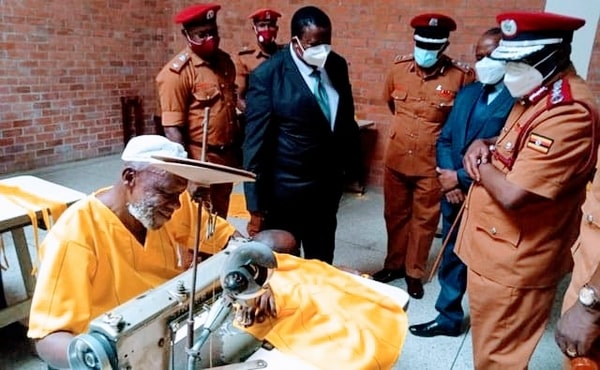
Minister Kahinda commissions new Prisons garments Workshop at Kitalya
The Minister for Internal Affairs Maj. Gen. Otafiire Kahinda has said that Uganda Prisons Service (UPS) should use its expertise to make garments for both the Uganda Peoples Defence Forces and Uganda Police Force.
Gen. Otafiire made the remarks while commissioning the new garment workshop machinery at Kitalya Mini Max Prison.
According to the Commissioner in charge of Prison Industries Robert Munanura, the new equipment will be used to give skills to inmates in the craft of tailoring, cloth making and stitching of all staff and prisoners’ uniforms.
“The garment machinery is a springboard into the competitive, modern mass production of quality garments where they shall be able to make their own uniforms and progressively venture into commercial enterprise and make garments for other institutions,” Munanura said.
He added that the revitalization of Uganda Prisons Industries will enable Uganda Prisons Services to attain self-financing and sufficiency through sales of industrial products to the government and the community while providing practical skills to offenders to reduce recidivism.
Gen Otafiire said that all the Uganda Armed forces should assign the docket of making uniforms to Uganda Prisons since they have the manpower to make them and currently, the Police uniforms are made by the Police Garment Factory in Jinja Road jointly with private suppliers.
Minister Otaffire is optimistic that after clothing all men in uniform, the Prisons facility can expand its capacity to serve other entities like the Uganda Wildlife Authority, Directorate of Immigration and private security service providers.
Whereas Gen Otafiire congratulated the Uganda Prisons Services for the foresight of acquiring a machinery that will simplify their work, he also asked them to start making shoes, boots and stockings for prison staff and other sister security agencies.
The Minister of Internal Affairs also asked the Uganda Prisons to train trainers to increase capacity to produce and increase their non-tax revenue base.
Gen Otafire asked the Commissioner General of Prisons Dr Johnson Byabashaija to ensure that the correctional aspect of Uganda Prisons is emphasized and actualized so that inmates can come out of prison with skills that can make their lives better.
Dr. Byabashaija commended President Museveni for ensuring that Uganda Prisons have a budget to revive its own industries and asked the Minister to support him to raise their budget with Shs32 billion which they have requested to be spent over five years to establish the required capacity in garment making and agriculture among other sectors.
According to the Uganda Prisons Services Spokesperson Frank Baine, a uniform generally costs about Shs100,000 and it would require Uganda Prisons Services to bid in order to take over the job of making uniforms at the various government agencies and then contractual arrangements would be made and added that the Minister’s suggestions would be actualized and realized through a number of administrative decisions.