Stanbic Bank
Stanbic Bank
18.2 C
Kampala
Stanbic Bank
Stanbic Bank
Home Blog Page 693

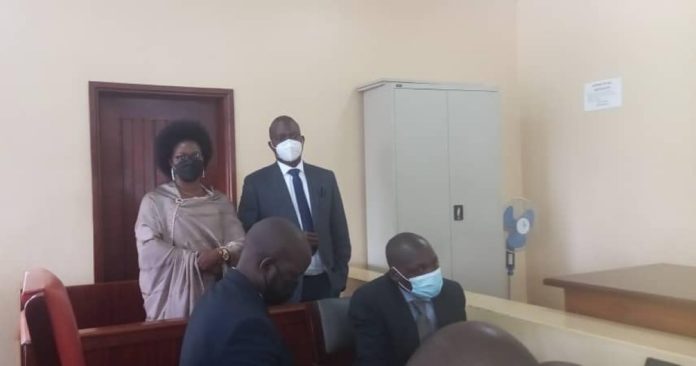
Pastor Bugingo, new fiancée Susan Makula arrive at Court ahead of the hearing of extra marital case against them

Bugingo in court

The founder of House of Prayer Ministries and proprietor of Salt Media, Pastor Aloysious Bugingo and his new fianceé Suzan Makula Nantaba have arrived at Entebbe Magistrates Court for hearing of the matter in which they are accused of contracting Marriage by Customary Law.

The two have been accompanied by Frank Gashumba who is also among the individuals who attended the introduction ceremony which was held at Kawuku, Katabi Town Council.

The two were sued by Private Prosecutor Male Mabirizi, who says Bugingo and Teddy Naluswa are legally married. On 20th December 2003 Bugingo got married to Teddy Naluswa Bugingo vide certificate number 376 through Church marriage at Victory Christian Center, Ndeeba after which the marriage was solemnized and it still subsists.

In 2019, Bugingo filed a divorce case at Kajjansi Chief Magistrates’ Court against his wife and sought for dissolution of their marriage. He accused Naluswa of being disrespectful to him. In her response to the divorce case, Naluswa maintains that she has never been disrespectful to Bugingo since they walked down the aisle many years ago.

And on 7th December 2021, Bugingo and Makula conducted a customary marriage at Kawuku, Katabi town council, Wakiso district contrary to Marriage Act.

According to the Act, Section 42 states that Any person who, being unmarried, goes through the ceremony of marriage with a person whom he or she knows to be married to another person, commits an offense and is liable on conviction to imprisonment for a period not exceeding five years.

Section 50 states that “Any person who, having contracted marriage under this Act or any modification or reenactment of this Act, during the continuance of that marriage contracts a marriage in accordance with customary law, commits an offense and is liable on conviction to imprisonment for a period not exceeding five years.”

Stories Continues after ad

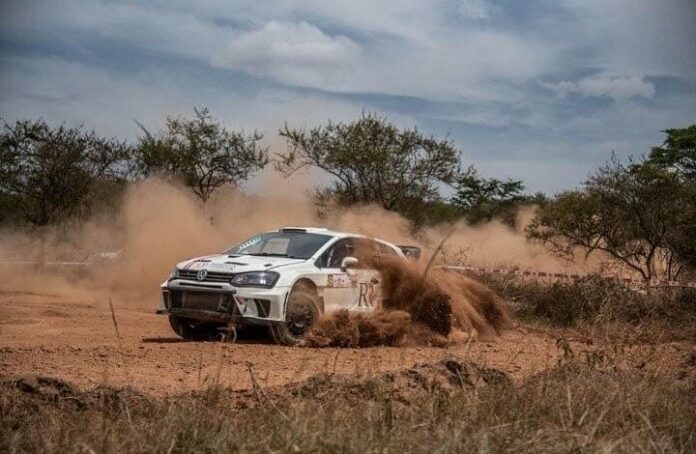
Mbarara Motor Club fails to meet health and safety standards

Motorsport

The Federation of Motorsport Clubs of Uganda (FMU) has cancelled the National Rally Championship season opener the Rukaari Lake Mburo Rally commonly known as the Mbarara Rally over failure to meet the health and safety standards.

Despite numerous calls to meet and harmonize, and following recommendations from Sporting Commission, the opening round of the 2022 National Rally Championship; The Rukaali-Lake Mburo rally 2022 which was scheduled for the weekend of 21-22 January, 2022 has been cancelled.

“The organising committee of the Mbarara Motor Club (MMC) failed to submit the event documents in conformity of the recommendation by the FMU and the Ministry of works and Transport despite the numerous extended deadlines,” reads a document from FMU.

“The speed lift instrument from MoWT, which is required for the issuance of an event permit has not yet been received yet the event starts tomorrow.”

“It is in the interest of FMU that events are organised within a proper structure and the recommended guidelines as provided by our regulations as well as the respective lines of the ministries.”

“Management regrets the extent of financial loss this decision has put the competitors, officials and fans.”

FMU will take necessary action against the club and its officials as per prescribed by the 2022 National Competition Rules and Constitution.

Stories Continues after ad

KAKWENZA ARREST: Stop politicking, did we torture you – Prisons tell Nicholas Opiyo

Kakwenza Rukirabashaija

Uganda Prisons Service has replied to human rights lawyer Nicholas Opiyo in response to the torture claims of Novelist Kakwenza Rukirabashaija while in prison.

Kakwenza was arrested from his home in Kisasi on 29th December 2021 after a twitter feud with supporters of UPDF Land forces commander Muhoozi Kainerugaba. Kakwenza averred that Muhoozi’s supporters were allegedly bullying him for criticizing President Yoweri Museveni.

On Wednesday, the Uganda Human Rights Commission (UHRC) confirmed that Kakwenza Rukirabashaija was subjected to torture.

“Yesterday, UHRC visited Kakwenza Rukirabashaija at Kitalya Government Prison. The team from UHRC interacted with him extensively and noted the visible scars & injuries on his body that were healing. We look forward to a judicial resolution of his matter,” the Commission confirmed on their twitter account.

Human rights lawyer Nicholas Opiyo has questioned the decision by Uganda Prisons and asked why they admitted Kakwenza to a prison facility when the law prohibits the admission of a person severely tortured.

“If the Daily Monitor story is accurate, why then did Uganda Prisons admit Kakwenza to a prison facility when the law prohibits the admission of a person severely tortured? Was it that they considered his torture not severe?” Nicholas Opiyo said.

In response, the Prisons Service said: “Healing scars cannot prevent you from being admitted in Prison. In fact worst Healing scars/wounds are borne by suspects that have been subjected to mob justice.

“Healing scars are usually sustained from; mob justice, accidents, protracted arrest and or torture.

“A person who is badly tortured, unable to walk, unable to feed himself or bathe himself is admitted to Prison Hospital. In case of Kakwenza, the healing scars weren’t serious. That’s why his vitals are very normal.

“Nothing on Kakwenza is life threatening,” the Service said.

Kakwenza was charged with two counts of offensive communication, contrary to Section 25 of the computer misuse act 2011. The Lawyer pleaded not guilty and subsequently remanded to Kitalya prison till 21st January 2022.

Prosecution averred that Kakwenza on 24th December 2021 in the Kampala District, willfully and repeatedly used his Twitter handle to commit cases of offensive communication against the President of Uganda Yoweri Kaguta Museveni and the first son Lt Gen Muhoozi Kainerugaba, with no purpose of legitimate communication.

Rukirabashaija is the author of the novel The Greedy Barbarian, which takes on themes of high-level corruption in a fictional country. He was arrested on 13 April 2020 in Uganda, and held for seven days, during which time he was interrogated about his fiction and subjected to torture and later released. Rukirabashaija details this treatment in his latest work Banana Republic: Where Writing is Treasonous.

Stories Continues after ad

AFCON 2021: Round of 16 fixtures confirmed

Afcon trophy

Following the conclusion of the Group Stage of the Africa Cup of Nations, Cameroon 2021, the pairings of the Round of 16 matches are now known.

Winners and runners-up from each of the six groups qualified for the last 16. They were joined by the four best-ranked third-place teams.

Cameroon and Burkina Faso advanced from Group A, while Senegal and Guinea progressed from Group B. Morocco and Gabon qualified from Group C, while Nigeria and Egypt advanced out of Group D.

Ivory Coast and Equatorial Guinea finished 1st and 2nd respectively in Group E and Mali finished top of Group F ahead of Gambia.

Cape Verde, Malawi, Tunisia and Comoros ended up finishing in the best third-place finish spots the end of the group stage.

Sunday 23 January 2022

Burkina Faso v Gabon (Limbe Stadium, Limbe)

Nigeria v Tunisia (Roumde Adjia Stadium, Garoua)

Monday 24 January 2022

Guinea v Gambia (Kouekong Stadium, Bafoussam)

Cameroon v Comoros (Olembe Stadium, Yaounde)

Tuesday 25 January 2022

Senegal v Cape Verde (Kouekong Stadium, Bafoussam)

Morocco v Malawi (Ahmadou Ahidjo Stadium, Yaounde)

Wednesday 26 January 2022

Cote d’Ivoire v Egypt (Japoma Stadium, Douala)

Mali v Equatorial Guinea (Limbe Stadium, Limbe)

Stories Continues after ad

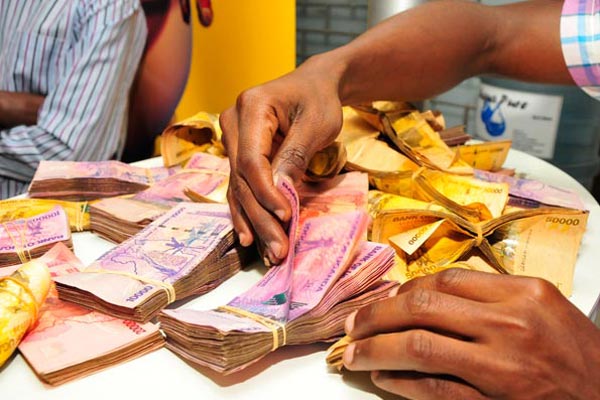
Uganda to be blacklisted over money laundering

Money

The Executive Director of the Finance Intelligence Authority, Sydney Asubo revealed that Uganda risks being blacklisted by the Financial Action Taskforce (FATF) if the government does not tackle money laundering by May 2022. 

Asubo who was appearing before the Committee on Finance said that the FATF maintains a watch list of countries that have significant shortfalls in tackling money laundering categorised under the grey list and the black list.

“Uganda was placed in the grey list in 2020. It means the country has been identified but it made commitments with the FATF to address the specific issues within a given time frame,” he said.

Asubo added that the FATF wrote to the Minister of Finance who wrote back making commitments to address the identified issues by January 2022 but later pushed to May 2022 because of the impact of Covid-19.

“Unfortunately, a number of issues are still outstanding so the FATF is concerned and has written that if these issues are not addressed, then the country will be moved to the blacklist,” he said.

Asubo said the consequences are dire because the impact of being on the grey list means that the world is aware that the country is having challenges in addressing money laundering.

“Some people have already started feeling the impact especially international transactions which would take a day or two, are now taking a week or two. That process of scrutiny is beyond the normal scrutiny,” he said.

According to the FATF evaluation, Uganda was deemed largely complaint for five of the FATF 40 Recommendations.

Asubo said that whilst the FIA has largely played its role in fulfilling the requirements, other ministries, departments and agencies are falling behind, including those that are under the Ministries of Finance, Internal Affairs and Justice.

“I am happy to report that all the things that FIA was supposed to do have been done. The obligation to fulfil those requirements lies not only on the FIA,” he said.

He said that in the 2020/2021 financial year, the authority received and analysed 2,419 suspicious transaction reports (STRs).

“Out of the 2,419 STRs received and analysed, 76 intelligence reports were generated and disseminated to various law enforcement agencies for further investigations,” said Asubo.

He however, urged lawmakers to allocate Shs12.2 billion to cater for unfunded priorities, which include staffing, information and communication technology and public awareness among others to enable the Authority carry out its mandate. 

According to the Budget Framework Paper (BFP) for 2022/2023 financial year, the authority has been allocated Shs16.7 billion.

“The Shs16.7 billion means that we shall not be able to recruit and yet the mandate of the authority is huge compared to the current staffing level. The volume of work is big and the backlog is beginning to build up,” Asubo said.

To meet the required staffing level, Asubo said, the authority requires Shs2.5 billion.

“Right now we are 43 staff, against the approved structure of 83 for the head office,” he said.

Asubo added that the Authority requires additional funding of Shs2.8 billion to enhance ICT.  He said that the current allocation to ICT is Shs800 million and yet they need Shs3.7 billion.

“ICT is very critical because if we do not safeguard our systems then there will be mayhem in this country. The information we keep is highly confidential and if the people who supply us with this information become jittery about the safety of the information, they may become reluctant in sharing information,” Asubo said.

The Committee Vice-Chairperson, Jane Pacuto challenged the FIA to address the allegations that one of the reasons why Uganda has been pushed to the grey list is because of the illicit entry of gold from countries like Venezuela.

“What is your authority doing to address this because gold is closely associated with money laundering,” said Pacuto.

Hon. Herbert Tayebwa (NRM, Kashongi County) questioned the capacity of the authority in fighting money laundering saying that majority of the work is  undertaken by the Police force.

“FIA is existing and yet Uganda is on the grey list. This is perturbing and means that you are not doing your work,” he said.

The core mandate of FIA is fighting money laundering and countering the financing of terrorism/proliferation and other financial crimes.

Stories Continues after ad

The Uganda Public Health Fellowship Program Holds its 6th Graduation of Fellows

Some of the Fellows at the Graduation Ceremony in Kampala. Courtsey Photo.

The Uganda Public Health Fellowship Program-UPHFP has on Thursday 20th held its annual graduation ceremony for the Cohort of Fellows who completed their Advanced Field Epidemiology Training. The program is implemented by the Ministry of Health (MoH) in conjunction with Makerere University School of Public Health (MakSPH) and the US Centers for Disease Control and Prevention (CDC). It is a two-year training-in-service program aimed at equipping public health professionals with skills to manage public health challenges and become the next generation of public health leaders.

The ceremony which was held at Imperial Royale Hotel in Kampala was officially opened by Dr. Daniel Okello Ayen, Director of Public Health of Kampala Capital City Authority who represented Dr. Ruth Jane Aceng Minister of Health who highlighted the critical role played by the program in the effective response to and control of disease outbreaks.

The ceremony was also graced by many other dignitaries like H.E Natalie Brown, the Ambassador of U.S in Uganda, Dr. Simon Antara, Director AFENET, Prof Rhoda Wanyenze, Dean MakSPH, Dr. Yonas Tegegn Woldemariam, WHO country representative among others, who applauded the fellows for the great work done.

On behalf of MakSPH, in a jovial mood, Prof Wanyenze congratulated the 13 Fellows who have successfully completed their fellowship in advanced field epidemiology and said as a school, they are proud of the hard work and dedication fellows have put forth over the course of your fellowship and are pleased to welcome them to the ranks of alumni of field epidemiology.

“You should be proud not just of your achievement, but also your flexibility, resilience, and determination in shifting to online learning to complete your deliveries this past year because of COVID-19. I commend Cohort 2020 Fellows for adapting so quickly in the face of the unexpected challenges and unprecedented circumstances” Prof. Rhoda Wanyenze said.

MakSPH Dean further noted that much has changed in this world over the past few months, saying, this great comfort knowing that they are the next generation of public health leaders, are well prepared to help the world overcome the challenges of both today and tomorrow and to find solutions that will address public health needs in the country.

Each fellow made a summary of their achievements over the 2 years of training in applied epidemiology and public health practice, plus a detailed presentation of one of their projects. Fellows presented the evidence of competencies acquired in disease outbreak investigation, public health surveillance, oral and written scientific and nonscientific communication, and public health leadership. Fellows presented work ranging from response to disease outbreaks such as COVID-19, Measles, HIV/TB/HIV, HIV/Cervical Cancer, Anthrax, among others to client satisfaction surveys and health service delivery assessments in refugees and other settings. Fellows also implemented projects to improve disease surveillance and service delivery in health centers.

Fellows received the award of a certificate of completion of training in Advanced Field Epidemiology, and Dr. Richard Migisha one of the Fellows who did a study on COVID-19 outbreak at Moroto Prison, Northern Uganda, September 2020 emerged the best outstanding students out of 13 fellows.

Other Fellows are; Alex Ndyabakira, MPH, Aggrey Byaruhanga, Advanced Field Epidemiology Fellow, Immaculate Atusekera, Bob Omoda Amodan, Daniel Jacob Emong, Geofrey Amanya, Ignatius Wadunde, Job Morukileng, Josephine Namayanja, Elizabeth B. Katana, Patricia Thiwe, and Peter Omms Ouzos.

Epidemiological Bulletin Launched

In the same ceremony, a quarterly Epidemiological Bulletin of Uganda National Institute of Public Health, Ministry of Health has been launched by H.E Natalie Brown, the Ambassador of United States of America in Uganda. The Quarterly Epidemiological Bulletin is a publication supported by the Public Health Fellowship Program of the Ministry of Health and partners.

This Bulletin, whose Vision is to make public health data and information available to health management teams, policymakers, and the public, to inform policies, programs, and actions that improve health, where the fellows and others Ministry of Health, epidemiologists, and officers publish valuable public health information for consumption by the public and scientific world.

Some of the epidemiologists who welcomed this development say, the goal of this bulletin is to inform the district, national and global stakeholders on disease outbreak investigations undertaken in detecting, preventing, and responding to public health events in the country.

The Uganda Public Health Fellowship Program-UPHFP has enrolled 95 Fellows in Advanced Field Epidemiology since its inception in 2015, with the highest ever enrollment of 15 in 2022. Over the past 7 years, fellows have conducted over 120 outbreak investigations most of them on high-priority diseases of public health surveillance systems with the aim of improving detection of disease epidemic alerts and prompting an early response.

In addition, Fellows have made numerous presentations at national and international conferences, winning eight awards including the prestigious CDC director’s Award for Excellence in Public Health and Response at the 2017 and 2021 EIS conferences. Fellows have made significant appearances in the local media, contributing feature articles on key topics of public health importance.

The publication of the Uganda Public Health Bulletin, where Fellows have participated very effectively as editors and article contributors is another tremendous achievement. Twenty four-24 volumes have so far been produced since the commencement of the program. Additionally, PHFP has continued to contribute to the production of Malaria Quarterly Bulletin, National TB and Leprosy Program Bulletin, and Non-Communicable Diseases Bulletin, where the fellows and other MoH epidemiologists and officers publish valuable public health information for consumption by the public and the scientific world.

According to Dr. Henry G. Mwebesa, Director General Health Services, the program has so far produced over 150 manuscripts, submitted to reputable peer-reviewed journals, 60 of what have so far been published, and the other remaining ones have either been accepted or undergoing peer reviews at various levels.

Stories Continues after ad

UTB disregards all claims regarding the development process of tourism brand

Uganda Tourism Board (UTB) has disregarded all claims regarding the development process and the launch of Uganda tourism destination brand.

Dubbed as ‘Rediscover the magnificence of the Pearl of Africa’, the campaign will be launched tomorrow at Kololo Airstrip. According to UTB, the launch will be graced by President Yoweri Museveni.

Yesterday, Uganda Tourism Associations (UTA), alleged that the association was not engaged and consulted during both the development of the brand as well as the organisation of the event leading to the launch.

Upon that, UTA President Herbert Byaruhanga said the association will boycott the planned Destination Brand launch event.

“UTB appreciates the plight of the tourism sector and has previously worked and continues to engage the entire public and private tourism stakeholder base to find a sustainable solution to sector challenges,” Tourism marketing body said adding that, “We are shocked that the new leadership of UTA is attempting, at the last minute to mislead its membership about one of the most strategic government interventions into restarting and rebuilding the tourism sector.”

UTB said: “We are l concerned that the new team of UTA is being deliberately dishonest to their membership over the extensive consultative process that we have had with the various UTA leaders over the last two years that it has taken to develop and subsequently ready to launch the new brand.”

According to UTB, On 24th August 2021, the Board wrote to the UTA requesting for the nomination of 15 members of its association to attend the Pearl of Africa Brand consultative meeting on 26th August 2021 at the Kampala Serena Hotel.

The meeting was attended by among others Pearl Hoareau Kakooza, the then President UTA, Richard Kawere, Chief Executive Officer UTA and Civy Tumusiime, the Chairperson Association of Uganda Tour Operators (AUTO), Sylvia Ntabaazi, Uganda Hotel Owners Association (UHOA) and Peter Mwanja, Association Of Uganda Conference and Incentive
Industry (UACII).

Others include; Nancy Okwong (AUTO), Sarah Kyerere (Association of Uganda Women in Tourism Trade (AUWOTT), Timothy Senkandwa, National Arts & Cultural Crafts Association of Uganda (NACCAU), Nicholas Kalyango, Ugandan Association of Travel Agents (TUGATA), Monalisa Aman (TUGATA).

Following the inputs of all stakeholders, the new brand was presented to the President of the Republic of Uganda on 15th September 2021, at Statehouse, Nakasero. Following the presentation and securing the approval of the president, preparations for launch and rolling out of the brand to domestic and international audiences started in earnest.

Stories Continues after ad

Museveni to officiate at the 9th African Union Ministerial Level Meeting

Museveni

President Yoweri Kaguta Museveni is today scheduled to officiate at the 9th Ministerial-Level Meeting of the African Union (AU) Committee of Heads of State and Government on the reform of the United Nations Security Council (UNSC).

According to a statement from the Ministry of Foreign Affairs, the two day meeting will be held at the Commonwealth Speke Hotel Munyonyo.

The African Union Committee of Ten Heads of State and Government was set up by the African Union (AU) with a mandate to advocate and canvass the African Common Position on United Nations Security Council (UNSC) reform.

“The African Common Position, also known as Ezulwini Consensus and the Sirte Declaration is named after a valley in Swaziland where the agreement was made by African Leaders in 2005, before it was adopted at an Extraordinary Session of the Executive Council of the African Union in Addis Ababa.” the statement issued by the Ministry of Foreign Affairs indicates.

According to the Ministry of Foreign Affairs, the ultimate objective of the C-10 is to unanimously and unequivocally chart out a common African position and build the momentum required for Africa to demand its rightful place within the United Nations system.

The meeting will be composed of two segments including one of Permanent Representatives from New York and Addis Ababa on the first day that will precede the meeting of the Ministers of Foreign Affairs  on the second day.

“It will further set the stage ahead of the 35th Summit of the C-10 Heads of State and Government, scheduled to take place in Addis Ababa, Ethiopia in February 2022, to discuss and adopt its outcome for subsequent submission to the closed-door session of the assembly,” the Ministry of Foreign Affairs said.

The meeting in Munyonyo, Kampala will further set the stage ahead of the 35th summit of the C-10 Heads of State and Government, scheduled to take place in Addis Ababa, Ethiopia in February 2022 to discuss and adopt its outcome for subsequent submission to the closed-door session of the Assembly.

The C-10 is currently chaired by the President of the Republic of Sierra Leone, Julius Maada Bio, who also doubles as the coordinator of the Committee of Ten.

Members of this Committee include the Heads of State and Government of Senegal, Algeria, Kenya, Zambia, Sierra Leone, the Republic of Congo, Libya, Namibia, Equatorial Guinea and Uganda.

Stories Continues after ad

Cases drop for first time as Africa’s fourth #Covid-19 wave takes center stage

Testing for covid-19

Weekly COVID-19 cases in Africa have dropped significantly and deaths dipped for the first time since the peak of the fourth pandemic wave propelled by the Omicron variant. The decline nudges the continent past its shortest upsurge yet that lasted 56 days.

Newly reported cases fell by 20% in the week to 16 January, while deaths dropped by 8%. The decrease in deaths is still small and further monitoring is needed, but if the trend continues the surge in deaths will also be the shortest reported so far during this pandemic.

South Africa where Omicron was first sequenced, and which has accounted for the bulk of cases and deaths has recorded a downward trend over the past four weeks. Only North Africa reported an increase in cases over the past week, with a 55% spike. Cases fell across the rest of Africa, where, as of the 16 January, there were 10.4 million cumulative COVID-19 cases and more than 233 000 deaths.

The Omicron-fuelled pandemic wave has resulted in the lowest cumulative average case fatality ratio the proportion of deaths among confirmed cases to date in Africa, standing at 0.68% compared with the three previous waves during which the case fatality ratio was above 2.4%. The Omicron variant has now been reported in 36 African countries, and 169 globally.

“While the acceleration, peak and decline of this wave have been unmatched, its impact has been moderate, and Africa is emerging with fewer deaths and lower hospitalizations. But the continent has yet to turn the tables on this pandemic,” said Dr Matshidiso Moeti, World Health Organization (WHO) Regional Director for Africa.

“So long as the virus continues to circulate, further pandemic waves are inevitable. Africa must not only broaden vaccinations, but also gain increased and equitable access to critical COVID-19 therapeutics to save lives and effectively combat this pandemic,” Dr Moeti said.

The African region’s current case fatality ratio remains the highest in the world, although it has been lowered in the last two waves. While improvements have been made in the availability of Intensive Care Unit (ICU) beds for COVID-19 patients from 0.8 per 100 000 population to 2.0 per 100 000, the numbers are still far from sufficient to meet the demands of the pandemic. In terms of medication, currently patients with severe forms of the virus are being treated with corticosteroids and medical oxygen. Corticosteroids are largely available and relatively affordable, but availability of medical oxygen remains a challenge across the continent.

In addition, African countries face major impediments in accessing other COVID-19 treatment due to limited availability and high cost. Last week, WHO recommended two new drugs a rheumatoid arthritis drug called baricitinib and a monoclonal antibody called sotrovimab raising the number of WHO approved COVID-19 therapeutics to 11. WHO is reviewing the data on two oral antivirals paxlovid from Pfizer and molnupiravir from Merck which the manufacturers report show promise in reducing the risk of hospitalization in some patients.

Following initial negotiations with the Swiss pharmaceutical Roche, WHO is supporting the shipment of a limited number of vials of Tocilizumab to African countries in the coming weeks. Cape Verde and Uganda have already received vials. Burkina Faso, Ghana and Tanzania are due to receive a consignment soon. Tocilizumab is an immunosuppressive drug which can be used to treat patients with severe COVID-19. Further larger-scale deliveries of the drug to the continent are expected. Through the Access to COVID-19 Tools (ACT)-Accelerator partnership, negotiations are also underway with other drug makers to procure supplies of COVID-19 treatments.

“The deep inequity that left Africa at the back of the queue for vaccines must not be repeated with life-saving treatments. Universal access to diagnostics, vaccines and therapeutics will pave the shortest path to the end of this pandemic and no region of the world should be left on the fringes of this endeavour,” said Dr Moeti.

In Africa, while vaccine supplies have been on the rise in recent months, the rate of vaccination remains low, with just 10% of the continent’s population fully vaccinated. Africa has so far received about 500 million COVID-19 vaccine doses and administered 327 million.

Significant efforts are needed to ramp up the vaccination to reach a broad swathe of the population. In 2022, an average of between 250 million and 300 million doses of vaccine will be available for supply each month. By mid-2022, the COVAX Facility expects to have enough supply for all the countries participating in the Facility’s Advance Market Commitment option to fully vaccinate 45% of their populations.

Stories Continues after ad
PM Robinah Nabbanja: Boycott all fuel stations hiking prices

PM Nabbanja

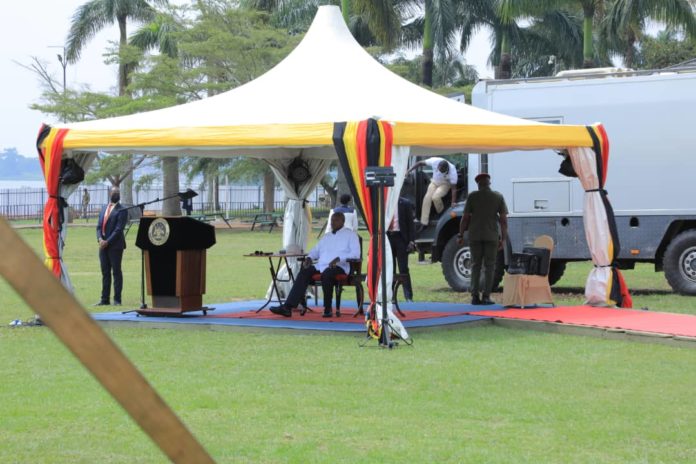
The Prime Minister of Uganda Robinah Nabbanja has urged motorists to boycott fuel stations that are steadily hiking prices.

The skyrocketing fuel prices is alluded to the government’s policy to curb the spread of Covid-19. Under the policy, the government subjected all fuel truck drivers to a mandatory Covid-19 test despite having Polymerase Chain Reaction (PCR) certificates from their respective countries of origin. The truck drivers protested Uganda’s move unless tests were done at the cost of the government.

Since there was no inflow of fuel, the prices shot up and by the end of last week, a litre of fuel was costing Shs 12,000 in some parts of the country like Hoima.

According to Ms. Nabbanja, the Cabinet meeting which was held earlier this week suspended mandatory testing for Covid-19 of truck drivers and passengers at the Malaba and Busia land borders. The prime minister said the decision aimed at easing flow of fuel tankers across the borders.

“I want to advise Ugandans to go to fuel stations that have not hiked the prices. Two companies have not hiked their prices and therefore go and buy from those ones these others will follow, because it is not necessary for any company to hike prices above Shs 5000,” she said.

The ongoing fuel crisis is also blamed on the government’s failure to fill fuel reserves in Jinja. Yesterday, Mr. Joel Nkangi, the depot manager of Uganda National Oil Company (UNOC0, revealed that Uganda’s oil reserves ran out of fuel.

The reserves have a storage capacity of 30 million liters, against a monthly demand of between 200 and 230 million liters of fuel in the Country and that all the fuel in the reserves could only contain the situation for a period of one week in case of a crisis.

Stories Continues after ad