Stanbic Bank
Stanbic Bank
18.1 C
Kampala
Stanbic Bank
Stanbic Bank
Home Blog Page 692

UEFA Champions League final moved from Russia over Ukraine invasion

UCL-trophy

The 2022 Champions League final will be played in Paris after Russia was stripped of the match following the nation’s invasion of Ukraine.

The final of Europe’s most prestigious club competition was due to be played in St Petersburg on 28 May.

Following a meeting on Friday, Uefa confirmed the match would not be held at the Gazprom Arena.

Instead the European football governing body has decided it will be staged at the Stade de France in Paris.

Uefa expressed “thanks and appreciation” to French President Emmanuel Macron for “his personal support and commitment to have European club football’s most prestigious game moved to France at a time of unparalleled crisis”.

It added: “Together with the French government, Uefa will fully support multi-stakeholder efforts to ensure the provision of rescue for football players and their families in Ukraine who face dire human suffering, destruction and displacement.”

At Friday’s meeting, Uefa also ordered Russian and Ukrainian clubs and national teams to play their home matches away from the region.

Spartak Moscow are the only Russian team left in European club competition this season, having reached the Europa League last 16.

They will find out their opponents – with Scottish Premiership champions Rangers one of the clubs they could be paired with – when the draw takes place.

Spartak, along with other Russian and Ukrainian sides, will “be required to play their home matches at neutral venues until further notice”, said Uefa.

Russia and Ukraine are both scheduled to play 2022 men’s World Cup play-off matches in March, with world governing body Fifa saying on Thursday it was monitoring the situation in the region.

Russia are due to host Poland in Moscow on 24 March, while Ukraine travel to Scotland on the same day.

Stories Continues after ad

Motion seeking to censure Jim Muhwezi lapses as Opposition fails to collect required signatures

Jim Muhwezi

The Opposition-sponsored motion seeking to censure Security Minister Maj. Gen. Jim Muhwezi has lapsed. This followed the failure by the Opposition to raise the required 176 signatures to move the motion to the next phase.

On 9th February 2022, the Opposition MPs led by their leader in parliament Mathias Mpuuga, launched a campaign at moving a motion to censure the Minister of Security Maj. Gen. (Rtd ) Jim Muhwezi.

Gen. Muhwezi was a cussed abdicating his responsibility and that has resulted into forced disappearances, arbitrary arrests, detentions and continued torture of people in the country.

In his letter to the Leader of Opposition in Parliament (LoP), the clerk of parliament Adolf Mwesigye informed Mpuuga that the motion to censure the security minister failed.

“Only 88 Legislators appended their signatures out of the 176 MPs who are required to the censure motion to go on,” The clerk said.

The LoP admitted failing to collect the required signatures.

“We have not mastered the required signatures. The required signatures should be 176. Therefore it makes the censure motion proceedings no available to us,” Mpuuga said.

The MPs’ decisions to censure Muhwezi came amidst reports of torture of Ugandan Novelist Kakwenza Rukirabasaijja and Mr. Samuel Masereka, the Kasese District National Unity Platform (NUP) Registrar.

The two were allegedly tortured by security agencies upon arrest. Narrating his ordeal, Masereka said he was arrested by Police and later handed to Chieftaincy of Military Intelligence (CMI). He accused CMI of detaining him for three weeks, beating and punching him on a daily basis.

Kakwenza was nabbed from his Kisaasi home after a three days twitter feud with supporters of UPDF Land forces commander Muhoozi Kainerugaba. Kakwenza averred that Muhoozi’s supporters were allegedly bullying him for criticizing President Yoweri Museveni. He was detained at unknown military facility where he was subjected to all forms of torture. After two weeks, the Author was paraded before Buganda road and leveled with charges of offensive communication, contrary to Section 25 of the computer misuse act 2011.

Various organistions have since condemned the inhuman acts noting that arbitrary arrest of people by security services, holding them in ungazetted places of detention for prolonged periods of time, torturing them, not bringing them before a court within the mandatory time limits, are violations of Uganda’s national legislation, regional and international commitments as well as specific Presidential guidelines.

Stories Continues after ad

New push to drive up Africa’s #Covid-19 vaccination

#Covid-19 vaccine

One year since the COVAX Facility delivered the first COVID-19 vaccines to Africa, around 400 million doses have been administered – the region’s largest ever vaccine rollout in a single year. However, vaccination rates in the continent are the lowest in the world. To help bolster uptake, the World Health Organization (WHO), UNICEF, Gavi, the Vaccine Alliance, and partners are supporting mass vaccination campaigns in 10 priority countries to reach 100 million people by the end of April 2022.

“A year since the first COVAX vaccine shipments, Africa has administered nearly 400 million doses. That’s the continent’s most massive vaccine rollout for a single disease in a single year. While this is a big step forward, we need a quantum leap,” said Dr Matshidiso Moeti, WHO Regional Director for Africa. “Mass vaccination drives are one tactic which is enabling countries to speed up their rollout.”

After a fitful start following the first COVAX vaccine shipments on 24 February 2021, Africa now has a steady supply of vaccines. Ninety per cent of the total COVAX deliveries to date have been in the last six months. COVID-19 vaccine deliveries to the continent have increased by more than 100% from November 2021 to January 2022, compared with the previous three months.

COVAX deliveries account for almost two-thirds of the more than 680 million doses delivered to Africa in the past year. The African Union’s Africa Vaccines Acquisition Trust has shipped about 6% of the doses and bilateral deals account for the rest.

“Today marks an important milestone in COVAX’s journey. Over the course of one year, working closely with governments and partners, COVAX has shipped over 430 million doses to 50 African countries. The global vaccine equity gap may be closing, but there remains so much work to be done. In the months ahead, COVAX looks forward to supporting countries further, providing targeted and tailored support where needed and ensuring supply matches countries’ needs as they work towards their vaccination targets,” said Aurélia Nguyen, Managing Director of the Office of the COVAX Facility.

Of the 20 priority countries identified by WHO for intensified support, 10 countries are conducting the mass vaccination campaigns in a range of urban settings such as shopping centres and markets, as well as in hard-to-reach rural communities. Countries are reporting a significant rise in people vaccinated. During its two-week campaign in early February, Kenya tripled the number of vaccines it administered, compared with the two weeks prior to the start of the campaign. In Guinea Bissau around 125 000 doses were administered during a two-week campaign in February, in comparison with 11 000 in the whole of January.

UNICEF has delivered around three-quarters of all COVID-19 doses to the Eastern and Southern Africa region. Mohamed Fall, Regional Director for the world’s leading children’s agency, said, “To truly achieve vaccine equity for Africa three things need to happen: Richer countries must contribute more funding to get vaccines into arms, including by recruiting and training community healthcare workers; partners need to ensure timely and reliable delivery of vaccines; and we need to increase the innovative ways we’re seeing in bringing vaccines to the people as opposed to people to the vaccines. Governments must also continue to invest in their health systems to make them more resilient to health crises.”

So far, only 13% of Africans are fully vaccinated. Eighteen countries have vaccinated less than 10% of their population and three have vaccinated less than 1%. Twenty-nine countries have used less than 50% of their vaccine stock.

High-risk populations also remain critically underserved by vaccination programmes. In 27 countries reporting data on health worker vaccination, 33% of their health workforce is fully vaccinated, and in 24 African countries reporting data on vaccination of older people, only 21% of adults over 50 years are fully vaccinated. Just 11% of people with comorbidities are fully vaccinated in 20 countries reporting that data.

WHO, UNICEF, Gavi, the vaccine alliance, and other international and local partners are supporting countries to scale up COVID-19 vaccination and have deployed 66 experts to 18 priority countries to form country support teams, with several experts on their way to two more countries.

WHO, UNICEF and other partners’ experts are working under the leadership of the ministries of health to strengthen partner coordination, logistical planning, including microplanning, closing the funding gap, tracking adverse events following immunization, as well as the management of data on vaccination uptake and vaccine stock while engaging and empowering communities.

Stories Continues after ad

Uganda Martyrs University announces inaugural Outstanding Alumni Awards

UMU Awards launch

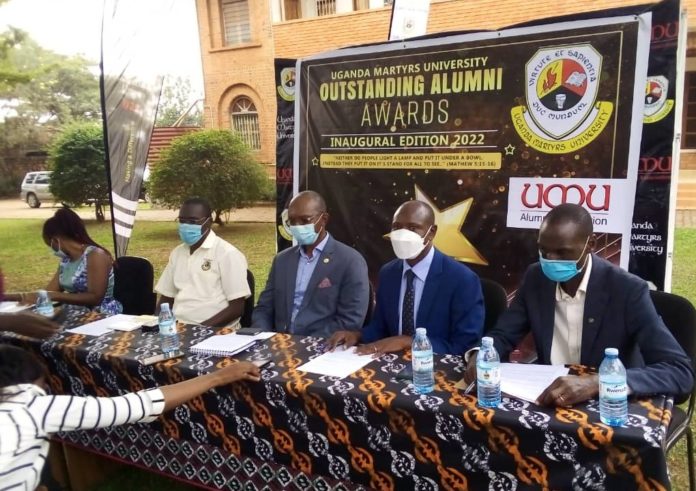
Uganda Martyrs University (UMU) has announced its inaugural awards to spotlight Outstanding Alumni scheduled for Saturday 26th February at Pope Paul VI Memorial Hotel, Lubaga.

According to Professor Patrick Edrine Kyamanywa, the Vice-Chancellor at UMU, during the event, outstanding alumni, employers of alumni will be singled out for recognition and families that have consistently believed in the UMU brand so that most if not all of their children are alumni of the University.

“The market has recognized our graduates ahead of us and we felt it necessary to respond as their Alma Mater by carving out a special to recognize those who are excelling in different walks of life. Some of these we may not be able to recognize and award at this maiden occasion. Notably, and among the award recipients at this inaugural edition, is the Rt. Honourable Prime Minister of the Republic of Uganda, Robinah Nabbanja who obtained both her bachelor’s and Masters’ degrees at Uganda Martyrs University,” he shared.

“Alumni should offer mentorship to students still at the university. Pass on the knowledge you have learnt to enable them to succeed as well. If you forget where you came from, you may as well not know where you are headed,” he cautioned.

UMU was established in 1993 as a Catholic-founded, not-for-profit private university owned by the Uganda Episcopal Conference (UEC). The idea to start a university was first conceived in 1982 with the sole desire to serve the church and society in training a human resource with strong ethical and Christian values. It received a Civil Charter on 2nd April 2005 from the Government of Uganda.

The main campus is located in Nkozi Sub-County, Mpigi District, 82 Kilometres west of Kampala along the Kampala-Masaka highway and right on the equator. In the last 10 years, the university has set up other Campuses, including Mbale, Ngetta in Lira, Kabale, Masaka, Lubaga and Fort Portal, all of which have been accredited by the NCHE.

UMU started with 84 students and seven staff members in two faculties. Presently the University has over 5,000 students in 12 Faculties, namely: Agriculture, Business Administration and Management, Education, Health Sciences, Science, the Built Environment, Engineering and Applied Sciences, Law, Institute of Ethics, Institute of Languages and Communication Studies, School of Arts and Social Sciences, Mother Kevin Postgraduate Medical School and School of Postgraduate Studies and Research.

 The University has over 30,000 alumni who have gone on to excel in several fields and impact social development both locally and globally.

Ambrose Kibuuka Mukiibi, President Uganda Martyrs University Alumni Association (UMUAA) extended the invitation to all alumni and well wishes on the D-day.

“I take this opportunity to invite all alumni, parents and well-wishers to join us as we network, reminisce on the good times and celebrate each other. Let’s come together and build the future we want together,” he rallied.

Stories Continues after ad

‘Our activities will yield results for the people of East Africa’ – Simon Kaheru

Simon Kaheru - Uganda Chapter Board Chair & EABC Vice Chair

The newly-elected Uganda representatives to the East African Business Council (EABC) have committed to focus on facilitating business growth in East Africa to position the region to take advantage of business opportunities across Africa and further afield.

Simon Kaheru, the Uganda Chapter Board Chair, elected at the Chapter AGM in Kampala, said the leadership of the EABC would focus on clearing impediments to doing business in the region, and promote private sector leadership of all efforts to support East African Community integration.

“We must all work under the EABC as business leaders, with a specific focus on results that benefit the people of the EAC across the entire region, starting within our countries. There is no way integration will happen simply because politicians have spoken, we have to do work as the private sector to create benefits for the people through our businesses creating wealth for them,” Kaheru said.

Kaheru, who is Public Affairs and Communications Director Coca-Cola Beverages Africa in Uganda, pledged that the EABC would work more closely with all business, trade and economic organisations in Uganda to synchronise and harmonise positions to suit the interests of all parties.

Kaheru also emphasized that EABC Uganda Chapter activities would focus on results rather than activities, and pledged to ensure constant and consistent engagement with the private sector on all issues for quick escalation and resolution.

Also elected to the Uganda Chapter Board were Pheona Nabaasa Wall, President of the Uganda Law Society; Stuart Jason Mwesigwa, Head of Corporate Affairs at Roofings Group; and Businge Rwabwogo, General Manager of Mukwano Group of Companies.

Director Rwabogo said the private sector body would adopt measures to be more inclusive of the youth and SMEs, as they are an active foundation for business and entrepreneurship across East Africa.

Challenged by Charles Kareba to identify what led to the collapse of the EAC in 1977 as a basis for making the EAC work for its people, Director Nabaasa called for more focused leadership across East Africa, and pledged to establish a panel of legal experts to help frame people-friendly policies for the private sector to implement, with the support of the political actors.

The AGM was facilitated by Private Sector Foundation Uganda (PSFU), which is the National Focal Point of the EABC in Uganda. PSFU Deputy Executive Director, Francis Kisirinnya, called upon EABC members to remain constantly engaged in order to give the private sector more influence in shaping policies that are EAC-focused and business friendly across the region.

Former EABC Uganda Chapter Chair, Jim Mwine Kabeho, challenged EABC Members to focus keenly on  the Africa Free Continental Trade Area in all their engagements, to take advantage of the vast opportunities it offers.

“There are already countries and regional bodies that have moved quickly to understand, popularise and mobilise for the opportunities that the AFCTA presents. If we do not get our act together quickly across East Africa and put a stop to the non-tariff barriers and border closures that we keep seeing in East Africa, by the time we think of going out to the rest of Africa it will be too late. We must wake up now!” Kabeho warned.

The EABC will hold a pre-Heads of State Summit symposium in March to outline issues gathered from across the EAC states.

Stories Continues after ad

Ssebuliba vows to turn Victoria University into a Sports powerhouse

Ssebuliba

Experienced Sports Administrator Patrick Ssebuliba has expressed his readiness and promised to turn Victoria University into one of the powerhouses of Sports in the country.

Ssebuliba joined Victoria University as a sports administrator in 2020 after ending his spell at Nkumba University where he had helped the Entebbe based institution win over 300 trophies across all Sports Disciplines.

In an interview with The-SportsNation, he offered an insight into their plans and preparations, revealing that he wants to reinstate a strong Victoria University Football team that years back went on to feature in Uganda Premier League.

Ssebuliba served as FUFA Football Delegate for over 10 years and is the current General Secretary for University Sports in Uganda.

“It’s just unfortunate that after sometime, the leadership of the University changed and then the Victoria University FC team ceased to exist,” he told The-SportsNation.

“But the current leadership, including one of the Directors Mr Rajiv Ruparelia, is a Sports person. My Vice Chancellor (Lawrence Muganga) is a lover of Sports and we already began exchanging ideas on how best we can strongly engage sports in this University.

“You are very much aware that sports is one of the co-curricular activities that is a must in all education establishments. So we provide time for our students to do physical fitness not for fun but for physical wellbeing, healthy wellbeing and competition.

“This University has given scholarship to over 80 students, because of that we want to have visibility for the University through Sports.

“We have a number of local, regional and International competitions where we must compete in, so we had to get the good talent to give us the good results. We are handling these things step by step, we do not like to just go out there and concede 8.”

During his time at Nkumba, the men’s basketball team (Nkumba Marines) won the National Basketball League back to back – 2005 & 2006 – and they also played in Zonal competitions in Kigali and Dar es Salam.

The Women Volleyball team won eight national league titles and won the national championship twice as well. Nkumba also represented Uganda eight times at the Africa championship.

Ssebuliba was also voted the football best coach twice at the University league and his side reached the University Football League final once. Won trophies at Wakiso district, Buganda region, among others.

They won at the East Africa University games thrice in Dar, Makerere and Kenyatta. They were more dominant in Volleyball, Handball and Netball.

“I started out at Nkumba at around the age 21, I had just left Campus, and I served there for 25 years! I was working initially as a lecturer in the department of Business Administration,” Ssebuliba who did diploma in Makerting, Bachelors in Business Administration, and Masters in Education Management, told The-SportsNation.

“During the course of my working with Nkumba, the University gave me an opportunity to be in charge of Sports. I had already shown my passion for Sports.

“Then I did a lot of training – Like the Football coaching courses etc. My main interest was in Football majorly.”

“But I achieved a lot in almost each sports discipline and that’s what I want to do here with Victoria University.”

“By scouting good players, having the right coaches and I have moved on with most of them, they didn’t have Contracts with Nkumba actually, I struggled to pay them while at Nkumba but right now Victoria is taking them on and will pay them. We recruited the best here, including Former She Cranes coach Rashid Mubiru who will handle our Netball teams.”

Last year, Victoria University’s Women team finished fourth in the National Handball League on their debut season. This year, the side will be competing in the National Basketball League (after acquiring Sharing Youth’s slot in top flight).

The University will later on this year, in July, host the Woodball Presidents Cup at Kampala International School.

Ssebuliba says that he will use his expertise and experience to see that Victoria University become a formidable force in Ugandan sports.

“I am a believer, I know what I am capable of, I have got strong backing from my bosses here at Victoria University and we have already recruited some of the best players in most sports disciplines. The University is also in advanced plans to put up our own sports facilities among other developments.”

Stories Continues after ad

Fifa ban Kenya, Zimbabwe from international football

FIFA President Infantino

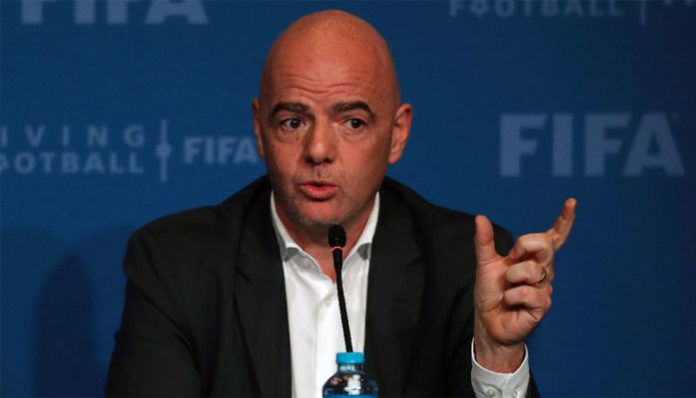
World football governing body, Fifa, has suspended Kenya and Zimbabwe from all international football activities over government interference.

Fifa President Gianni Infantino announced the two countries’ indefinite suspension from all football activities during the Fifa Council Press Conference on Thursday.

“We had to suspend two of our member associations Kenya and Zimbabwe both for government interference in the activities of the football. These associations are suspended from all football activities with immediate effect and they know what need to be done for them to be re-admitted or the suspension to be lifted,” Infantino said.

In a letter from the FIFA Secretary General Fatma Samoura, sent to the two football federations, it says the FIFA Council decided to suspend both of them with immediate effect due flagrant violations of the FIFA Statutes.

“On the basis of article 14 paragraphs 1 i) and 3 of the FIFA Statutes – as well as article 16 paragraph 1, under which the FIFA Council may, without a vote of the Congress, temporarily suspend with immediate effect a member association that seriously violates its obligations – the FIFA Council decided to suspend the FKF with immediate effect due flagrant violations of the FIFA Statutes.”

The suspension means both countries are barred from fielding any team in any competitive event outside the country like the Caf Champions League, Caf Confederations Cup as well. These include the men’s and women’s national football teams and clubs.

Referees from both countries are also barred from international assignments during duration of the suspension.

Stories Continues after ad

Respect Supreme Court ruling – Sudhir’s lawyers to BoU

Sudhir with his lawyers of Kampala Associated Advocates

Kampala Associated Advocates (KAA), the lawyers representing tycoon Sudhir Ruparelia and Meera Investments Ltd, have responded to Bank of Uganda’s claim that an application before Court for wrongful extracti is still pending.

“The statement by BOU that a review application is pending before the Court is incorrect. This review application arises from an appeal which was finally determined by their own withdrawal. It therefore stands moot. Contrary to the assertions of BOU, the ruling of the court was within the ambit of the Financial Institutions Act. It was overtaken by events,” reads part of the statement from KAA.

The Law firm noted that BOU is subject to laws of Uganda and can not act like they are beyond the law.

“The import of the Supreme Court decision is that BOU is also subject to the laws of Uganda and cannot act in a manner that places it beyond the reach of the law,” the statement from KAA reads.

In a landmark ruling on 11th February 2022, Supreme Court directed that the management of Crane Bank be reverted to its shareholders and also ordered the central bank to pay the costs of the case bringing an end to a five year court battle.

The judges in their ruling further said that in ruling civil application No.32 of 2020 and found that indeed, receivership of the appellant had ended on January 20, 2018. The said the implication of the finding in their view was that the management of the appellant had reverted to shareholders after January 20,2018.

“In the result, this appeal is dismissed with costs to the respondents in the terms found by the lower courts. The dismissal of the instant appeal takes effect as of the date of endorsement of this ruling. We so order,” Justices Ruby Opio Aweri, Faith Mwondha, Prof. Tibatemwa-Ekirikubinza and Percy Night Tuhaise ruled.

The full statement from KAA;

Our attention has been drawn to a statement issued by Bank of Uganda on the Supreme Court Ruling in Civil Appeal No. 07 of 2020; Crane Bank Limited (In Receivership) Vs Sudhir Ruparelia and Meera Investments Limited. We have noted with concern that the statement contains many incorrect assertions, and it has become necessary for us to respond to it to set the record straight.

BOU placed Crane Bank Limited (CBL) under Receivership on the January 24 2017. BOU then sold CBL the next day- January, 25 2017. BOU used CBL to file an action in the High Court (Civil Suit No. 493 of 2017) against Sudhir Ruparelia and Meera Investments Limited.

We objected to the case on the basis that it had no merit. The suit was dismissed with costs against BOU. BOU, through CBL, then appealed to the Court of Appeal (Civil Appeal No. 252 of 2019).

The Court of Appeal upheld all the findings of the High Court and dismissed the Appeal with costs against BOU and also found that receivership had ended in January 2018 in accordance with the express provisions of the law

In the Supreme Court, BoU filed two applications for injunctions to prevent the shareholders of Crane Bank Limited from taking over the management Company, since receivership had ended. The Supreme Court dismissed both applications with costs.

Not only did the Supreme Court find that the Applications had no merit, but it also found that the Bank of Uganda was acting in bad faith. The Supreme Court also found that there was very little chance of success in the appeal that had been filed by Bank of Uganda.

In a bizarre turn of events, BoU purported to place Crane Bank into liquidation with the intention of winding it up and that way forever extinguishing the rights of its shareholders and avoiding accountability.

BOU, through CBL, also filed another application in the Supreme Court to change the parties to the appeal. The Supreme Court later found that the liquidation was contrary to the law. This Application was also dismissed with costs, by the Supreme Court.

BOU then applied to withdraw its Appeal after submissions had been closed in a number of their applications and for which rulings were pending. Strangely, in the Application to withdraw the Appeal they also sought to overturn some of the decisions of the Court of Appeal and High Court. We objected to the withdrawal and applied to court to dismiss the Appeal.

The Supreme Court finally ruled on the matters in its Judgment in Civil Appeal No. 7 of 2020, where it ordered that: i) The Appeal is hereby dismissed with costs, ii) The costs shall be borne by Bank of Uganda. The dismissal of the Appeal shall take effect from the date of this judgment being the 11th February, 2022 and iii) The Appellant’s receivership ended on 20th January 2018 and thereafter its management reverted to the shareholders.

We would like to inform the public that on 11th February 2022, the Supreme Court finally and conclusively determined the dispute between BOU and our Clients.

The effect of the Supreme Court decision is that the company has reverted to its shareholders. The decision also means that BOU lost control of CBL from the 20th of January, 2018 and any decision made on behalf of CBL by BOU is reversed. This is not a mere technicality. This is a fundamental principle- those in authority must act in accordance with the express provisions of the Law. BOU cannot exercise power outside or against the law. Nor is it above the law.

The statement by BOU that a review application is pending before the Court is incorrect. This review application arises from an appeal which was finally determined by their own withdrawal. It therefore stands moot. Contrary to the assertions of BOU, the ruling of the court was within the ambit of the Financial Institutions Act. It was overtaken by events.”

The import of the Supreme Court decision is that BOU is also subject to the laws of Uganda and cannot act in a manner that places it beyond the reach of the law. BOU must act within the four corners of the laws of Uganda.

Our Clients shall take all the necessary steps to ensure that BOU complies with the Orders of the Supreme Court, the Court of Appeal and the High Court of Uganda.

Stories Continues after ad

MPs to visit detention facilities to probe torture allegations

Hon Fox Odoi (R) said they will visit the prison facilities around the country

Members of Parliament sitting on the Human Rights Committee intend to visit all government detention facilities in order to investigate allegations of gross human rights violation.

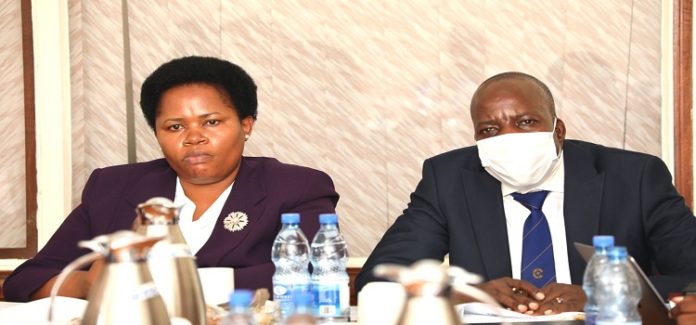
The Committee chairperson, Hon Fox Odoi Oywelowo on Thursday, 24 February 2022 informed the officials from Uganda Prisons Service of the committee’s intent to visit detention centres across the country.

The committee was interacting with the officials from the Prisons Service led by the Director of Correctional Services, Samuel Akena who represented the Commissioner General of Prisons.

“I would like to use this meeting to inform you that this committee is going to visit all detention facilities to interact with the inmates or whether or not they have experienced any sort of torture from the prisons authorities or other security forces outside the prisons,” Hon Fox Odoi said.

This was after Akena informed the committee that the Prisons has not recorded any cases of torture since January 2020, a statement that shocked MPs who wondered whether the allegations of torture on inmates are self-inflicted.

However, Akena admitted that whereas there are instances where inmates are brought to prison in an unhealthy conditions, it is under their jurisdiction to probe what happened to them.

“For us, our mandate is to provide safe custody to the people who are brought to prison. Our mandate is to treat and take good care of those who come with health issues and it is not our concern to find out what happened to them,”

Akena said they have a zero tolerance policy on torture of inmates and that any staff or prisoner who is involved in acts of torture is immediately handed over to Police for prosecution. He also denied the allegations that prison authorities partake in the torture of prisoners.

“It is true we have not recorded any case of torture since January 2020. However, we have had disciplinary cases involving violation of rights of prisoners and the culprits have been dealt with,” he said.

Hon James Baba Boliba (NRM, Koboko County) blamed the prison authorities for paying a deaf ear to allegations of torture on prisoners, saying it is within their authority to seek further information on what happened to the inmates before being brought to them.

“When you receive these people, you are supposed to record their condition and in case of torture then you  find out what happened to them,” Baba said.

Fox Odoi re-echoed that it is still the responsibility of the prison authorities to investigate cases of torture even if the prisoners were not tortured by the prison warders.

He directed Akena to avail the committee with a list of prisoners who have allegedly been tortured ahead of another scheduled meeting.

On 8 February 2022, the Deputy Speaker Anita Among directed the Committee on Human Rights to investigate allegations of torture on prisoners by security personnel.

Stories Continues after ad
TotalEnergies’ Pouyanne under pressure after country declined to approve funds towards oil developments in Uganda

The Executive Director of the French energy conglomerate TotalEnergies Patrick Pouyanne has come under pressure after the country declined to approve funds towards the oil development and exploration of Uganda.

According to a source, the Total boss is being criticized by the environmentalists and prominent politicians as shareholders look on. They call for suspension of funding to the project noting it is in a fragile Ecosystem. Our efforts to get a comment were futile after the company declined to comment on the matter.

The Lake Albert development encompasses Tilenga and Kingfisher upstream oil projects in Uganda and the construction of the East African Crude Oil Pipeline (EACOP) in Uganda and Tanzania.

The Tilenga is a project, operated by Total, and the Kingfisher project under CNOOC. They are expected to deliver a combined production of 230,000 barrels per day at plateau.

The upstream partners are Total (56.67%), CNOOC (28.33%) and UNOC (15%). The crude oil will be transported from the oilfields in Uganda to the port of Tanga in Tanzania via EACOP cross-border pipeline, with Total, Uganda, Tanzania and CNOOC as shareholders.

On 23 April 2020, Tullow Oil announced the signing of a Sale and Purchase Agreement with Total Uganda to be effective on 1 January 2020, in which it agreed to transfer its entire interests in Blocks 1, 1A, 2 and 3A in Uganda and the proposed East African Crude Oil Pipeline (EACOP) System to Total.

Tullow received $500 million consideration and a further $75 million after a Final Investment Decision is taken on the development project.

Last month, Pouyanne signed the Final Investment Decision (FID) that will see the production of Uganda’s oil in 2025. The FID will see Total and CNOOC investing more than US$10 billion in developing crude oil production between Uganda and Tanzania.

Out of the $10 billion, $3.5 billion will be spent on constructing a heated pipeline linking oil fields in western Uganda to the Indian Ocean port of Tanga in Tanzania. With 897 miles, the pipeline will be one of the world’s longest.

With this project, the two countries are projected to realise their record level of foreign direct investment flows to the tune of $3.5 billion over the period 2022 to 2025 which is an increase of over 60%  of their current levels of foreign direct investment flows.

Stories Continues after ad